Career Gaps Don't Scare Recruiters Anymore. Bad Explanations Do.
84% of hiring managers look for growth stories, not perfect timelines. Career gaps aren't the problem. Leaving them unexplained is.

Laddro Team

Can we finally stop panicking about career gaps? Please?
Look, if the pandemic taught us anything, it's that life doesn't follow a neat, uninterrupted career timeline. People got laid off. People burned out. People took time to care for family, recover from illness, raise kids, travel, figure out what they actually wanted to do with their lives. And the hiring world noticed.
So where do things stand in 2026? 84% of hiring managers say they look for growth narratives, not continuous employment. Read that again. The vast majority of people making hiring decisions don't care that you took time off. They care about what you did with it and how you talk about it.
The gap itself isn't the problem. The silence around it is.
The Real Red Flag
Candidates who leave gaps blank on their resume, with no explanation, no context, just a suspicious void between 2023 and 2025, are 40% less likely to get interviews. Not because the gap scares recruiters. Because the silence does. It makes them fill in the blanks themselves, and people's imaginations rarely land on the charitable explanation.
Were you fired? Were you in prison? Did you just... stop working and watch TV for two years?
That's what an unexplained gap looks like to someone scanning your resume for thirty seconds. And it's completely avoidable.
The fix isn't to hide the gap. It's to own it.
The New Normal
Some perspective that should take the pressure off. Gaps under six months? Nobody even blinks at those anymore. That's considered completely normal in the current job market. Between job transitions, relocation, a short break between roles, six months is nothing. You barely need to address it.
Gaps over a year are where you need a narrative. Not an apology, not an excuse. A narrative. There's a big difference. An apology sounds like "Unfortunately, I had to step away from my career due to personal reasons." A narrative sounds like "I took a year off to care for a family member, and during that time I also completed a UX certification through Google because I'd been wanting to pivot into product design."
See the difference? One is defensive. The other is honest and forward-looking.
Guess which one lands better.
How to Address It on Your Resume
You've got a few options, and the right one depends on your specific situation.
Option one: Include it in your timeline. If you did something meaningful during your gap, like freelance work, caregiving, education, or volunteering, put it right in your experience section with dates. Treat it like any other role. "Primary Caregiver | 2023–2024" or "Career Break, Professional Development | 2024–2025" followed by a brief description of what you learned or accomplished. This works especially well for gaps where you have concrete things to point to.
Option two: Use a functional or hybrid format. If your gap is longer or harder to explain in a timeline, a hybrid resume format can help. Instead of leading with a strict chronological list, you lead with a skills-based section that highlights what you can do, followed by a condensed work history. This doesn't hide the gap. Hiring managers will still see it. But it shifts the emphasis to your capabilities rather than your dates. Laddro has templates built for exactly this approach, by the way.
Option three: Address it in your summary. A one-line mention in your professional summary can preemptively answer the question. Something like "Marketing professional with 8 years of experience, returning from a planned career break focused on advanced analytics training." Clean, direct, and it frames the gap before the reader even gets to your timeline.
Whatever you do, don't try to fudge the dates. Using only years instead of months to hide a gap might seem clever, but experienced recruiters spot it immediately. And it creates a trust problem that's worse than the gap itself.
What Hiring Managers Actually Want to Hear
I've talked to a lot of recruiters about this, and they're remarkably consistent in what they're looking for. It comes down to three things.
Honesty. Just tell them what happened. "I was laid off during a round of restructuring." "I took time off for my mental health." "I left to raise my kids." These are normal, human things. The recruiter across the table has probably experienced at least one of them personally. Trying to spin or obscure the truth is what makes it weird.
Growth. What did you do during the gap that kept you sharp or made you better? This doesn't have to be dramatic. Maybe you took an online course. Maybe you volunteered. Maybe you freelanced on a few projects. Maybe you read a lot and stayed current in your field. The point is to show that you stayed engaged with your professional development in some way. Not that you disappeared for a year and came back unchanged.
Readiness. The gap is over. You're here now. You're prepared, you're motivated, and you're up to speed. That's what they need to believe, and the best way to prove it is to demonstrate it in the interview. Know what's happening in your industry. Reference recent trends. Show that the gap didn't leave you behind.
The Confidence Factor
Something nobody talks about enough: how you feel about your gap matters more than the gap itself. If you walk into an interview acting like your career break is something to be ashamed of, the interviewer will pick up on that energy. They'll start wondering if they should be concerned too.
But if you own it, explain it clearly without over-explaining, and then move the conversation forward to what you bring to the table? It becomes a non-issue. I've seen candidates with two-year gaps get hired over candidates with unbroken timelines, purely because they handled the conversation with confidence and clarity.
The stigma around career gaps has decreased massively since the pandemic. Millions of professionals took breaks. Entire industries went through waves of layoffs. The old expectation of an unbroken career timeline was always somewhat unrealistic. And now the hiring world has largely caught up to that reality.
Format It Right
The way your resume is structured can make a gap feel like a footnote or a flashing alarm. The right template matters. A clean, modern format with a strong skills section and a well-written summary does a lot of heavy lifting. It tells the hiring manager, "Yes, there was a break. And here's everything I'm bringing to the table regardless."
Don't let a gap in your timeline hold you hostage. Address it, frame it, and move on to showing them why you're the right hire.
Want a resume format that puts your strengths front and center, gap or no gap? Build yours with Laddro for free and stop letting your timeline tell the wrong story.
Related examples you might find useful:
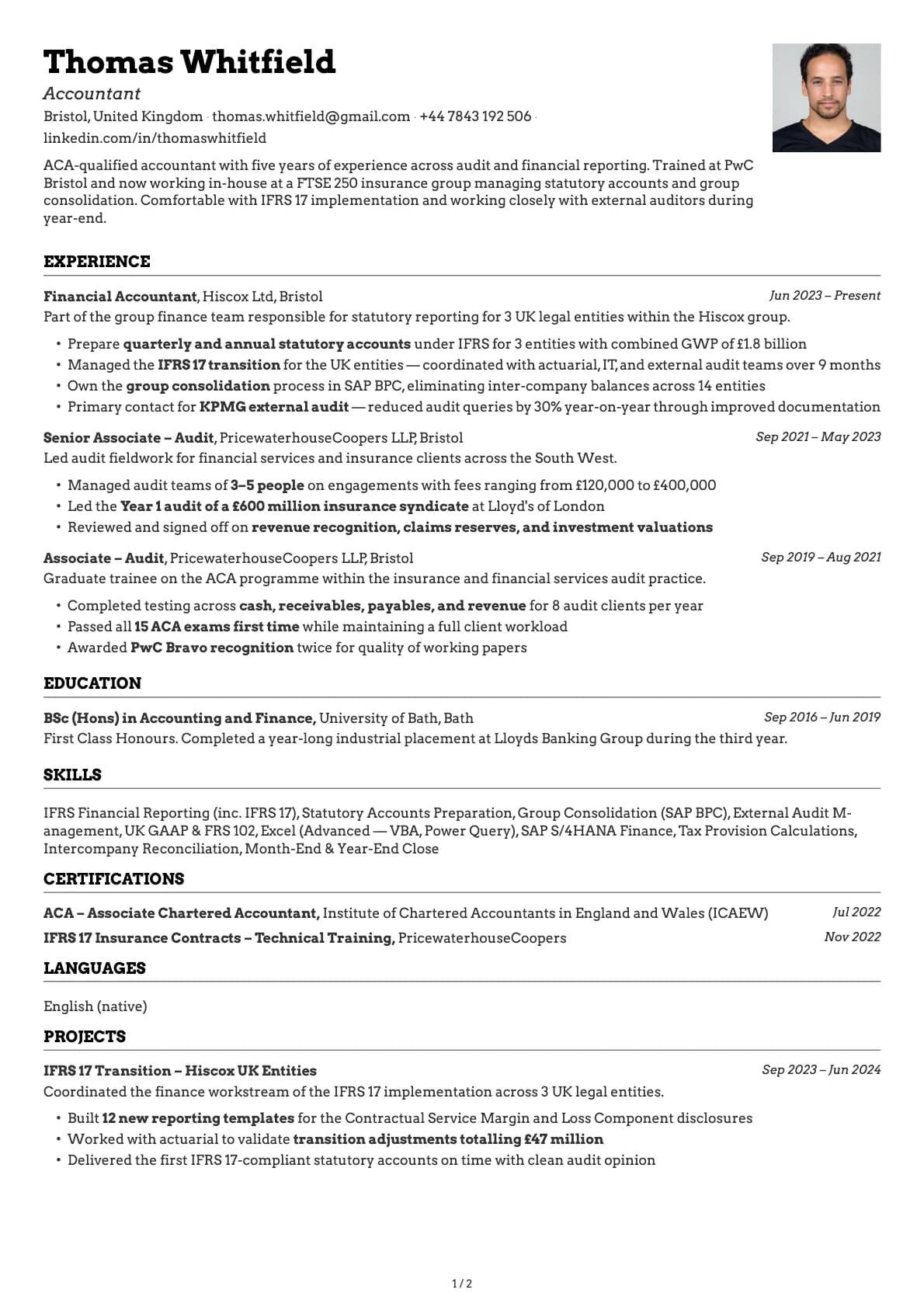
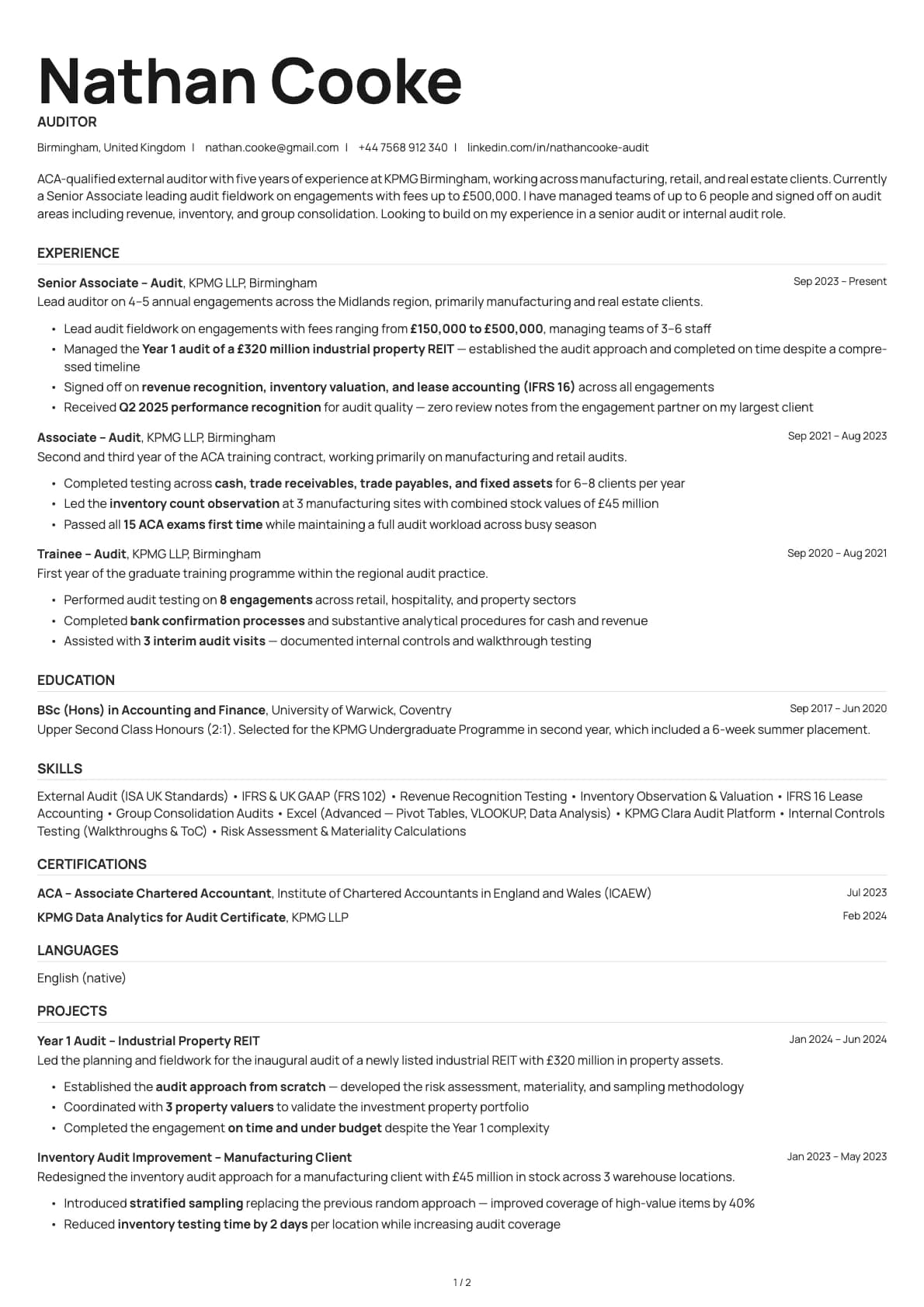
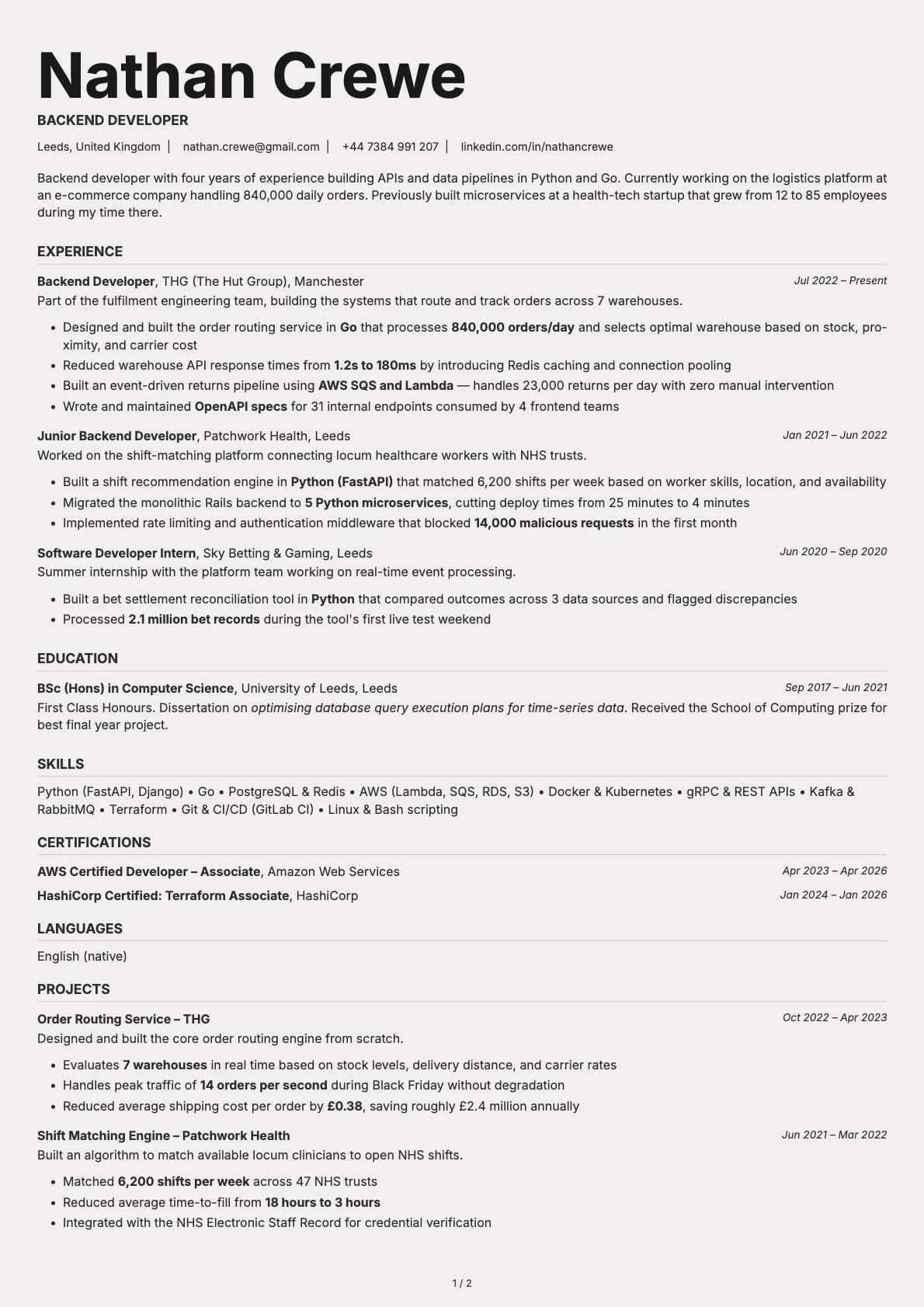
Frame your career gap with confidence
Build your resume for free with Laddro. Choose a hybrid layout that leads with skills, not dates, and let your strengths do the talking.
See how others in your field handle it. Browse resume examples for real formatting ideas that work.