Accountant Resume Example
An ACA-qualified accountant resume example with Big 4 audit experience and FTSE 250 in-house reporting.

Laddro Team
Free to use. No account needed to start.
Free to use. No account needed to start.
Overview
Accounting resumes tend to look the same. "Prepared financial statements." "Assisted with month-end close." "Supported the audit process." The problem is that every qualified accountant can write those lines. They tell the reader nothing about the scale you have worked at, the complexity you have handled, or what you actually improved.
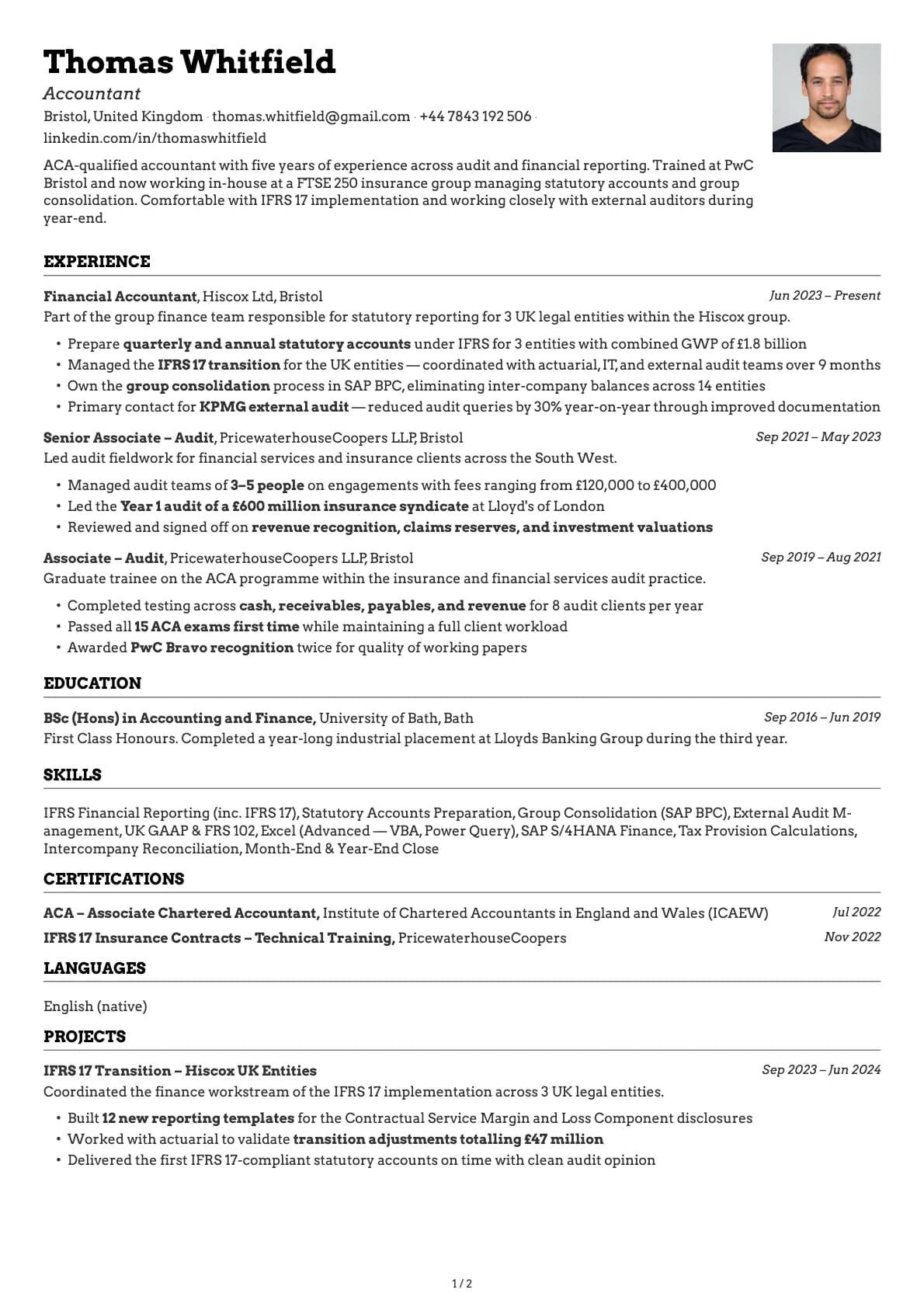
This resume belongs to Thomas Whitfield, an ACA-qualified accountant who trained at PwC Bristol and now works in-house at Hiscox, a FTSE 250 insurance group. He manages statutory accounts and group consolidation for entities with a combined GWP of £1.8 billion. What makes this resume stand out is the specifics: entity counts, audit fee ranges, exam results, and even a percentage reduction in audit queries.
Let us walk through each section so you can apply the same approach.
The summary: qualifications first, then scale
In accounting, your qualification is the first thing a hiring manager checks. ACA, ACCA, CIMA. If you have it, put it in the first sentence of your summary. Do not bury it in a certifications section and hope they scroll down.
Here is Thomas's:
ACA-qualified accountant with five years of experience across audit and financial reporting. Trained at PwC Bristol and now working in-house at a FTSE 250 insurance group managing statutory accounts and group consolidation.
Two sentences. The recruiter immediately knows: ACA-qualified, Big 4 trained, now in industry at a named FTSE 250. That is a career trajectory they can picture instantly.
Try this: First sentence covers your qualification and years of experience. Second sentence names where you work now and what you are responsible for. If you have a standout number (like managing consolidation across 14 entities), add a third sentence for that.
Experience: show the size of what you touched
Accounting is all about scale. The difference between preparing accounts for a single-entity SME and running group consolidation across 14 entities in SAP BPC is enormous. Your bullets need to communicate that scale.
Look at the Hiscox role:
Prepare quarterly and annual statutory accounts under IFRS for 3 entities with combined GWP of £1.8 billion
Managed the IFRS 17 transition for the UK entities, coordinated with actuarial, IT, and external audit teams over 9 months
Primary contact for KPMG external audit, reduced audit queries by 30% year-on-year through improved documentation
The first bullet tells the recruiter this person works with serious numbers. The second shows project management ability on a complex technical change. The third gives a measurable improvement. All three together paint a picture of someone who is more than a number-cruncher.
The formula for accounting bullets: What you do + How many/how much + What standard or system you use.
"Prepare VAT returns" becomes "Prepare quarterly VAT returns for 3 UK entities under MTD using SAP." Same task, completely different level of detail.
The Big 4 section: make it count
If you trained at a Big 4 firm, that experience carries weight. But you still need to describe it properly. "Worked on audits" is worthless. "Led the Year 1 audit of a £600 million insurance syndicate at Lloyd's" tells a story.
Thomas splits his PwC time into two roles (Associate and Senior Associate) which shows progression. For the senior role, he includes:
Managed audit teams of 3-5 people on engagements with fees ranging from £120,000 to £400,000
Fee ranges are useful because they tell the reader the size and complexity of the engagements. A £400,000 audit is a very different animal from a £30,000 one. If you worked at a Big 4 or mid-tier firm, include fee ranges or client revenue figures where you can.
And the "passed all 15 ACA exams first time" bullet? That is not bragging. In a profession where exam results are a genuine differentiator, this is valuable information. If you passed first time, say so.
Skills: name the software
Generic skills like "financial reporting" or "attention to detail" waste space on an accounting resume. Every accountant does financial reporting. Every accountant is expected to be detail-oriented.
What is actually useful is software. Thomas lists SAP BPC, SAP S/4HANA Finance, and Excel with specific capabilities (VBA, Power Query). He also lists technical standards: IFRS, UK GAAP, FRS 102.
If you use Sage, Xero, QuickBooks, Oracle, SAP, or any ERP system, name it. If your Excel skills go beyond basic formulas (pivot tables, Power Query, VBA macros), specify that. These are the keywords that both ATS systems and hiring managers are scanning for.
Projects: the IFRS 17 example
Thomas includes his IFRS 17 transition project as a separate entry. This is smart because it lets him expand on work that is too detailed for a bullet point but too important to leave out.
Built 12 new reporting templates for the Contractual Service Margin and Loss Component disclosures. Worked with actuarial to validate transition adjustments totalling £47 million.
If you have been involved in any major accounting change (IFRS 17, IFRS 16 transition, an ERP migration, a system implementation), it deserves its own section. These are the projects that make you stand out from someone who has just been doing BAU reporting.
Mistakes accountants make on their resume
Not specifying the accounting framework. IFRS, UK GAAP, FRS 102, US GAAP. These are different things and employers care which one you know. Do not just say "prepared financial statements." Say which standard you prepared them under.
Leaving out the ERP or accounting software. A hiring manager at a company running SAP wants to know you have used SAP. If you only write "used accounting software," you have wasted a keyword match.
Underselling Big 4 experience. If you trained at a Big 4 firm, name the clients (where confidentiality allows), the fee sizes, and the industries. "Completed audit testing" could describe anyone. "Led the Year 1 audit of a £600 million insurance syndicate" could not.
Using a creative template. Accounting recruiters expect clean, conservative formatting. Thomas uses Emerald, a single-column layout with no visual clutter. That is the right call. Save the creative templates for marketing roles.
One more thing
If you are moving from practice to industry (or vice versa), your summary needs to address the transition directly. Thomas does this by naming PwC in his summary and then stating his current in-house role. The reader can see the path without guessing.
If you are making that move and do not have industry experience yet, highlight the transferable parts of audit: managing external relationships, understanding internal controls, working to tight deadlines, and communicating with non-finance stakeholders. Those are the skills an industry employer is actually buying.
Build your own version
Open this layout in the builder and swap in your own details. It takes a few minutes.
Free to use. No account needed to start.
Was this resume example helpful?
Rate this example to help us create better content for you.
4.8 average from 187 ratingsRelated resume examples
Financial Analyst
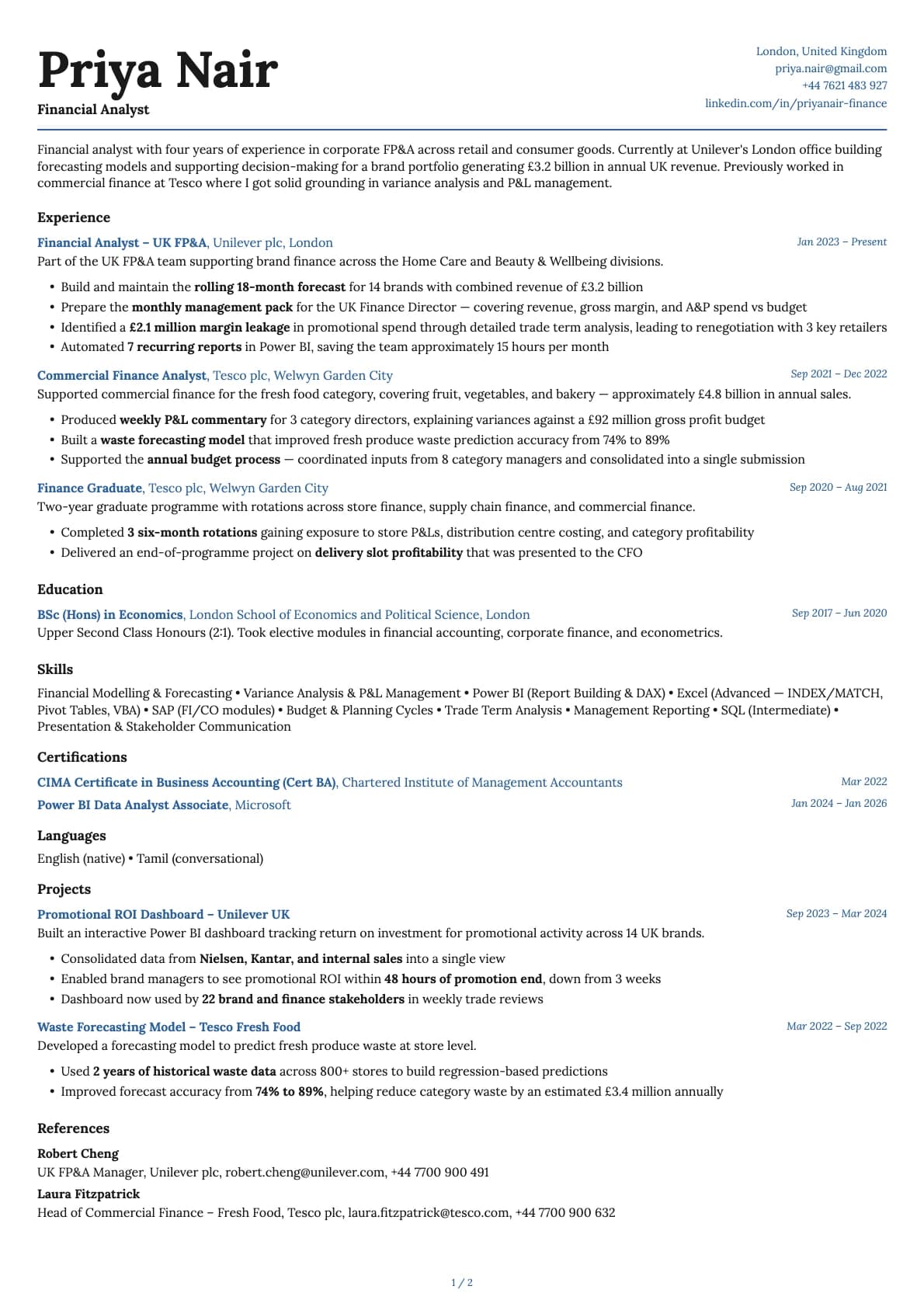
A financial analyst resume example from FP&A roles at Unilever and Tesco. Learn how to present forecasting models, variance analysis, and business impact.
Investment Banker
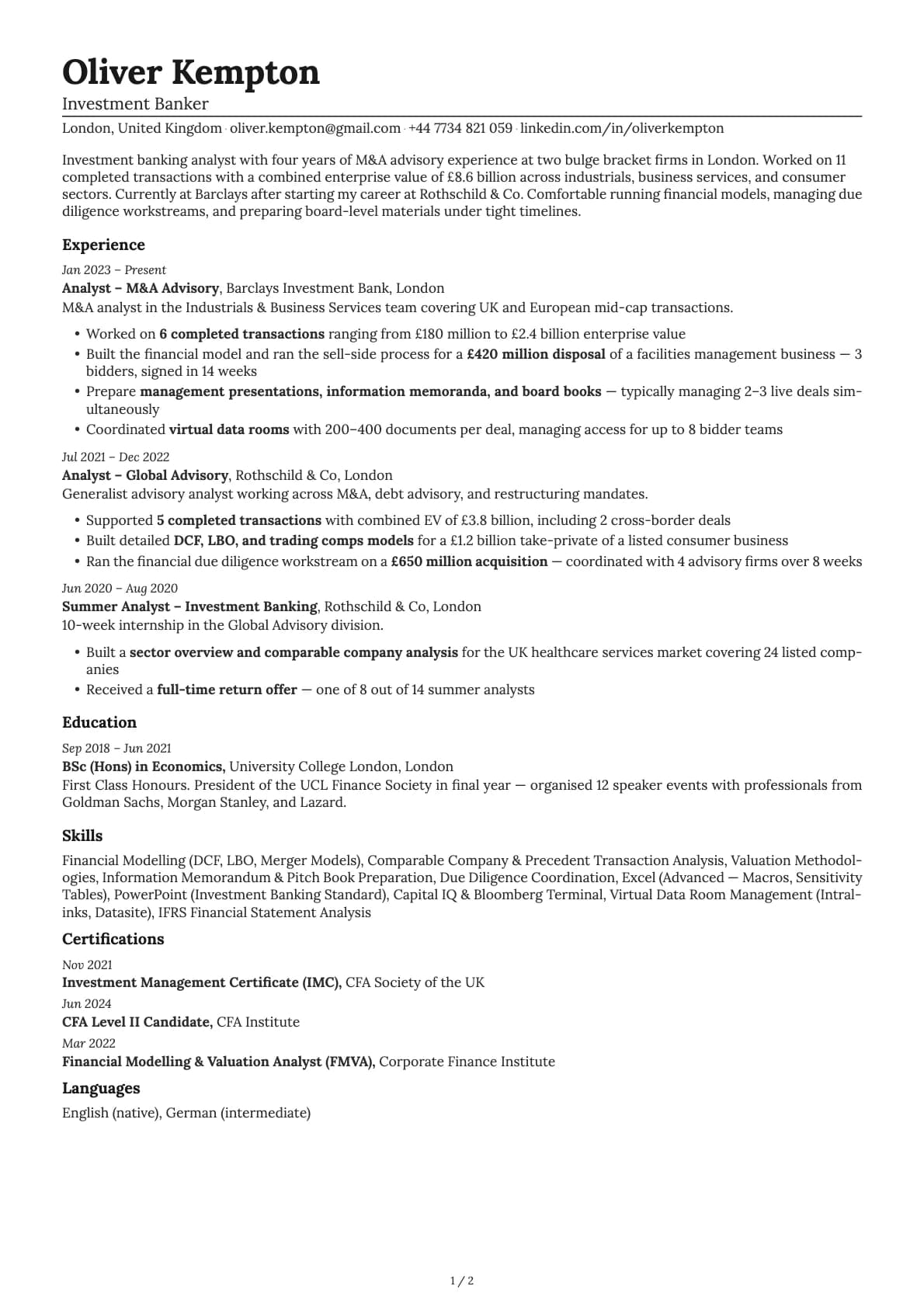
An investment banker resume example with M&A deal values, financial modelling, and bulge bracket experience.
Management Consultant
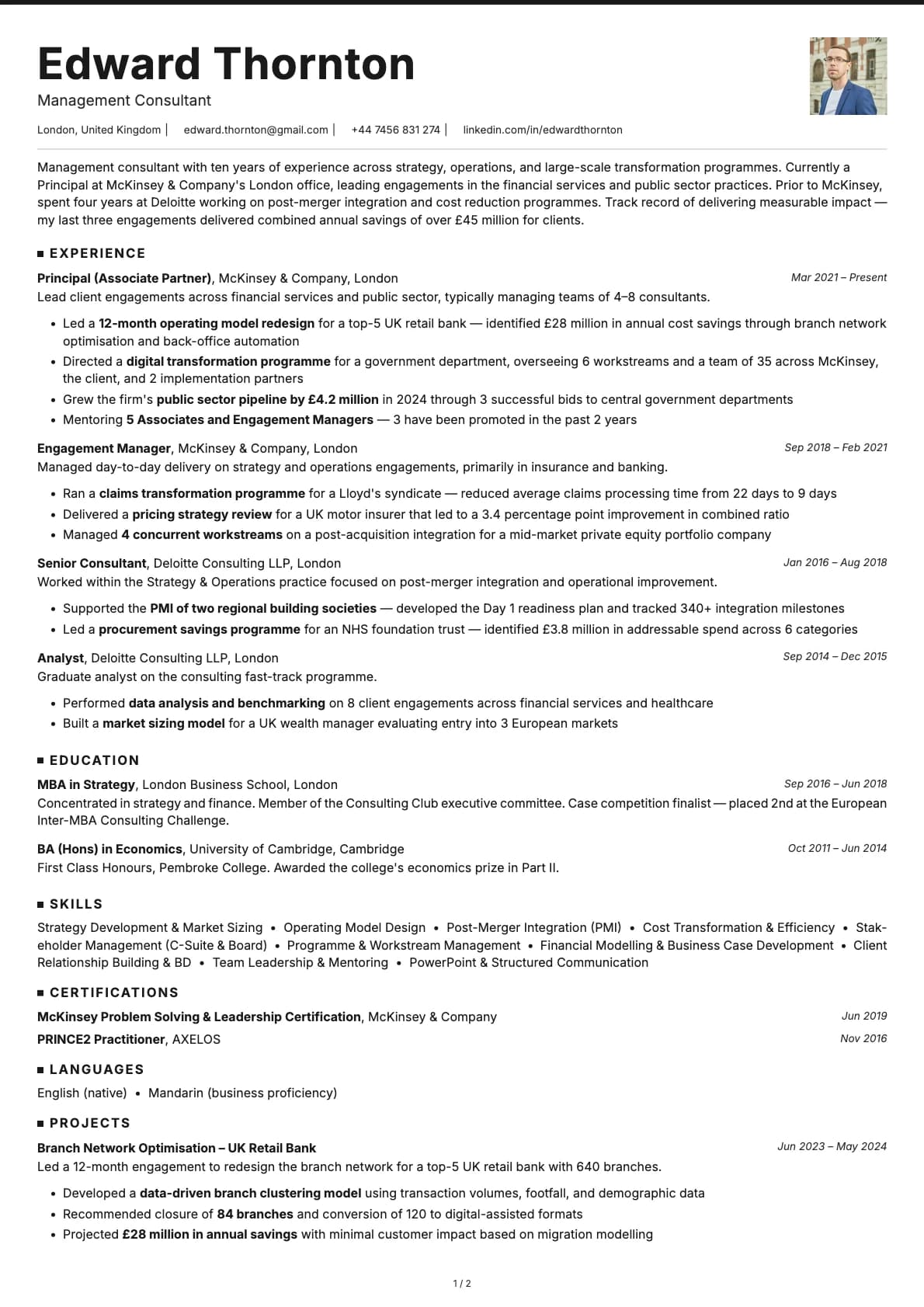
A management consultant resume example from McKinsey with client impact numbers, engagement details, and business development wins.
Business Analyst
A business analyst resume example with requirements documentation, stakeholder workshops, and process redesign experience across e-commerce and grocery.
Auditor
An ACA-qualified auditor resume example from KPMG with engagement fee ranges, team management, and ISA Standards experience across manufacturing and real.
Tax Advisor
A tax advisor resume example with CTA qualification and 9 years of corporate tax experience across Big Four and in-house roles.
Bookkeeper
A bookkeeper resume example with Xero, Sage, and QuickBooks experience across hospitality and retail SMEs.
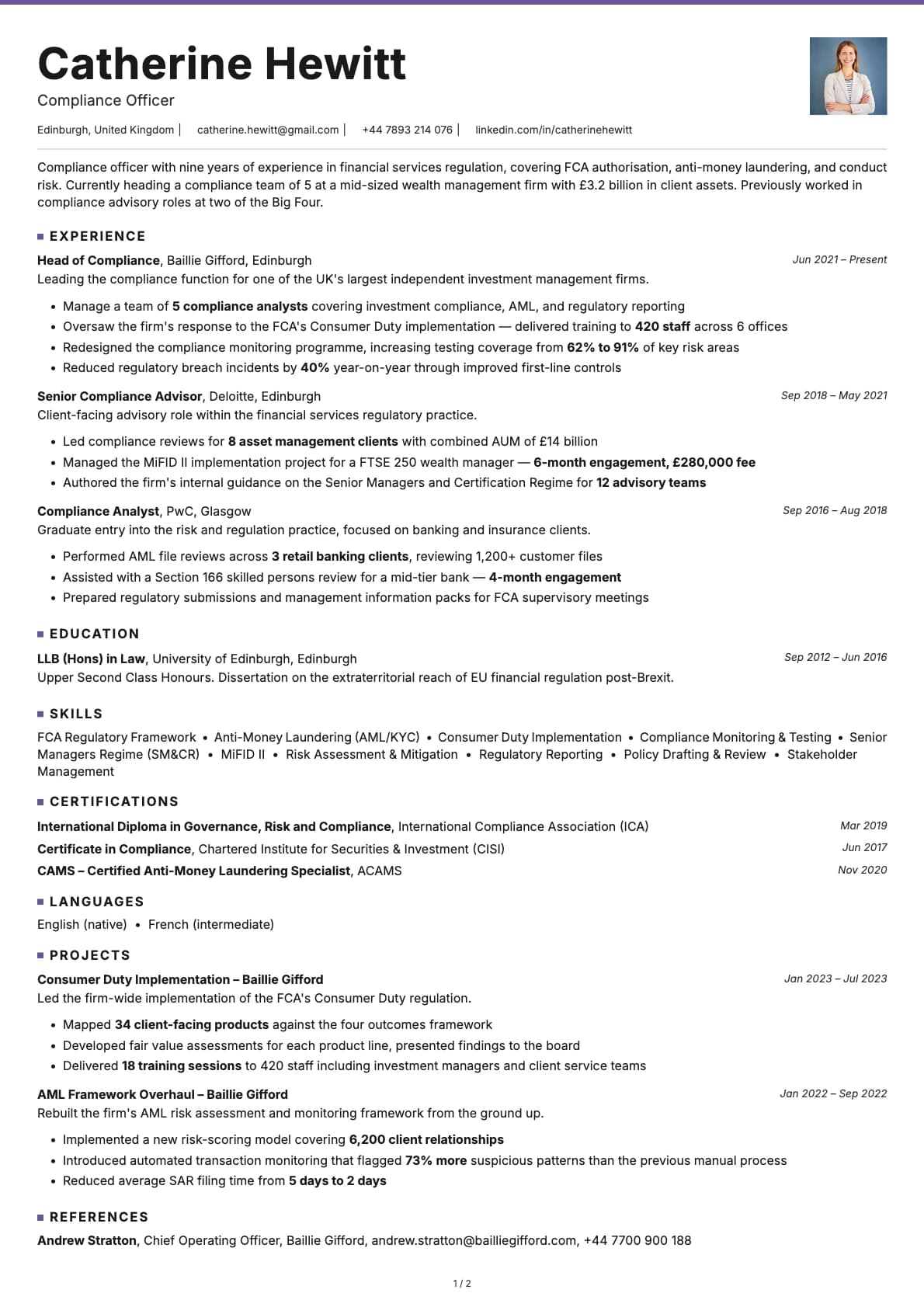
Compliance Officer
A compliance officer resume example with 9 years in financial services regulation at Baillie Gifford, Deloitte, and PwC.
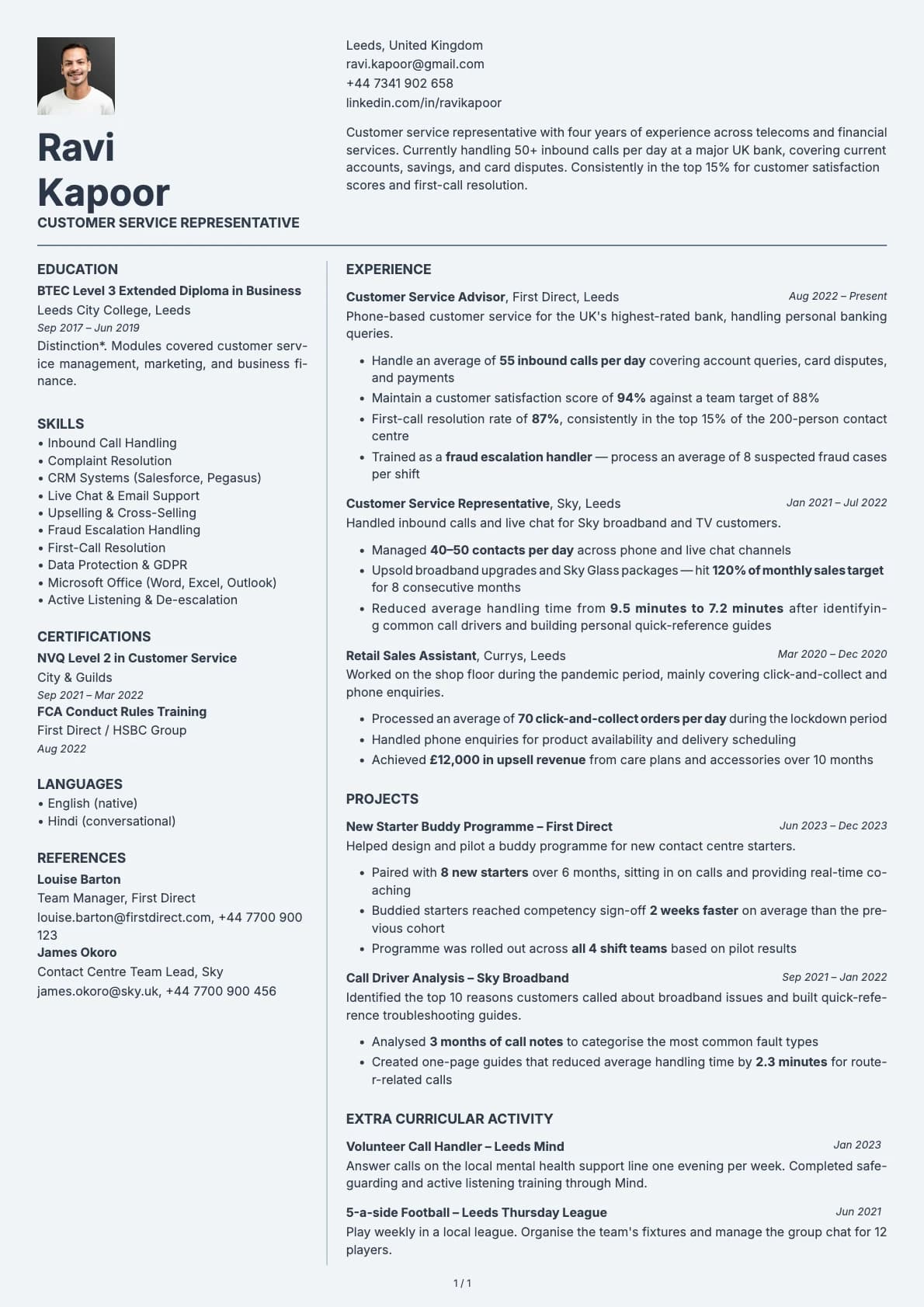
Customer Service Representative
A customer service representative resume example with experience at First Direct and Sky.
Related articles

AI Is Screening Your Resume Before Any Human Sees It
AI screens most resumes before a human ever reads them. 97.4% of Fortune 500 companies run an ATS. This is what that means for you and what you can do about it.

The Best Resume Builders in 2026, Compared Honestly
Resume.io, Zety, Enhancv, Kickresume, Teal, and Laddro compared honestly: real pricing, free tiers, mobile apps, and where each tool wins. All prices checked in September 2026.

Burnout Recovery: A Real Timeline, Not 'Take a Bubble Bath'
55% of the U.S. workforce is burned out. Recovery takes 3 to 12 months. Here's what that actually looks like, stage by stage.