CV Examples That Get Interviews: Before and After, by Role
Real CV examples by role for the UK and Ireland, with before and after bullets, the structure recruiters expect, and the mistakes that get a CV binned.

Laddro Team

Most CVs read like a job description that someone copied and pasted. "Responsible for handling customer queries." "Assisted with monthly reporting." "Duties included stock management." A recruiter in Manchester or Dublin scanning forty applications before lunch reads that and moves on, because it tells them what your old job was, not what you were good at.
The CVs that get shortlisted do one thing differently. They show the result of the work, not the task. That is the whole difference between a CV that gets skimmed and binned and one that earns a call back. Below are before and after examples for five common roles, plus the structure and the rules that UK and Irish employers actually expect in 2026.
What a recruiter reads first
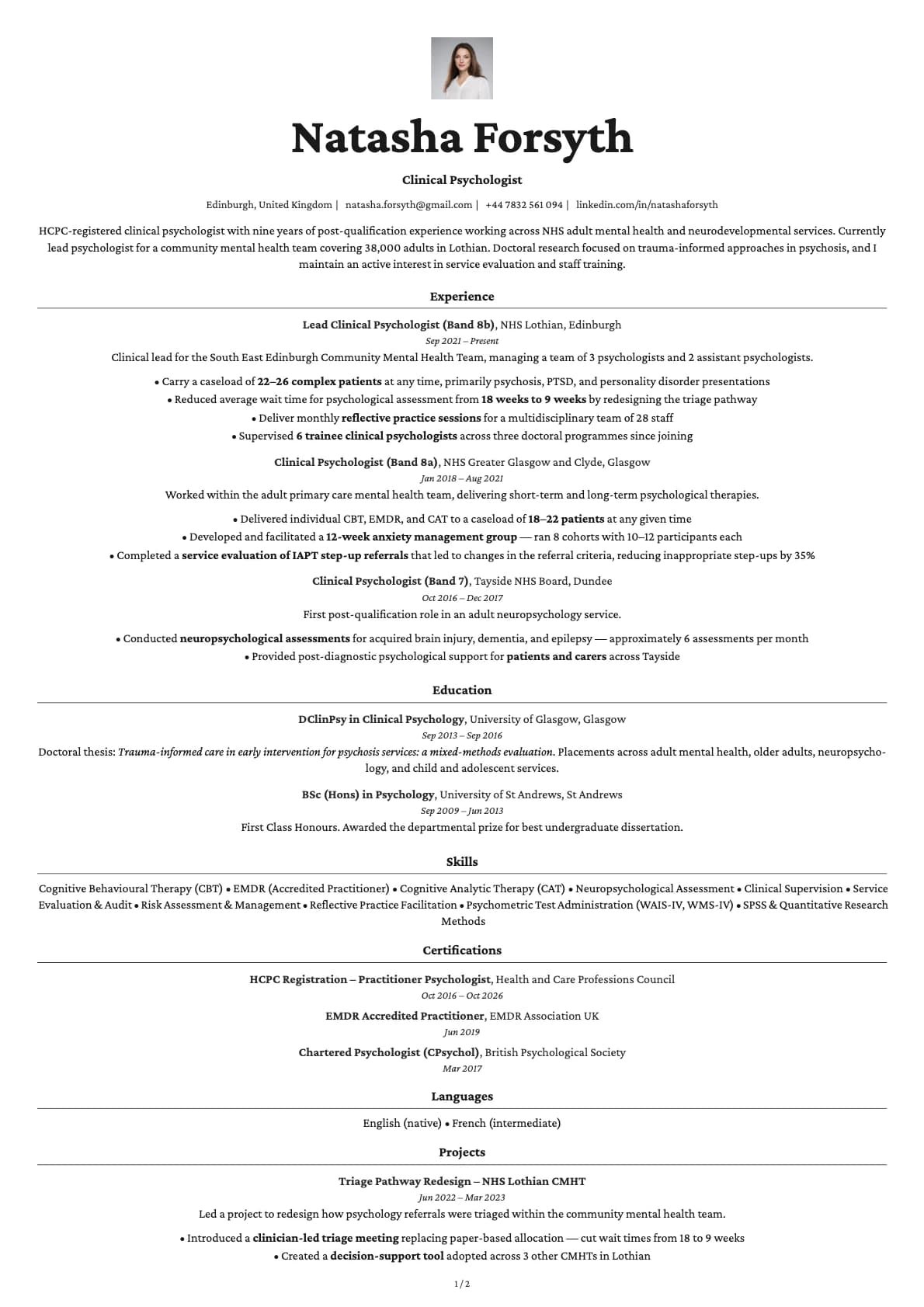
Before we get to the examples, know what you are writing for. The National Careers Service recommends a clear font such as Arial, Calibri or Times New Roman at size 11 or bigger, with headings and bullet points so the page is easy to skim. It also tells you to leave out your age, date of birth, marital status and nationality, and UK and Irish CVs do not carry a photo either, unlike a German or French application.
On length, career service Prospects and most UK guidance land on two A4 pages as the norm. One page can read as thin once you have a few years behind you, and past two pages recruiters tend to stop reading. Reverse chronological order is standard: your most recent role first, working backwards.
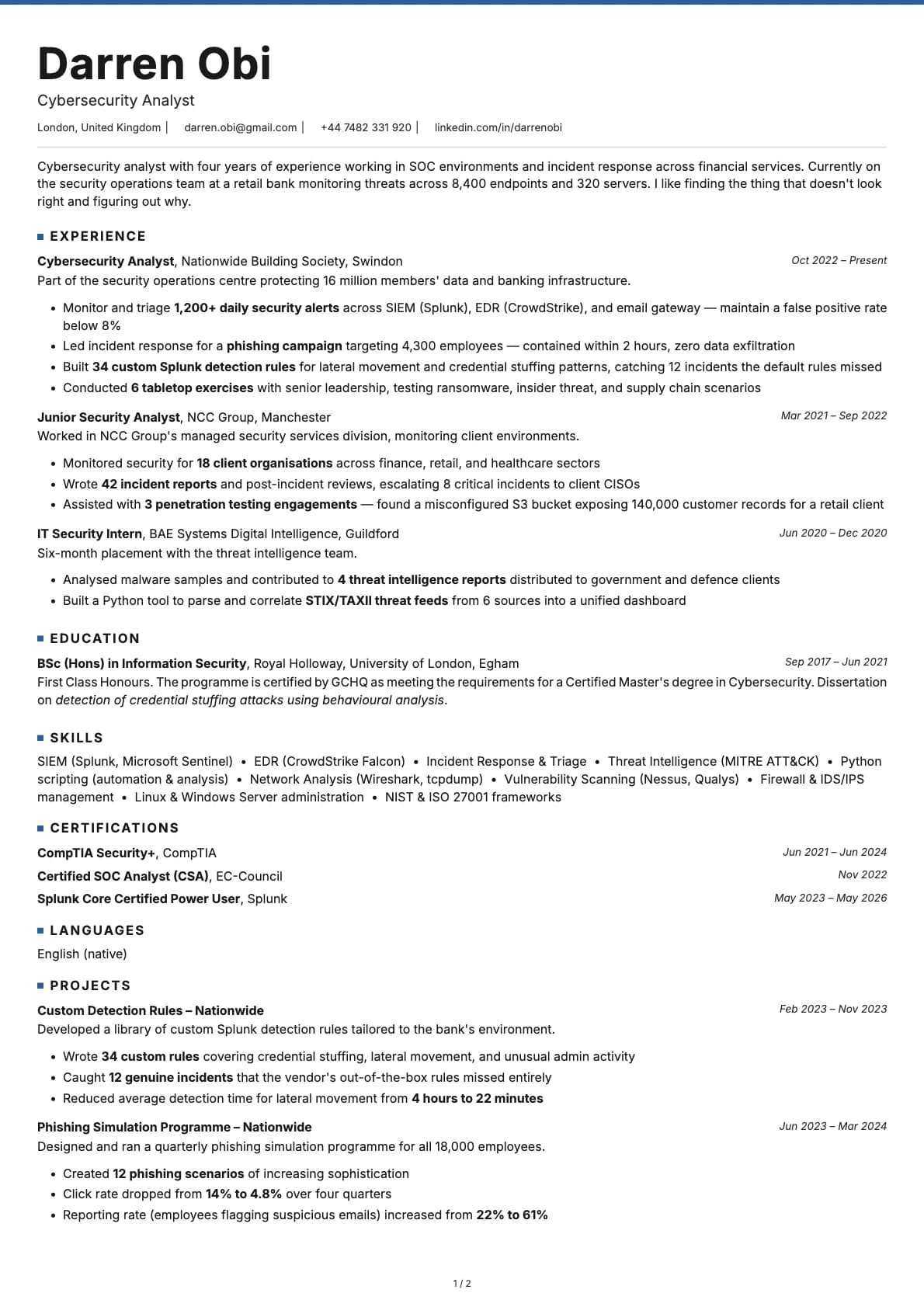
At the top, put a short profile. gradireland describes this as a two or three sentence summary of your experience, key skills and what you are aiming for, tailored to the specific role rather than a generic paragraph you reuse everywhere. Everything under it should back up that opening claim.
The one change that turns a duty into an achievement
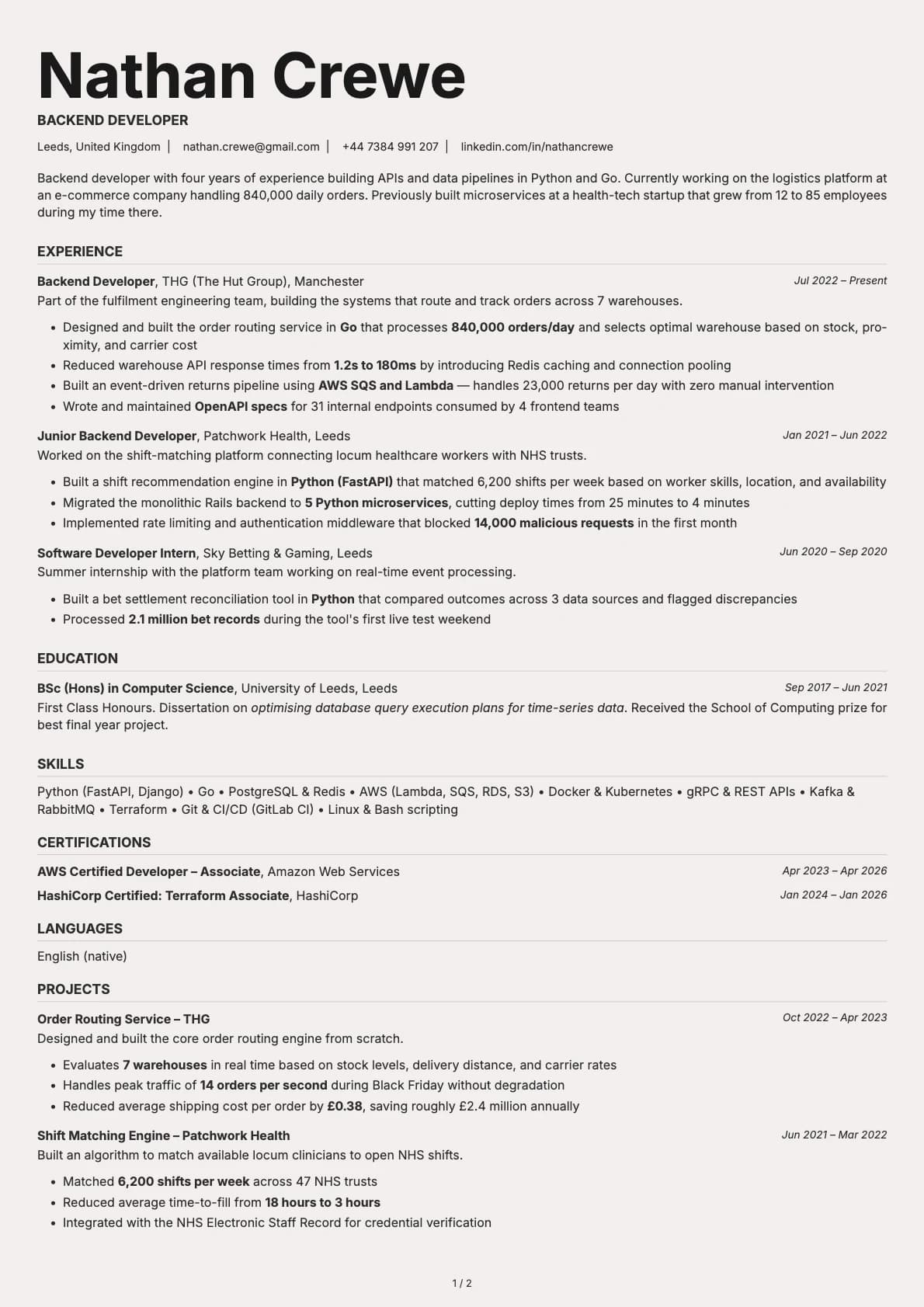
Here is the formula the examples all follow: action verb, then what you did, then the result, with a number wherever you honestly have one. The numbers in the samples below are illustrations. Swap them for your own real figures, because a recruiter can smell a rounded-up guess and any of these can come up in the interview.
Graduate, first job
Before: Completed a final year project on renewable energy. Member of the debating society.
After: Led a five person final year project on solar output forecasting, presenting the findings to a panel of three academics and scoring a First. Ran the university debating society of around 60 members, organising eight events across the year.
If you are a recent graduate in the UK or Ireland, lead with education while it is your strongest card. gradireland advises stating your degree classification plainly, so First Class Honours, 2:1 or 2:2, along with your institution and any relevant modules, placements or projects. A placement at a firm in Cork or a summer job in a Leeds warehouse both count, because they show you can hold a role. Frame them by what you handled, not just that you were there.
Customer service and retail
Before: Responsible for answering customer calls and resolving complaints.
After: Handled around 45 customer calls a day, keeping a 96 per cent satisfaction score, and resolved billing disputes without escalating them to a manager in most cases.
Retail and support roles are where quantifying pays off most, because the work is measurable. Calls per day, satisfaction scores, average handling time, upsell rate. Pull the real numbers from your own reviews or team dashboards. If you never saw a figure, describe the scale instead: a busy Saturday shift, a store doing high street footfall, a queue you cleared single handed.
Sales and account management
Before: Sold products to new and existing customers and met targets.
After: Grew a patch of 30 accounts across the North West, hitting 112 per cent of an annual target of 400,000 pounds, and won back six lapsed clients in one quarter through a structured follow up plan.
Sales CVs live or die on numbers, so this is the one role where you should never write "met targets" without saying which target and by how much. Percentage of quota, revenue figure, deal count, retention rate. If a full year is not flattering, quote a strong quarter and label it as such. Honesty about the window matters, because a hiring manager will ask.
Nursing and healthcare
Before: Duties included patient care and administering medication on a busy ward.
After: Delivered care for up to 8 patients per shift on a 28 bed acute medical ward, led medication rounds in line with NMC standards, and mentored two newly qualified nurses through their first rotation.
Clinical CVs need the specifics that let a matron picture your day: ward type, patient load, specialties, and your registration. State your NMC pin status clearly for UK roles or NMBI registration for Ireland, because it is the first thing they check. Mandatory training, audits you took part in and any mentoring all belong here, framed as things you did rather than boxes you ticked.
Software developer
Before: Worked on the company website and fixed bugs.
After: Built and shipped three customer facing features on a React and Node stack used by roughly 12,000 monthly users, and cut page load time on the checkout by about a third by reworking how data was fetched.
Technical CVs still need results, not just a wall of technologies. Name the stack, but attach it to something that shipped and mattered. Users served, load time cut, incidents reduced, a release you owned. A GitHub link or a live project does more than any adjective, so include one if you can. Job boards like Indeed UK and LinkedIn increasingly parse the exact tech names, so write React, not "modern JavaScript frameworks", if React is what you used.
Career changer
Before: Various roles in hospitality before moving into administration.
After: Ran front of house at a 90 cover restaurant, coordinating a team of six under pressure, then moved into an office role where I rebuilt the booking spreadsheet into a system that cut double bookings to near zero.
Changing fields is where the achievement framing rescues you. Nobody cares that your last job was in a different sector if you show the transferable result. Coordinating people, handling money, hitting deadlines, fixing a broken process. Pull those threads out of your old roles and connect them to the job you want now. A short line in your profile naming the switch, so a recruiter is not left guessing, saves you the awkward phone screen where they ask why a chef is applying.
The mistakes that get a good CV binned
Even strong content gets sunk by a few avoidable things. A generic profile reused across every application reads as effort you did not make. A wall of unbroken text loses the skim reader in seconds. Sending a Word file when the formatting shifts on the employer's machine is a needless risk, so export to PDF unless a specific job asks for Word. Typos in the first two lines end the read before it starts, so proofread the top of the page hardest.
One more that catches people out: the CV that never mentions the role it is aimed at. Reed, Totaljobs and Indeed UK all let employers filter by keyword, and a lot of larger firms run applications through screening software first. If the advert asks for stock control and you did stock control, use those words. Do not disguise them behind something clever.
Put it together
A CV that gets interviews is not a longer CV or a prettier one. It is one where every line answers the question a recruiter is silently asking: so what did that get you? Take your current CV, find the five weakest "responsible for" lines, and rewrite each one as an action, a task and a result. That single pass is usually the difference between silence and a call from a number you do not recognise.
When you are ready to build it properly, create your CV for free with Laddro. Pick a clean, recruiter friendly layout, and browse resume examples by industry to see how strong bullets read in your field.