Cybersecurity Analyst Resume Example
A cybersecurity analyst resume example with SOC experience at Nationwide and NCC Group.

Laddro Team
Free to use. No account needed to start.
Free to use. No account needed to start.
Overview
Cybersecurity analyst resumes have a unique problem. The work is often confidential. You cannot name the vulnerability you found, the threat actor you tracked, or the exact system you defended. But you still need to convince a hiring manager that you are good at your job.
This resume belongs to a cybersecurity analyst with four years of experience across financial services and managed security services. He currently works in the SOC at Nationwide Building Society, monitoring 8,400 endpoints and 320 servers. Before that, he was at NCC Group covering 18 client organisations. The resume is specific without revealing anything sensitive. Alert volumes, detection rules written, incident response times, phishing simulation results. All quantifiable, all safe to share.
Your summary: scope and environment
A cybersecurity analyst summary should tell the reader what kind of environment you work in, what you protect, and how long you have been doing it.
Here is this resume's summary:
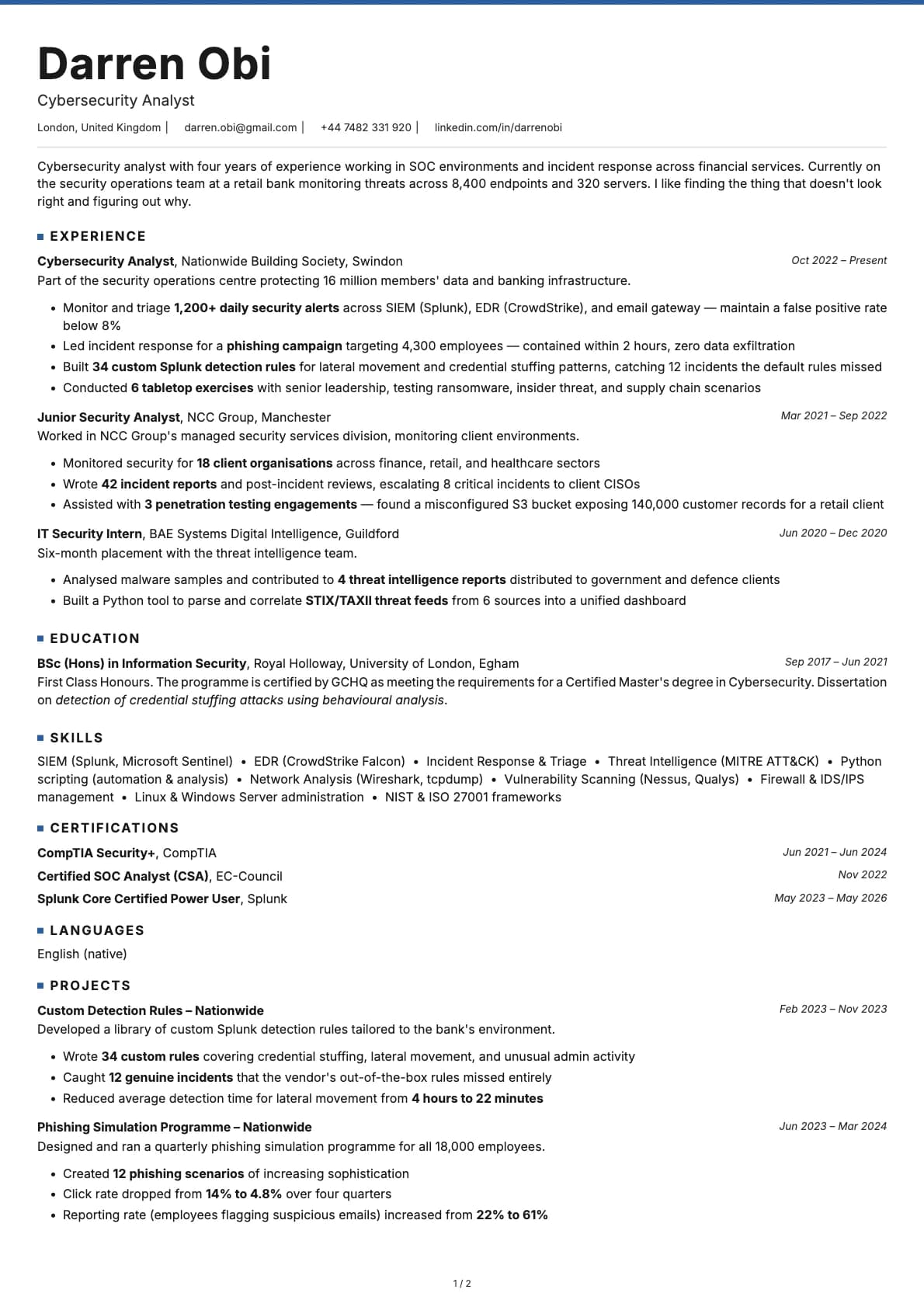
Cybersecurity analyst with four years of experience working in SOC environments and incident response across financial services. Currently on the security operations team at a retail bank monitoring threats across 8,400 endpoints and 320 servers.
Two sentences. The reader knows: this is a SOC analyst, in financial services, responsible for a large environment. The endpoint and server count is a smart detail. It immediately communicates scale without revealing anything confidential.
For yours: Name the type of environment (SOC, MSSP, in-house), the industry, and the scale of what you monitor. Endpoint counts, server counts, and user numbers are all fair game.
Writing experience bullets when the work is classified
You cannot always name the threat you stopped or the vulnerability you patched. But you can describe the volume, speed, and impact of your work.
Look at these bullets:
"Monitor and triage 1,200+ daily security alerts across SIEM (Splunk), EDR (CrowdStrike), and email gateway, maintain a false positive rate below 8%"
This tells the reader three things: the volume of alerts this person handles, the tools they use, and their accuracy rate. That is a complete picture of daily SOC work without any sensitive details.
"Led incident response for a phishing campaign targeting 4,300 employees, contained within 2 hours, zero data exfiltration"
An incident response bullet should always include: what the incident was, how fast it was contained, and what the outcome was. "Contained within 2 hours, zero data exfiltration" is the kind of line that makes a hiring manager pay attention.
The pattern: Volume of work + tools used + speed or accuracy metric. Apply this to every bullet.
Detection engineering is a differentiator
One section of this resume really stands out:
"Built 34 custom Splunk detection rules for lateral movement and credential stuffing patterns, catching 12 incidents the default rules missed"
This is not just monitoring. This is building things. Detection engineering is increasingly valued in security teams, and if you have written custom rules, queries, or automation, put it front and centre. The detail about catching 12 incidents the default rules missed proves the rules actually work. That is the kind of measurable impact most security analysts struggle to show.
If you are earlier in your career and have not written detection rules yet, you can still show analytical thinking. The NCC Group role on this resume mentions finding a misconfigured S3 bucket exposing 140,000 customer records during a penetration test. That is a concrete finding with a real impact.
Certifications: the right ones matter
Cybersecurity is one of the few fields where certifications genuinely influence hiring decisions. This resume includes three:
- CompTIA Security+ (the entry-level standard)
- Certified SOC Analyst from EC-Council
- Splunk Core Certified Power User
Notice they are all relevant to the actual work described in the resume. The Splunk cert matches the SIEM tool used at Nationwide. The SOC Analyst cert matches the job function. There are no random certifications just to pad the list.
If you are building your cert roadmap, start with Security+ or CySA+, then get certified in the specific tools you use daily (Splunk, CrowdStrike, Microsoft Sentinel). After that, consider GIAC certifications if you want to move into more specialised roles.
Projects: phishing simulations and training
The phishing simulation programme on this resume is excellent:
"Click rate dropped from 14% to 4.8% over four quarters"
"Reporting rate increased from 22% to 61%"
Security awareness work is often seen as less technical than threat hunting or incident response. But it is measurable, it reduces real risk, and it shows the analyst can communicate with non-technical people. If you have run phishing tests, security training, or tabletop exercises, include the numbers.
Mistakes that weaken security resumes
Listing every tool you have ever used. A skills section with 25 tools suggests you are a generalist who is not deep in any of them. Pick the 8-10 tools you use daily and group them logically: SIEM, EDR, network analysis, scripting, frameworks.
No incident numbers. "Performed incident response" is too vague. How many incidents? How fast was containment? What was the outcome? Every IR bullet needs at least one number.
Forgetting the frameworks. If you work within NIST, ISO 27001, or MITRE ATT&CK, list them. These are keyword matches that ATS systems scan for, and they show you understand structured security practices.
Using a template with sidebars or graphics. Many security-focused companies use ATS systems that struggle with multi-column layouts. This resume uses Graphite, a clean single-column template. For security roles, keep the format simple and let the content do the work.
One last thing
Cybersecurity hiring managers often look for evidence of genuine curiosity about the field. CTF competitions, personal labs, open-source contributions, or NCSC volunteering (like on this resume) all signal someone who does this work because they find it interesting, not just because it pays well. If you have anything like that, include it.
Build your own version
Open this layout in the builder and swap in your own details. It takes a few minutes.
Free to use. No account needed to start.
Was this resume example helpful?
Rate this example to help us create better content for you.
4.8 average from 109 ratingsRelated resume examples
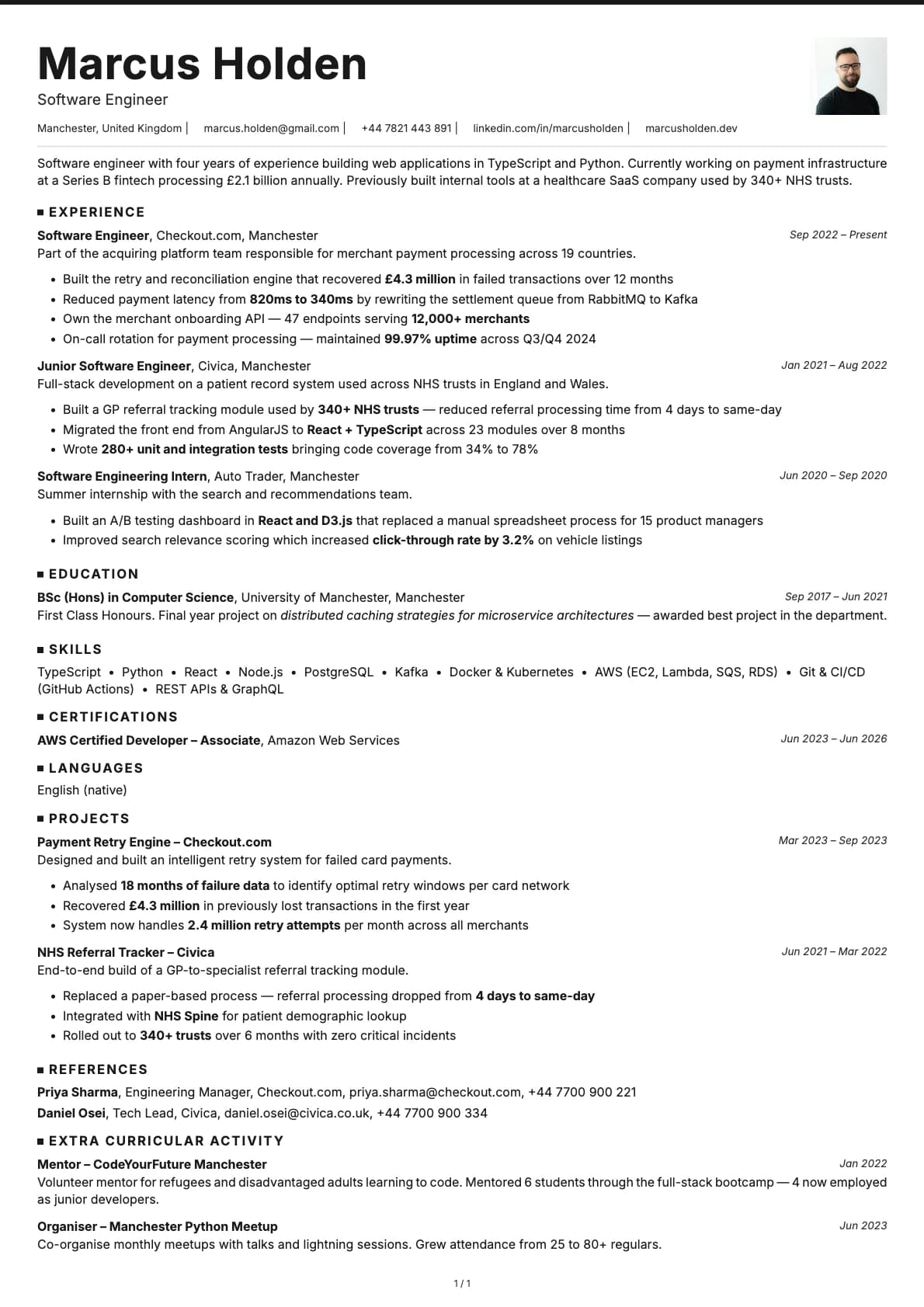
Software Engineer
A software engineer resume example with practical tips on how to write your tech stack, quantify your impact, and get past ATS screening.
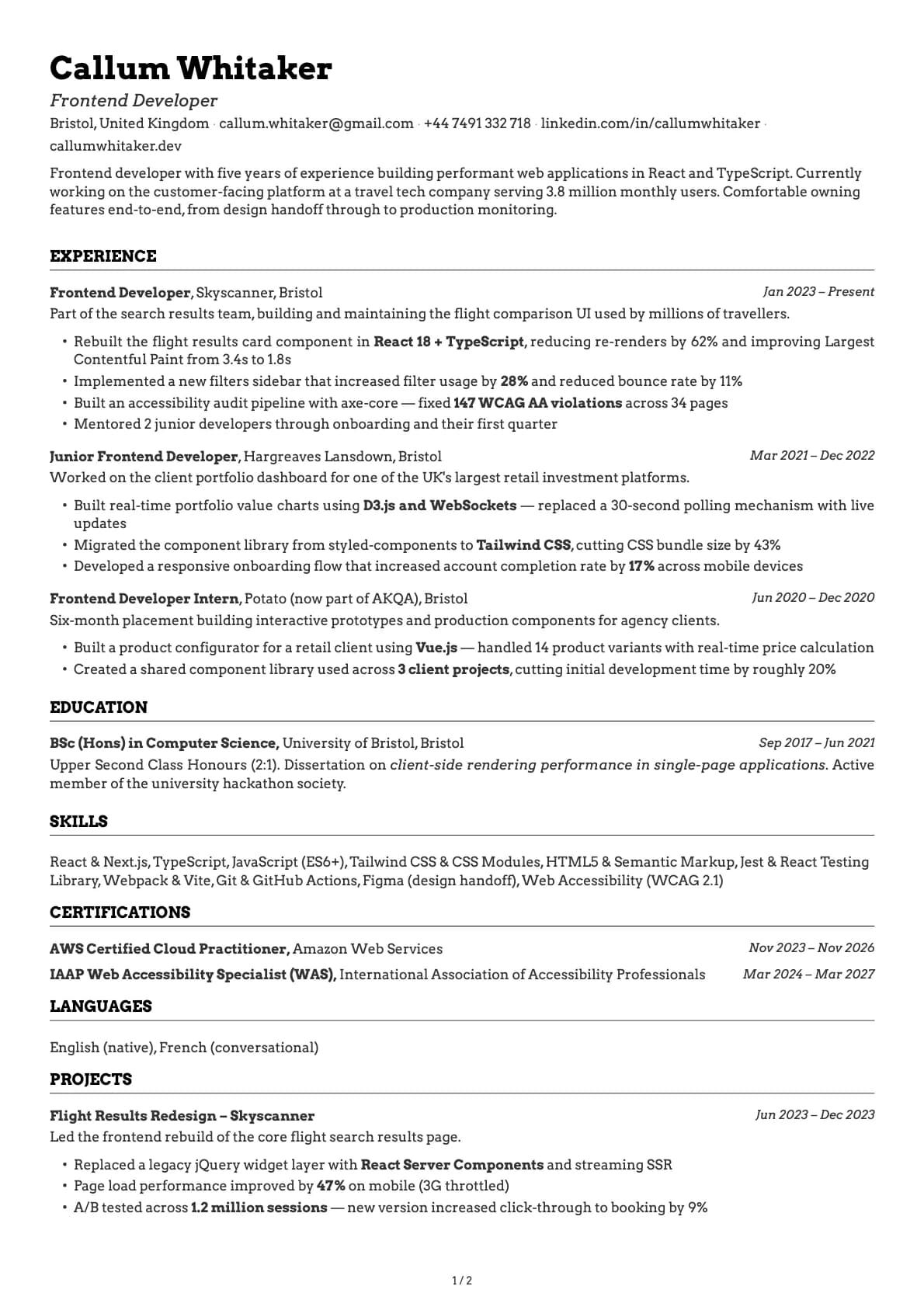
Frontend Developer
A frontend developer resume example with React and TypeScript experience at Skyscanner and Hargreaves Lansdown.
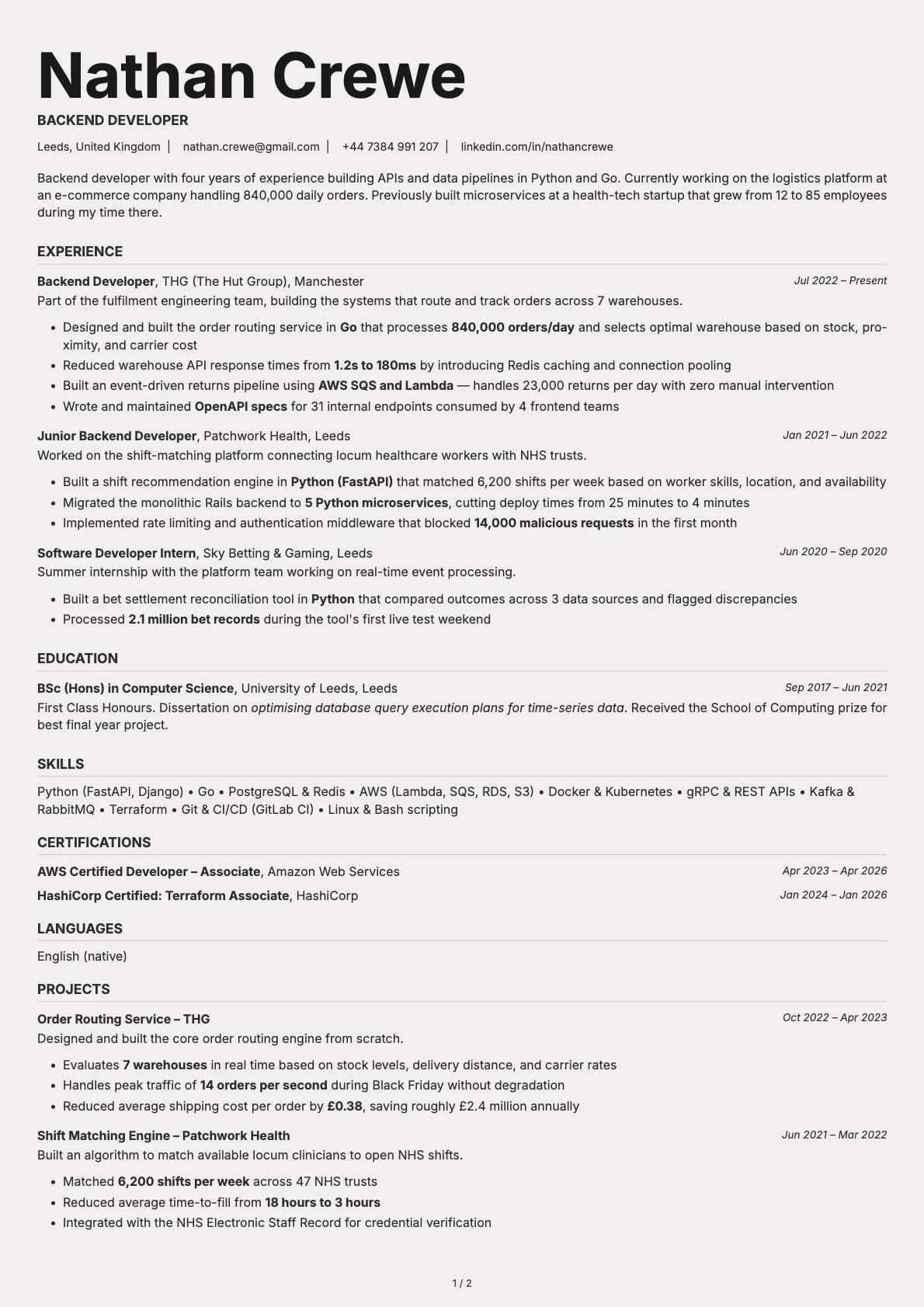
Backend Developer
A backend developer resume example with Go and Python experience, system throughput numbers, and infrastructure projects across e-commerce and health-tech.
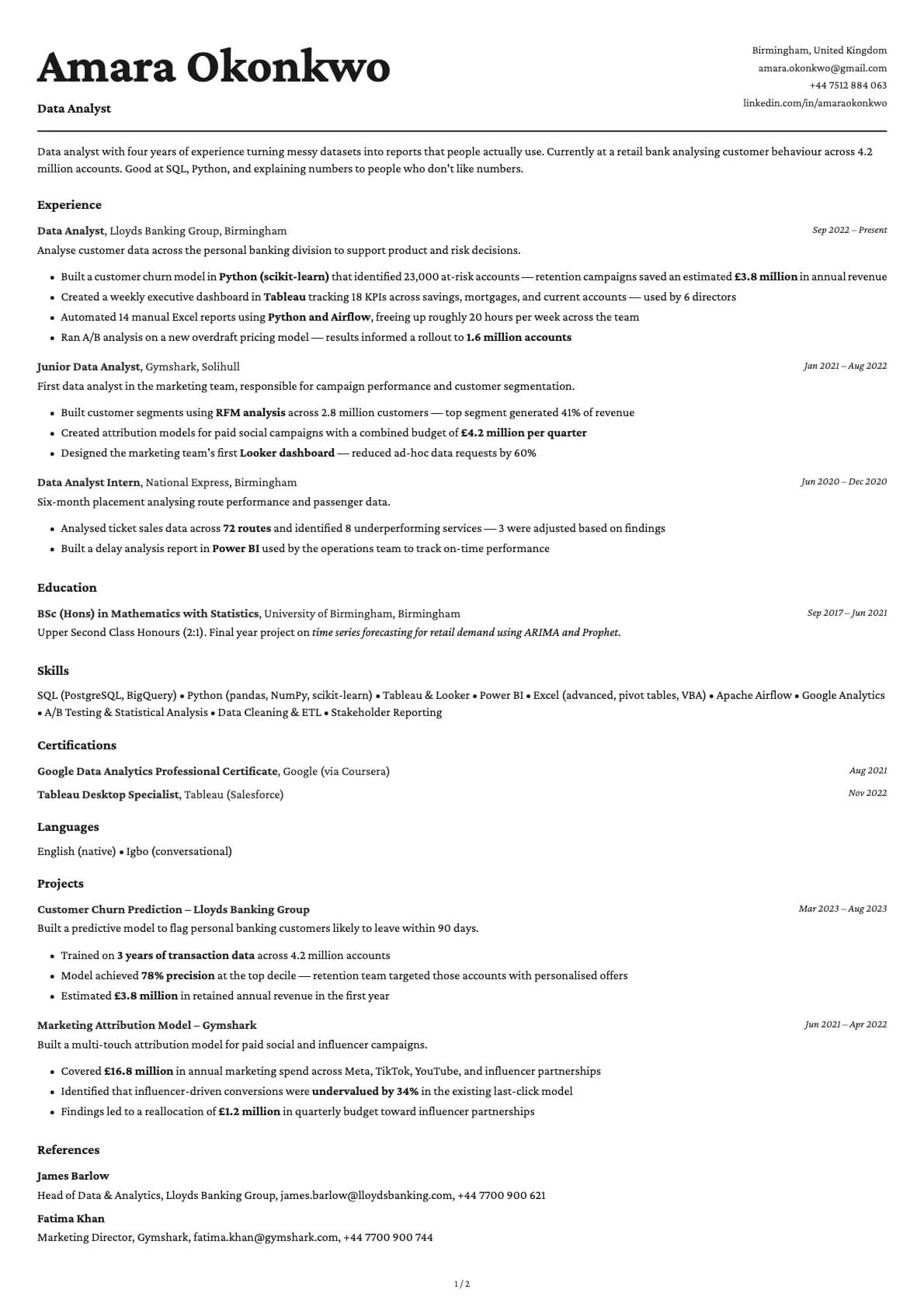
Data Analyst
A data analyst resume example with experience at Lloyds Banking Group and Gymshark.
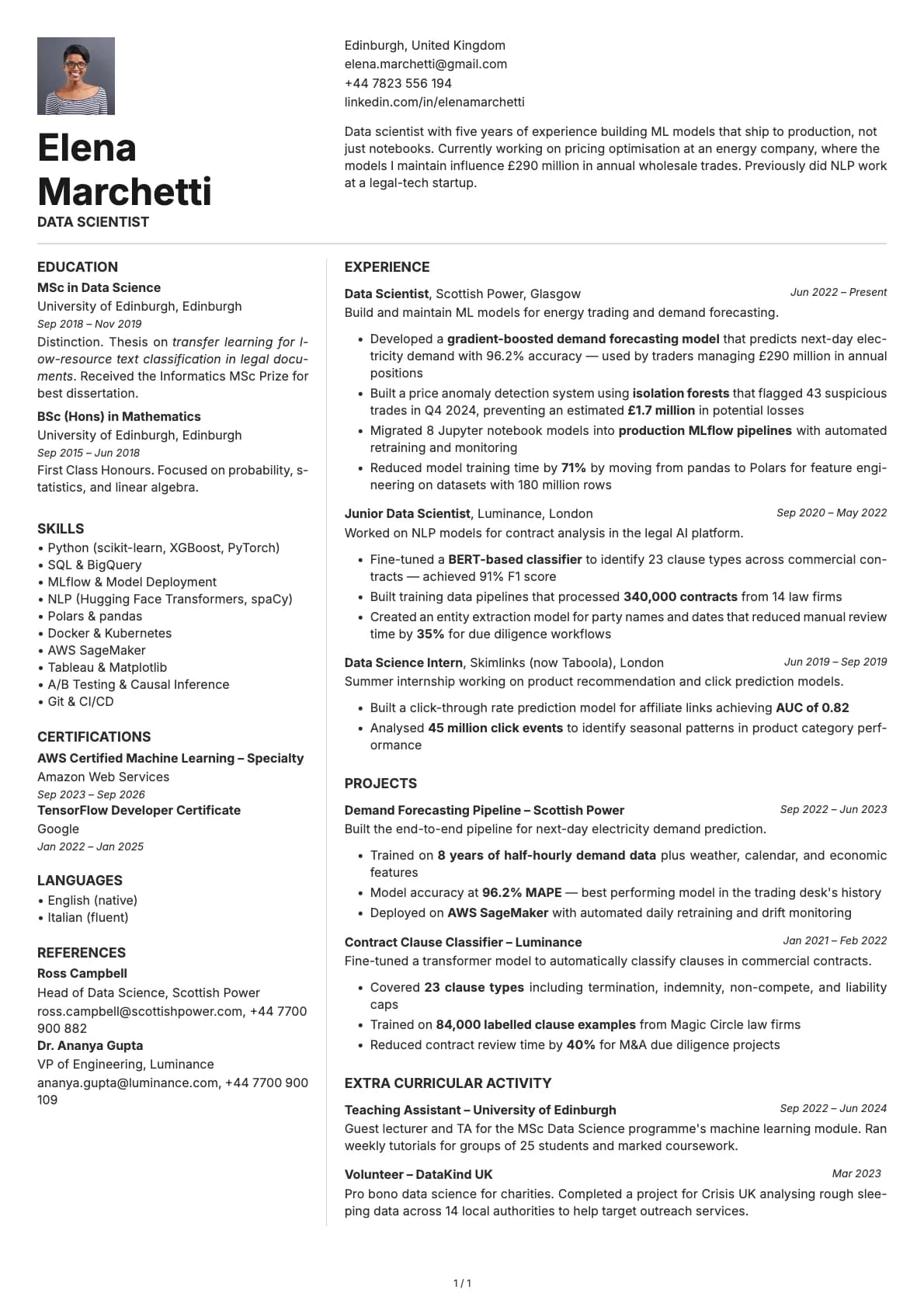
Data Scientist
A data scientist resume example with ML production experience at Scottish Power and NLP work at Luminance.
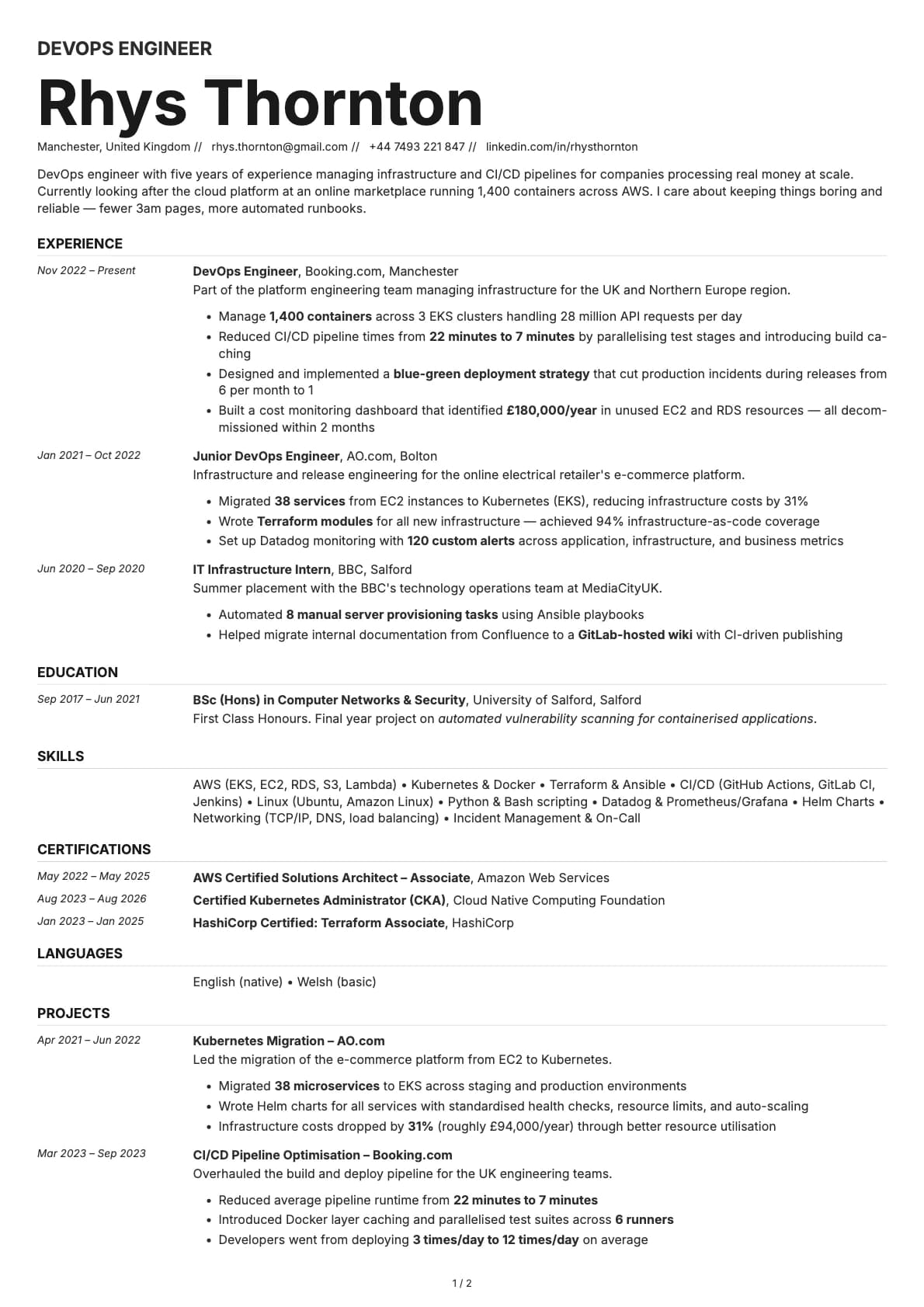
DevOps Engineer
A DevOps engineer resume example with infrastructure experience at Booking.com and AO.com.
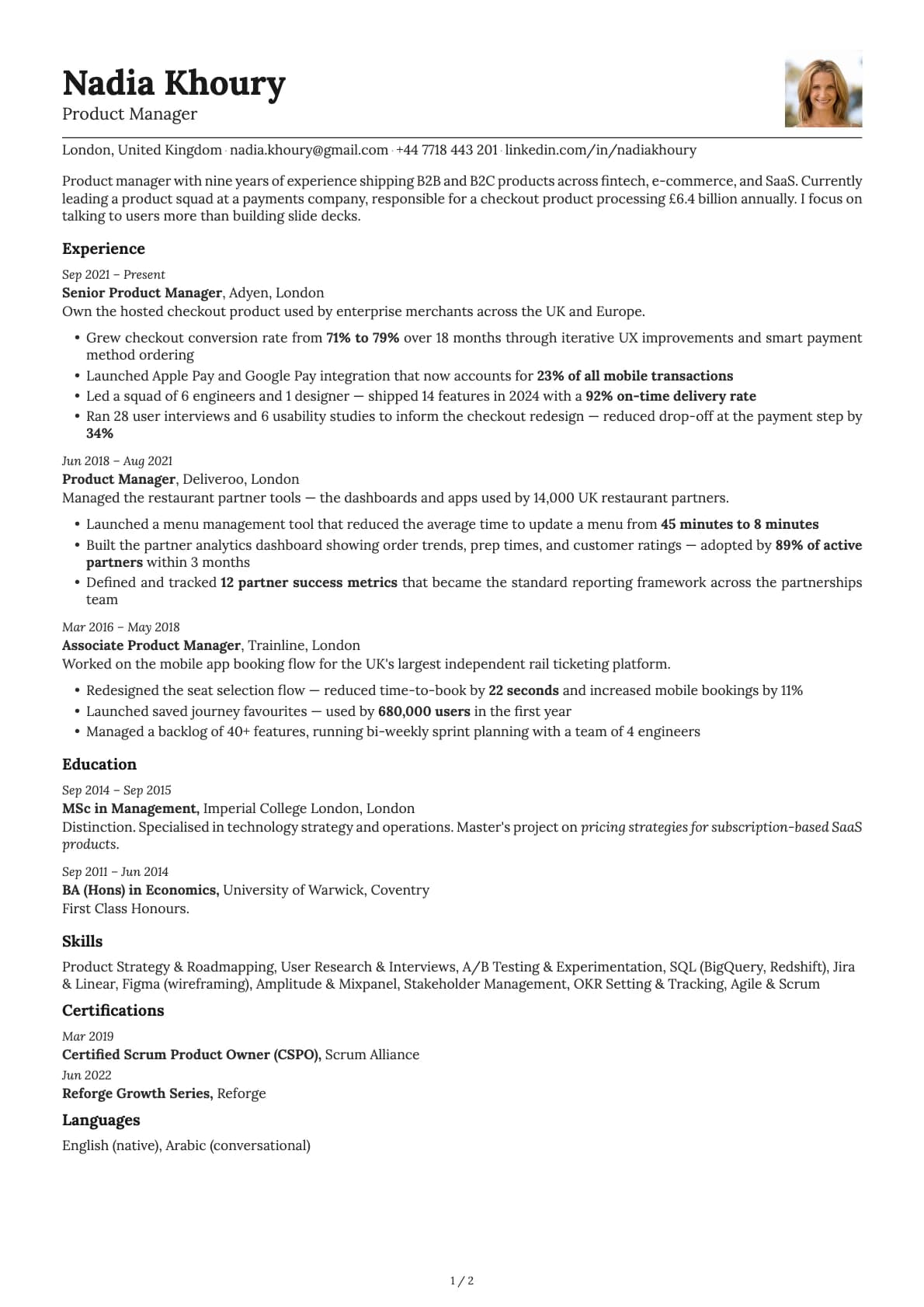
Product Manager
A product manager resume example showing how to present user research, conversion metrics, and feature launches with real business outcomes.
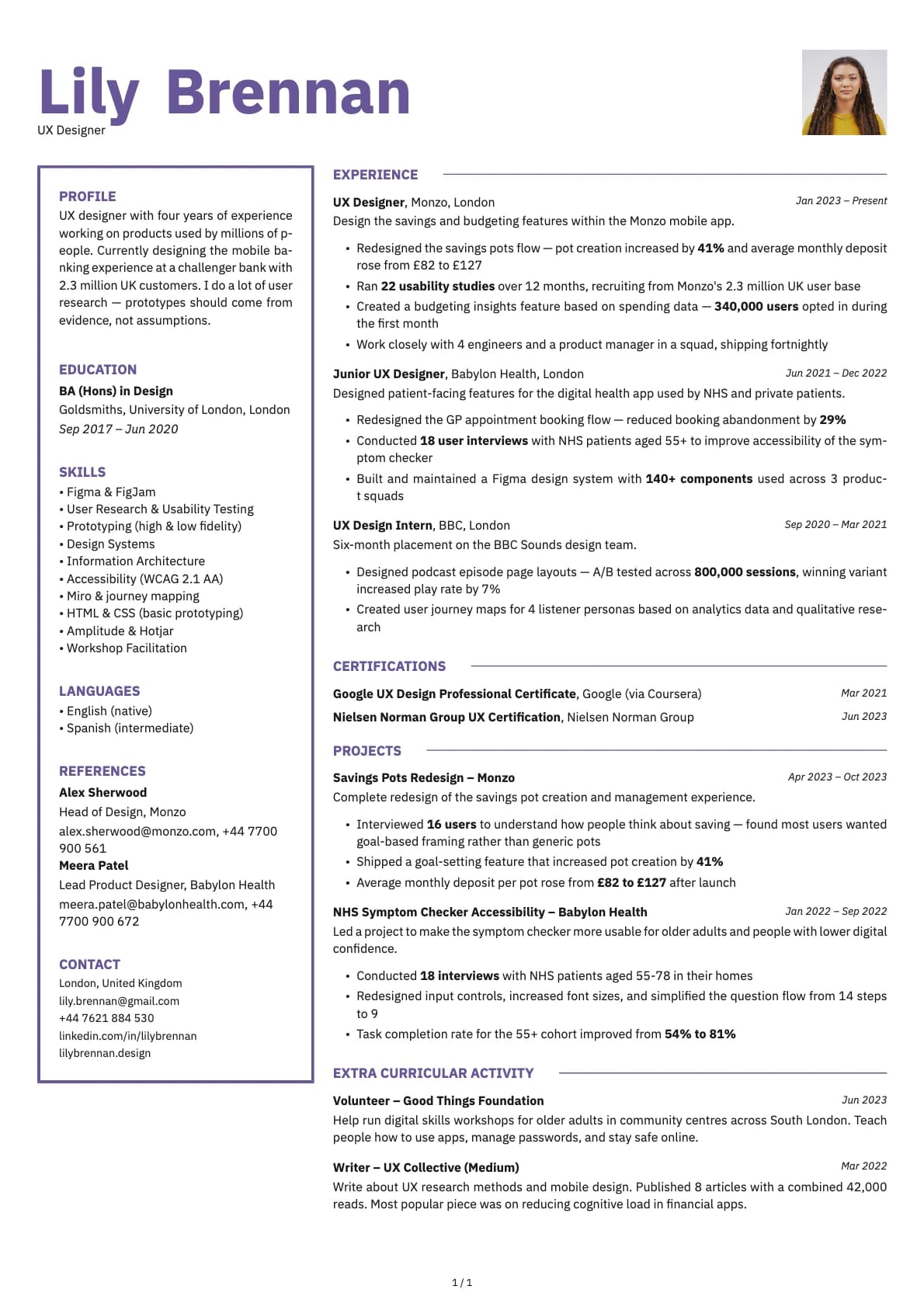
UX Designer
A UX designer resume example with 4 years of product design experience at Monzo and Babylon Health.
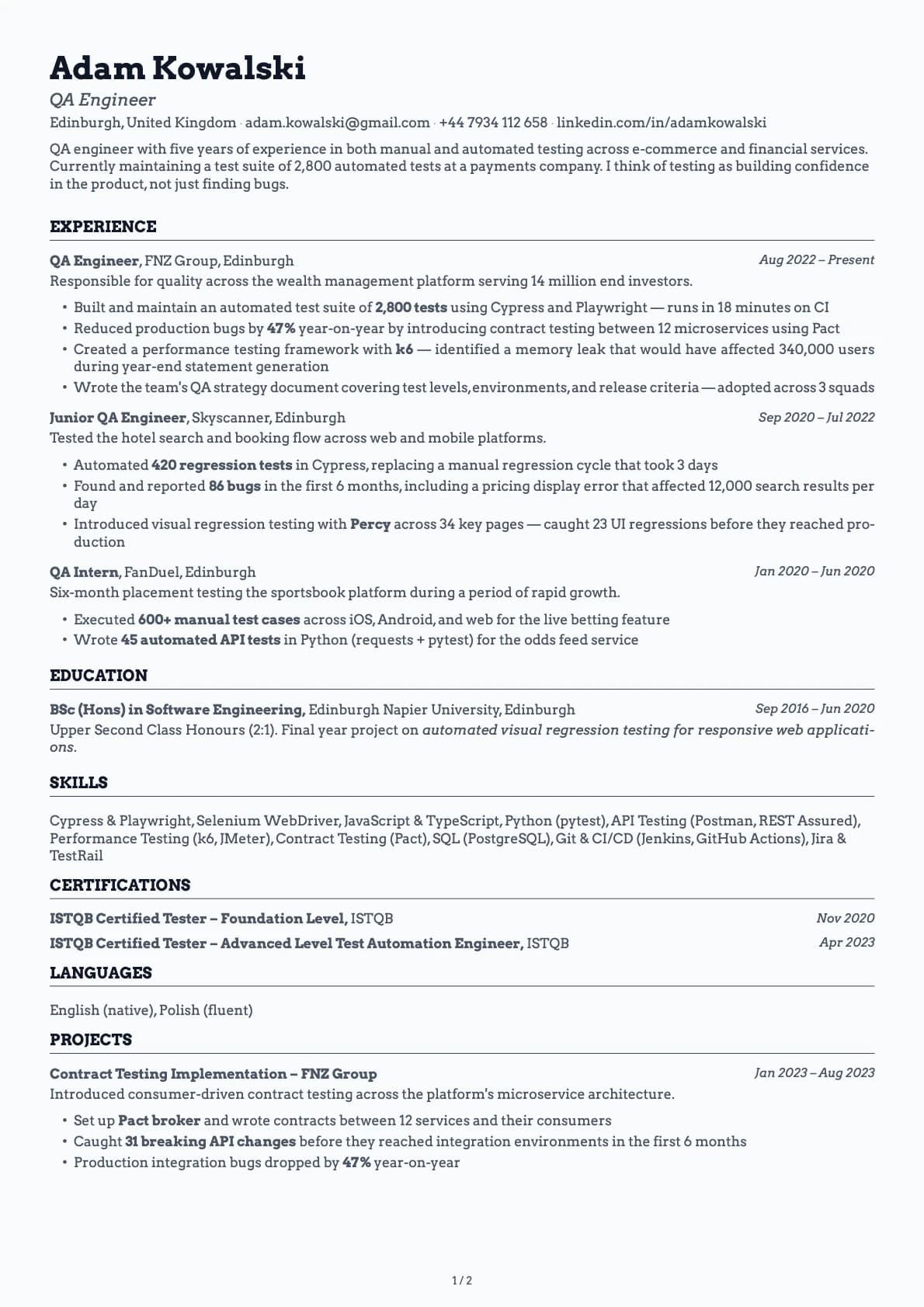
QA Engineer
A QA engineer resume example with automated test suite numbers, production bug reduction, and contract testing implementation details.
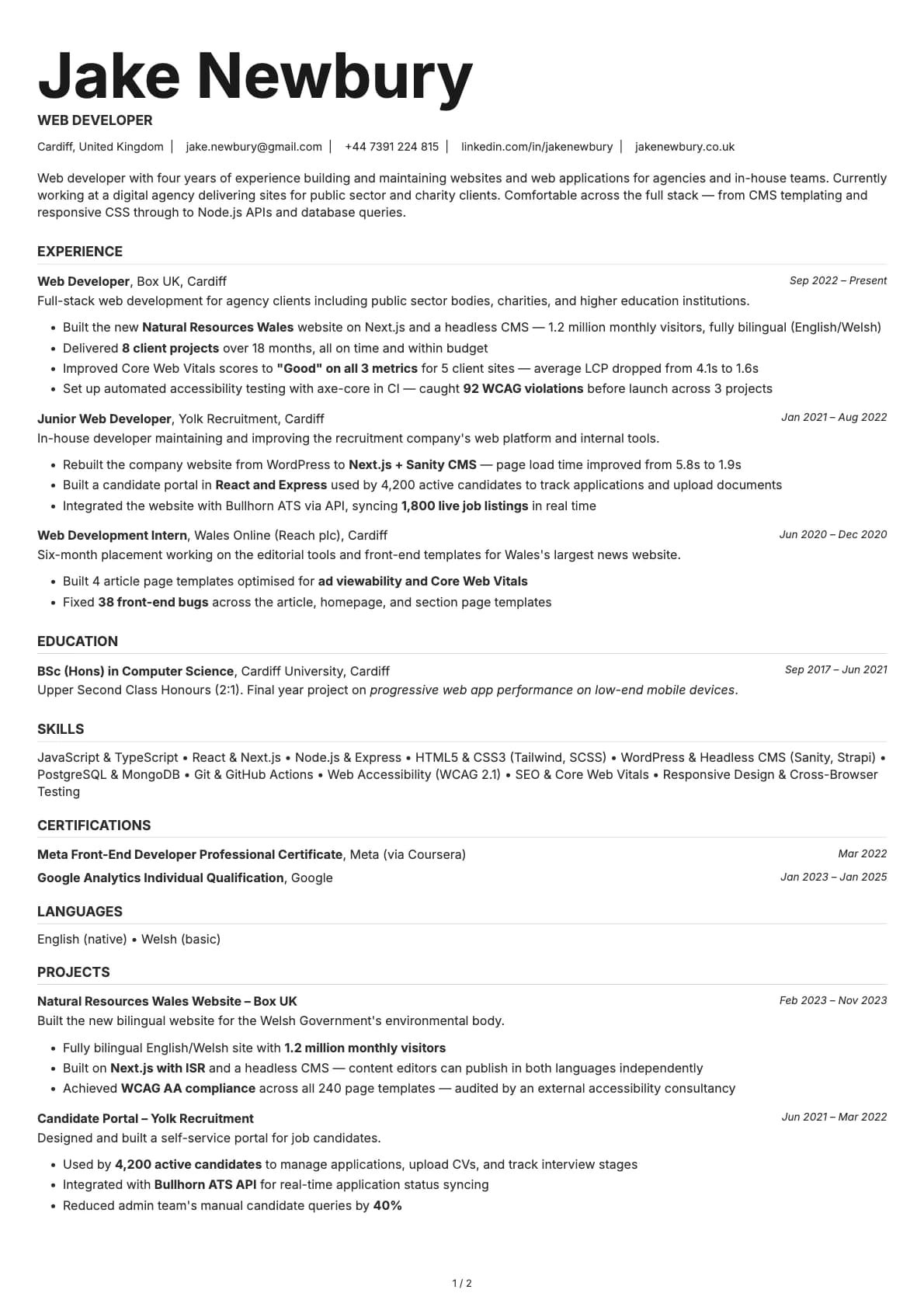
Web Developer
A web developer resume example with agency and in-house experience building Next.js sites, improving Core Web Vitals, and delivering accessible public.
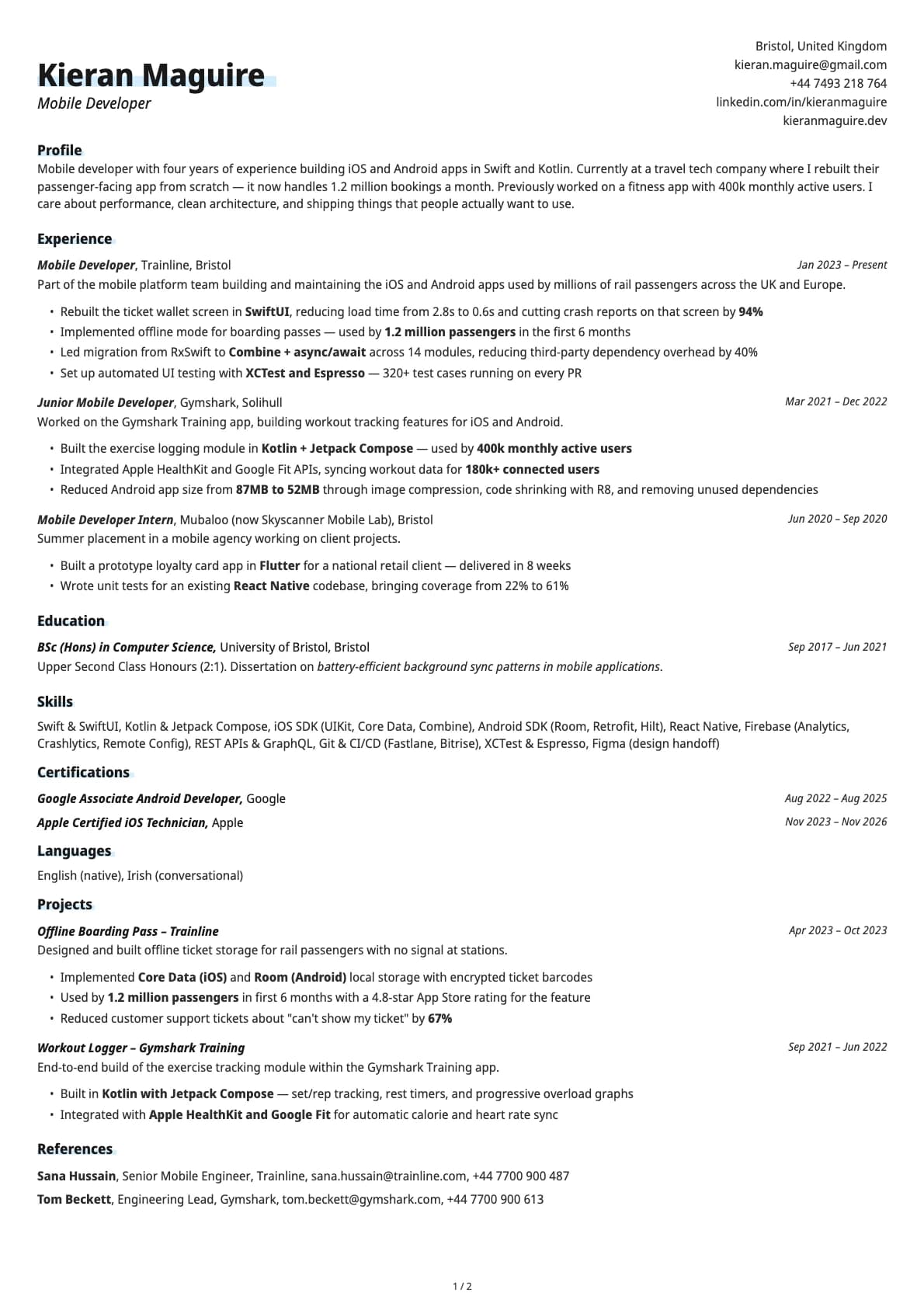
Mobile Developer
A mobile developer resume example with iOS and Android experience, performance metrics, and real app user numbers.
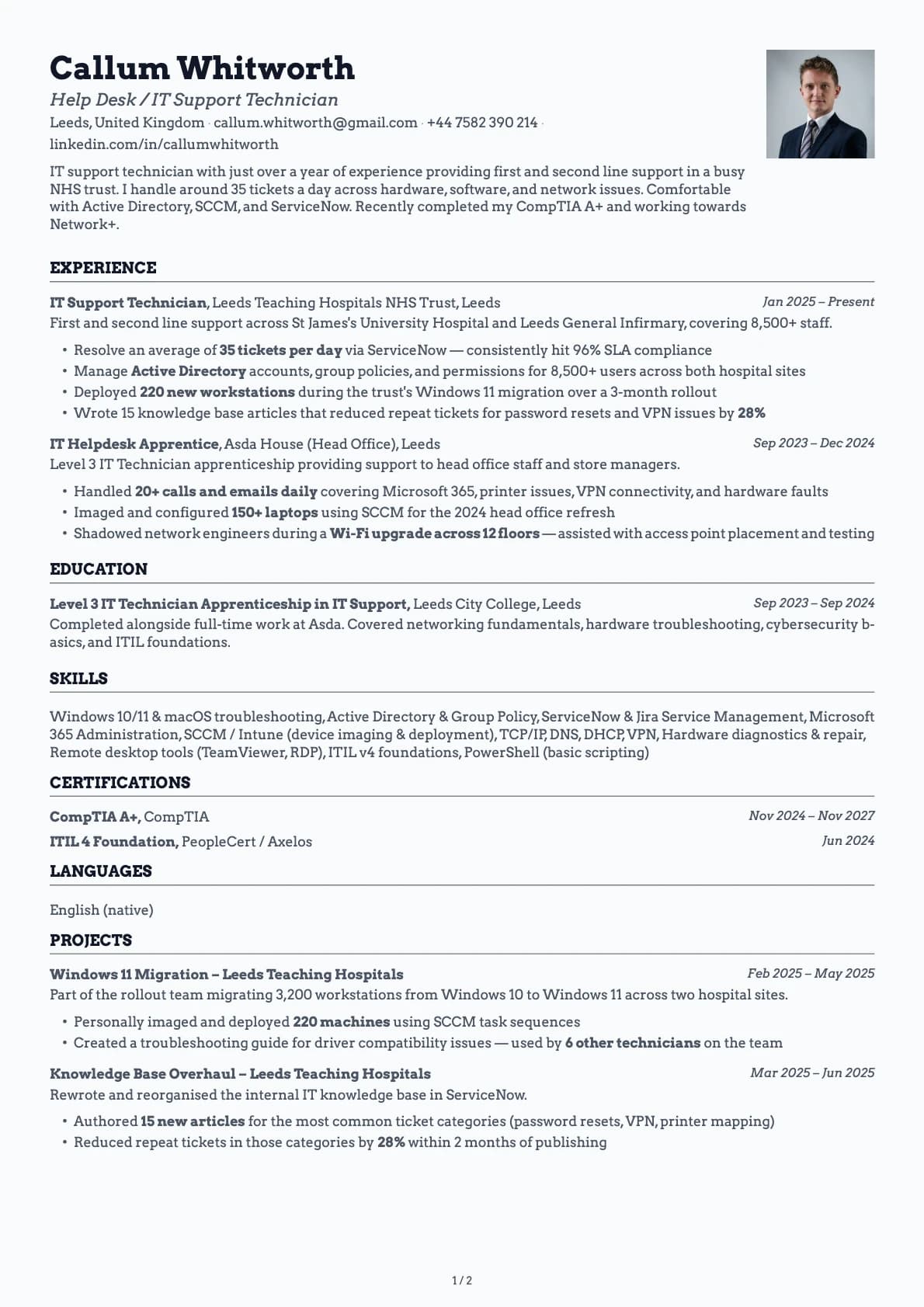
Help Desk / IT Support Technician
A help desk technician resume example with NHS IT support experience.
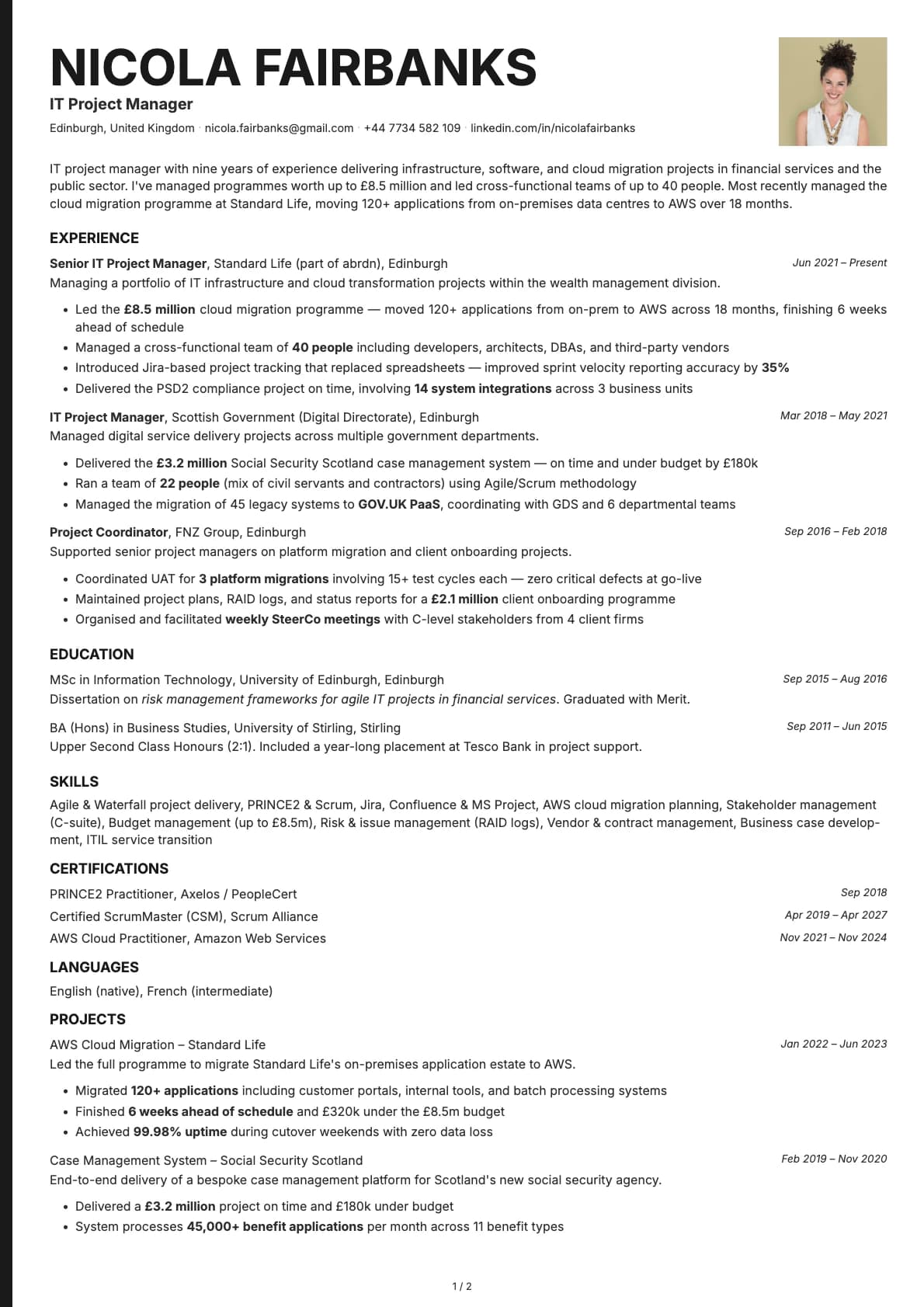
IT Project Manager
An IT project manager resume example with cloud migration, programme budgets up to £8.5 million, and PRINCE2/Scrum certifications.
Related articles

AI Is Screening Your Resume Before Any Human Sees It
AI screens most resumes before a human ever reads them. 97.4% of Fortune 500 companies run an ATS. This is what that means for you and what you can do about it.

ATS Resume Checker: How to Format a CV That Gets Past the Filters
Run the free copy and paste test to see what an ATS actually reads on your CV, then fix the tables, columns and headings that quietly get you filtered out.

The Best Resume Builders in 2026, Compared Honestly
Resume.io, Zety, Enhancv, Kickresume, Teal, and Laddro compared honestly: real pricing, free tiers, mobile apps, and where each tool wins. All prices checked in September 2026.