Bartender Cover Letter Example
A bartender cover letter example that showcases mixology expertise, outstanding customer service, and fast-paced bar experience.
Free to use. No account needed to start.
Free to use. No account needed to start.
Overview
Bartender cover letters are uncommon. Most bartending jobs are filled through walk-ins, referrals, or a quick trial shift. But when you are applying to a destination bar, a distillery, or a cocktail-focused venue, a cover letter gives you a chance to show that you are more than just fast hands behind the bar.
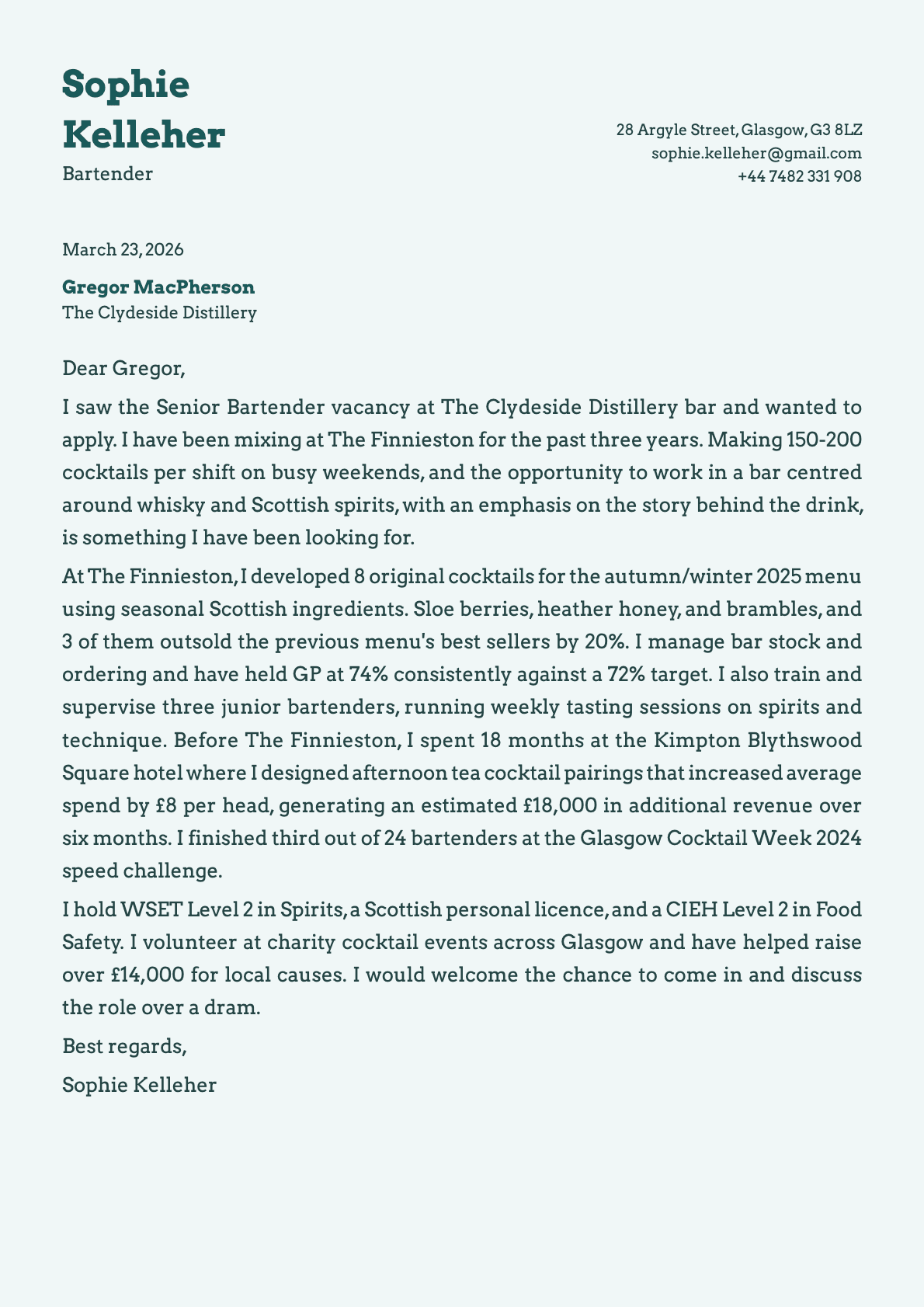
This cover letter is from Sophie Kelleher, a bartender at The Finnieston in Glasgow, applying for a Senior Bartender role at The Clydeside Distillery. Let us look at what makes it effective.
Opening with volume and intention
Sophie opens with her current venue and her output: 150-200 cocktails per shift on busy weekends. That number immediately tells the reader she can handle high-volume service. But the second part of the opening is what makes it interesting. She explains that the opportunity to work in a bar centred around whisky and Scottish spirits, with an emphasis on the story behind the drink, is what she has been looking for.
That tells the hiring manager something important: Sophie is not just looking for any bartending job. She is looking for this specific one because it aligns with her interests. For specialty venues like distillery bars, that kind of genuine interest matters a lot.
When writing your bartender cover letter, lead with your current venue and your service volume. Then explain what draws you to the specific bar or venue you are applying to. Generic enthusiasm will not stand out. Specific interest will.
Menu development shows creativity
Sophie developed 8 original cocktails for the autumn/winter 2025 menu using seasonal Scottish ingredients. Three of them outsold the previous menu's best sellers by 20%. This is not just creativity for its own sake. It is creativity that drove sales.
For a senior bartender role, the ability to create drinks that sell well is essential. If you have developed cocktails, created specials, or contributed to a menu, include the details and the results. How many drinks did you create? How did they perform? Were any of them carried over to the next season?
GP management and training
Managing bar stock and ordering while holding GP at 74% against a 72% target shows financial discipline. Training and supervising three junior bartenders with weekly tasting sessions shows leadership. These details move Sophie from "good bartender" to "someone who can run a bar."
For your letter, if you manage stock, ordering, or GP, include your numbers. If you train or supervise anyone, mention it. These are the responsibilities that justify a senior title and a higher rate of pay.
The competition result adds credibility
Finishing third out of 24 bartenders at the Glasgow Cocktail Week 2024 speed challenge is a nice credential. Competition results provide external validation. They tell the hiring manager that other people in the industry have seen your work and rated it highly.
If you have competed in any bartending competitions, cocktail challenges, or industry events, include the result. Even placing in the top third of a competitive field is worth mentioning.
Revenue generation from a previous role
At the Kimpton Blythswood Square hotel, Sophie designed afternoon tea cocktail pairings that increased average spend by £8 per head, generating an estimated £18,000 in additional revenue over six months. This is the kind of detail that makes a bar manager pay attention. It shows commercial thinking and the ability to generate revenue through creativity.
Qualifications and community involvement
WSET Level 2 in Spirits, a Scottish personal licence, and CIEH Level 2 in Food Safety cover the professional requirements. The volunteer work at charity cocktail events and £14,000 raised for local causes adds a personal dimension without being forced.
Template choice
This letter uses the Emerald template, which is approachable and professional. For bartending roles at premium venues, your letter should feel polished but not corporate. Emerald gets that balance right.
Was this cover letter example helpful?
Rate this example to help us create better content for you.
4.6 average from 131 ratingsBuild your own version
Open this layout in the builder and swap in your own details. It takes a few minutes.
Free to use. No account needed to start.
Related cover letter examples
Hotel Manager
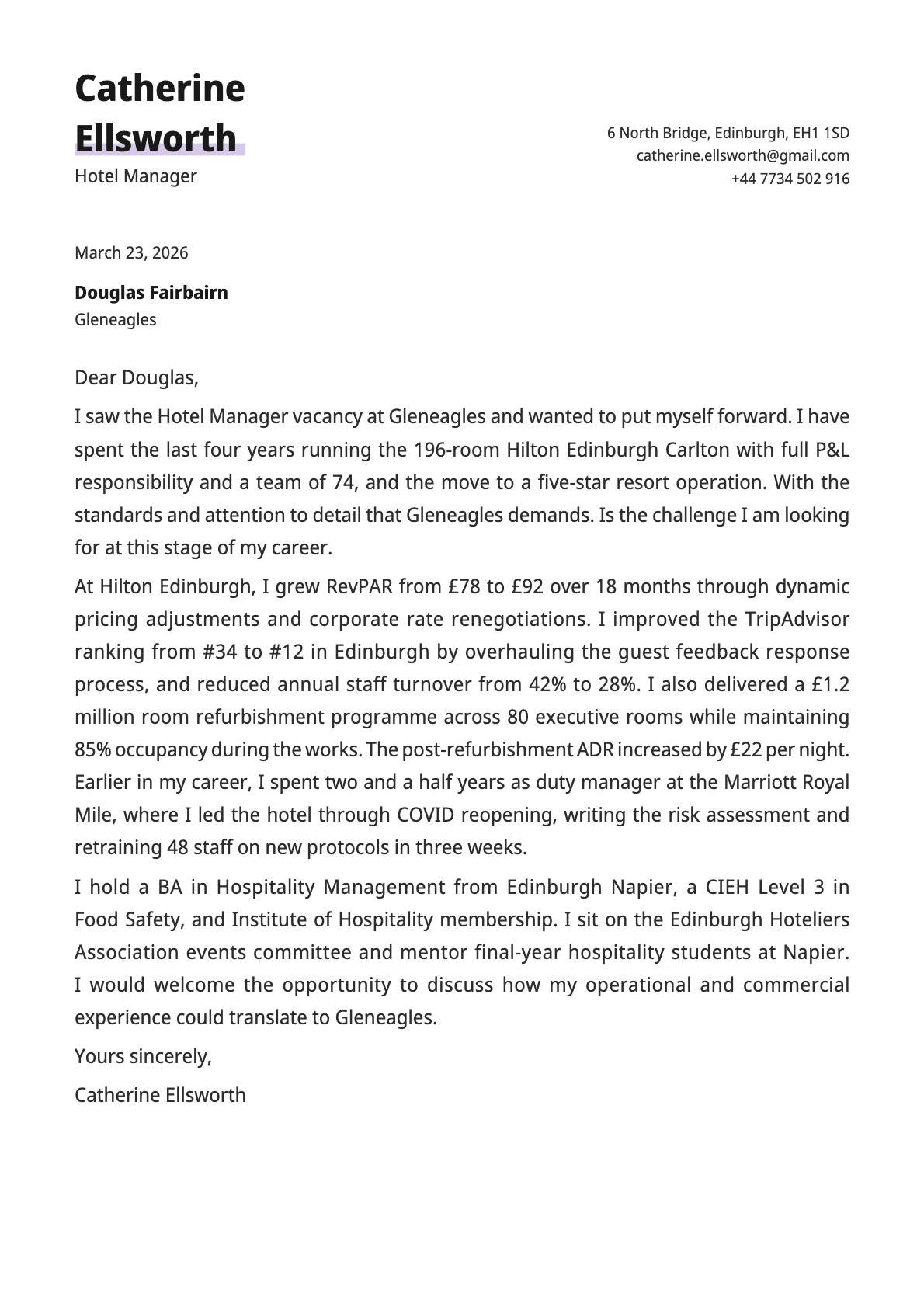
A hotel manager cover letter example showcasing guest satisfaction focus, team leadership, and daily hospitality operations.
Chef
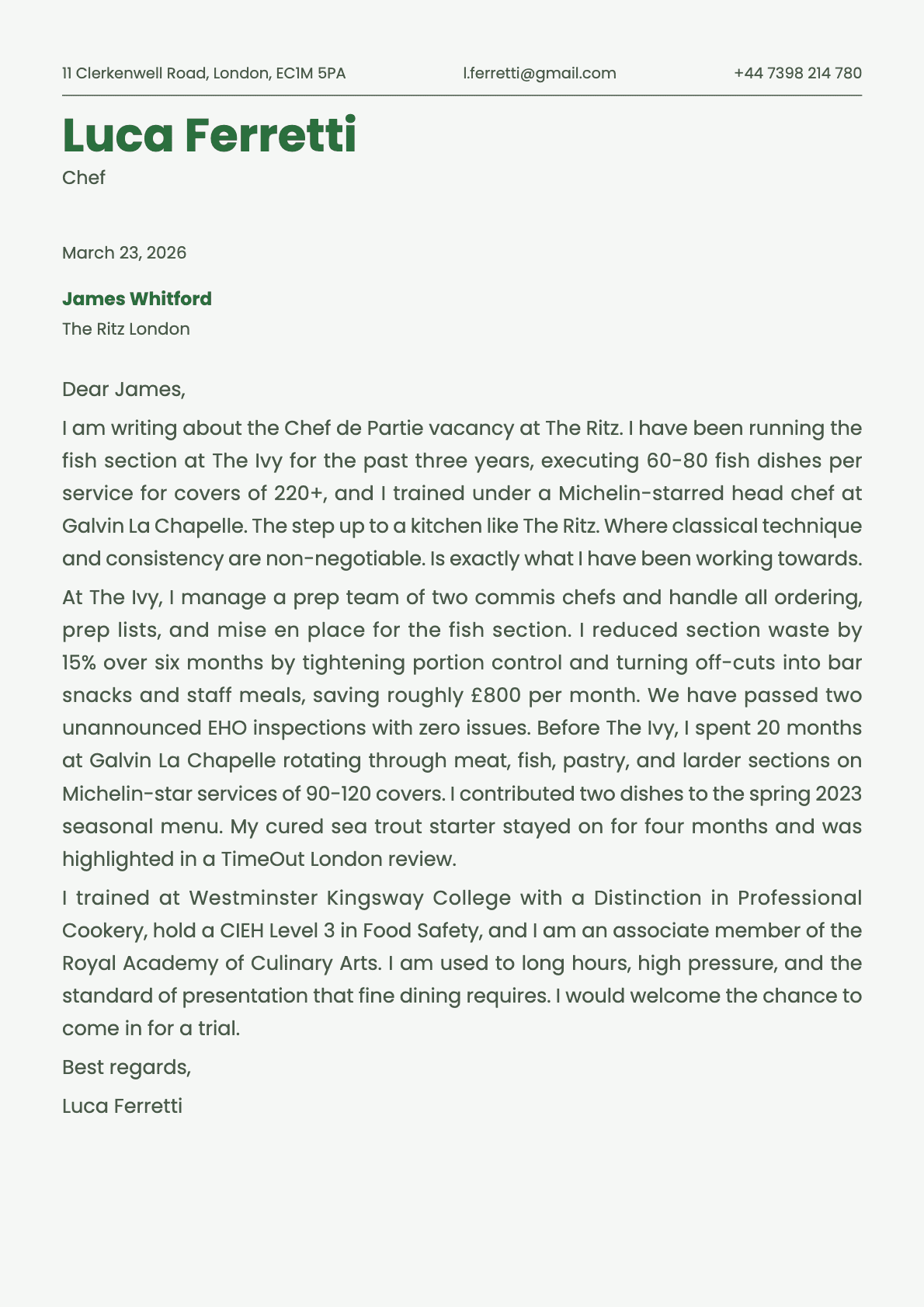
Explore a chef cover letter example that emphasizes culinary creativity, kitchen leadership, and menu development experience.
Event Manager
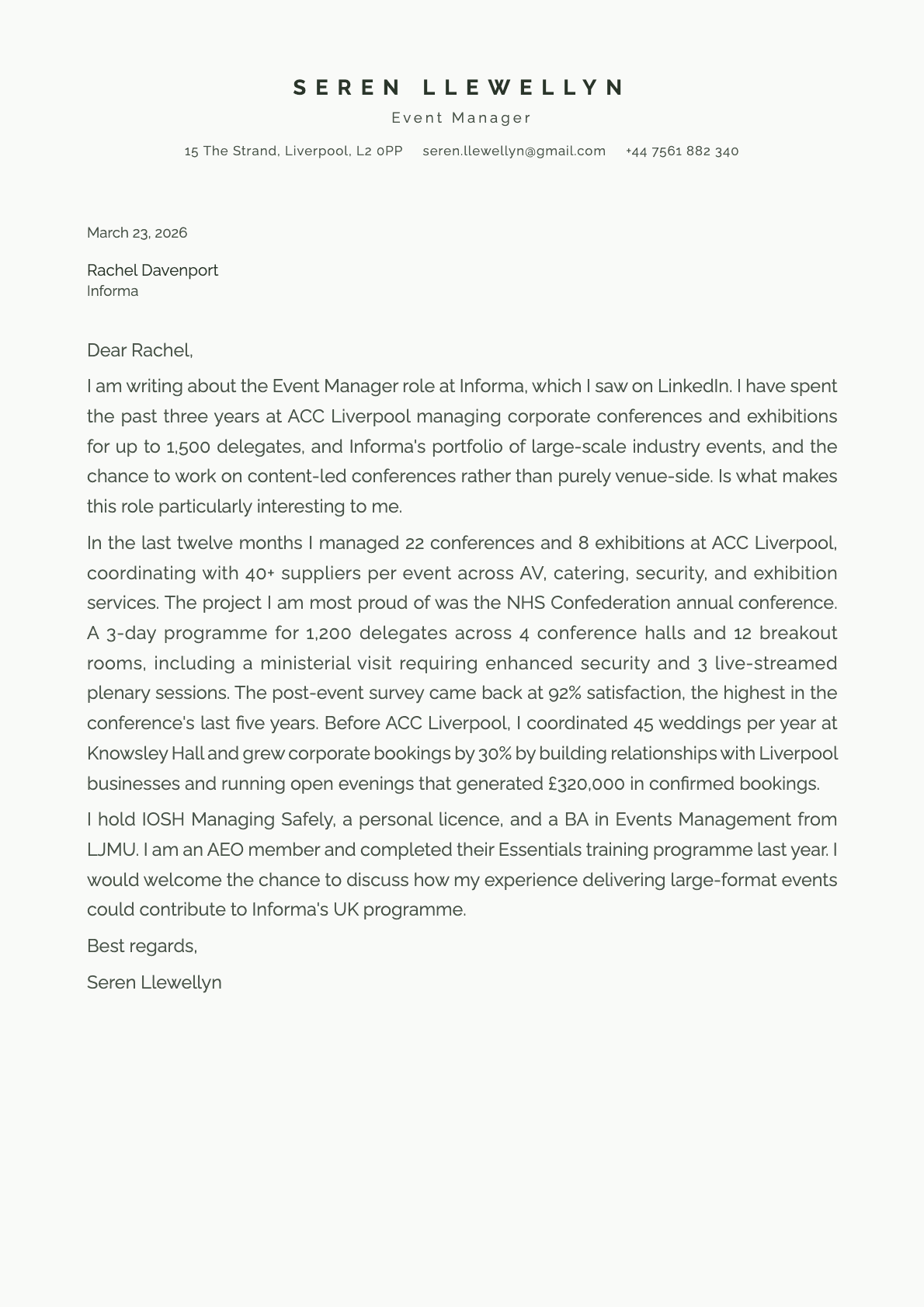
This event manager cover letter example shows how to convey planning expertise, vendor coordination, and creative execution.
Related articles

AI Is Screening Your Resume Before Any Human Sees It
AI screens most resumes before a human ever reads them. 97.4% of Fortune 500 companies run an ATS. This is what that means for you and what you can do about it.

The Best Resume Builders in 2026, Compared Honestly
Resume.io, Zety, Enhancv, Kickresume, Teal, and Laddro compared honestly: real pricing, free tiers, mobile apps, and where each tool wins. All prices checked in September 2026.

Burnout Recovery: A Real Timeline, Not 'Take a Bubble Bath'
55% of the U.S. workforce is burned out. Recovery takes 3 to 12 months. Here's what that actually looks like, stage by stage.