Assistant Psychologist Resume Example
An assistant psychologist resume example for psychology graduates showing how to present research experience, clinical exposure, and therapy skills for NHS Band 4 roles.

Laddro Team
Free to use. No account needed to start.
Free to use. No account needed to start.
Overview
Assistant psychologist positions are among the most competitive roles in healthcare. Hundreds of psychology graduates apply for each NHS Band 4 post, and most have the same 2:1 BSc on their resume. The candidates who get interviews are those who can demonstrate research skills, clinical exposure, and an understanding of psychological therapies that goes beyond textbook knowledge.
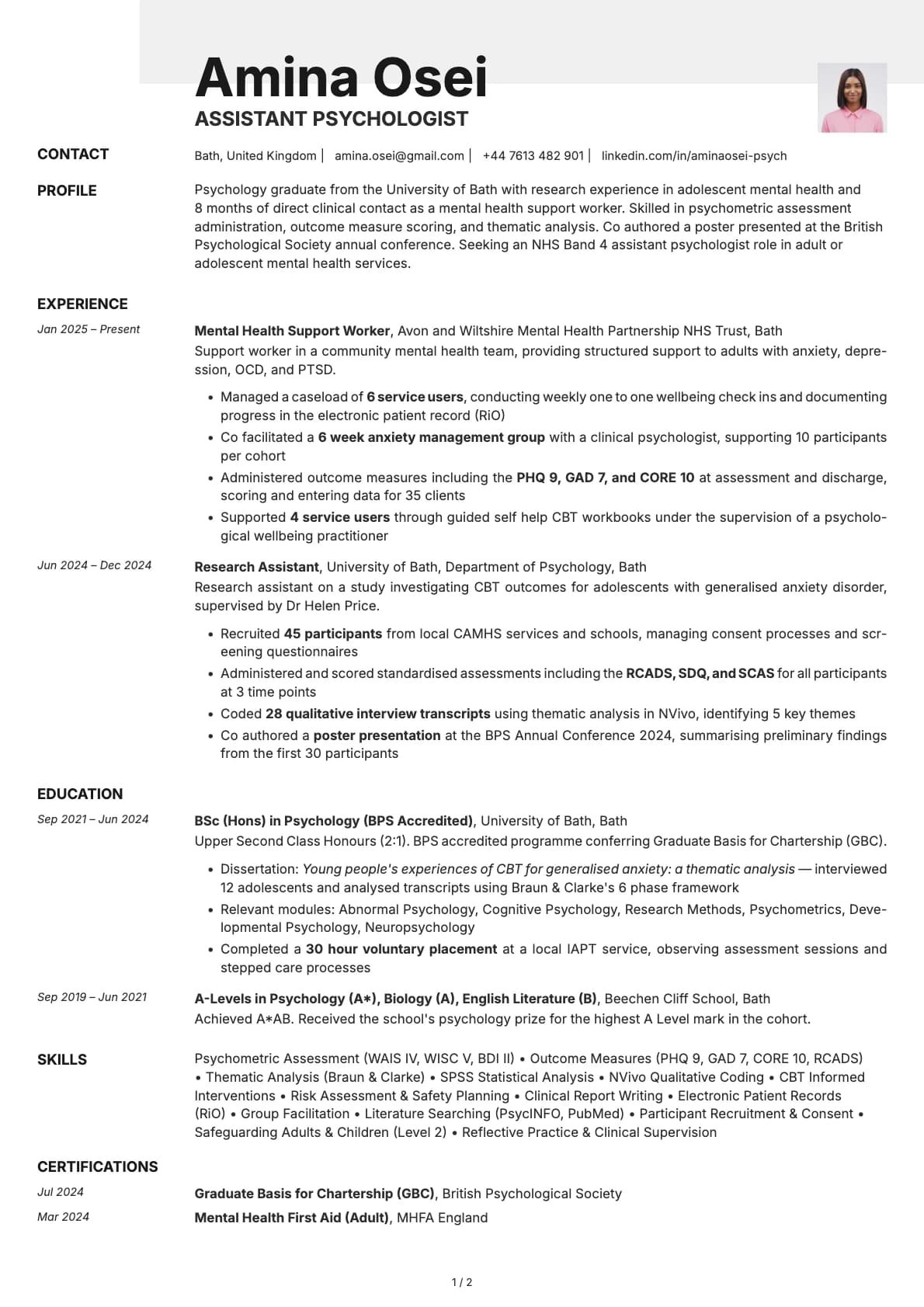
This resume belongs to Amina Osei, a Psychology BSc graduate from the University of Bath who is applying for assistant psychologist positions in NHS mental health services. She has relevant experience from a research assistant role, a mental health support worker position, and a final year dissertation that involved primary data collection with clinical participants. Her resume works because it shows a clear commitment to clinical psychology through practical experience, not just academic interest.
What Makes This Resume Work
Research experience is presented with methodological detail. Amina does not just say she "assisted with research." She describes recruiting 45 participants for a study on cognitive behavioural therapy outcomes in adolescent anxiety, coding transcripts using thematic analysis, and running statistical analyses in SPSS. She also mentions co authoring a poster presented at the British Psychological Society annual conference. This tells a clinical psychologist interviewer that she can handle the research component of an assistant psychologist role.
Clinical exposure is described in terms of patient contact. She worked as a mental health support worker for 8 months, supporting a caseload of 6 service users with conditions including anxiety, depression, OCD, and PTSD. She conducted weekly wellbeing check ins, co facilitated a 6 week anxiety management group with 10 participants, and administered outcome measures including the PHQ 9 and GAD 7. This direct patient contact is what separates her from candidates who only have academic experience.
Psychometric assessment experience is highlighted. She describes administering and scoring standardised assessments including the WAIS IV, WISC V, and Beck Depression Inventory under supervision during her research assistant role. Psychometric testing is a core part of assistant psychologist work, and showing she already has exposure to it is a significant advantage.
The resume demonstrates a clear career trajectory. From her psychology degree to her research assistant role to her mental health support work, every step on the resume points toward clinical psychology. There are no unexplained gaps or unrelated roles. This coherent trajectory tells an interviewing panel that she has been preparing deliberately.
Key Takeaways
Show research skills with specific detail. Name the methodology, the sample size, the analysis software, and any outputs like conference presentations or publications. Research competence is a requirement for assistant psychologist roles and vague descriptions will not be enough.
Describe your client facing experience in clinical terms. How many service users? What conditions? Which therapeutic modalities did you observe or assist with? Which outcome measures did you administer? Use the language of the profession.
Include psychometric assessment experience if you have it. Even if you only administered assessments under supervision during a research project, list the specific tools you used. It shows you understand the practical work that assistant psychologists do every day.
Build your own version
Open this layout in the builder and swap in your own details. It takes a few minutes.
Free to use. No account needed to start.
Was this resume example helpful?
Rate this example to help us create better content for you.
4.8 average from 156 ratingsRelated resume examples
Graduate Archaeologist
A graduate archaeologist resume example with commercial excavation experience, single-context recording, and CIfA membership.
Graduate Banking Analyst
A graduate banking analyst resume example with Barclays ECM internship and financial modelling skills.
Graduate Biomedical Scientist
A graduate biomedical scientist resume example with NHS lab placement experience, HCPC registration, and sample processing numbers.
Graduate Building Services Engineer
A graduate building services engineer resume example with MEP consultancy experience, energy modelling skills, and CIBSE membership.
Graduate Building Surveyor
A graduate building surveyor resume example with chartered practice placement and building inspection experience.
Graduate Civil Engineer
A graduate civil engineer resume example for recent graduates. See how to present your engineering degree, placement experience, and technical skills to land your first role.
Graduate Civil Servant
A graduate civil servant resume example with Department for Education placement and policy support experience.
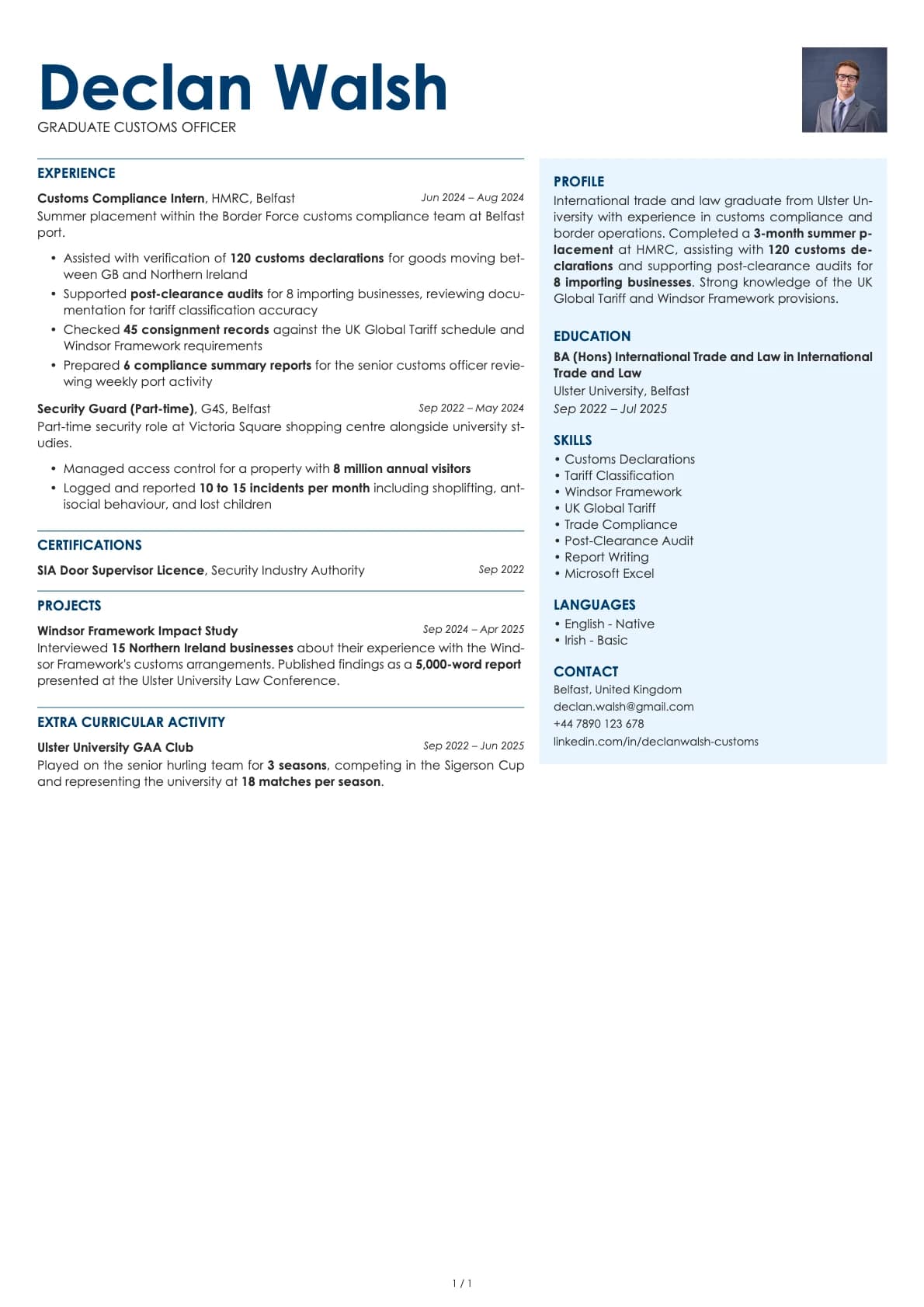
Graduate Customs Officer
A graduate customs officer resume example with HMRC placement and customs compliance experience.
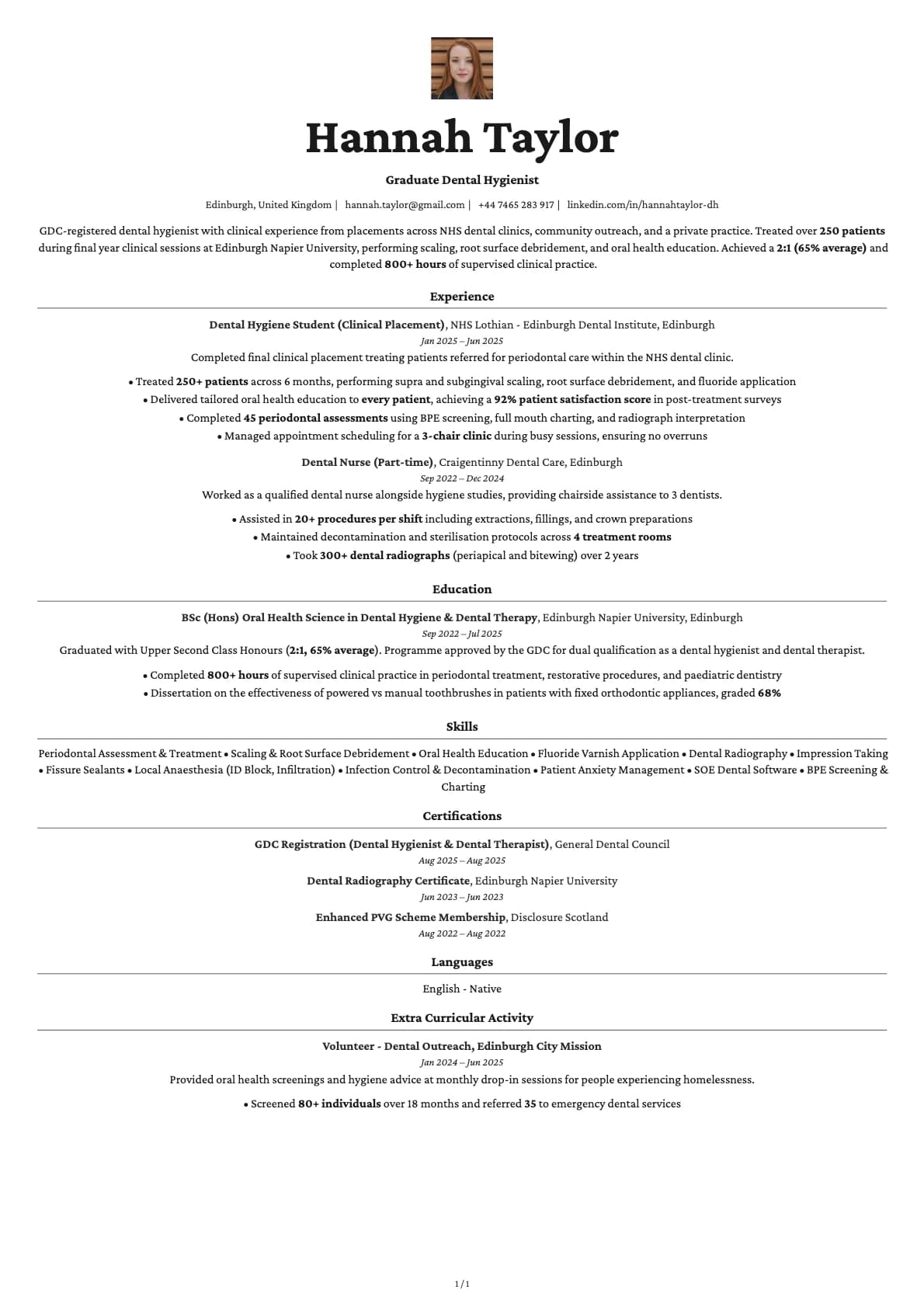
Graduate Dental Hygienist
A graduate dental hygienist resume example with GDC registration, clinical patient numbers, and periodontal treatment experience for new graduates.
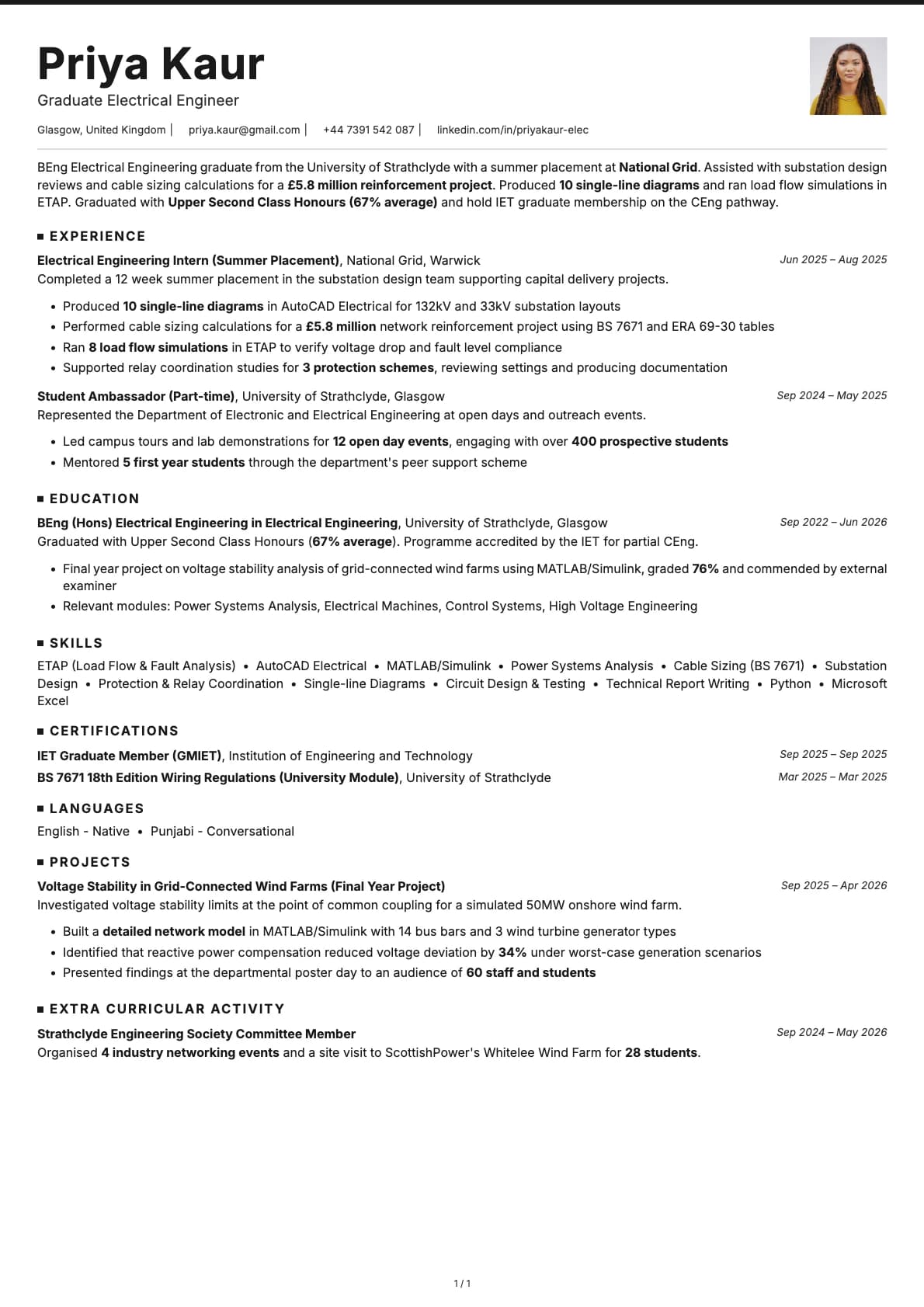
Graduate Electrical Engineer
A graduate electrical engineer resume example with power systems placement experience, IET membership, and MATLAB proficiency.
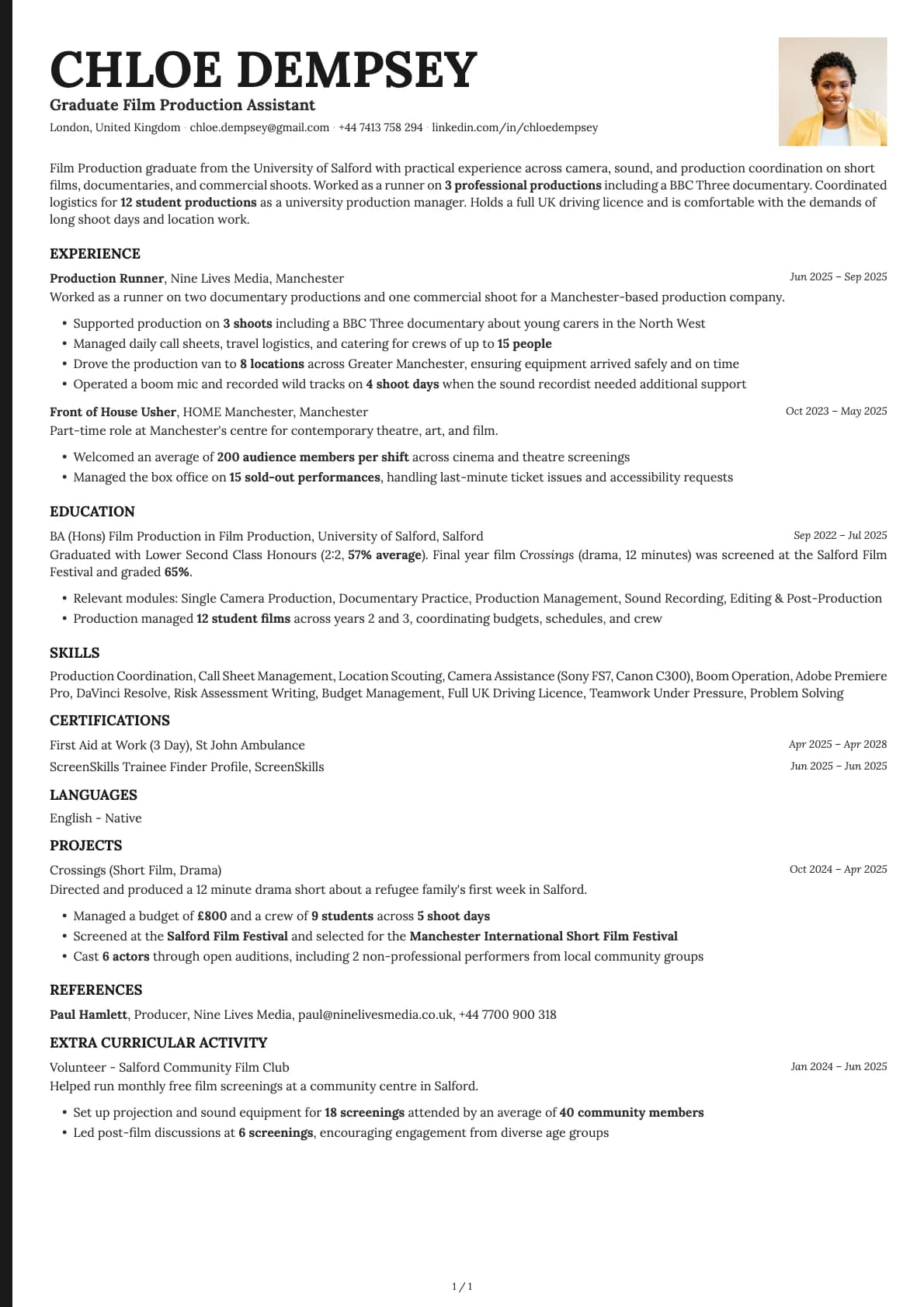
Graduate Film Production Assistant
A graduate film production assistant resume example. See how to present runner experience, production coordination, and on-set skills to break into the film industry.
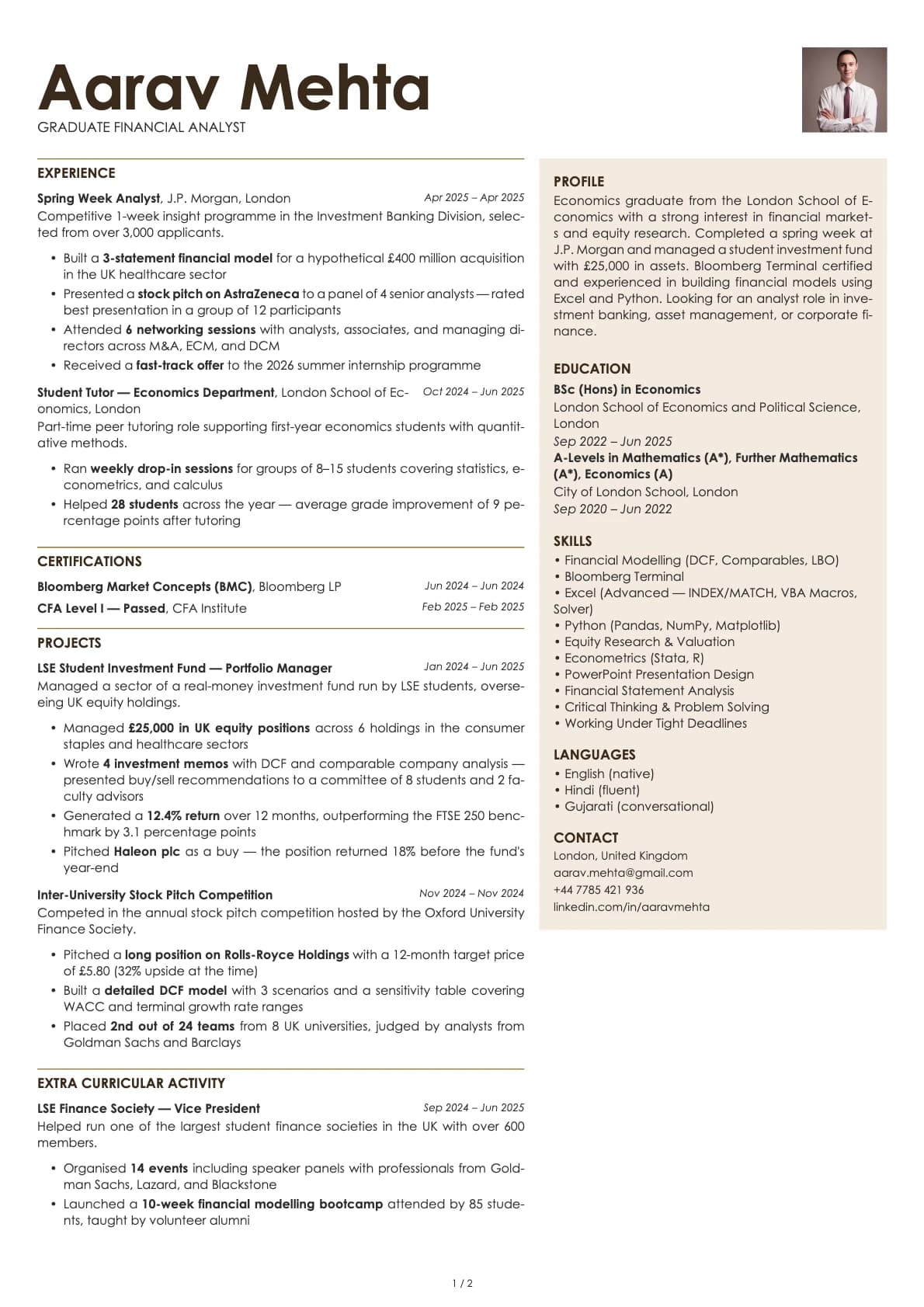
Graduate Financial Analyst
A graduate financial analyst resume example for recent graduates. See how to present your financial modelling skills, Excel expertise, and internship experience to land an analyst role.