Graduate Building Services Engineer Resume Example
A graduate building services engineer resume example with MEP consultancy experience, energy modelling skills, and CIBSE membership.

Laddro Team
Free to use. No account needed to start.
Free to use. No account needed to start.
Overview
Building services engineering is one of the most in-demand disciplines in the built environment, driven by net zero targets, rising energy costs, and increasingly complex building regulations. MEP consultancies want graduates who can produce design calculations, create MEP drawings, and run energy models. Internship experience makes a significant difference in how quickly you can progress.
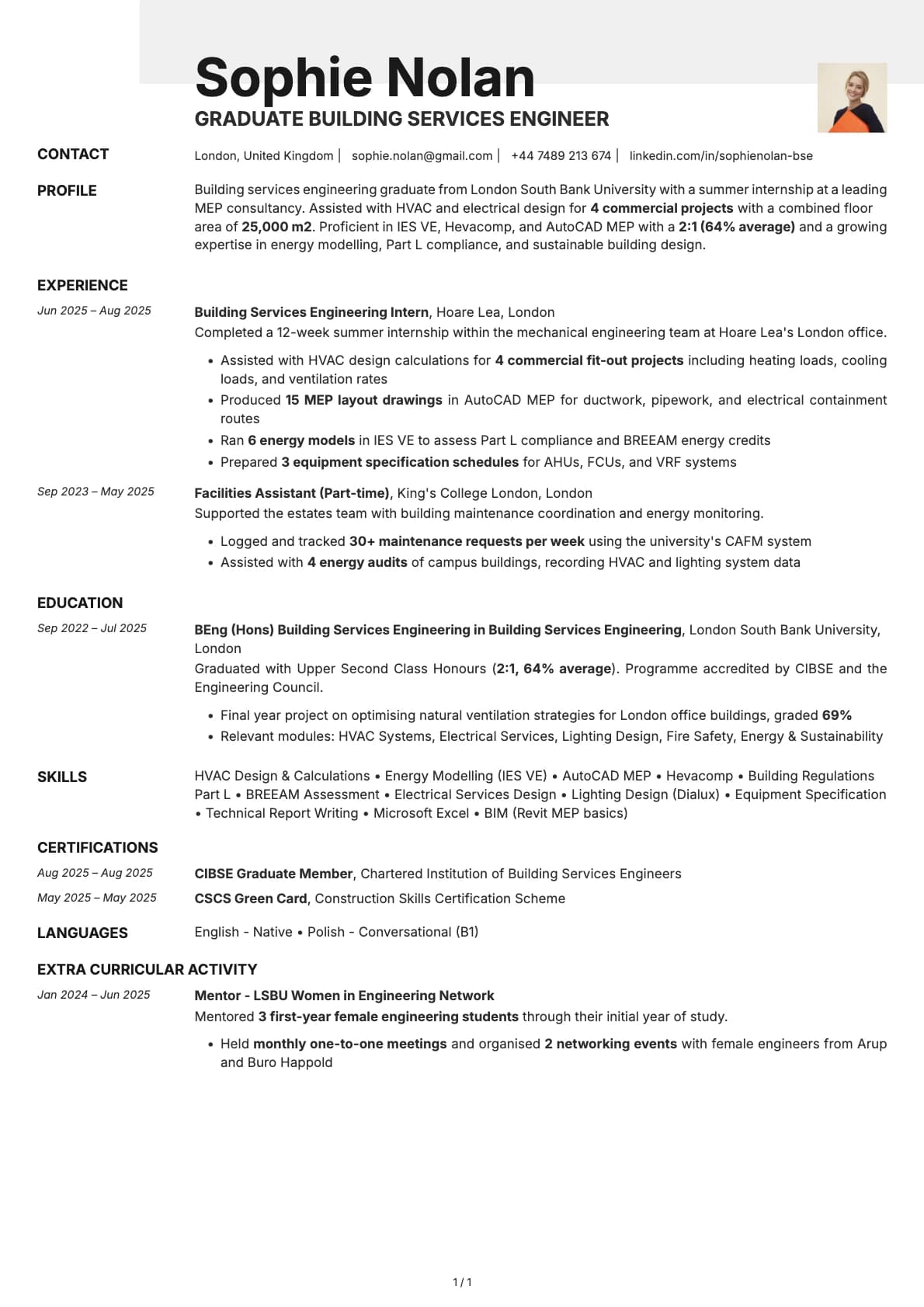
This resume belongs to Sophie Nolan, a building services engineering graduate from London South Bank University who interned at Hoare Lea. She worked on HVAC design for four commercial projects totalling 25,000 m2, produced 15 MEP drawings, and ran 6 energy models for Part L and BREEAM assessment. Her part-time role in university facilities gave her additional exposure to building operations.
What Makes This Resume Work
Design and modelling experience on real projects. Sophie does not just list software names. She describes producing HVAC calculations, MEP drawings, and energy models for actual commercial fit-outs. This level of detail tells employers she has been a productive member of a design team, not just an observer.
Energy and sustainability skills align with market demand. IES VE modelling, Part L compliance, and BREEAM assessment are all high-demand skills. Employers working on net zero building design actively seek graduates with this expertise.
Facilities experience provides operational perspective. Having worked in university estates, Sophie understands how buildings are maintained and operated, not just designed. This operational awareness makes her a more thoughtful designer who considers long-term performance.
Key Takeaways
Graduate building services engineers should describe the specific design tasks they completed during internships, including calculation types, drawing counts, and energy models run. Mention the floor area and project type to provide scale context. CIBSE membership, CSCS card, and specific software proficiency (IES VE, AutoCAD MEP, Hevacomp) should all be clearly listed. Any experience with BREEAM, Part L, or sustainability assessment is increasingly valuable and worth highlighting.
Build your own version
Open this layout in the builder and swap in your own details. It takes a few minutes.
Free to use. No account needed to start.
Was this resume example helpful?
Rate this example to help us create better content for you.
4.5 average from 85 ratingsRelated resume examples
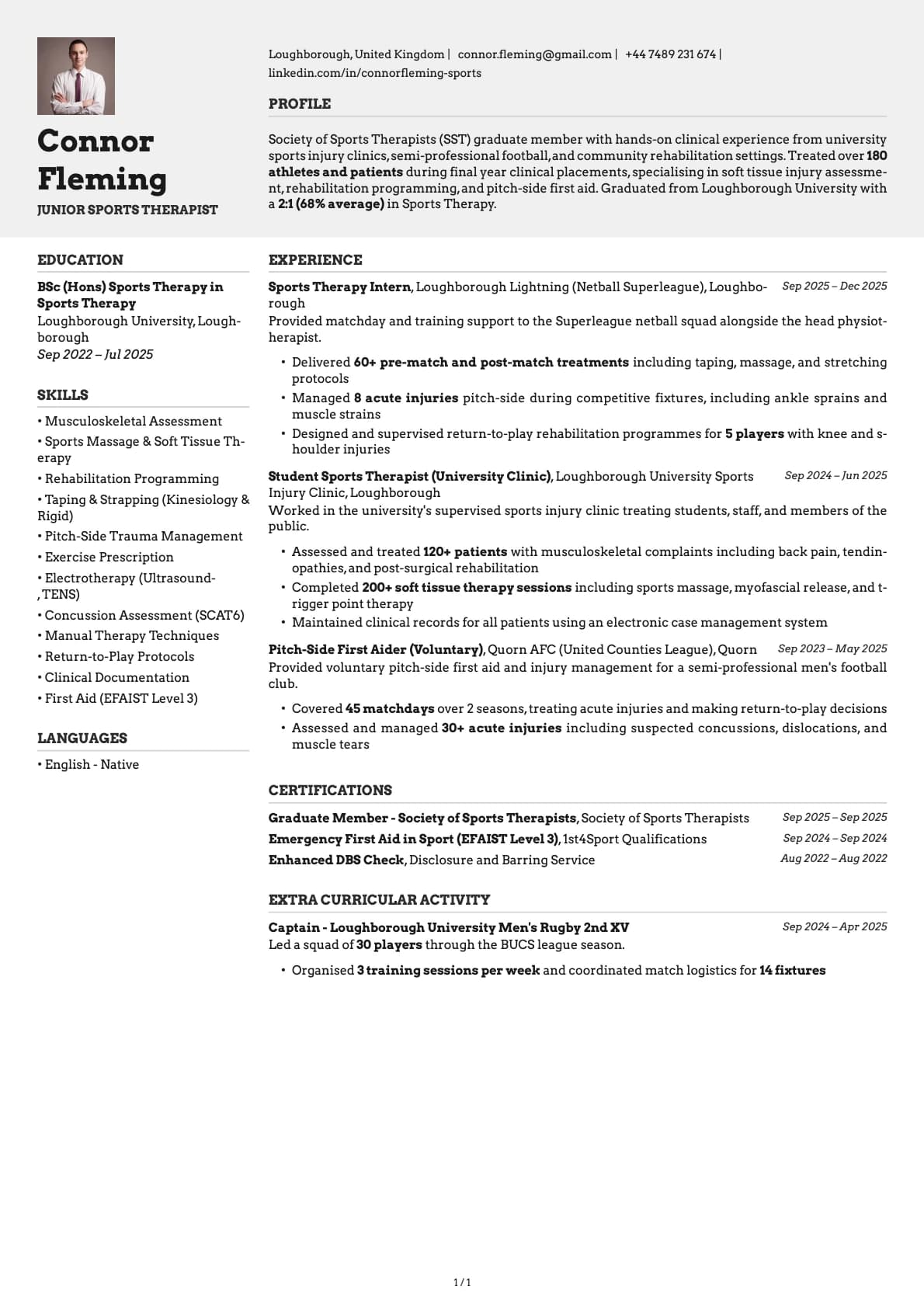
Junior Sports Therapist
A junior sports therapist resume example with clinical treatment numbers, pitch-side experience, and SST membership for new graduates.
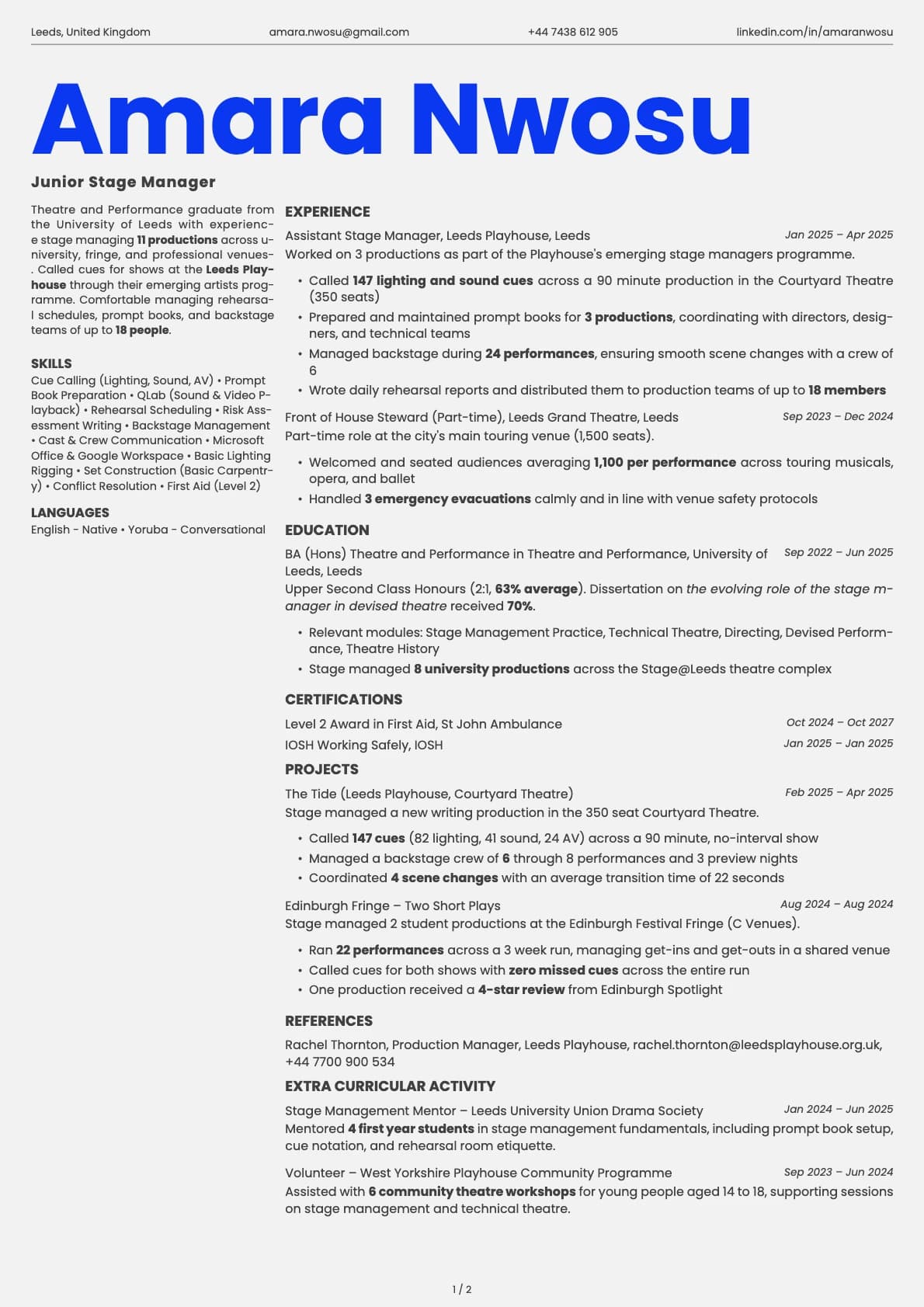
Junior Stage Manager
A junior stage manager resume example with prompt book experience, production counts, and cue calling from a Theatre Studies graduate entering professional stage management.
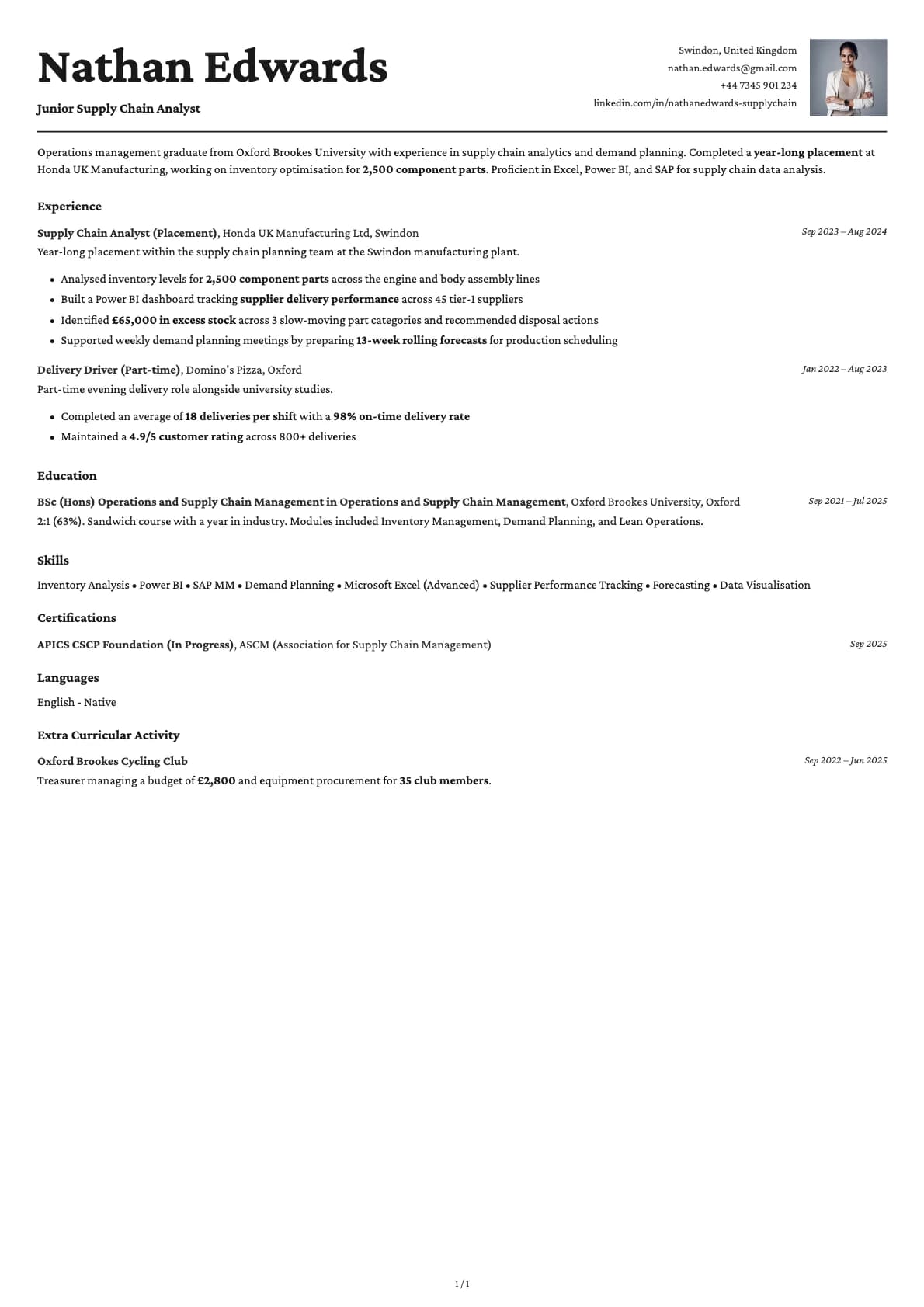
Junior Supply Chain Analyst
A junior supply chain analyst resume example with Honda UK placement and inventory optimisation experience.

Junior Sustainability Consultant
A junior sustainability consultant resume example for environmental science graduates. See how to present carbon auditing, consultancy internships, and environmental volunteering.
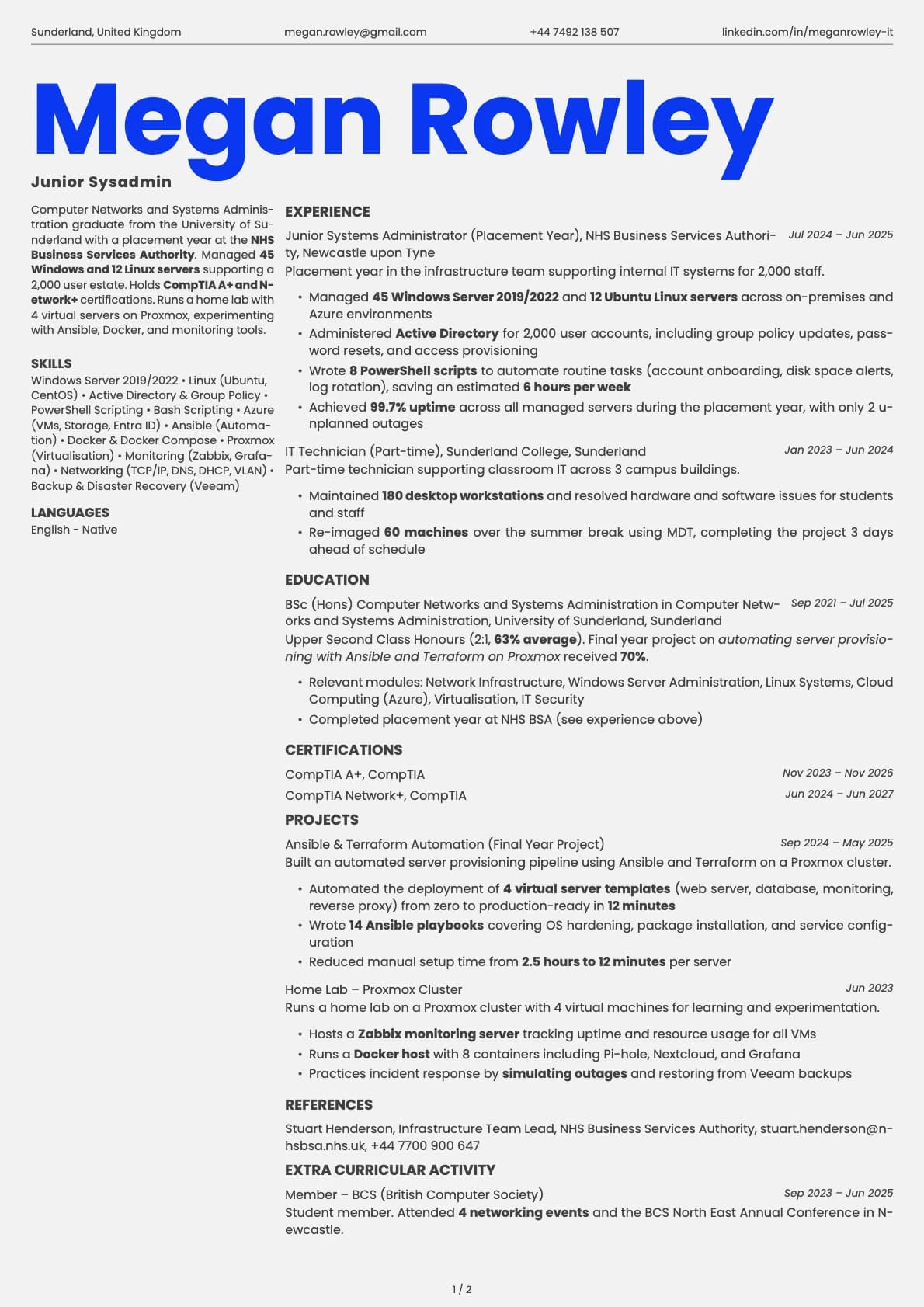
Junior Sysadmin
A junior sysadmin resume example with Linux server management, Active Directory experience, and CompTIA certifications from an IT graduate entering systems administration.
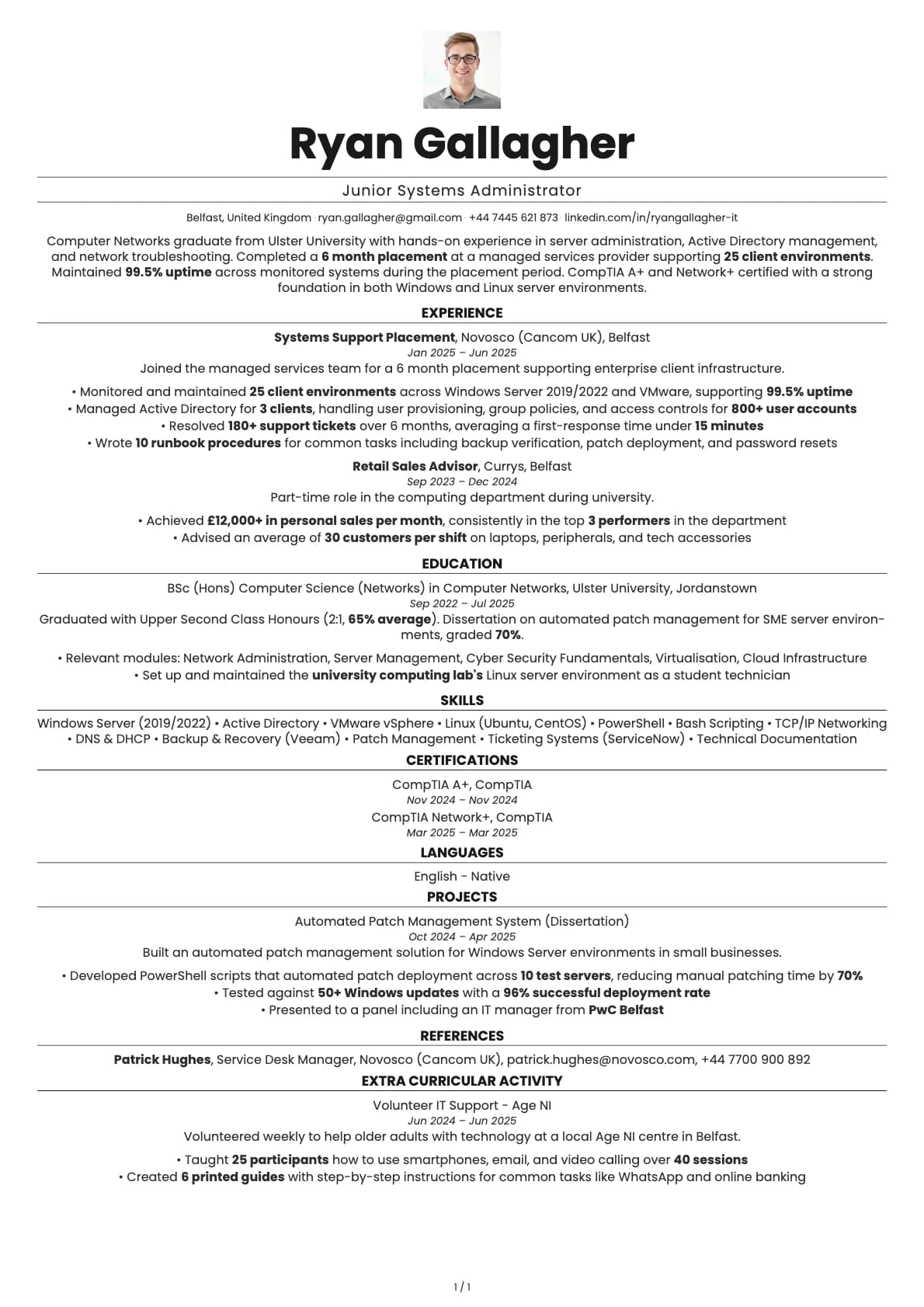
Junior Systems Administrator
A junior systems administrator resume example for graduates. See how to present server management, Active Directory, and CompTIA certifications to land your first sysadmin role.
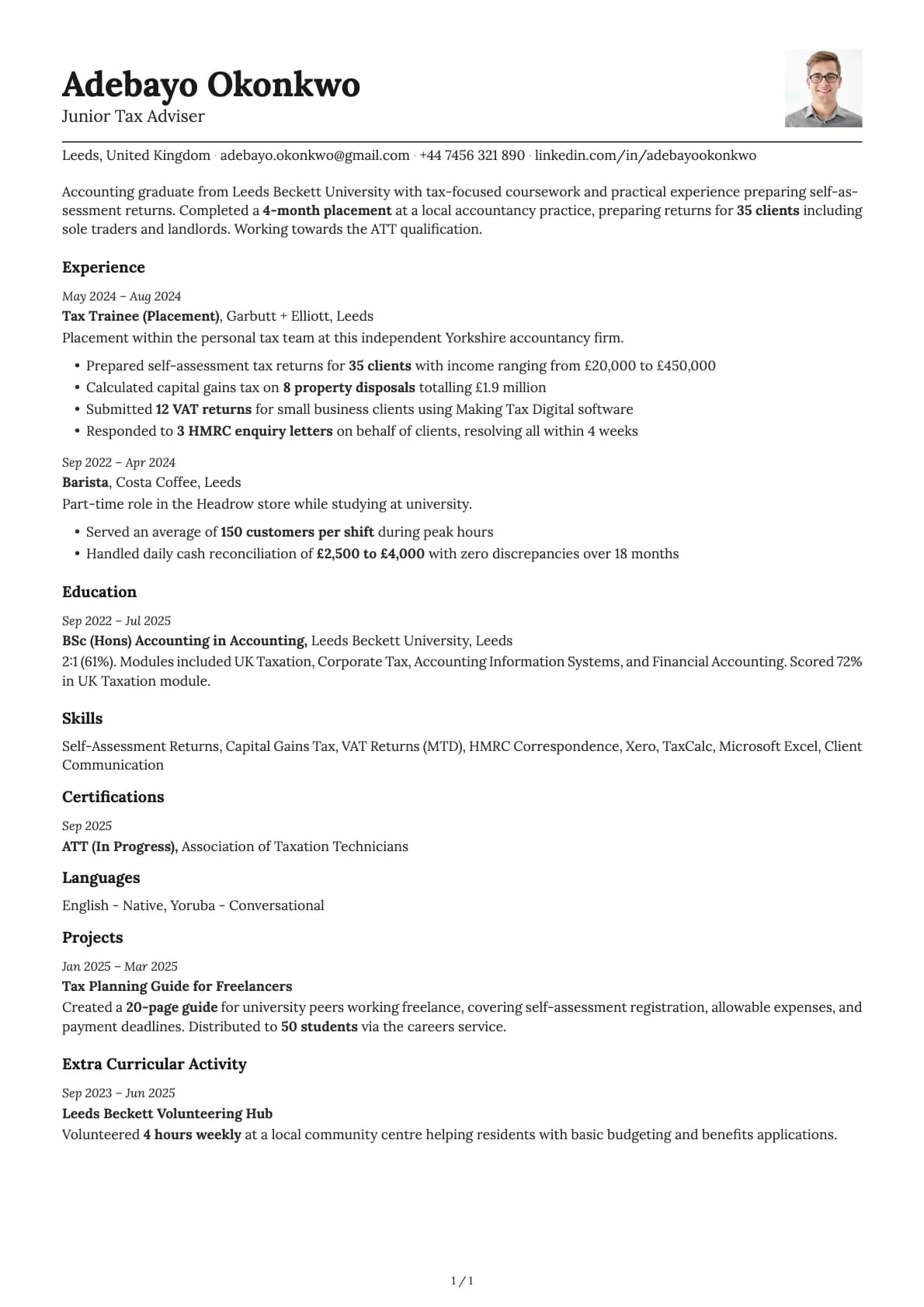
Junior Tax Adviser
A junior tax adviser resume example with placement experience at a regional accountancy firm and ATT study.
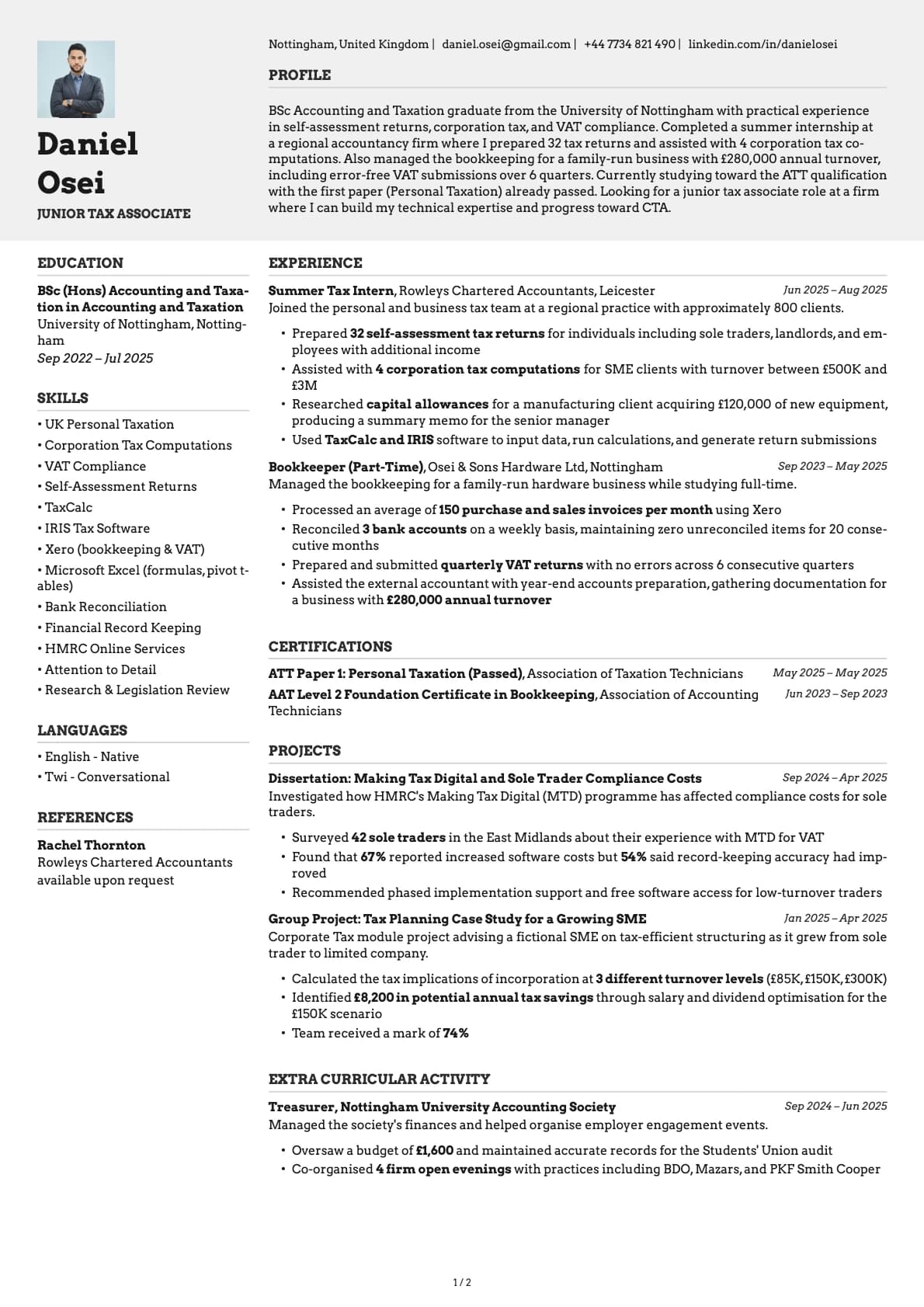
Junior Tax Associate
A junior tax associate resume example for tax and accounting graduates. See how HMRC work experience and ATT progress help you stand out to employers.
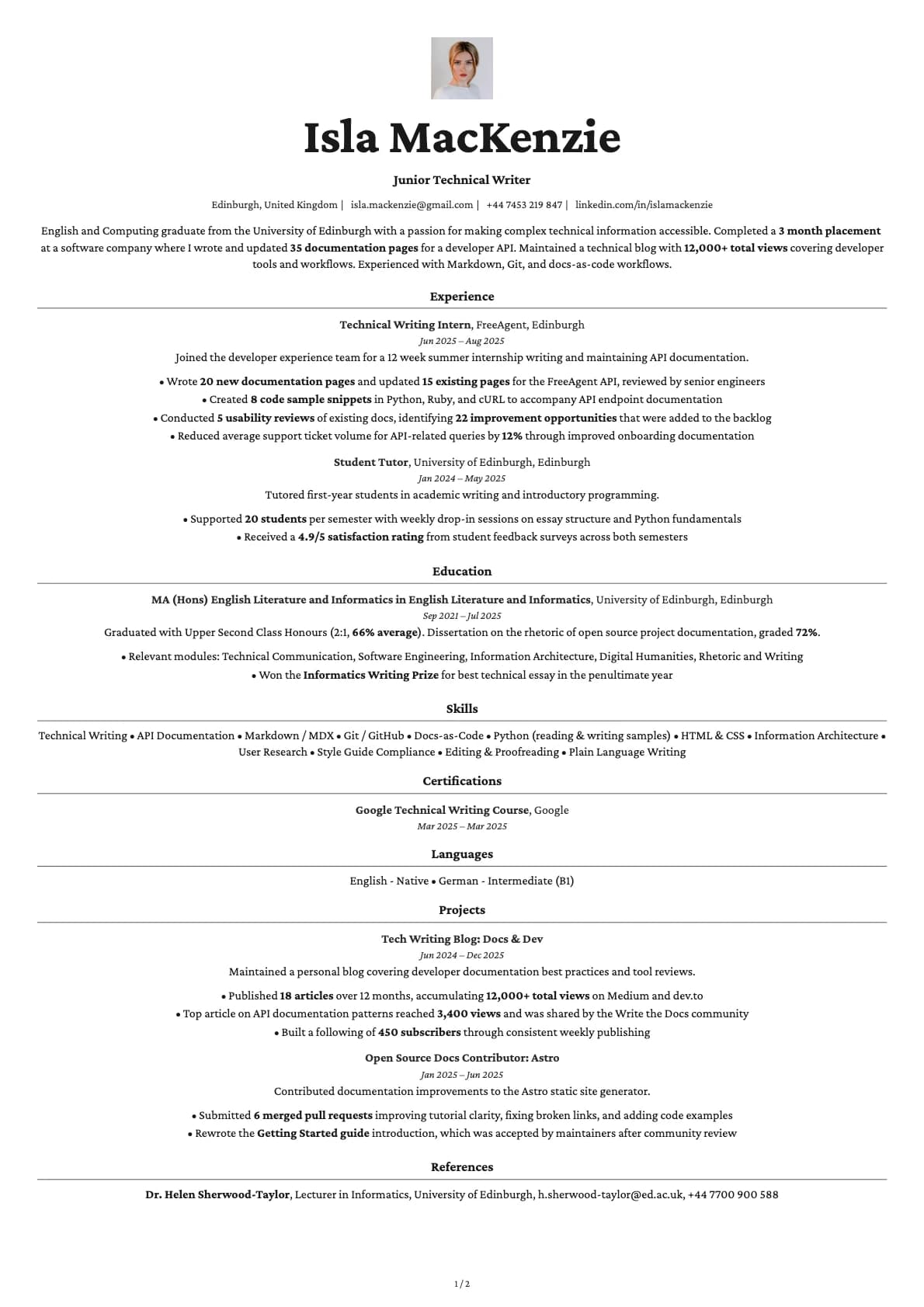
Junior Technical Writer
A junior technical writer resume example for graduates. See how to present documentation experience, API writing samples, and open source contributions to land your first tech writing role.
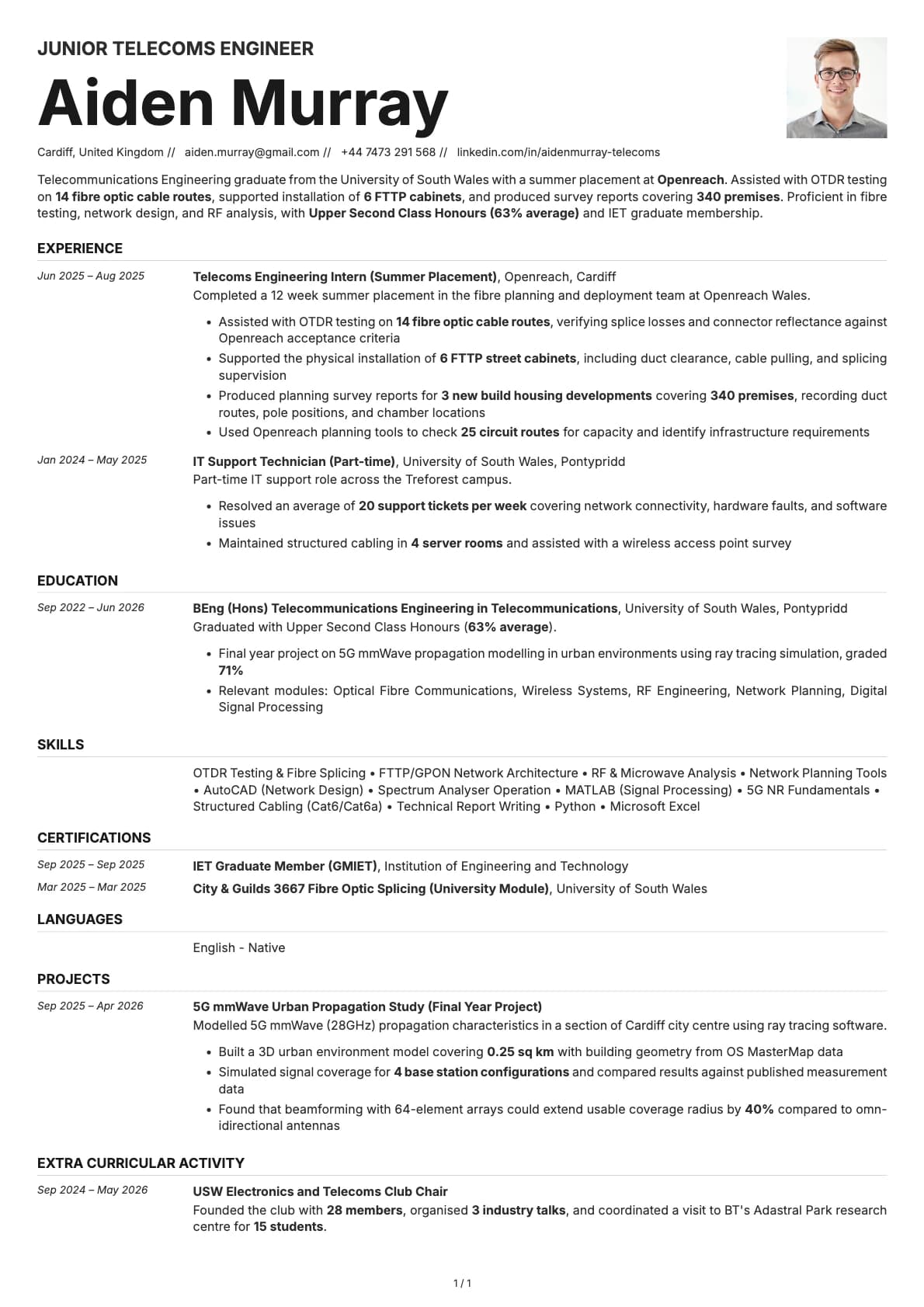
Junior Telecoms Engineer
A junior telecoms engineer resume example with fibre optic network experience, OTDR testing skills, and placement at Openreach.
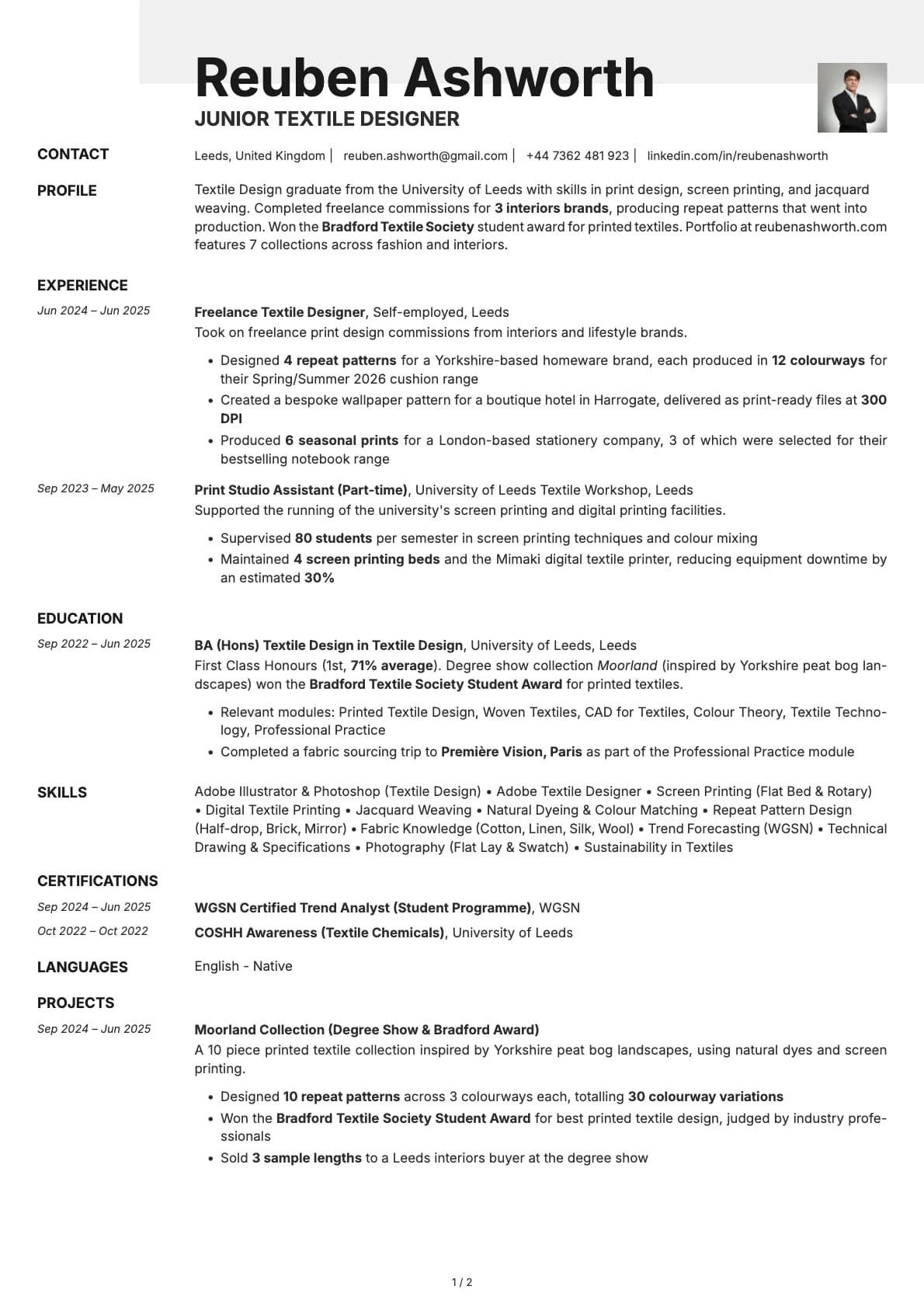
Junior Textile Designer
A junior textile designer resume example with print design projects, client commissions, and weaving skills from a Textile Design BA graduate entering the industry.
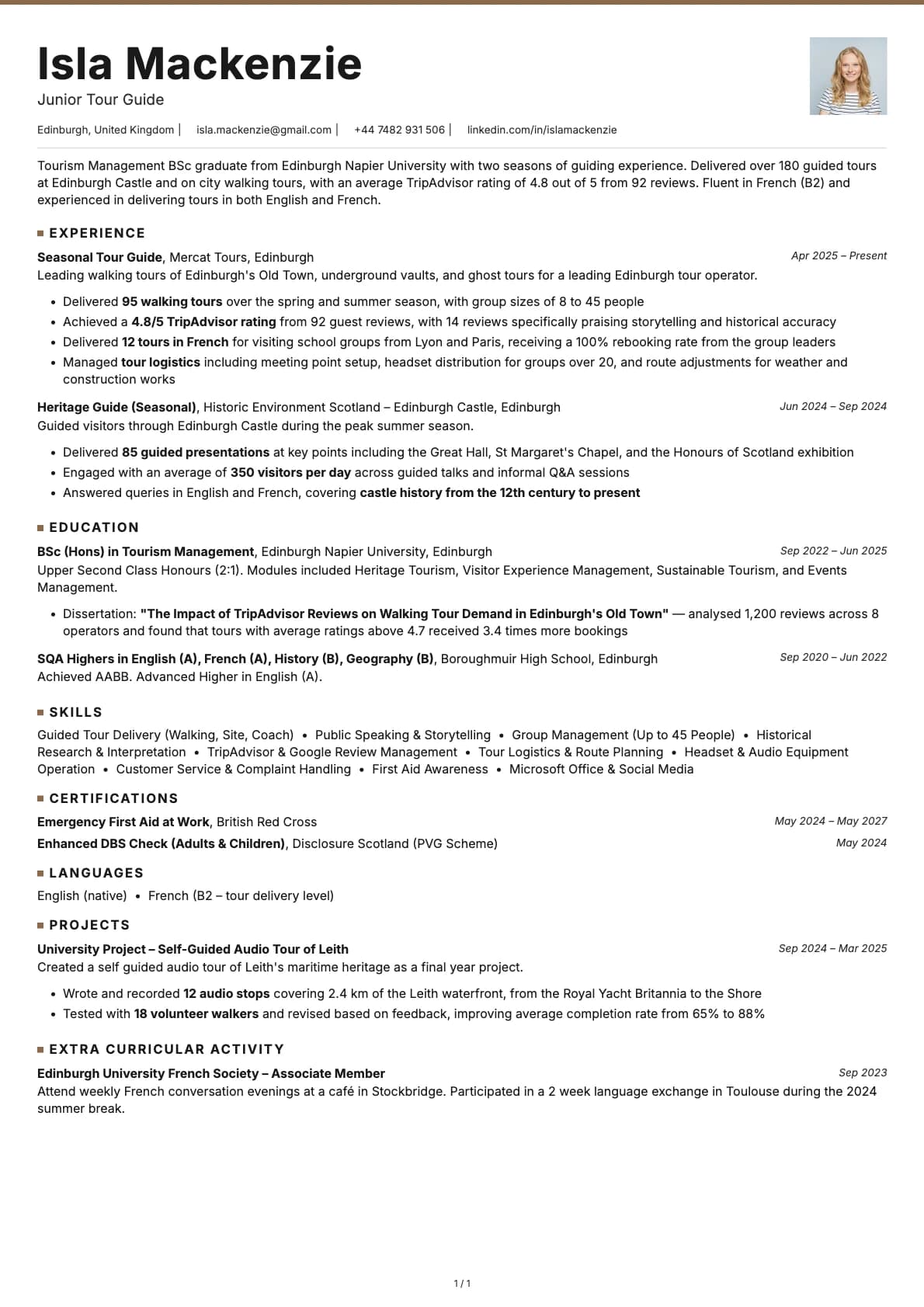
Junior Tour Guide
A junior tour guide resume example for tourism graduates. See how to present your guiding experience, customer satisfaction scores, and language skills for the UK tourism industry.