Graduate Financial Analyst Resume Example
A graduate financial analyst resume example for recent graduates. See how to present your financial modelling skills, Excel expertise, and internship experience to land an analyst role.

Laddro Team
Free to use. No account needed to start.
Free to use. No account needed to start.
Overview
Graduate financial analyst roles attract sharp, numerate candidates from across finance, economics, and accounting programmes. The competition is fierce, and most applicants look similar on paper. A 2:1 in finance, some Excel skills, and an interest in markets. The ones who get interviews are those who can show they have already done the work, whether in an internship, a university project, or a personal initiative.
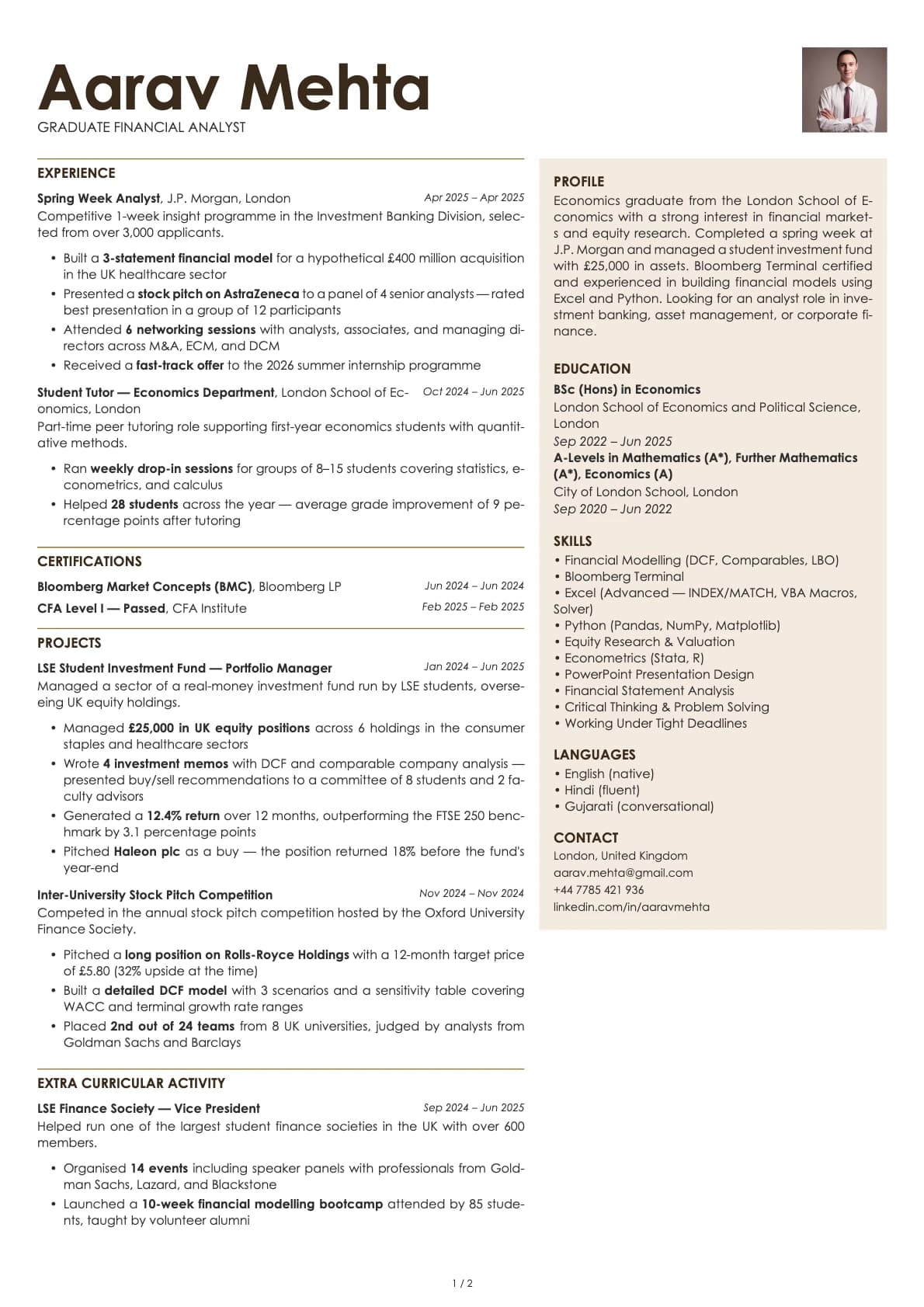
This resume belongs to Charlotte Webb, a finance and economics graduate from the University of Exeter. She completed a summer internship at an asset management firm and built a stock screening model as her dissertation project. Her resume works because it shows practical financial analysis, not just theoretical knowledge.
What Makes This Resume Work
The internship section is analytically specific. Charlotte assisted with quarterly earnings analysis for a portfolio of 30 UK mid cap equities. She built comparison spreadsheets that tracked revenue growth, margin trends, and EPS estimates against consensus forecasts. She also drafted briefing notes for two fund managers summarising her findings. These tasks map directly to what a junior analyst does in their first year.
The dissertation is treated as a professional project. She developed a multi factor stock screening model in Excel that ranked FTSE 350 companies based on value, momentum, and quality metrics. She backtested the model over five years of historical data and presented results showing a 3.2% annual outperformance versus the benchmark. This is the kind of independent analytical work that impresses hiring managers, especially when it is quantified.
Excel skills go beyond the basics. Charlotte lists INDEX/MATCH, pivot tables, VLOOKUP, conditional formatting, and data validation. She also built macros to automate parts of her screening model. For financial analyst roles, advanced Excel is not optional. Listing specific functions and automation experience shows she is well beyond the "proficient in Excel" level.
Financial certifications are in progress. She has passed CFA Level 1 and mentions that she is preparing for Level 2. She also holds an IMC qualification. These credentials signal serious career commitment and give her a clear edge over candidates who have not started any professional qualifications yet.
Key Takeaways
Describe your internship in terms of what you analysed, how many companies or data points you covered, and what output you produced. "Assisted the team" is invisible. "Analysed quarterly earnings for 30 UK equities and drafted briefing notes for fund managers" is memorable.
Turn your dissertation or final year project into an analytical showcase. If you built a model, ran a backtest, or analysed a dataset, present the methodology and the result. Numbers and percentages make your work feel real.
Start professional qualifications early. CFA, IMC, or CISI exams show you are investing in your career. Even listing "CFA Level 1 candidate" gives you a measurable advantage in the application pile.
Build your own version
Open this layout in the builder and swap in your own details. It takes a few minutes.
Free to use. No account needed to start.
Was this resume example helpful?
Rate this example to help us create better content for you.
4.8 average from 147 ratingsRelated resume examples
Graduate Museum Assistant
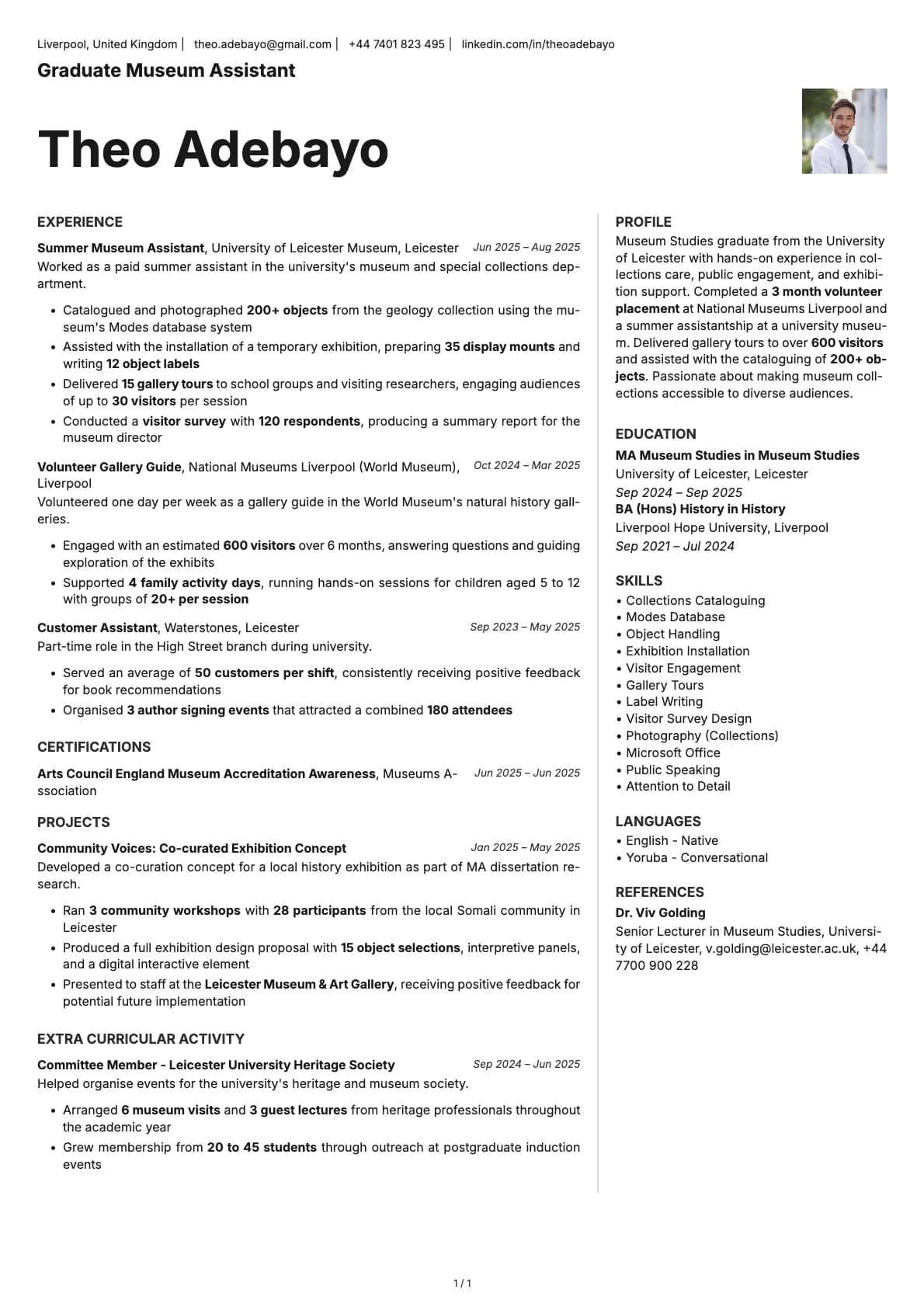
A graduate museum assistant resume example. See how to present collections experience, gallery tours, and museum studies qualifications to land your first museum role.
Graduate Nurse
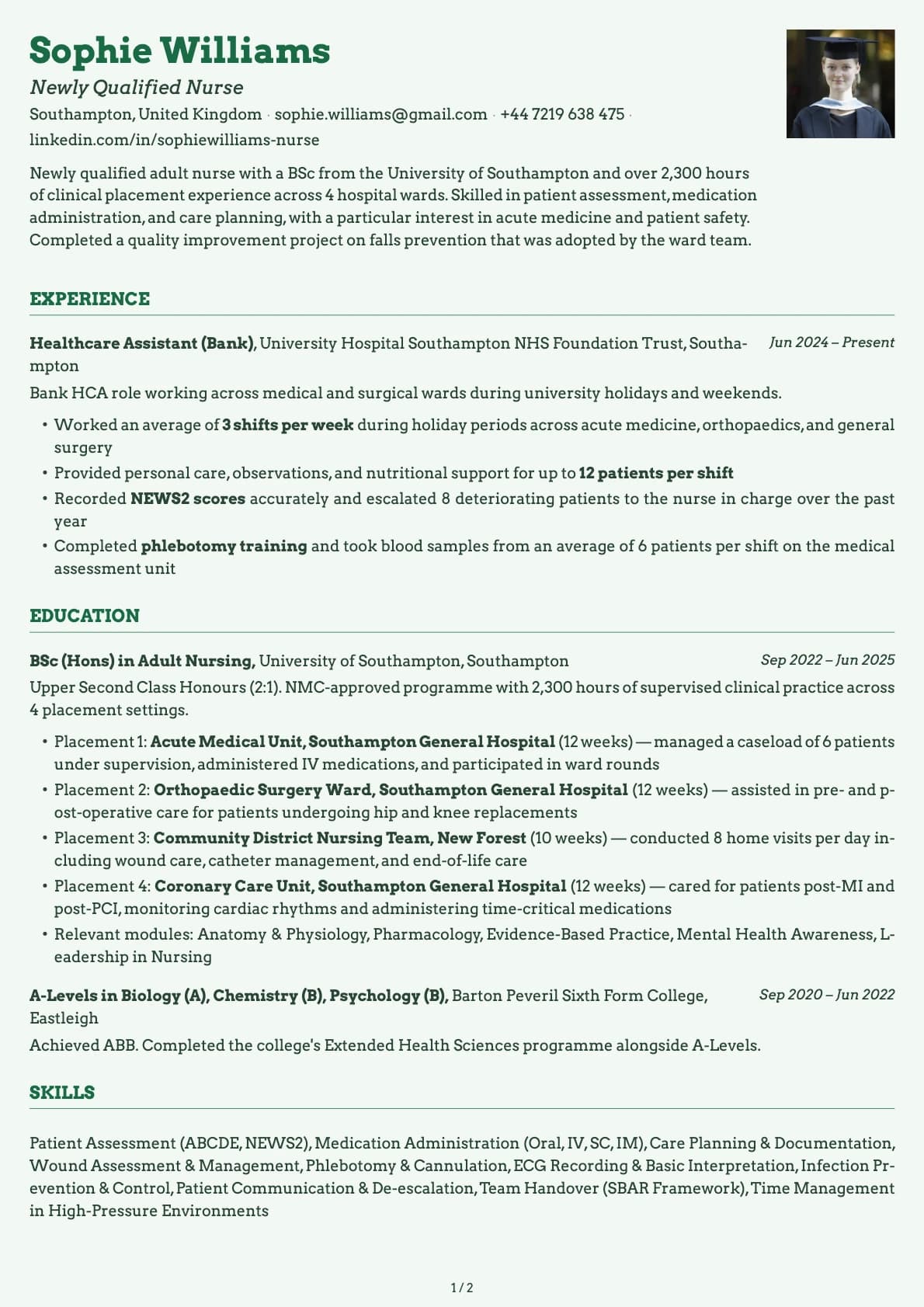
A graduate nurse resume example for recently qualified nurses. See how to present your clinical placements, patient care experience, and NMC registration to land your first nursing role.
Graduate Nursery Practitioner
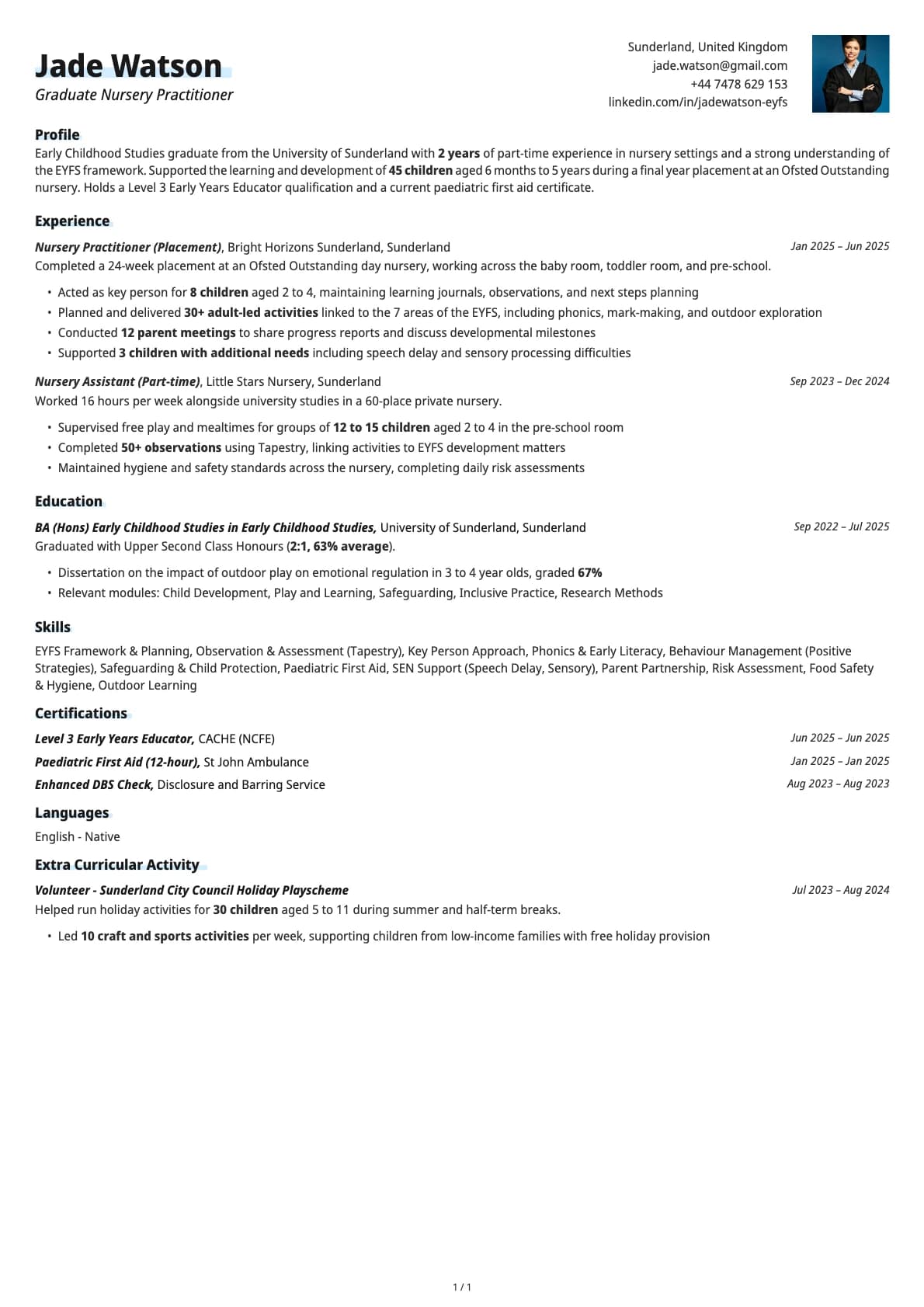
A graduate nursery practitioner resume example with EYFS experience, key person responsibilities, and Level 3 Early Years Educator qualification.
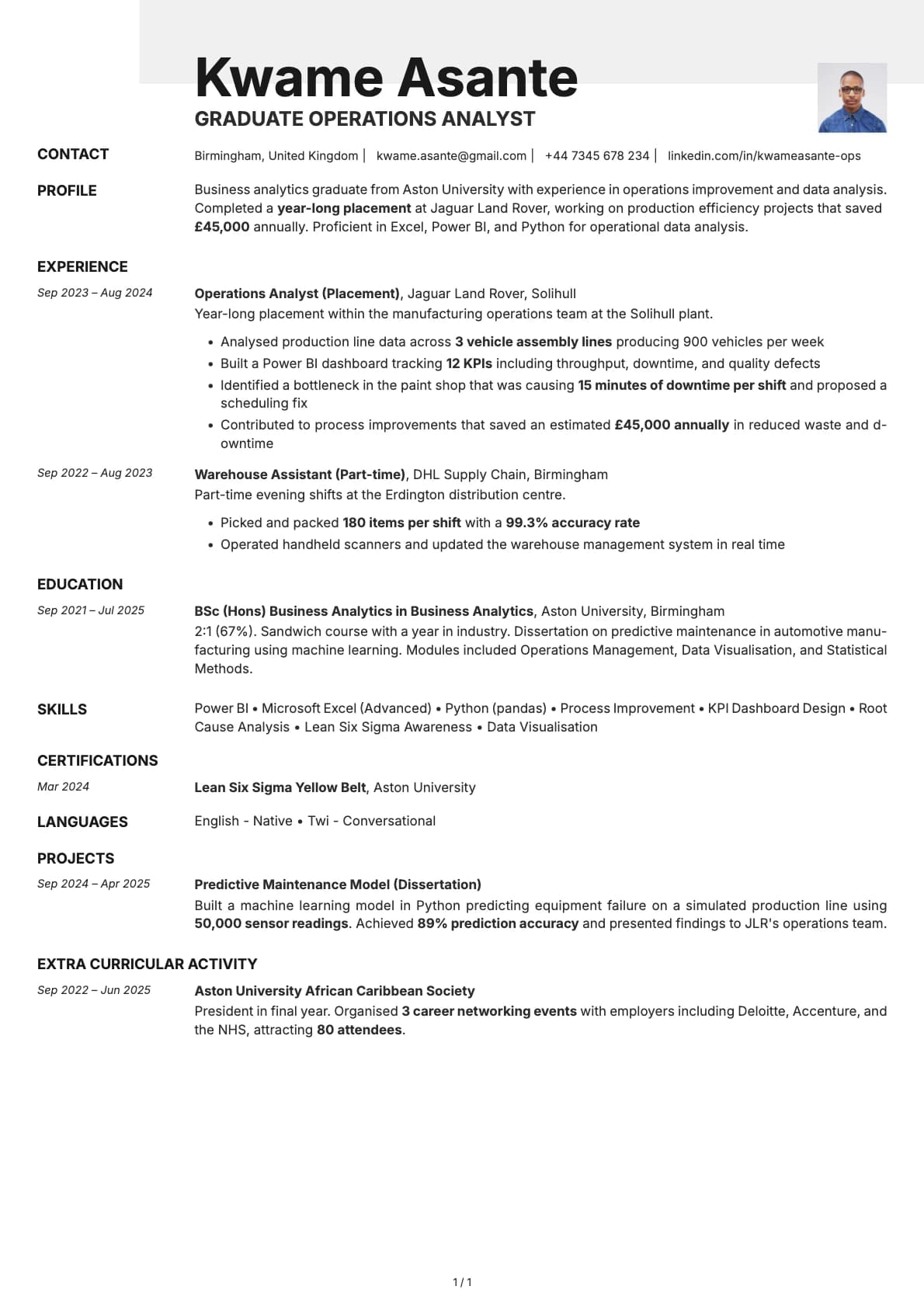
Graduate Operations Analyst
A graduate operations analyst resume example with Jaguar Land Rover placement and data analysis skills.
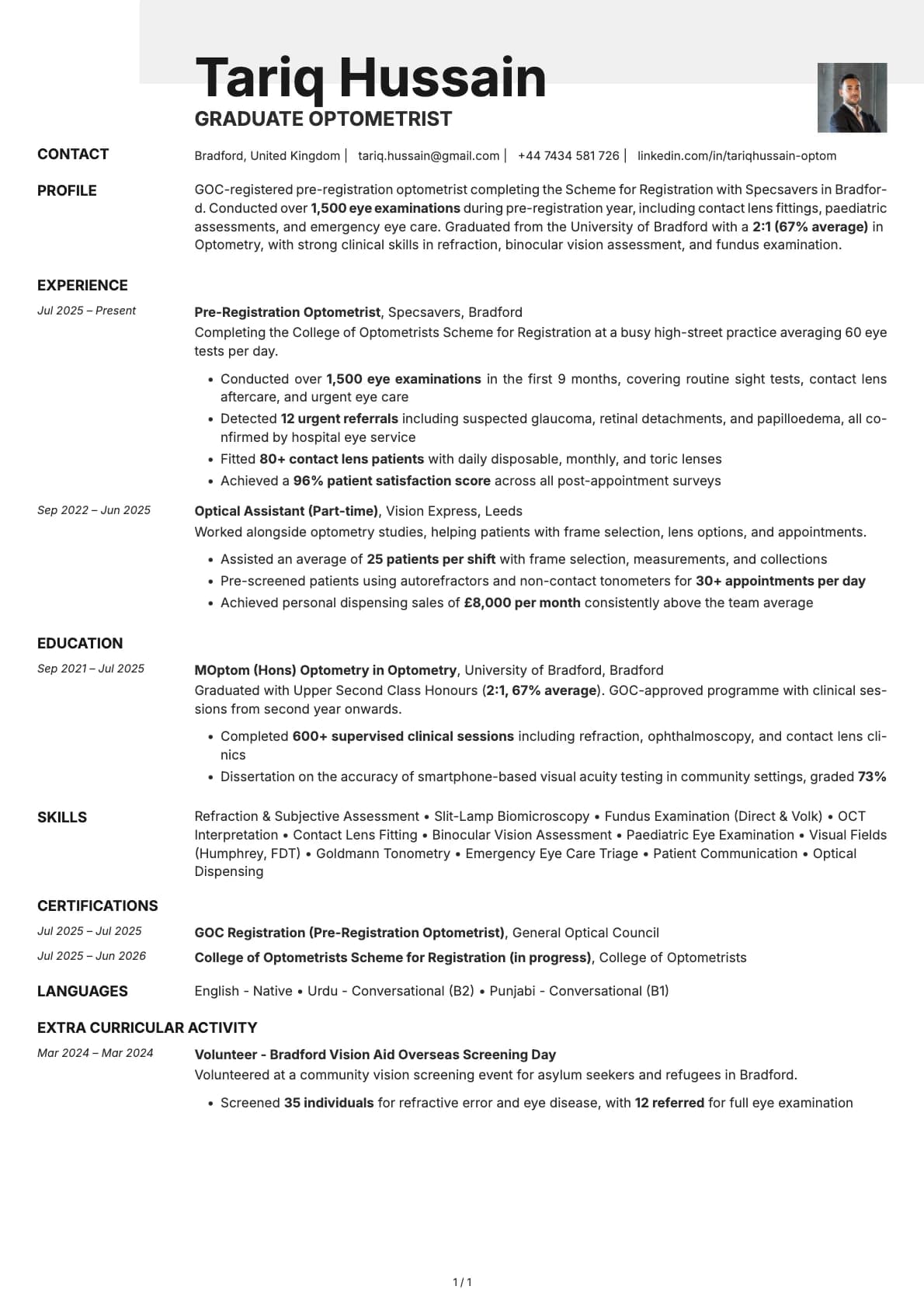
Graduate Optometrist
A graduate optometrist resume example with pre-registration experience, GOC registration, and eye examination numbers for newly qualifying optometrists.
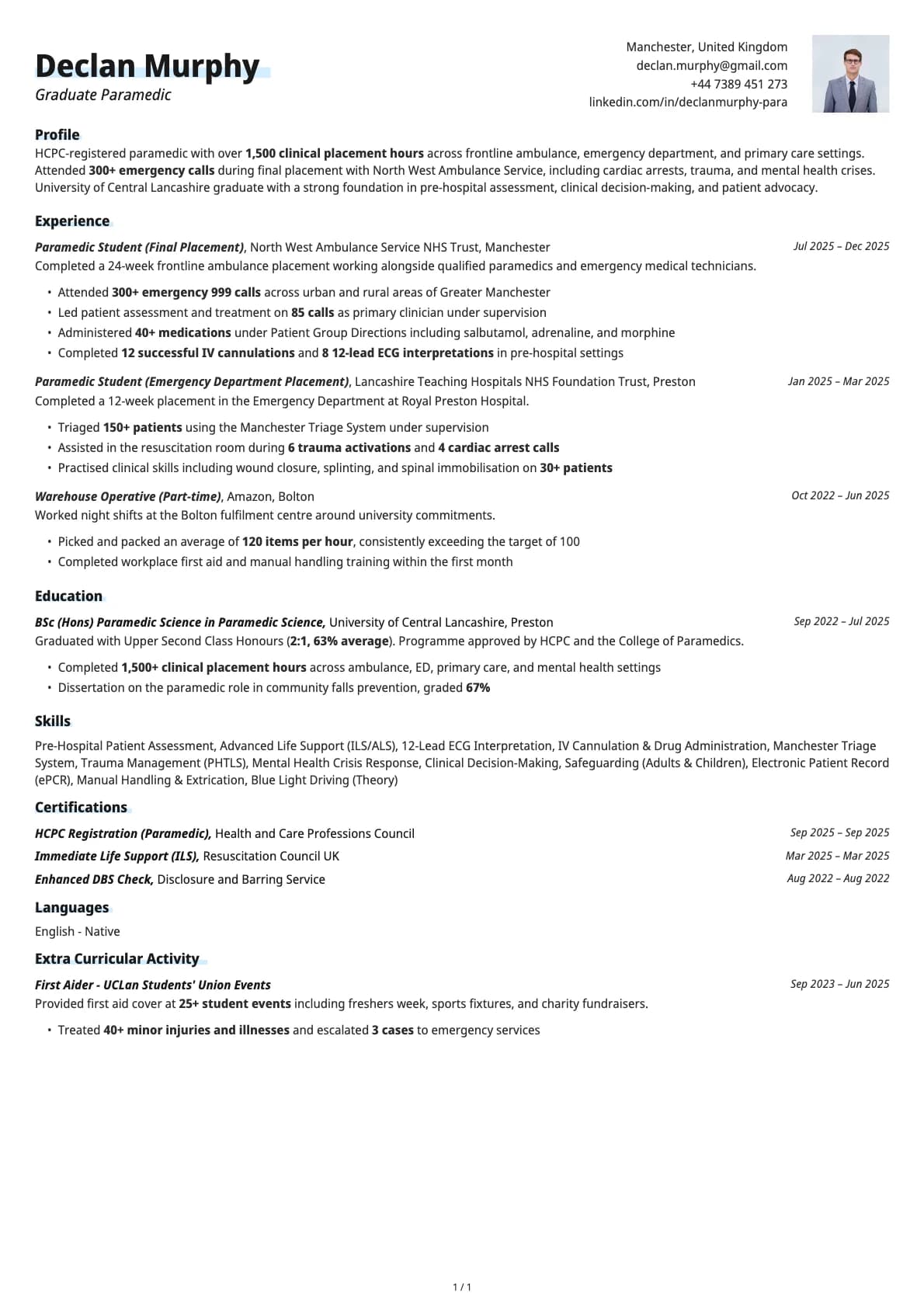
Graduate Paramedic
A graduate paramedic resume example with frontline placement hours, HCPC registration, and emergency call numbers for newly qualified paramedics.
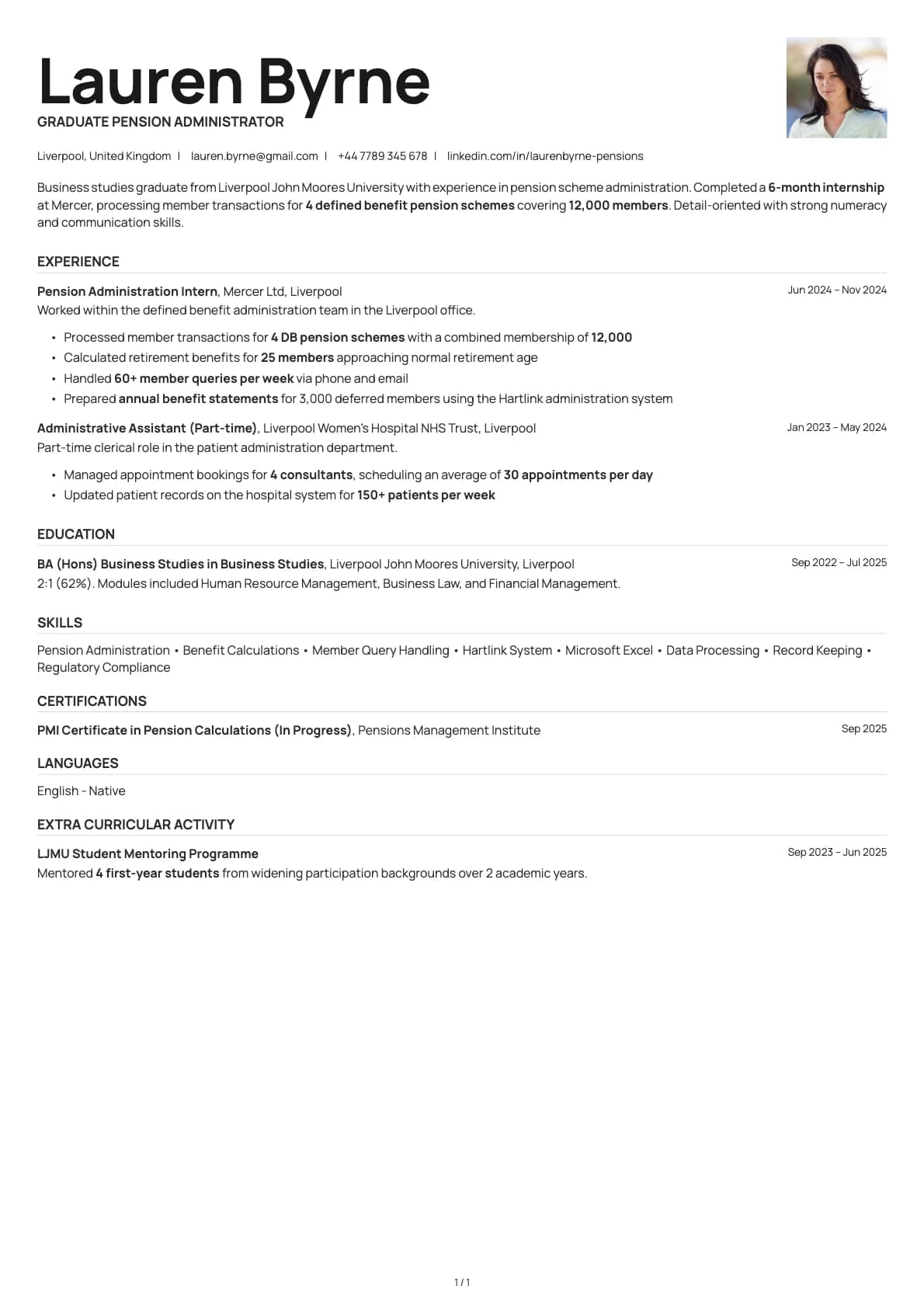
Graduate Pension Administrator
A graduate pension administrator resume example with Mercer internship and benefit calculation experience.
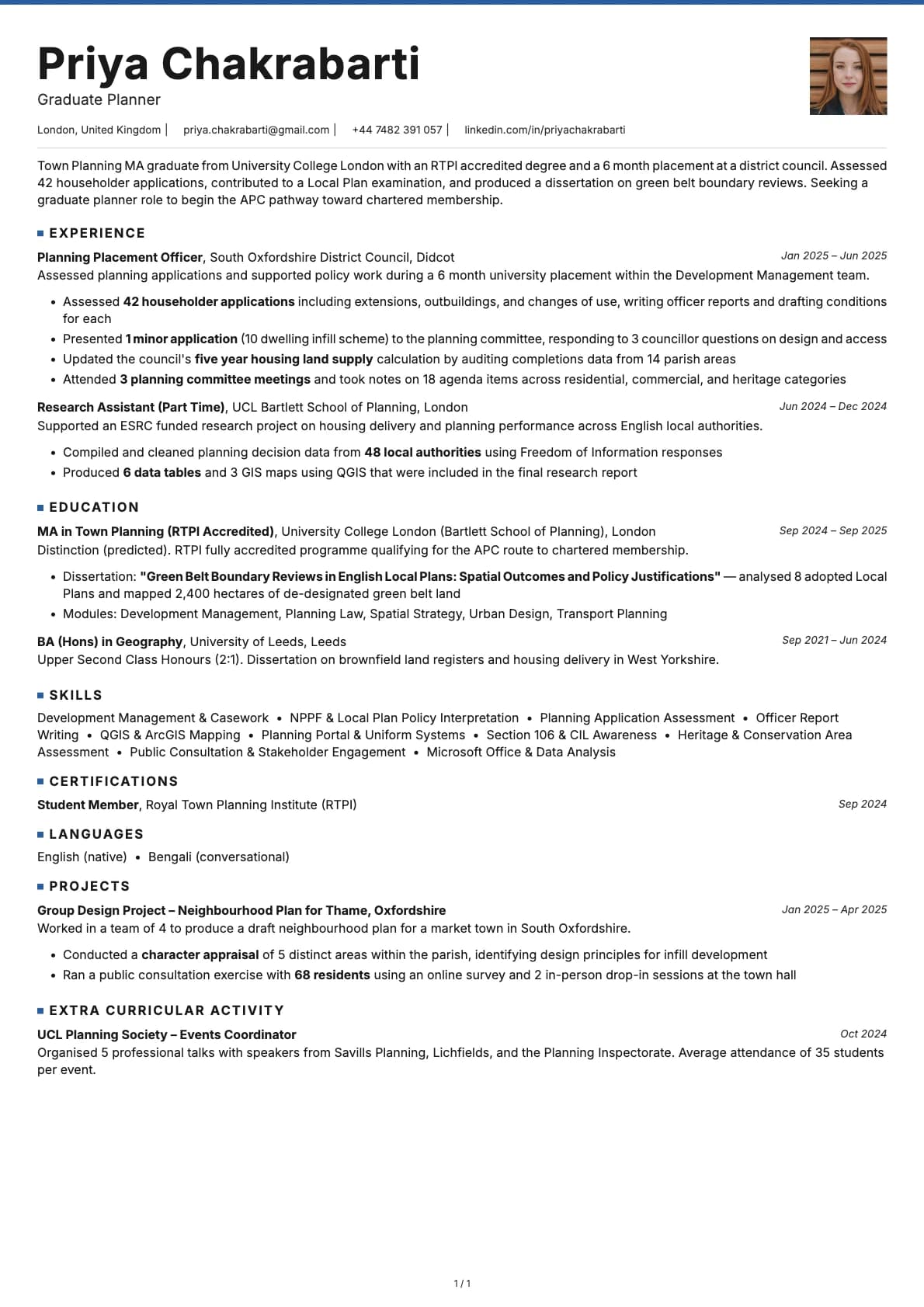
Graduate Planner
A graduate planner resume example for town planning MA graduates. See how to present your RTPI accredited degree, planning applications experience, and policy knowledge.
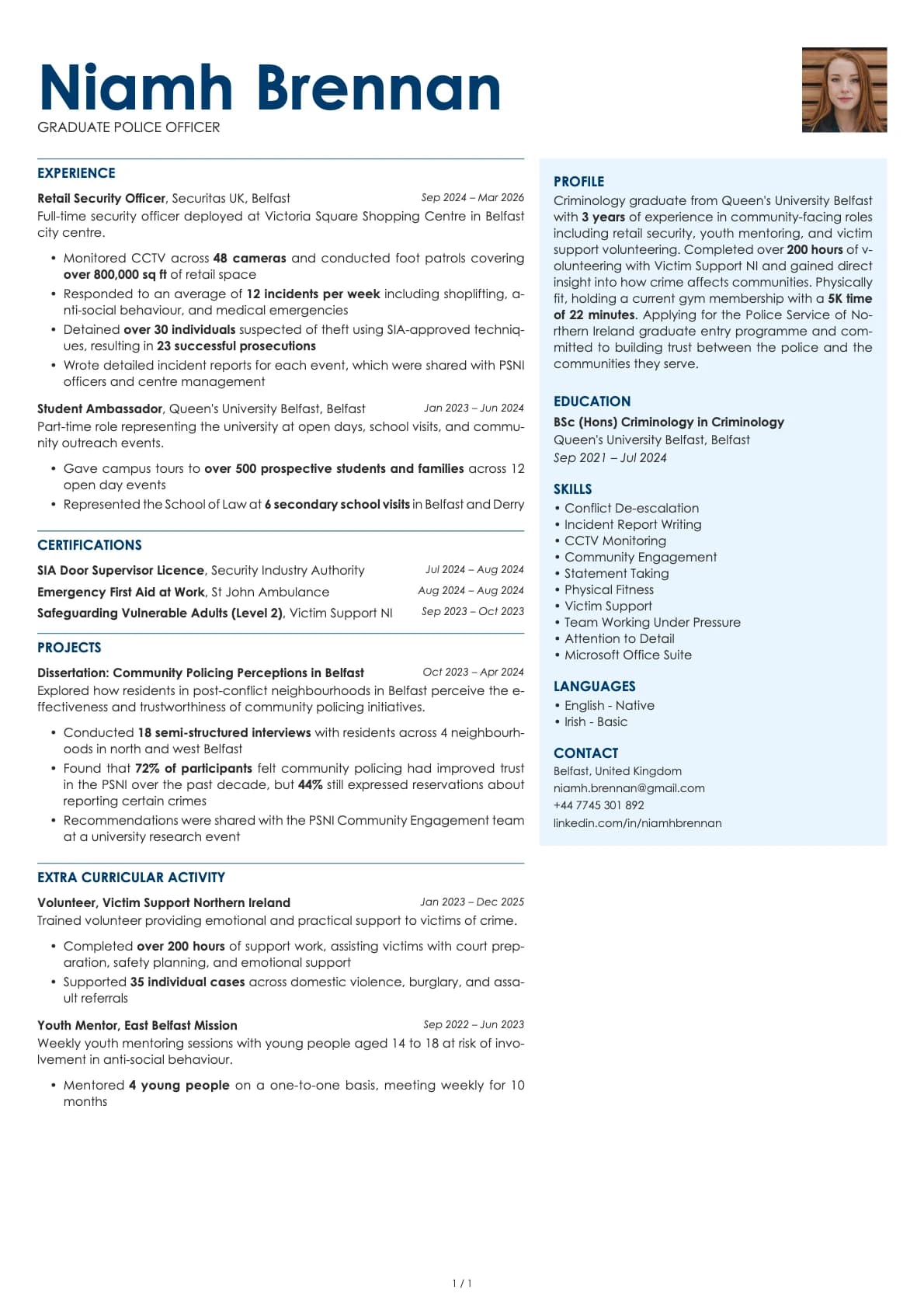
Graduate Police Officer
A graduate police officer resume example showing how to turn retail security, victim support volunteering, and a criminology degree into a strong PSNI application.
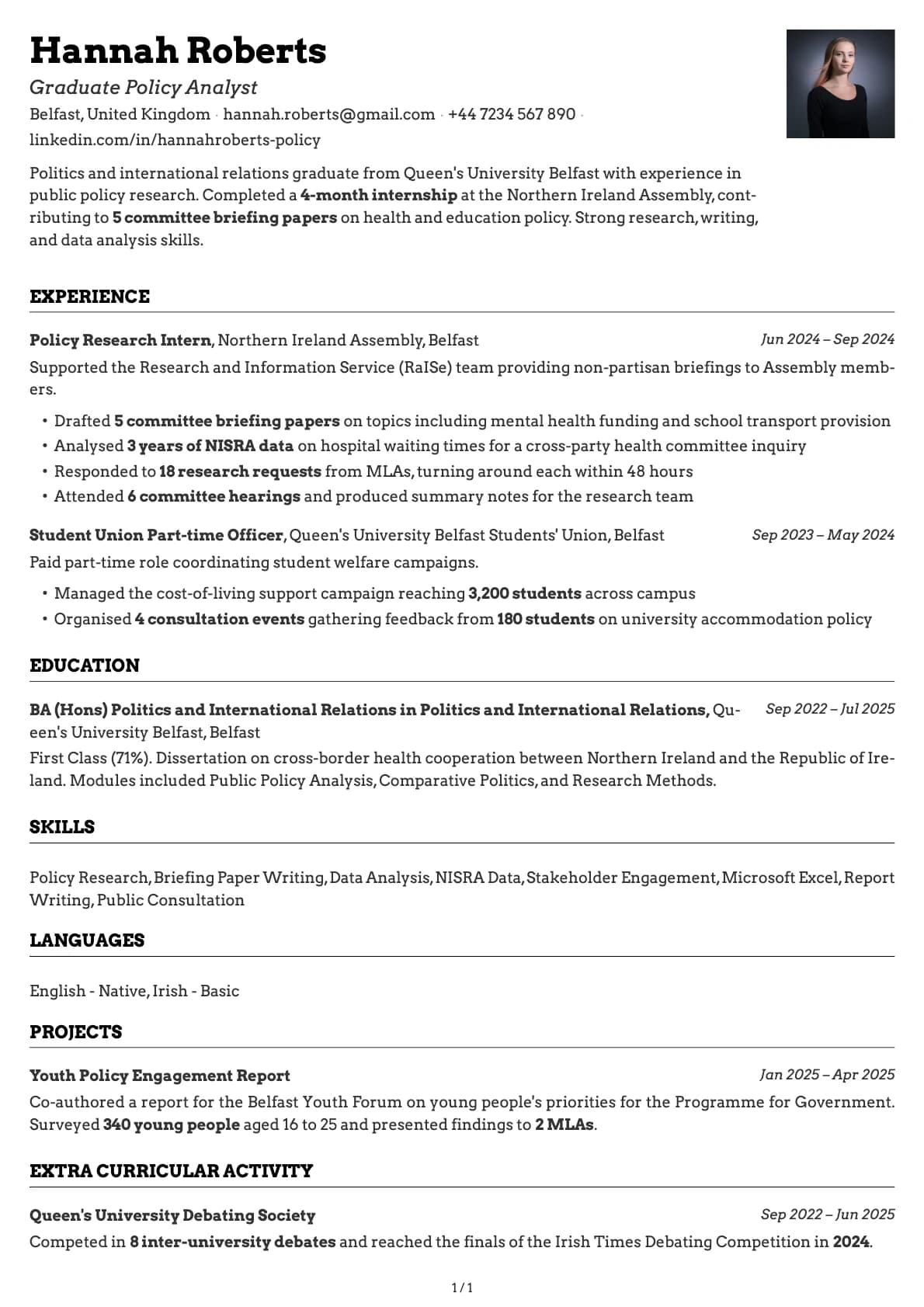
Graduate Policy Analyst
A graduate policy analyst resume example with Northern Ireland Assembly internship and public policy research experience.
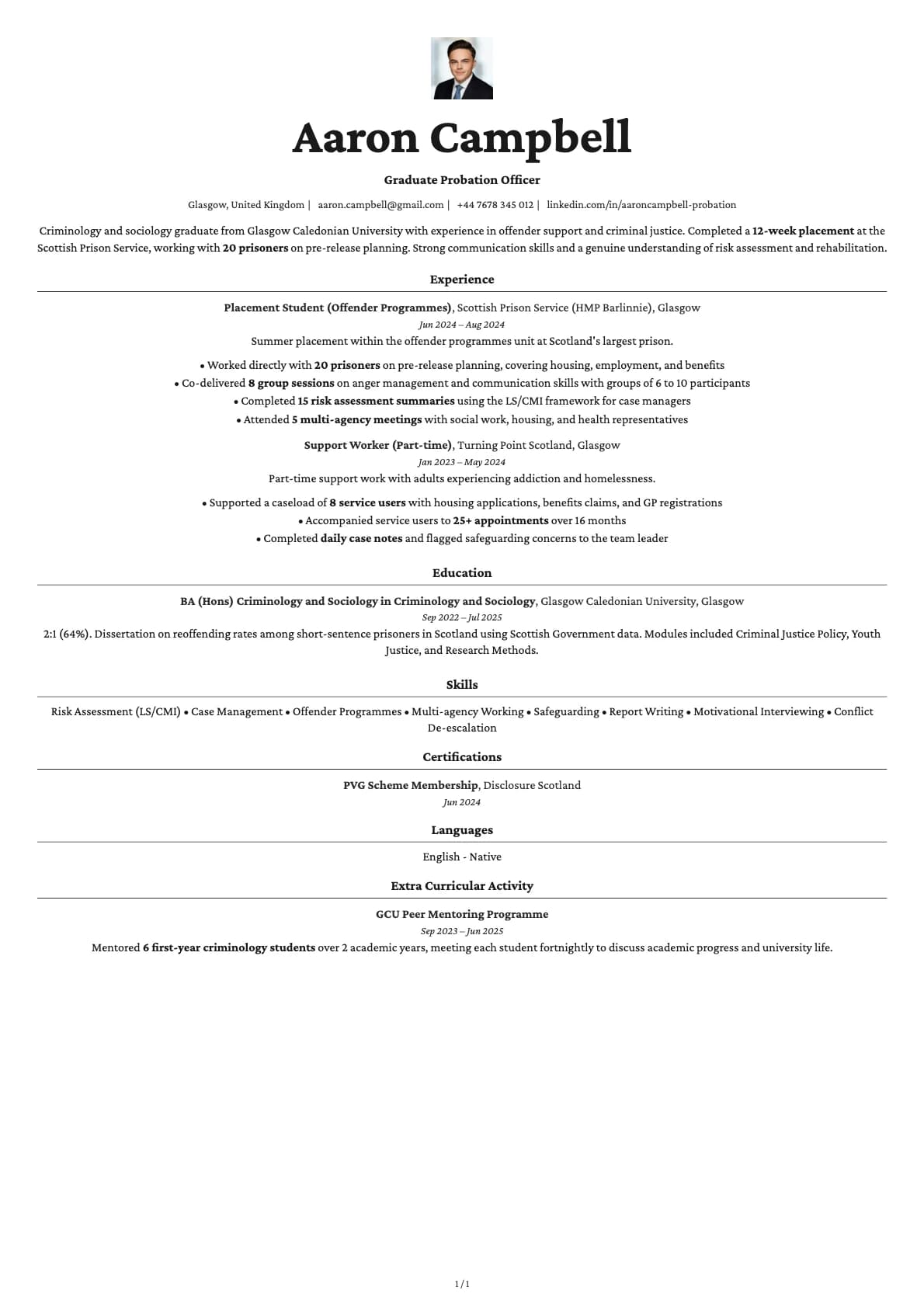
Graduate Probation Officer
A graduate probation officer resume example with prison placement experience and risk assessment skills.
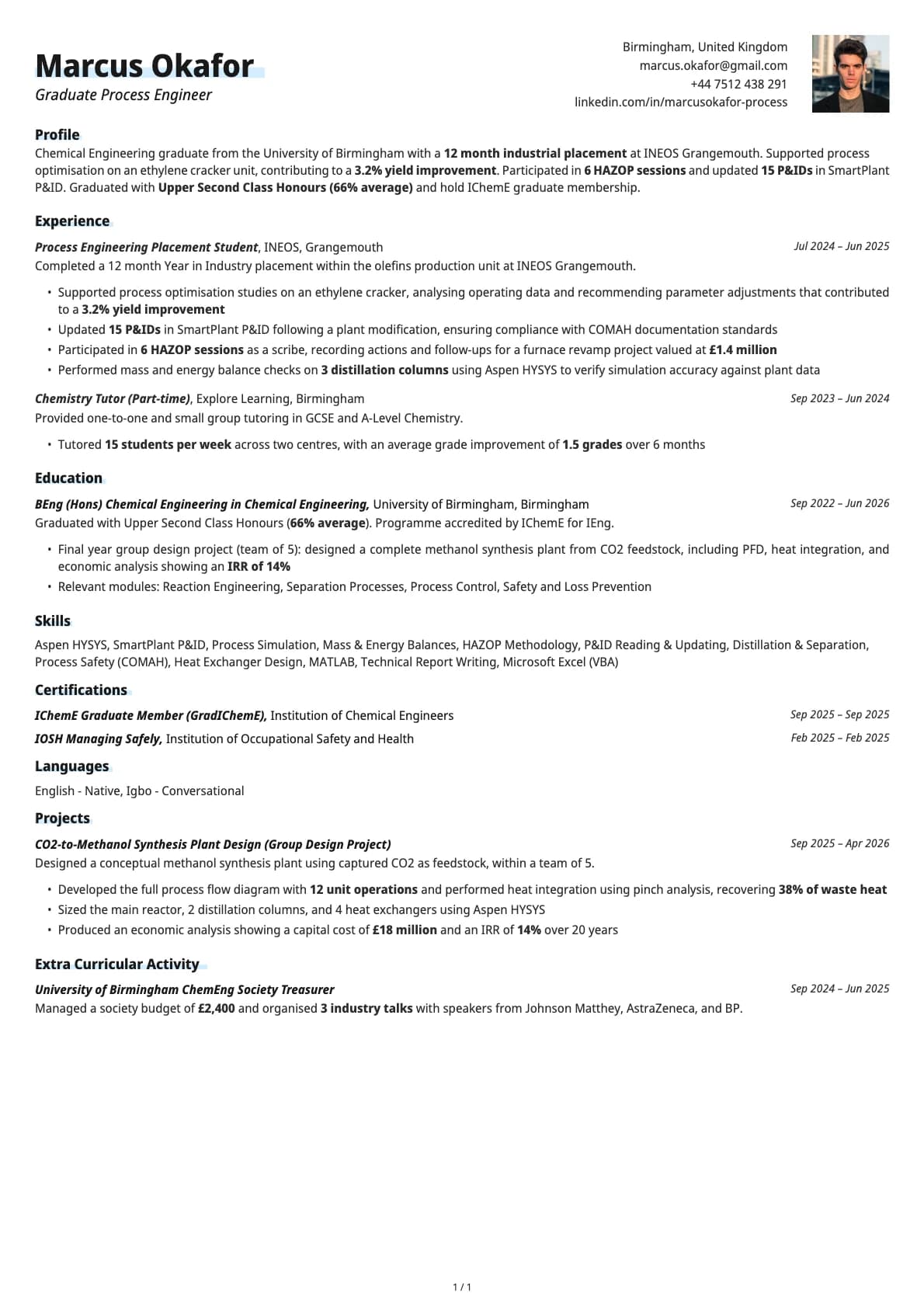
Graduate Process Engineer
A graduate process engineer resume example with chemical plant placement experience, HAZOP participation, and IChemE membership.