Cashier Cover Letter Example
This cashier cover letter example demonstrates how to present transaction accuracy, customer interaction, and retail readiness.
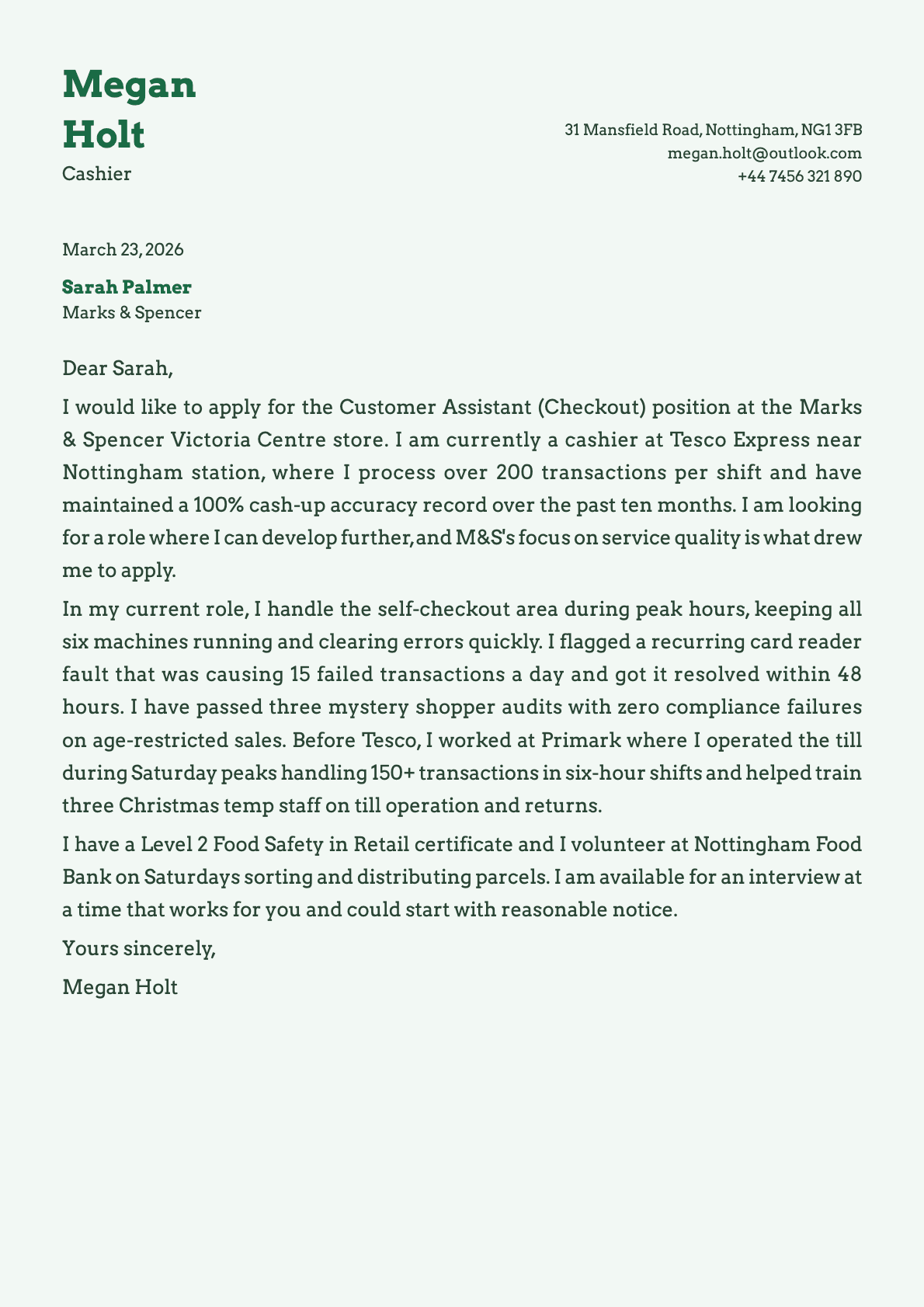
Free to use. No account needed to start.
Free to use. No account needed to start.
Overview
Cashier cover letters get dismissed as unnecessary. Many people think that for an entry-level retail role, a CV is enough. But a well-written cover letter can be the difference between getting called in for an interview and getting lost in a pile of identical applications. The key is showing reliability, attention to detail, and a genuine reason for applying to that specific store.
This cover letter is from Megan Holt, applying for a Customer Assistant (Checkout) position at Marks & Spencer in Nottingham. Let us look at what makes it work.
Leading with reliability, not enthusiasm
The most common mistake in cashier cover letters is opening with "I am a hardworking and enthusiastic individual." Every applicant says that. Megan takes a different approach. She starts with what she does right now: processing over 200 transactions per shift with a 100% cash-up accuracy record over ten months.
That single detail does two things. It tells the hiring manager she can handle volume, and it tells them she does not make mistakes with money. For a checkout role, those are the two things that matter most.
If you are writing a cashier cover letter, think about what you can measure from your current or most recent role. Transactions per shift, accuracy records, and compliance audit results all work well.
Solving problems, not just processing transactions
The middle of the letter is where Megan separates herself from other applicants. She mentions managing the self-checkout area during peak hours, keeping six machines running and clearing errors quickly. Then she describes flagging a recurring card reader fault that was causing 15 failed transactions a day and getting it resolved within 48 hours.
That card reader detail is excellent. It shows she does not just do her job. She notices when something is wrong and takes initiative to fix it. Hiring managers for retail roles value this kind of proactive behavior because it reduces the workload on supervisors and team leaders.
She also mentions passing three mystery shopper audits with zero compliance failures on age-restricted sales. In retail, compliance is serious. Showing a clean record on Challenge 25 and similar policies tells the employer they can trust you with that responsibility.
Previous experience adds depth
Megan briefly mentions her time at Primark, where she handled 150+ transactions in six-hour Saturday shifts and helped train three Christmas temp staff. The training detail is particularly good because it signals that her previous employer trusted her enough to bring new people up to speed. That is not something every cashier gets asked to do.
Even if your previous role was similar, look for the details that show you went beyond the basics. Did you train anyone? Did you cover a supervisor's break? Did you handle a specific challenge during a busy period? Those are the details that make your letter memorable.
Volunteer work and availability
The closing paragraph mentions Megan's Level 2 Food Safety in Retail certificate and her volunteer work at Nottingham Food Bank. The food safety certificate is directly relevant for a role at M&S, where food halls are a major part of the operation. The volunteer work shows character without being heavy-handed about it.
She also mentions her availability, which is practical and appreciated. Hiring managers for retail roles often need to fill specific shift patterns, and knowing a candidate is flexible and available to start soon makes scheduling decisions easier.
Writing a cashier cover letter with limited experience
If you are applying for your first cashier role and do not have previous retail experience, focus on transferable skills. Handling money at a school event, volunteering at a charity shop, or any situation where you dealt with the public and managed transactions. The same principles apply: be specific, use numbers where you can, and show that you take responsibility seriously.
Template and format
This letter uses the Emerald template, which is clean and approachable. For entry-level retail roles, you do not need anything elaborate. A well-organized, professional-looking letter that is easy to read will serve you better than something overly designed. Keep it to one page and make every sentence count.
Was this cover letter example helpful?
Rate this example to help us create better content for you.
4.7 average from 156 ratingsBuild your own version
Open this layout in the builder and swap in your own details. It takes a few minutes.
Free to use. No account needed to start.
Related cover letter examples
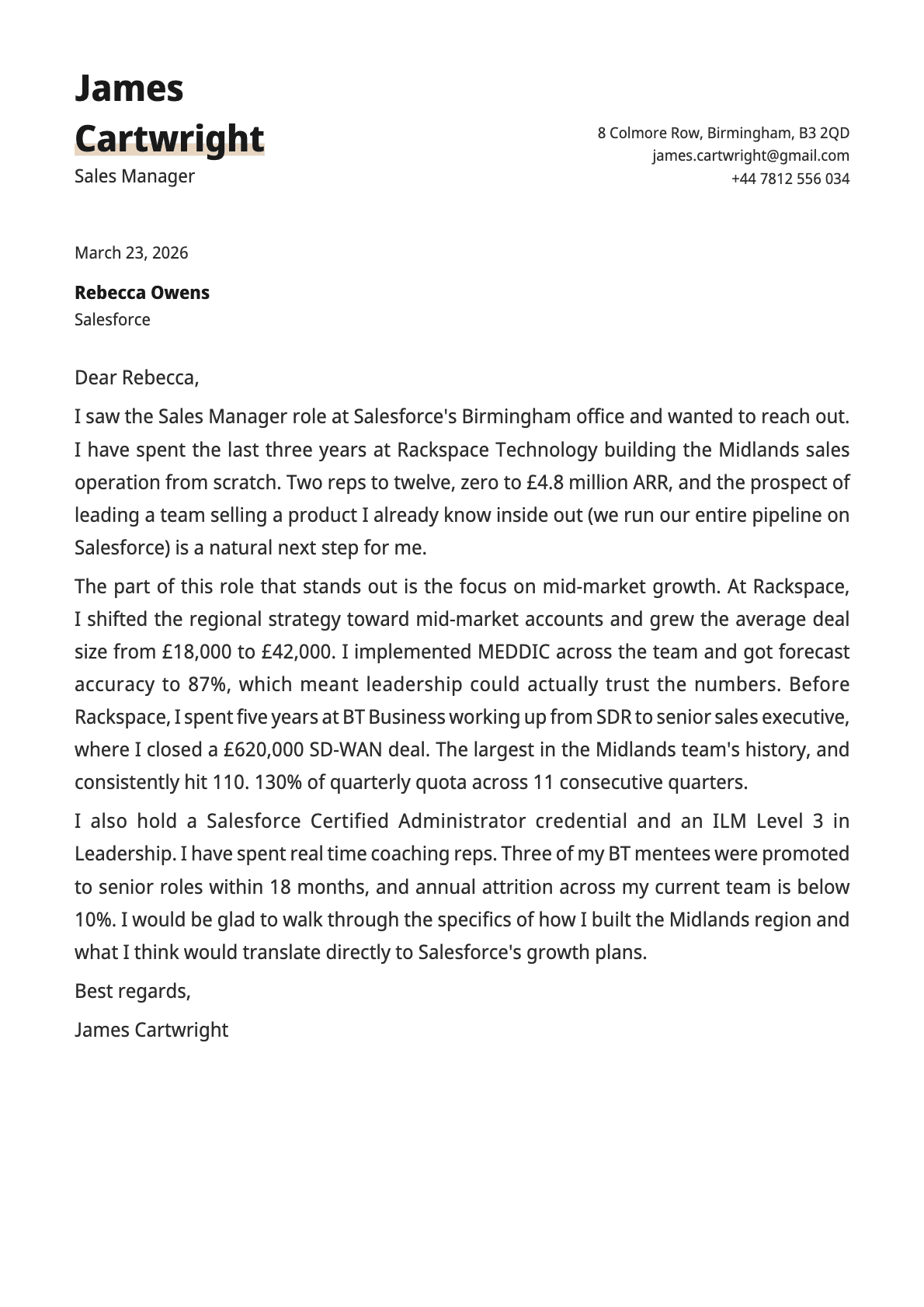
Sales Manager
A sales manager cover letter example showcasing consistent quota achievement, team leadership, and revenue growth strategies.
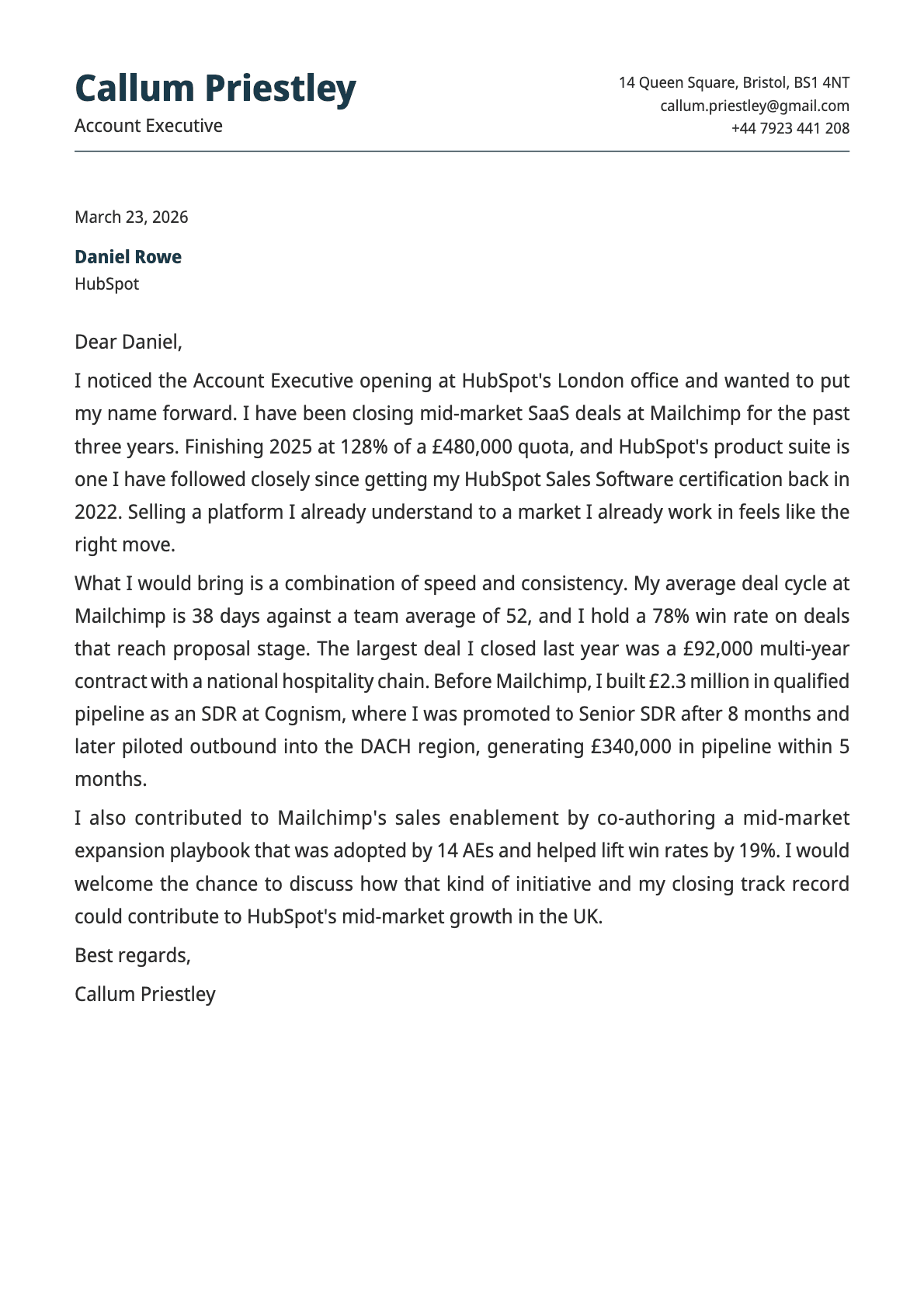
Account Executive
See how this account executive cover letter highlights client growth, revenue targets, and relationship-building skills.
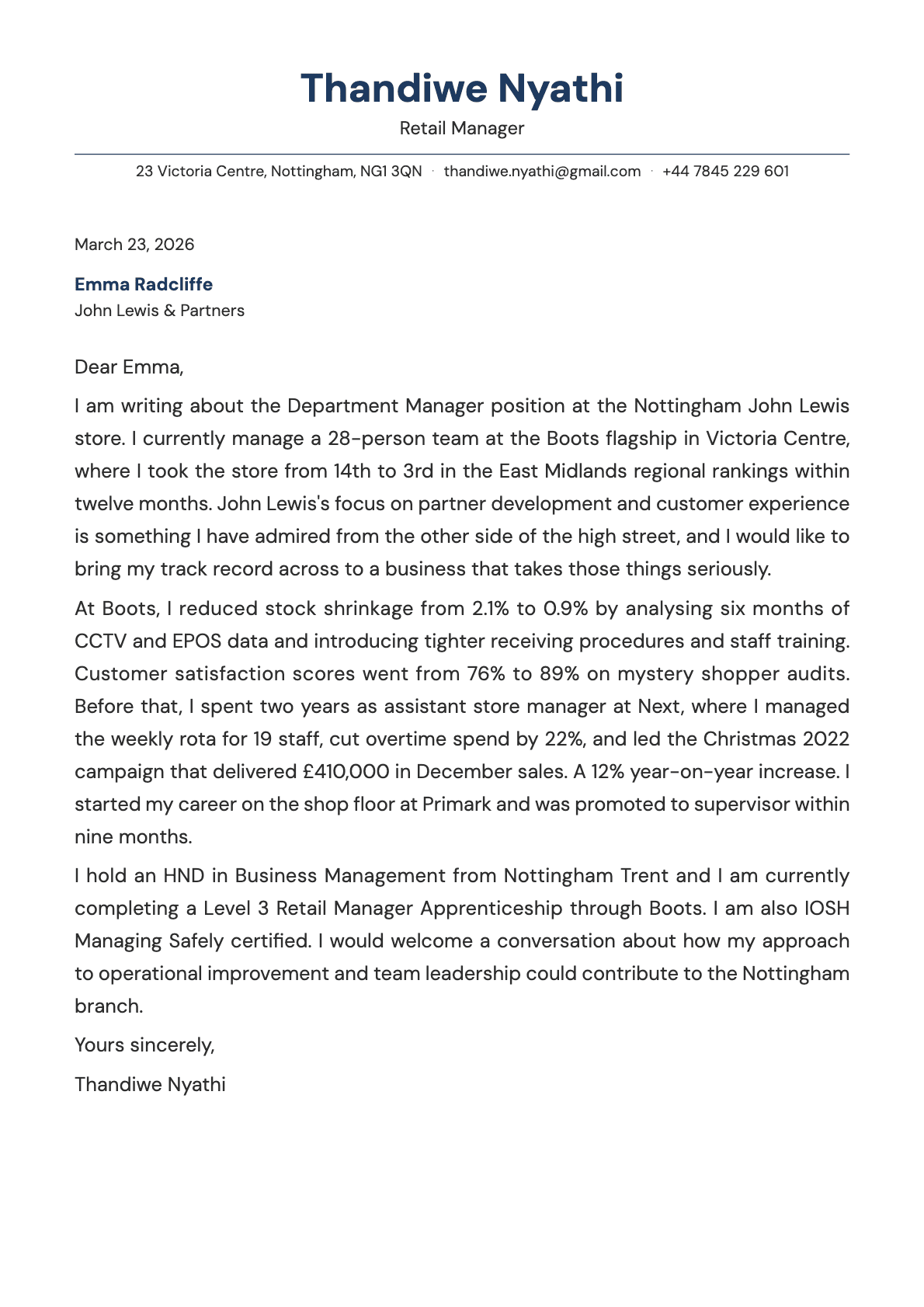
Retail Manager
This retail manager cover letter example highlights store performance, team development, and inventory management expertise.
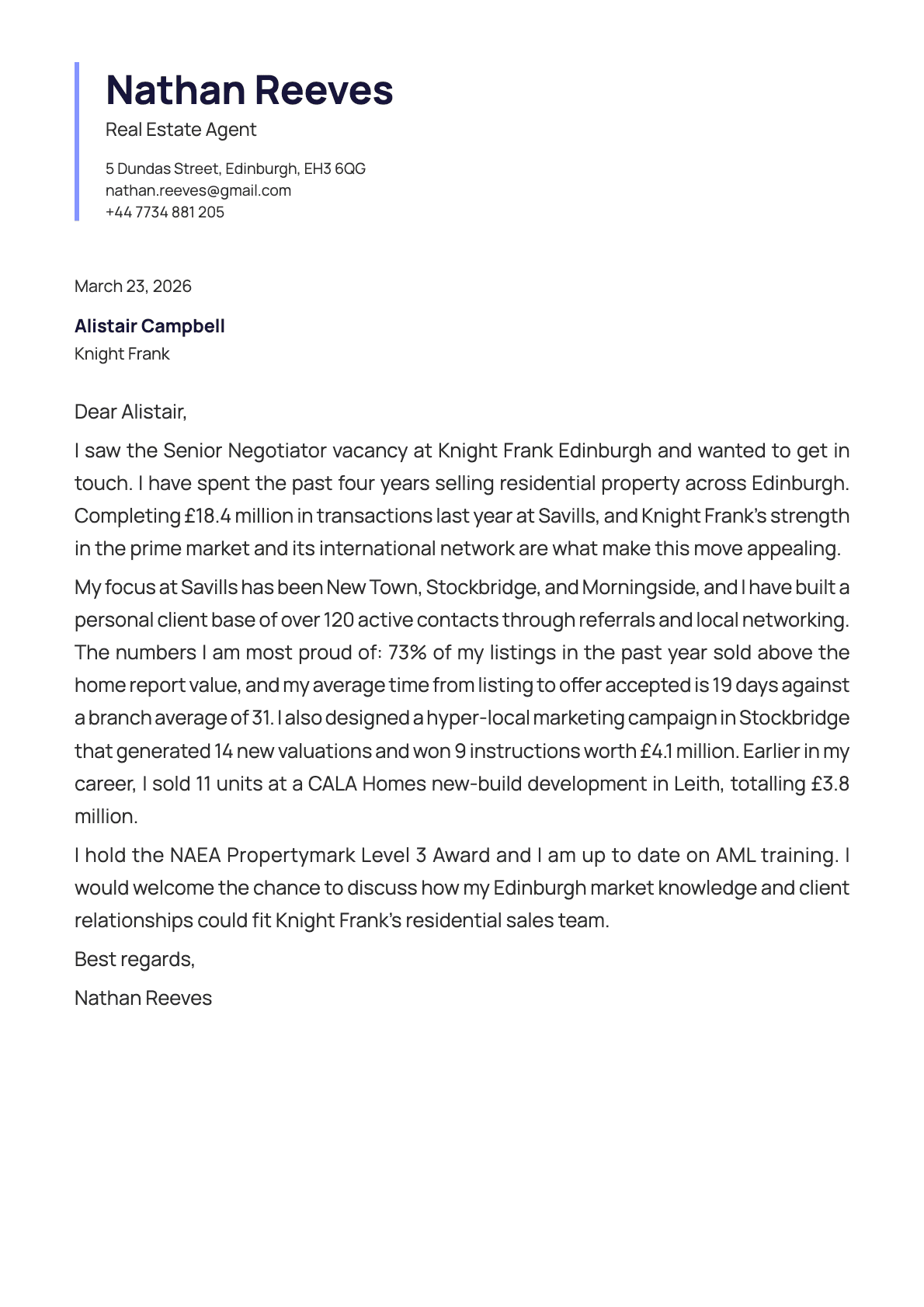
Real Estate Agent
See how this real estate agent cover letter presents market knowledge, client relationships, and property sales results.
Related articles

AI Is Screening Your Resume Before Any Human Sees It
AI screens most resumes before a human ever reads them. 97.4% of Fortune 500 companies run an ATS. This is what that means for you and what you can do about it.

The Best Resume Builders in 2026, Compared Honestly
Resume.io, Zety, Enhancv, Kickresume, Teal, and Laddro compared honestly: real pricing, free tiers, mobile apps, and where each tool wins. All prices checked in September 2026.

Burnout Recovery: A Real Timeline, Not 'Take a Bubble Bath'
55% of the U.S. workforce is burned out. Recovery takes 3 to 12 months. Here's what that actually looks like, stage by stage.