Real Estate Agent Cover Letter Example
See how this real estate agent cover letter presents market knowledge, client relationships, and property sales results.
Free to use. No account needed to start.
Free to use. No account needed to start.
Overview
Real estate agent cover letters have a unique challenge. The hiring manager is probably a branch director or regional manager who thinks in terms of listings won, deals closed, and time on market. If your letter does not speak that language from the first sentence, it will not hold their attention.
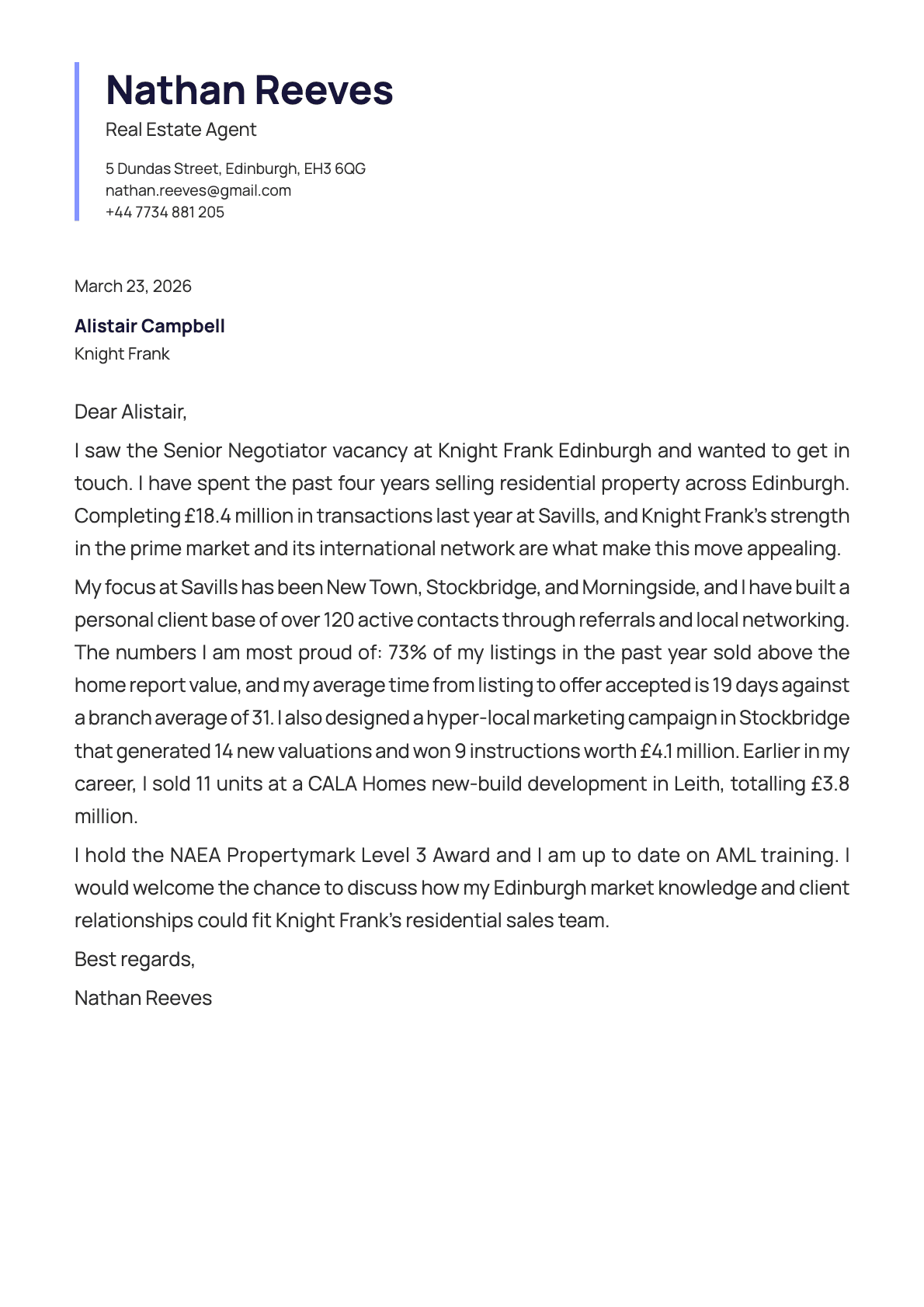
This cover letter comes from Nathan Reeves, a negotiator at Savills in Edinburgh who is applying for a Senior Negotiator role at Knight Frank. Let us look at what works and how you can use the same approach.
Opening with the transaction volume
Nathan opens by naming the role and then immediately drops his annual figure: £18.4 million in completed transactions last year. For a real estate cover letter, this is the equivalent of leading with your quota attainment in a sales role. The number tells the hiring manager everything they need to know about Nathan's level before they even finish the first paragraph.
He also explains why Knight Frank specifically. The prime market focus and the international network. This is not generic. It shows he understands the difference between the agencies and has a reason for making this move.
When writing your own letter, lead with your transaction volume or your most impressive deal figure from the past 12 months. If you are newer to the industry, lead with the number of completions or the total value of properties you have listed.
Local market knowledge as a selling point
Nathan names the specific Edinburgh neighborhoods he works: New Town, Stockbridge, and Morningside. He mentions a personal client base of over 120 active contacts built through referrals and local networking.
This matters because real estate is a local business. A hiring manager at Knight Frank Edinburgh does not just want someone who can sell houses. They want someone who already knows the streets, the buyers, and the sellers. By naming neighborhoods and quantifying his network, Nathan signals that he brings a book of business with him.
If you have a geographic specialty or a network of contacts, say so. Be specific about the area you know and the size of the network you have built. That is often the deciding factor in real estate hiring.
The metrics that matter
Two numbers stand out in this letter. First, 73% of his listings sold above the home report value. Second, his average time from listing to offer accepted is 19 days against a branch average of 31.
These are the two metrics real estate hiring managers care about most: sale price relative to valuation and speed. If you can show that you consistently sell above asking and faster than average, you are making a very strong case.
Nathan also mentions a hyper-local marketing campaign in Stockbridge that generated 14 new valuations and won 9 instructions worth £4.1 million. That tells the reader he does not just handle leads that come to him. He goes out and creates business.
Credentials are mentioned, not emphasized
Nathan holds the NAEA Propertymark Level 3 Award and is up to date on AML training. He mentions these in a single sentence at the end. In real estate, your results matter far more than your qualifications. But having the Propertymark accreditation signals professionalism, and AML compliance is a regulatory requirement that shows you take the legal side seriously.
If you have relevant accreditations, include them. But keep them brief. Your cover letter is not a CV. The numbers and the narrative should carry the weight.
What could be improved
The letter does not mention any technology skills or marketing tools. In modern real estate, digital marketing, CRM management, and social media presence are increasingly important. A brief mention of how Nathan uses Rightmove data, Reapit, or social media to generate leads would strengthen the letter.
Template choice
This letter uses the Onyx template, which gives it a sharp and professional look. For real estate roles, especially at firms like Knight Frank, presentation matters. The Onyx template looks polished without being flashy, which is the right tone for this industry.
Was this cover letter example helpful?
Rate this example to help us create better content for you.
4.6 average from 97 ratingsBuild your own version
Open this layout in the builder and swap in your own details. It takes a few minutes.
Free to use. No account needed to start.
Related cover letter examples
Sales Manager
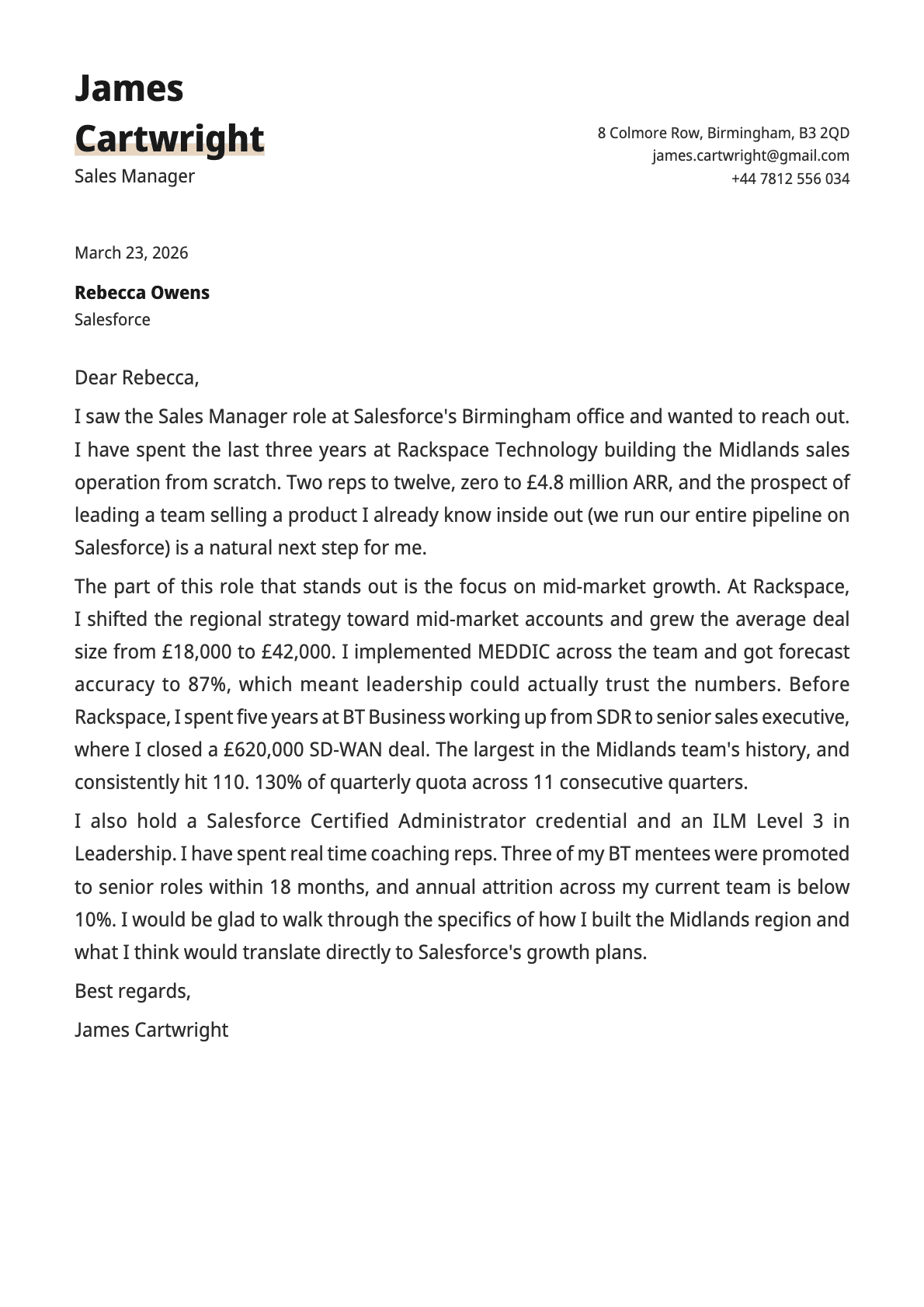
A sales manager cover letter example showcasing consistent quota achievement, team leadership, and revenue growth strategies.
Account Executive
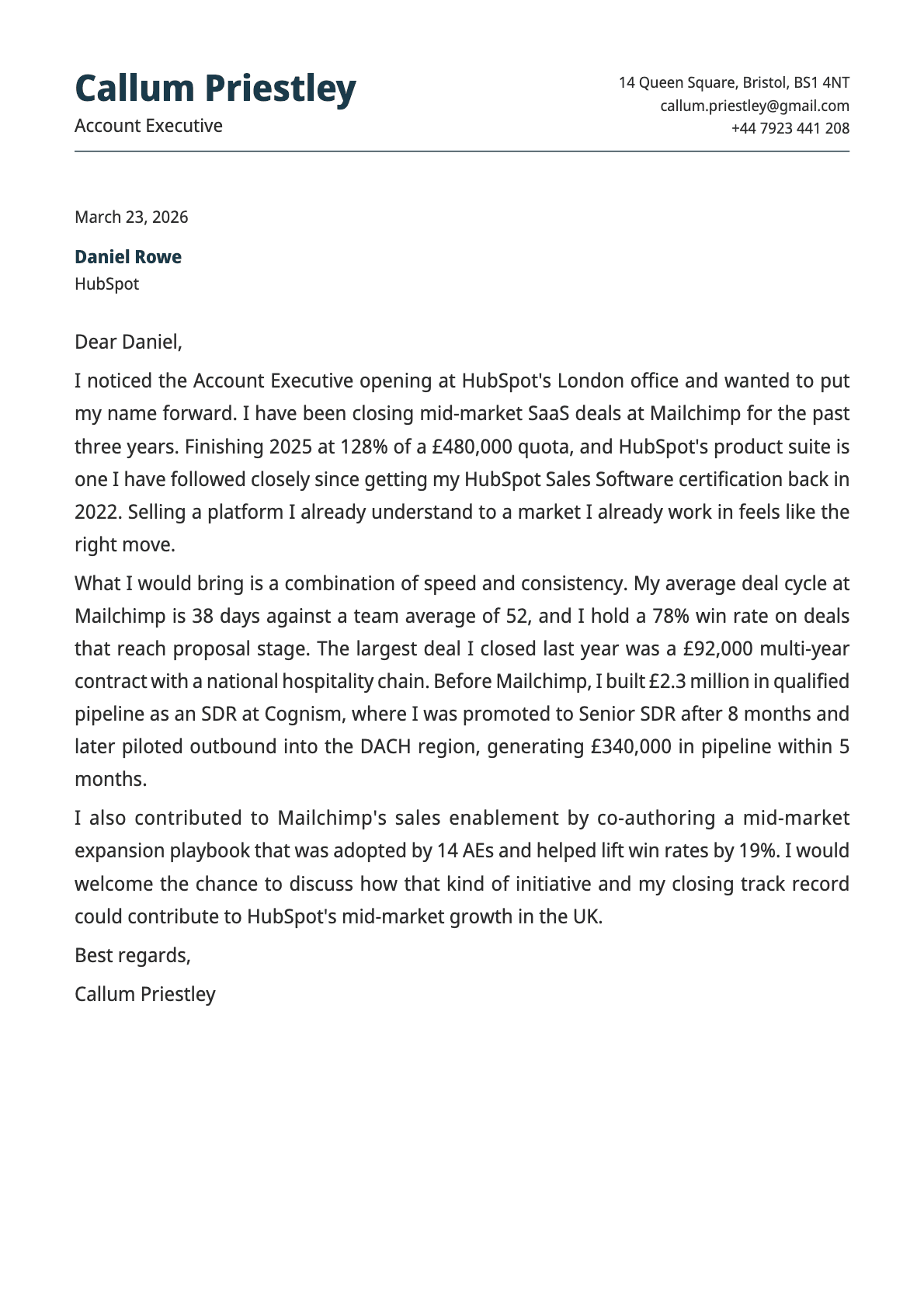
See how this account executive cover letter highlights client growth, revenue targets, and relationship-building skills.
Retail Manager
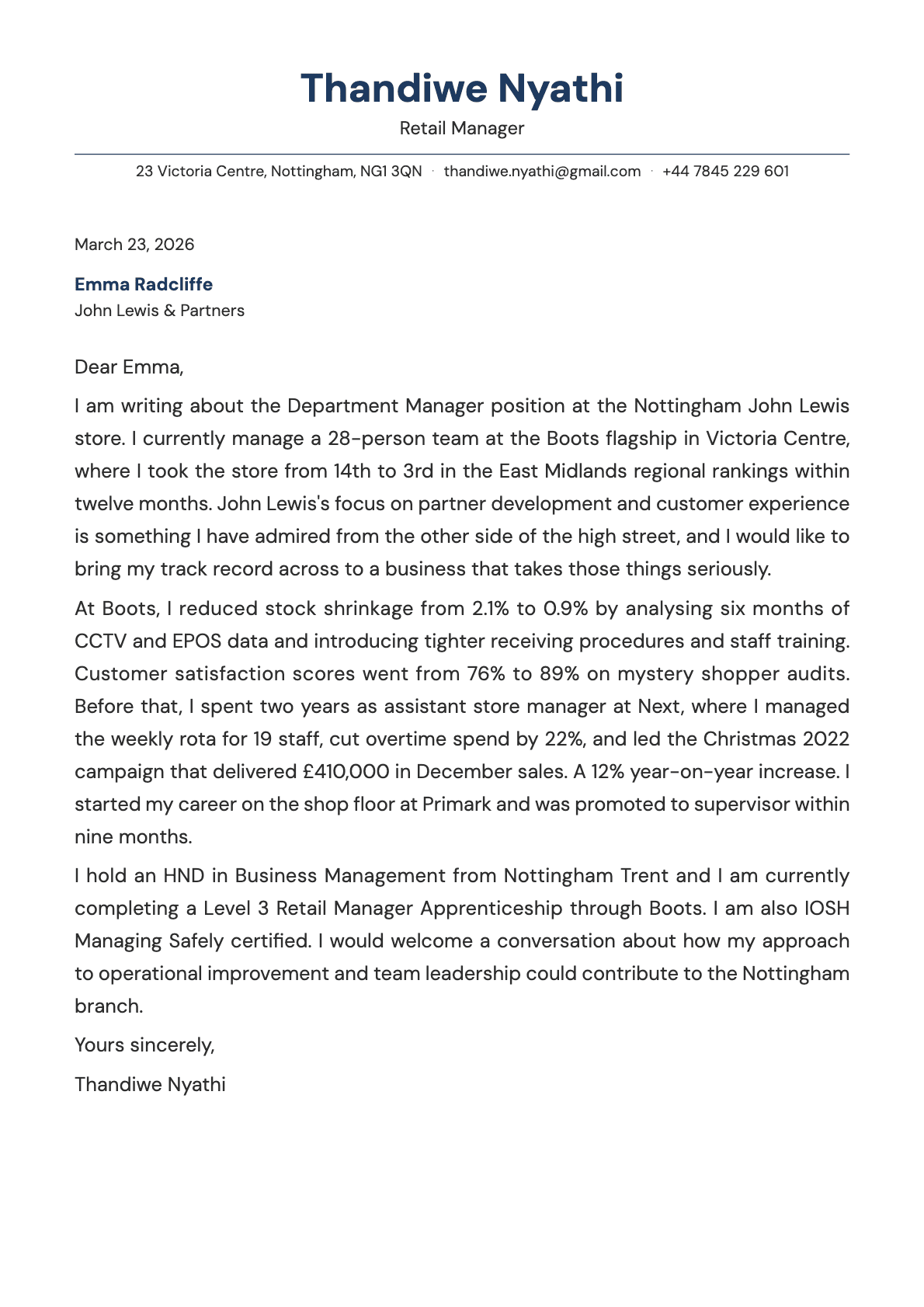
This retail manager cover letter example highlights store performance, team development, and inventory management expertise.
Cashier
This cashier cover letter example demonstrates how to present transaction accuracy, customer interaction, and retail readiness.
Related articles

AI Is Screening Your Resume Before Any Human Sees It
AI screens most resumes before a human ever reads them. 97.4% of Fortune 500 companies run an ATS. This is what that means for you and what you can do about it.

The Best Resume Builders in 2026, Compared Honestly
Resume.io, Zety, Enhancv, Kickresume, Teal, and Laddro compared honestly: real pricing, free tiers, mobile apps, and where each tool wins. All prices checked in September 2026.

Burnout Recovery: A Real Timeline, Not 'Take a Bubble Bath'
55% of the U.S. workforce is burned out. Recovery takes 3 to 12 months. Here's what that actually looks like, stage by stage.