Teacher Cover Letter Example
A teacher cover letter example for a secondary English position at Redland Green School.

Laddro Team
Free to use. No account needed to start.
Free to use. No account needed to start.
Overview
Teacher cover letters have a particular challenge. Teaching involves so many different skills (subject knowledge, classroom management, assessment, pastoral care, extracurricular contributions) that it is tempting to try to cover all of them. The result is usually a long, unfocused letter that reads like a job description rather than a compelling case for why this particular teacher should get this particular job.
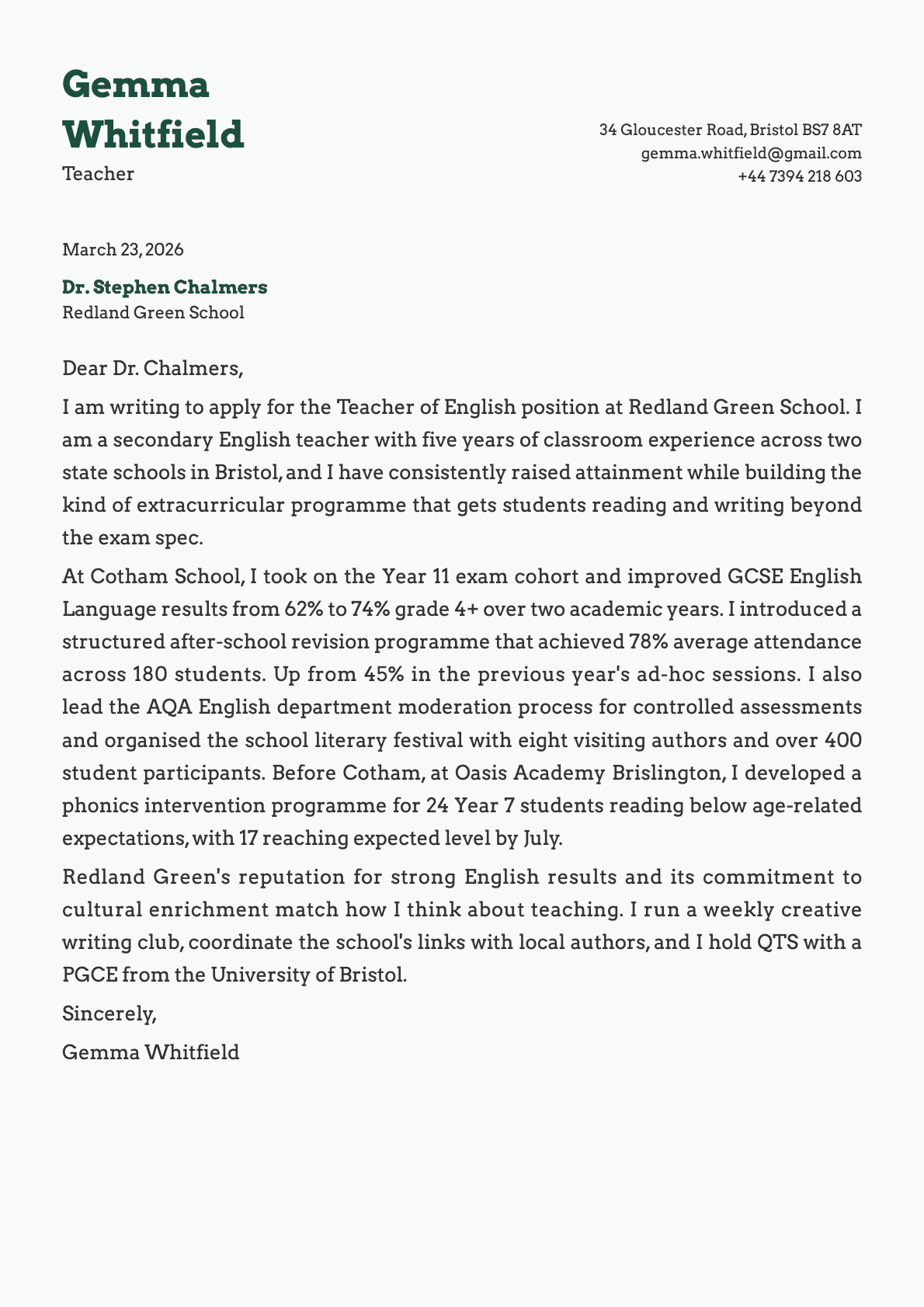
This cover letter belongs to Gemma Whitfield, a secondary English teacher with five years of experience across two Bristol schools. She is applying for a Teacher of English position at Redland Green School. Her letter works because she focuses on two things: measurable attainment improvements and meaningful extracurricular contributions.
The opening: subject, experience, and a clear claim
Gemma opens with her subject, her experience level, and a confident claim: she has "consistently raised attainment while building the kind of extracurricular programme that gets students reading and writing beyond the exam spec."
This framing is important. It tells the headteacher that Gemma does not just teach to the exam. She builds the wider English culture in a school. That is exactly what English departments want: someone who raises results and inspires a genuine love of the subject.
For your letter: lead with your subject specialism, your experience, and one sentence that captures what makes you distinctive as a teacher. Not "I am keen about education" but something specific about your impact.
The body: results and evidence
The middle paragraph delivers two strong results from two different schools. At Cotham School, she improved GCSE English Language results from 62% to 74% grade 4+ over two years. She also designed a revision programme that achieved 78% attendance (up from 45% with the previous approach). At Oasis Academy Brislington, she developed a phonics intervention for 24 Year 7 students, with 17 reaching expected level by July.
The revision programme detail is particularly effective. Designing a structured programme that tripled attendance shows she thinks about how to engage students, not just what to teach them. The before-and-after attendance figure makes the improvement undeniable.
The literary festival (eight visiting authors, 400+ student participants) adds a different dimension. It shows Gemma contributes to the school community beyond her classroom, which matters in teaching applications.
The lesson: teaching cover letters should include at least one attainment figure (exam results, progress measures, intervention outcomes) and at least one extracurricular contribution. Headteachers are hiring for both.
The closing: school fit and qualifications
Gemma's closing connects Redland Green's reputation to her own values: strong English results and cultural enrichment. She then mentions her ongoing contributions (creative writing club, author links) and her qualifications (QTS, PGCE from University of Bristol).
In teaching applications, the school-specific fit matters more than in most other professions. Headteachers want to know you have researched their school and that your approach aligns with their ethos. A generic closing that could apply to any school is a missed opportunity.
What makes this letter effective
Gemma writes like a teacher who cares about her subject and her students but expresses that through evidence rather than emotion. The letter is warm but professional. Every claim is supported by a number or a specific example. The attainment improvements carry the argument, and the extracurricular details show the wider contribution.
The balance between exam results and broader engagement is exactly right for a secondary English application. A letter that only discussed exam results would feel narrow. A letter that only discussed creative writing clubs and literary festivals would feel ungrounded. Gemma gives both.
Mistakes teachers make in cover letters
Leading with philosophy instead of evidence. "I believe every child can succeed" is a fine sentiment, but it does not distinguish you from any other applicant. Lead with what you have actually achieved, and let your practice demonstrate your beliefs.
Not including exam or assessment data. If you have improved results, say so with specific figures. GCSE percentages, Key Stage progress measures, or intervention outcomes. Headteachers make decisions based on evidence, and your cover letter should provide it.
Being vague about extracurricular contributions. "I run various clubs and activities" is not useful. Name the clubs, describe the participation levels, and explain their impact. A literary festival with eight visiting authors and 400 students is a specific, impressive contribution.
Applying generically. Teaching cover letters should be tailored to the school. Mention the school by name, reference something specific about its ethos or priorities, and explain why you want to work there specifically. Headteachers can tell when a letter has been sent to ten schools without modification.
Ignoring pastoral care and SEND. If you have experience with pastoral responsibilities, SEND support, or behaviour management strategies, include relevant examples. These are increasingly important in school hiring decisions.
Was this cover letter example helpful?
Rate this example to help us create better content for you.
4.8 average from 192 ratingsBuild your own version
Open this layout in the builder and swap in your own details. It takes a few minutes.
Free to use. No account needed to start.
Related cover letter examples
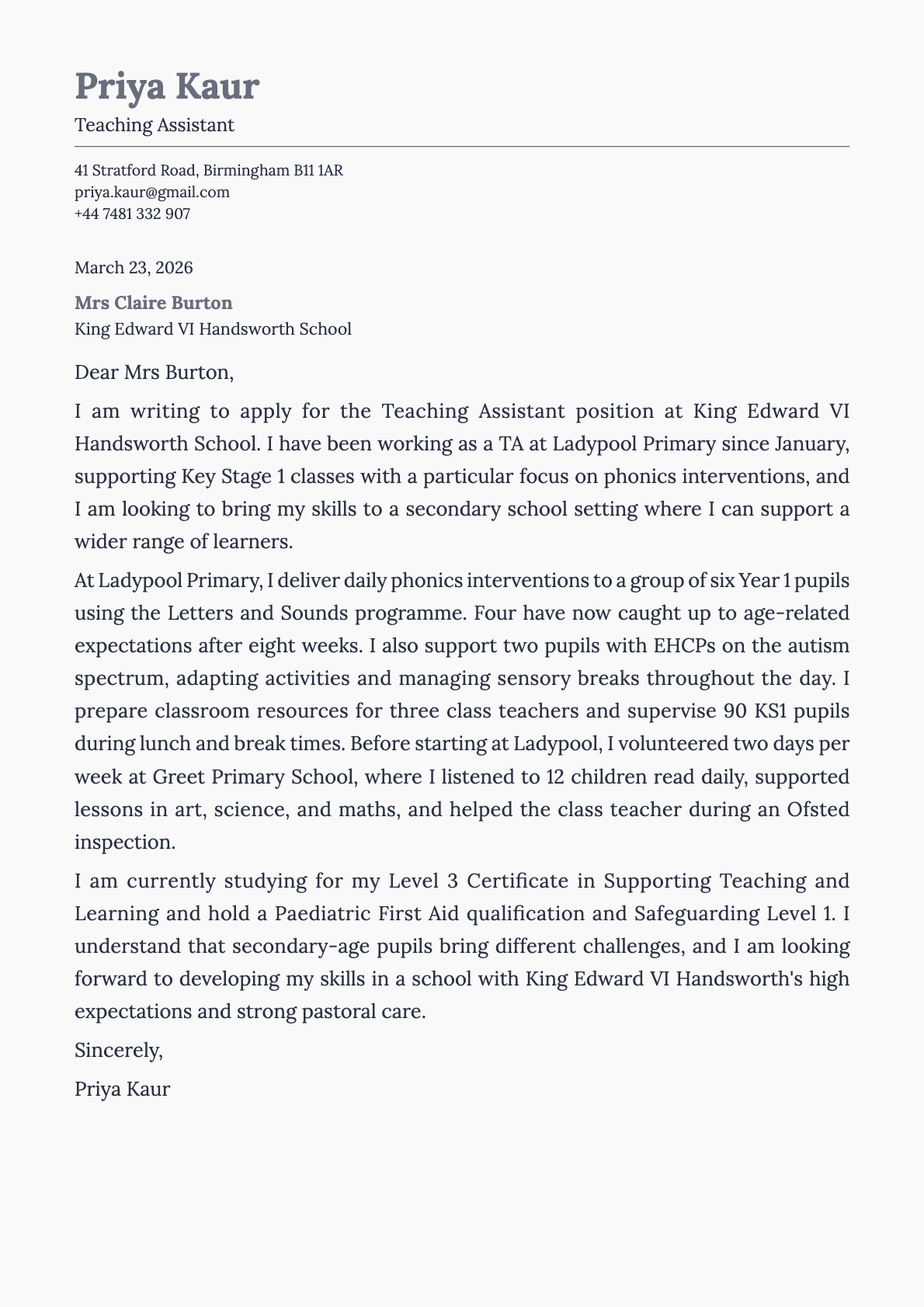
Teaching Assistant
A teaching assistant cover letter example showing how to present phonics intervention results, SEND support experience, and classroom management skills.
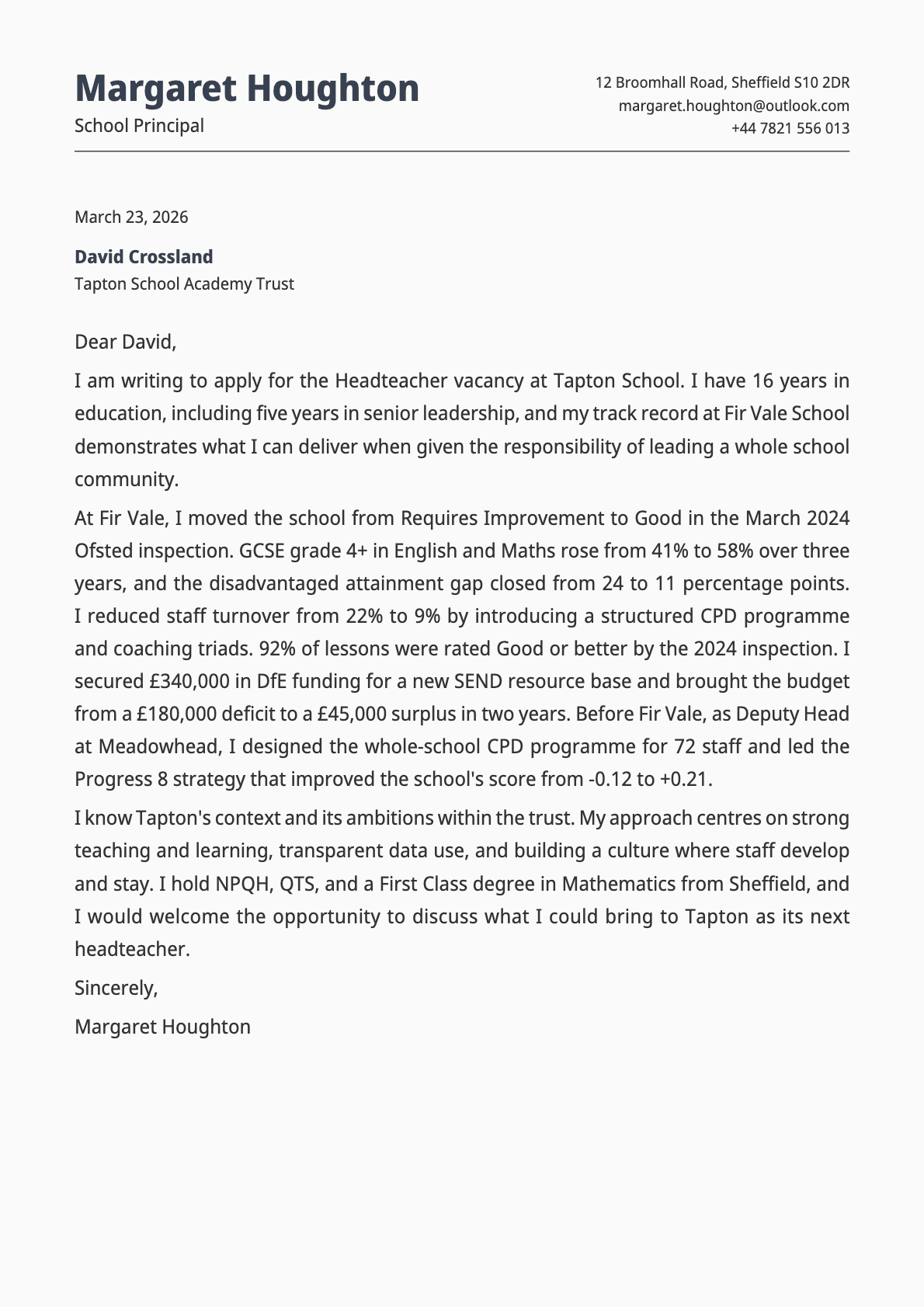
School Principal
A school principal cover letter example showing how to present Ofsted results, attainment data, budget management.
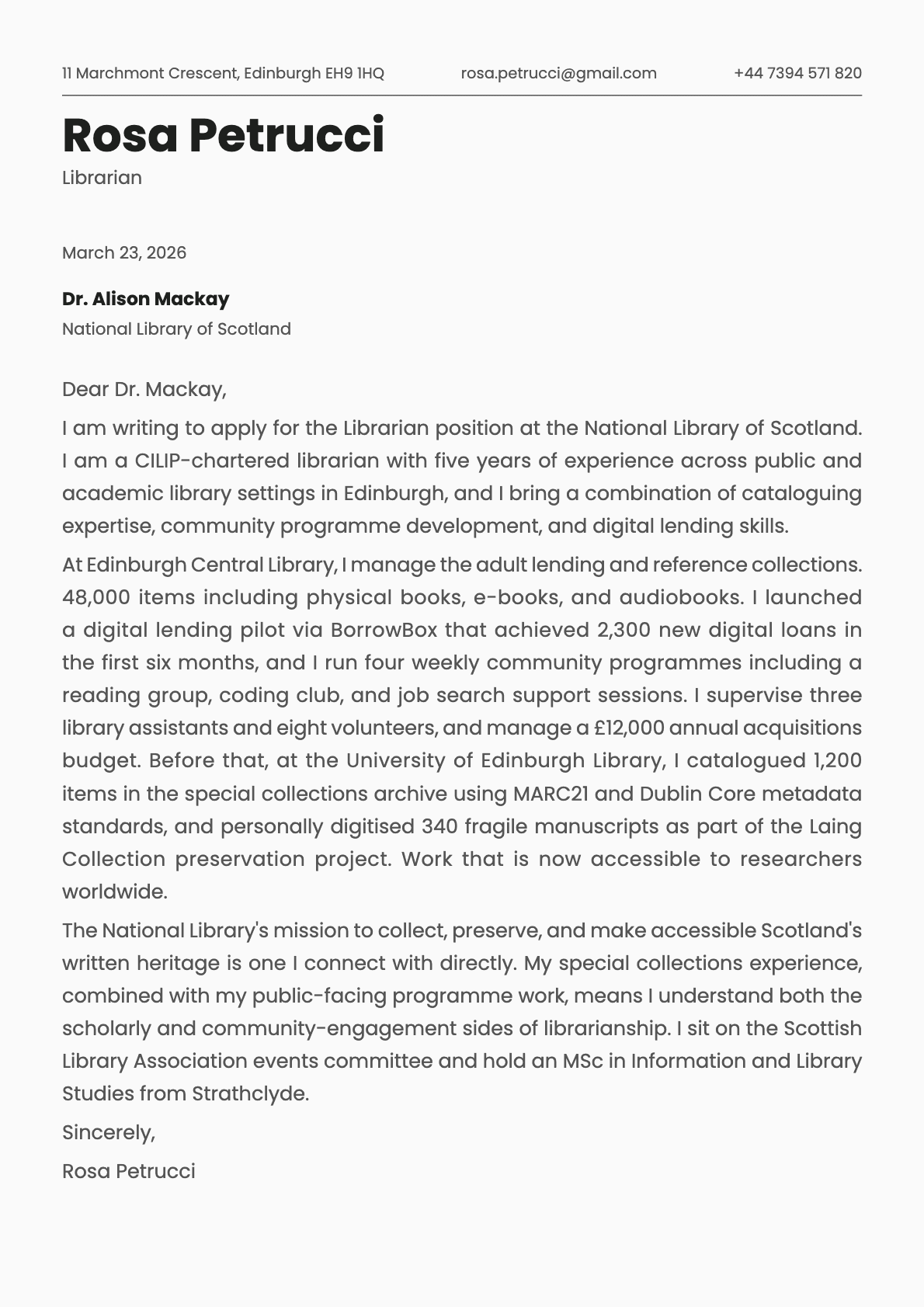
Librarian
A librarian cover letter example showing how to present cataloguing expertise, community programme development, and digital lending skills for a national.
School Counselor
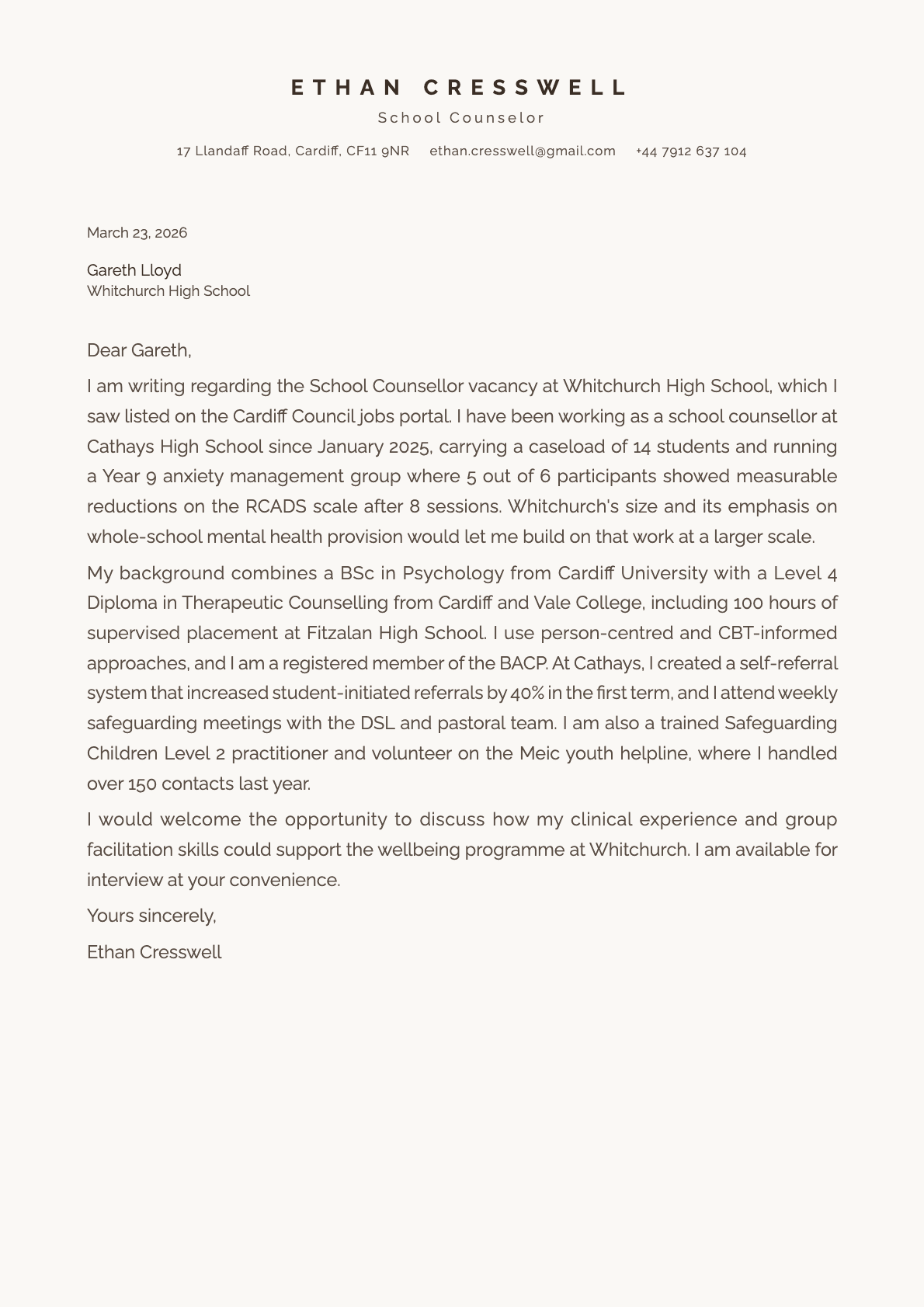
A school counselor cover letter example that conveys student advocacy, guidance program design, and emotional support skills.
Related articles

AI Is Screening Your Resume Before Any Human Sees It
AI screens most resumes before a human ever reads them. 97.4% of Fortune 500 companies run an ATS. This is what that means for you and what you can do about it.

The Best Resume Builders in 2026, Compared Honestly
Resume.io, Zety, Enhancv, Kickresume, Teal, and Laddro compared honestly: real pricing, free tiers, mobile apps, and where each tool wins. All prices checked in September 2026.

Burnout Recovery: A Real Timeline, Not 'Take a Bubble Bath'
55% of the U.S. workforce is burned out. Recovery takes 3 to 12 months. Here's what that actually looks like, stage by stage.