Teaching Assistant Cover Letter Example
A teaching assistant cover letter example showing how to present phonics intervention results, SEND support experience, and classroom management skills.

Laddro Team
Free to use. No account needed to start.
Free to use. No account needed to start.
What schools look for in a teaching assistant cover letter
Teaching assistant roles attract a lot of applications, and most cover letters sound identical. "I love working with children and I want to support their learning." The headteacher reading your letter has seen this sentence hundreds of times. What sets a strong application apart is specific evidence of what you have done with pupils and the results you have achieved.
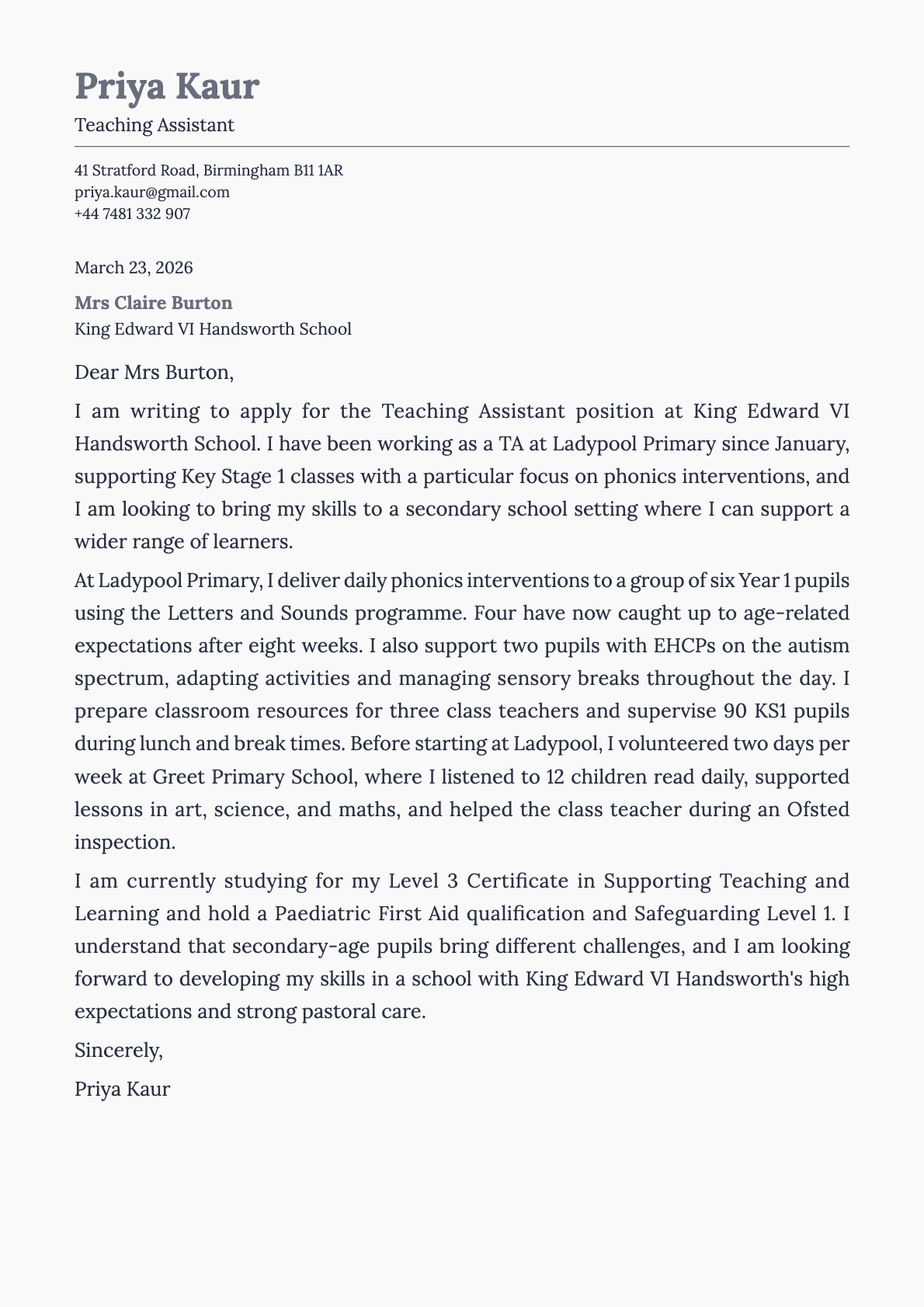
This example from Priya Kaur shows the difference. She works as a TA at a primary school in Birmingham and is applying for a teaching assistant position at King Edward VI Handsworth School, a secondary school.
Name your interventions and their results
Priya opens by naming her current school, the key stage she supports, and her main focus: phonics interventions. She then delivers a concrete result in the first paragraph: four out of six Year 1 pupils in her phonics group have caught up to age-related expectations after eight weeks.
That detail is more persuasive than any sentence about loving children. It shows she can deliver measurable academic progress.
Your takeaway: If you run intervention groups, state the programme name, the group size, and the outcome. Numbers like "four out of six caught up in eight weeks" are exactly what headteachers want to see.
Show your SEND experience
The middle of Priya's letter adds another dimension. She supports two pupils with Education, Health and Care Plans on the autism spectrum, adapting activities and managing sensory breaks throughout the day. She prepares resources for three class teachers and supervises 90 Key Stage 1 pupils during lunch and break times.
Her previous volunteer experience at Greet Primary School is also relevant: daily reading support, lesson assistance across multiple subjects, and supporting a class teacher during an Ofsted inspection.
Your takeaway: SEND experience is highly valued. Name the types of need you support (autism, ADHD, speech and language, etc.) and describe the specific strategies you use.
Address the transition between key stages or settings
Priya is moving from primary to secondary, and she addresses this directly. She acknowledges that secondary-age pupils bring different challenges and expresses genuine interest in developing her skills within a school with high expectations and strong pastoral care.
This honesty works better than pretending secondary experience you do not have. It shows self-awareness and a willingness to grow.
What to include in your teaching assistant cover letter
- Intervention work with programme names and pupil outcomes
- SEND support with specific needs and strategies used
- Classroom duties (resource preparation, supervision, lesson support)
- Pupil numbers you work with regularly
- Qualifications in progress or completed (Level 2/3, Paediatric First Aid, Safeguarding)
- Volunteer or previous school experience with specific examples
What to leave out
Do not write about your own school experience as a pupil. Do not describe yourself as a "natural with children." And do not fill the letter with vague enthusiasm. The headteacher wants to know what you can do in a classroom, not how you feel about education.
Final thoughts
A teaching assistant cover letter should be a brief, practical summary of your classroom experience and the impact you have had on pupils. Name your interventions, state your results, describe your SEND experience, and keep the whole thing under 300 words. Schools hire teaching assistants who can demonstrate that they make a measurable difference to children's progress. Show that in your letter and you will be ahead of most applicants.
Was this cover letter example helpful?
Rate this example to help us create better content for you.
4.6 average from 145 ratingsBuild your own version
Open this layout in the builder and swap in your own details. It takes a few minutes.
Free to use. No account needed to start.
Related cover letter examples
Teacher
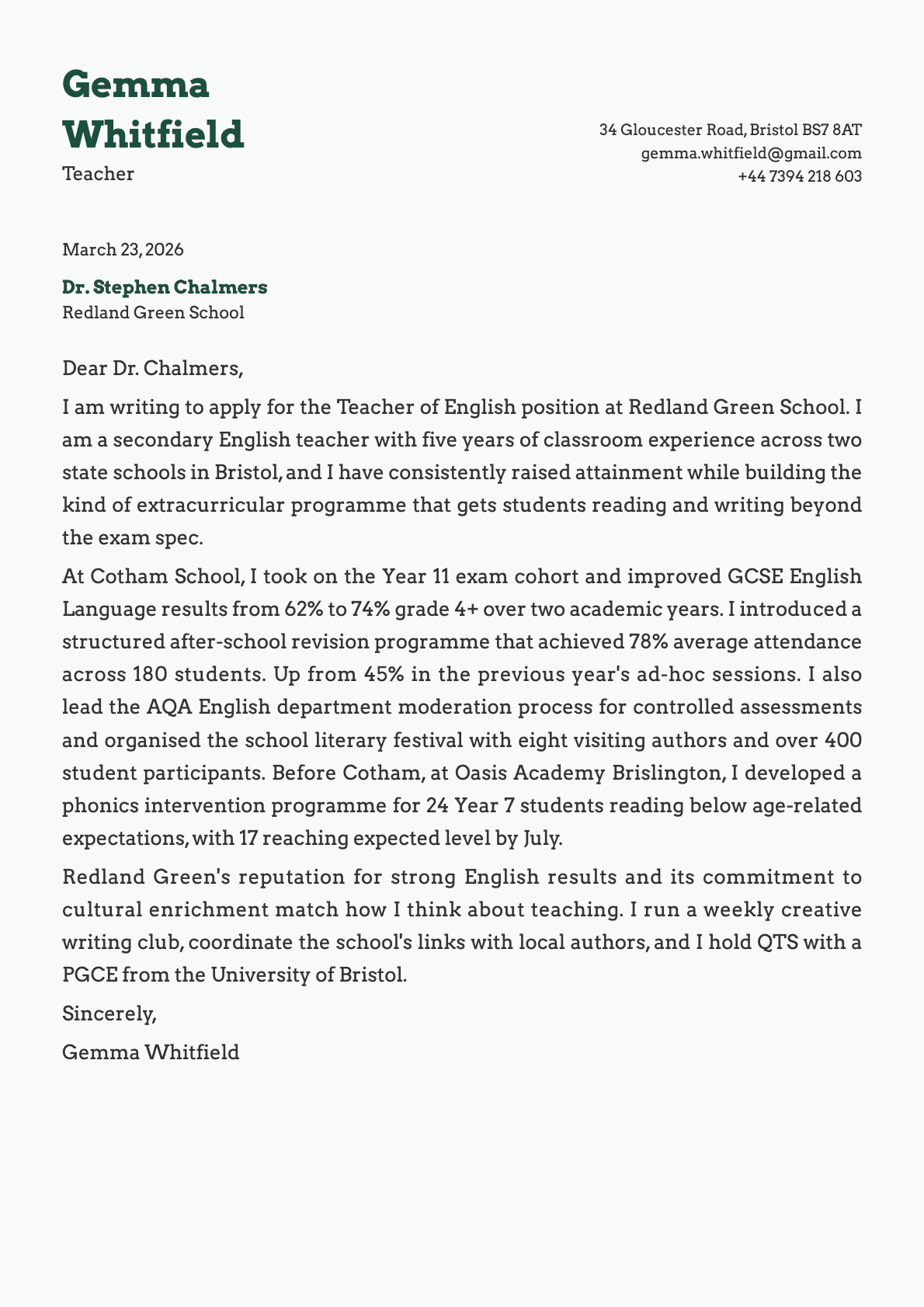
A teacher cover letter example for a secondary English position at Redland Green School.
School Principal
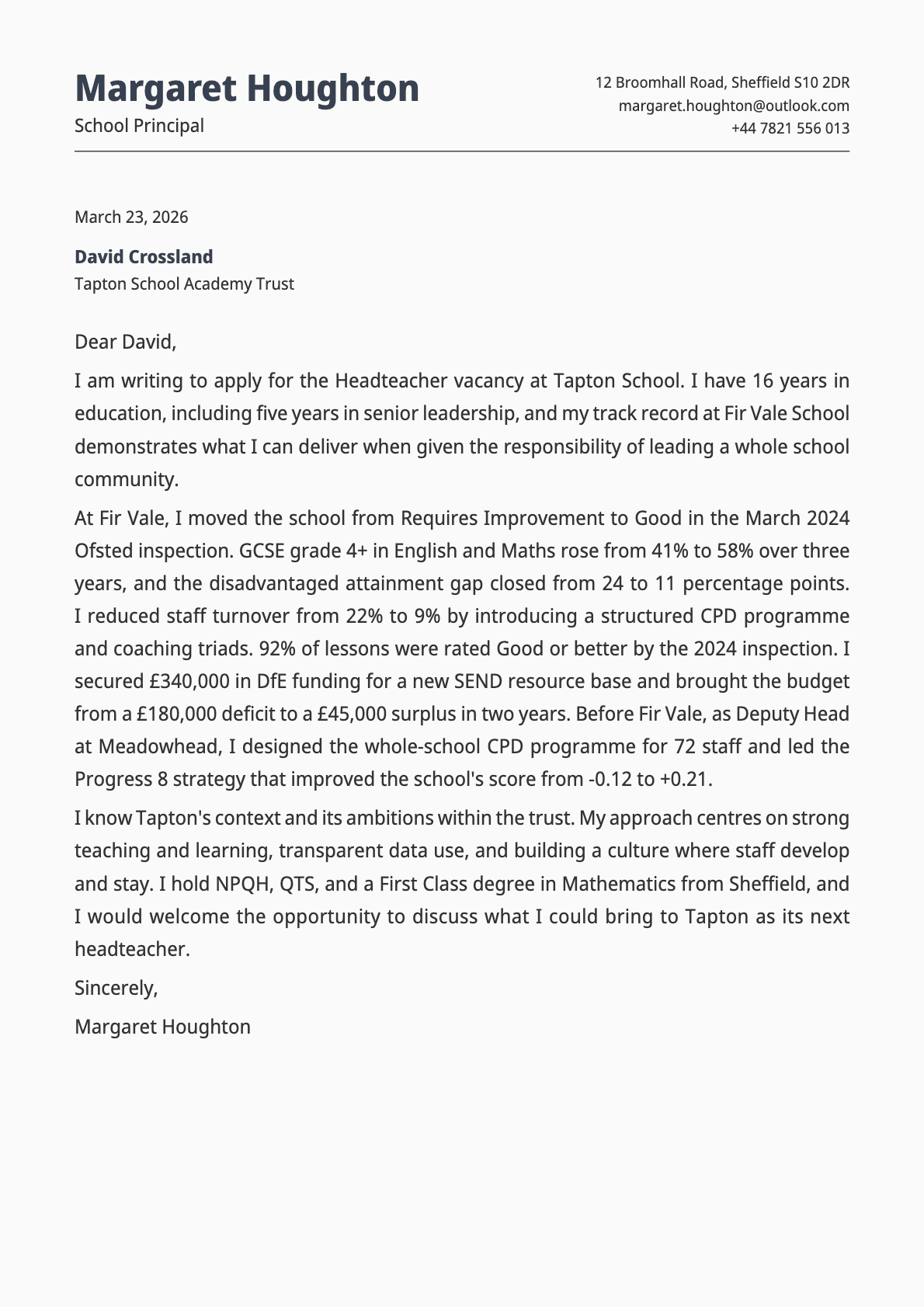
A school principal cover letter example showing how to present Ofsted results, attainment data, budget management.
Librarian
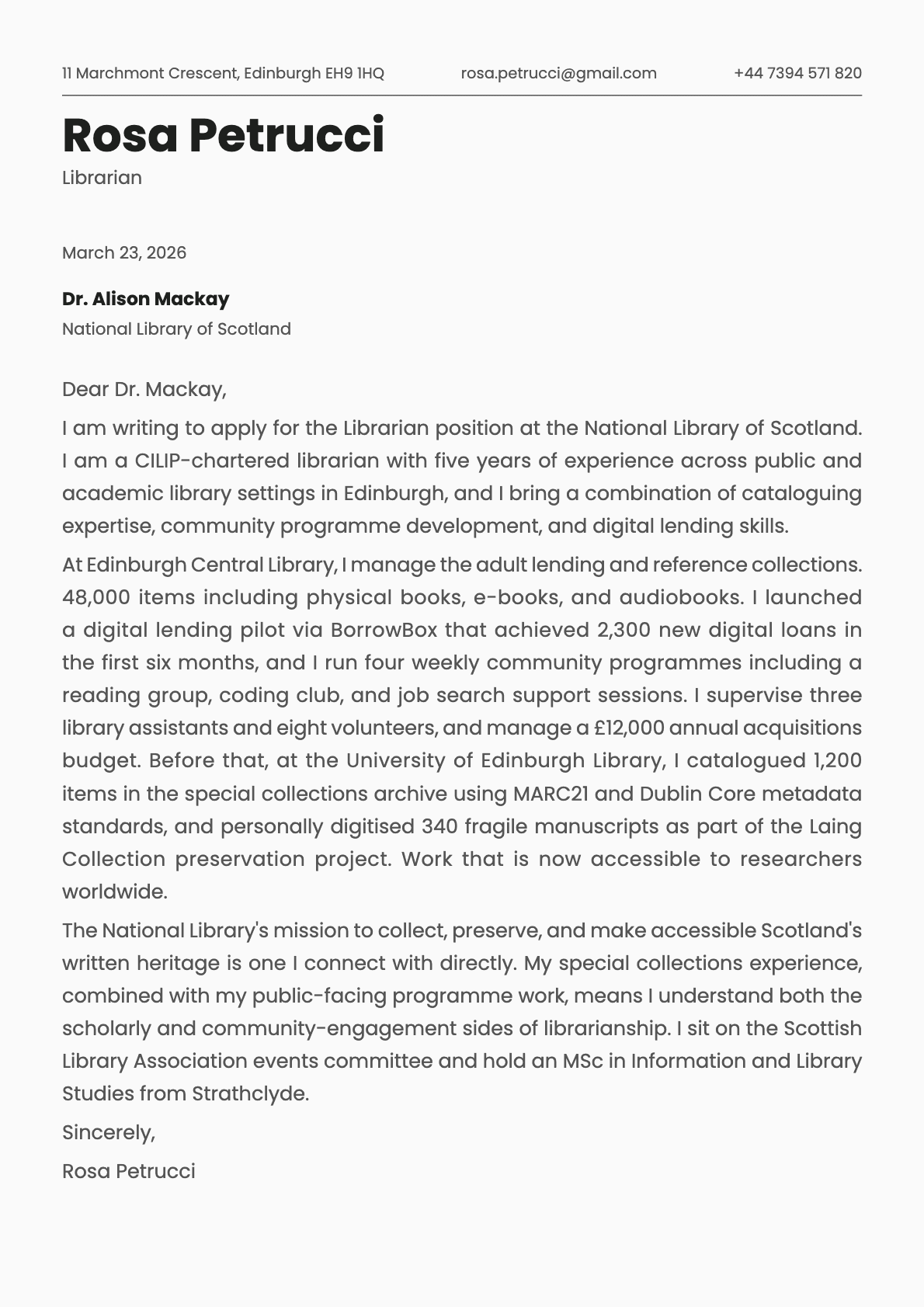
A librarian cover letter example showing how to present cataloguing expertise, community programme development, and digital lending skills for a national.
School Counselor
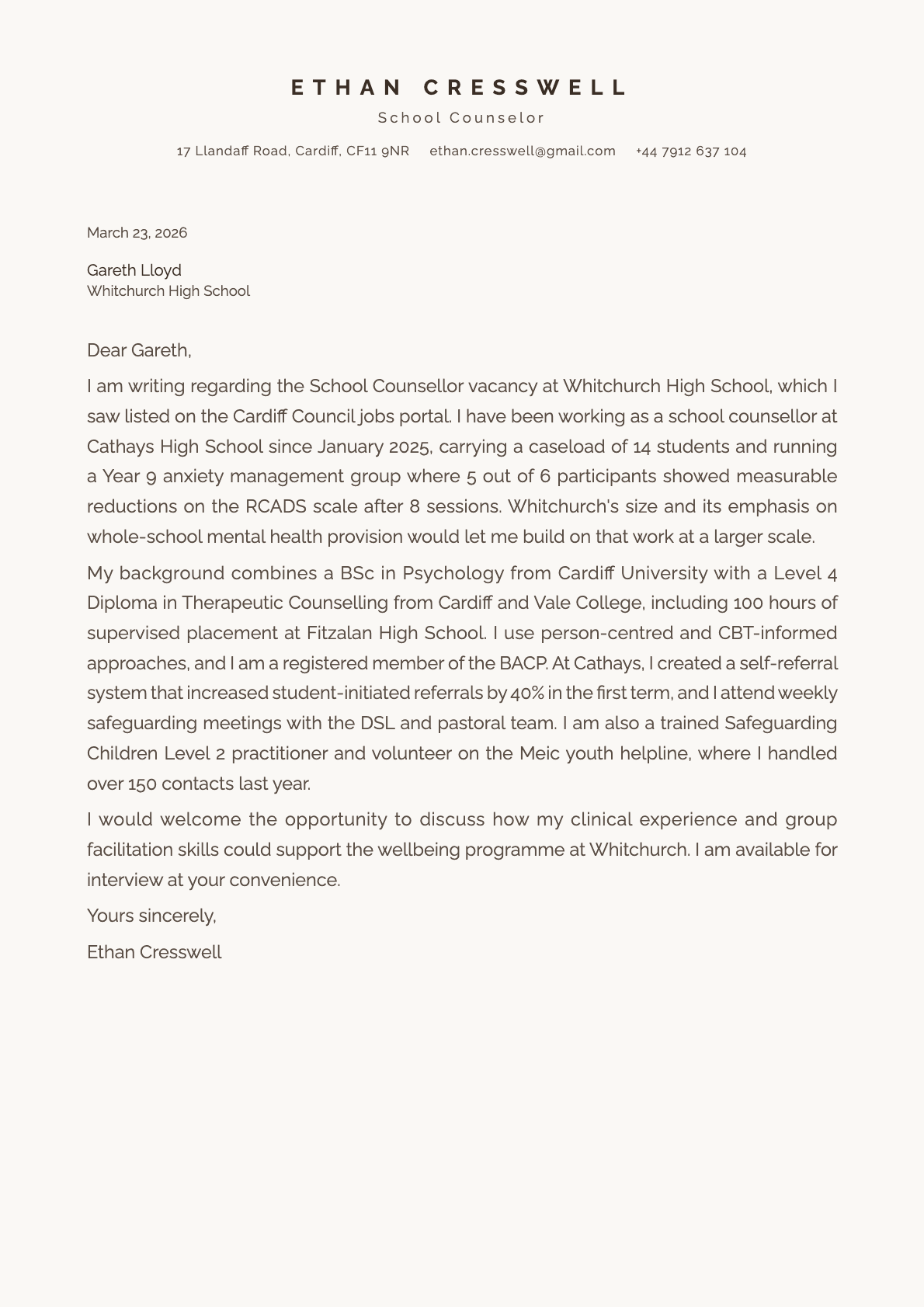
A school counselor cover letter example that conveys student advocacy, guidance program design, and emotional support skills.
Related articles

AI Is Screening Your Resume Before Any Human Sees It
AI screens most resumes before a human ever reads them. 97.4% of Fortune 500 companies run an ATS. This is what that means for you and what you can do about it.

The Best Resume Builders in 2026, Compared Honestly
Resume.io, Zety, Enhancv, Kickresume, Teal, and Laddro compared honestly: real pricing, free tiers, mobile apps, and where each tool wins. All prices checked in September 2026.

Burnout Recovery: A Real Timeline, Not 'Take a Bubble Bath'
55% of the U.S. workforce is burned out. Recovery takes 3 to 12 months. Here's what that actually looks like, stage by stage.