Teaching Assistant Resume Example
A teaching assistant resume example for an entry-level TA with phonics intervention experience and SEND support.

Laddro Team
Free to use. No account needed to start.
Free to use. No account needed to start.
Overview
Teaching assistant resumes are tough to write when you are just starting out. You might have one year of experience, or even less. You might be working towards your Level 3 qualification. You might worry that you do not have enough to fill a page.
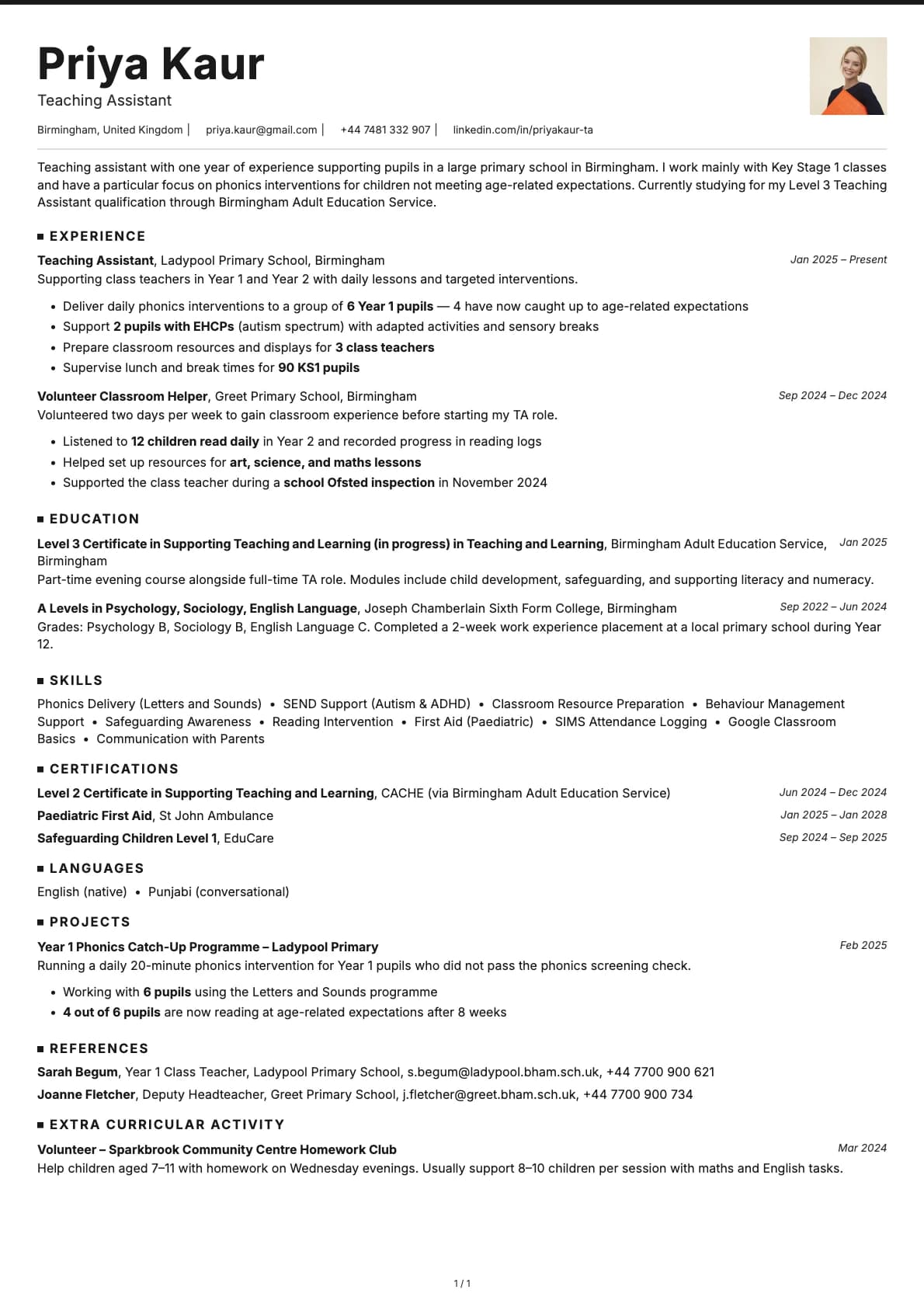
This resume belongs to Priya, a teaching assistant at Ladypool Primary School in Birmingham. She has been in the role since January 2025 and is currently studying for her Level 3 TA qualification. Before that, she volunteered at a nearby primary school for a term to get classroom experience. What makes this resume work despite limited experience is the detail. She does not write "support children in the classroom." She writes about specific phonics interventions, named pupils with EHCPs, and measurable progress.
If you are applying for your first or second TA role, this is how to do it.
Your summary when you have limited experience
Here is Priya's summary:
Teaching assistant with one year of experience supporting pupils in a large primary school in Birmingham. I work mainly with Key Stage 1 classes and have a particular focus on phonics interventions for children not meeting age-related expectations. Currently studying for my Level 3 Teaching Assistant qualification.
She is honest about her experience level. One year. But she immediately narrows it to something specific: phonics interventions in KS1. This is much better than "enthusiastic teaching assistant looking for a rewarding role." The headteacher reading this can already picture what Priya does every day.
For yours: State your experience level honestly. Then name your key stage, your main focus area, and any qualification you are working towards. Three to four sentences maximum.
How to write experience bullets when you are new
The biggest trap for new TAs is writing vague bullets like "assisted the class teacher" or "supported children with their learning." Every TA does that. It tells the reader nothing.
Look at Priya's approach:
Deliver daily phonics interventions to a group of 6 Year 1 pupils. 4 have now caught up to age-related expectations
That is a measurable outcome. 6 children, 4 caught up. The headteacher can see that this intervention is working and that Priya is tracking progress.
Support 2 pupils with EHCPs (autism spectrum) with adapted activities and sensory breaks
This shows SEND experience. She names the type of need (autism spectrum), the support she provides (adapted activities, sensory breaks), and the number of pupils. SEND experience is highly valued and many TA roles specifically ask for it.
Even the simpler bullets have useful detail:
Prepare classroom resources and displays for 3 class teachers
Supervise lunch and break times for 90 KS1 pupils
These are not exciting, but they quantify the workload. Three teachers. Ninety pupils. That context helps the reader understand the scale of the school and Priya's contribution.
Your volunteering counts as experience
Priya includes her volunteer role at Greet Primary School. This is important. If you volunteered in a school before getting your first paid TA role, include it as a separate entry.
Listened to 12 children read daily in Year 2 and recorded progress in reading logs
Supported the class teacher during a school Ofsted inspection in November 2024
The Ofsted detail is a nice touch. It shows she was present during a high-pressure situation and was trusted to be in the classroom.
If your school experience is limited, other relevant volunteering counts too. Homework clubs, Sunday schools, Scouts, Brownies, sports coaching. Anything that shows you can work with children in a structured setting.
Certifications and qualifications: show the pathway
For TA roles, your qualifications tell the headteacher where you are on the career path. Priya lists:
- Level 2 Certificate in Supporting Teaching and Learning (completed)
- Paediatric First Aid (current)
- Safeguarding Children Level 1 (current)
She also has her Level 3 listed in the education section as in-progress. This shows she is investing in her development.
Must-haves for any TA resume:
- DBS check status (or a note that you are on the update service)
- Safeguarding training with the level and date
- First Aid certification (paediatric is preferred for primary schools)
If you have any additional training like Makaton, Team Teach, dyslexia awareness, or speech and language support, list it. These are keyword matches for many TA job adverts.
Skills: focus on what schools actually need
Priya's skills list includes "Phonics Delivery (Letters and Sounds)," "SEND Support (Autism & ADHD)," and "SIMS Attendance Logging."
The phonics programme name matters. If you deliver Letters and Sounds, Read Write Inc, Little Wandle, or Jolly Phonics, name the specific programme. Schools use different schemes and they want TAs who already know theirs.
Including school systems like SIMS is a small detail that makes a difference. If you can log attendance, update records, or handle the school data system, that is one less thing the school needs to train you on.
Mistakes new TAs make on their resumes
Being too vague. "Helped children with their work" is not a resume bullet. How many children? What subject? What was the outcome? Even if the outcome is small, it is better than nothing.
Forgetting SEND detail. If you have supported any child with an EHCP or additional needs, mention it. Name the type of need (autism, ADHD, dyslexia, speech and language delay) and describe what you did. This is one of the most in-demand skills for TAs.
Not including volunteer experience. If you volunteered before your first paid role, that experience counts. Leave it off and your resume looks thin. Include it and you have a fuller picture.
Skipping first aid and safeguarding details. Schools check these before offering a role. If yours are current, put them on the resume with dates. If they have expired, renew them before applying.
One more thing
If you are early in your TA career and want to stand out, focus on one area of specialism. Priya's focus on phonics interventions makes her memorable. Other options include SEND support, EAL (English as an additional language), maths intervention, or outdoor learning.
You do not need to know everything. You just need to be clearly useful in one specific way that the school needs. Read the job advert carefully, find the thing they are asking for most, and make sure your resume speaks directly to that.
Build your own version
Open this layout in the builder and swap in your own details. It takes a few minutes.
Free to use. No account needed to start.
Was this resume example helpful?
Rate this example to help us create better content for you.
4.6 average from 172 ratingsRelated resume examples
Teacher
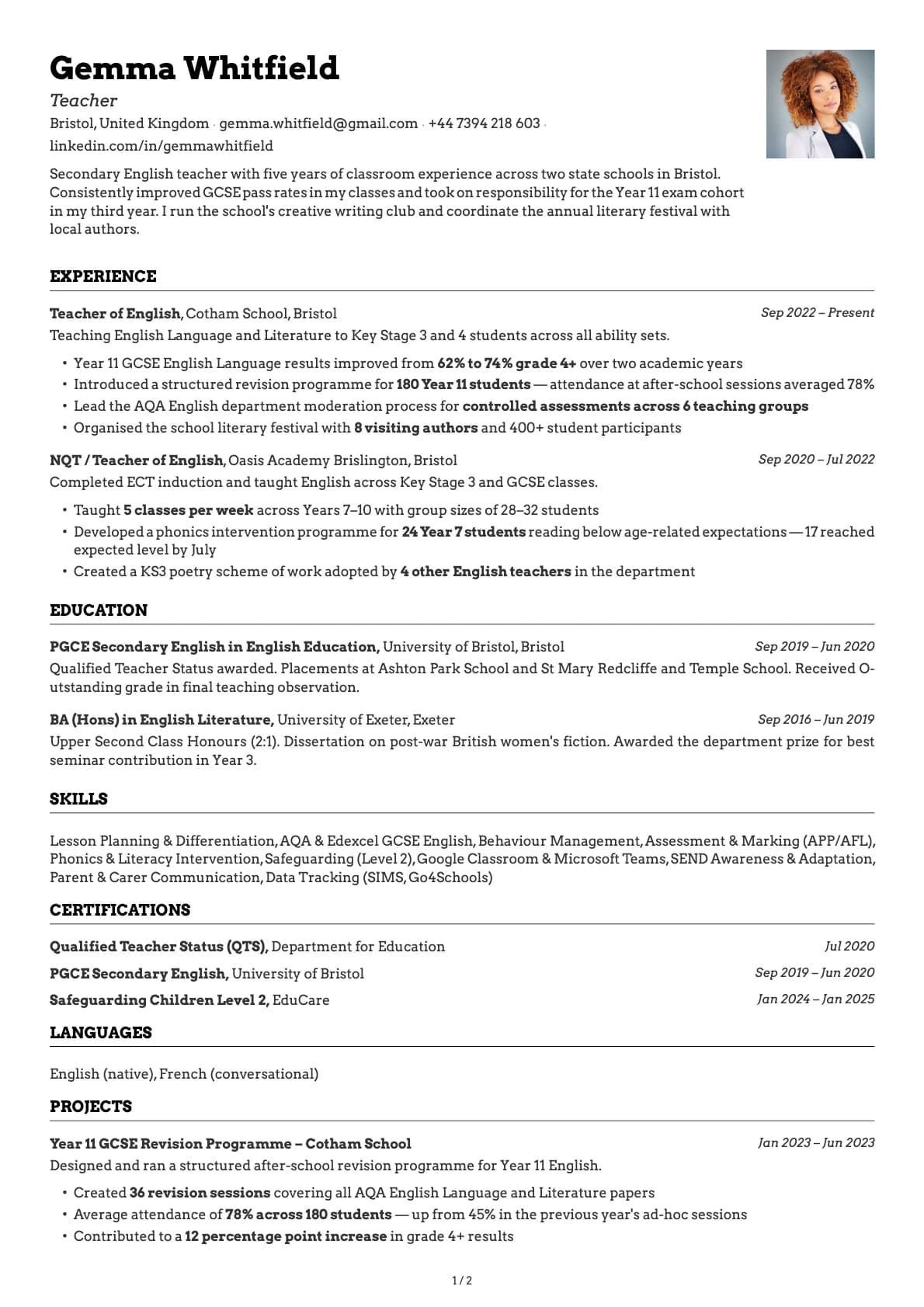
A secondary English teacher resume example with 5 years of experience and measurable GCSE results.
Substitute Teacher
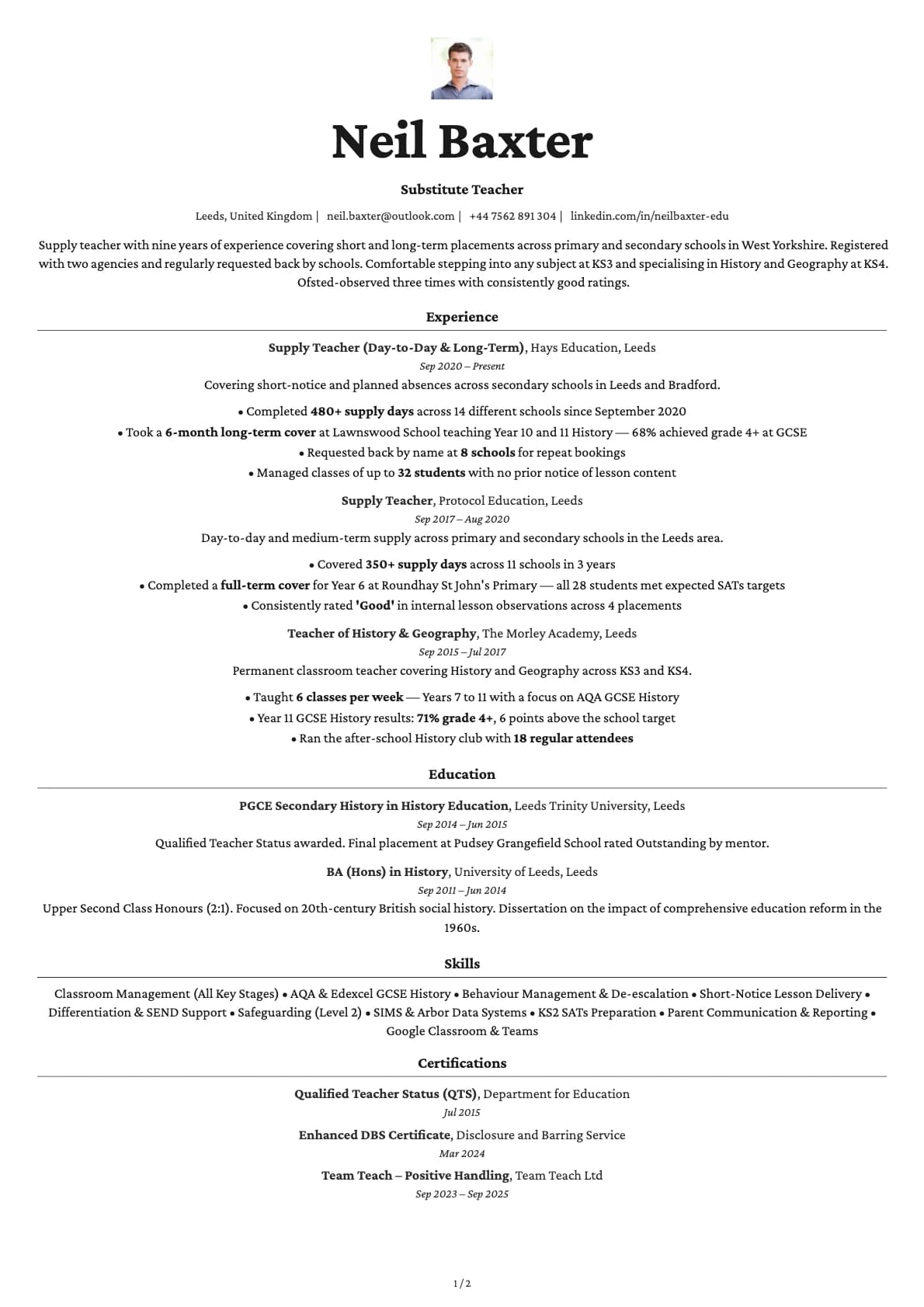
A substitute teacher resume example with 9 years of supply experience across primary and secondary schools.
School Principal
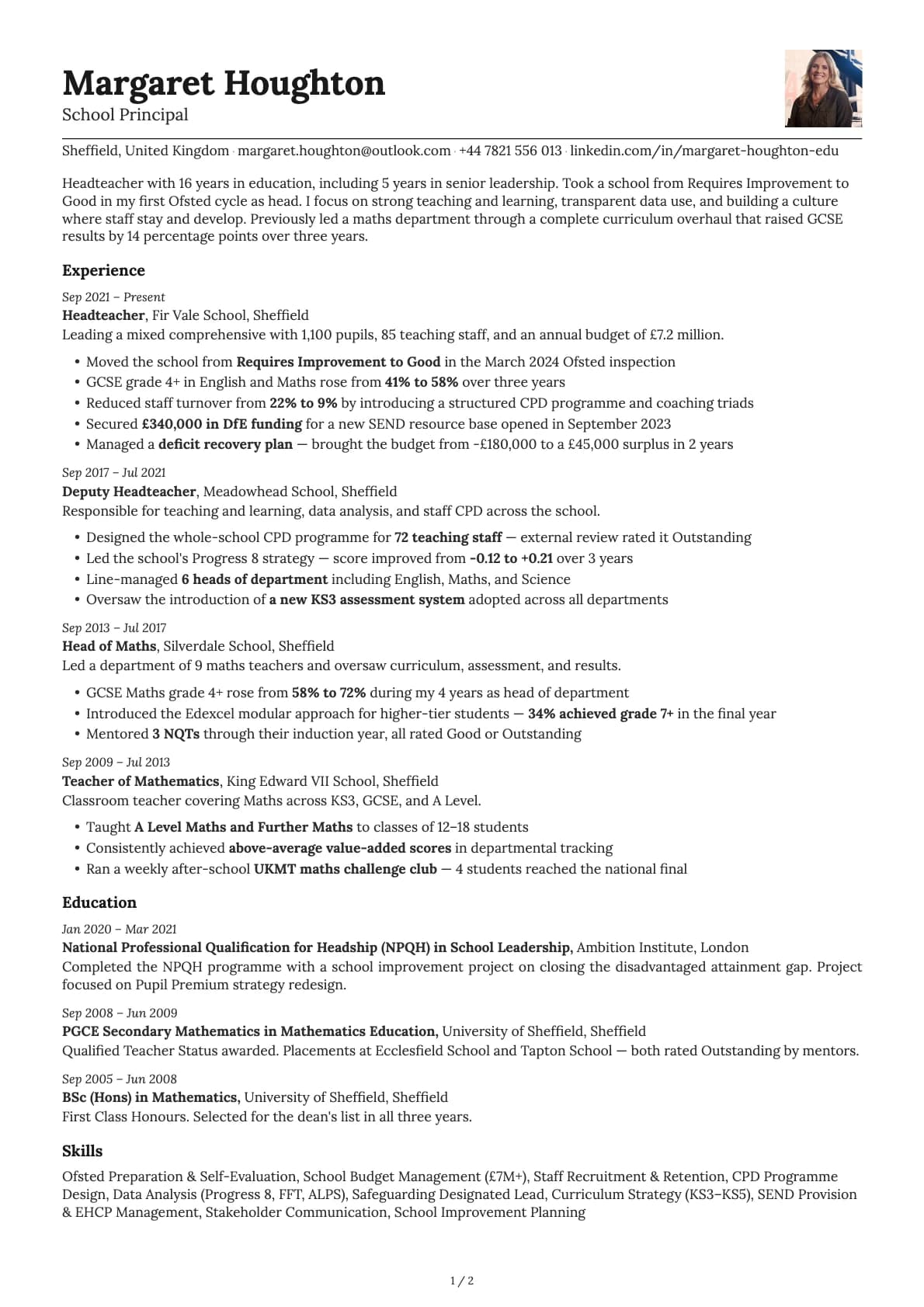
A school principal resume example with Ofsted outcomes, GCSE results, and budget management.
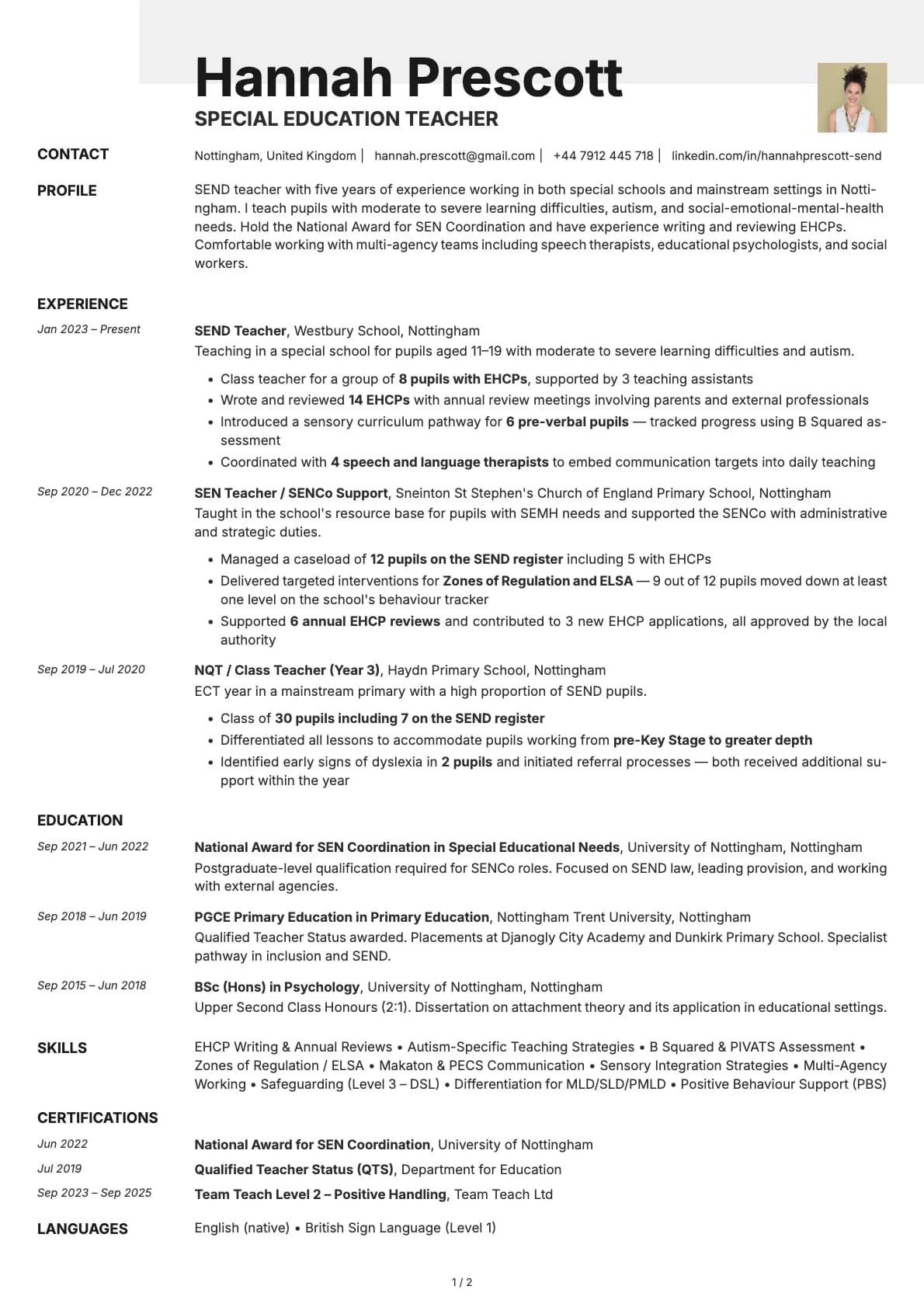
Special Education Teacher
A special education teacher resume example with EHCP experience, intervention outcomes, and multi-agency collaboration.
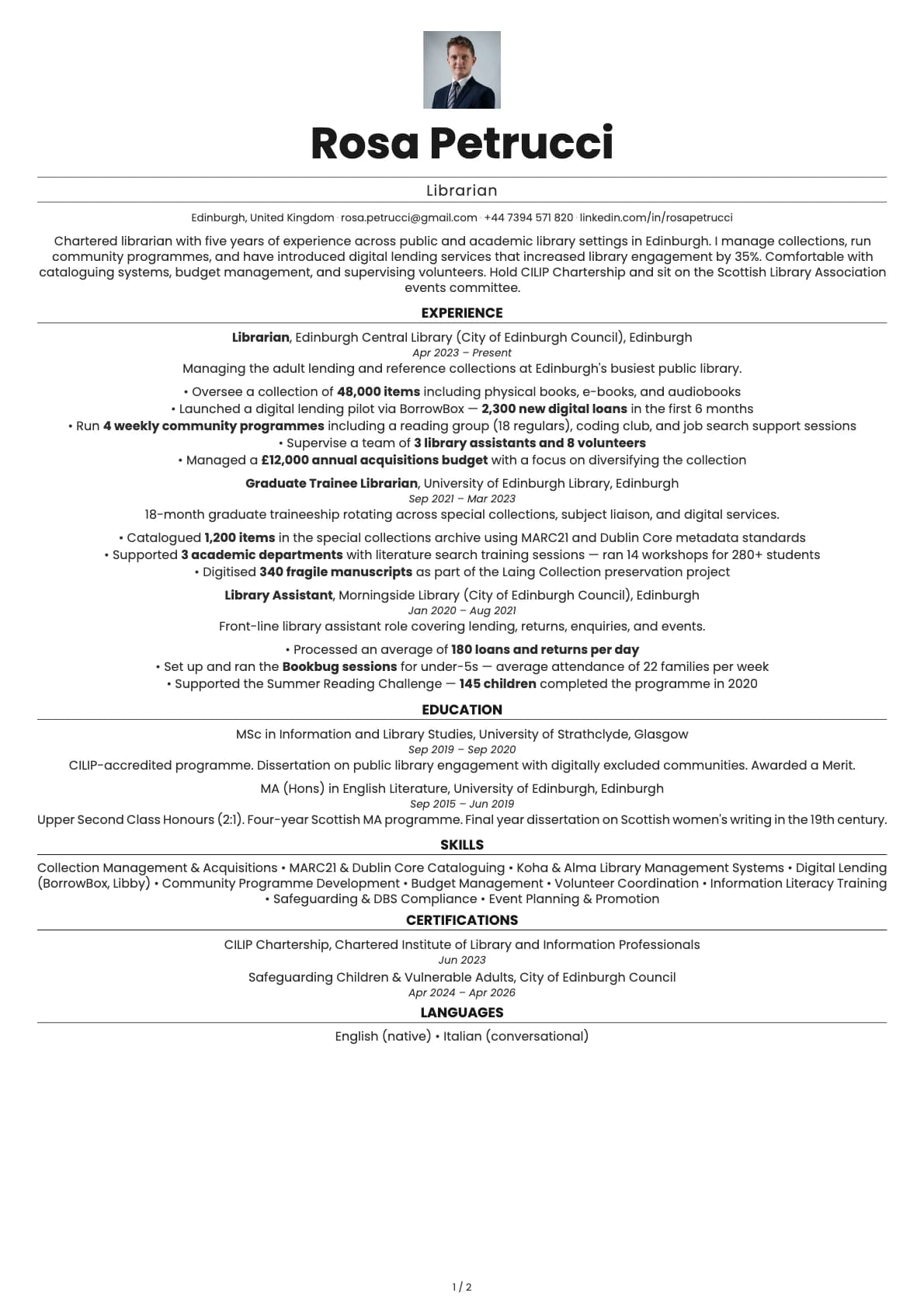
Librarian
A librarian resume example with community programme numbers, collection management specifics, and digital lending results.
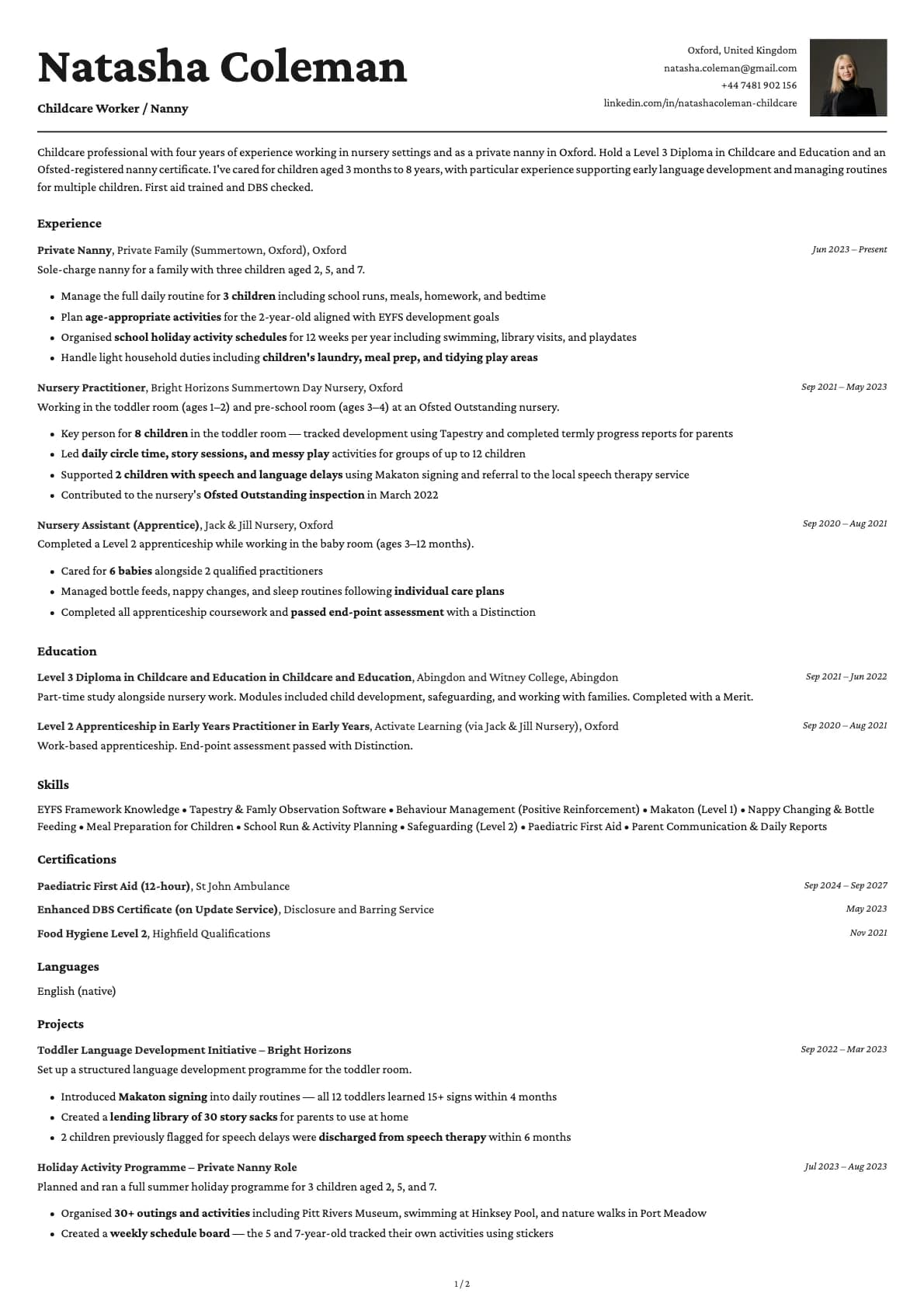
Childcare Worker / Nanny
A childcare worker resume example with nursery and private nanny experience.
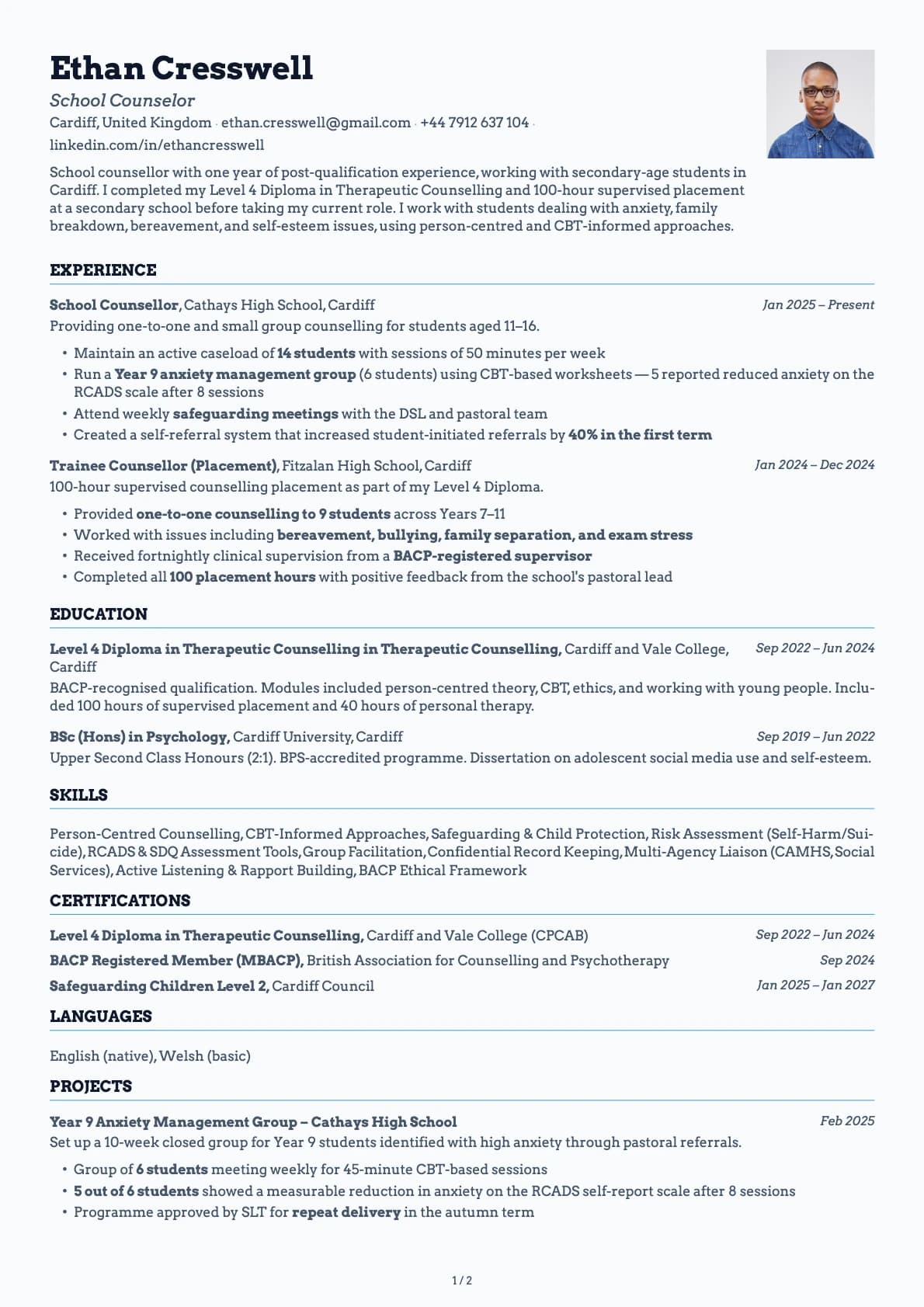
School Counselor
A school counselor resume example with caseload numbers, group therapy outcomes, and safeguarding experience.
Related articles

AI Is Screening Your Resume Before Any Human Sees It
AI screens most resumes before a human ever reads them. 97.4% of Fortune 500 companies run an ATS. This is what that means for you and what you can do about it.

The Best Resume Builders in 2026, Compared Honestly
Resume.io, Zety, Enhancv, Kickresume, Teal, and Laddro compared honestly: real pricing, free tiers, mobile apps, and where each tool wins. All prices checked in September 2026.

Burnout Recovery: A Real Timeline, Not 'Take a Bubble Bath'
55% of the U.S. workforce is burned out. Recovery takes 3 to 12 months. Here's what that actually looks like, stage by stage.