Real Estate Agent Resume Example
A real estate agent resume example with transaction volumes, local market strategies, and sales metrics from residential property in Edinburgh.

Laddro Team
Free to use. No account needed to start.
Free to use. No account needed to start.
Overview
Estate agent resumes are sales resumes. And like all sales resumes, the only thing that really matters is your numbers. How much did you sell? How fast? At what price versus asking? If those numbers are missing, the hiring manager has nothing to evaluate.
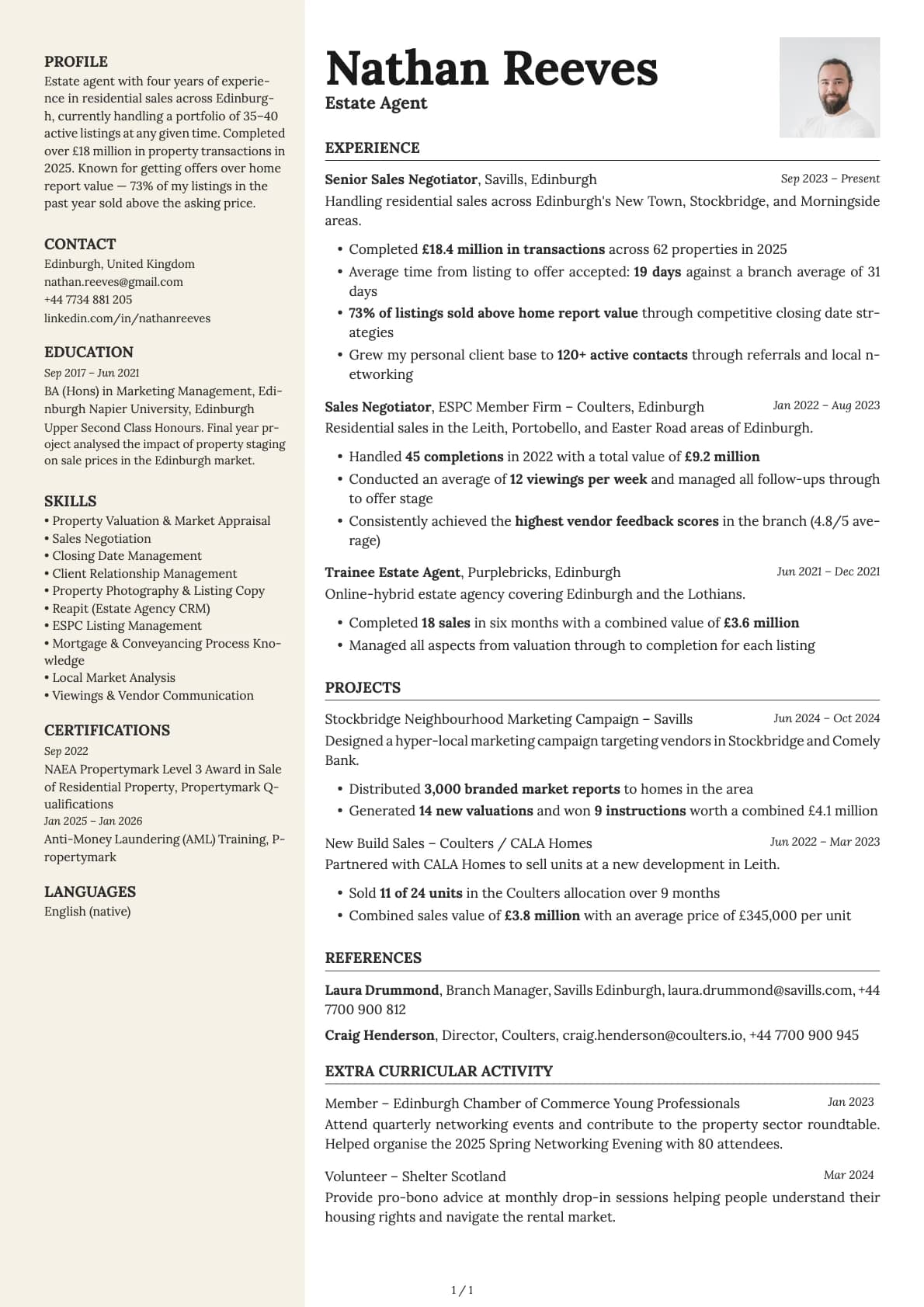
This resume belongs to Nathan Reeves, a senior sales negotiator at Savills in Edinburgh with four years of experience. He completed £18.4 million in transactions in 2025 across 62 properties. 73% of his listings sold above the home report value. His average time from listing to offer was 19 days against a branch average of 31.
Those numbers do all the work. Let us look at how he presents them and how you can do the same.
Your summary should be your sales pitch for yourself
Nathan's summary opens with his experience level and portfolio size ("handling a portfolio of 35-40 active listings"), then immediately hits the numbers:
"Completed over £18 million in property transactions in 2025. Known for getting offers over home report value, 73% of my listings in the past year sold above the asking price."
No fluff. No "dynamic and motivated property professional." Just the numbers that a branch manager cares about. How much did you sell, and did you get good prices for your clients?
For yours: State your current portfolio size and your headline number for the last 12 months (total transaction value, number of completions, or average sale price versus asking). If you have a stat that sets you apart from the rest of your team, lead with it.
How to write experience that shows sales ability
Estate agent resumes need to demonstrate three things: sales volume, speed, and client acquisition.
Sales volume
"Completed £18.4 million in transactions across 62 properties in 2025"
This is the headline. Total value and number of properties give the branch manager a complete picture. If you only give one number, give total value. But pairing it with the property count shows you were not just selling two mansions. You were handling volume.
Speed
"Average time from listing to offer accepted: 19 days against a branch average of 31 days"
This is a killer stat. It tells the hiring manager that Nathan moves properties faster than his colleagues. If you track your average time to offer (or can estimate it), include it. Compare it against the branch or market average if possible.
Client growth
"Grew my personal client base to 120+ active contacts through referrals and local networking"
In estate agency, your contacts are your business. Showing that you grow your own pipeline through referrals and networking (rather than just relying on walk-ins) tells the manager you bring business with you.
Earlier roles: show the trajectory
Nathan started as a trainee at Purplebricks (18 sales in six months, £3.6 million), moved to Coulters (45 completions, £9.2 million, highest vendor feedback scores), and now works at Savills handling premium stock.
The progression is clear: online hybrid, then a local ESPC firm, then a premium national brand. Each step up comes with higher values and more responsibility. If your career shows a similar upward path, make sure the numbers at each stage reflect the growth.
For his earlier roles, he keeps it simple but specific. At Coulters: "Conducted an average of 12 viewings per week and managed all follow-ups through to offer stage." At Purplebricks: "Managed all aspects from valuation through to completion for each listing." Both show he handled the full sales process, not just one piece of it.
Projects: local marketing that generates instructions
Nathan includes a hyper-local marketing campaign he designed for the Stockbridge area:
"Distributed 3,000 branded market reports to homes in the area"
"Generated 14 new valuations and won 9 instructions worth a combined £4.1 million"
This is excellent because it shows initiative beyond taking listings that come in. He went out and created business. If you have ever run a door-knock campaign, hosted a local event, partnered with a developer, or designed marketing material, include it. Estate agency is a sales job, and showing you can generate your own pipeline is one of the strongest things you can put on a resume.
Skills: industry-specific matters
Nathan lists Reapit (the estate agency CRM), ESPC listing management, closing date management, and property photography and listing copy. These are the daily tools and tasks of an estate agent.
If you use a specific CRM (Reapit, Alto, Vebra, Jupix), name it. If you write your own listing descriptions or take property photos, include those as skills. If you understand the conveyancing process from the agent's side, say so. These practical details tell the hiring manager you can be productive from your first week.
Certifications: Propertymark helps
Nathan has the NAEA Propertymark Level 3 Award and current AML training. The Propertymark qualification is not legally required in Scotland (unlike letting agent registration), but it signals professionalism. Many larger agencies prefer or require it, and having it gives you an edge over candidates who do not.
If you have completed any property-related qualifications, including AML training, ARLA, or NAEA awards, list them. Also make sure your AML training is current. It is renewed annually and an expired certificate is an easy reason to screen you out.
Mistakes estate agents make on their resumes
No transaction numbers. This is the biggest one. If a branch manager cannot see your sales volume, your resume tells them nothing. Include total value, number of completions, and any performance metric that shows you above average.
Describing the estate agency process. "Conducted market appraisals, listed properties, arranged viewings, and negotiated offers." Yes. That is what every estate agent does. The hiring manager already knows this. Instead, tell them how much you sold and how fast.
Forgetting vendor feedback. If you track client satisfaction scores (and most agencies do), include them. Nathan's "4.8/5 average vendor feedback" is a small detail that adds a lot of credibility.
Using a template that is too creative. Estate agency is a professional services role. Your resume should look polished but not flashy. Nathan uses Aurum, which is clean and structured. Avoid templates with heavy graphics or unusual layouts.
One more thing
Estate agency is a people business, but your resume is a numbers document. The branch manager wants to know: can this person sell, and will they bring business with them? If your resume answers both questions with specific figures, you will get the interview. If it describes the job without showing your results, it will be skipped. Lead with the numbers. Always.
Build your own version
Open this layout in the builder and swap in your own details. It takes a few minutes.
Free to use. No account needed to start.
Was this resume example helpful?
Rate this example to help us create better content for you.
4.7 average from 131 ratingsRelated resume examples
Sales Manager
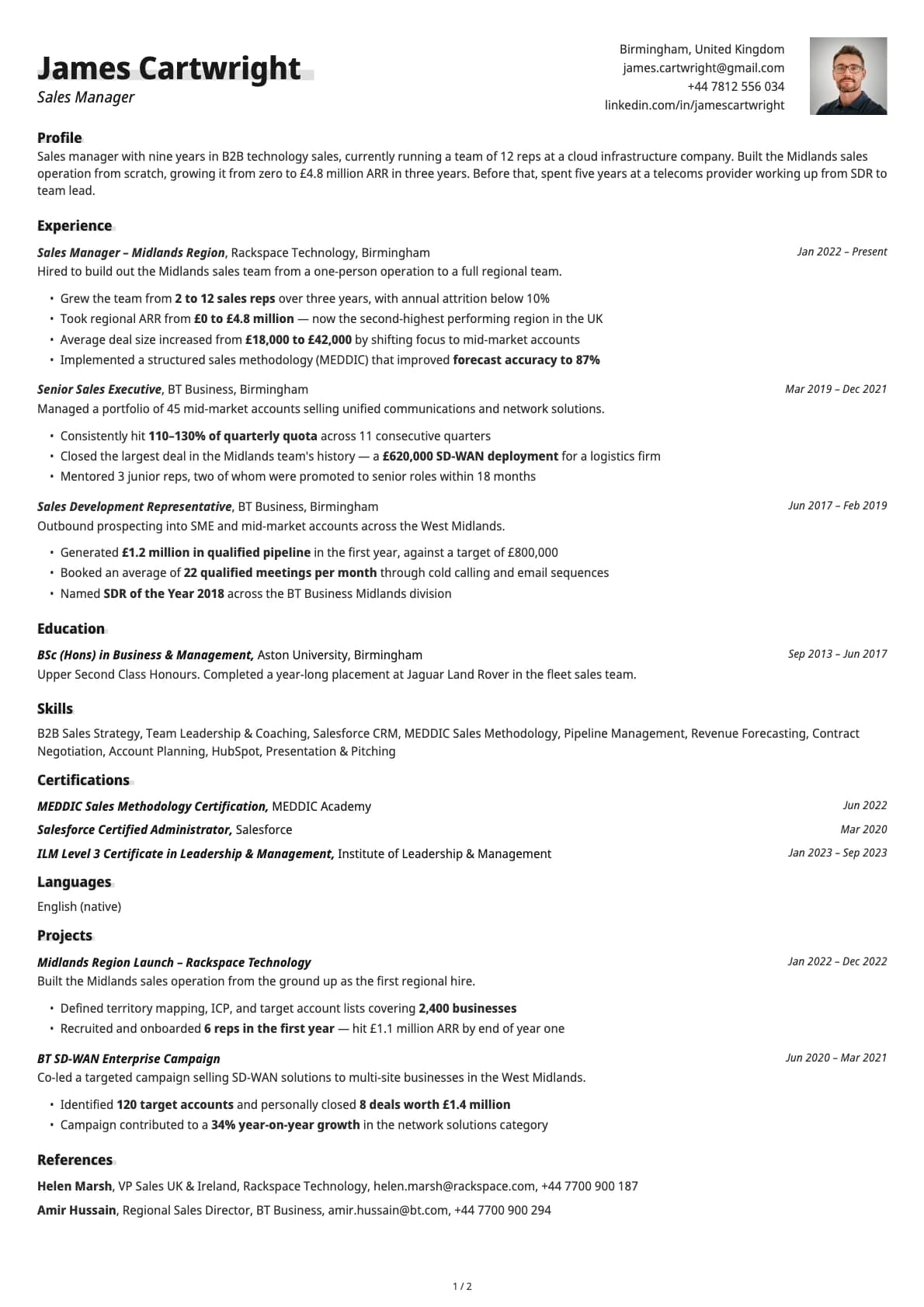
A sales manager resume example with ARR growth, team scaling, and quota attainment numbers.
Account Executive
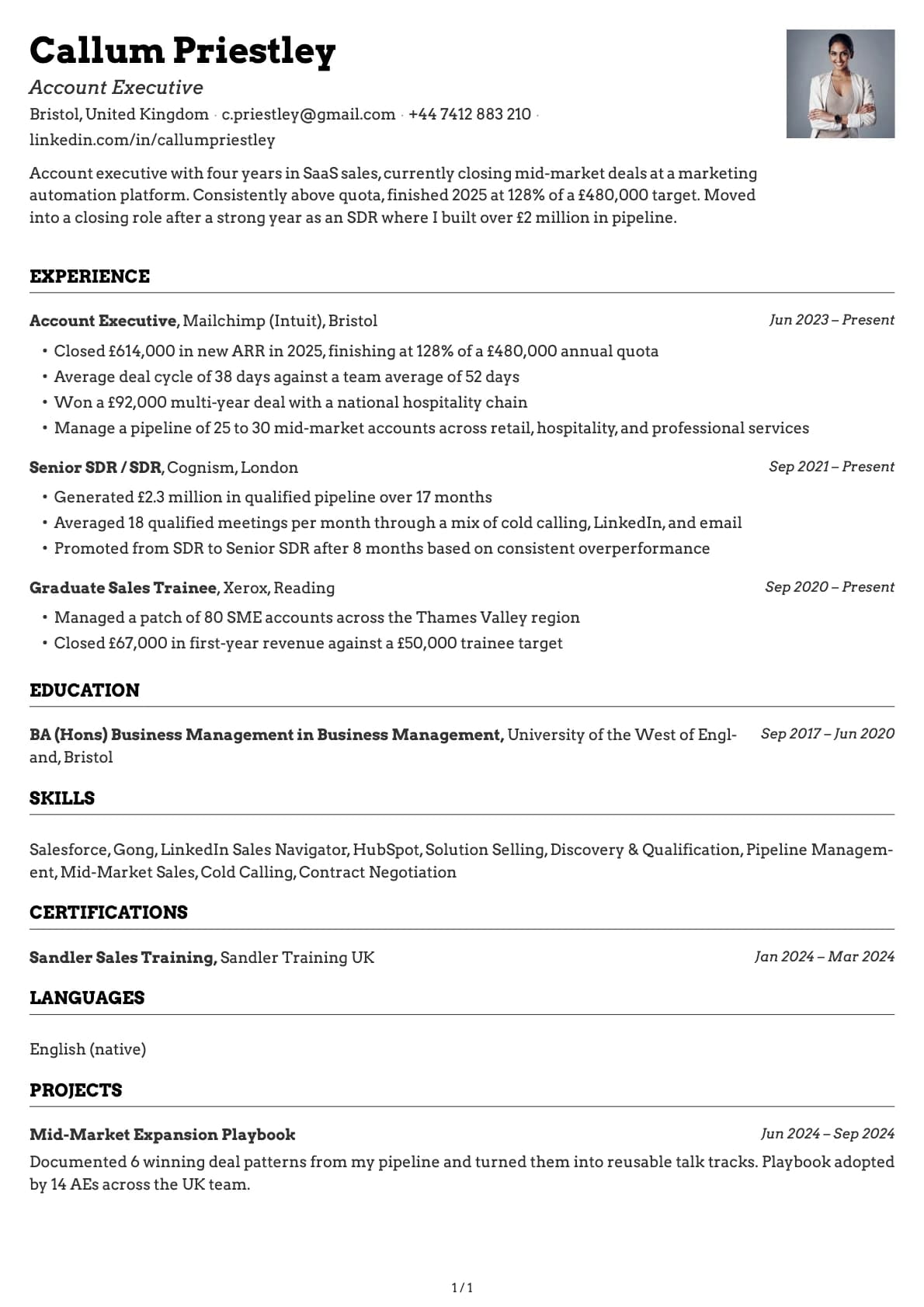
An account executive resume example with SaaS sales experience, quota attainment figures, and pipeline numbers that actually make hiring managers pick up.
Retail Manager
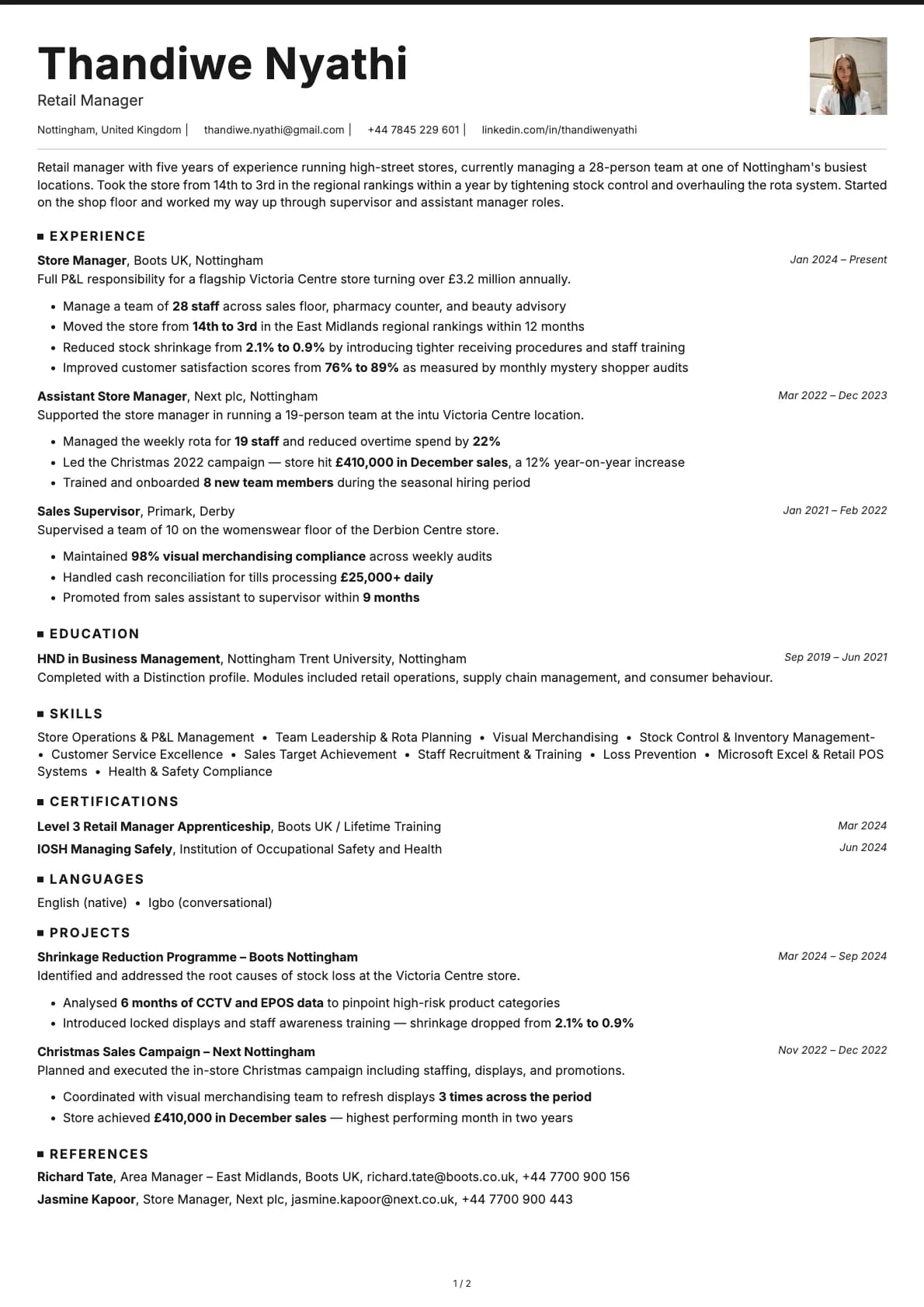
A retail manager resume example showing store rankings, shrinkage reduction, and team leadership.
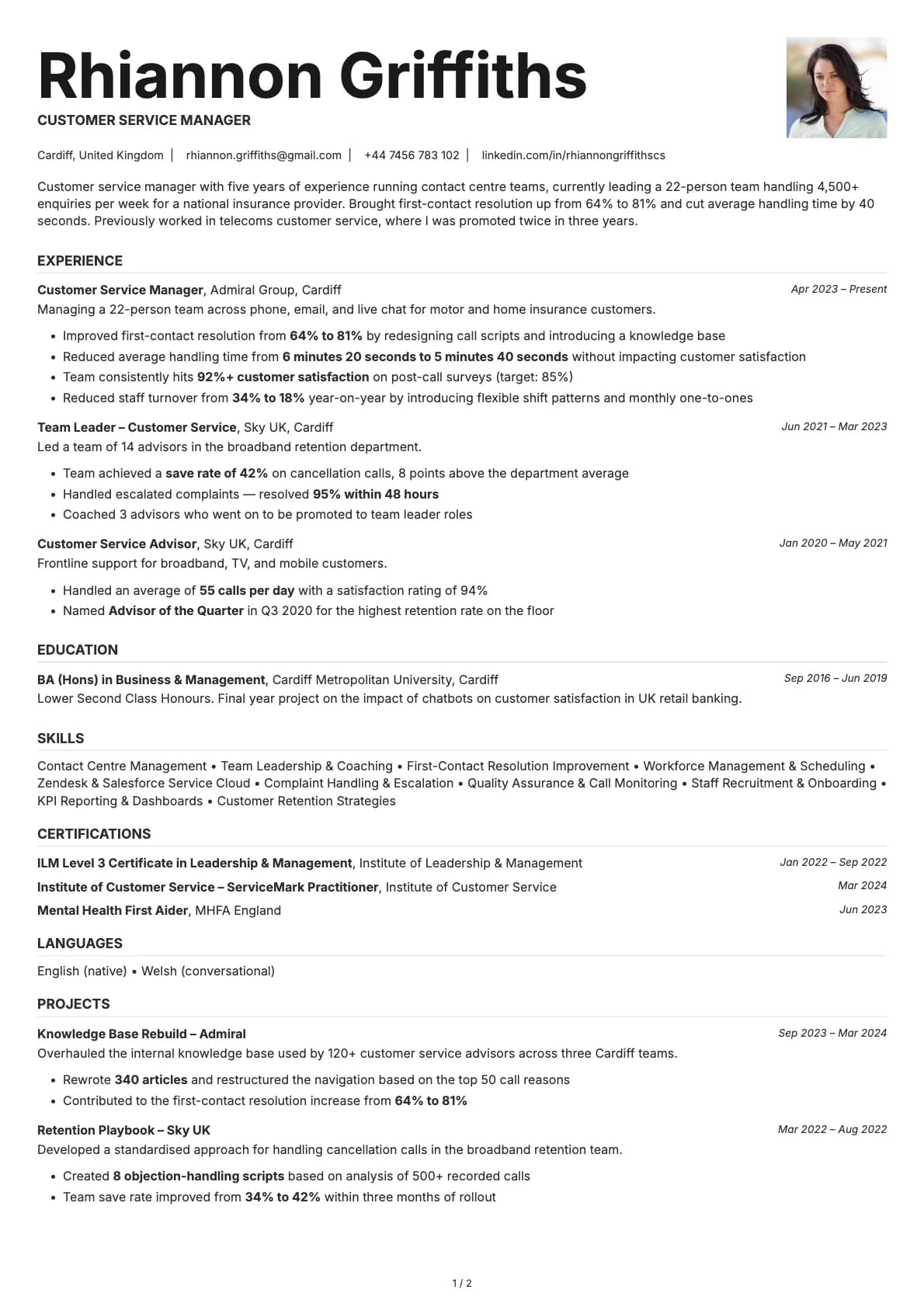
Customer Service Manager
A customer service manager resume example with contact centre experience at Admiral and Sky.
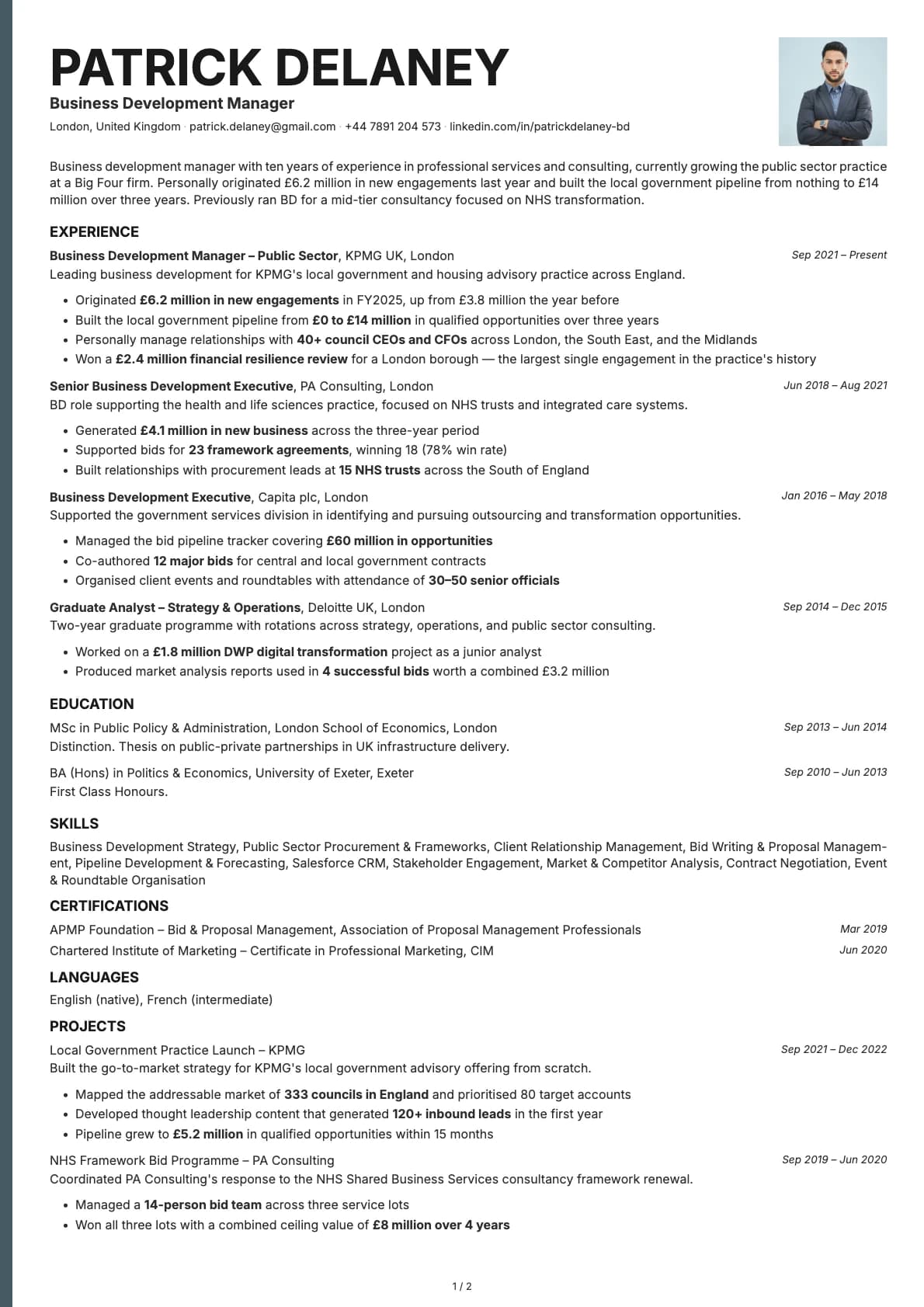
Business Development Manager
A business development manager resume example from professional services with £6.2 million in originated engagements, pipeline building, and public.
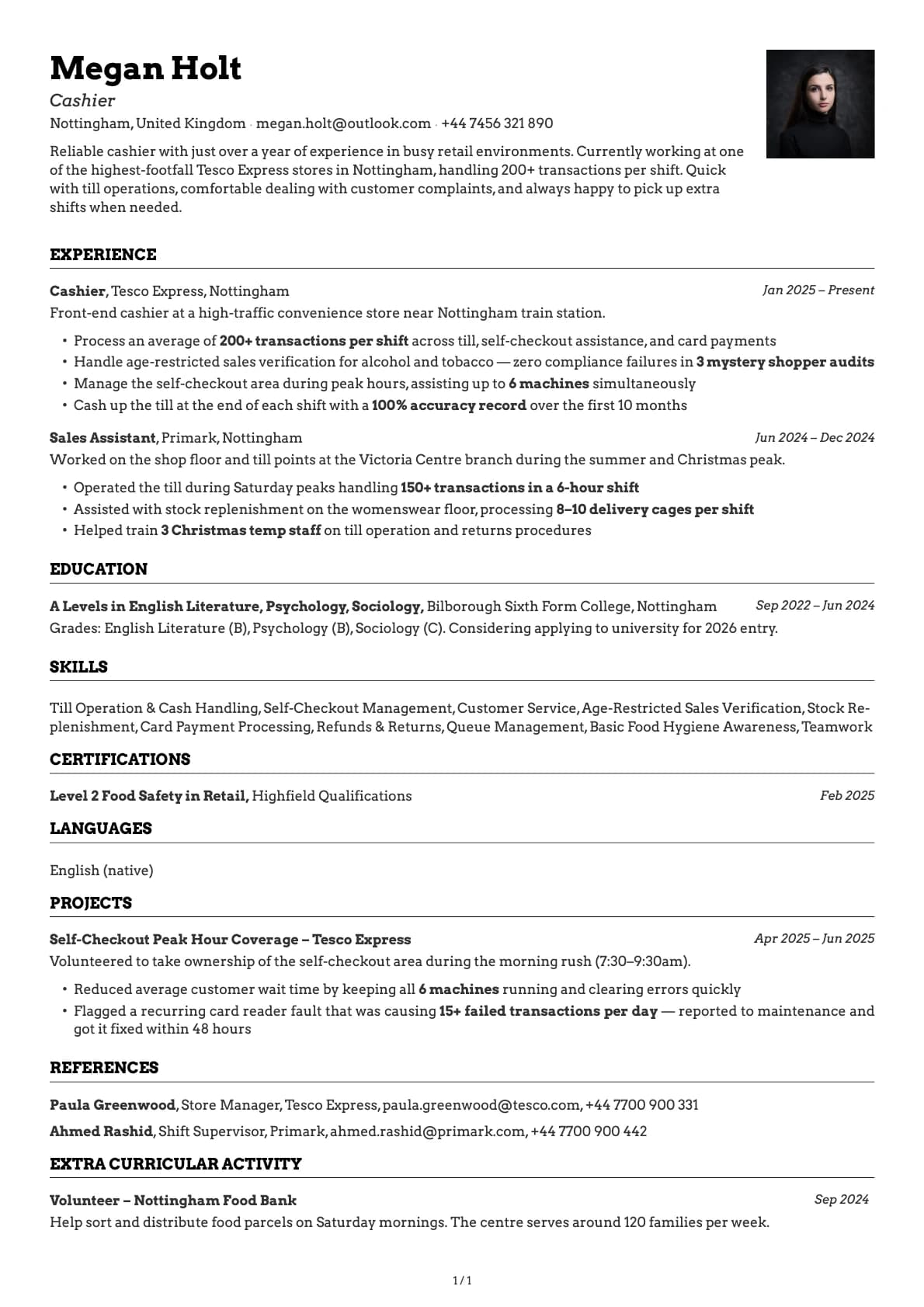
Cashier
A cashier resume example with real retail experience at Tesco and Primark. See how to present transaction volumes, till accuracy, and compliance records.
Related articles

AI Is Screening Your Resume Before Any Human Sees It
AI screens most resumes before a human ever reads them. 97.4% of Fortune 500 companies run an ATS. This is what that means for you and what you can do about it.

The Best Resume Builders in 2026, Compared Honestly
Resume.io, Zety, Enhancv, Kickresume, Teal, and Laddro compared honestly: real pricing, free tiers, mobile apps, and where each tool wins. All prices checked in September 2026.

Burnout Recovery: A Real Timeline, Not 'Take a Bubble Bath'
55% of the U.S. workforce is burned out. Recovery takes 3 to 12 months. Here's what that actually looks like, stage by stage.