HR Coordinator Resume Example
An HR coordinator resume example with onboarding metrics, HRIS experience, and HR reporting.

Laddro Team
Free to use. No account needed to start.
Free to use. No account needed to start.
Overview
HR coordinator sits in that awkward middle ground. You are not an assistant anymore, but you are not managing the team either. You are the person who makes the HR function actually run. Onboarding, HR admin, employee queries, reporting, benefits. If something needs doing and nobody else has picked it up, it lands on your desk.
The challenge when writing your resume is showing that you are more than an administrator. You need to demonstrate process thinking, volume, and the ability to improve how things work.
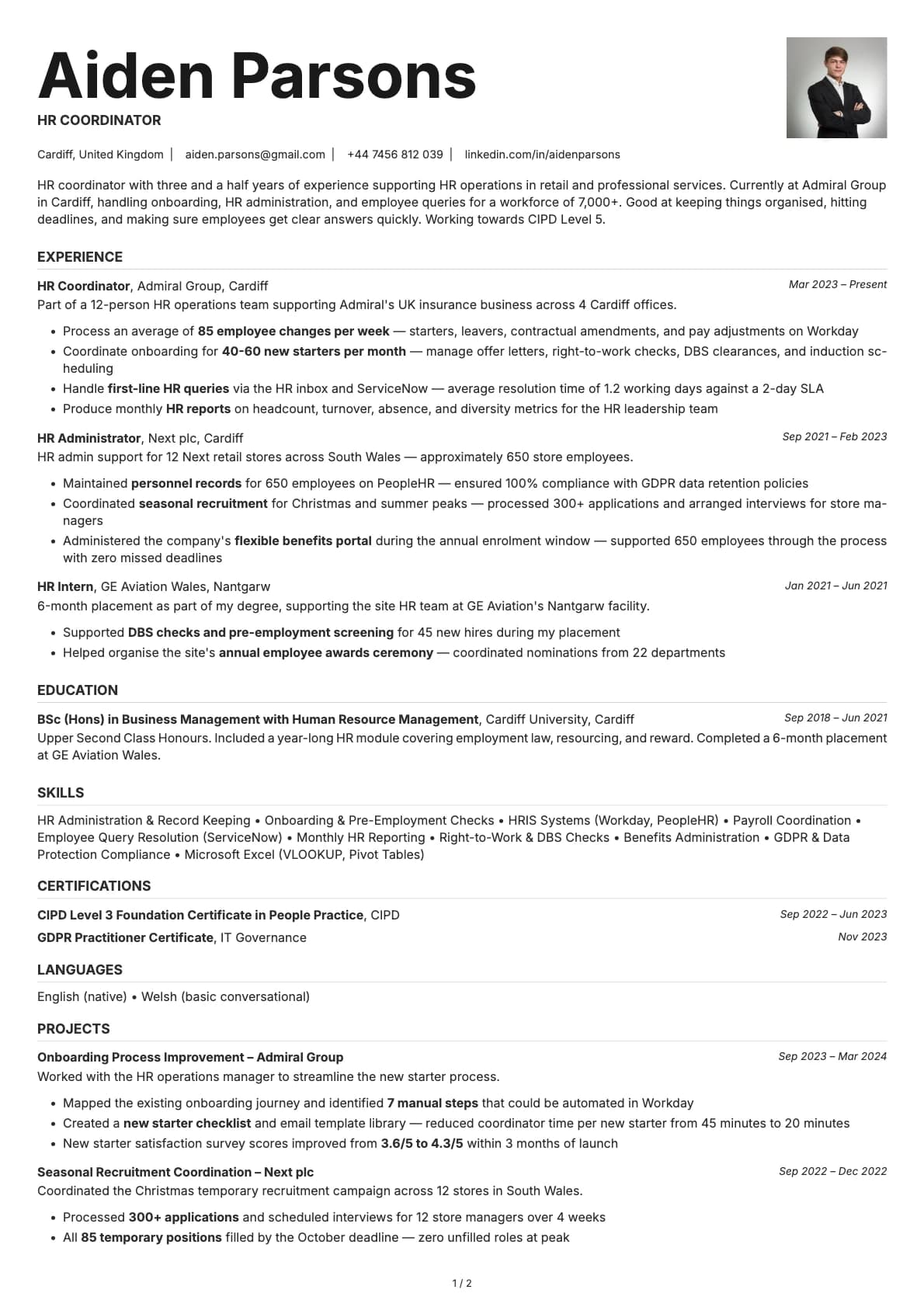
This resume belongs to Aiden, an HR coordinator at Admiral Group in Cardiff. He supports a workforce of 7,000+ employees, processes 85 employee changes per week, and coordinates onboarding for 40-60 new starters per month. Before Admiral, he was an HR administrator at Next and did an internship at GE Aviation. Three and a half years of experience, but the numbers make it look like much more.
Your summary should position you above admin
The biggest mistake HR coordinators make in their summary is writing something that sounds like an HR assistant role. You need to signal that you operate at a higher level.
Here is Aiden's:
HR coordinator with three and a half years of experience supporting HR operations in retail and professional services. Currently at Admiral Group in Cardiff, handling onboarding, HR administration, and employee queries for a workforce of 7,000+. Working towards CIPD Level 5.
Notice the workforce size (7,000+). That single number tells the reader this is not a small business with 30 employees. The mention of CIPD Level 5 signals career progression. And listing the industries (retail, professional services) shows breadth.
Your version: Name your current employer and the size of the workforce you support. Mention 2-3 core responsibilities. Add your CIPD level or what you are working towards.
Volume and speed are your best friends
At coordinator level, the value you bring is handling a high volume of work accurately and on time. Your resume needs to prove this.
Look at these bullets:
"Process an average of 85 employee changes per week, starters, leavers, contractual amendments, and pay adjustments on Workday"
"Coordinate onboarding for 40-60 new starters per month, manage offer letters, right-to-work checks, DBS clearances, and induction scheduling"
"Handle first-line HR queries via the HR inbox and ServiceNow, average resolution time of 1.2 working days against a 2-day SLA"
The first two show volume. 85 changes a week. 40-60 starters a month. Those are real numbers a hiring manager can compare against their own operation. The third bullet is clever because it shows a service standard and that Aiden beats it. 1.2 days against a 2-day SLA. That is a simple metric, but it proves reliability.
Formula for your bullets: What you process + How many + What system you use + How fast or how accurately.
Show progression from your earlier roles
If you have moved from HR admin to HR coordinator, make that progression visible. Aiden's earlier role at Next covered 650 employees across 12 retail stores. His internship at GE Aviation was a 6-month placement.
From the Next role:
"Coordinated seasonal recruitment for Christmas and summer peaks, processed 300+ applications and arranged interviews for store managers"
From the internship:
"Supported DBS checks and pre-employment screening for 45 new hires during my placement"
Neither of these are senior achievements. But they show someone who has been doing HR admin work for a few years, with increasing responsibility at each step. The recruiter can see a clear path from intern to admin to coordinator.
HRIS systems and reporting matter more than you think
HR coordinator roles almost always involve an HRIS. If you use Workday, PeopleHR, SAP SuccessFactors, BambooHR, or anything else, put it on your resume with context about what you do in it.
Aiden's resume mentions Workday, PeopleHR, and ServiceNow. But more importantly, it mentions what he produces from them:
"Produce monthly HR reports on headcount, turnover, absence, and diversity metrics for the HR leadership team"
If you create reports, say what they cover and who reads them. HR directors and managers care a lot about data quality. Showing that you produce the reports they rely on makes you immediately valuable.
Also list your Excel skills specifically. Not just "Microsoft Excel" but "VLOOKUP, Pivot Tables" or whatever you actually use. HR coordinators who can pull data and make it useful are in demand.
Projects prove you think beyond your job description
Aiden lists two projects. The onboarding process improvement at Admiral reduced coordinator time per new starter from 45 minutes to 20 minutes and pushed satisfaction scores from 3.6/5 to 4.3/5. The seasonal recruitment coordination at Next filled all 85 temporary positions by the deadline with zero gaps.
These projects show someone who does not just process paperwork. They improve how the paperwork gets processed. At coordinator level, this is exactly what gets you promoted to advisor or business partner.
If you have ever suggested a better way of doing something and it got implemented, write it up as a project. Before and after numbers are ideal.
Mistakes HR coordinators make on their resumes
Describing the role, not the results. "Responsible for onboarding" is a job description. "Coordinate onboarding for 40-60 new starters per month" is a resume bullet. Always add the number.
Not mentioning the CIPD. If you have Level 3 and are working towards Level 5, say so. The CIPD pathway is the standard career framework for HR in the UK. Hiring managers look for it.
Ignoring GDPR. If you handle employee data (and you do), mention GDPR compliance. Aiden lists a GDPR Practitioner Certificate. Even if you do not have a formal certificate, showing awareness of data protection is important for any HR role.
Burying your systems experience. If the job ad mentions Workday and you use Workday, it should appear in your first few bullets, not just in the skills section. ATS software scans for keywords, and human readers scan for relevance. Make it easy for both.
One last tip
HR coordinator is a stepping stone role. The resume should make that obvious. Show that you are studying (CIPD Level 5), that you improve processes (not just follow them), and that you can handle a serious volume of work without dropping things. That combination gets you to the next level.
Build your own version
Open this layout in the builder and swap in your own details. It takes a few minutes.
Free to use. No account needed to start.
Was this resume example helpful?
Rate this example to help us create better content for you.
4.7 average from 112 ratingsRelated resume examples
HR Manager
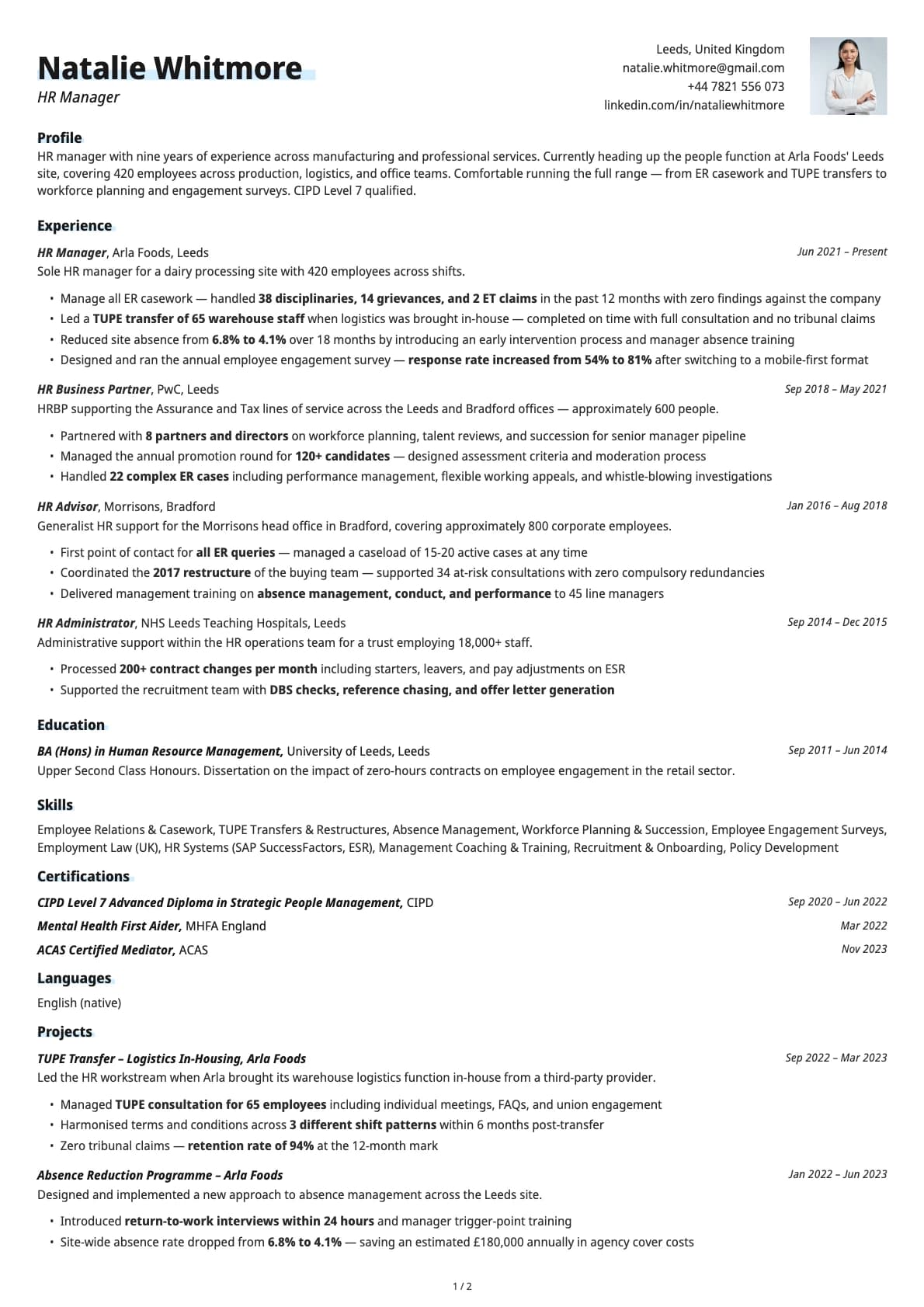
An HR manager resume example with ER casework numbers, TUPE experience, and absence reduction results.
Recruiter
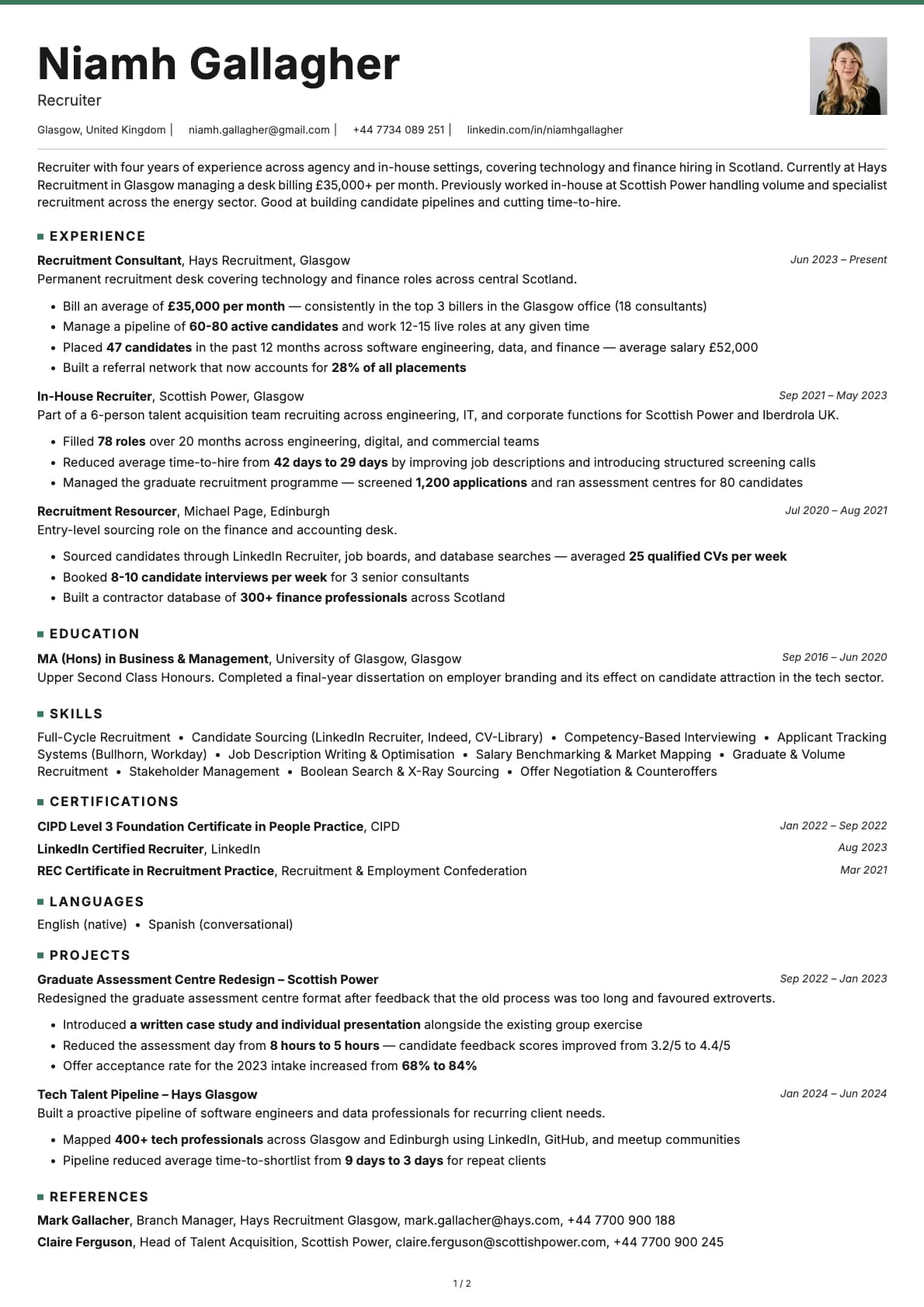
A recruiter resume example with agency and in-house experience, billing numbers, and candidate pipeline metrics.
Learning & Development Manager
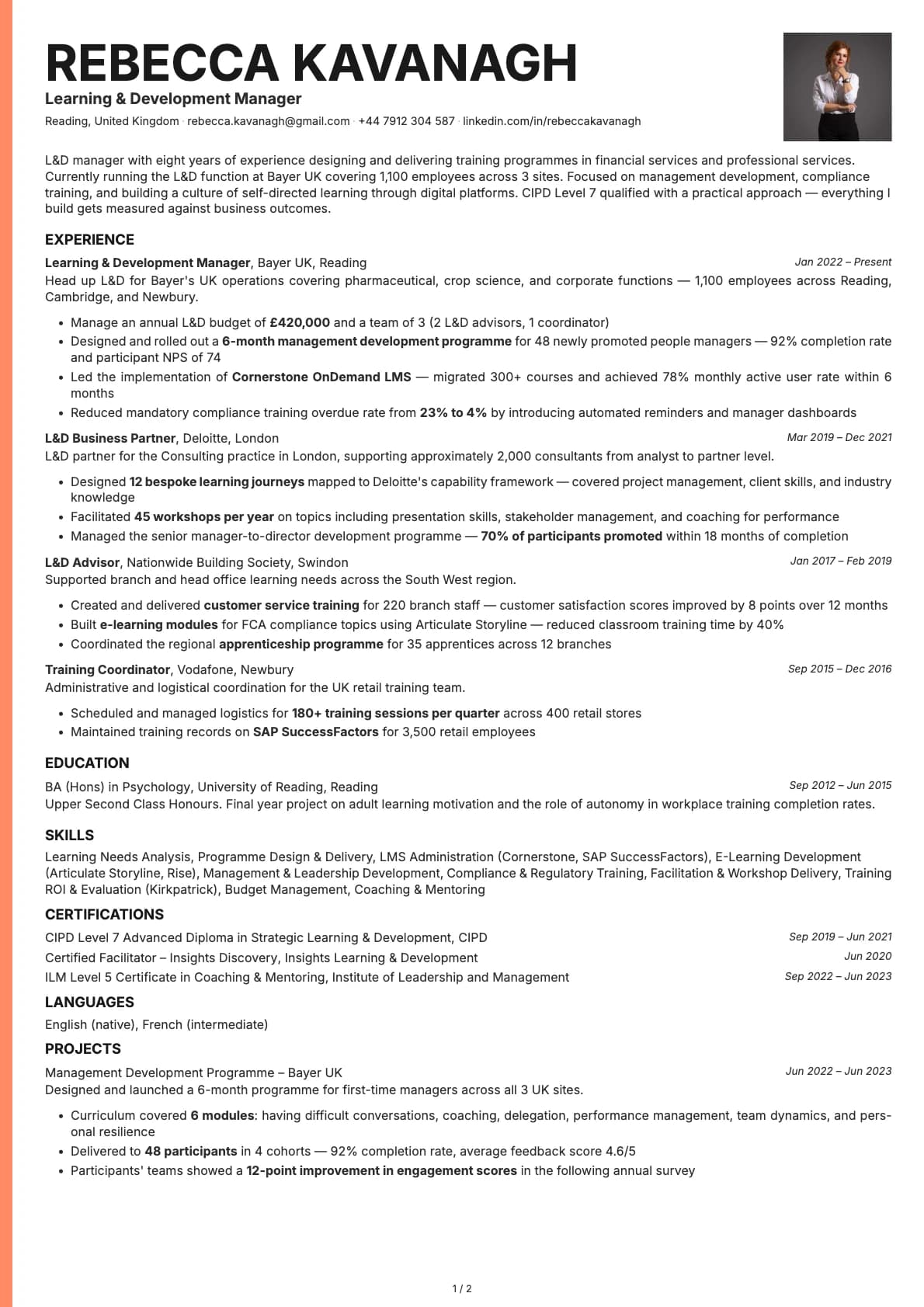
An L&D manager resume example with programme design, LMS implementation, and training ROI metrics. See how to present eight years of L&D experience.
HR Director
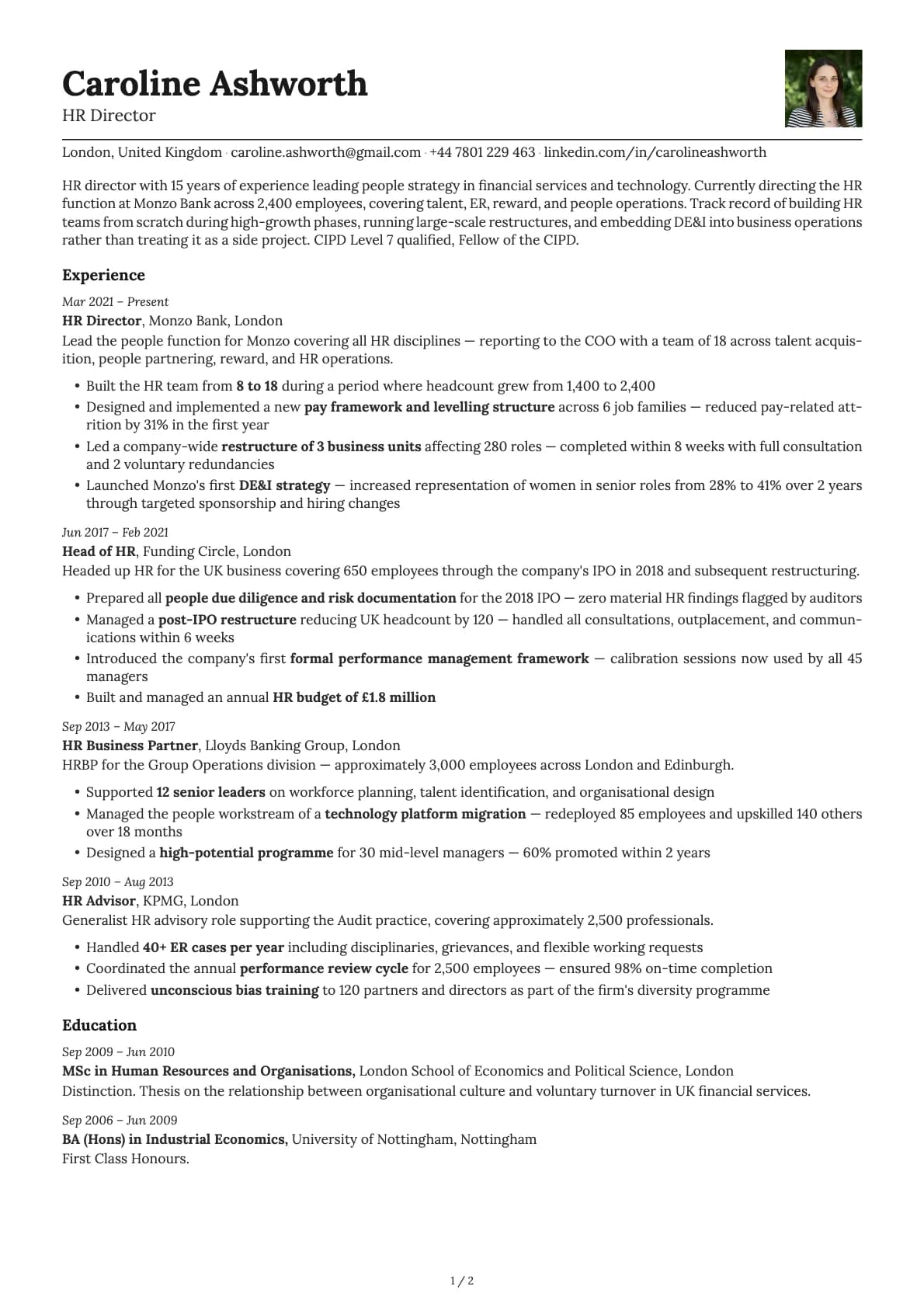
An HR director resume example with 15 years in financial services and tech. See how to present people strategy, restructures, and DE&I outcomes.
Related articles

AI Is Screening Your Resume Before Any Human Sees It
AI screens most resumes before a human ever reads them. 97.4% of Fortune 500 companies run an ATS. This is what that means for you and what you can do about it.

The Best Resume Builders in 2026, Compared Honestly
Resume.io, Zety, Enhancv, Kickresume, Teal, and Laddro compared honestly: real pricing, free tiers, mobile apps, and where each tool wins. All prices checked in September 2026.

Burnout Recovery: A Real Timeline, Not 'Take a Bubble Bath'
55% of the U.S. workforce is burned out. Recovery takes 3 to 12 months. Here's what that actually looks like, stage by stage.