Recruiter Resume Example
A recruiter resume example with agency and in-house experience, billing numbers, and candidate pipeline metrics.

Laddro Team
Free to use. No account needed to start.
Free to use. No account needed to start.
Overview
Here is the irony of being a recruiter: you read resumes all day, but when it comes time to write your own, you freeze. You know what a bad resume looks like. You have rejected hundreds of them. But translating your own work into bullet points that actually land? That is harder than it sounds.
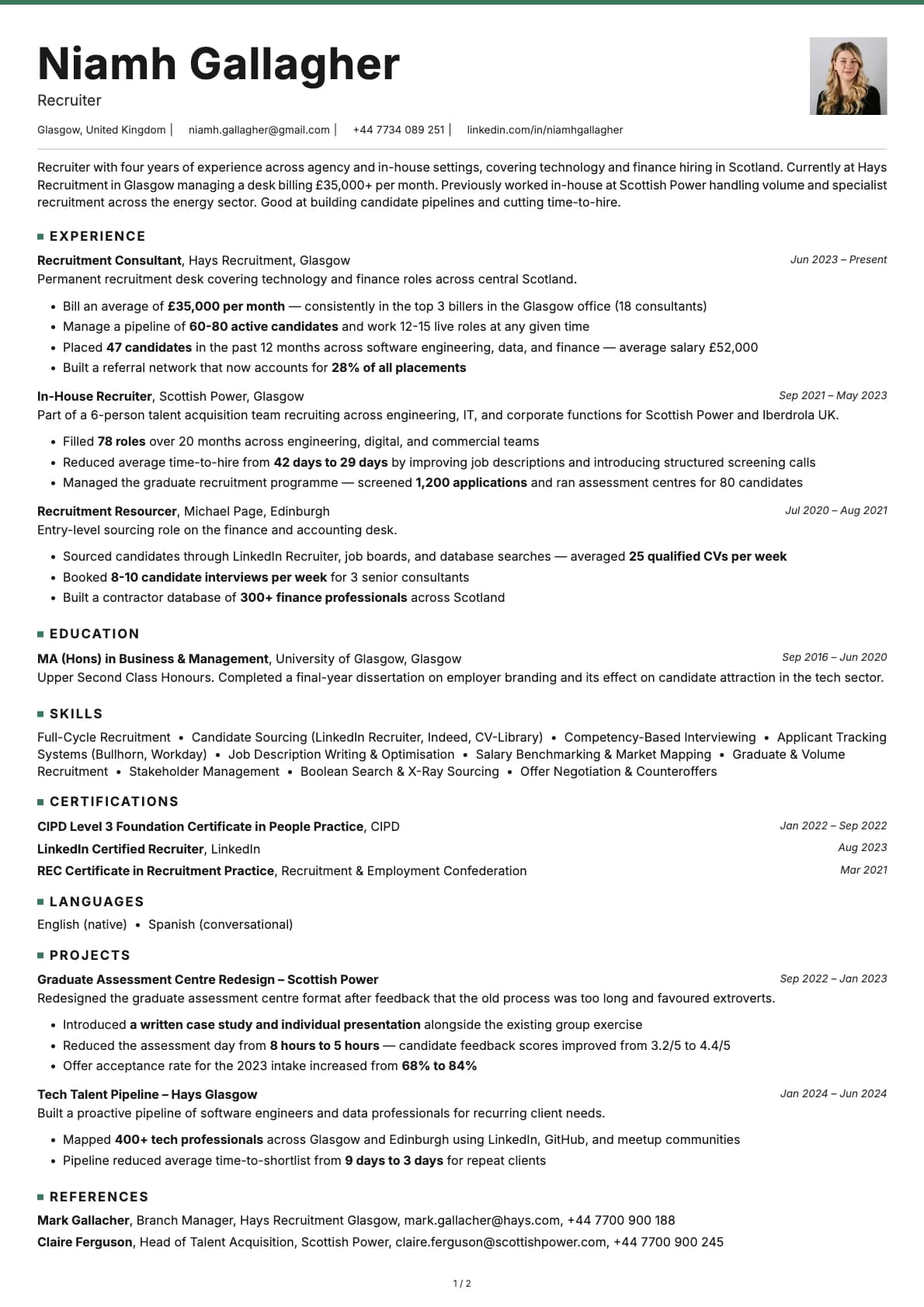
This resume belongs to Niamh Gallagher, a recruiter with four years of experience across agency and in-house settings in Scotland. She is currently a recruitment consultant at Hays in Glasgow, billing £35,000+ per month. Before that, she worked in-house at Scottish Power handling volume and specialist recruitment. And she started as a resourcer at Michael Page.
What makes this resume work is numbers. Not vague claims about being a "people person" or "talent acquisition professional." Actual billing figures, placement counts, and pipeline sizes. Let us go through it.
Lead with billing and placement numbers
If you are in agency recruitment, your billing number is the single most important thing on your resume. It is the clearest signal of how good you are. This resume puts it front and centre:
"Bill an average of £35,000 per month, consistently in the top 3 billers in the Glasgow office (18 consultants)"
That line does three things at once. It tells the hiring manager the billing figure, shows where she ranks against peers, and gives context on team size. If you are a 360 recruiter, your billing is your headline stat. Put it in the first bullet.
For in-house recruiters, the equivalent is roles filled. Look at the Scottish Power entry:
"Filled 78 roles over 20 months across engineering, digital, and commercial teams"
That is a clear, verifiable number. Not "supported hiring across the business." Seventy-eight roles. Twenty months. Three departments.
Your formula: State the number, the timeframe, and the scope.
Show that you improve processes, not just fill seats
Anyone can fill a req if given enough time. The best recruiter resumes show that you made hiring faster, cheaper, or better. This resume does it well:
"Reduced average time-to-hire from 42 days to 29 days by improving job descriptions and introducing structured screening calls"
That is a 31% reduction in time-to-hire, and it tells the reader exactly how she did it. Not "streamlined the recruitment process." The actual actions: better job descriptions, structured screening calls. Hiring managers want to know your methods because they want to know if you will bring those methods to their team.
If you have improved any metric (time-to-hire, cost-per-hire, offer acceptance rate, candidate satisfaction), put it on your resume with a before-and-after number.
Write your pipeline like inventory
Recruiters manage pipelines the way sales reps manage deals. Your resume should reflect that. Look at this bullet:
"Manage a pipeline of 60-80 active candidates and work 12-15 live roles at any given time"
This tells the reader exactly how much you can handle at once. It is not flashy. But it answers a practical question every hiring manager has: can this person handle our volume?
And this one from the resourcer role at Michael Page:
"Sourced candidates through LinkedIn Recruiter, job boards, and database searches, averaged 25 qualified CVs per week"
Notice the word "qualified." Not just CVs sent over. Qualified ones. That distinction matters because it shows she understands that sourcing is about quality, not just volume.
The project section that sets you apart
Most recruiter resumes do not have a projects section. This one does, and it is smart. The Graduate Assessment Centre Redesign at Scottish Power shows strategic thinking:
"Reduced the assessment day from 8 hours to 5 hours, candidate feedback scores improved from 3.2/5 to 4.4/5"
"Offer acceptance rate for the 2023 intake increased from 68% to 84%"
These numbers tell a story that goes beyond filling roles. She identified a problem (the old assessment process was too long and biased), changed it, and measured the results. If you have ever redesigned an interview process, built a new sourcing channel, or improved employer branding, write it up as a project with measurable outcomes.
Certifications and tools matter more than you think
Recruitment is one of those fields where certifications are not strictly required but they signal professionalism. This resume lists the CIPD Level 3, LinkedIn Certified Recruiter, and the REC Certificate in Recruitment Practice. All three are recognized in the UK market.
But just as important are the tools. Notice the skills section includes Bullhorn, Workday, LinkedIn Recruiter, and Boolean search. If you know Bullhorn and the hiring company uses Bullhorn, that is one less thing they have to train you on. List your ATS experience by name, always.
Mistakes that sink recruiter resumes
Using recruitment jargon without proof. "Full-cycle recruiter" means nothing unless you back it up. Show sourcing numbers, screening volumes, and placement counts.
Not specifying your market. "Recruited across multiple sectors" tells the reader nothing. This resume says "technology and finance roles across central Scotland." Be specific about the industries, geographies, and seniority levels you cover.
Hiding your agency experience. Some recruiters moving in-house downplay their agency background. Do not. Agency experience shows you can work fast, handle targets, and build relationships under pressure. Frame it as a strength.
Forgetting the sourcing details. If you are good at sourcing, prove it. "Built a contractor database of 300+ finance professionals across Scotland" is far better than "skilled at candidate sourcing."
One last tip
If you are applying to another agency, lead with billing. If you are applying in-house, lead with process improvement and stakeholder management. Same experience, different emphasis. Read the job spec and reorder your bullets to match what they are looking for. You tell candidates to do this all the time. Do it yourself.
Build your own version
Open this layout in the builder and swap in your own details. It takes a few minutes.
Free to use. No account needed to start.
Was this resume example helpful?
Rate this example to help us create better content for you.
4.7 average from 134 ratingsRelated resume examples
HR Manager
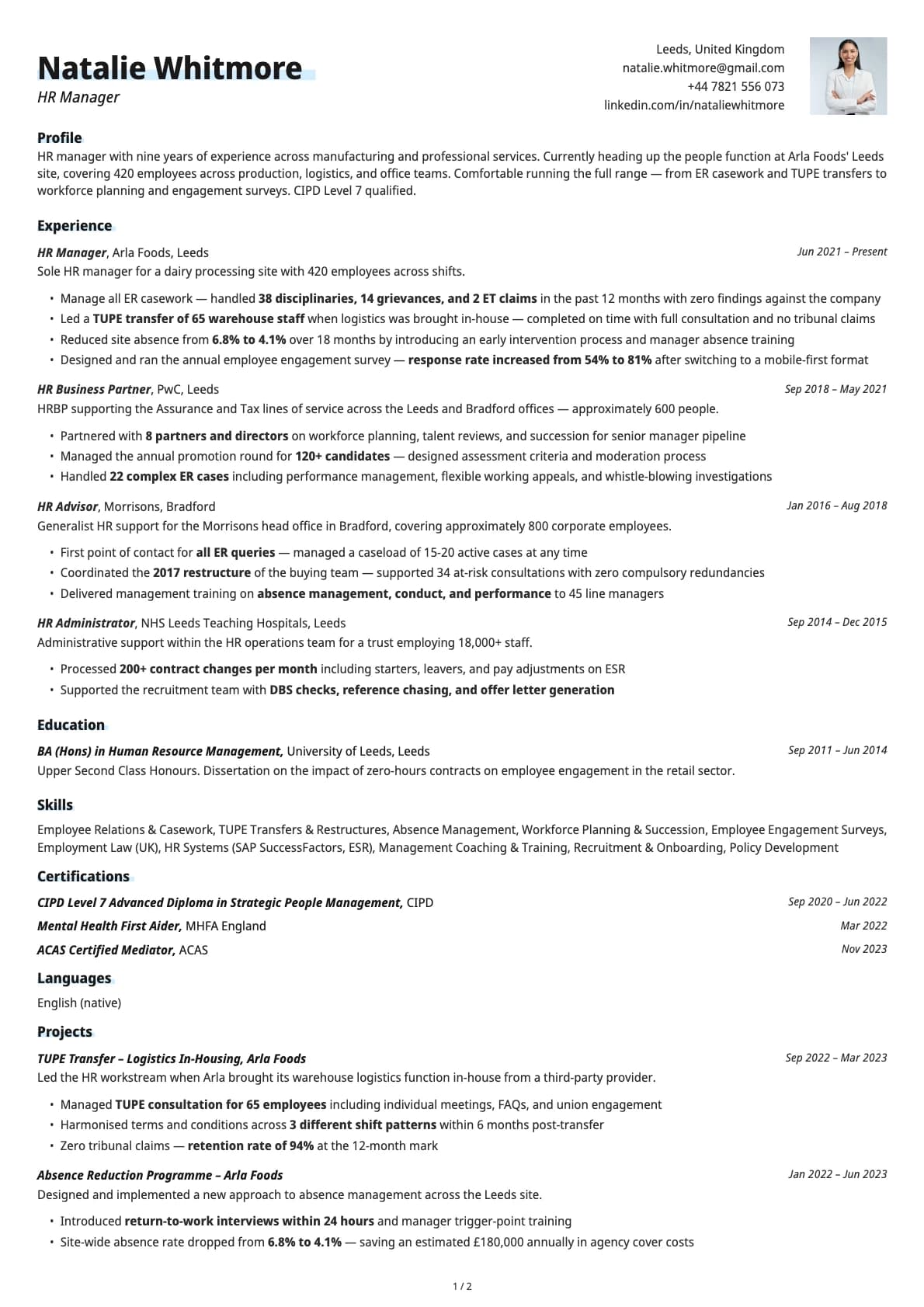
An HR manager resume example with ER casework numbers, TUPE experience, and absence reduction results.
Learning & Development Manager
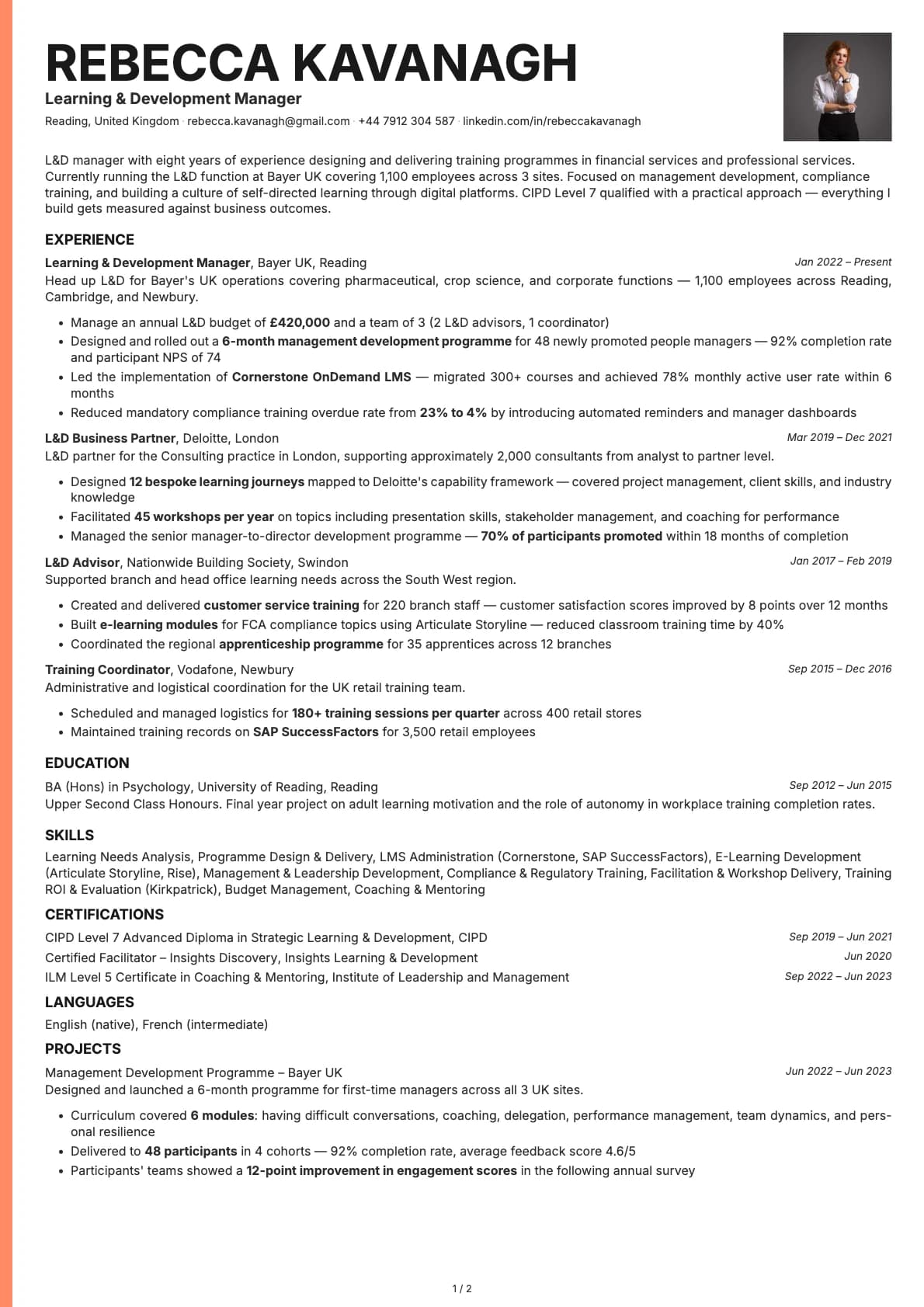
An L&D manager resume example with programme design, LMS implementation, and training ROI metrics. See how to present eight years of L&D experience.
HR Director
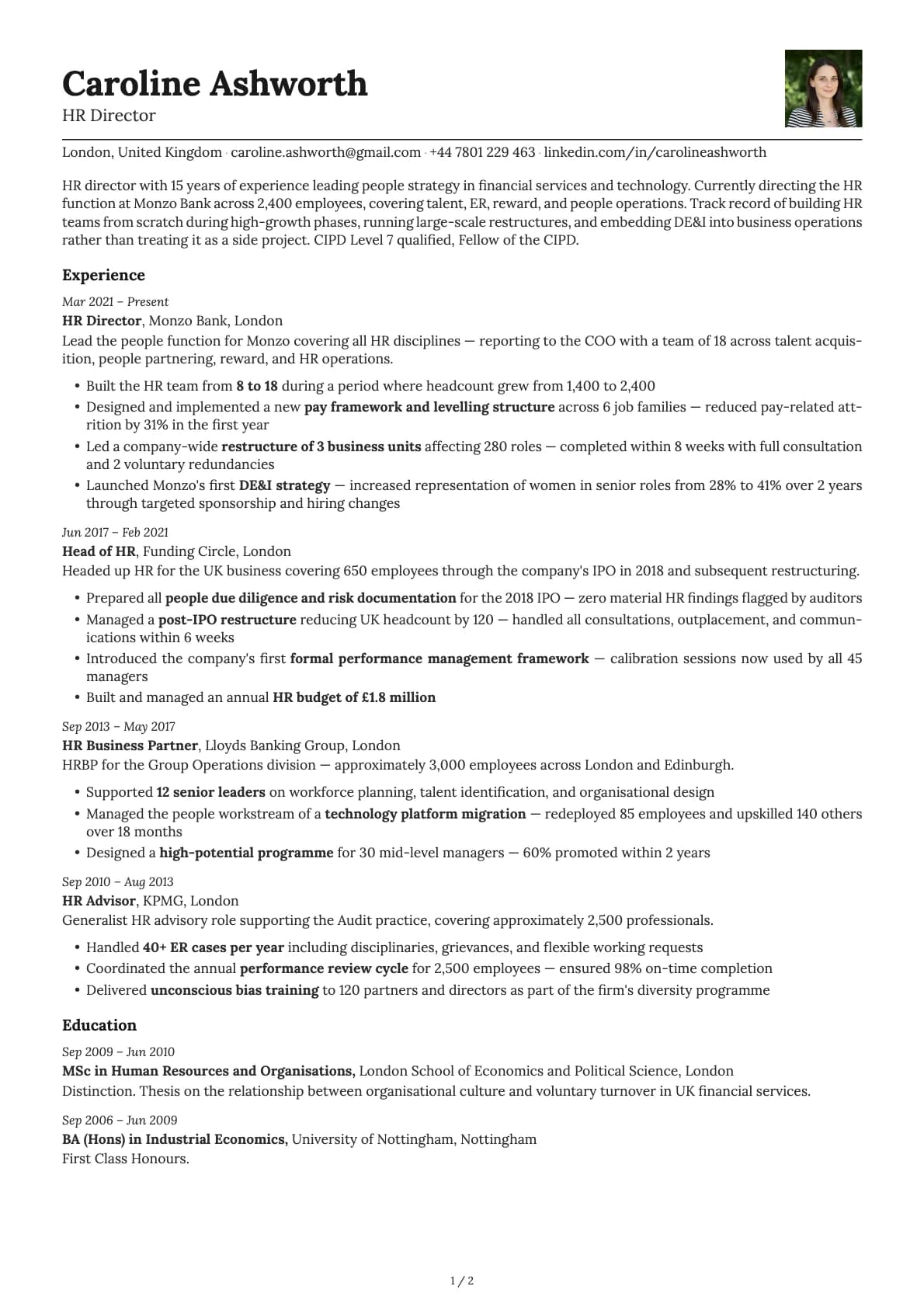
An HR director resume example with 15 years in financial services and tech. See how to present people strategy, restructures, and DE&I outcomes.
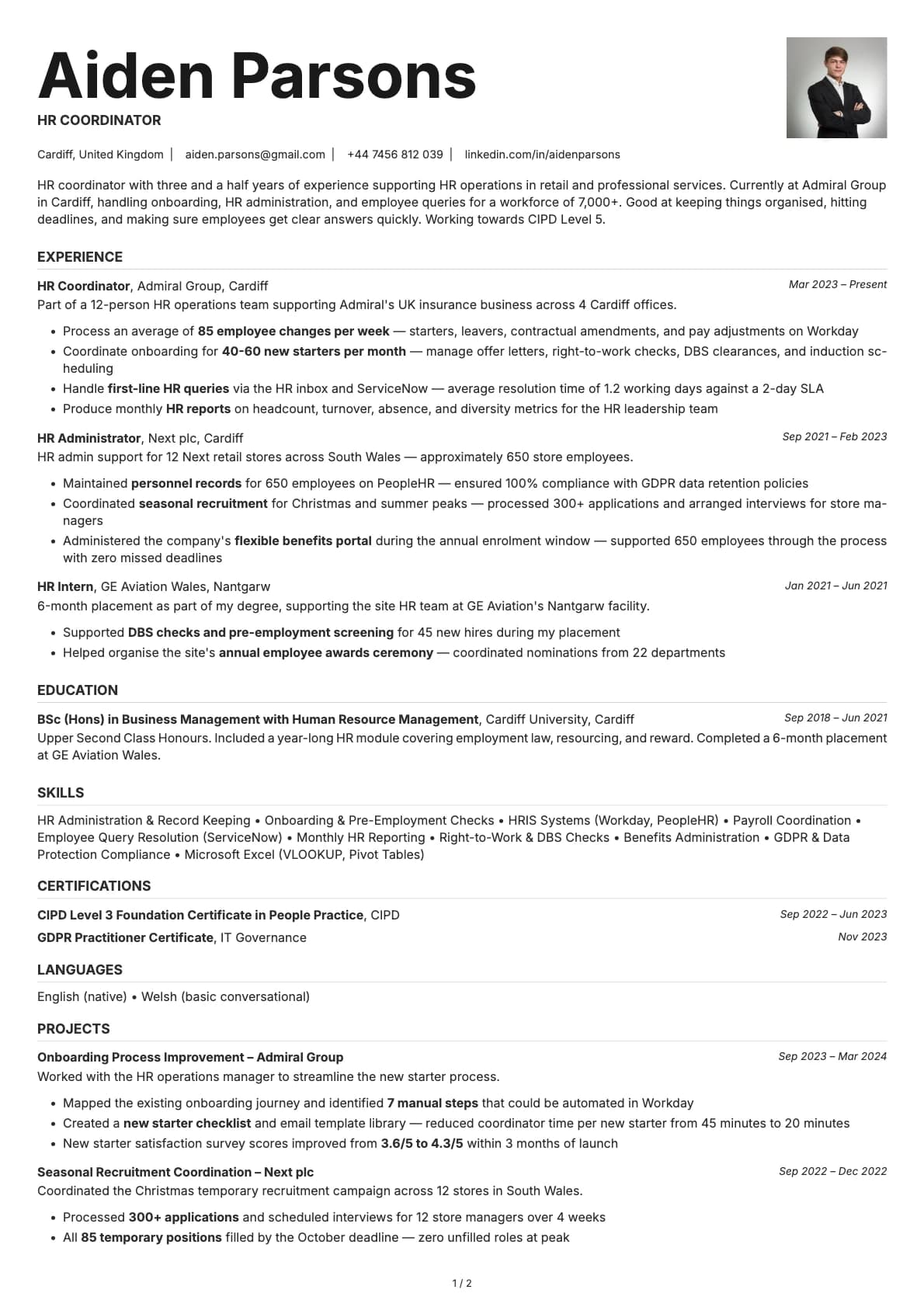
HR Coordinator
An HR coordinator resume example with onboarding metrics, HRIS experience, and HR reporting.
Related articles

AI Is Screening Your Resume Before Any Human Sees It
AI screens most resumes before a human ever reads them. 97.4% of Fortune 500 companies run an ATS. This is what that means for you and what you can do about it.

The Best Resume Builders in 2026, Compared Honestly
Resume.io, Zety, Enhancv, Kickresume, Teal, and Laddro compared honestly: real pricing, free tiers, mobile apps, and where each tool wins. All prices checked in September 2026.

Burnout Recovery: A Real Timeline, Not 'Take a Bubble Bath'
55% of the U.S. workforce is burned out. Recovery takes 3 to 12 months. Here's what that actually looks like, stage by stage.