Retail Manager Resume Example
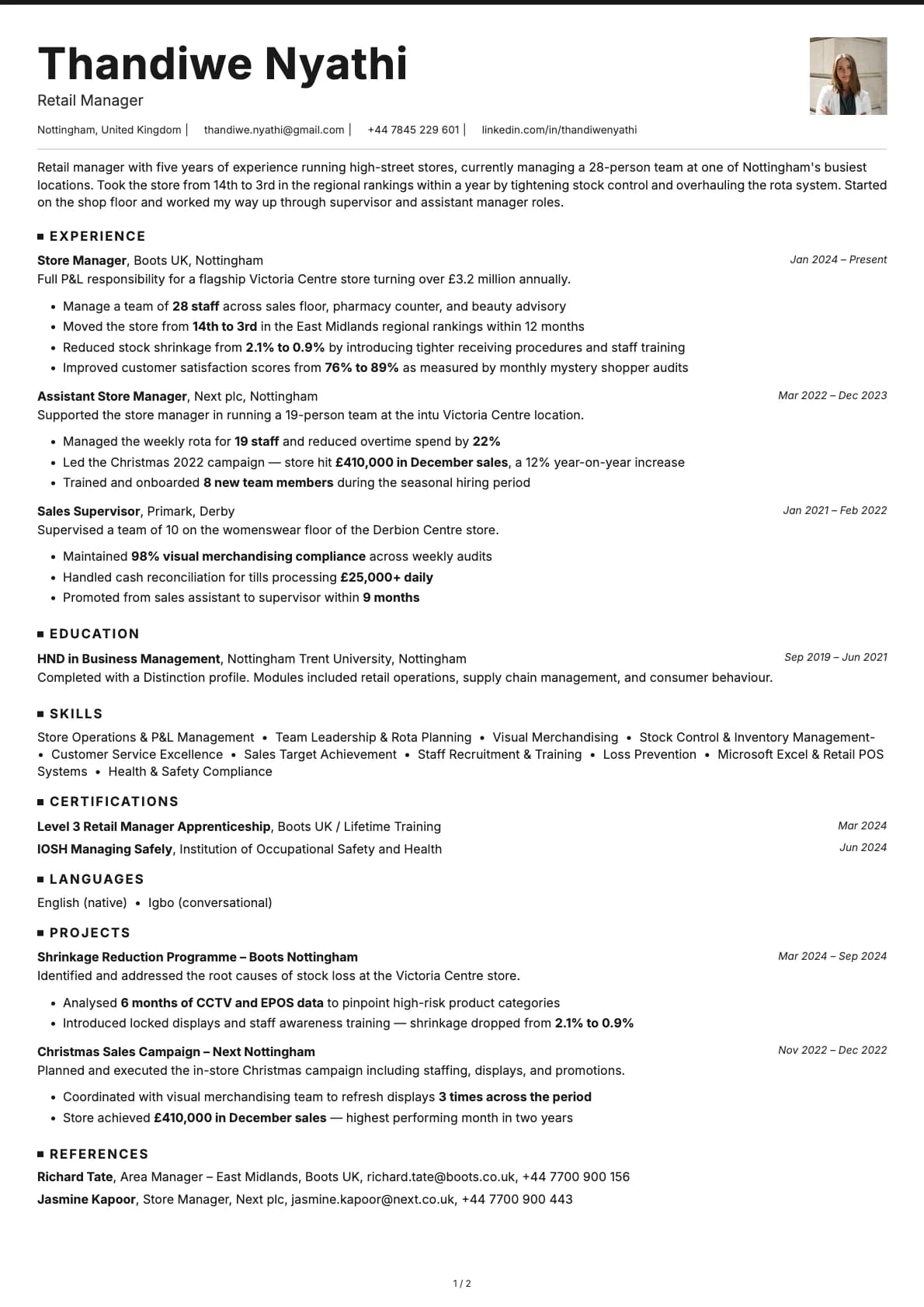
A retail manager resume example showing store rankings, shrinkage reduction, and team leadership.

Laddro Team
Free to use. No account needed to start.
Free to use. No account needed to start.
Overview
Retail management resumes tend to fall into two categories. Either they read like a job description ("responsible for store operations and team management") or they list every KPI ever invented without any context. Neither works.
This resume belongs to Thandiwe Nyathi, a retail manager in Nottingham. She currently runs a flagship Boots store in the Victoria Centre with 28 staff and £3.2 million in annual turnover. Before that, she was assistant manager at Next and a supervisor at Primark. She started on the shop floor and worked her way up.
What makes this resume effective is that every bullet connects to a result the next employer cares about: sales, shrinkage, customer satisfaction, or team performance. Let us break it down.
Your summary should tell the promotion story
Retail is one of the few industries where working your way up still happens regularly. If you have done it, say so. This resume does it in one sentence:
"Started on the shop floor and worked my way up through supervisor and assistant manager roles."
That is not just background. It tells the hiring manager you understand every level of the operation. You have done the tills, you have done the floor, and now you run the store. Area managers love candidates who have been through the ranks because they know you will not ask your team to do something you have not done yourself.
Keep it short: Band/title, years of experience, current store and team size, your best achievement, and how you got there.
Store performance numbers are your headline
In retail, the ranking is everything. This resume leads with it:
"Moved the store from 14th to 3rd in the East Midlands regional rankings within 12 months"
That is a clear, provable statement. The area manager can verify it in five seconds. If your store has improved its regional ranking, its like-for-like sales, or its mystery shopper score, that is bullet number one.
If you do not have a ranking to quote, use revenue figures:
"Full P&L responsibility for a flagship Victoria Centre store turning over £3.2 million annually"
P&L responsibility signals that you are managing a budget, not just running a team. That distinction matters for senior retail roles.
Shrinkage and loss prevention
Shrinkage is the number most retail managers forget to put on their resume. But it is one of the first things an area manager will ask about. This resume handles it well:
"Reduced stock shrinkage from 2.1% to 0.9% by introducing tighter receiving procedures and staff training"
Before-and-after. Method explained. That is the format. If you brought shrinkage down, say by how much and say what you changed. If you maintained a low number, that is worth mentioning too. "Maintained shrinkage at 0.8% against a regional average of 1.6%" is a strong line.
Team size and management details
Retail managers manage people. So the reader needs to know how many and in what context. This resume does not just say "managed a team." It says:
"Manage a team of 28 staff across sales floor, pharmacy counter, and beauty advisory"
That tells the reader the team size, the complexity (three different functions), and the type of store. From the Next role:
"Managed the weekly rota for 19 staff and reduced overtime spend by 22%"
Rotas, overtime, seasonal hiring. These are the operational details that show you actually run a store, not just work in one.
Showing growth through earlier roles
If you were promoted quickly, highlight it. From the Primark entry:
"Promoted from sales assistant to supervisor within 9 months"
That is a fact, not a boast. It says: the company trusted me enough to promote me fast. And the other bullets from that role (visual merchandising compliance, daily cash reconciliation of £25,000+) show that even in a junior role, she was handling real responsibility.
Do not skip over your earlier roles just because they were junior. Show what you were trusted with and how quickly you progressed.
Mistakes retail managers make on resumes
Writing "responsible for" everything. "Responsible for store operations" could describe literally any manager in any store. Replace it with what you actually did and what changed because of it.
Ignoring customer satisfaction metrics. This resume includes "Improved customer satisfaction scores from 76% to 89% as measured by monthly mystery shopper audits." If your store tracks NPS, mystery shopper scores, or Google reviews, use them.
Not mentioning the systems you use. If you use SAP, Oracle Retail, Kronos, or any specific POS system, name it. Employers want to know you can hit the ground running without a two-week systems training course.
Leaving out seasonal campaigns. The Christmas period is the biggest test of a retail manager's ability. This resume highlights the December 2022 campaign at Next: "£410,000 in December sales, a 12% year-on-year increase." If you ran a successful peak trading period, it belongs on your resume.
A final thought
Retail management interviews are practical. They will ask about a time you dealt with underperformance, managed a stock crisis, or handled a customer escalation. Your resume should set up those stories. Every bullet point you write is a story you might have to tell in detail later. So only include things you can expand on with confidence.
Build your own version
Open this layout in the builder and swap in your own details. It takes a few minutes.
Free to use. No account needed to start.
Was this resume example helpful?
Rate this example to help us create better content for you.
4.8 average from 142 ratingsRelated resume examples
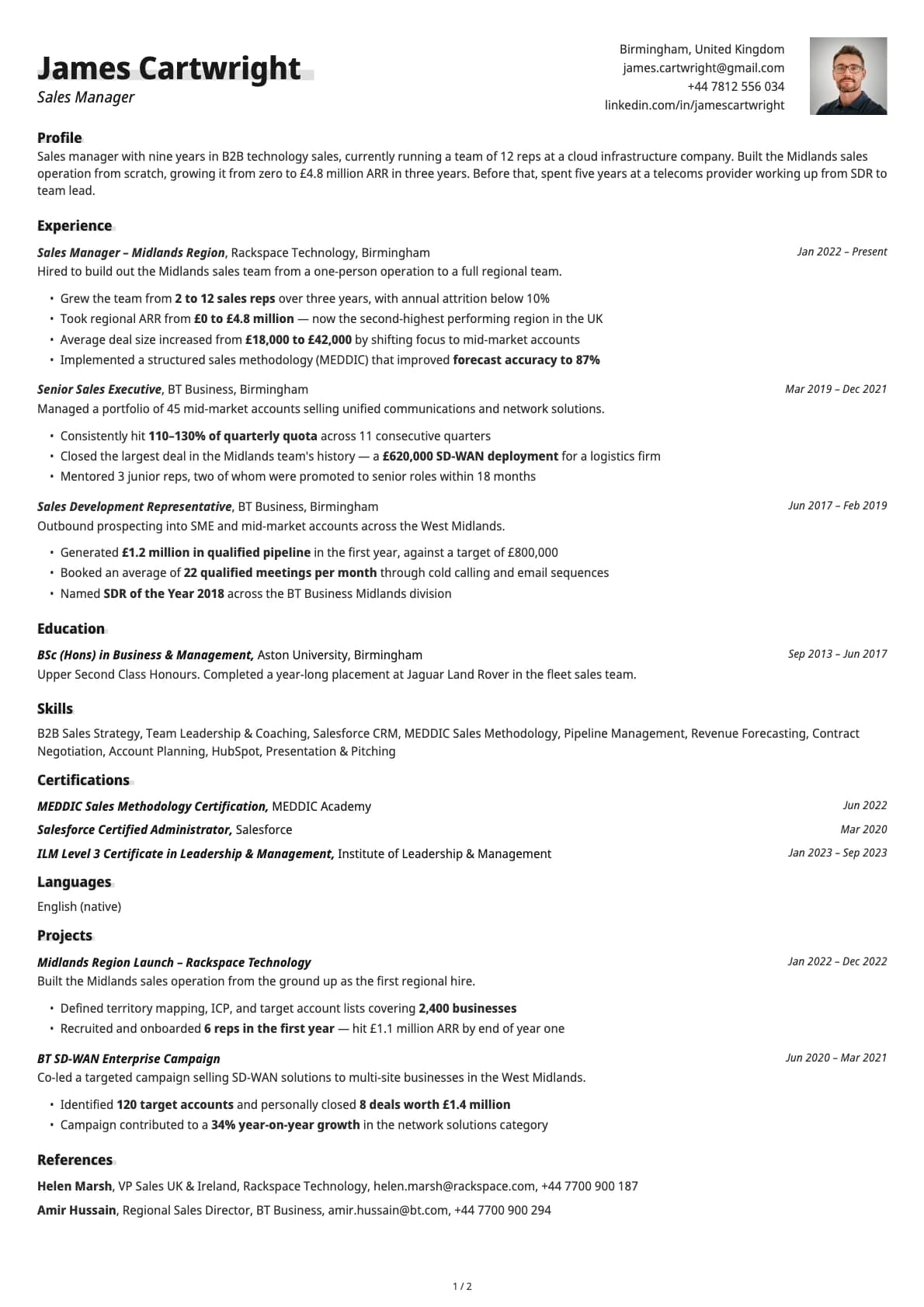
Sales Manager
A sales manager resume example with ARR growth, team scaling, and quota attainment numbers.
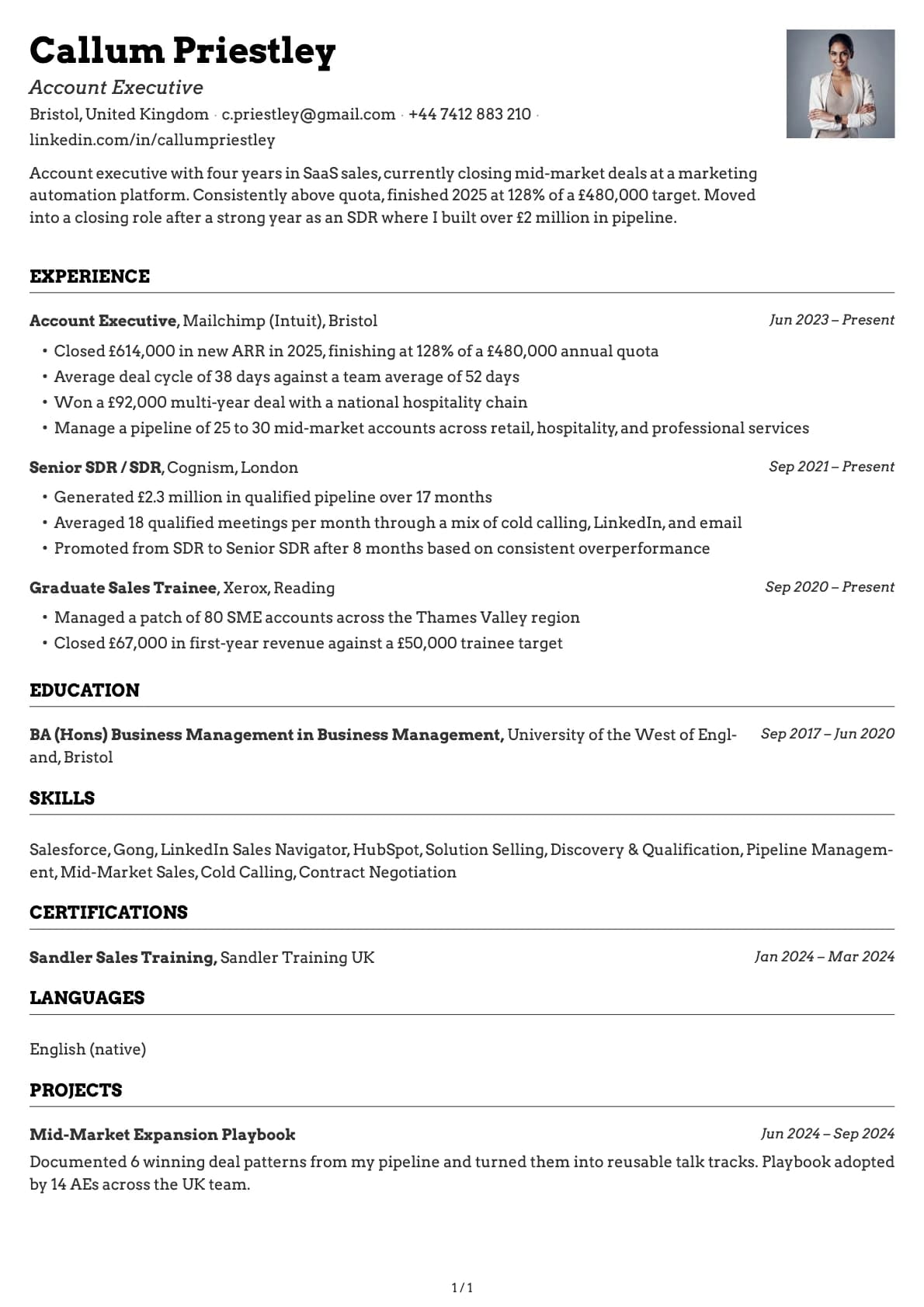
Account Executive
An account executive resume example with SaaS sales experience, quota attainment figures, and pipeline numbers that actually make hiring managers pick up.
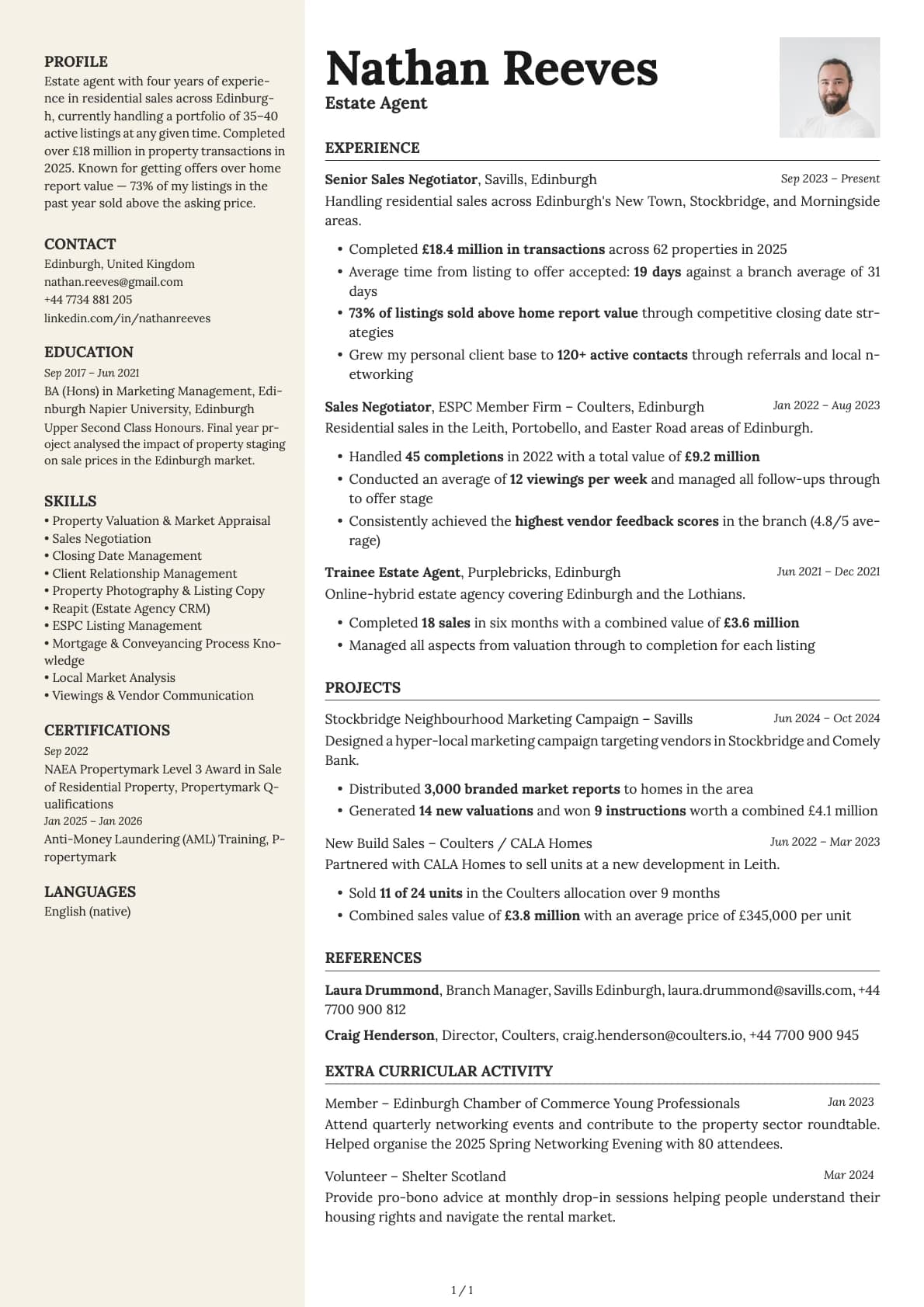
Real Estate Agent
A real estate agent resume example with transaction volumes, local market strategies, and sales metrics from residential property in Edinburgh.
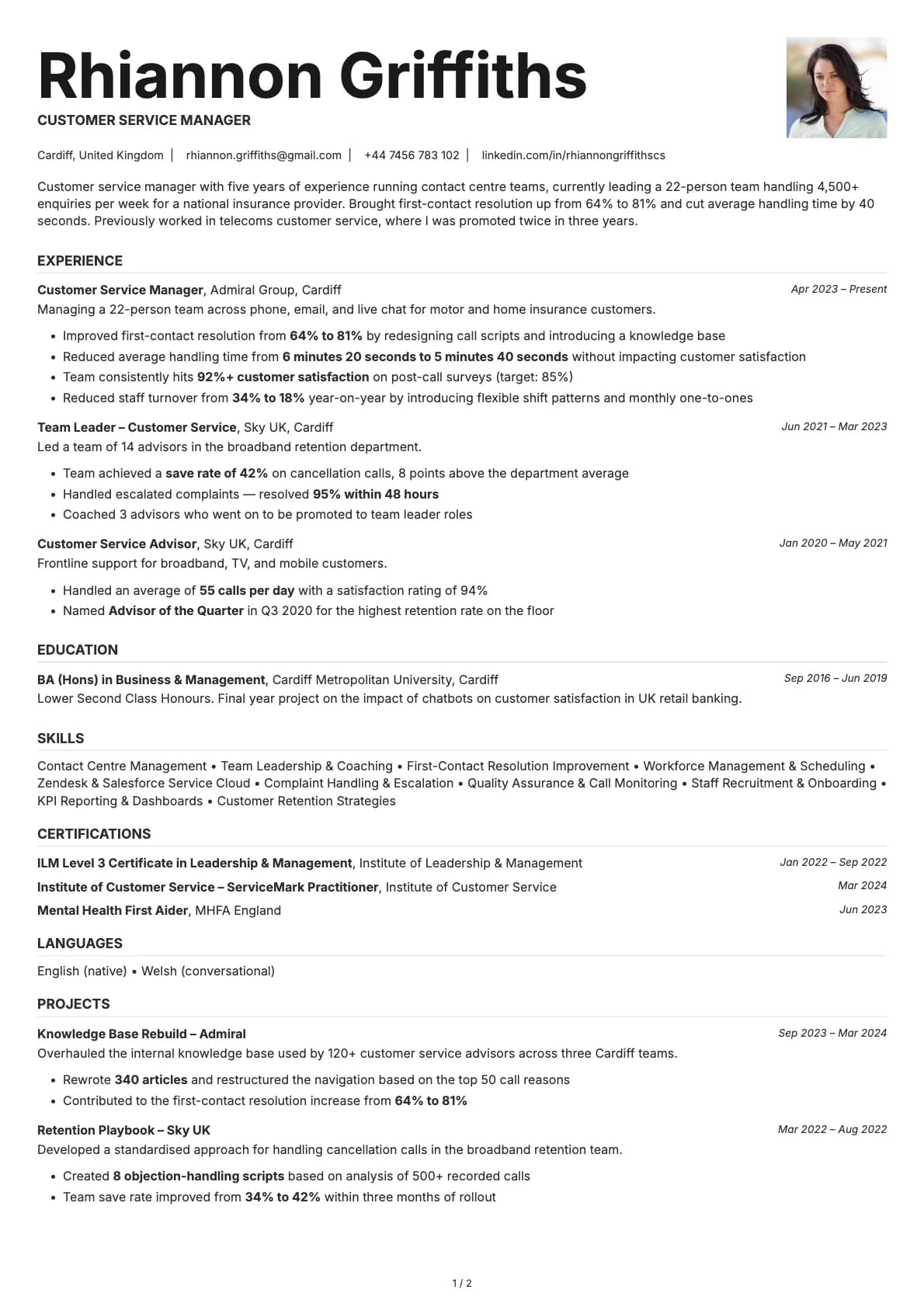
Customer Service Manager
A customer service manager resume example with contact centre experience at Admiral and Sky.
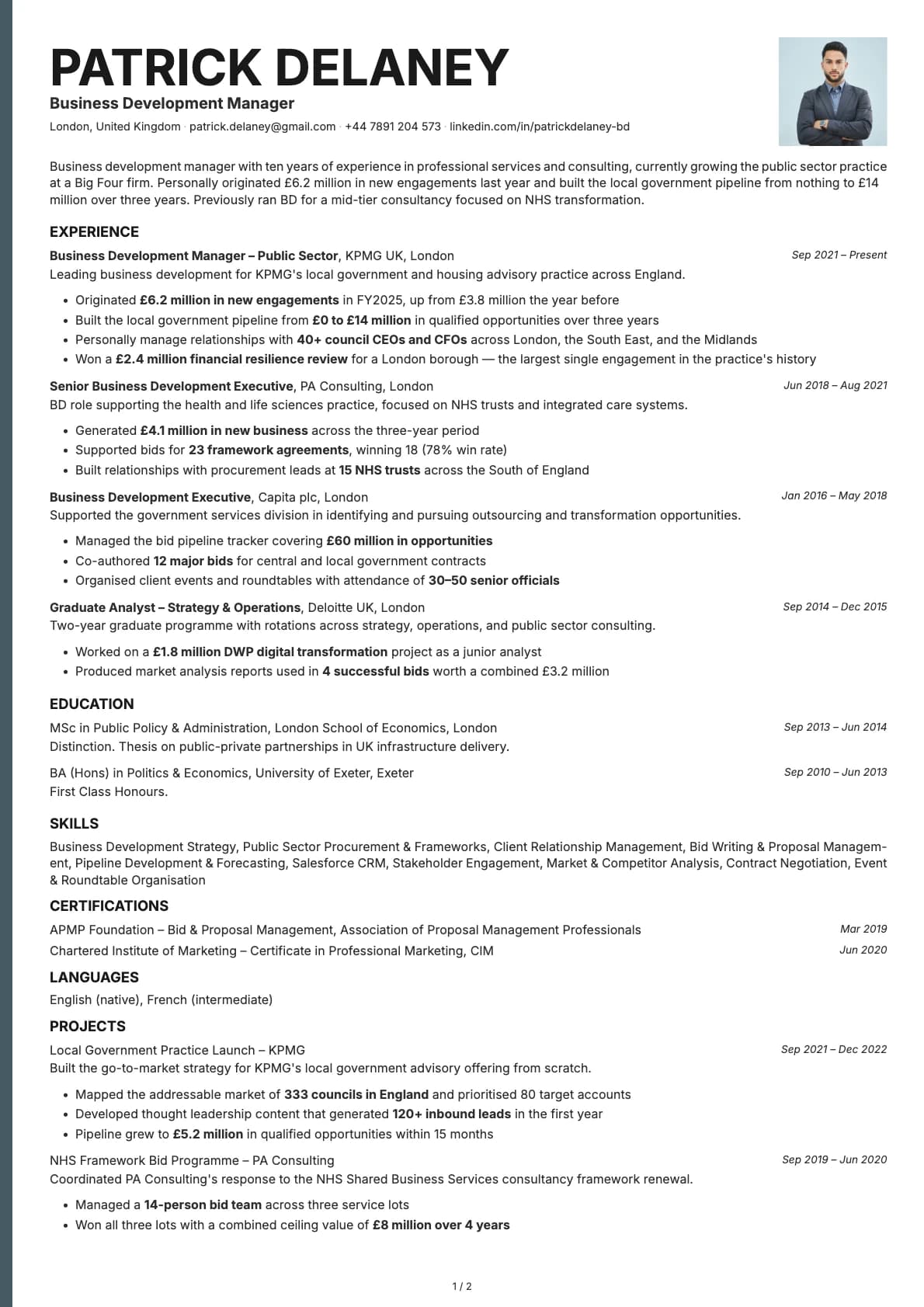
Business Development Manager
A business development manager resume example from professional services with £6.2 million in originated engagements, pipeline building, and public.
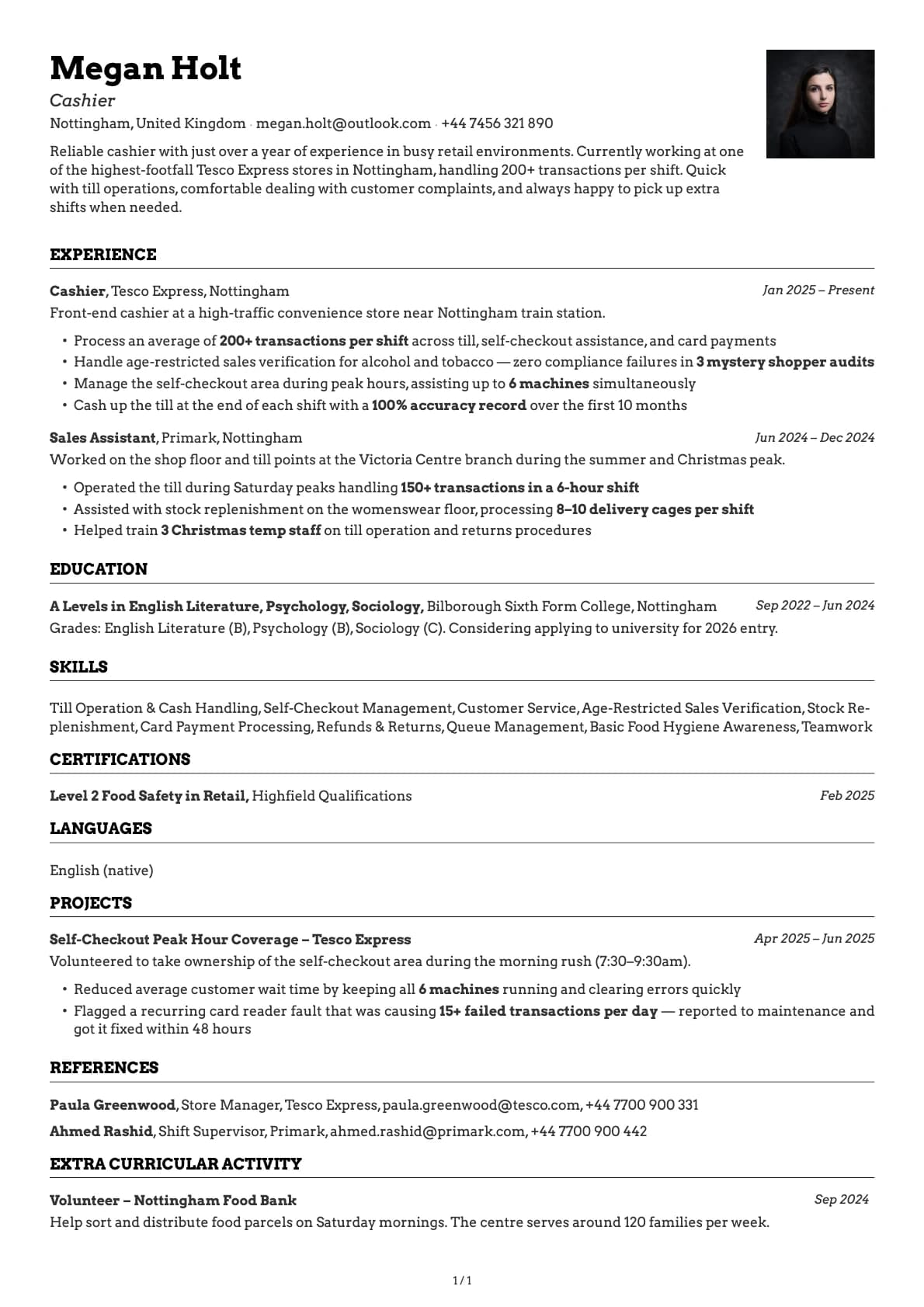
Cashier
A cashier resume example with real retail experience at Tesco and Primark. See how to present transaction volumes, till accuracy, and compliance records.
Related articles

AI Is Screening Your Resume Before Any Human Sees It
AI screens most resumes before a human ever reads them. 97.4% of Fortune 500 companies run an ATS. This is what that means for you and what you can do about it.

The Best Resume Builders in 2026, Compared Honestly
Resume.io, Zety, Enhancv, Kickresume, Teal, and Laddro compared honestly: real pricing, free tiers, mobile apps, and where each tool wins. All prices checked in September 2026.

Burnout Recovery: A Real Timeline, Not 'Take a Bubble Bath'
55% of the U.S. workforce is burned out. Recovery takes 3 to 12 months. Here's what that actually looks like, stage by stage.