Project Coordinator Cover Letter Example
A project coordinator cover letter example targeting Persimmon Homes.

Laddro Team
Free to use. No account needed to start.
Free to use. No account needed to start.
Overview
Project coordinator cover letters are challenging because the role sits between administration and project management. You need to show organisational skills without sounding like an administrator, and you need to show project awareness without overstating your authority. The best project coordinator letters focus on what you actually keep track of, how you keep it on track, and what happens when you spot something going off course.
This cover letter belongs to Megan Rowley, a project coordinator with just over a year of experience at Acorn Property Group and Cardiff Council. She is applying for a role at Persimmon Homes. Despite being early in her career, her letter demonstrates the core skills of project coordination: tracking, communication, and process improvement.
The opening: project scope and value
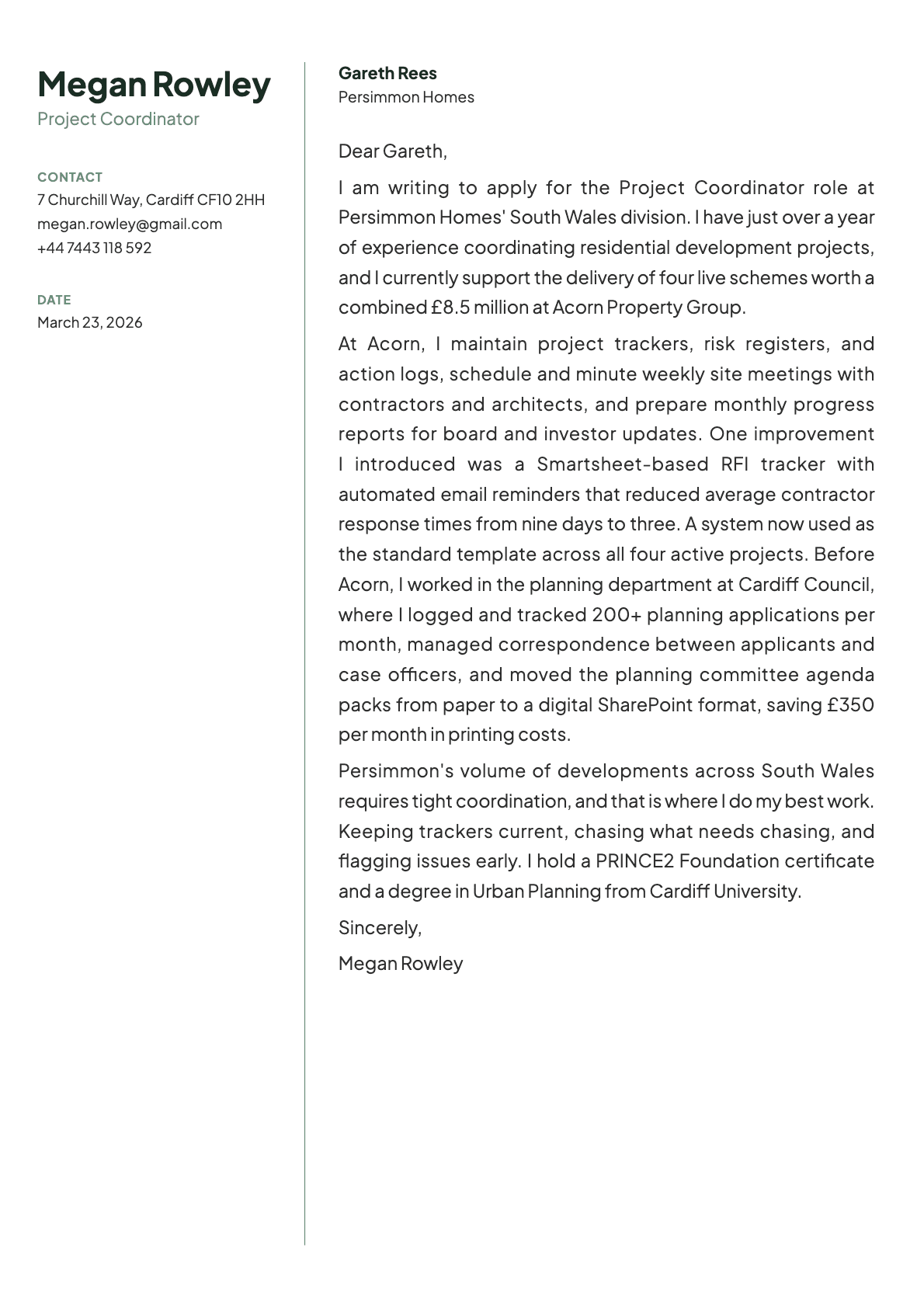
Megan opens by naming the scale of her current work. She supports four live residential development schemes worth a combined £8.5 million. That figure immediately tells the reader she is working on real projects with real money at stake, not just updating spreadsheets in isolation.
I have just over a year of experience coordinating residential development projects, and I currently support the delivery of four live schemes worth a combined £8.5 million at Acorn Property Group.
For your letter: if you coordinate projects, state their value, number, or scope. A project coordinator working on £8.5 million of live projects sounds very different from one who "assists with project administration." Same role, different framing.
The body: tracking, coordination, and a real improvement
The middle paragraph describes Megan's daily coordination work: project trackers, risk registers, action logs, weekly site meetings, and monthly progress reports. These are the core activities of project coordination, and she names them specifically rather than describing them vaguely.
The Smartsheet RFI tracker is the highlight. She identified a problem (slow contractor response times), built a solution (automated tracker with email reminders), and achieved a measurable result (response times from nine days to three). The fact that her system became the standard template across all four projects shows the improvement had lasting value.
The Cardiff Council experience adds breadth. Processing 200+ planning applications per month shows volume handling. Moving planning committee agenda packs from paper to digital SharePoint format, saving £350 per month, shows she can identify and implement practical improvements.
The key for project coordinators: your cover letter should include at least one example of a tool, tracker, or process you created or improved. Project coordination is fundamentally about systems, and showing that you build better ones demonstrates you are more than a note-taker.
The closing: understanding the job
Megan's closing describes what project coordination actually requires at a volume housebuilder: "keeping trackers current, chasing what needs chasing, and flagging issues early." This is a refreshingly honest description of the role. She does not dress it up with management jargon. She describes the work as it is.
The PRINCE2 Foundation certificate and Urban Planning degree show she has both formal project management knowledge and relevant academic background for the construction sector.
What makes this letter effective
Megan does not try to sound more senior than she is. She describes project coordination work accurately and then shows that she does it well, with evidence. The RFI tracker improvement is the kind of practical initiative that hiring managers remember because it solves a real problem that costs projects time and money.
The letter is also well targeted to Persimmon. Volume housebuilding requires tight coordination across many concurrent schemes, and Megan's experience with multiple live projects shows she understands that environment.
Mistakes project coordinators make in cover letters
Overstating your authority. Do not describe yourself as a project manager if you are a coordinator. Hiring managers know the difference, and inflating your title undermines your credibility. Show that you are excellent at coordination, and let your progression speak for itself.
Being vague about your tools. Name the specific tools you use for tracking and reporting. Smartsheet, MS Project, Monday.com, Jira, Asana, or even well-structured Excel trackers. These are practical skills that hiring managers want to verify.
Not mentioning stakeholder coordination. Project coordinators interact with contractors, architects, clients, and internal teams. If you schedule meetings, take minutes, or chase action items across multiple parties, describe that. It is a core part of the role.
Leaving out the sector context. Project coordination in construction is different from project coordination in IT or marketing. If you have sector-specific experience, make it clear. If you are changing sectors, explain how your skills transfer.
Forgetting to show initiative. The difference between a good coordinator and a great one is initiative. Did you create a better tracker? Flag a risk that prevented a delay? Improve a reporting format? These are the details that get you shortlisted.
Was this cover letter example helpful?
Rate this example to help us create better content for you.
4.6 average from 152 ratingsBuild your own version
Open this layout in the builder and swap in your own details. It takes a few minutes.
Free to use. No account needed to start.
Related cover letter examples
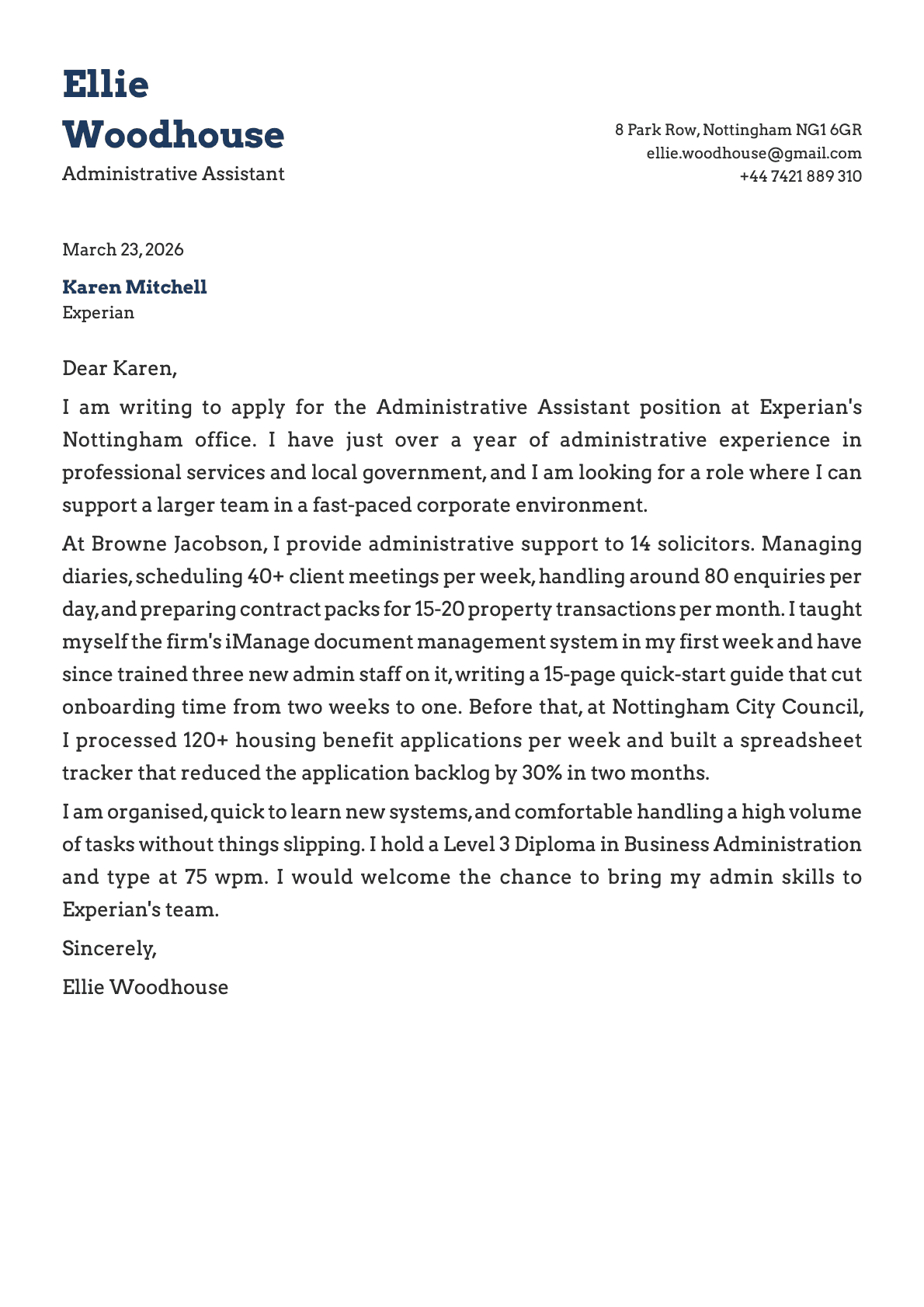
Administrative Assistant
An administrative assistant cover letter example for a corporate role at Experian.
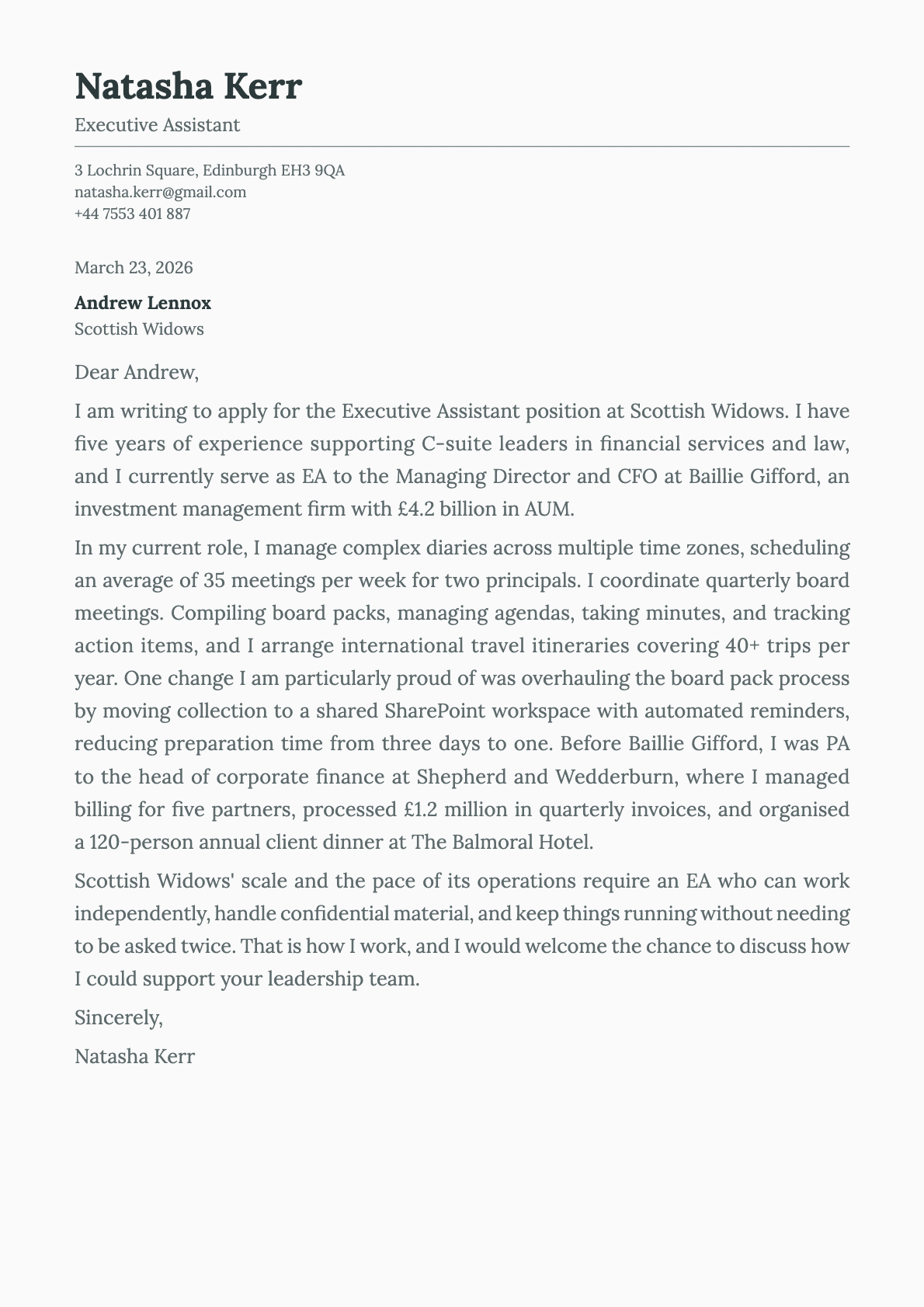
Executive Assistant
An executive assistant cover letter example targeting Scottish Widows.
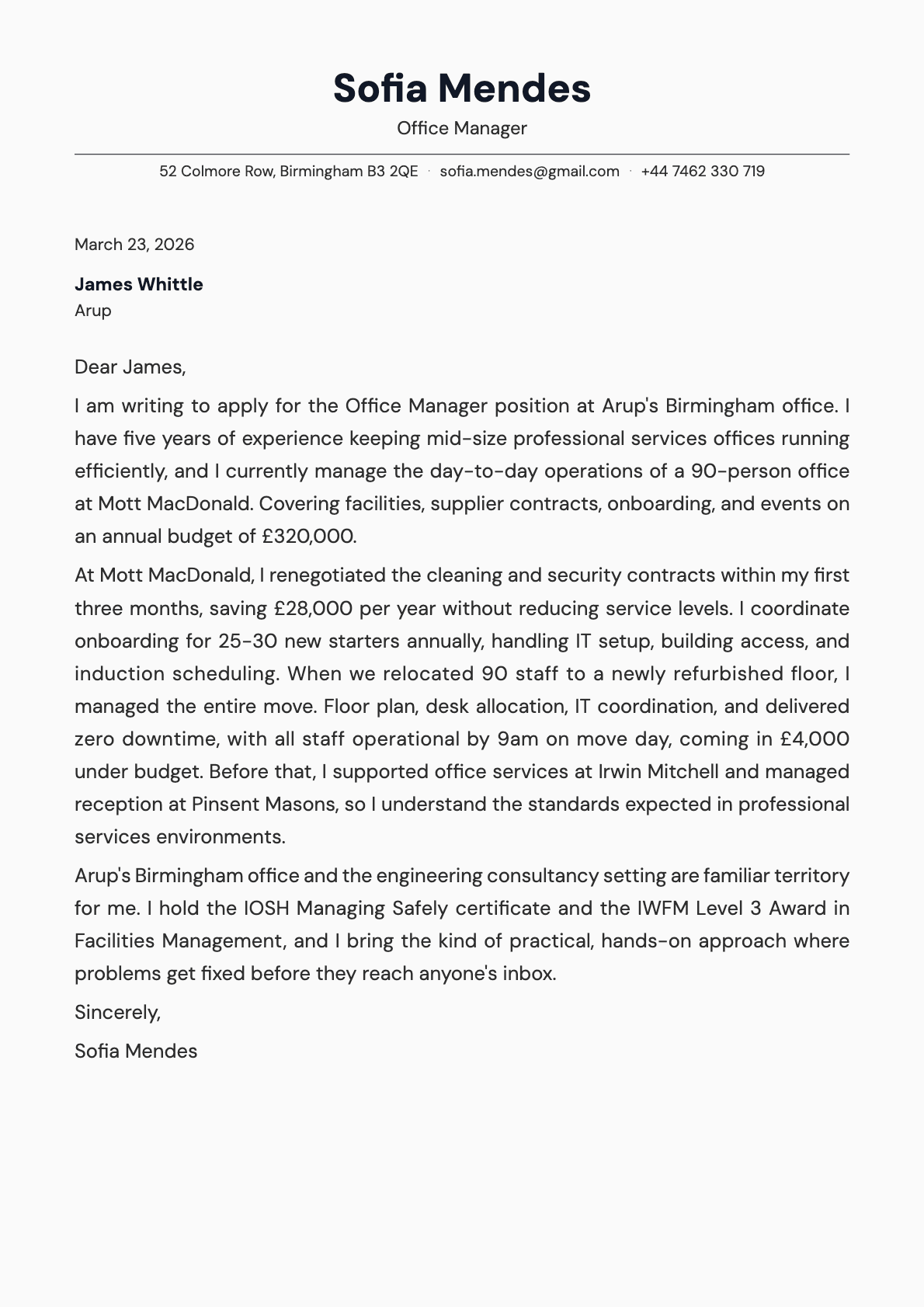
Office Manager
An office manager cover letter example targeting Arup.
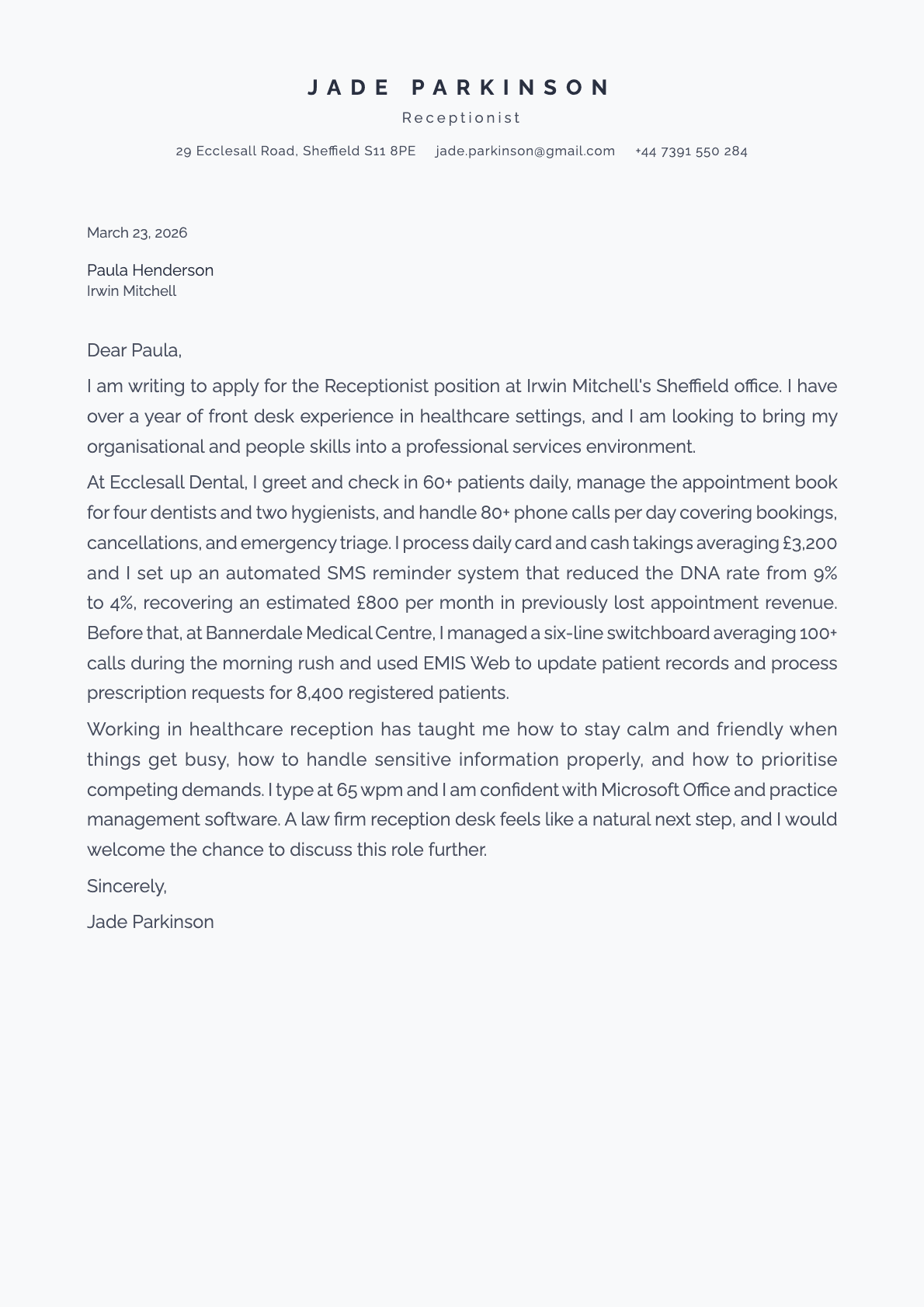
Receptionist
A receptionist cover letter example targeting a law firm role at Irwin Mitchell.
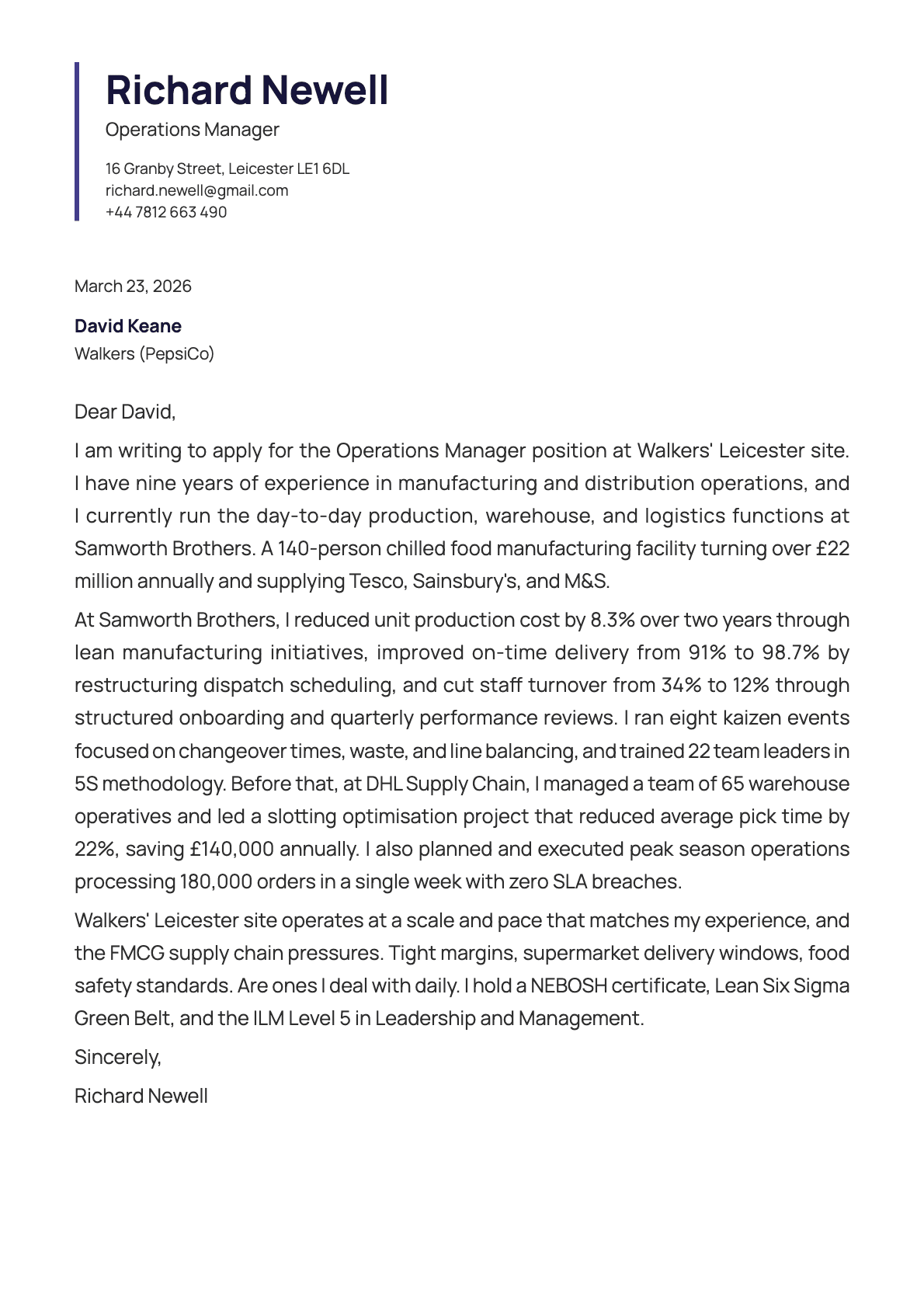
Operations Manager
An operations manager cover letter example targeting Walkers (PepsiCo).
Related articles

AI Is Screening Your Resume Before Any Human Sees It
AI screens most resumes before a human ever reads them. 97.4% of Fortune 500 companies run an ATS. This is what that means for you and what you can do about it.

The Best Resume Builders in 2026, Compared Honestly
Resume.io, Zety, Enhancv, Kickresume, Teal, and Laddro compared honestly: real pricing, free tiers, mobile apps, and where each tool wins. All prices checked in September 2026.

Burnout Recovery: A Real Timeline, Not 'Take a Bubble Bath'
55% of the U.S. workforce is burned out. Recovery takes 3 to 12 months. Here's what that actually looks like, stage by stage.