Receptionist Cover Letter Example
A receptionist cover letter example targeting a law firm role at Irwin Mitchell.

Laddro Team
Free to use. No account needed to start.
Free to use. No account needed to start.
Overview
Receptionist cover letters are often dismissed as simple, but writing one well is harder than it looks. The challenge is that receptionist work is largely about consistency, calm under pressure, and handling a high volume of interactions, none of which sound impressive when described in generic terms. "I greet visitors and answer phones" describes every receptionist who has ever worked. The trick is showing how many, how fast, and what you improved.
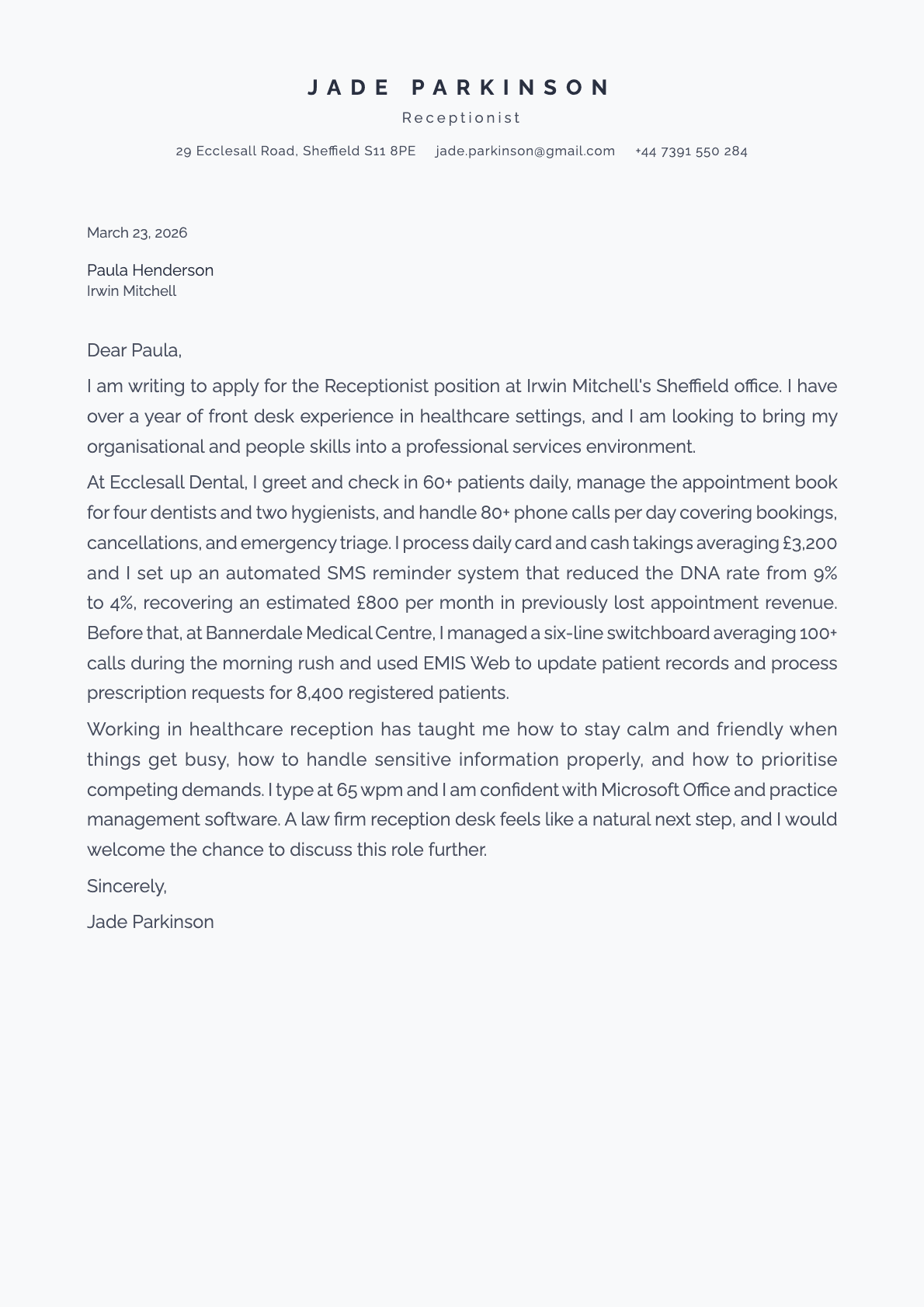
This cover letter belongs to Jade Parkinson, a receptionist with over a year of healthcare experience, applying for a front desk role at Irwin Mitchell in Sheffield. Her letter works because she quantifies everything and includes a specific improvement that directly impacted revenue.
The opening: clear about the transition
Jade is moving from healthcare reception to law firm reception. She addresses this directly in her opening: she has front desk experience and she is looking to bring her skills into a professional services environment. No apologies, no lengthy explanation. Just a clear statement of where she is and where she wants to go.
For your letter: if you are changing sectors, address the transition in your opening. Do not leave the hiring manager to wonder why someone from a dental practice is applying to a law firm. State it clearly and then immediately show how your skills transfer.
The body: volume, systems, and a revenue impact
The middle paragraph is dense with numbers. At Ecclesall Dental: 60+ patients daily, appointment management for six practitioners, 80+ phone calls per day, and daily card and cash takings of £3,200. These figures show she operates at significant volume in a fast-paced environment.
The SMS reminder system is the standout. Jade set up an automated reminder system that reduced the DNA (did not attend) rate from 9% to 4%, recovering an estimated £800 per month in lost appointment revenue. That is a process improvement with a measurable financial impact. It shows initiative that goes well beyond standard receptionist duties.
The Bannerdale Medical Centre experience adds a second dimension. Managing a six-line switchboard with 100+ calls during the morning rush, updating patient records in EMIS Web, and processing prescription requests for 8,400 registered patients shows she can handle complex administrative work alongside front desk duties.
The lesson for receptionists: find the number that shows your impact. It might be call volumes, visitor counts, appointment bookings, or a process you improved. Whatever it is, quantify it. Receptionists handle more volume than most people realise, and the numbers prove it.
The closing: transferable skills
Jade's closing connects her healthcare experience to the skills a law firm needs. Staying calm when busy, handling sensitive information, and prioritising competing demands are all directly transferable. She also includes practical details: typing speed (65 wpm) and software confidence.
The final sentence positions the law firm move as a "natural next step," which frames the career change positively rather than defensively.
What makes this letter effective
Jade writes with confidence despite having relatively limited experience. She does not hide behind vague descriptions. She gives exact numbers for every aspect of her work and includes a specific achievement (the SMS system) that demonstrates she thinks beyond her job description.
The healthcare-to-law-firm transition is handled smoothly. By focusing on the transferable skills (volume handling, sensitive information, systems proficiency) rather than the domain-specific ones (patient triage, medical records), she makes the case that her experience is relevant without overstating it.
Mistakes receptionists make in cover letters
Describing the role generically. "I greet visitors, answer phones, and handle mail" is a job description, not a cover letter. Add numbers: how many visitors, how many calls, how many bookings per day.
Not mentioning systems. Every reception desk runs on specific software. Booking systems, switchboards, visitor management platforms, practice management software. Name the ones you use. If you have experience with multiple systems, mention that you learn new platforms quickly and give an example.
Underselling the multitasking. Reception work requires simultaneous handling of phone calls, walk-in visitors, deliveries, and administrative tasks. If you do all of these at once (and you probably do), describe the volume and the pace. It is a genuine skill.
Ignoring the sector transition. If you are moving from one sector to another (healthcare to legal, retail to corporate, hotel to office), explain why and highlight the transferable skills. Do not assume the hiring manager will make the connection themselves.
Forgetting about cash and payment handling. If you process payments, handle petty cash, or manage daily takings, include it. Financial handling is a responsibility that many reception roles include, and it demonstrates trustworthiness.
Was this cover letter example helpful?
Rate this example to help us create better content for you.
4.6 average from 176 ratingsBuild your own version
Open this layout in the builder and swap in your own details. It takes a few minutes.
Free to use. No account needed to start.
Related cover letter examples
Administrative Assistant
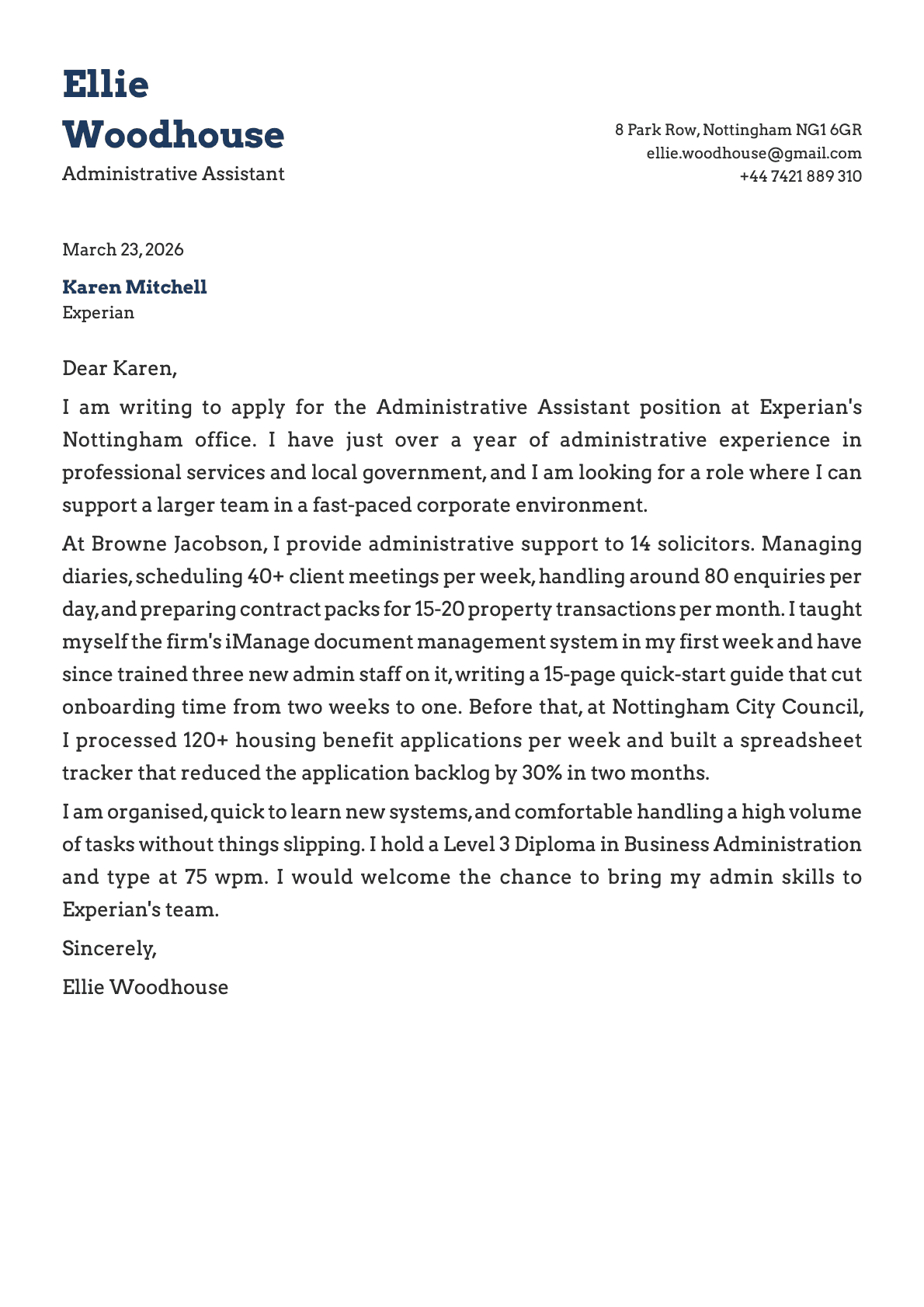
An administrative assistant cover letter example for a corporate role at Experian.
Executive Assistant
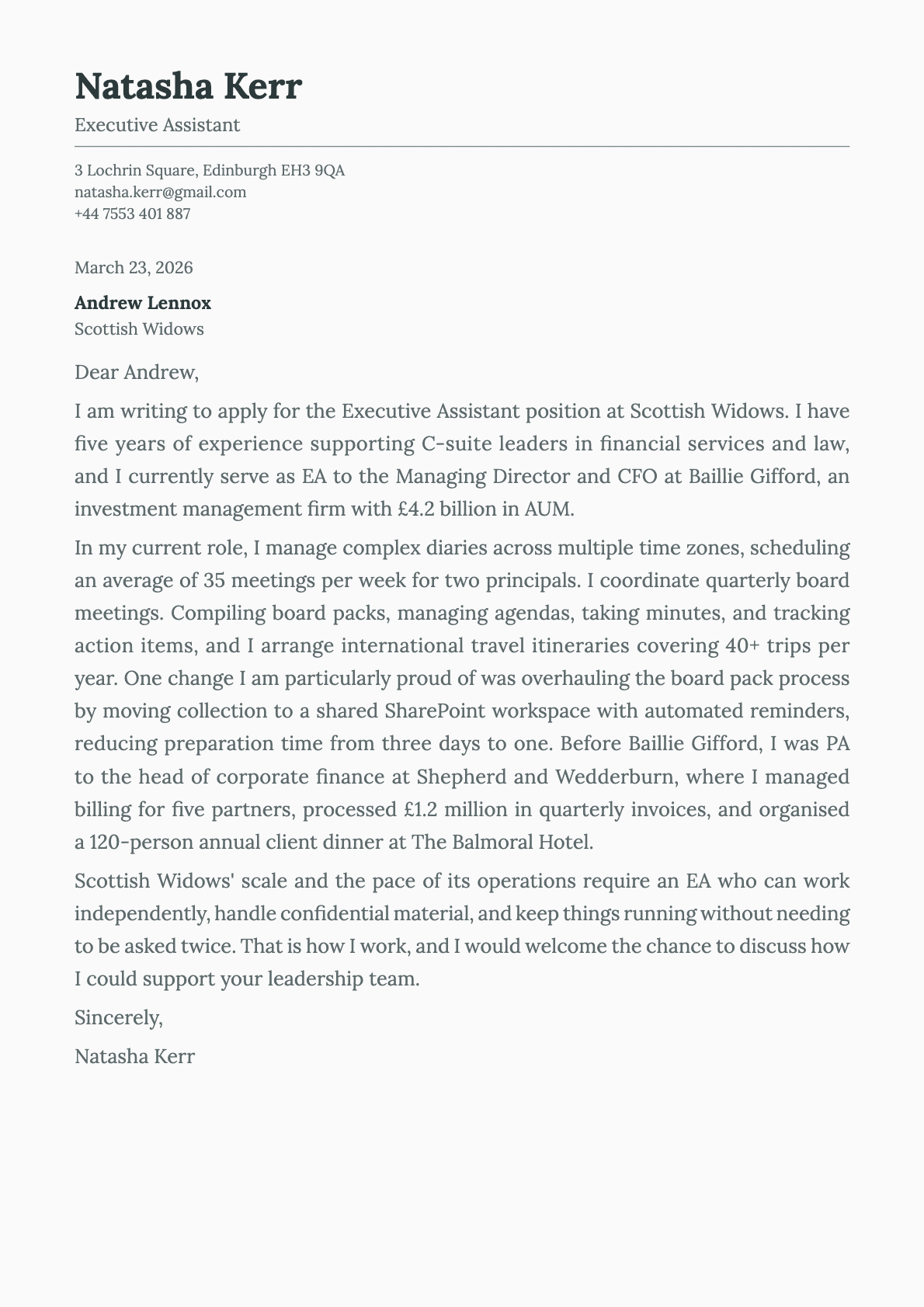
An executive assistant cover letter example targeting Scottish Widows.
Office Manager
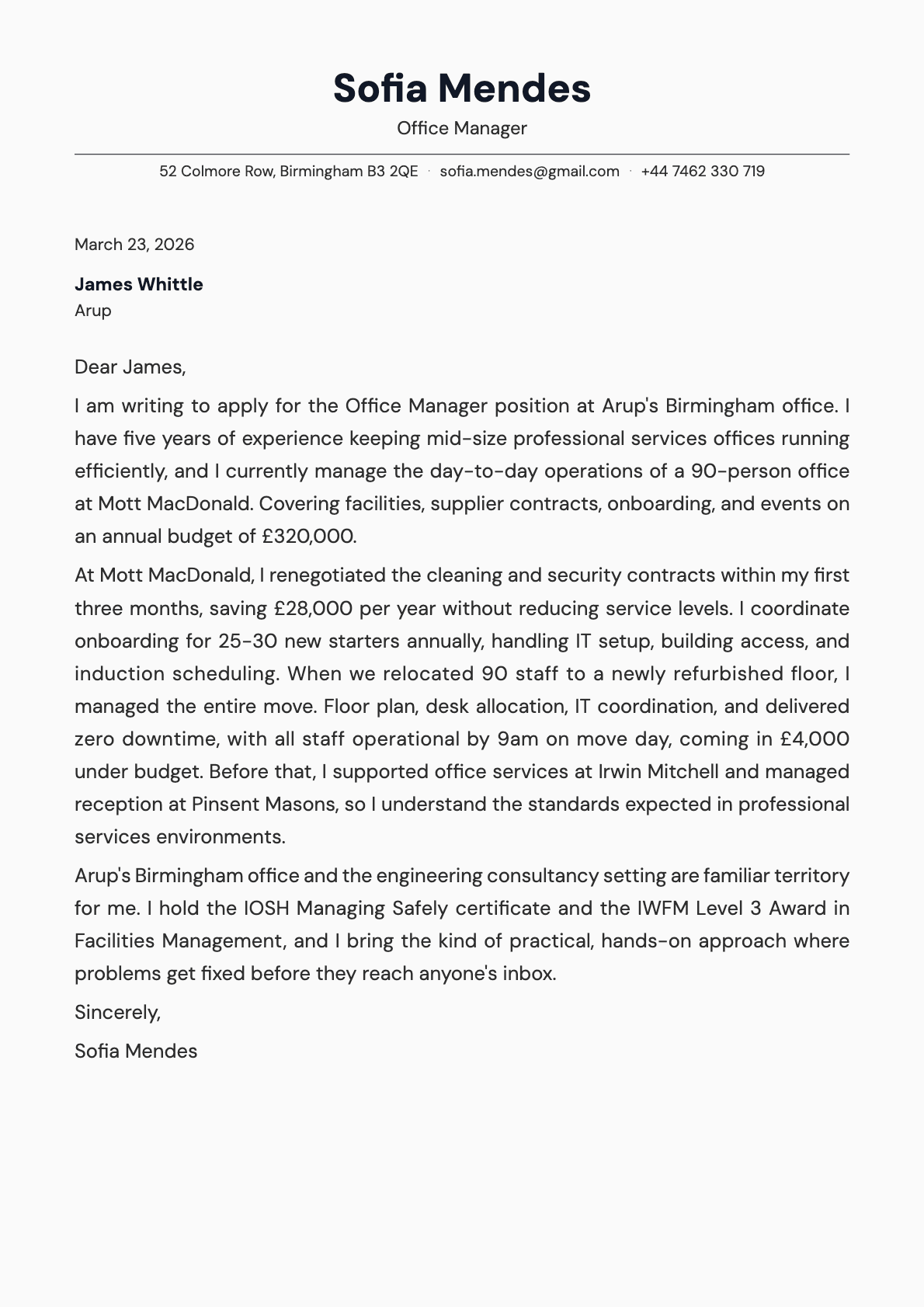
An office manager cover letter example targeting Arup.
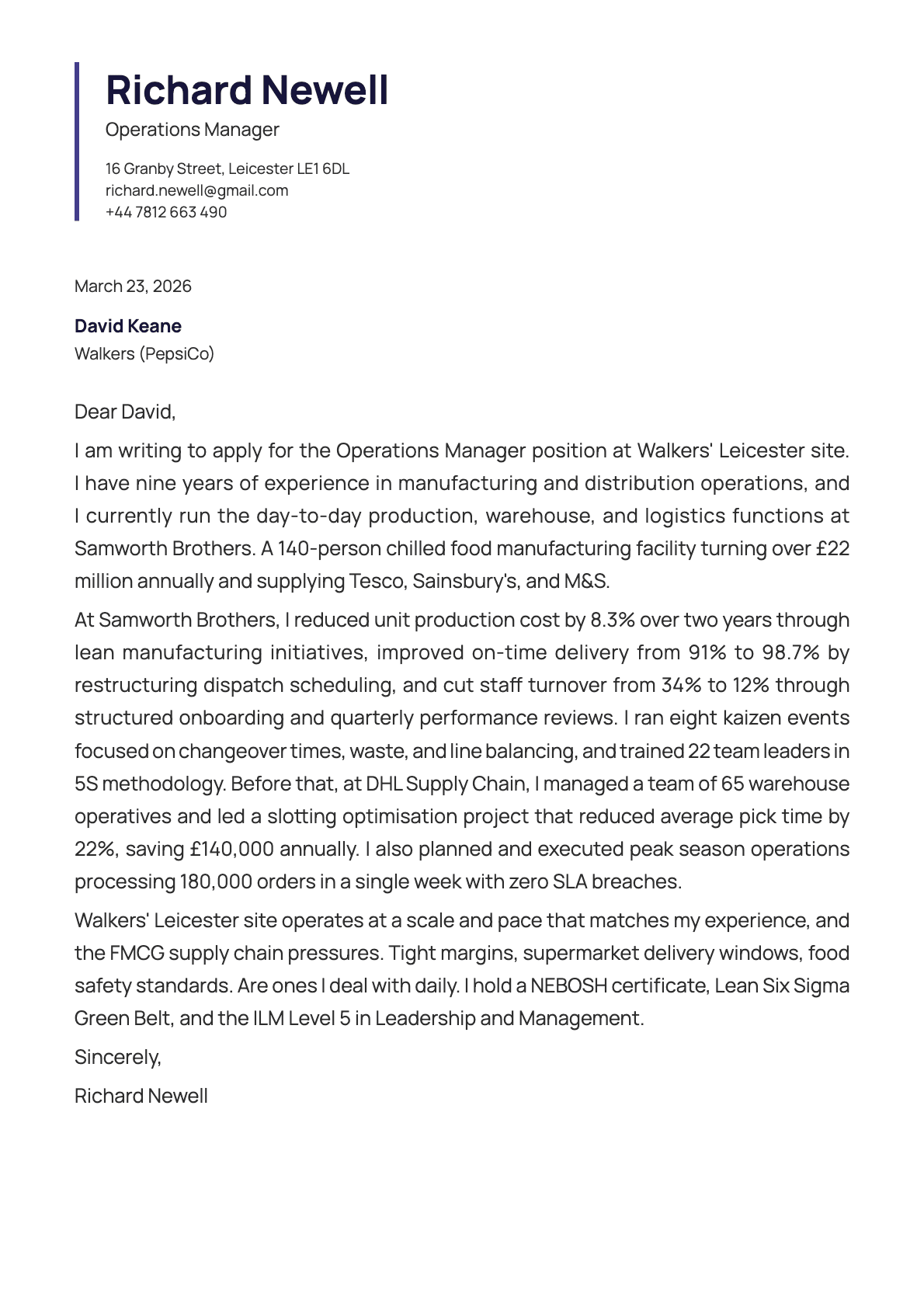
Operations Manager
An operations manager cover letter example targeting Walkers (PepsiCo).
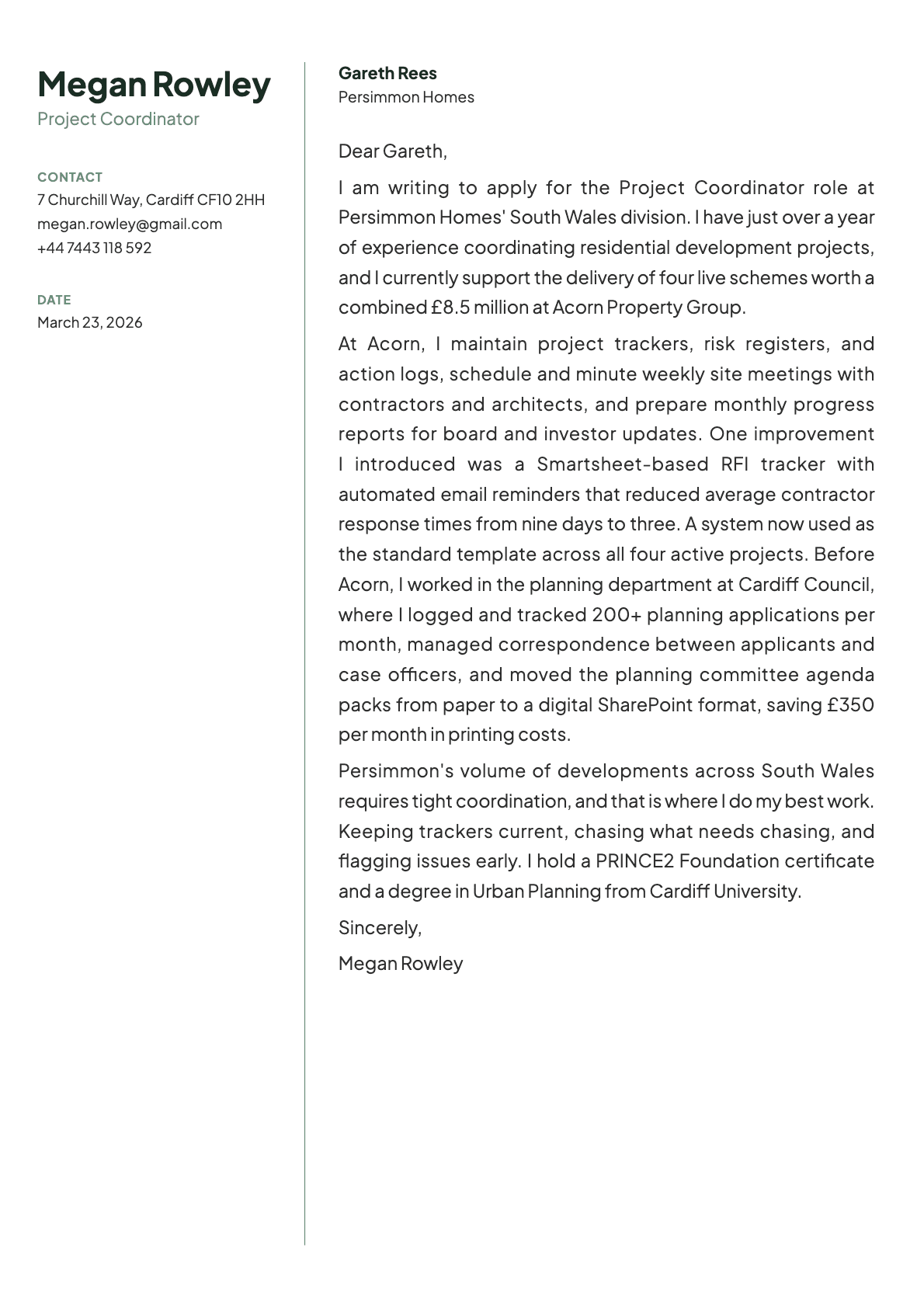
Project Coordinator
A project coordinator cover letter example targeting Persimmon Homes.
Related articles

AI Is Screening Your Resume Before Any Human Sees It
AI screens most resumes before a human ever reads them. 97.4% of Fortune 500 companies run an ATS. This is what that means for you and what you can do about it.

The Best Resume Builders in 2026, Compared Honestly
Resume.io, Zety, Enhancv, Kickresume, Teal, and Laddro compared honestly: real pricing, free tiers, mobile apps, and where each tool wins. All prices checked in September 2026.

Burnout Recovery: A Real Timeline, Not 'Take a Bubble Bath'
55% of the U.S. workforce is burned out. Recovery takes 3 to 12 months. Here's what that actually looks like, stage by stage.