Receptionist Resume Example
A receptionist resume example from a healthcare setting with patient volumes, phone handling stats, and a process improvement that cut missed.

Laddro Team
Free to use. No account needed to start.
Free to use. No account needed to start.
Overview
Receptionist resumes are often too short and too generic. "Greeted visitors and answered phones." Yes, that is the job. But it does not help a hiring manager compare you against 40 other people who also greeted visitors and answered phones.
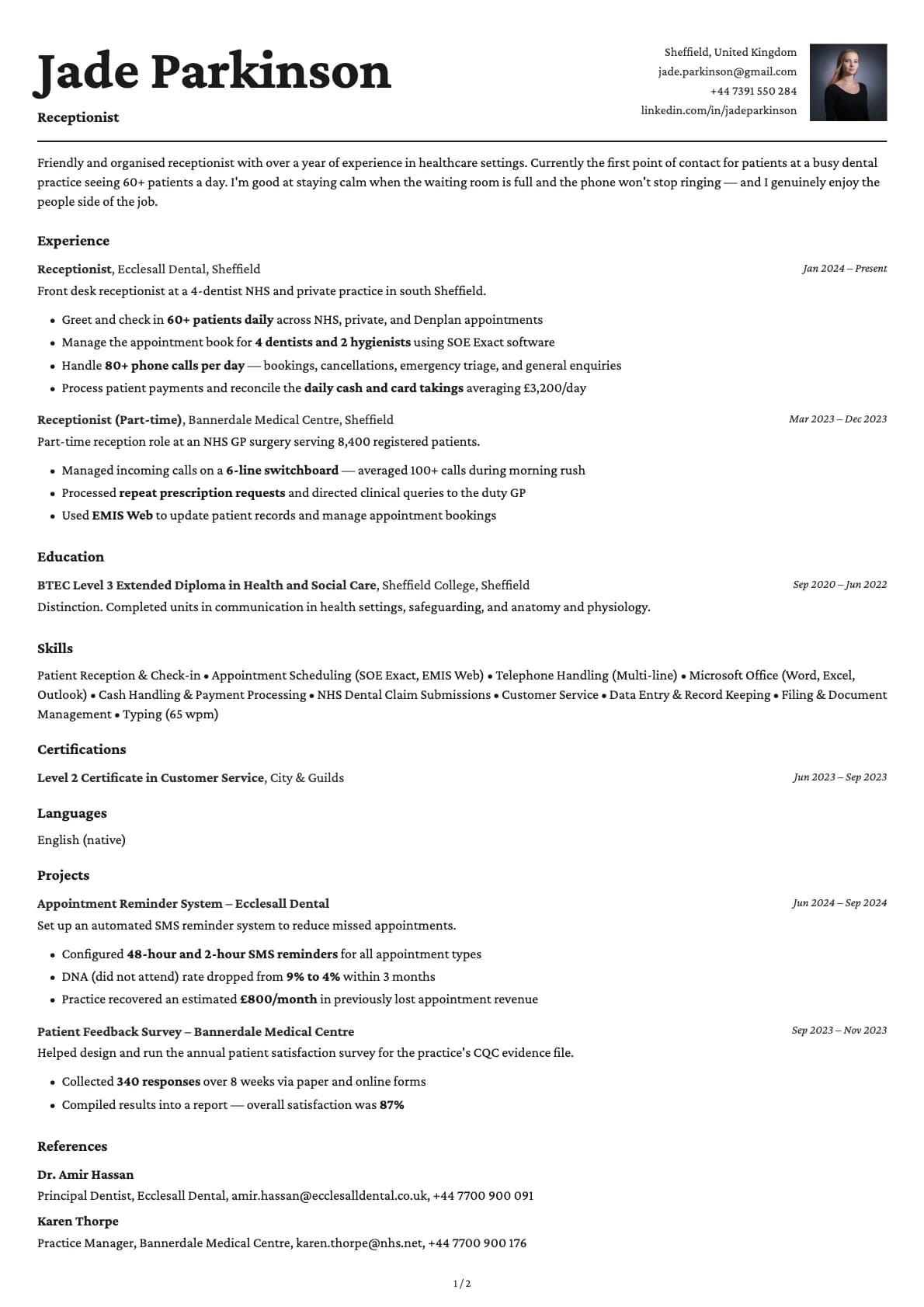
This resume belongs to Jade Parkinson, a receptionist in Sheffield with just over a year of experience in healthcare settings. She currently works the front desk at a dental practice seeing 60+ patients a day, and before that she was at an NHS GP surgery with 8,400 registered patients. She handles 80+ phone calls a day, manages the appointment book for four dentists and two hygienists, and set up an SMS reminder system that cut missed appointments from 9% to 4%.
That last point is the one that makes this resume stand out. Let us go through how she presents everything.
Write a summary that shows your daily workload
Most receptionist summaries say "friendly and professional receptionist with excellent communication skills." That describes roughly every receptionist who has ever existed. It adds nothing.
Jade does something smarter. She names her setting (dental practice), her volume (60+ patients a day), and her working reality (staying calm when the waiting room is full and the phone will not stop ringing). It paints a picture. The hiring manager can immediately imagine what her shift looks like.
For yours: Name where you work and how busy it is. Use one specific number (patients per day, calls per day, visitors per day). Then add one sentence about how you handle the pressure. That is your summary.
How to make receptionist work sound impressive (it is)
The trick with receptionist resumes is finding numbers in a role that does not obviously have them. But the numbers are there if you look.
Volume
"Greet and check in 60+ patients daily across NHS, private, and Denplan appointments"
"Handle 80+ phone calls per day, bookings, cancellations, emergency triage, and general enquiries"
Two numbers, two bullets. The hiring manager now knows this is a high-volume environment and Jade can handle it. If you work a busy front desk, count your daily visitors, calls, or transactions for one week and use the average.
Systems
"Manage the appointment book for 4 dentists and 2 hygienists using SOE Exact software"
Naming the software (SOE Exact) is important. Many practices and surgeries hire based on system experience. If you know EMIS Web, SystmOne, SOE Exact, Dentally, or any specific booking system, put it on your resume. It is one of the fastest ways to get shortlisted.
Money handling
"Process patient payments and reconcile the daily cash and card takings averaging £3,200/day"
This adds a dimension that most receptionist resumes miss. Handling money shows you are trusted with financial responsibility. If you process payments, handle petty cash, or reconcile takings, include the daily or weekly figure.
Your project is your secret weapon
Jade's standout entry is the SMS reminder system she set up at the dental practice:
"Configured 48-hour and 2-hour SMS reminders for all appointment types"
"DNA rate dropped from 9% to 4% within 3 months"
"Practice recovered an estimated £800/month in previously lost appointment revenue"
She did not just do her job. She identified a problem (too many missed appointments), implemented a solution (automated SMS reminders), and produced a measurable result (DNA rate cut in half, £800/month recovered).
This is the kind of entry that separates a good receptionist resume from an average one. If you have ever improved a process, no matter how small, write it up the same way. Moved from a paper diary to a digital one? Set up a better filing system? Changed the way phone calls are triaged? That is your project.
Earlier roles: even part-time work counts
Jade's previous role was a part-time receptionist at a GP surgery. She does not hide the "part-time" label. Instead, she focuses on what she did:
"Managed incoming calls on a 6-line switchboard, averaged 100+ calls during morning rush"
"Used EMIS Web to update patient records and manage appointment bookings"
The switchboard detail is great. It tells the hiring manager she can handle a multi-line phone system under pressure. And mentioning EMIS Web gives her another system keyword that GP surgeries look for.
If your previous role was part-time, temporary, or in a different industry, focus on the transferable details. Call volumes, visitor counts, software used, and any responsibility that involved organisation or customer interaction.
Skills: software and practical abilities
Jade lists SOE Exact, EMIS Web, Microsoft Office, multi-line telephone handling, cash handling, NHS dental claim submissions, and her typing speed (65 wpm).
Every one of those is a practical skill that a hiring manager can match against their requirements. "Good communication skills" is not listed because it is obvious from the work itself. "NHS dental claim submissions" IS listed because it is specific and not every receptionist can do it.
Tip: If you type above 50 wpm, include your speed. Many receptionist jobs require fast data entry, and a number is more convincing than "fast typing skills."
Mistakes receptionists make on their resumes
No numbers at all. "Answered phones and greeted visitors" tells the reader nothing about how busy your workplace was. Add the daily volume. 60 patients a day tells a completely different story than 10.
Hiding the software. Booking systems, phone systems, payment terminals, clinical systems. Name every piece of software and hardware you use. This is one of the top things hiring managers filter for.
Not mentioning money handling. If you process payments, reconcile cash, or handle petty cash, include it with a figure. It shows trust and responsibility.
Using two pages. A receptionist with one to two years of experience does not need a two-page resume. Keep it to one page. Focus on your most relevant experience and skills. Jade's resume is tight and everything on it earns its place.
One more thing
Receptionists are the first person a customer, patient, or visitor meets. The hiring manager knows this. They are looking for someone who can handle pressure, stay organised, and make people feel welcome. Your resume needs to show all three through specific examples. The volume shows you handle pressure. The systems show you are organised. The project (or any process improvement) shows you go beyond the basics. Get those three things on the page and you are ahead of most applicants.
Build your own version
Open this layout in the builder and swap in your own details. It takes a few minutes.
Free to use. No account needed to start.
Was this resume example helpful?
Rate this example to help us create better content for you.
4.6 average from 104 ratingsRelated resume examples
Administrative Assistant
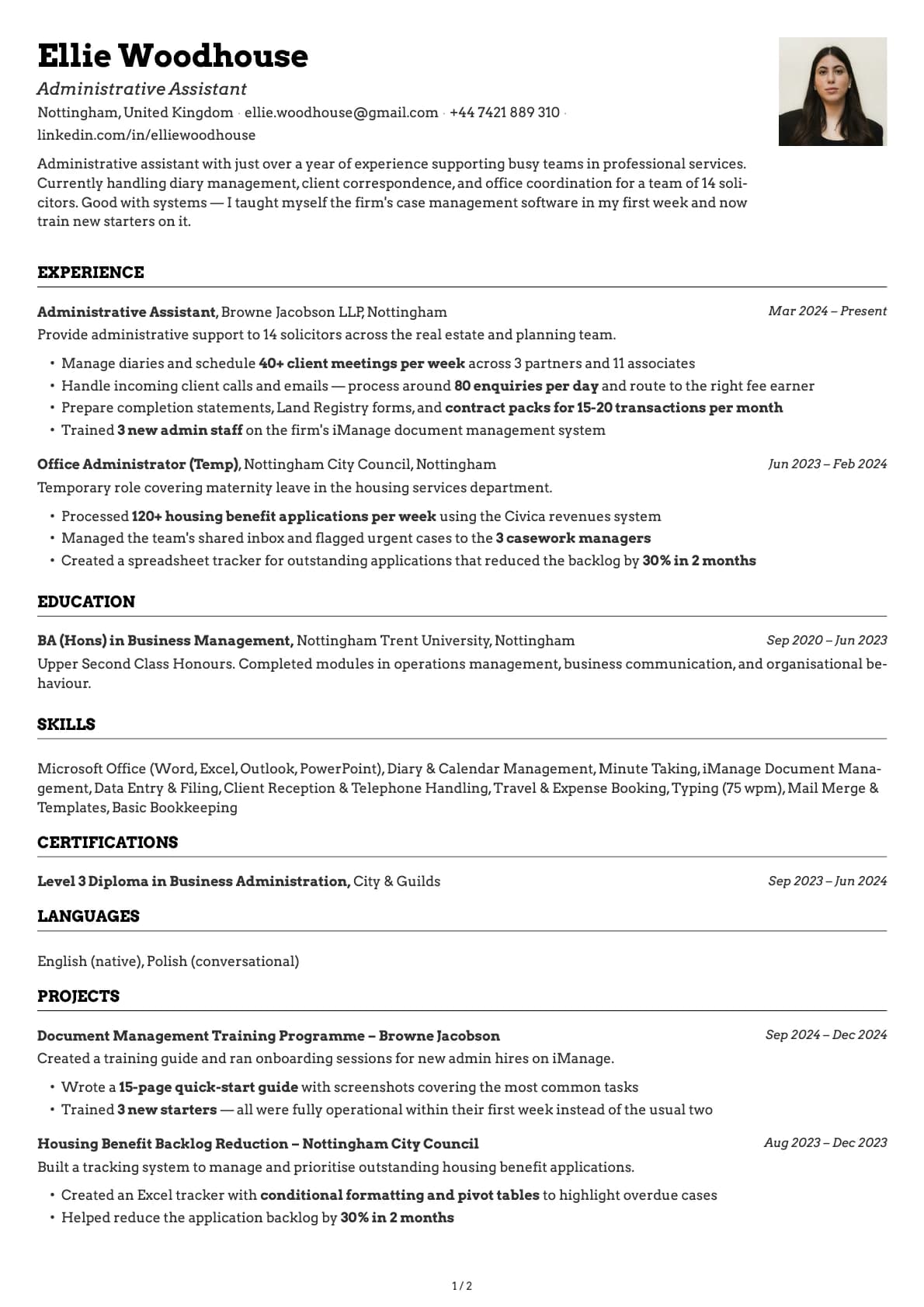
An administrative assistant resume example with law firm experience, showing how to present volume of work, systems knowledge.
Executive Assistant
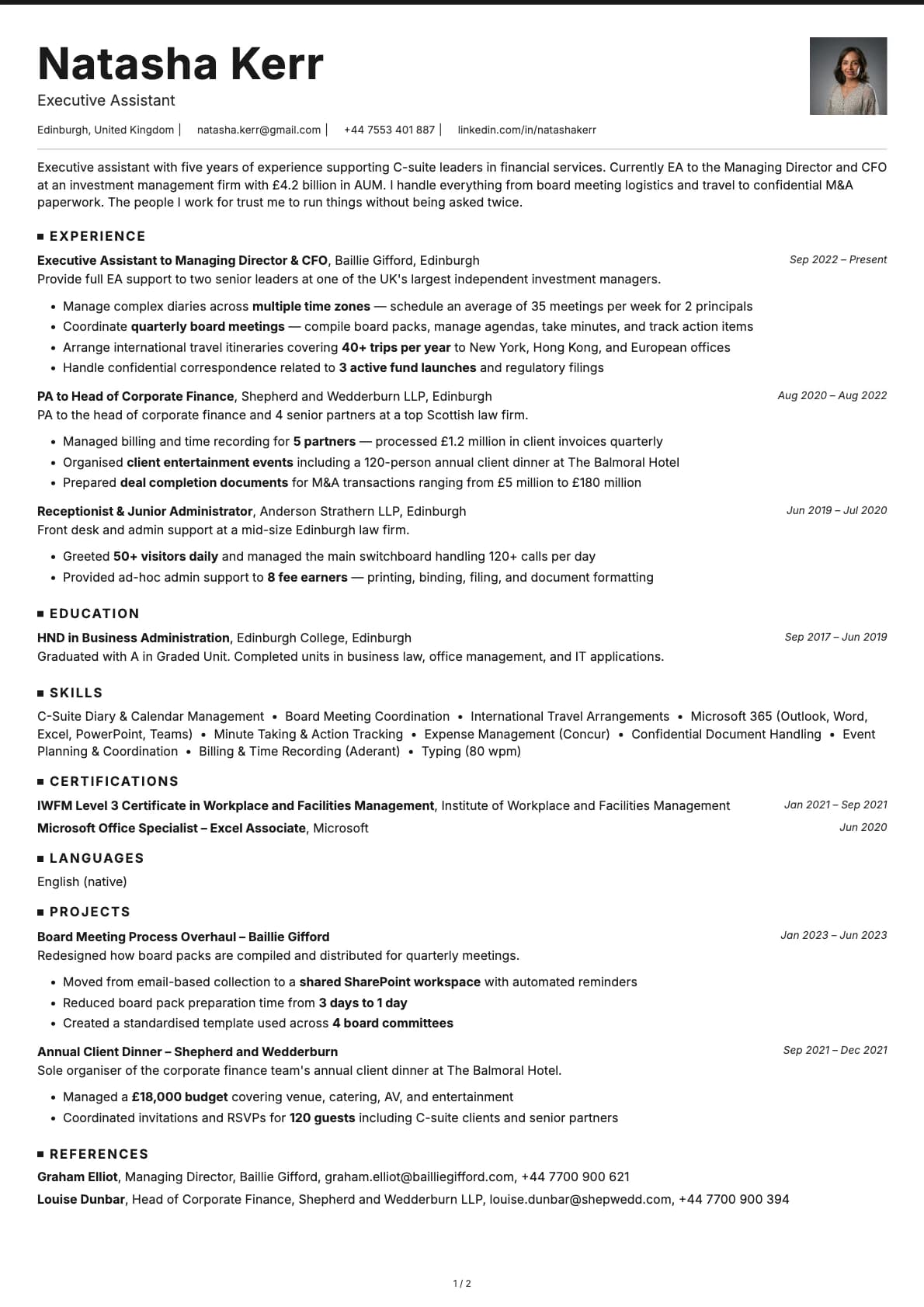
An executive assistant resume example supporting C-suite leaders in financial services.
Office Manager
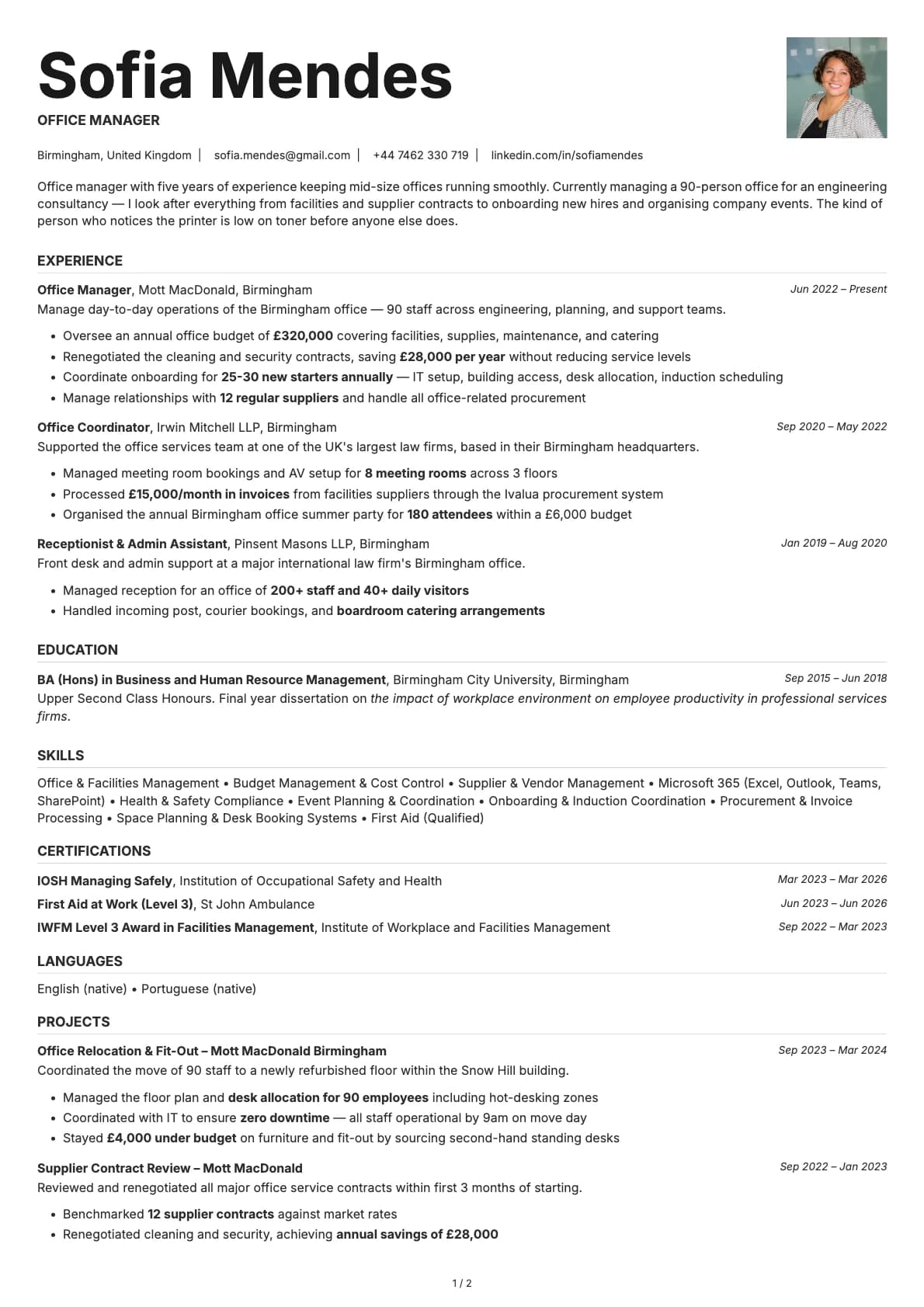
An office manager resume example with budget management, supplier negotiations, and onboarding coordination.
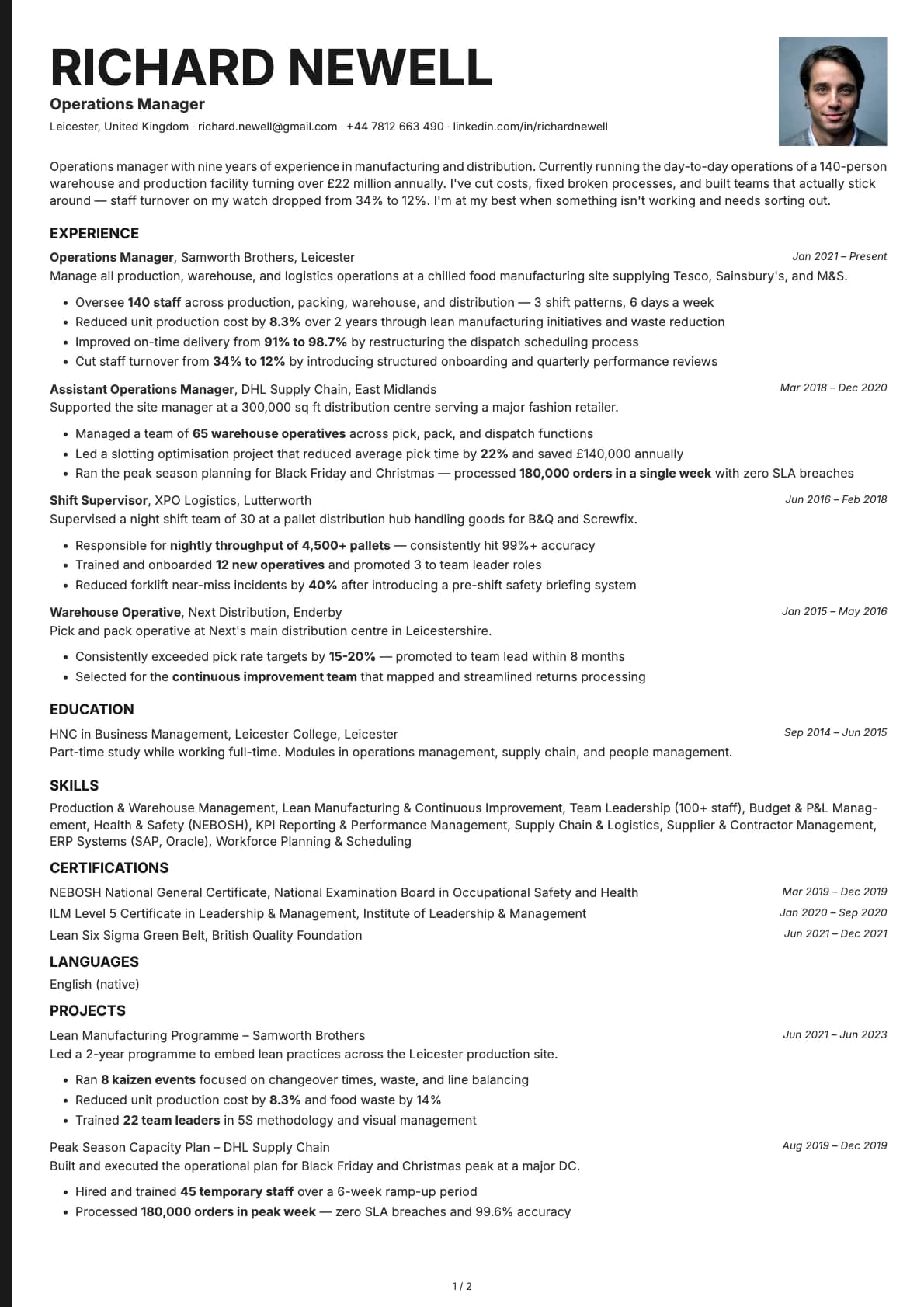
Operations Manager
An operations manager resume example with production KPIs, lean manufacturing results, and team leadership numbers.
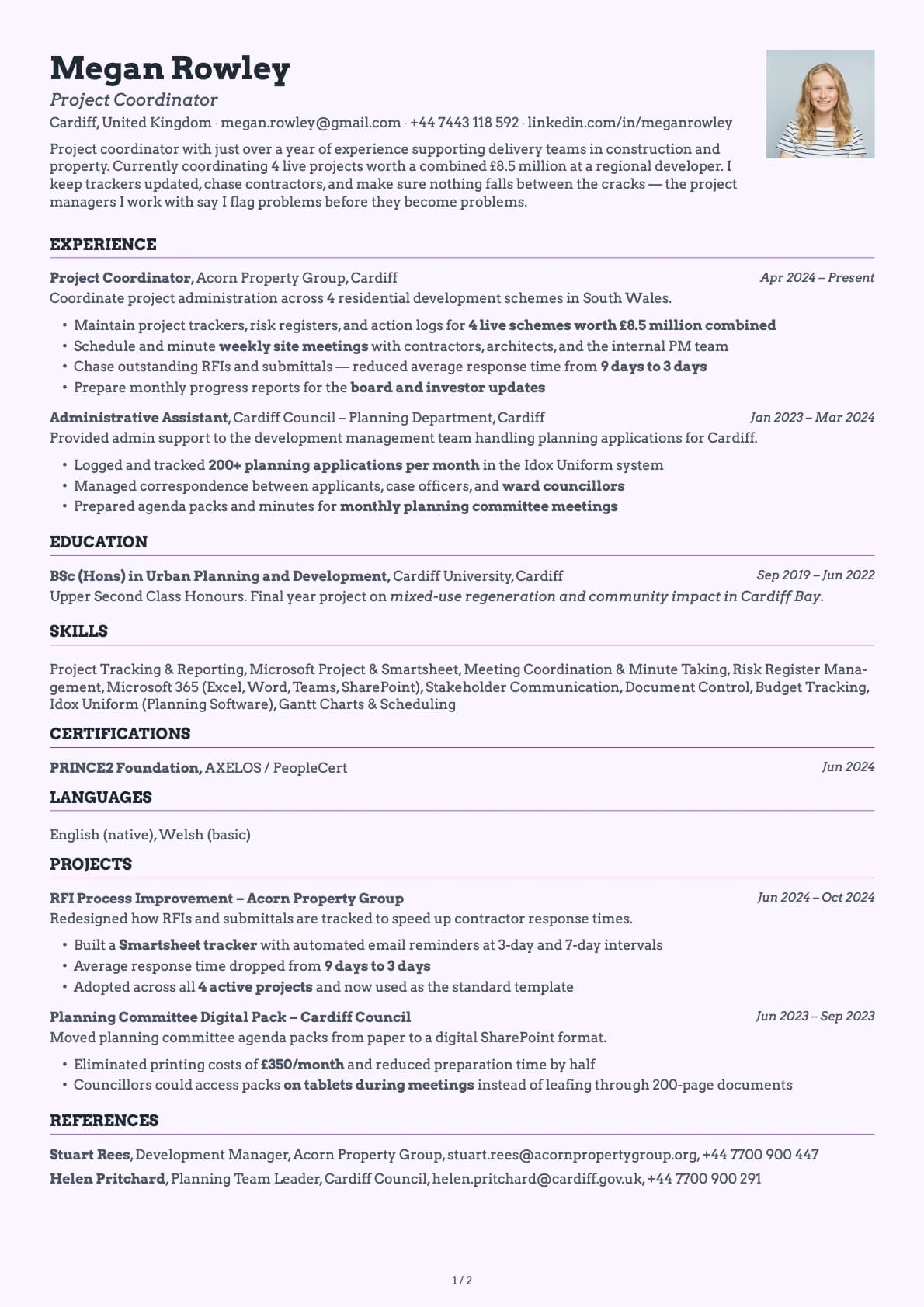
Project Coordinator
A project coordinator resume example with construction project tracking, process improvements, and real cost savings from an early-career professional.
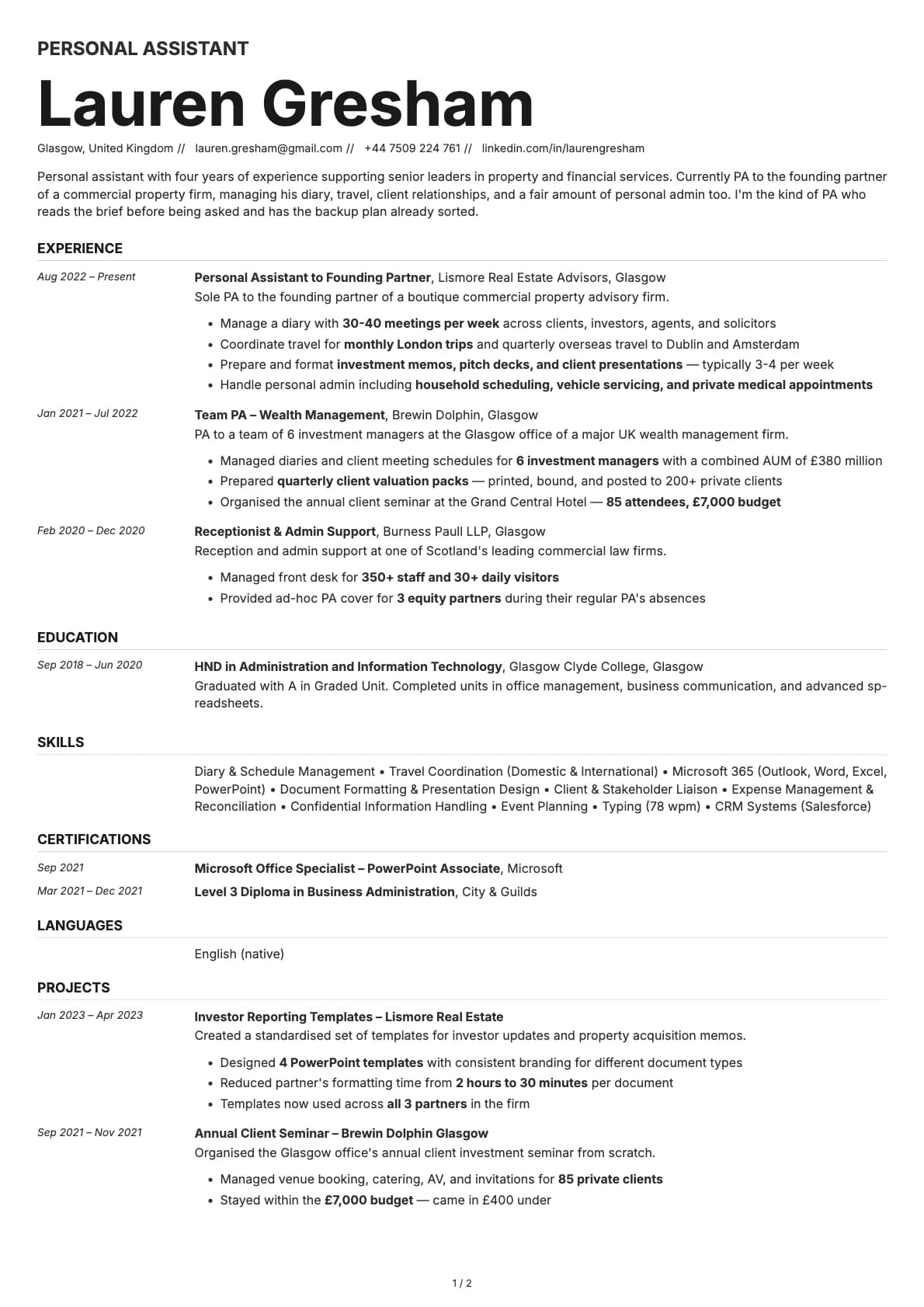
Personal Assistant
A personal assistant resume example showing how to present diary management, event coordination, and executive support with real numbers.
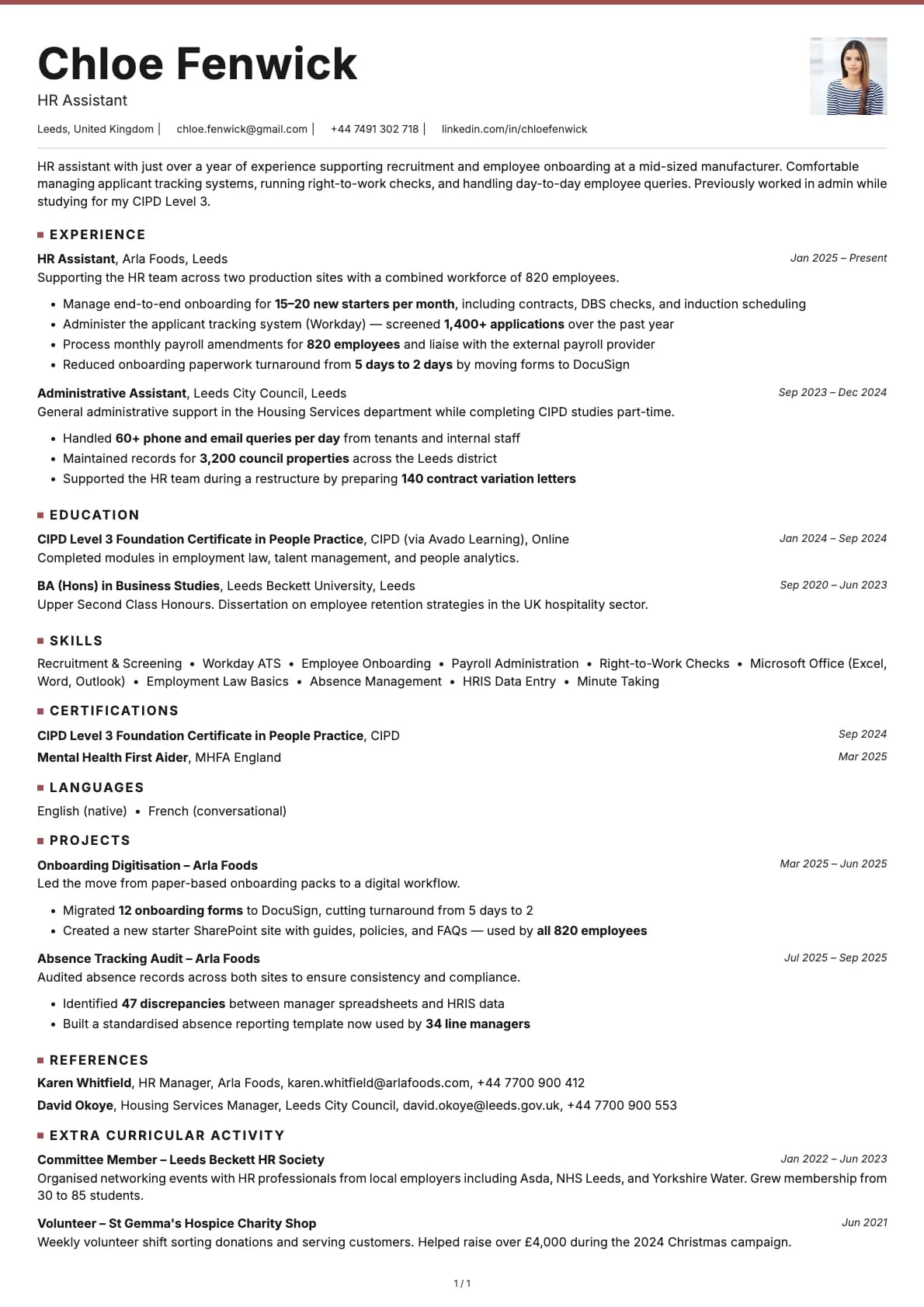
HR Assistant
An HR assistant resume example with onboarding metrics, ATS screening numbers, and a CIPD Level 3 qualification.
Related articles

AI Is Screening Your Resume Before Any Human Sees It
AI screens most resumes before a human ever reads them. 97.4% of Fortune 500 companies run an ATS. This is what that means for you and what you can do about it.

The Best Resume Builders in 2026, Compared Honestly
Resume.io, Zety, Enhancv, Kickresume, Teal, and Laddro compared honestly: real pricing, free tiers, mobile apps, and where each tool wins. All prices checked in September 2026.

Burnout Recovery: A Real Timeline, Not 'Take a Bubble Bath'
55% of the U.S. workforce is burned out. Recovery takes 3 to 12 months. Here's what that actually looks like, stage by stage.