Resume Builder for Marketing Professionals
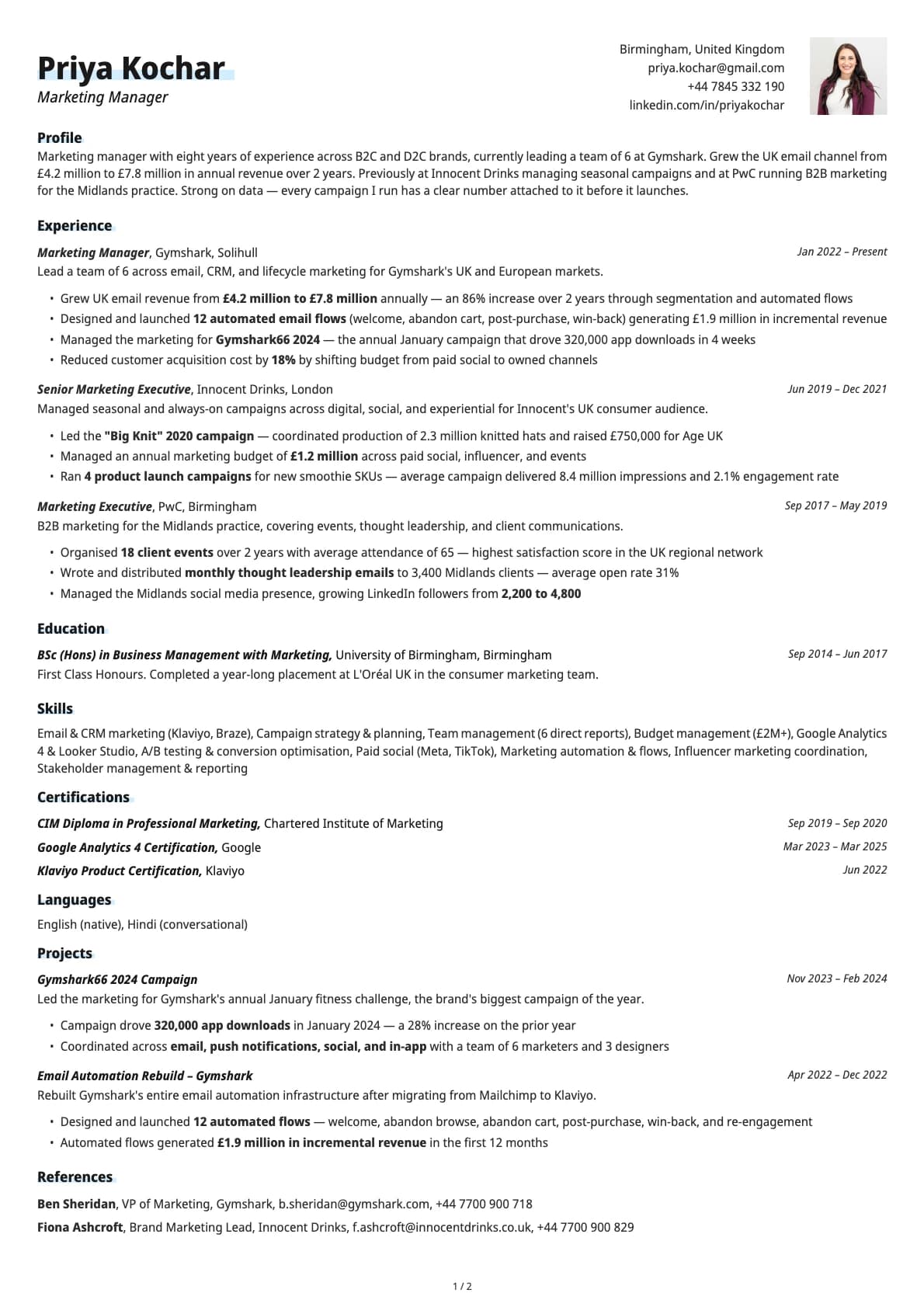
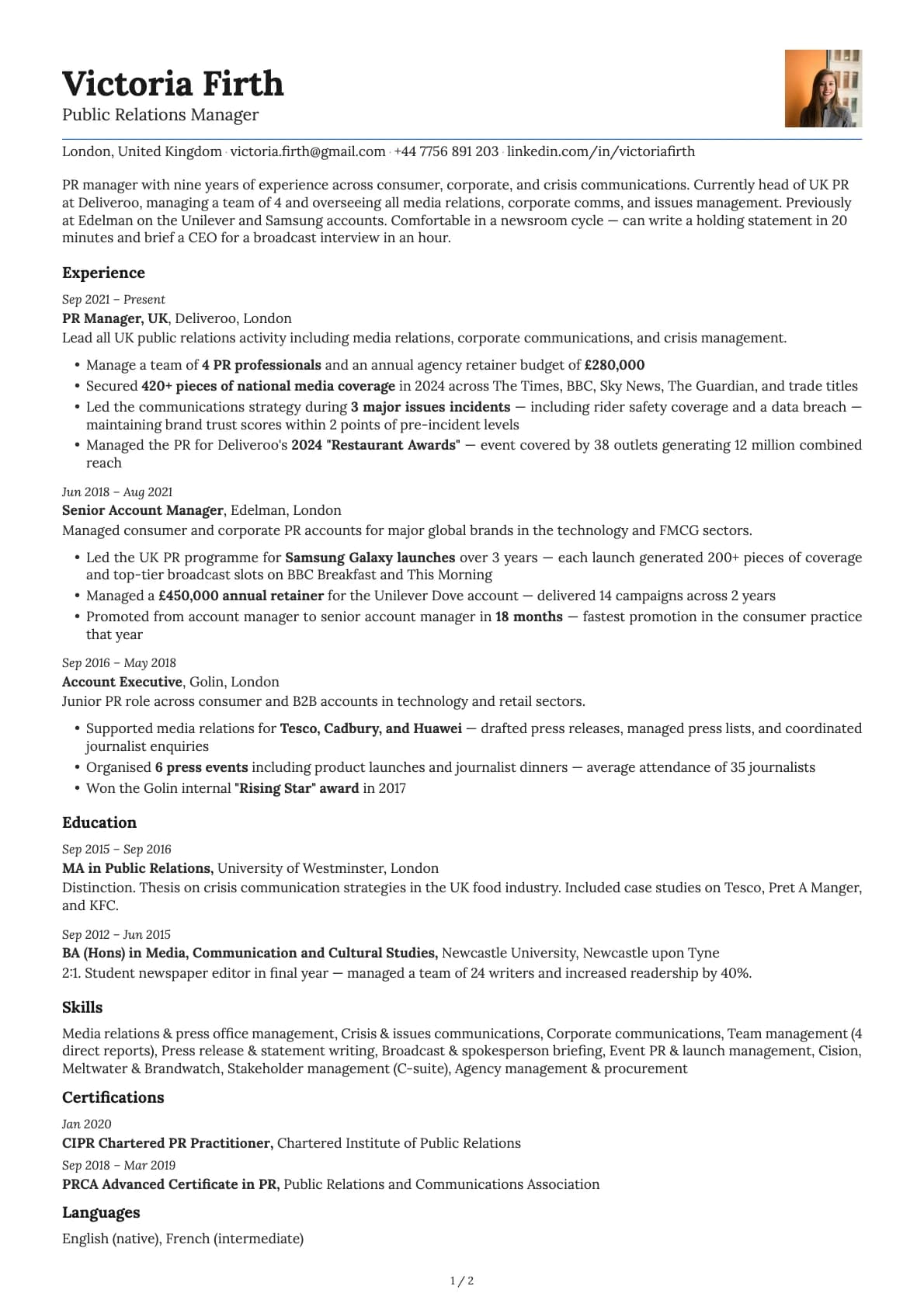
Build a marketing resume that leads with numbers, not buzzwords.
The Marketing Resume Paradox
You spend your career convincing people to take action. You write compelling copy, build campaigns that convert, and obsess over metrics. But when it comes to your own resume, there is a good chance it is full of the exact buzzwords you would never let into a client-facing campaign.
"Results-driven marketing professional with a passion for brand storytelling." That sentence could belong to any of the 500 people who applied for the same role. It tells the hiring manager nothing about what you actually did or what happened because of it.
Marketing resumes need to do what good marketing does: lead with proof, not promises.
Lead With Metrics, Not Buzzwords
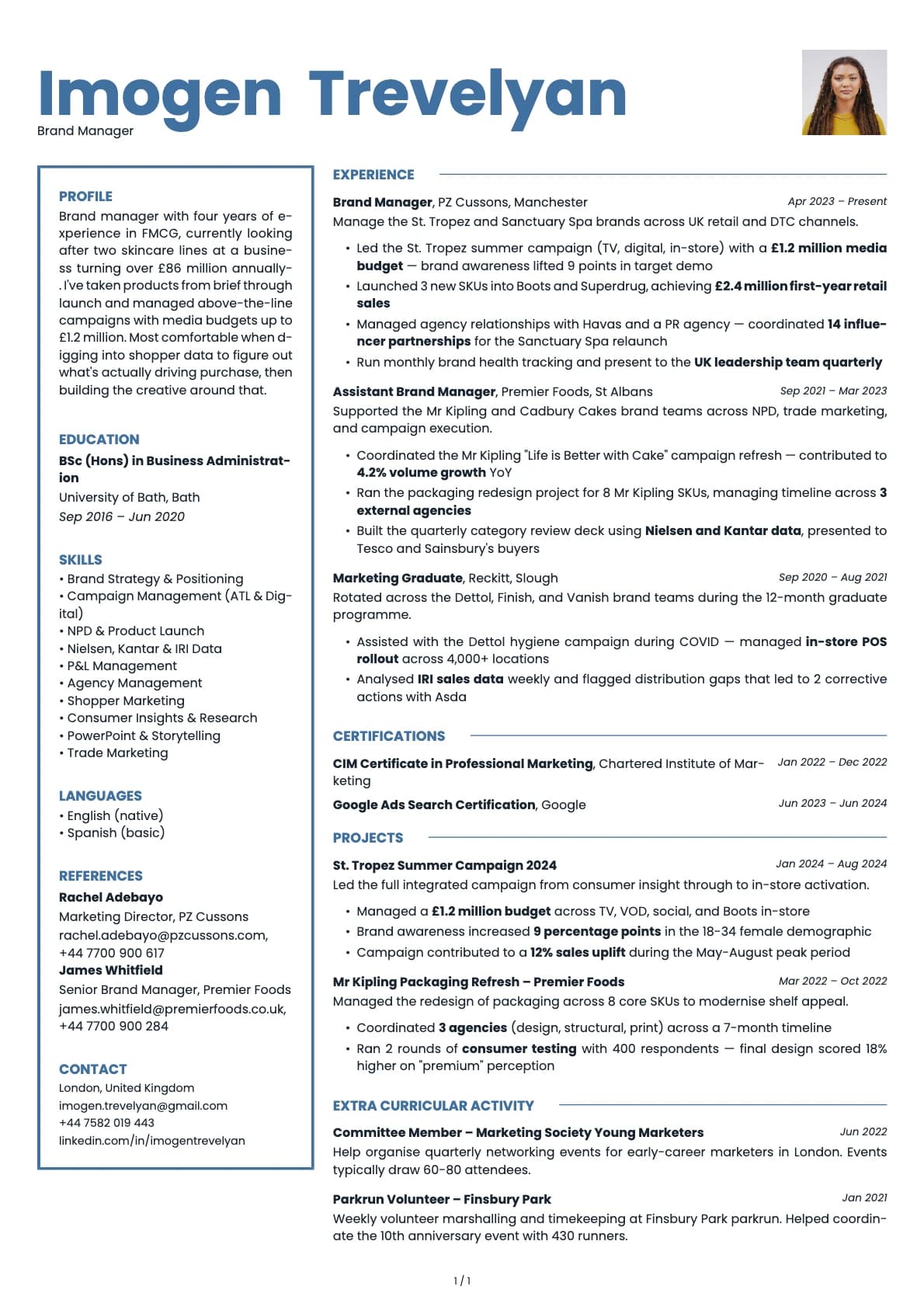
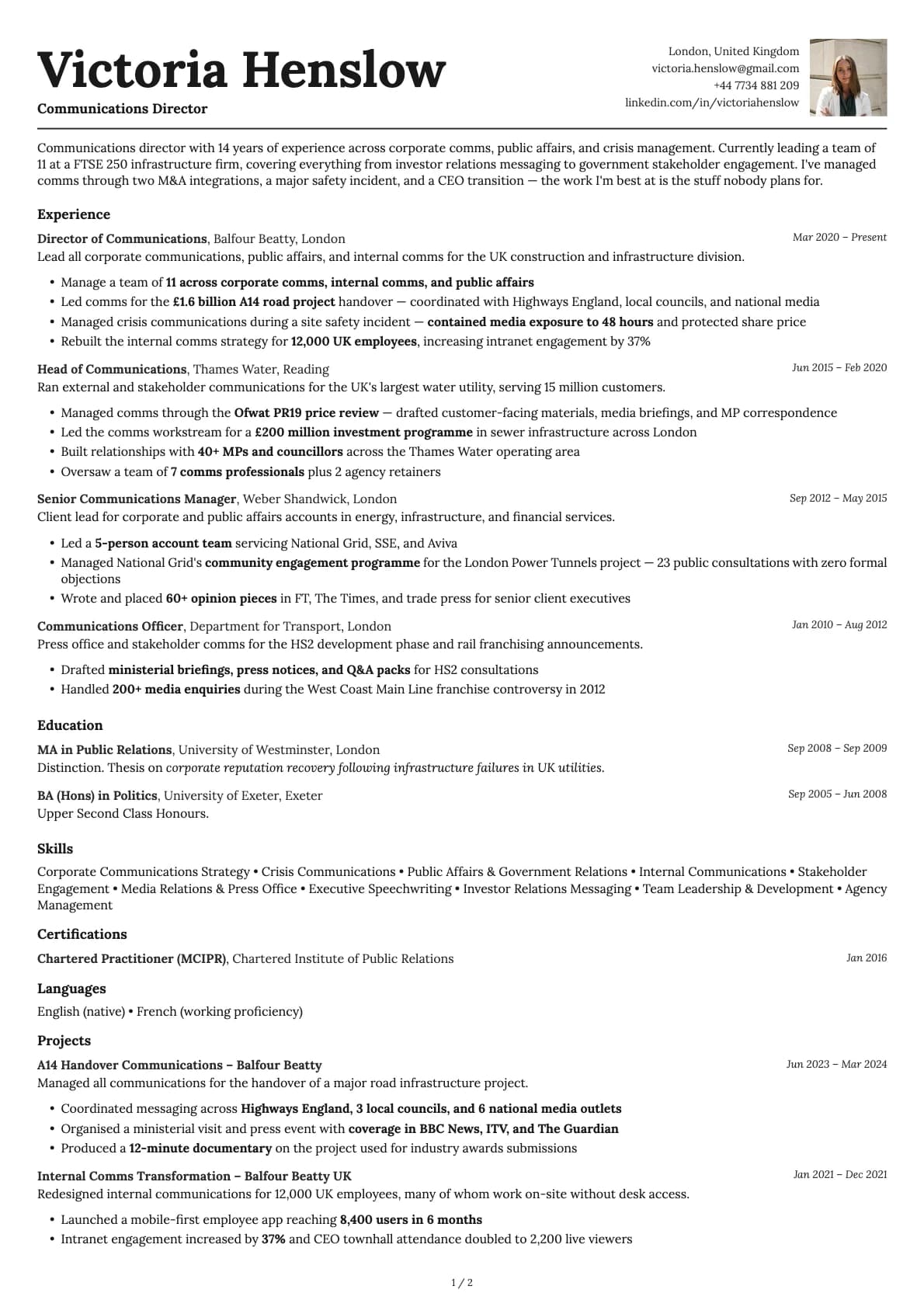
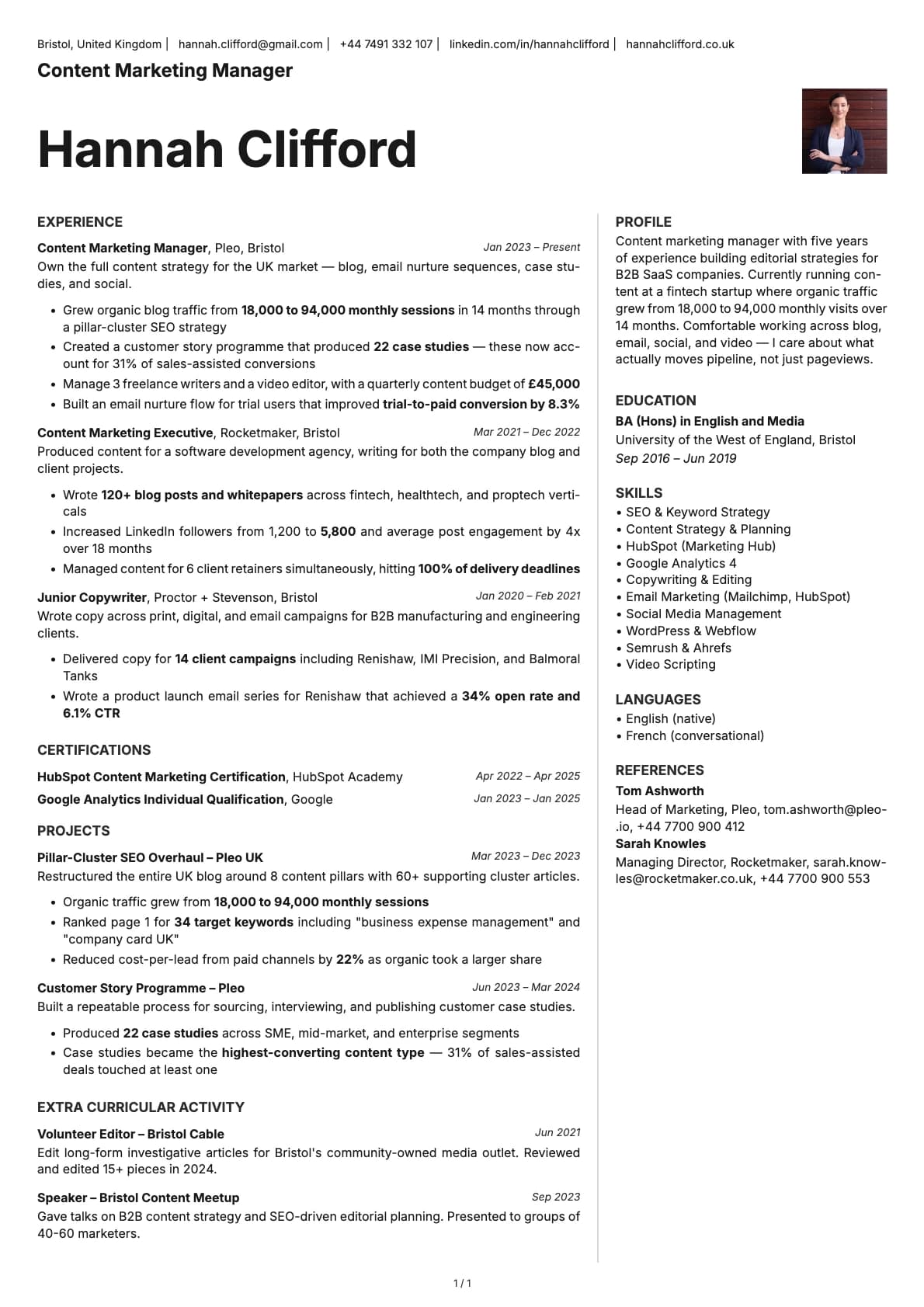
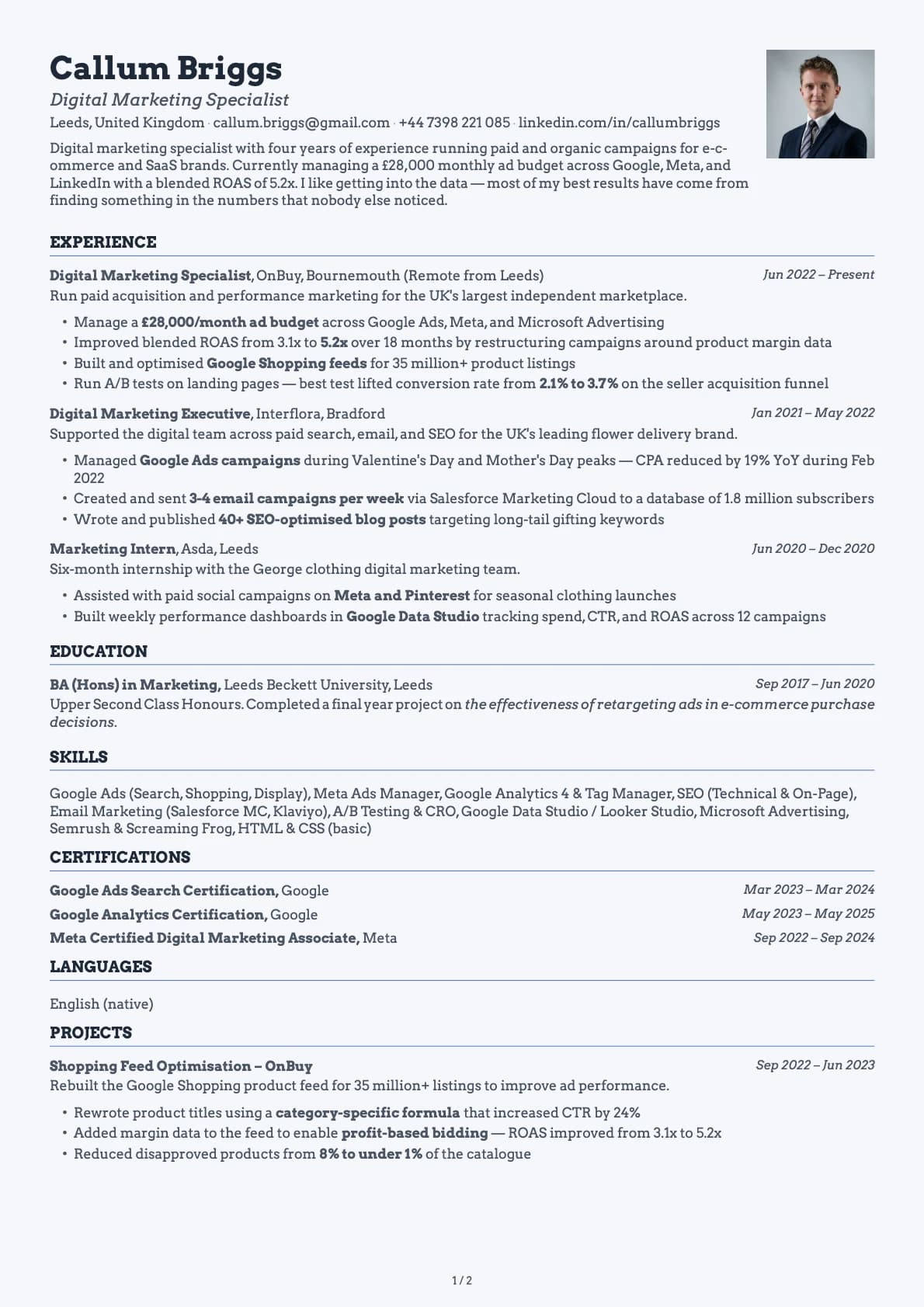
The single biggest thing you can do to improve your marketing resume is to replace every vague claim with a number. Hiring managers in marketing are fluent in metrics. They want to see that you speak the same language.
Here is what that looks like in practice:
Instead of: "Managed social media accounts and grew the audience" Write: "Grew Instagram following from 8K to 45K in 14 months through a UGC strategy that increased engagement rate from 1.2% to 4.8%"
Instead of: "Responsible for email marketing campaigns" Write: "Managed email campaigns for a 120K subscriber list, achieving a 28% average open rate and generating $340K in attributed revenue over 12 months"
Instead of: "Improved SEO performance" Write: "Increased organic traffic by 165% year-over-year through a content strategy targeting 200+ long-tail keywords, resulting in 40% more demo requests"
The formula is simple: what you did, the scale you did it at, and the result it produced.
What Metrics to Include by Specialty
Different marketing roles call for different proof points. Here is what hiring managers look for by specialty:
Digital Marketing / Performance Marketing
- Customer acquisition cost (CAC)
- Return on ad spend (ROAS)
- Cost per lead (CPL)
- Conversion rates by channel
- Campaign budgets managed
Content Marketing
- Organic traffic growth
- Content-attributed leads or revenue
- Publishing volume and consistency
- Engagement metrics (time on page, shares)
- SEO rankings achieved
Social Media
- Follower growth rate
- Engagement rate
- Social-attributed conversions
- Community growth and sentiment
- Paid social ROAS
Email Marketing
- List size and growth rate
- Open and click-through rates
- Revenue per email
- Segmentation strategies and their impact
- Deliverability rates
SEO
- Organic traffic growth (percentage and absolute)
- Keyword rankings gained
- Domain authority improvements
- Backlinks acquired
- Conversion rate from organic traffic
Tools and Platforms to List
Marketing hiring managers and ATS systems scan for specific tools. List the ones you actually use, grouped logically:
- Analytics: Google Analytics 4, Adobe Analytics, Mixpanel, Hotjar
- SEO: Semrush, Ahrefs, Screaming Frog, Google Search Console
- Email: Mailchimp, Klaviyo, HubSpot, ActiveCampaign
- Advertising: Google Ads, Meta Ads Manager, LinkedIn Campaign Manager, TikTok Ads
- CRM/Automation: HubSpot, Salesforce, Marketo, Pardot
- Content/Social: Hootsuite, Buffer, Sprout Social, WordPress, Webflow
- Design: Figma, Canva, Adobe Creative Suite
Do not list tools you used once in a free trial. Stick to what you can discuss confidently in an interview.
Portfolio and Work Samples
Marketing is one of the few fields where showing your work is as important as describing it. Include a link to your portfolio or personal site in your resume header.
If you do not have a dedicated portfolio site, consider linking to:
- Published articles or blog posts
- Case studies (anonymized if needed)
- Campaign screenshots or teardowns
- A curated LinkedIn profile with writing samples
A portfolio link turns "I grew organic traffic by 200%" from a claim into something verifiable. It builds trust before the interview even happens.
Words to Avoid on a Marketing Resume
If you work in marketing, you know that weak copy kills conversion. Apply the same standard to your resume.
Remove these immediately:
- "Growth hacker" (overused and vague)
- "Thought leader" (let your work speak for itself)
- "Synergy" (nobody takes this seriously)
- "Innovative marketer" (show innovation through results)
- "Passionate about brands" (show passion through what you built)
- "Dynamic" (means nothing without evidence)
Replace every one of these with a specific accomplishment and a number. That is the difference between a resume that gets screened out and one that gets a call.
Common Mistakes on Marketing Resumes
No numbers anywhere. This is the number one problem. If your resume reads like a job description instead of a results report, rewrite it.
Listing responsibilities instead of achievements. "Managed the company blog" is a task. "Grew blog traffic from 10K to 85K monthly visits, generating 200+ leads per month" is an achievement.
Ignoring ATS formatting. Marketers are tempted to use creative layouts. Resist the urge for online applications. Save the beautifully designed PDF for when you are emailing a hiring manager directly.
Not tailoring for the role. A social media manager resume and a demand gen manager resume should look quite different, even if you have done both. Tailor your bullets to match what the job posting emphasizes.
How Laddro Helps You Build a Marketing Resume
Laddro's resume builder helps you create a marketing resume that is as polished as the campaigns you run.
ATS-tested templates. Every template in Laddro passes through the same ATS platforms that marketing teams at major companies use. Your formatting will survive the parse.
Metric-focused suggestions. Laddro's AI prompts you to add quantifiable results to your experience bullets. It pushes you to include the numbers that hiring managers want to see.
Easy customization. Applying for a content role and a performance marketing role? Duplicate your resume and tailor each version in minutes. Laddro makes it easy to maintain multiple versions without the chaos of separate files.
Clean, professional design. Laddro's templates strike the right balance between polished and ATS-safe. You get a resume that looks good on screen without sacrificing parseability.
Ready to Build Your Marketing Resume?
You know better than anyone that good marketing is about proof, not promises. Apply that same standard to your resume. Start building your marketing resume with Laddro and lead with the numbers that matter.
Need ideas? Browse marketing and communications resume examples to see how other marketers have structured their results-driven resumes.