Communications Director Resume Example
A communications director resume example with 14 years of experience across corporate comms, public affairs.

Laddro Team
Free to use. No account needed to start.
Free to use. No account needed to start.
Overview
At director level, communications resumes cannot just list what you managed. Everyone at this level manages teams, budgets, and agencies. What sets you apart is the complexity of the situations you have handled and the outcomes you delivered when things went wrong.
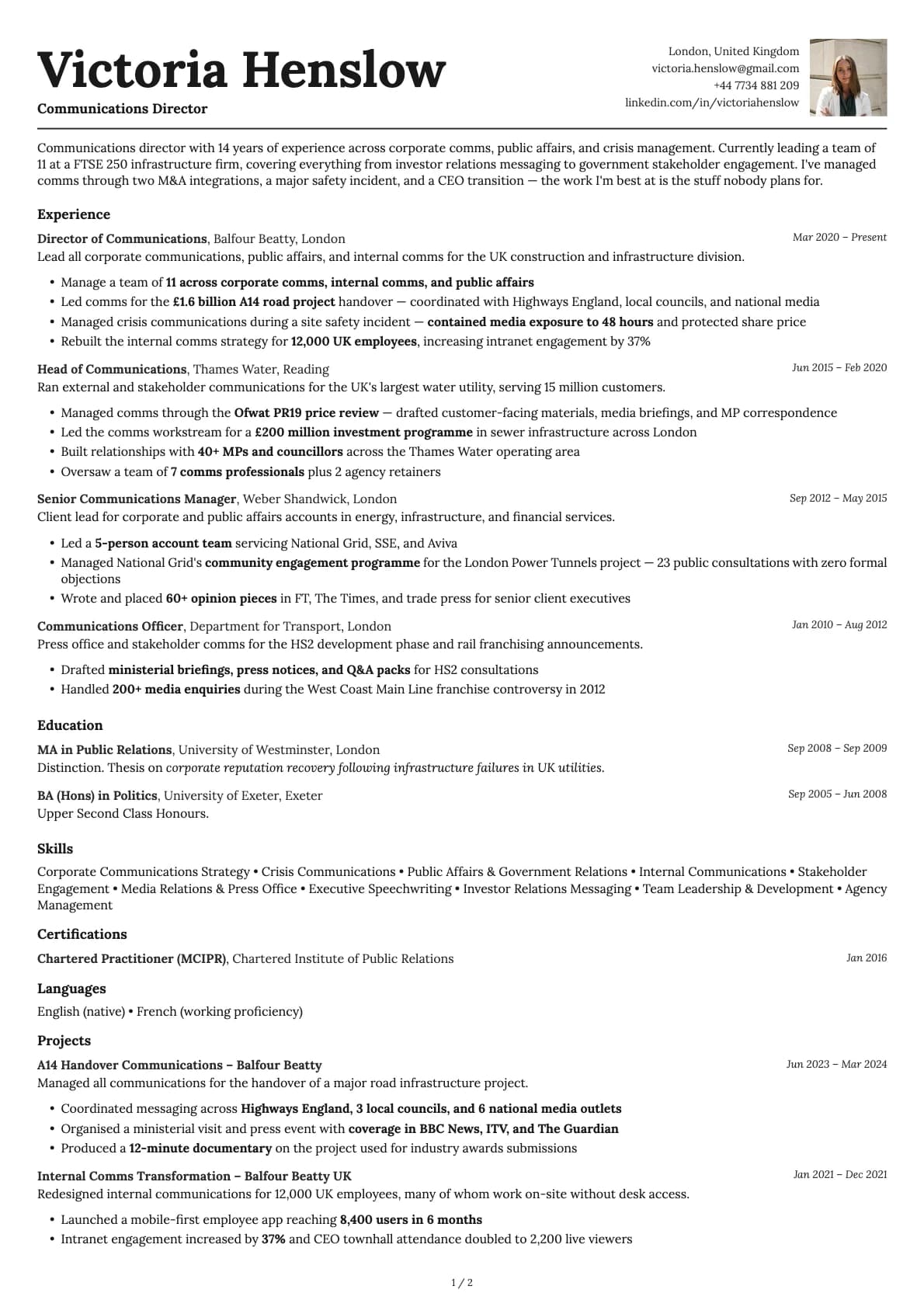
This resume belongs to Victoria Henslow, a Communications Director at Balfour Beatty with 14 years of experience across corporate comms, public affairs, and crisis management. She has worked at a FTSE 250 infrastructure company, the UK's largest water utility, a global PR agency, and the Department for Transport. What makes this resume strong is not the job titles. It is the specifics. Crisis management that contained media exposure to 48 hours. Internal comms for 12,000 employees. A ministerial press event with BBC coverage. Real situations with real stakes.
Let us go through what works and how to apply it at this level.
The summary: lead with breadth and complexity
At director level, the summary needs to establish scope fast. Not "experienced communications professional" but a specific picture of what you actually control.
Communications director with 14 years of experience across corporate comms, public affairs, and crisis management. Currently leading a team of 11 at a FTSE 250 infrastructure firm, covering everything from investor relations messaging to government stakeholder engagement.
Two sentences. Years, disciplines, company type, team size, and the range of work. The summary then adds something unusual:
I've managed comms through two M&A integrations, a major safety incident, and a CEO transition, the work I'm best at is the stuff nobody plans for.
That final line is a positioning statement. It tells the reader that this person is not just a steady-state comms director. She handles the difficult moments. Anyone hiring at director level will know that crisis and change management are the hardest parts of the job.
For yours: Name the disciplines you cover (corporate, internal, public affairs, crisis). Give the team size and the type of organisation. Then add one line about the most complex situation you have navigated. That is your hook.
Experience: show scale and stakes
Director-level experience bullets need to show both the scale of your remit and the impact of your decisions. Here are the strongest from this resume:
"Led comms for the £1.6 billion A14 road project handover, coordinated with Highways England, local councils, and national media"
This shows multi-stakeholder coordination on a nationally significant project. The pound figure gives scale. The stakeholder list shows complexity.
"Managed crisis communications during a site safety incident, contained media exposure to 48 hours and protected share price"
Crisis comms is the ultimate proof of capability at this level. The outcome here is specific: 48-hour media containment and no share price impact. That is something a board would care about.
"Rebuilt the internal comms strategy for 12,000 UK employees, increasing intranet engagement by 37%"
Internal comms for 12,000 people, many of whom work on construction sites without desk access, is a genuine challenge. The 37% engagement increase shows the strategy worked.
The formula at director level: What situation you managed + who the stakeholders were + what the outcome was for the business. Every bullet should connect to a business result.
Career progression: agency to in-house to director
This resume shows a clear pathway. Civil service (Department for Transport), then agency (Weber Shandwick), then in-house (Thames Water), then director (Balfour Beatty). Each step builds on the previous one.
The DfT entry is brief but shows government experience:
"Drafted ministerial briefings, press notices, and Q&A packs for HS2 consultations"
"Handled 200+ media enquiries during the West Coast Main Line franchise controversy in 2012"
These are high-pressure situations with public accountability. The Weber Shandwick entry shows agency-side client management and media placement:
"Wrote and placed 60+ opinion pieces in FT, The Times, and trade press for senior client executives"
Placing opinion pieces in the Financial Times and The Times is not easy. It tells the reader this person has serious media relationships. The Thames Water entry then shows the step into in-house leadership:
"Managed comms through the Ofwat PR19 price review, drafted customer-facing materials, media briefings, and MP correspondence"
At Thames Water, managing comms through a regulatory price review is politically charged work. Building relationships with 40+ MPs and councillors shows government relations capability.
Certifications at director level
This resume lists one certification: MCIPR (Chartered Practitioner through the Chartered Institute of Public Relations). At director level, certifications are less important than track record. But CIPR chartership signals professional commitment and is recognised across the UK comms industry.
If you hold MCIPR, FCIPR, or are a member of PRCA, include it. If not, it is not a dealbreaker at director level. Your project portfolio speaks louder.
Skills: strategic, not tactical
The skills list at director level should reflect strategic capability, not day-to-day execution. This resume lists: Corporate Communications Strategy, Crisis Communications, Public Affairs & Government Relations, Stakeholder Engagement, Executive Speechwriting, Investor Relations Messaging, and Agency Management.
Notice what is not here. No "social media management." No "press release writing." Those are junior-level tasks. At director level, you set the strategy and manage the people who execute it. Your skills section should reflect that.
Mistakes that hurt director-level applications
Listing every responsibility. At this level, the reader assumes you can manage a team and a budget. Focus on the hardest challenges and the biggest outcomes, not the routine.
No crisis examples. If you have managed a crisis, a restructure, or any high-stakes situation, it needs to be on your resume. Director-level hiring is often about whether you can handle pressure. If your resume only shows steady-state work, it leaves a question mark.
Too many bullet points. This resume keeps each role to four bullets. At director level, that is enough. Pick the four most impressive things and let the interview cover the rest.
Generic team management. "Managed a team of communications professionals" adds nothing. "Manage a team of 11 across corporate comms, internal comms, and public affairs" tells the reader the team structure and the disciplines covered.
One more thing
At director level, your resume is usually not going through an ATS. It is being read by a CEO, a CHRO, or a board member. Sometimes a headhunter. These people do not have time to read a three-page document. Keep it tight. Lead with the biggest, most complex things you have done. Show that you can handle a crisis. And make sure every line connects to a business outcome. The resume gets you the conversation. The conversation gets you the job.
Build your own version
Open this layout in the builder and swap in your own details. It takes a few minutes.
Free to use. No account needed to start.
Was this resume example helpful?
Rate this example to help us create better content for you.
4.8 average from 89 ratingsRelated resume examples
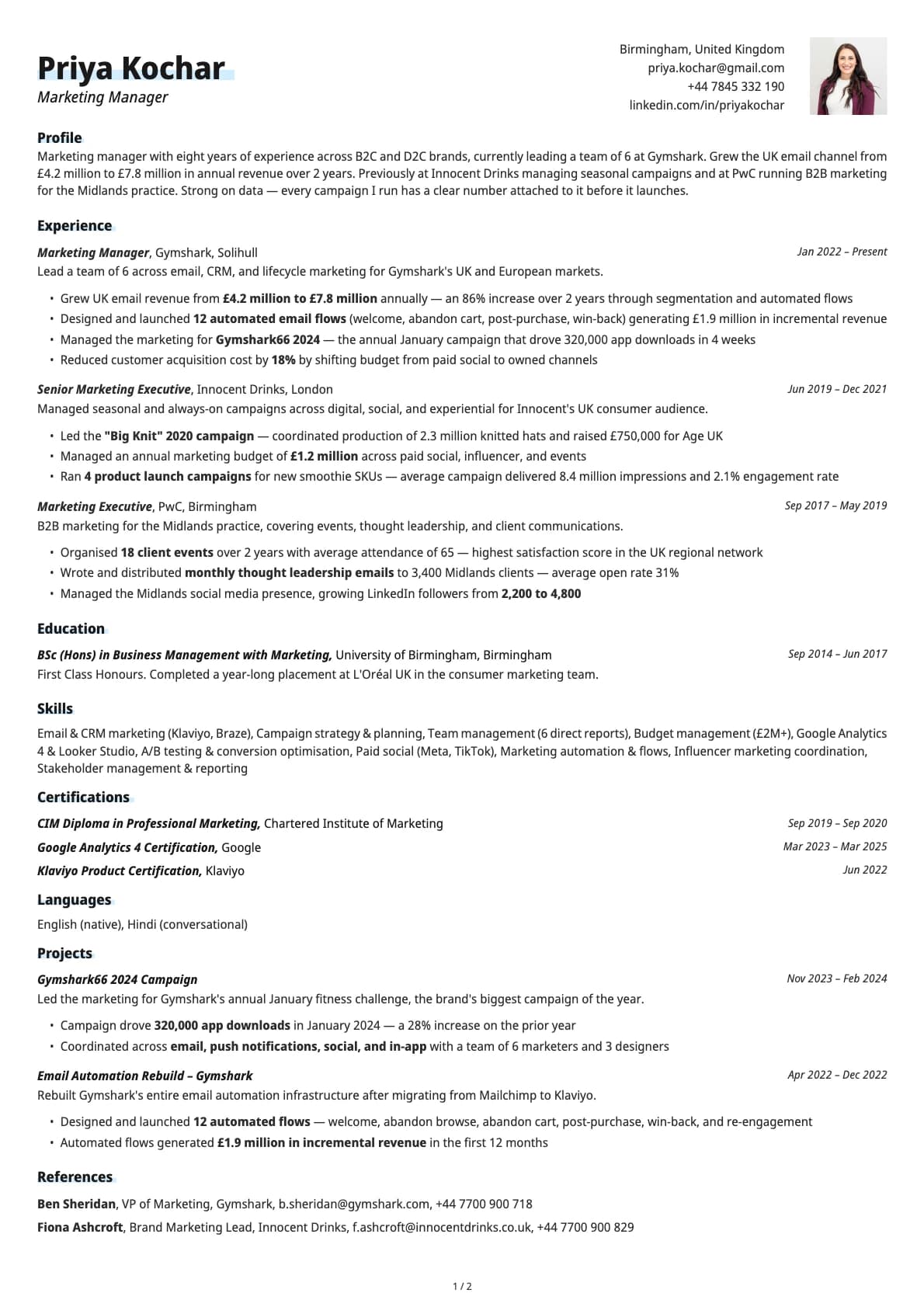
Marketing Manager
A marketing manager resume example with channel revenue growth, campaign results, and team management details.
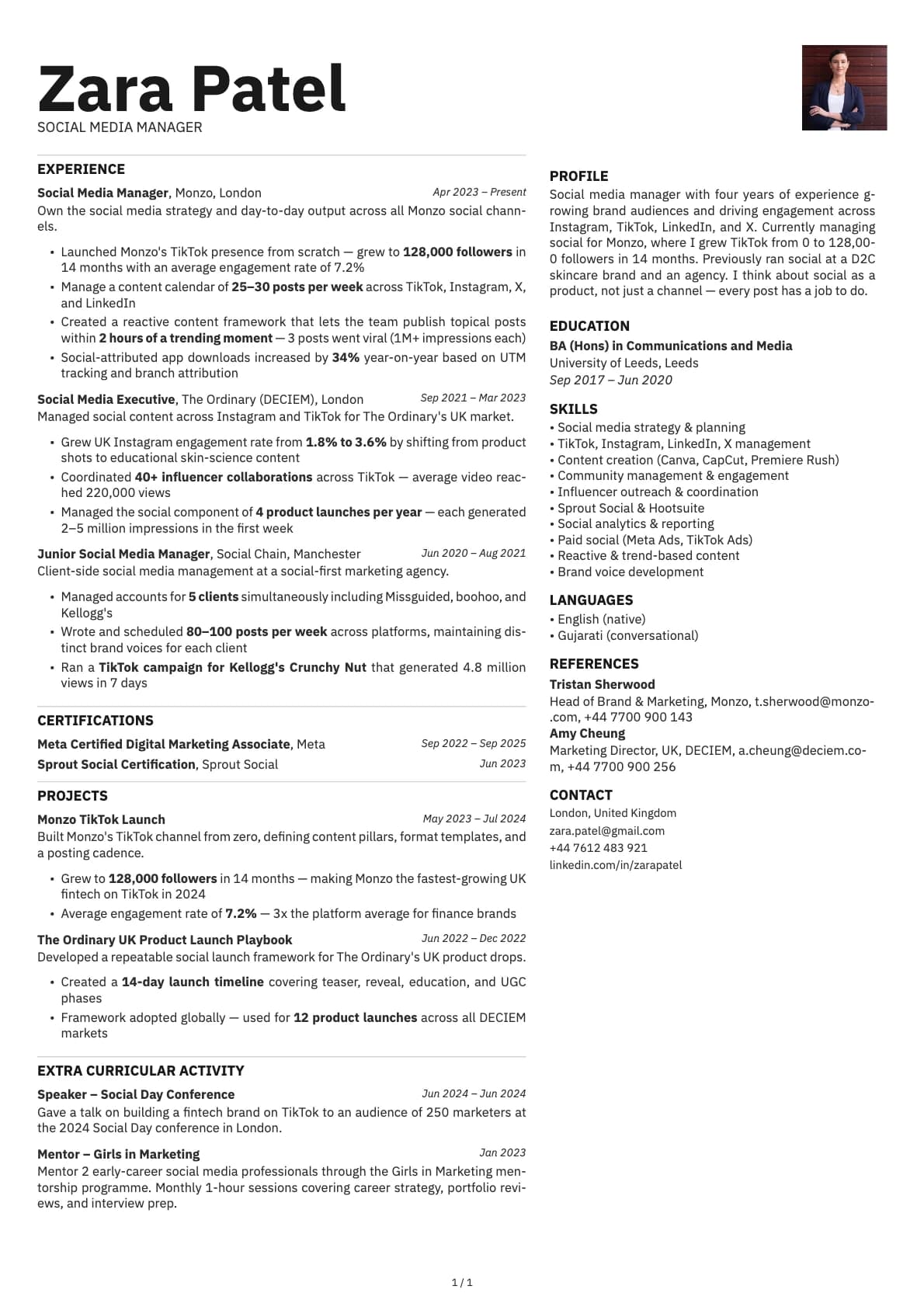
Social Media Manager
A social media manager resume example with follower growth, engagement rates, and campaign results.
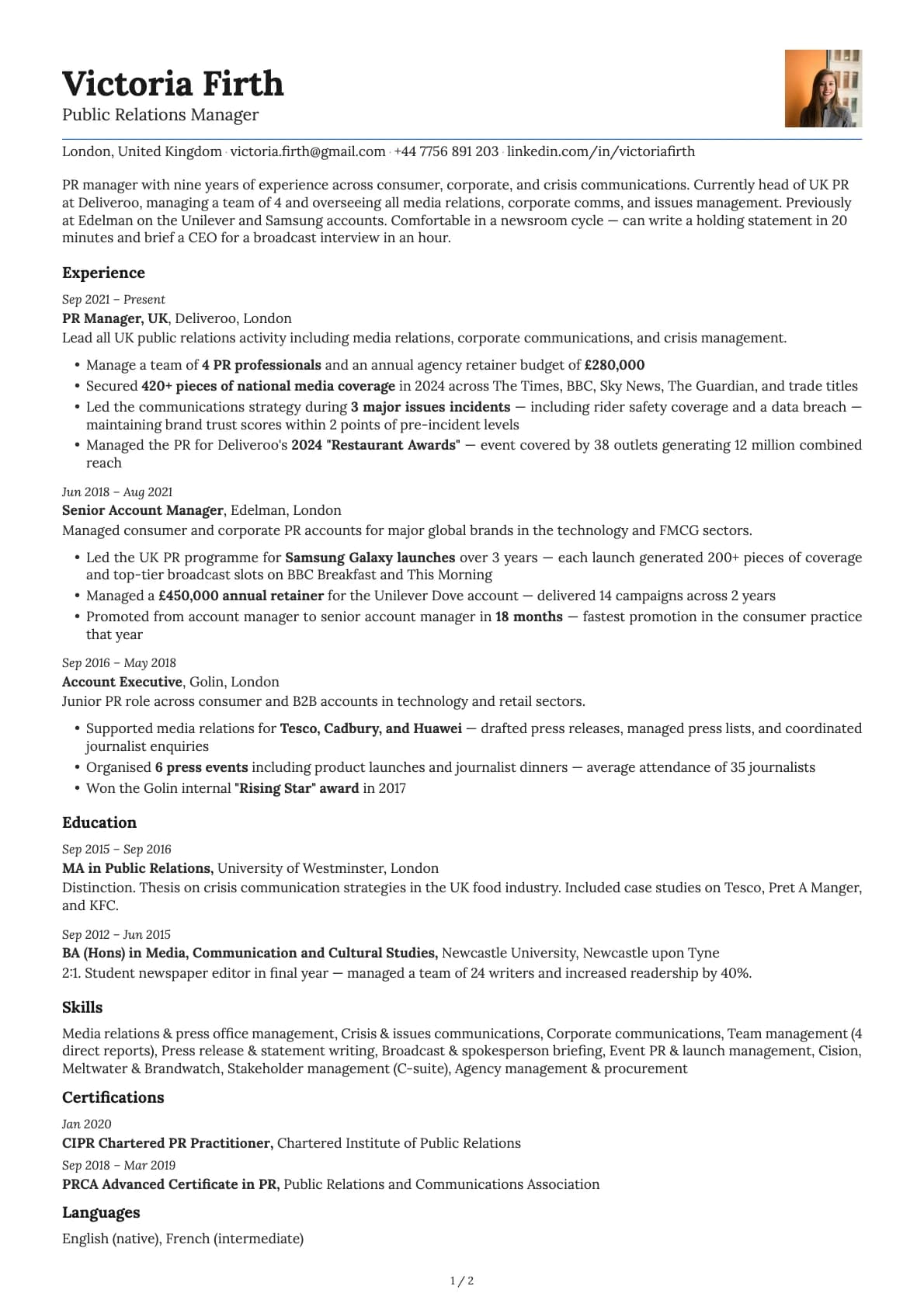
Public Relations Manager
A public relations manager resume example with media coverage numbers, crisis communications experience, and campaign reach from agency and in-house roles.
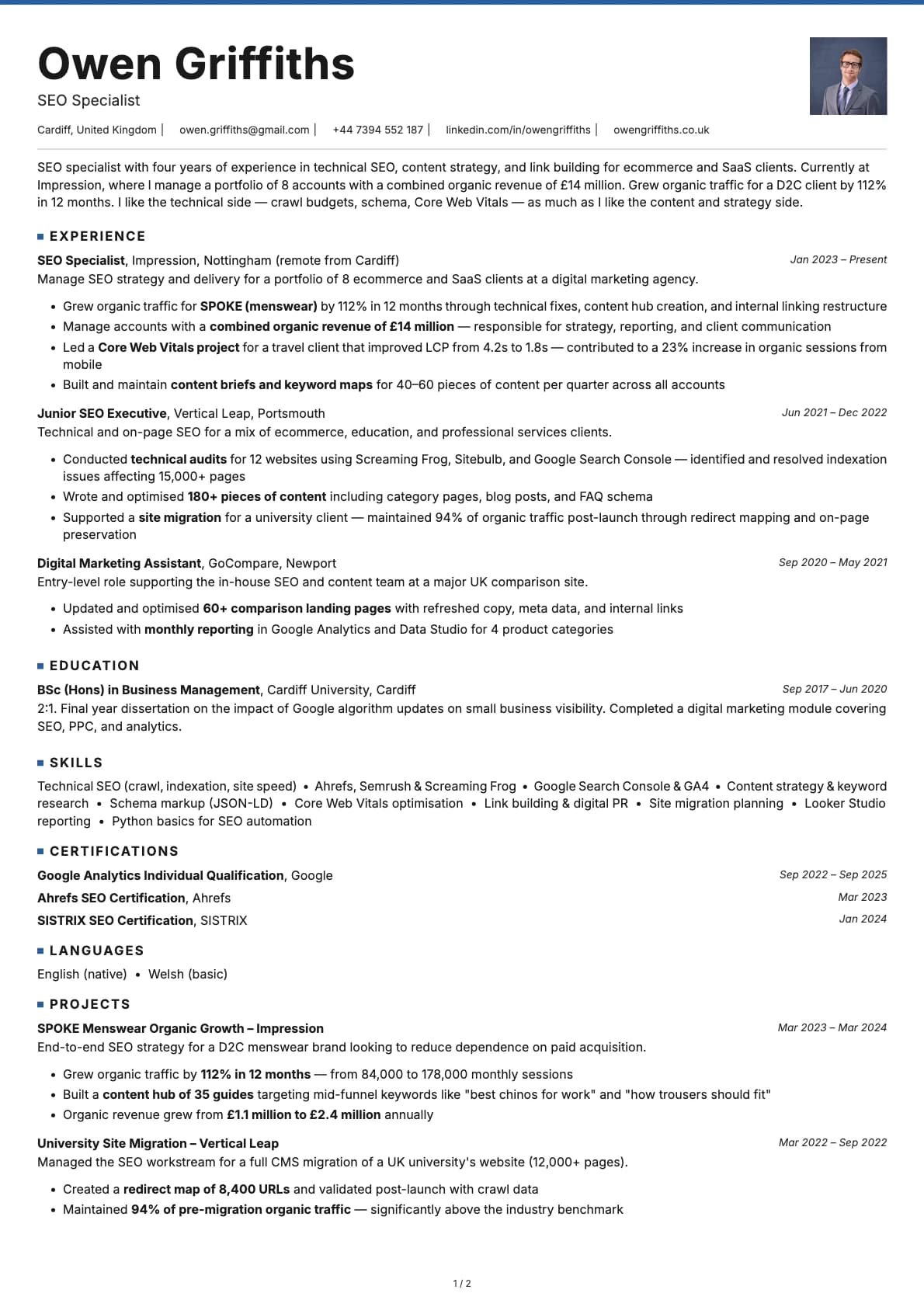
SEO Specialist
An SEO specialist resume example with traffic growth numbers, technical audit results, and content strategy outcomes.
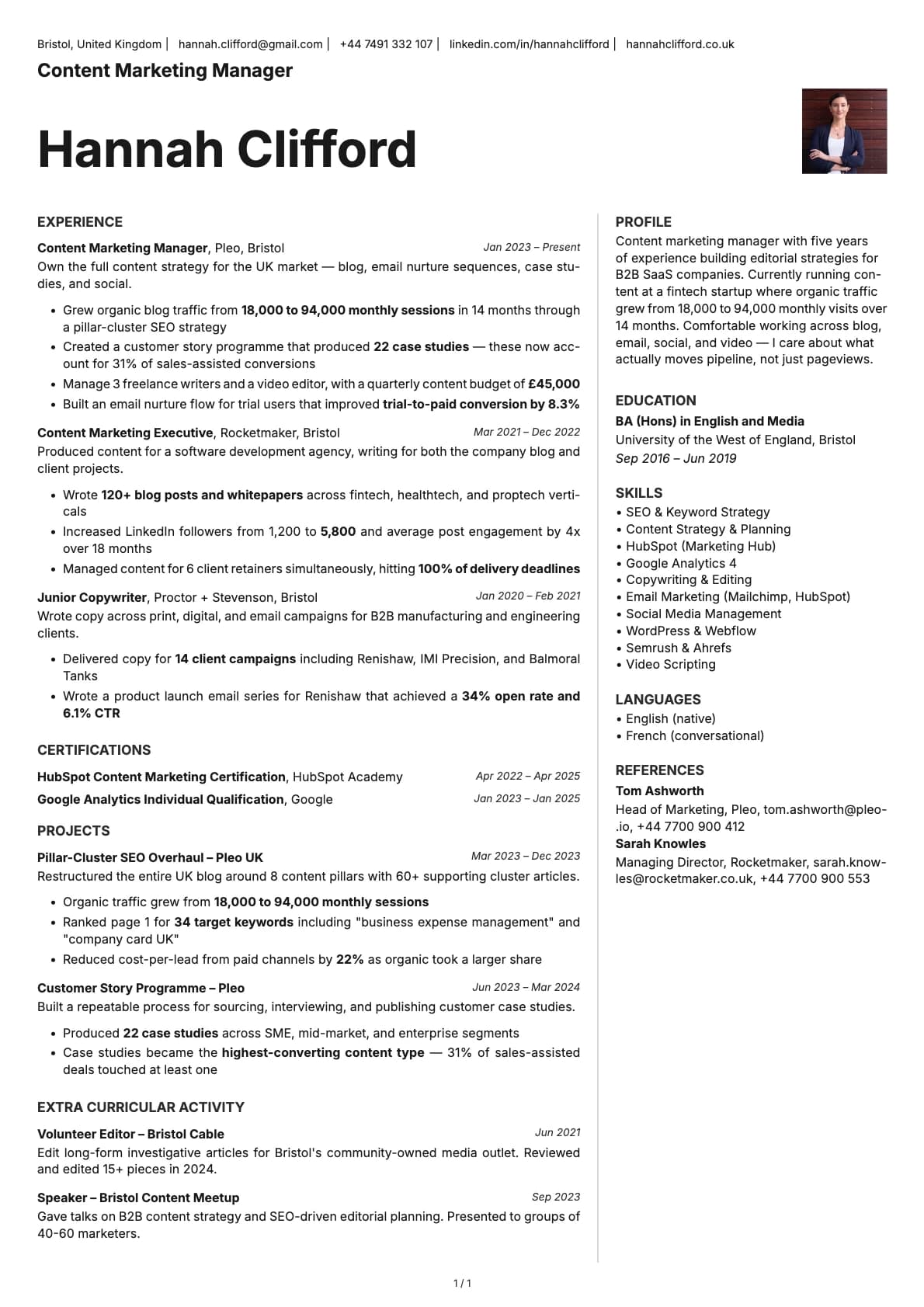
Content Marketing Manager
A content marketing manager resume example with B2B SaaS experience at Pleo.
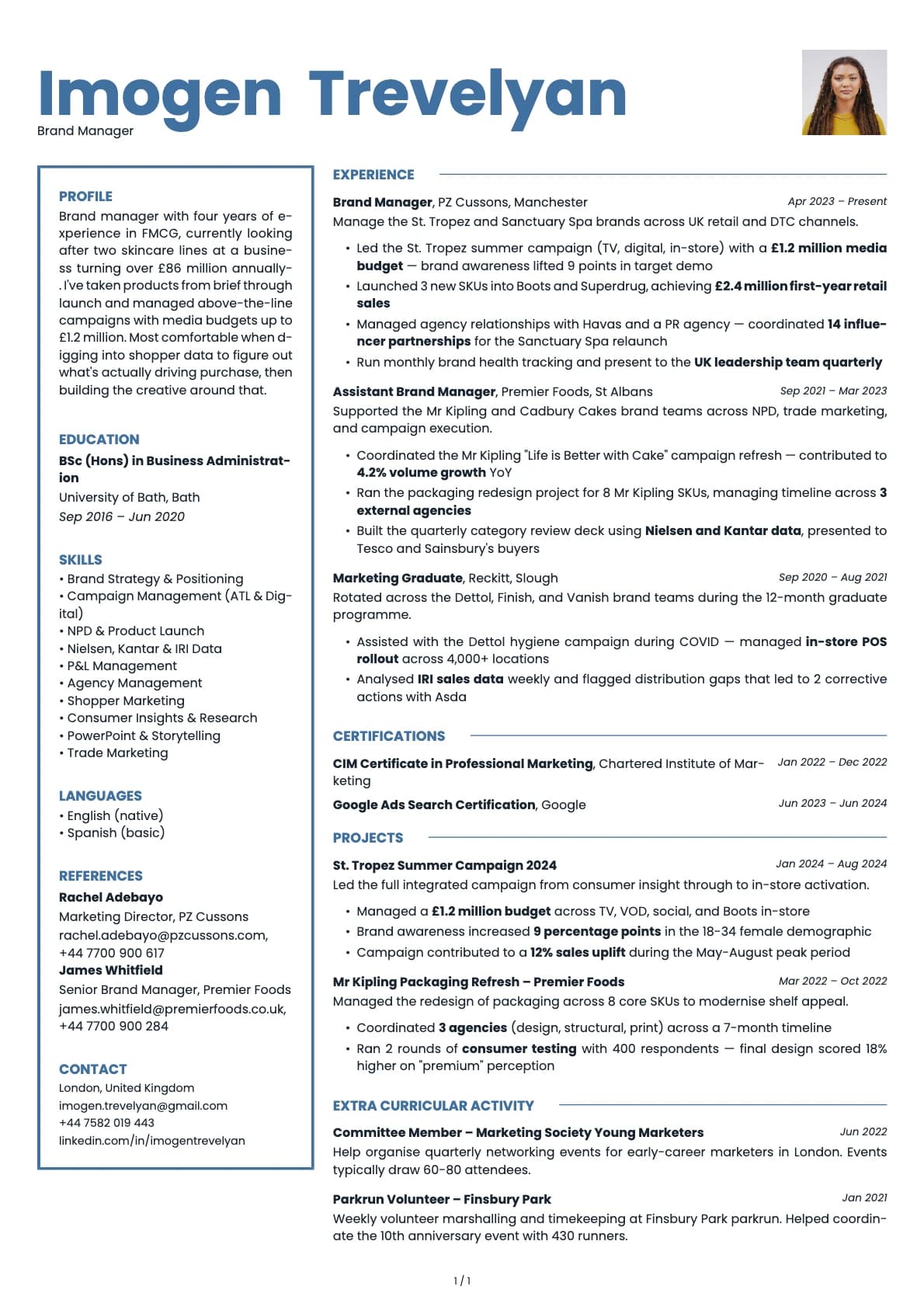
Brand Manager
A brand manager resume example from FMCG with campaign budgets, NPD launches, and Nielsen/Kantar data experience across PZ Cussons and Premier Foods.
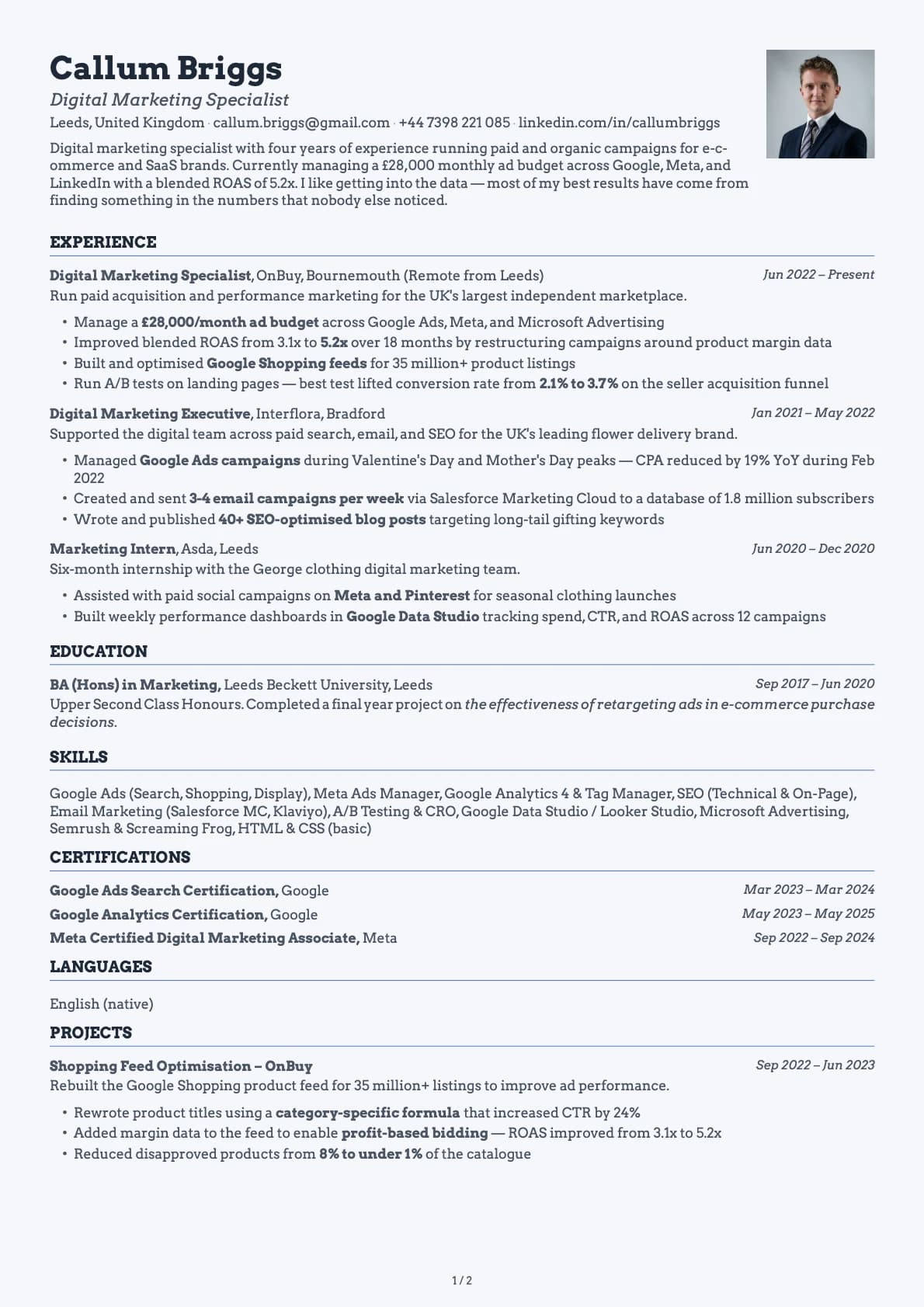
Digital Marketing Specialist
A digital marketing specialist resume example showing how to present campaign performance, ad spend management, and ROI numbers that recruiters actually.
Related articles

AI Is Screening Your Resume Before Any Human Sees It
AI screens most resumes before a human ever reads them. 97.4% of Fortune 500 companies run an ATS. This is what that means for you and what you can do about it.

The Best Resume Builders in 2026, Compared Honestly
Resume.io, Zety, Enhancv, Kickresume, Teal, and Laddro compared honestly: real pricing, free tiers, mobile apps, and where each tool wins. All prices checked in September 2026.

Burnout Recovery: A Real Timeline, Not 'Take a Bubble Bath'
55% of the U.S. workforce is burned out. Recovery takes 3 to 12 months. Here's what that actually looks like, stage by stage.