Hotel Manager Resume Example
A hotel manager resume example with P&L ownership at a 196-room Hilton. See how to present RevPAR growth, team management, and guest satisfaction.

Laddro Team
Free to use. No account needed to start.
Free to use. No account needed to start.
Overview
Hotel management resumes often read like a job description. "Responsible for day-to-day operations. Ensured guest satisfaction. Managed a team of staff." Every hotel manager could write those lines. The problem is that they tell a regional director or area manager nothing about how well you actually run a property.
What works is specifics. Room count, RevPAR movement, team size, TripAdvisor ranking changes, and P&L numbers. These are the things hotel group recruiters use to compare candidates.
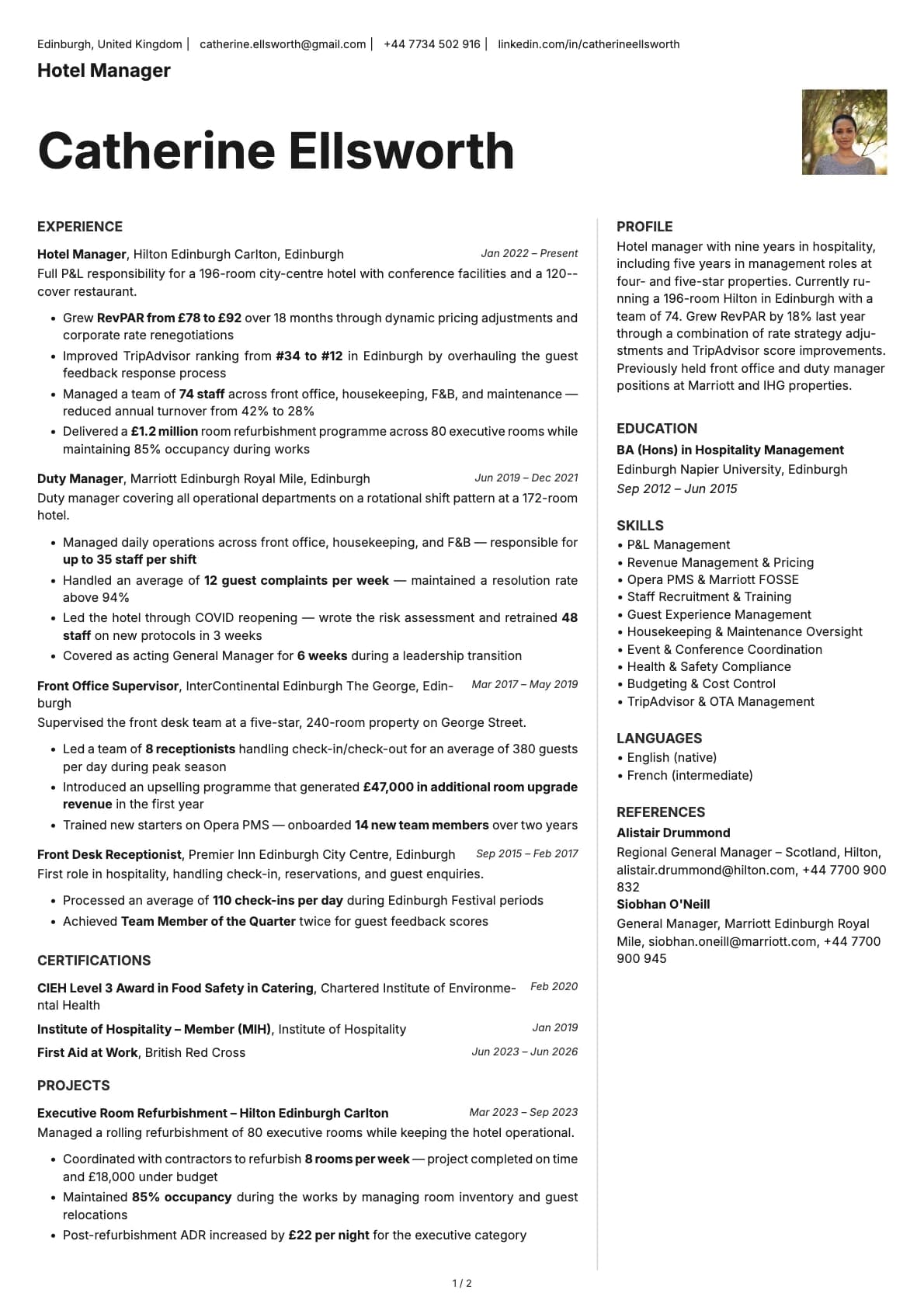
This resume belongs to Catherine, a hotel manager with nine years in hospitality, including five years in management. She currently runs a 196-room Hilton in Edinburgh with a team of 74. Before that, she was Duty Manager at a Marriott and Front Office Supervisor at an IHG five-star property. The resume shows a clear progression from the front desk to full P&L responsibility, with numbers at every stage.
Here is what you should take from this example.
Your summary: property size, team, and one big number
When a regional manager picks up your resume, they want to know three things. How big is your property? How many people do you manage? And what have you actually improved?
From this resume:
Currently running a 196-room Hilton in Edinburgh with a team of 74. Grew RevPAR by 18% last year through a combination of rate strategy adjustments and TripAdvisor score improvements.
Room count (196), team size (74), and a concrete result (18% RevPAR growth). The RevPAR number is doing the most work here. Anyone in hotel management understands what an 18% RevPAR increase means. It is the single number that best captures commercial performance.
For your summary: Name your property brand and size. State your team headcount. Then pick your strongest commercial metric (RevPAR, occupancy, ADR, or guest satisfaction) and show the improvement.
Experience bullets: the four metrics that matter
Hotel management comes down to four things: revenue, guest satisfaction, team management, and operational delivery. Your bullets should cover all four.
Revenue
Grew RevPAR from £78 to £92 over 18 months through dynamic pricing adjustments and corporate rate renegotiations
Before-and-after numbers. The recruiter can see the starting point, the result, and the method. If you have RevPAR, ADR, or occupancy numbers, present them as a journey, not just a snapshot.
Guest satisfaction
Improved TripAdvisor ranking from #34 to #12 in Edinburgh by overhauling the guest feedback response process
Rankings are powerful because they are external and verifiable. Anyone can check TripAdvisor. If your property has moved up in rankings, include the before-and-after position. If you track guest satisfaction through brand surveys (Hilton's SALT scores, Marriott's GSS), mention those too.
Team management
Managed a team of 74 staff across front office, housekeeping, F&B, and maintenance. Reduced annual turnover from 42% to 28%.
Team size and departments covered show scope. But the turnover reduction is the standout detail. Hospitality has notoriously high staff turnover. Reducing it from 42% to 28% is a genuine achievement that saves the business money in recruitment and training costs.
Operational delivery
Delivered a £1.2 million room refurbishment programme across 80 executive rooms while maintaining 85% occupancy during works
Refurbishment projects test a manager's ability to handle disruption. Including the budget, the scale, and the fact that occupancy stayed at 85% during the works shows real operational skill.
Showing your career progression
Hotel management has a clear career ladder. This resume shows it plainly: Front Desk Receptionist at Premier Inn, then Front Office Supervisor at InterContinental, then Duty Manager at Marriott, then Hotel Manager at Hilton.
Each role steps up in scope and responsibility. The Premier Inn role mentions "110 check-ins per day during Edinburgh Festival." The InterContinental role introduces an upselling programme worth "£47,000 in additional room upgrade revenue." The Marriott role covers "35 staff per shift" and acting GM duties. And the Hilton role has full P&L responsibility.
If your career follows a similar path, make sure the escalation in responsibility is obvious. Your early roles should show volume (how many check-ins, how many guests). Your management roles should show commercial outcomes (revenue, rankings, team performance).
Skills: PMS systems and operational areas
This resume lists 10 skills, and they cover the core operational areas: P&L management, revenue management, Opera PMS, staff recruitment, guest experience, housekeeping oversight, event coordination, health and safety, budgeting, and OTA management.
Listing the property management system by name (Opera PMS, Marriott FOSSE) is important. Different hotel groups use different systems, and hiring managers want to see that you can use theirs without extensive retraining. If you know Opera, FOSSE, Protel, Mews, or any other PMS, name it.
OTA management (Booking.com, Expedia, brand.com distribution) is another skill worth highlighting. Rate parity, channel management, and direct booking strategy are increasingly important, and many hotel manager job descriptions now ask for this experience specifically.
Certifications and professional memberships
This resume lists CIEH Level 3 Food Safety, Institute of Hospitality membership (MIH), and First Aid at Work. All three are practical and relevant.
The Food Safety Level 3 is important because many hotel managers oversee F&B operations. If you manage a restaurant or breakfast service, this certification is expected. The Institute of Hospitality membership shows professional engagement. And First Aid at Work is a baseline safety requirement.
If you hold any brand-specific certifications (Hilton University courses, Marriott training programmes), include those too. They show investment in brand standards.
Mistakes in hotel management resumes
Not mentioning RevPAR or ADR. If you manage a hotel's commercial performance and your resume has no revenue metrics, the recruiter has to guess whether you are commercially savvy. Always include at least one financial performance number.
Vague team management claims. "Led a team" is weak. "Led a team of 74 across four departments" is specific. Always state the headcount and the departments.
Skipping the brand name. "Hotel Manager at a city-centre hotel" is nowhere near as strong as "Hotel Manager at Hilton Edinburgh Carlton." Brand names carry weight in hospitality, especially the major groups. Use them.
Not showing crisis management. If you managed a property through COVID, a refurbishment, or any major disruption, include it. The COVID reopening bullet on this resume (wrote 23 new SOPs, retrained 48 staff in 3 weeks) shows real leadership under pressure.
Ignoring online reputation. TripAdvisor, Google Reviews, and Booking.com scores are now part of the job. If you have improved review scores or rankings, include the numbers. If you have a process for responding to reviews, mention it.
One more thing
If you are moving from a smaller brand to a larger one, or from an independent property to a chain, your resume needs to show you can work within brand standards. Mention any brand audits you have passed, any brand training you have completed, and any standardised processes you have implemented. Regional directors at the major groups want someone who can deliver a consistent brand experience, not just run a good hotel.
Build your own version
Open this layout in the builder and swap in your own details. It takes a few minutes.
Free to use. No account needed to start.
Was this resume example helpful?
Rate this example to help us create better content for you.
4.8 average from 87 ratingsRelated resume examples
Chef
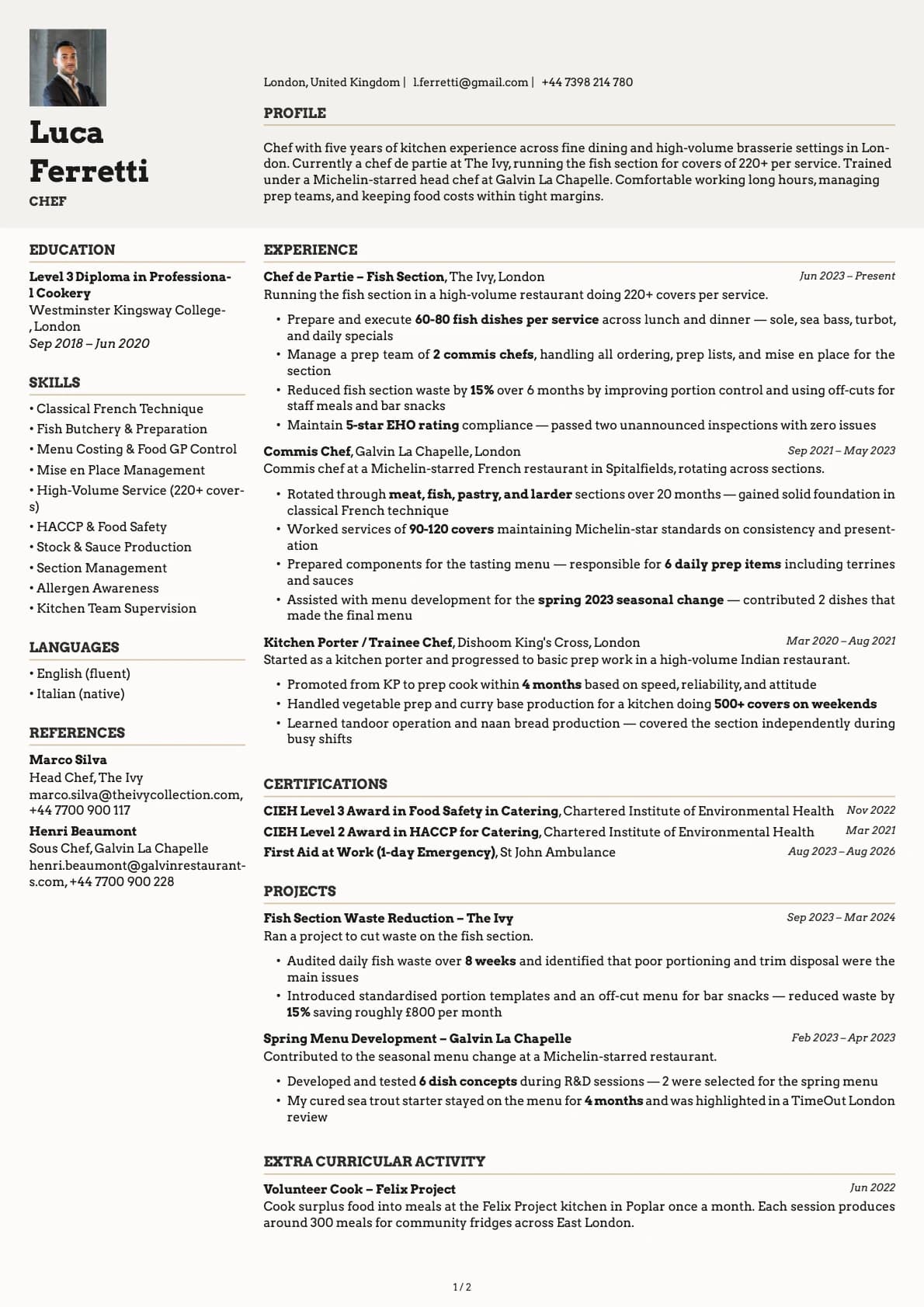
A chef resume example with fine dining and high-volume experience at The Ivy and Galvin La Chapelle.
Event Manager
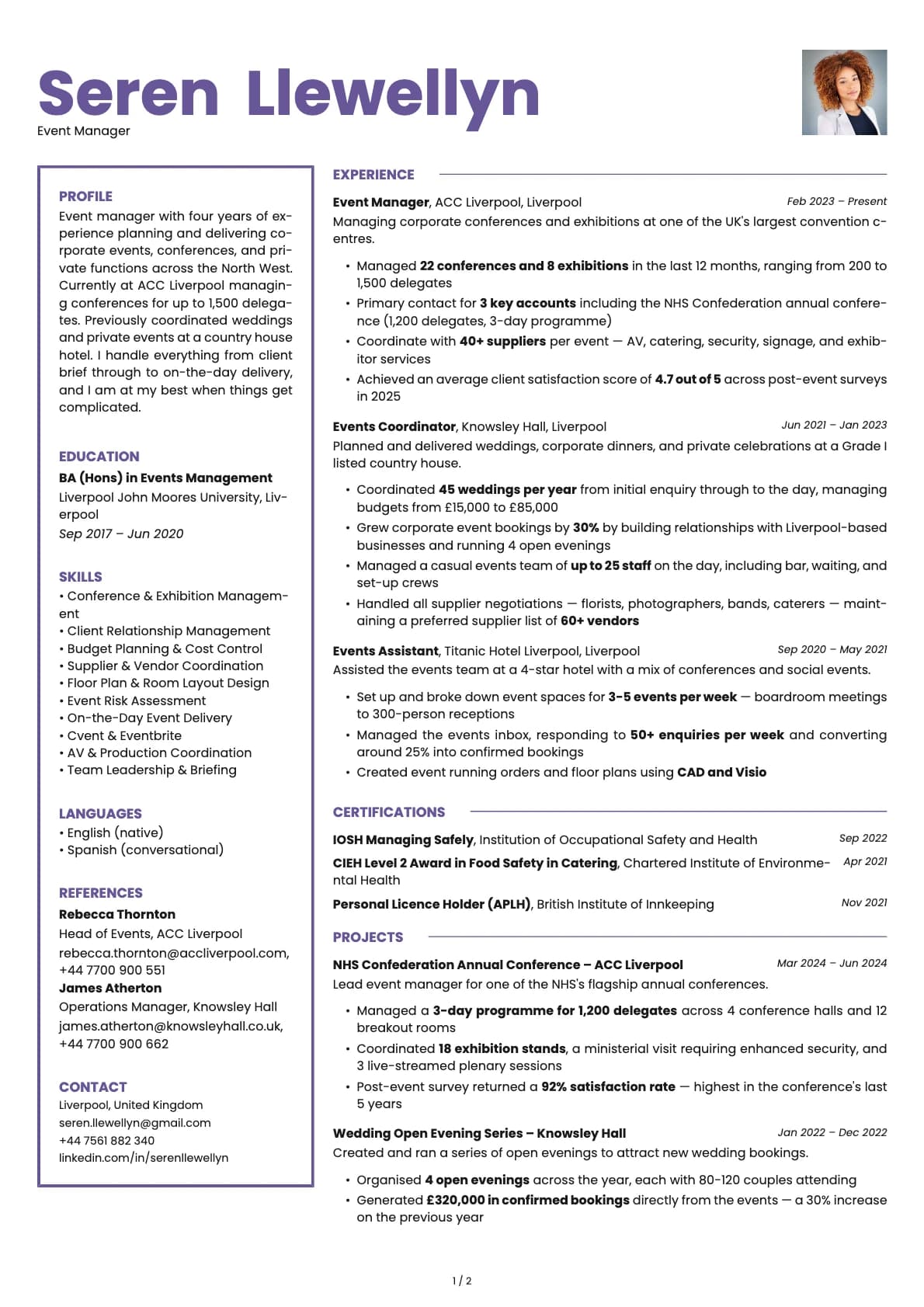
An event manager resume example with conference and wedding planning experience.
Bartender
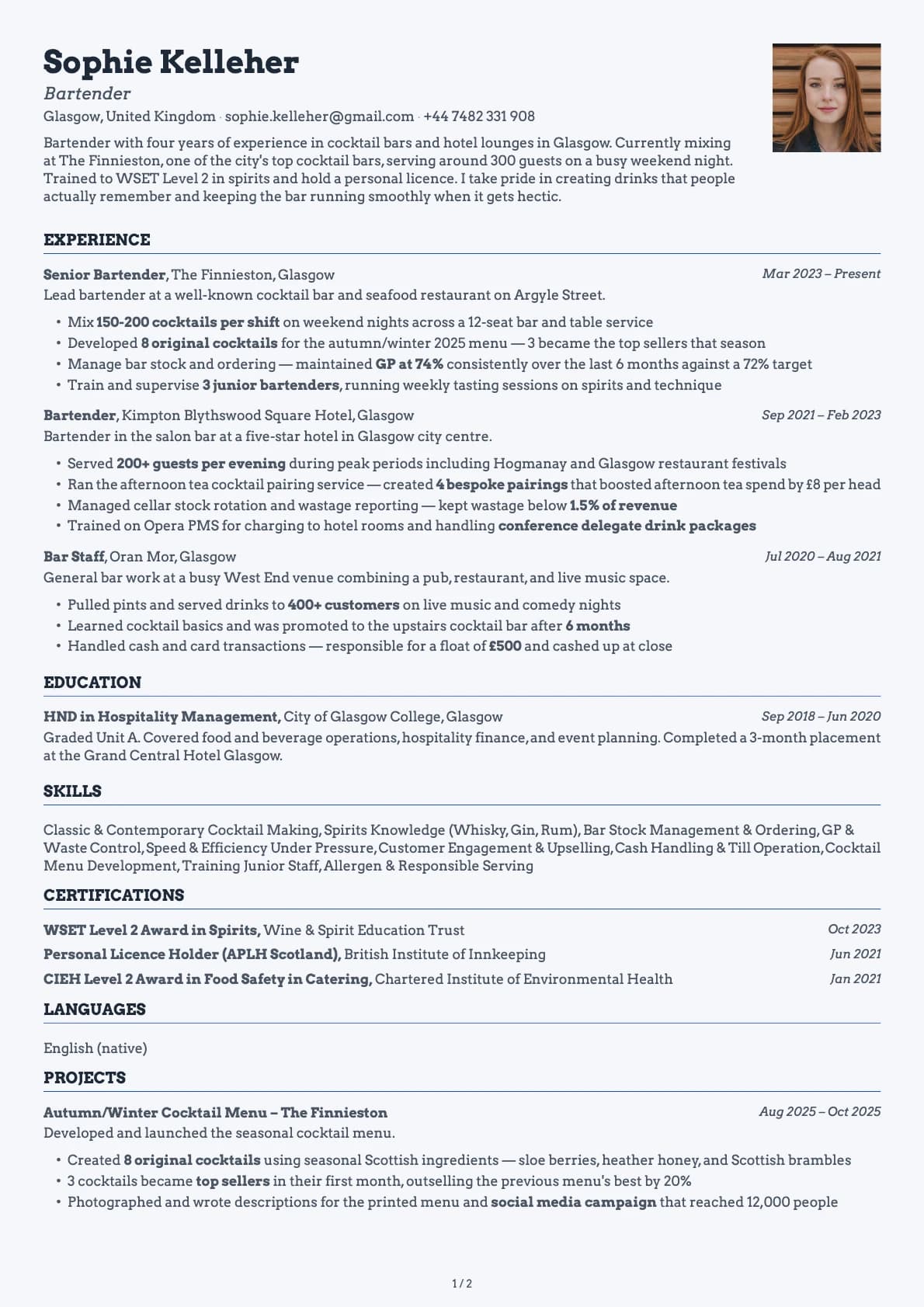
A bartender resume example from a top Glasgow cocktail bar, covering drink volumes, GP targets, menu development, and how to present hospitality.
Server / Waiter
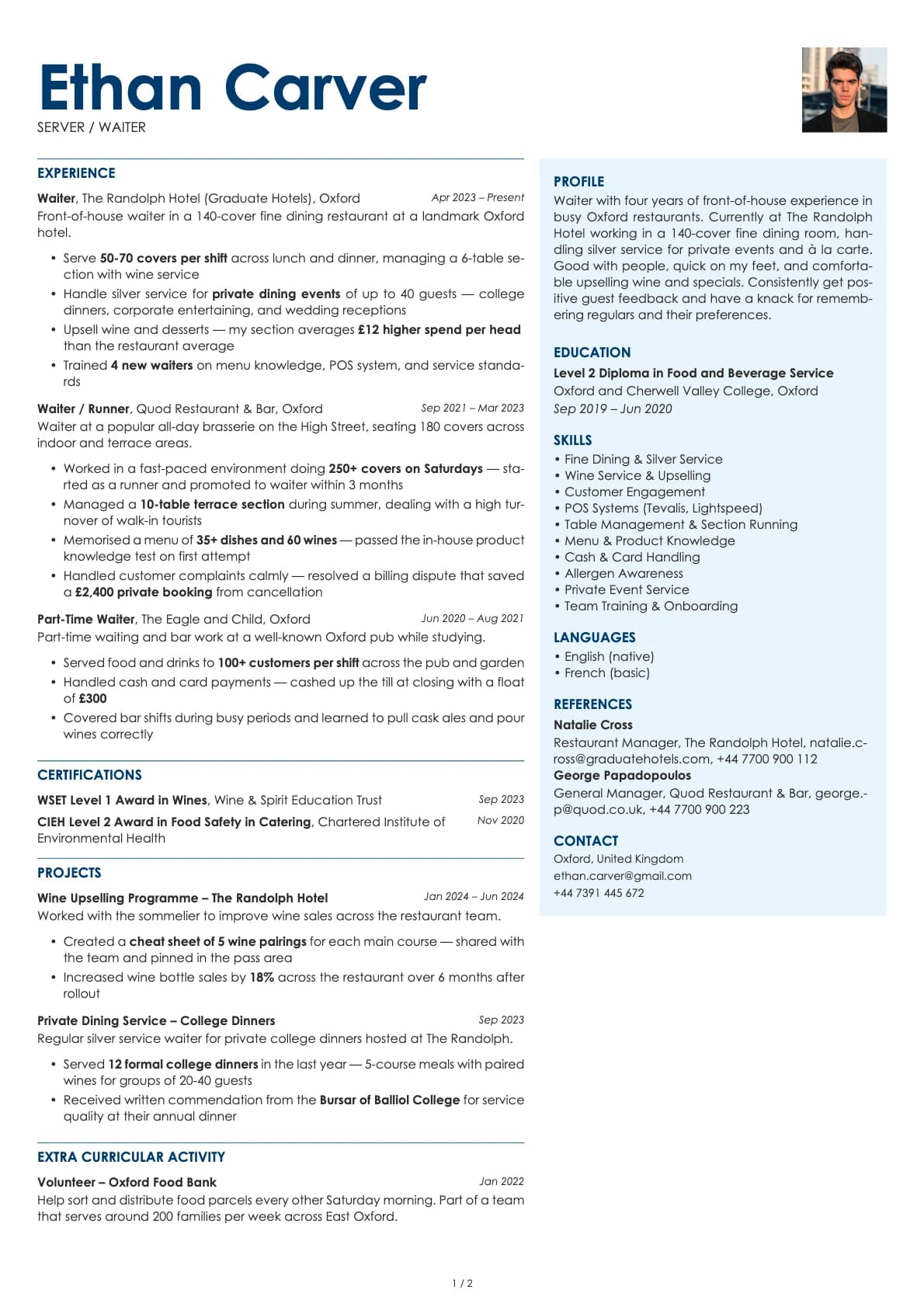
A server and waiter resume example with cover counts, upselling results, and private event experience.
Related articles

AI Is Screening Your Resume Before Any Human Sees It
AI screens most resumes before a human ever reads them. 97.4% of Fortune 500 companies run an ATS. This is what that means for you and what you can do about it.

The Best Resume Builders in 2026, Compared Honestly
Resume.io, Zety, Enhancv, Kickresume, Teal, and Laddro compared honestly: real pricing, free tiers, mobile apps, and where each tool wins. All prices checked in September 2026.

Burnout Recovery: A Real Timeline, Not 'Take a Bubble Bath'
55% of the U.S. workforce is burned out. Recovery takes 3 to 12 months. Here's what that actually looks like, stage by stage.