Editorial Assistant Resume Example
An editorial assistant resume example for English literature graduates, showing proofreading, manuscript handling, and publishing industry experience.

Laddro Team
Free to use. No account needed to start.
Free to use. No account needed to start.
Overview
Publishing is one of the hardest graduate industries to break into. The major London publishers receive thousands of applications for each editorial assistant opening, and the starting salaries are low enough that most candidates need additional experience just to prove their commitment. The graduates who get hired are the ones who have already done the work: interned at a publisher, edited a student magazine, proofread manuscripts, or managed submissions for a literary journal.
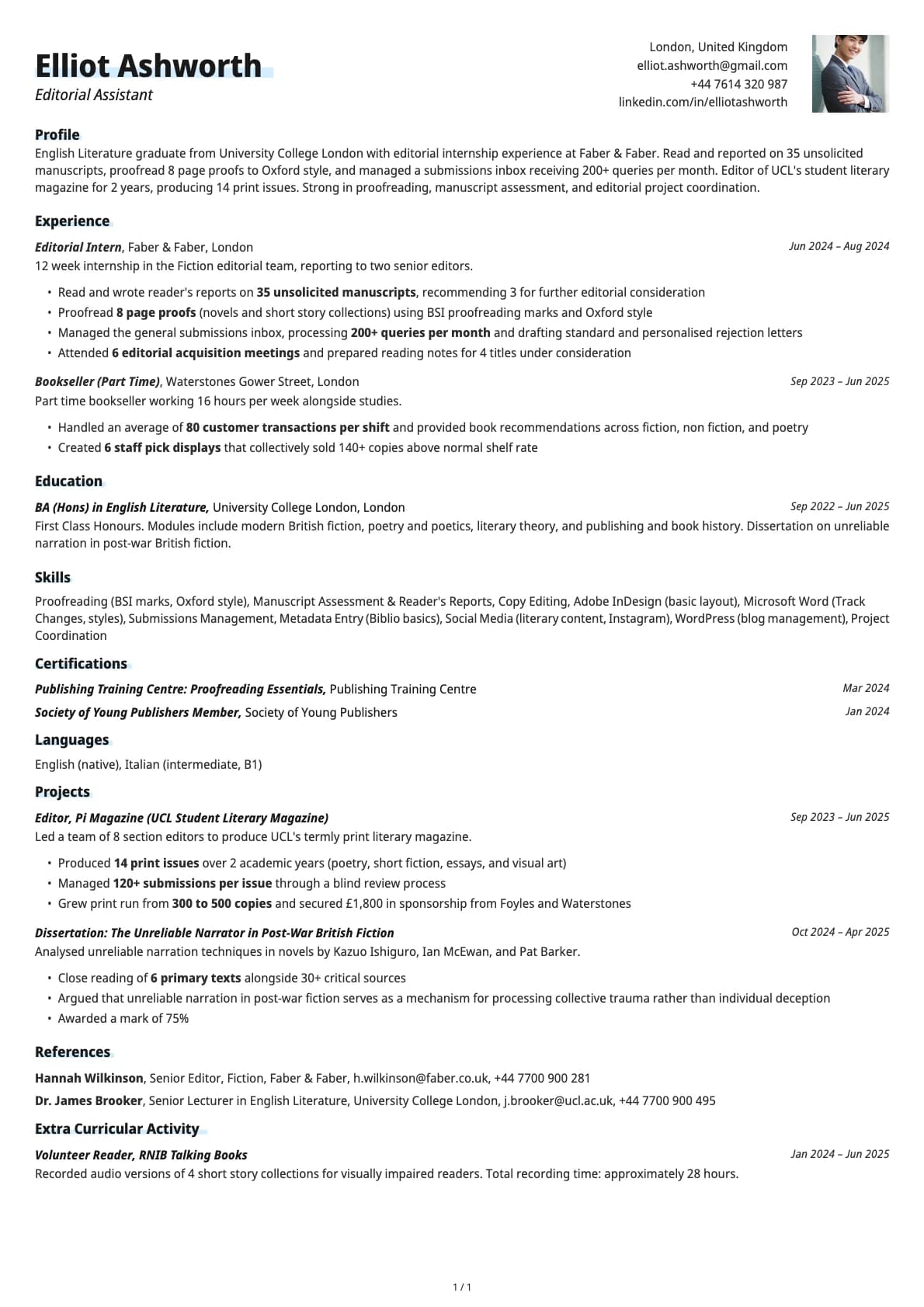
This resume belongs to Elliot, an English Literature BA graduate from University College London who interned at Faber & Faber and edited the university's student literary magazine. His resume works because it quantifies his editorial output: 35 manuscripts read and reported on, 14 magazine issues produced, 120+ submissions managed per issue.
Publishing internship experience
If you interned at a publisher, describe what you actually did, not just the name of the company. Elliot's internship at Faber & Faber involved reading and writing reader's reports on 35 unsolicited manuscripts, proofreading 8 proofs at page stage, and managing the submissions inbox which received 200+ queries per month.
These specifics tell a hiring editor that Elliot understands the full editorial pipeline, from acquisition to production.
Student publications and editing experience
Editing a student magazine or literary journal is the best extracurricular for publishing careers. Elliot served as editor of Pi Magazine, UCL's student literary magazine, for 2 years. He managed a team of 8 section editors, processed 120+ submissions per issue, and produced 14 print issues.
If you ran a blog, podcast, or newsletter, the same principle applies. Name the publication, your role, the output volume, and the audience size.
Proofreading and style guides
Proofreading is a core skill for editorial assistants. If you are familiar with specific style guides (Oxford, Chicago Manual of Style, house styles), mention them. Elliot's resume mentions proofreading to Oxford style and using BSI proofreading marks. These details signal professional training, not just a casual eye for typos.
Software and systems
Publishing uses specific tools: InDesign (or InCopy) for typesetting, Biblio or Klopotek for rights and metadata, and various manuscript tracking systems. If you have used any of these, list them. Even proficiency with Word's Track Changes, Grammarly Pro, or Scrivener shows you understand the tools of the trade.
Build your own version
Open this layout in the builder and swap in your own details. It takes a few minutes.
Free to use. No account needed to start.
Was this resume example helpful?
Rate this example to help us create better content for you.
4.7 average from 131 ratingsRelated resume examples
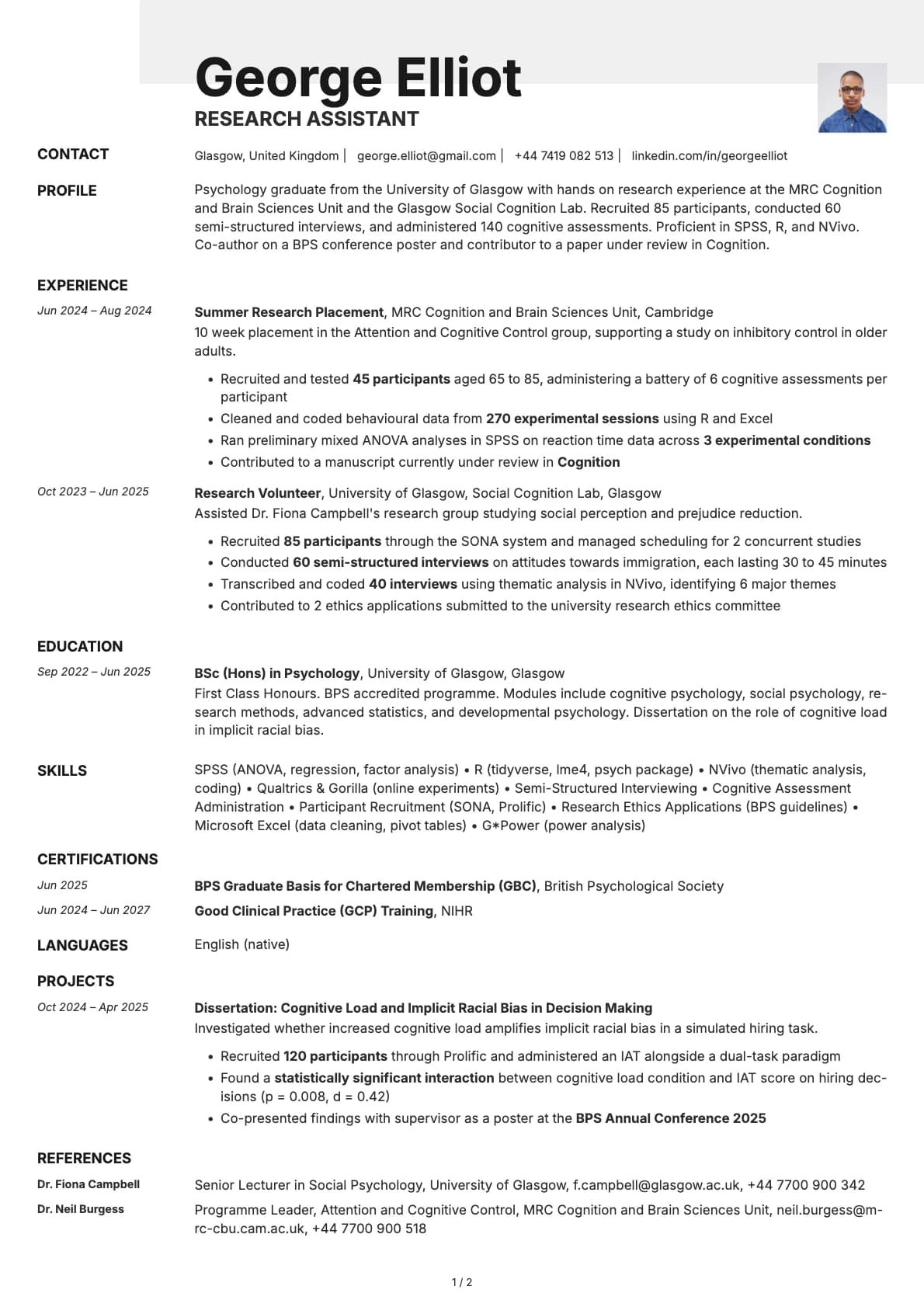
Research Assistant
A research assistant resume example for psychology graduates, showing how to present participant recruitment, data collection, and SPSS analysis skills.
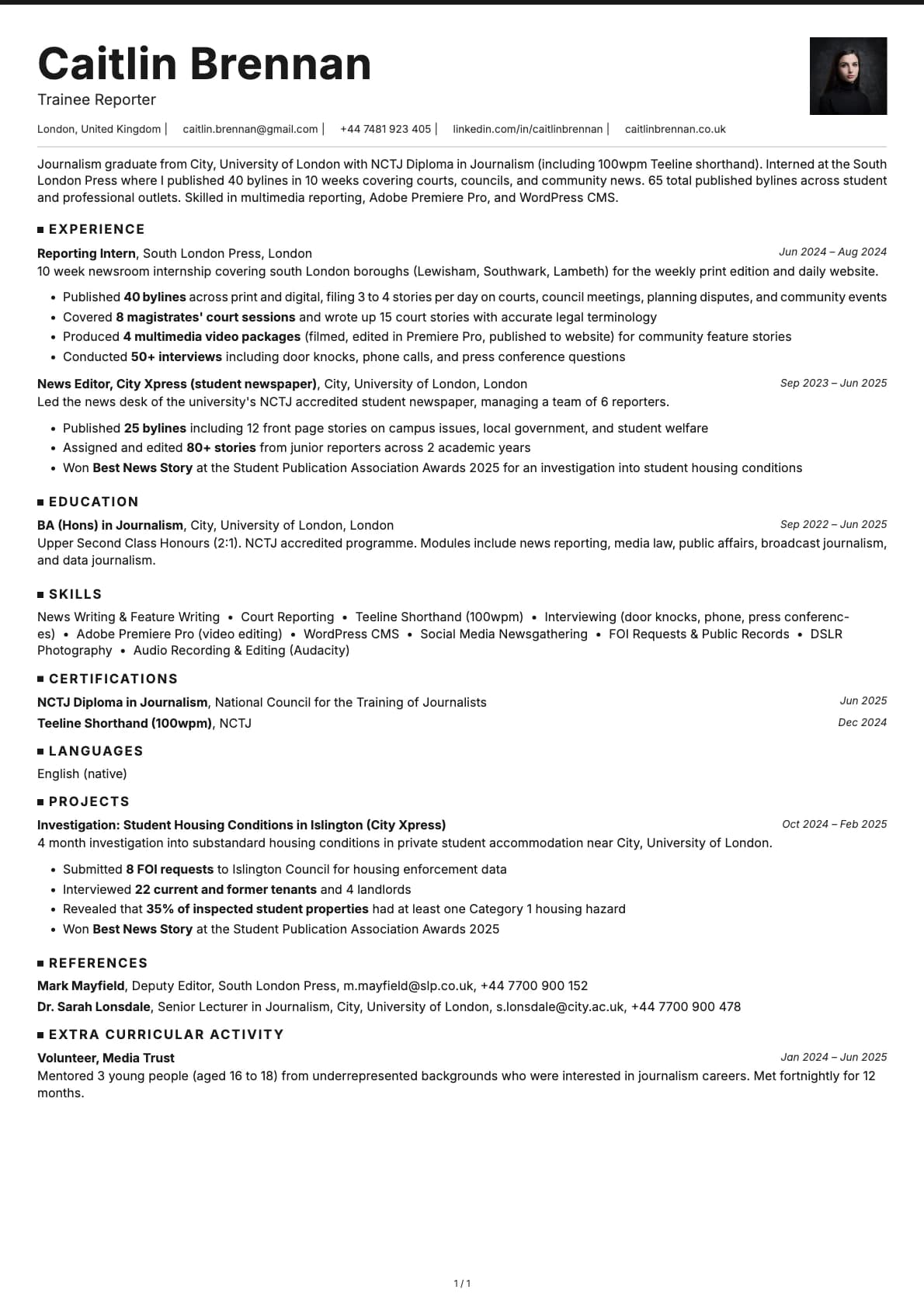
Trainee Reporter
A trainee reporter resume example for journalism graduates, showing published bylines, newsroom experience, and multimedia storytelling skills.
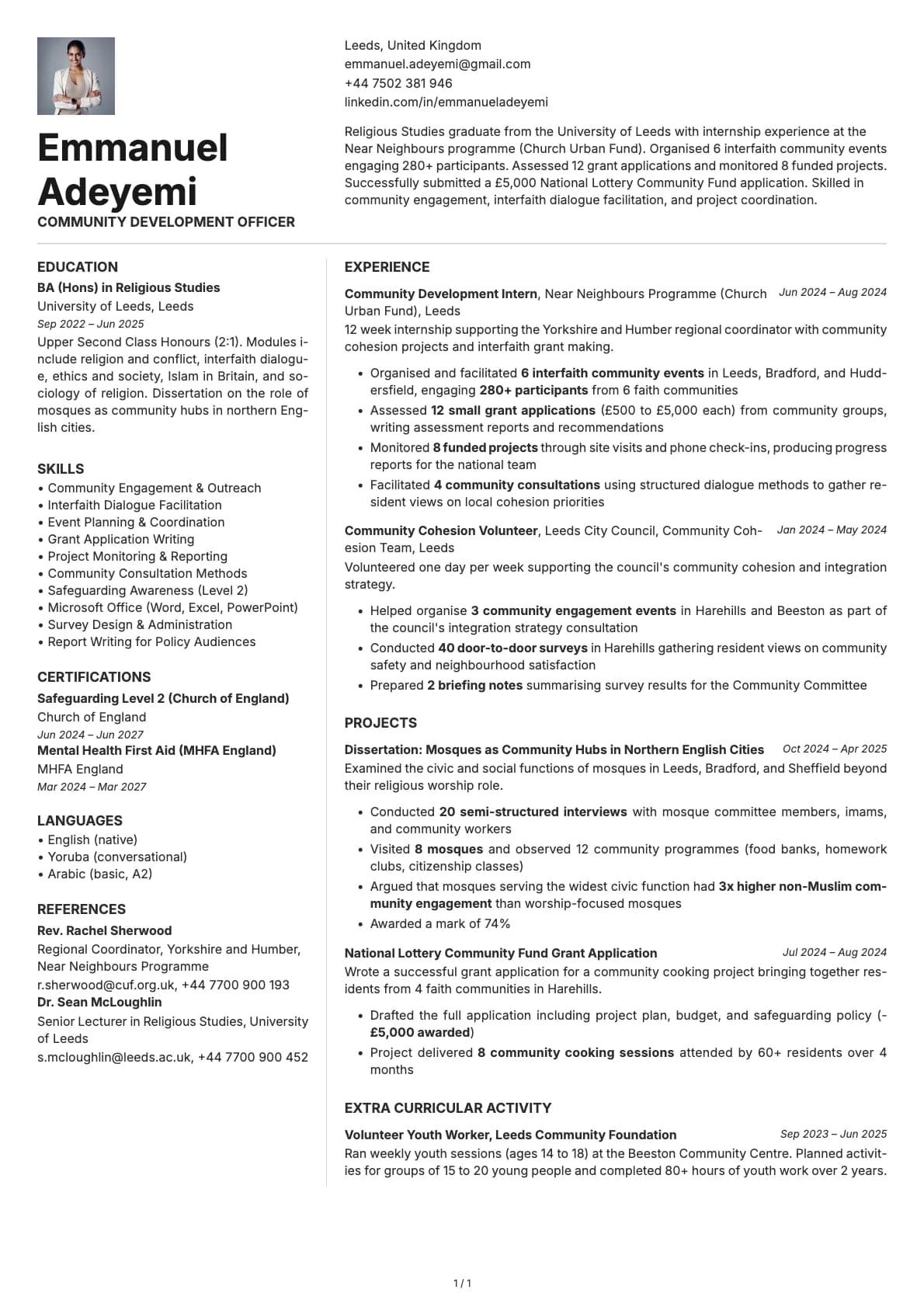
Community Development Officer
A community development officer resume example for religious studies graduates, showing interfaith work, community engagement, and project management skills.
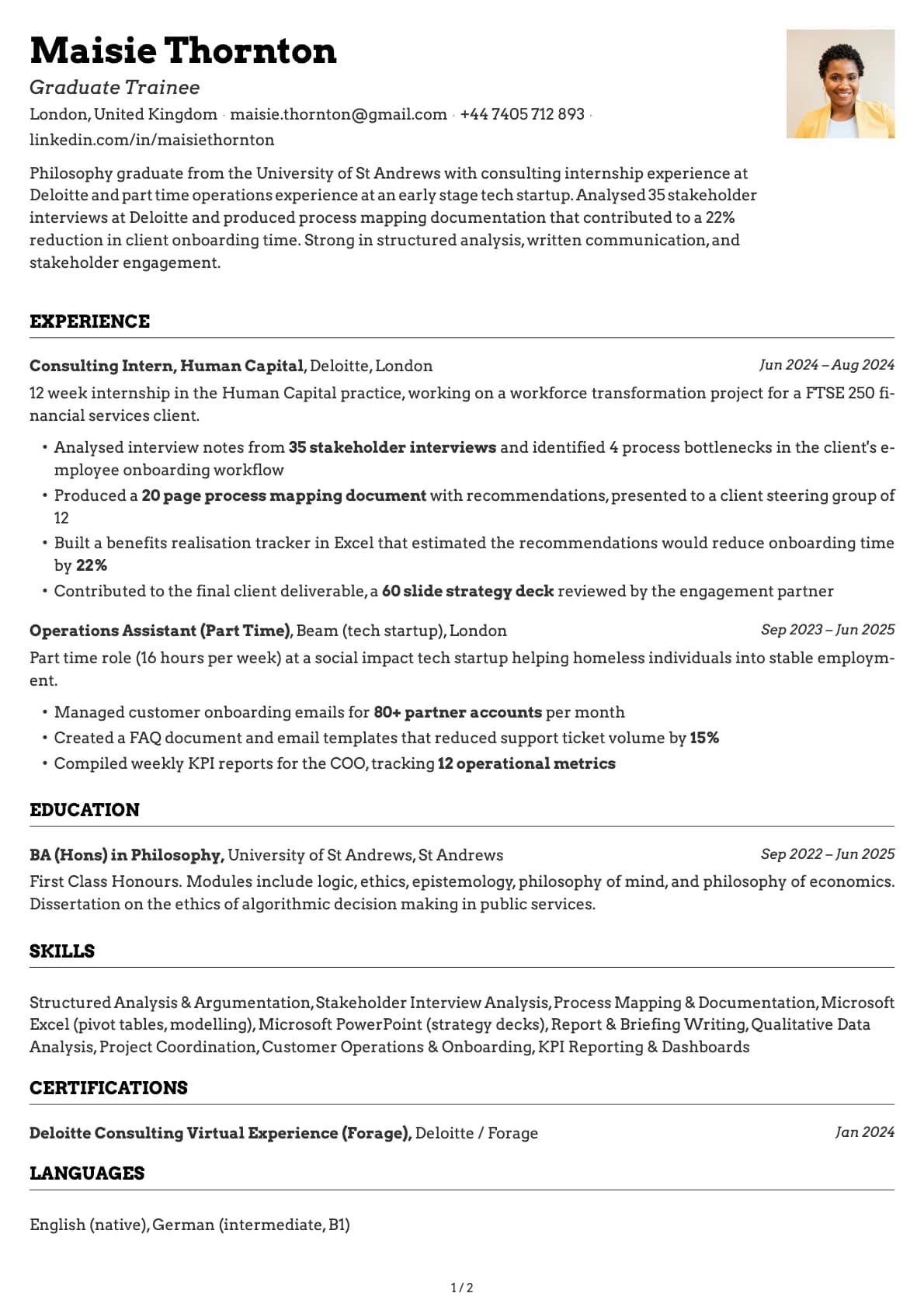
Graduate Trainee
A graduate trainee resume example for philosophy graduates, showing transferable analytical skills, structured thinking, and commercial awareness.
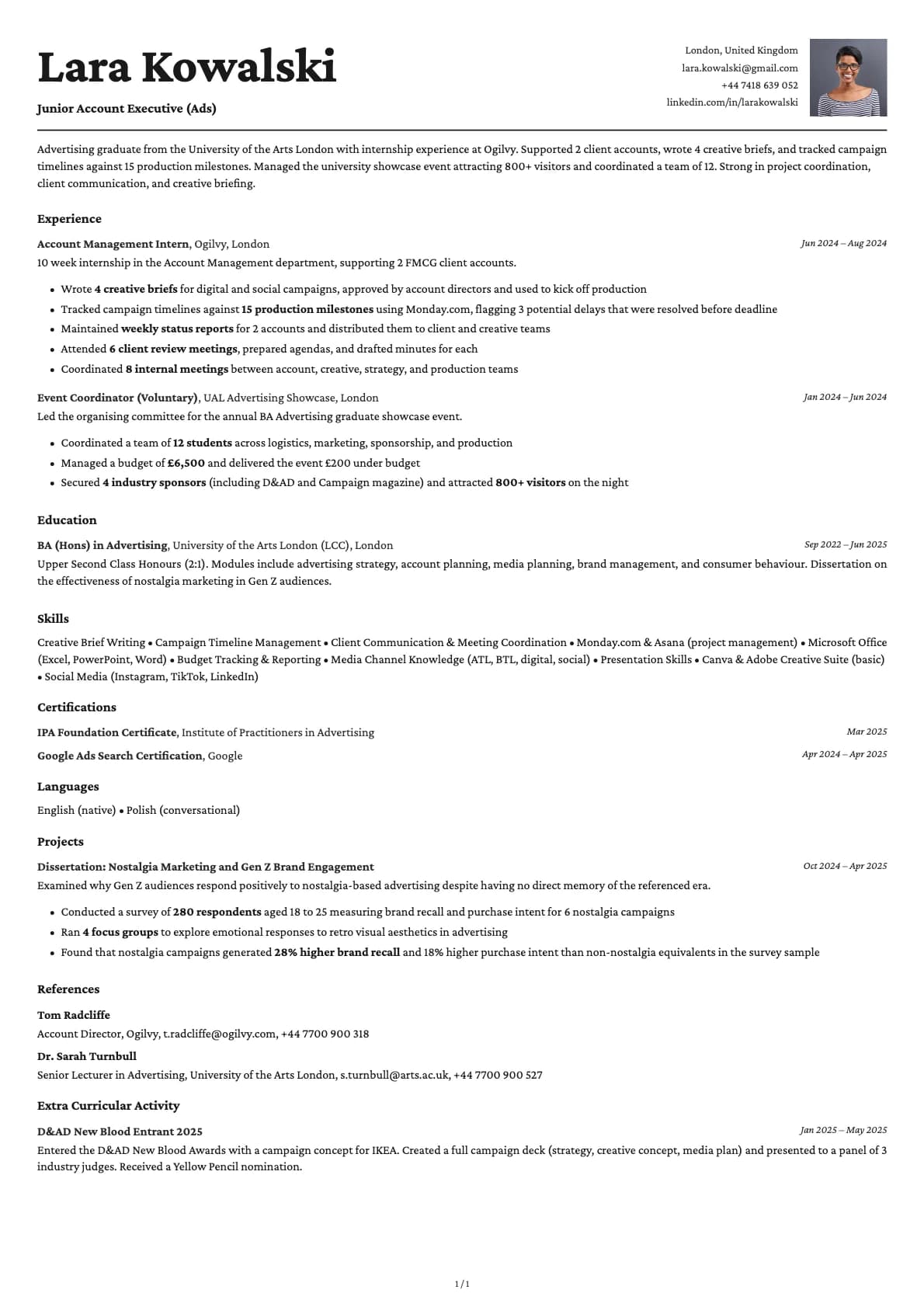
Junior Account Executive (Ads)
A junior account executive resume example for advertising graduates, showing campaign management, client liaison, and creative briefing experience.
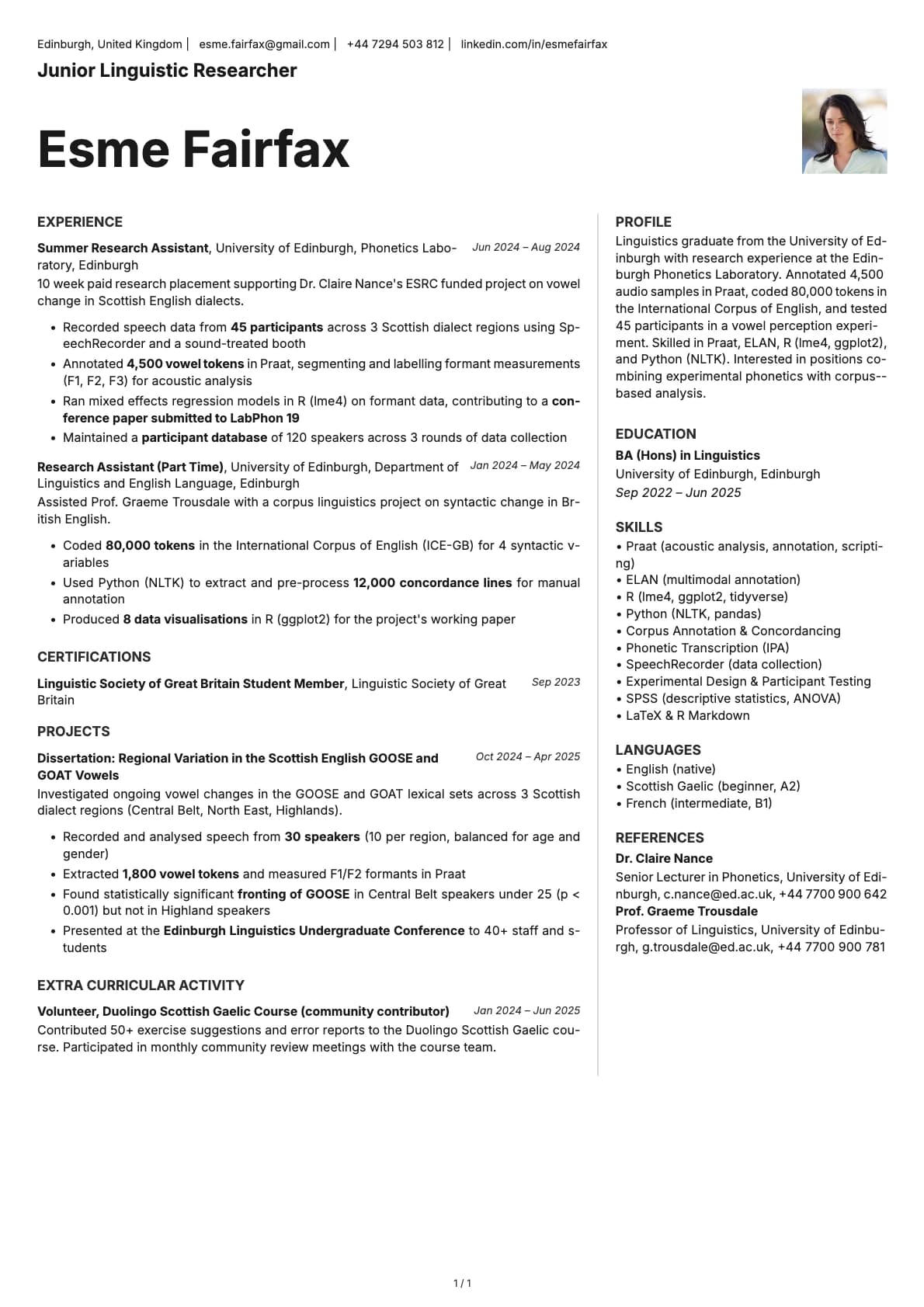
Junior Linguistic Researcher
A junior linguistic researcher resume example for linguistics graduates, showing corpus analysis, phonetic fieldwork, and computational linguistics skills.
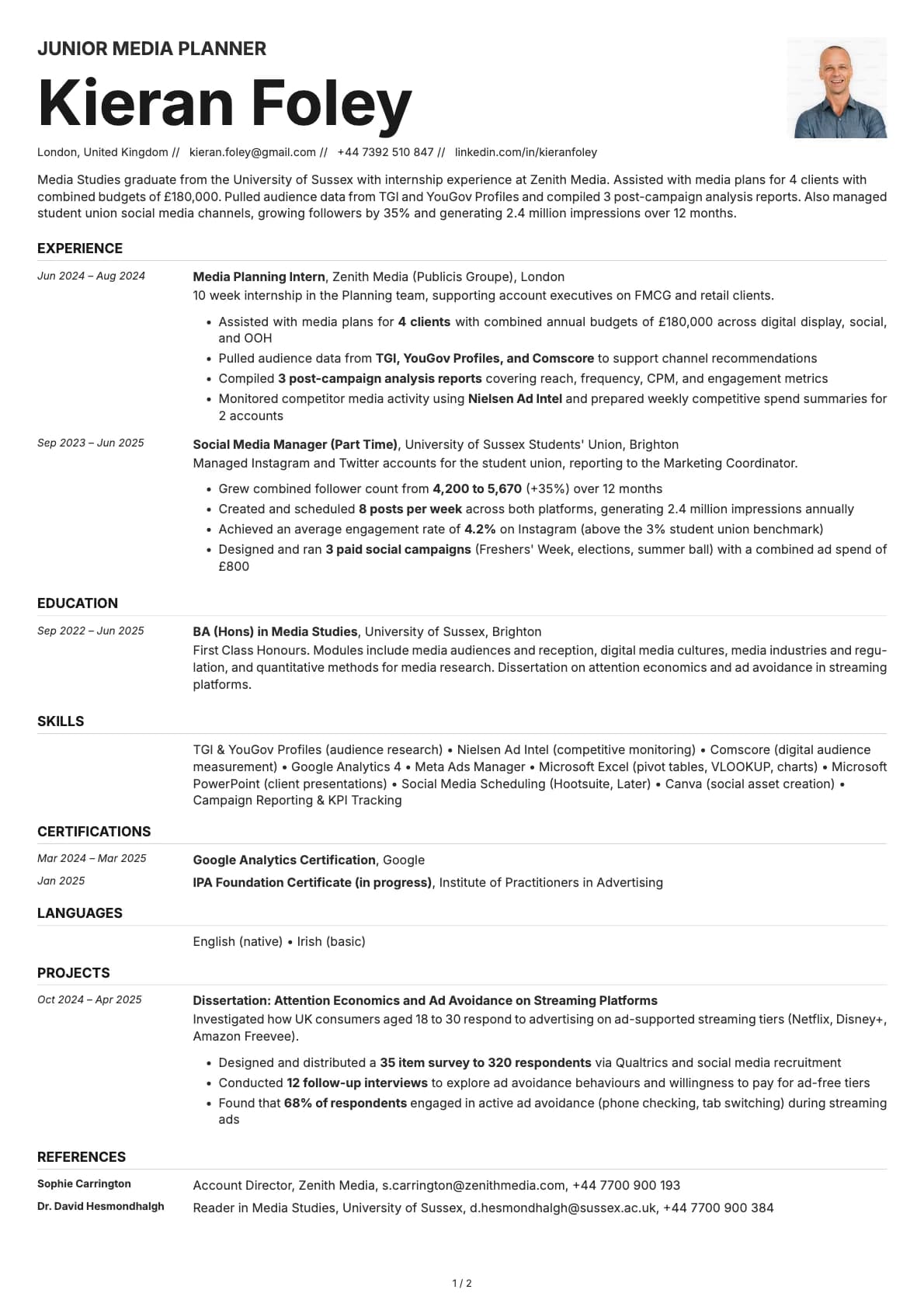
Junior Media Planner
A junior media planner resume example for media studies graduates, showing campaign planning, audience research, and media buying tool experience.
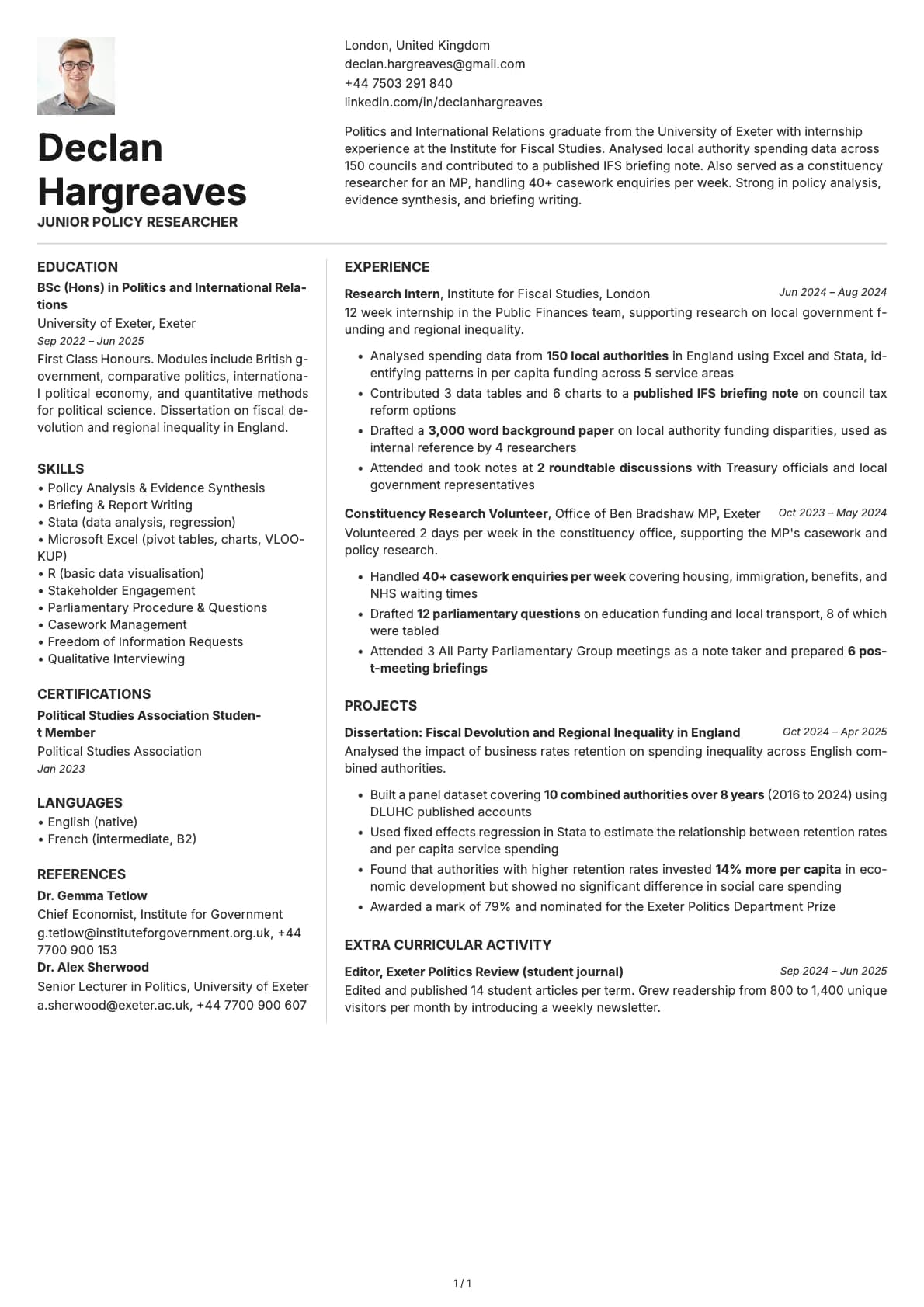
Junior Policy Researcher
A junior policy researcher resume example for politics and international relations graduates, showing policy analysis, briefing writing, and research skills.
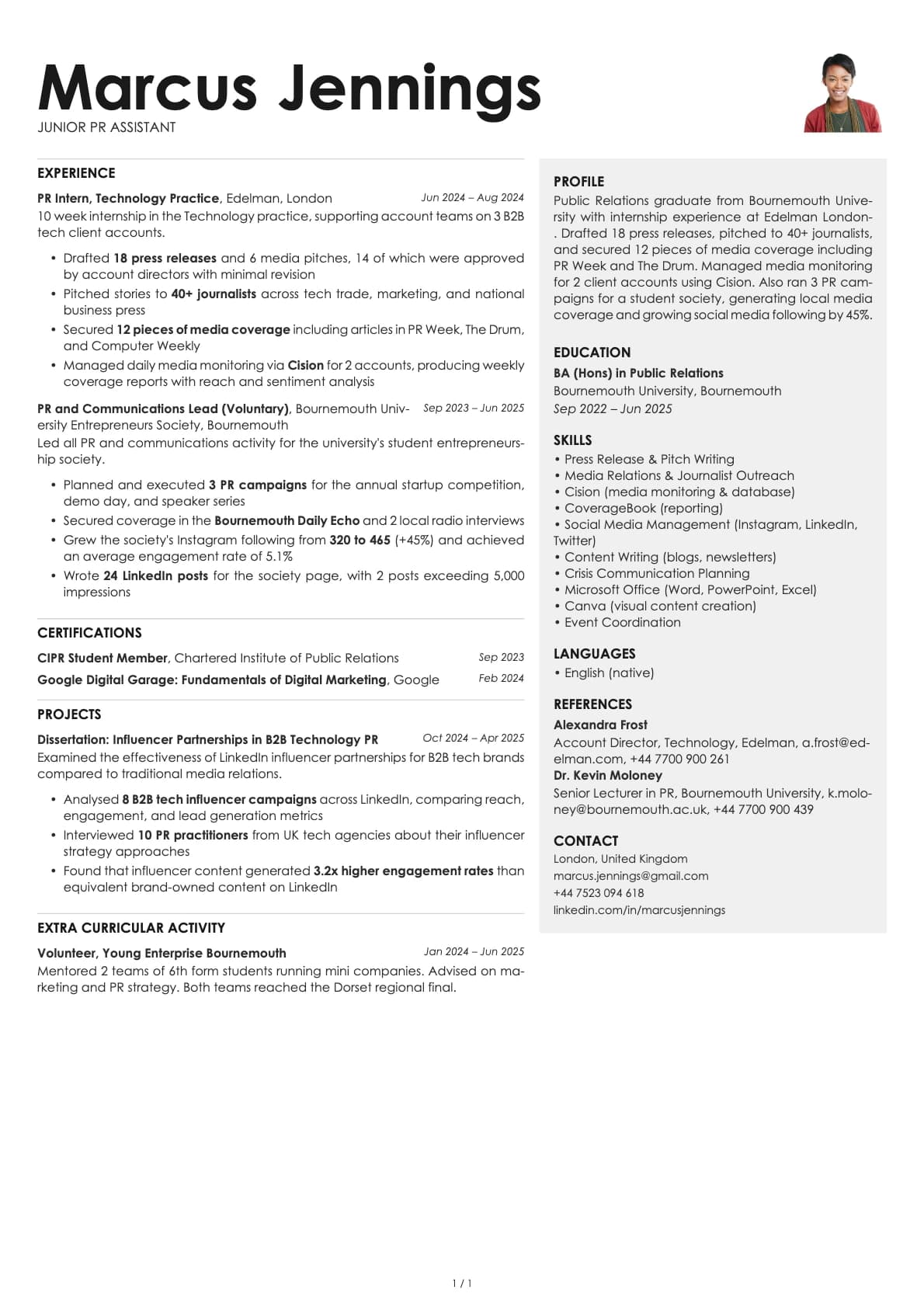
Junior PR Assistant
A junior PR assistant resume example for public relations graduates, showing media coverage results, press release writing, and campaign metrics.
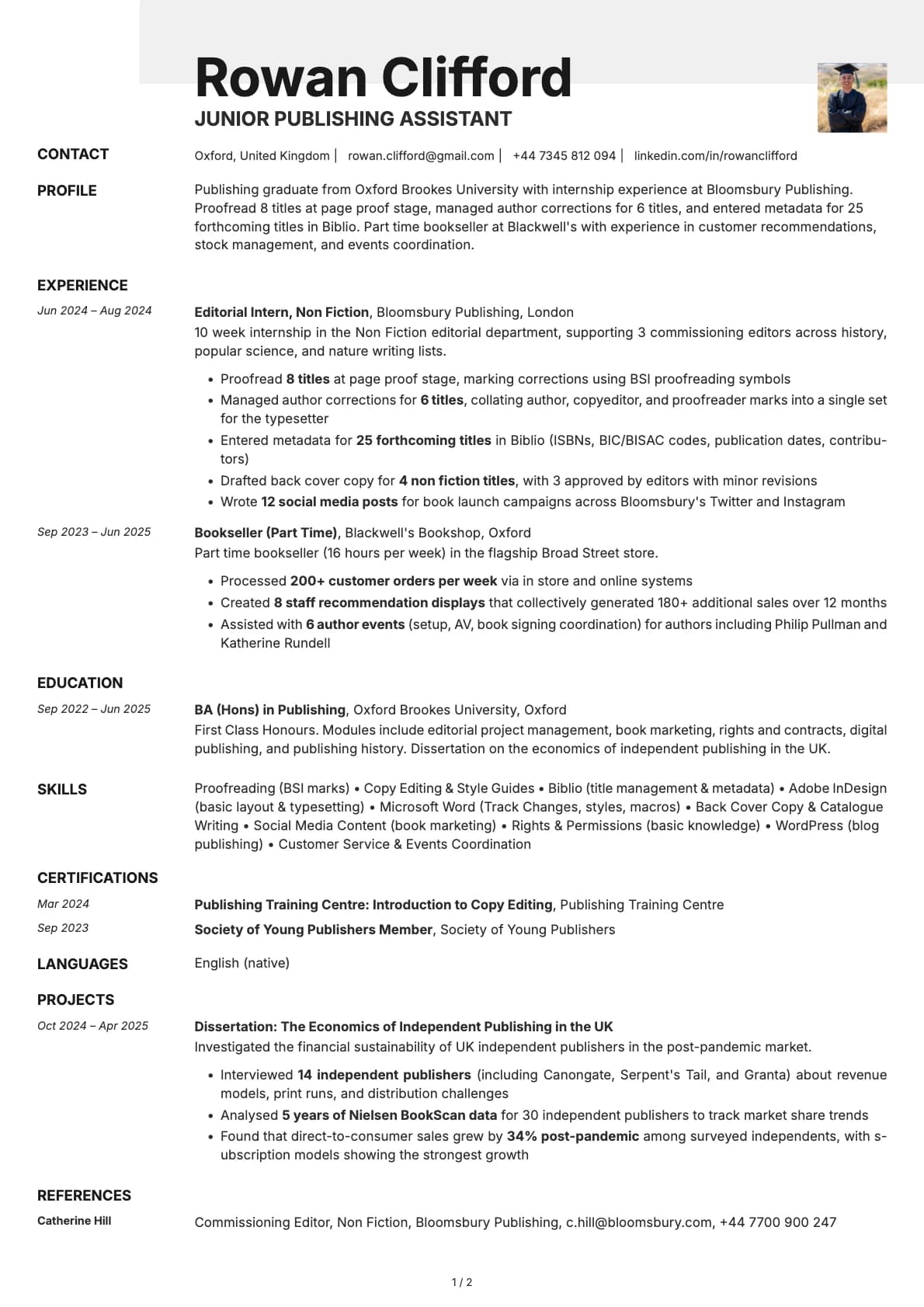
Junior Publishing Assistant
A junior publishing assistant resume example for publishing graduates, showing manuscript handling, production workflows, and rights management basics.
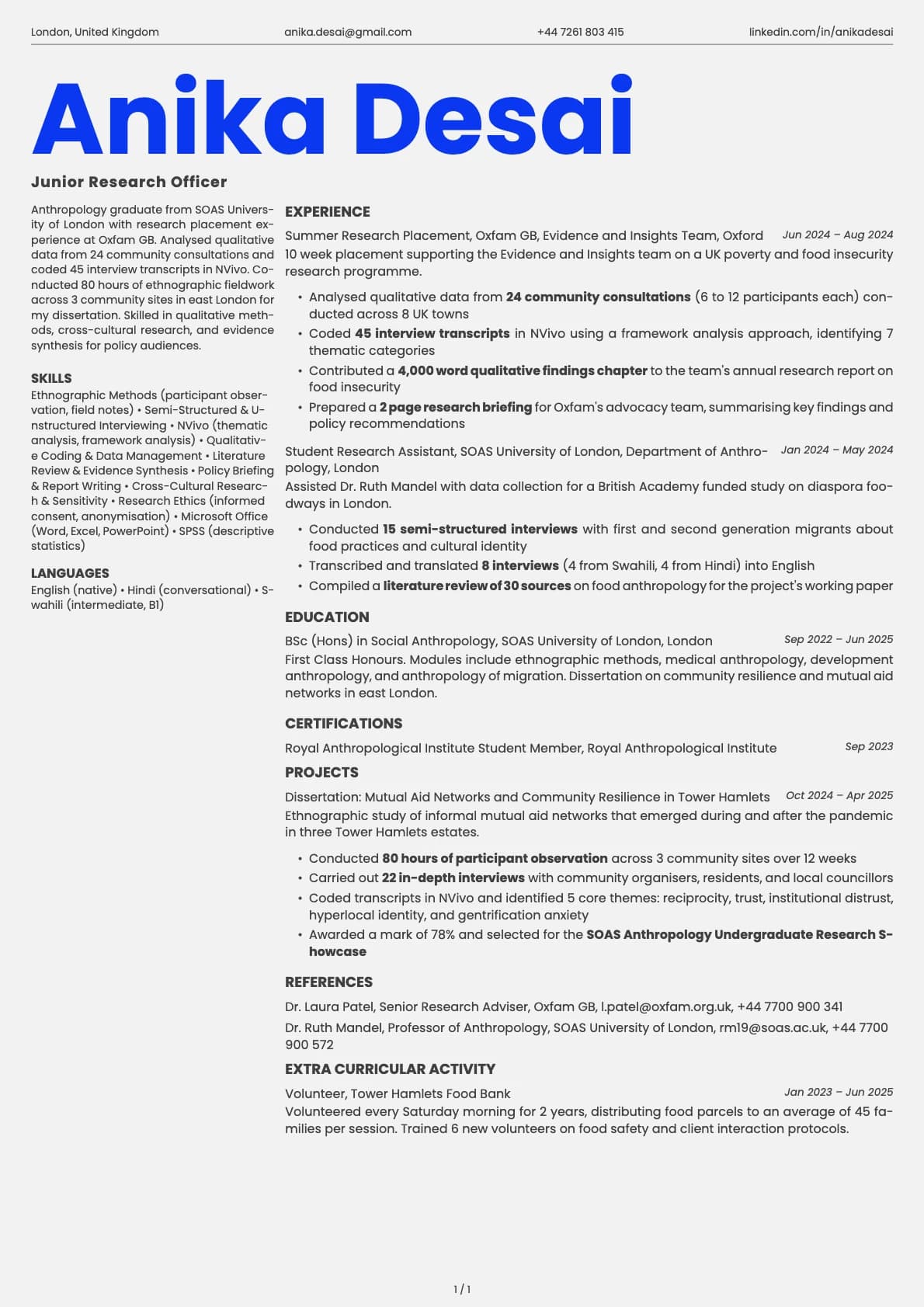
Junior Research Officer
A junior research officer resume example for anthropology graduates, showing ethnographic fieldwork, qualitative analysis, and cross-cultural research skills.
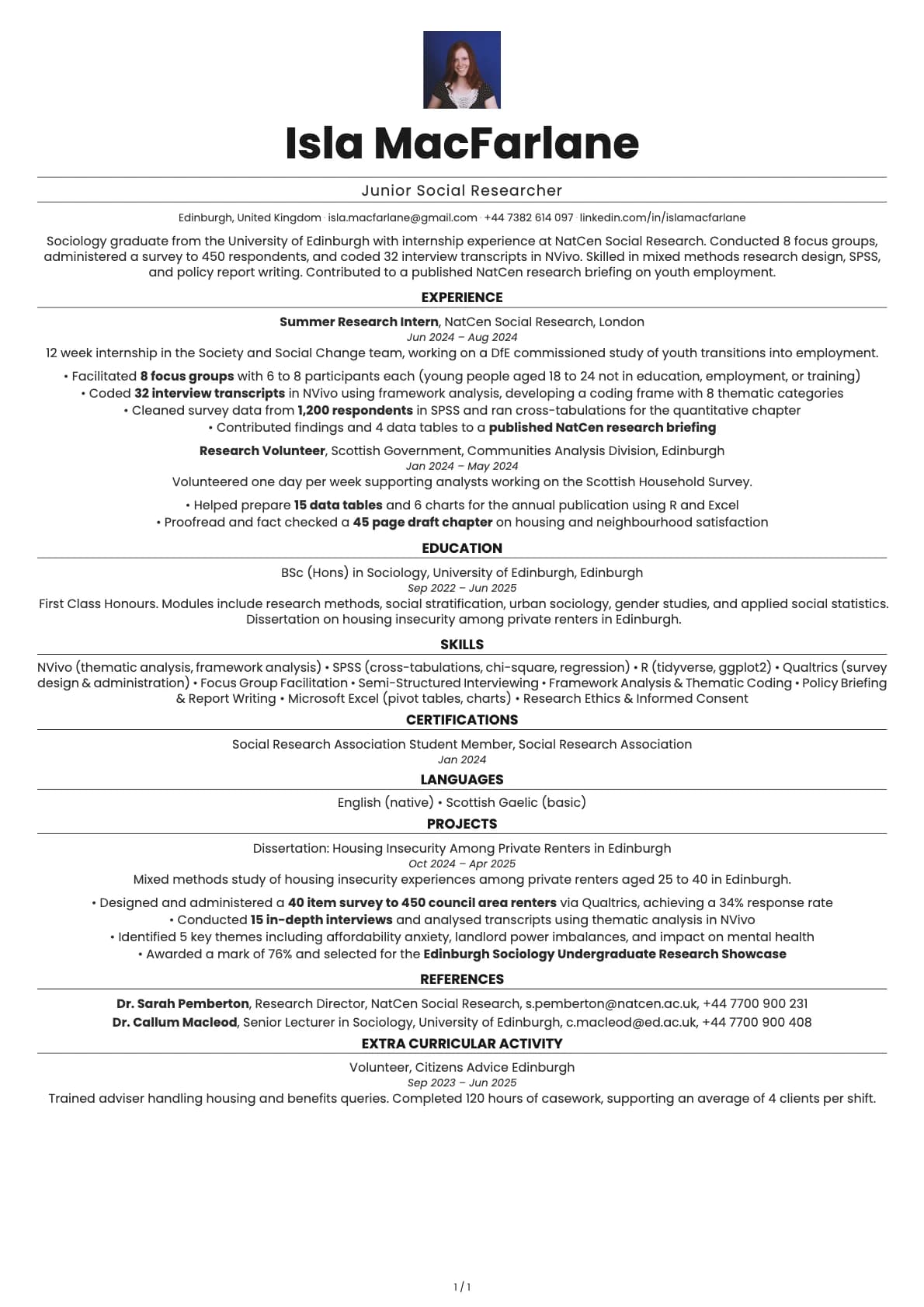
Junior Social Researcher
A junior social researcher resume example for sociology graduates, showing qualitative and quantitative methods, NVivo, and policy research skills.