Junior Research Officer Resume Example
A junior research officer resume example for anthropology graduates, showing ethnographic fieldwork, qualitative analysis, and cross-cultural research skills.

Laddro Team
Free to use. No account needed to start.
Free to use. No account needed to start.
Overview
Anthropology graduates bring a unique research toolkit to the job market: ethnographic methods, cross-cultural understanding, and the ability to make sense of complex social settings through sustained participant observation. The challenge is that many employers do not immediately understand what anthropology involves. Your resume needs to translate fieldwork, ethnography, and cultural analysis into language that research organisations, NGOs, and policy teams can recognise.
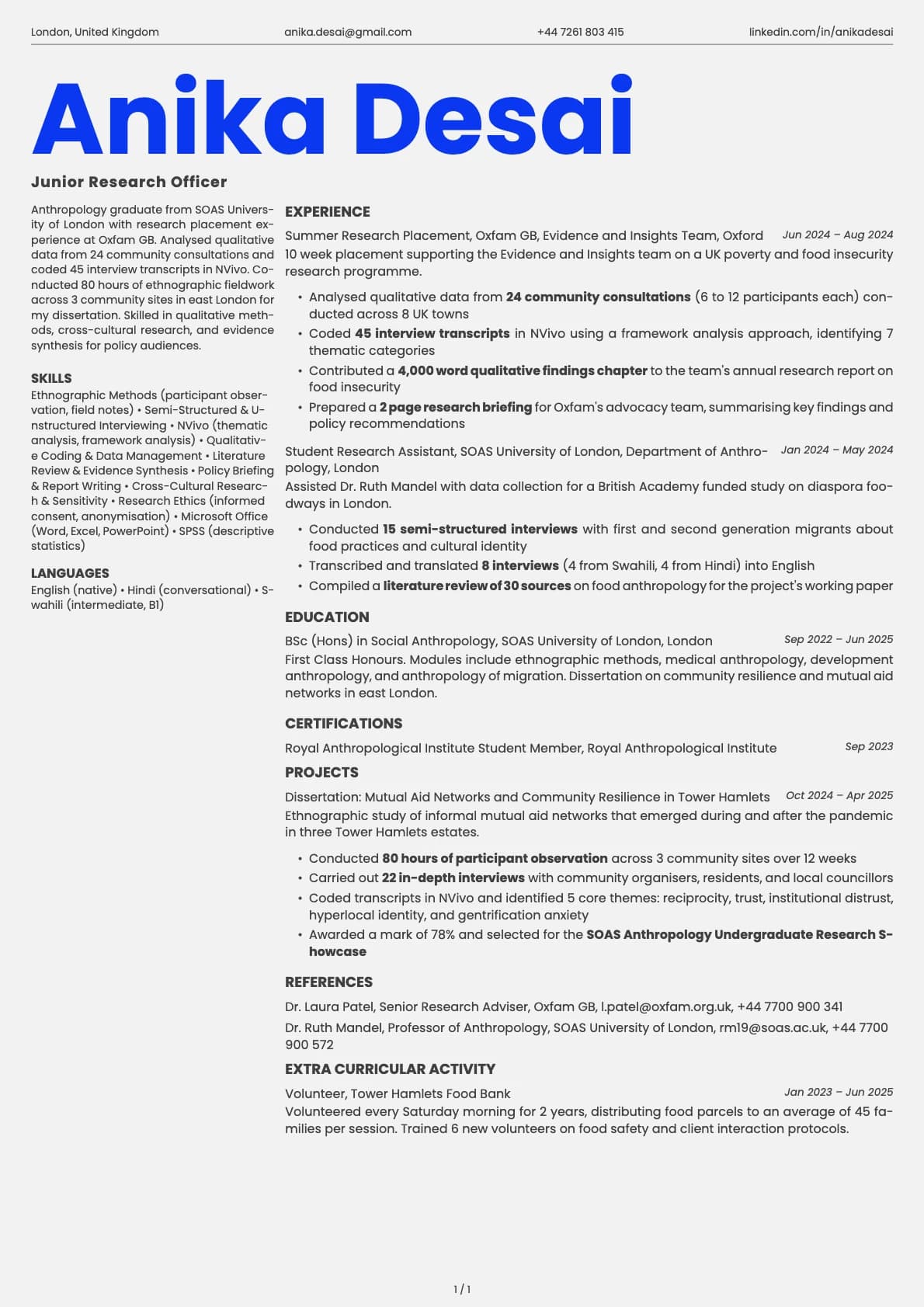
This resume belongs to Anika, an Anthropology BSc graduate from SOAS University of London who completed a summer research placement at Oxfam GB and conducted fieldwork for her dissertation in a community in east London. Her resume works because it describes her ethnographic skills in terms of participant numbers, hours of fieldwork, and tangible research deliverables.
Ethnographic fieldwork as a research method
Ethnography is a rigorous research method, but you need to present it that way. "Conducted 80 hours of participant observation across 12 weeks at 3 community sites" is a research statement. "Spent time in communities" is not. Anika's resume describes her dissertation fieldwork with specific hours, site counts, participant numbers, and analytical methods used.
If you did fieldwork abroad during your degree, include the location, duration, and research question. International fieldwork is a genuine asset for roles at development organisations, NGOs, and international research bodies.
NGO and development sector experience
Anika's Oxfam placement put her in the Evidence and Insights team, where she analysed qualitative data from 24 community consultations, coded interview transcripts in NVivo, and contributed to a research report on food insecurity. These are the exact tasks a junior research officer would perform.
If you interned at an NGO, think tank, or development organisation, focus on the research tasks you completed rather than general administrative work.
Qualitative analysis software
NVivo is the standard, but Atlas.ti and Dedoose are also used. If you have done thematic analysis, grounded theory coding, or framework analysis in any of these tools, list both the software and the analytical approach. Anika lists NVivo with thematic analysis and framework analysis.
Cross-cultural competence
Anthropology graduates often have language skills and cross-cultural experience that other social science graduates lack. Anika lists Swahili at intermediate level from a university module and summer language course. For roles in international development, even basic competence in a non-European language can set you apart.
Build your own version
Open this layout in the builder and swap in your own details. It takes a few minutes.
Free to use. No account needed to start.
Was this resume example helpful?
Rate this example to help us create better content for you.
4.6 average from 91 ratingsRelated resume examples
Junior Translator
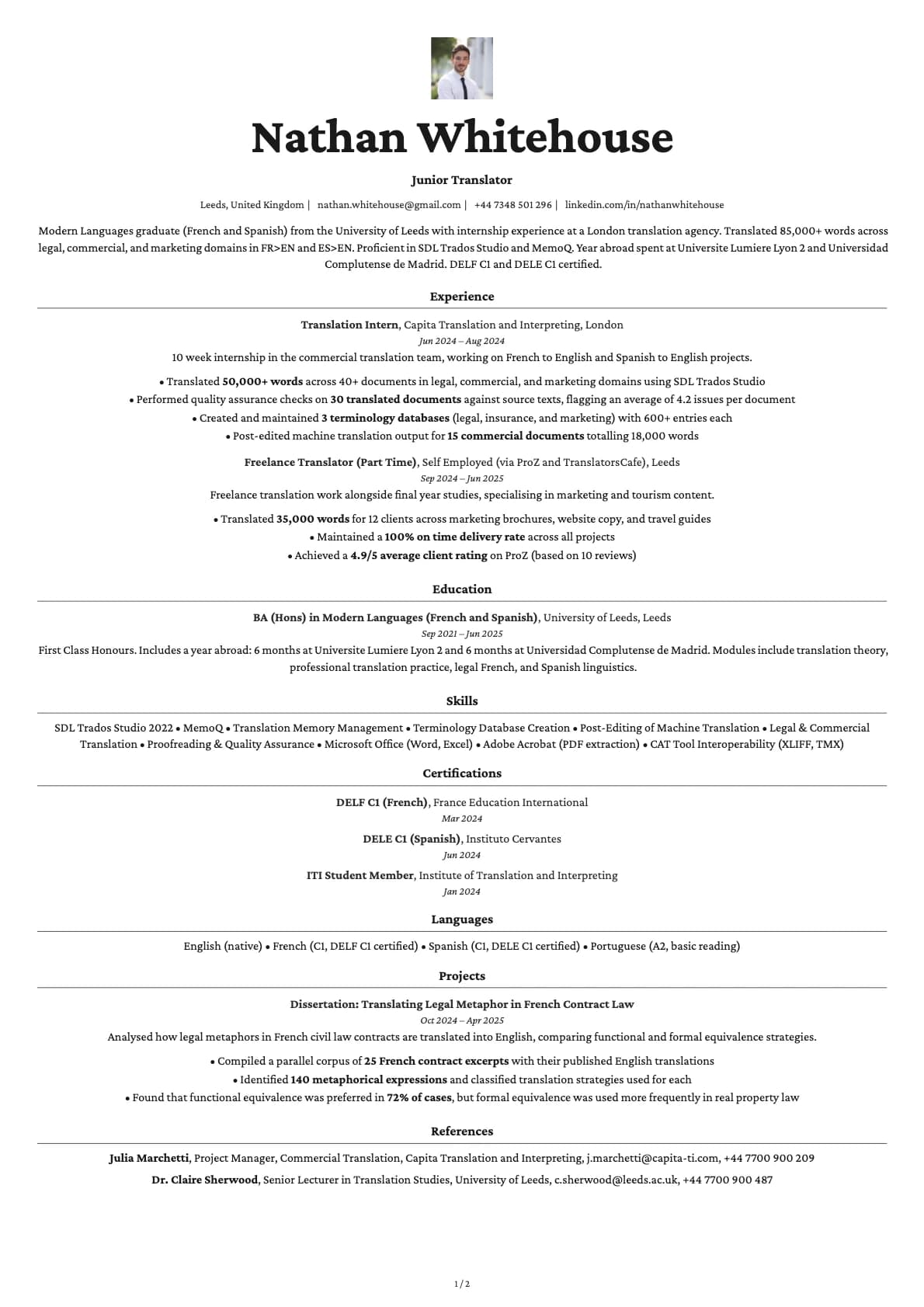
A junior translator resume example for languages graduates, showing translation volume, CAT tools, and subject matter specialisation.
Museum / Heritage Assistant
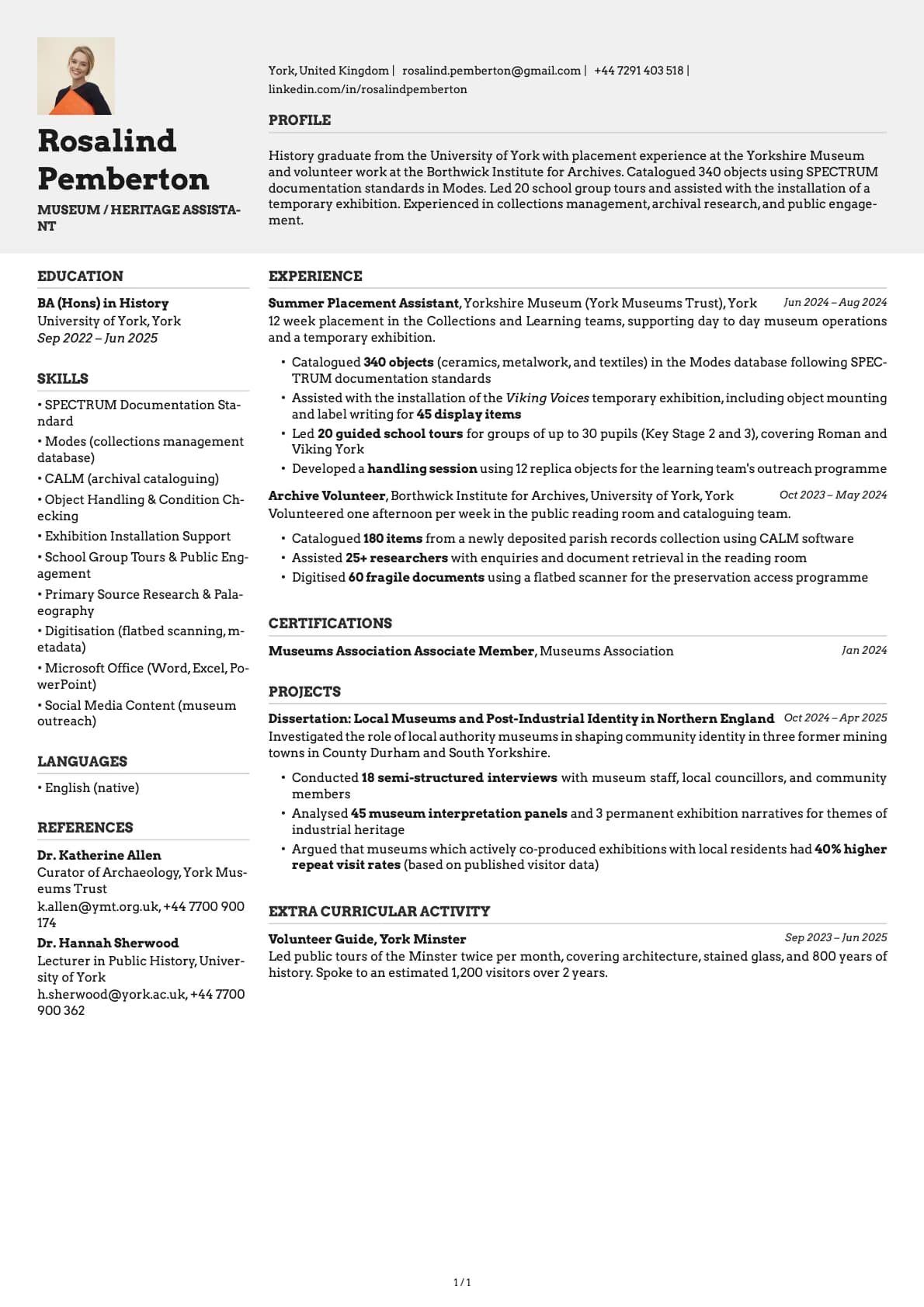
A museum and heritage assistant resume example for history graduates, showing collections management, visitor engagement, and archival research skills.
Research Assistant
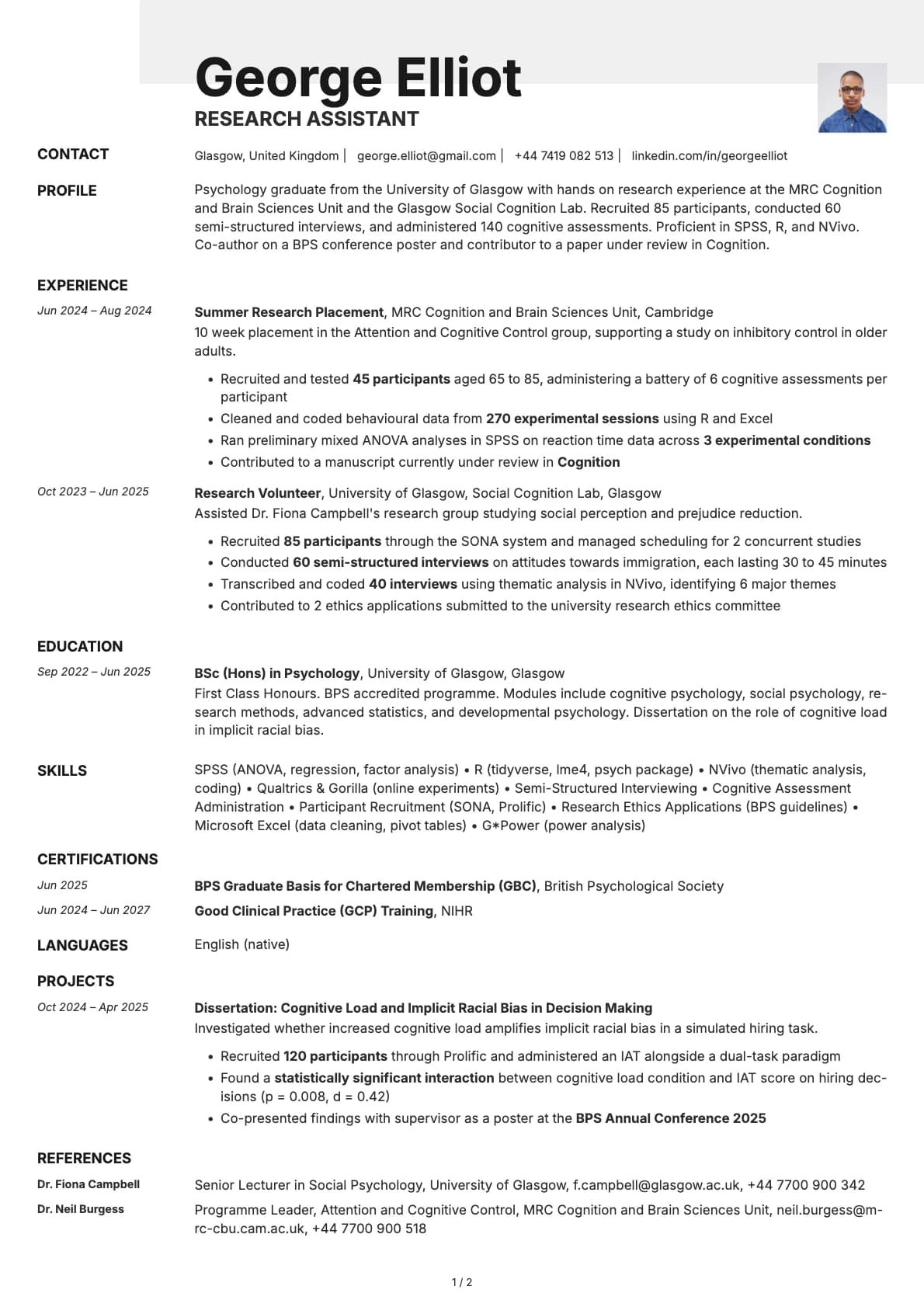
A research assistant resume example for psychology graduates, showing how to present participant recruitment, data collection, and SPSS analysis skills.
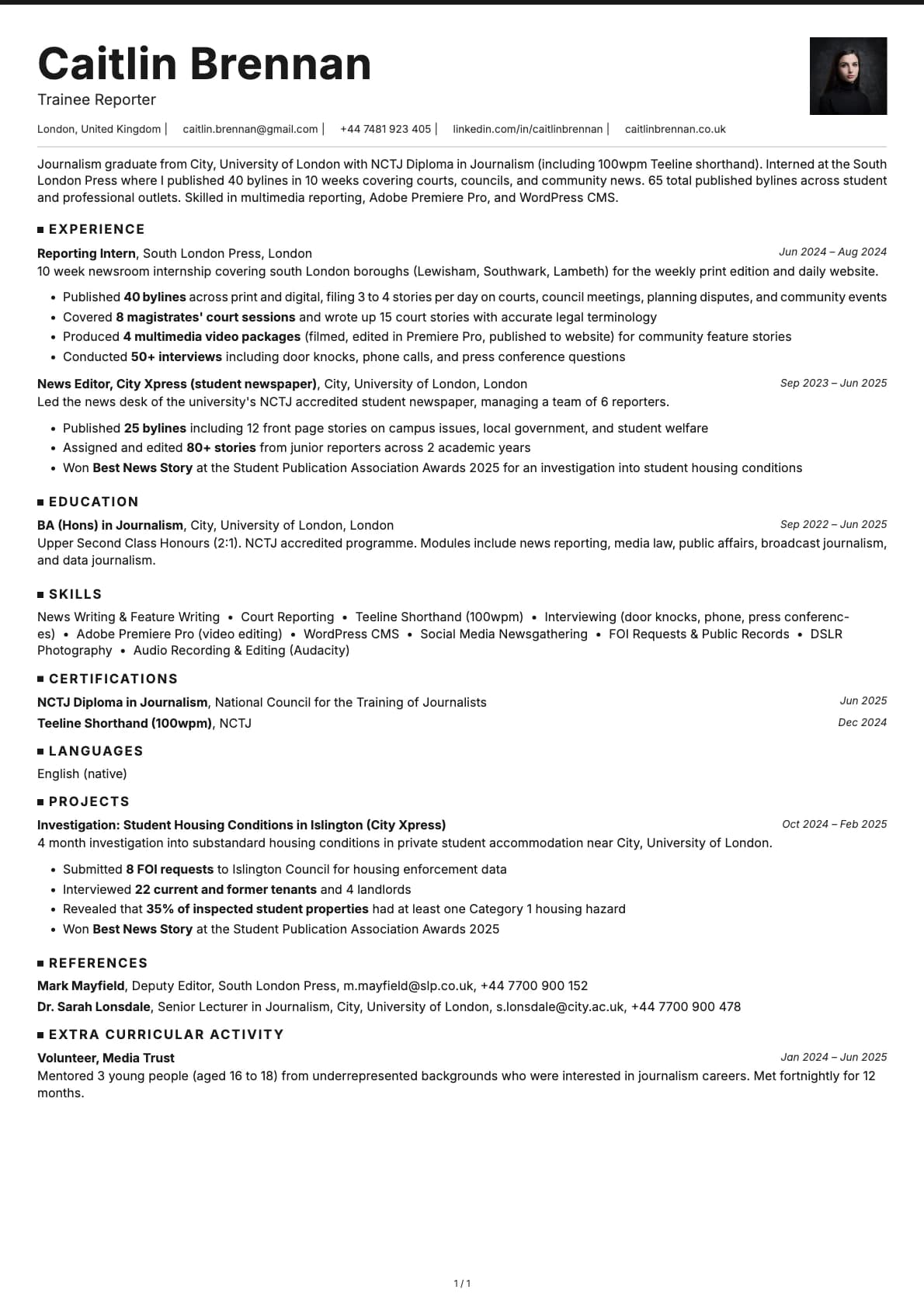
Trainee Reporter
A trainee reporter resume example for journalism graduates, showing published bylines, newsroom experience, and multimedia storytelling skills.
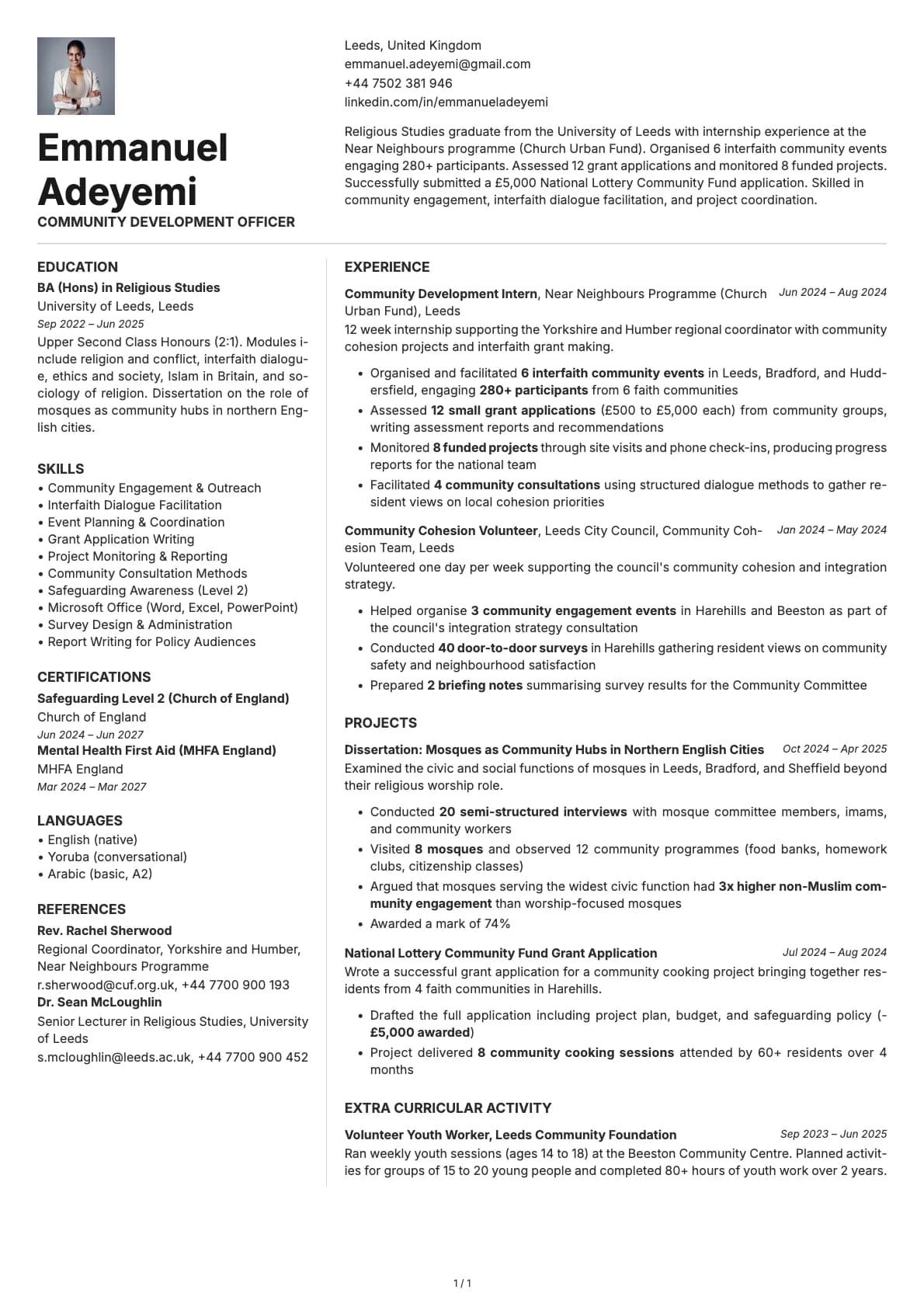
Community Development Officer
A community development officer resume example for religious studies graduates, showing interfaith work, community engagement, and project management skills.
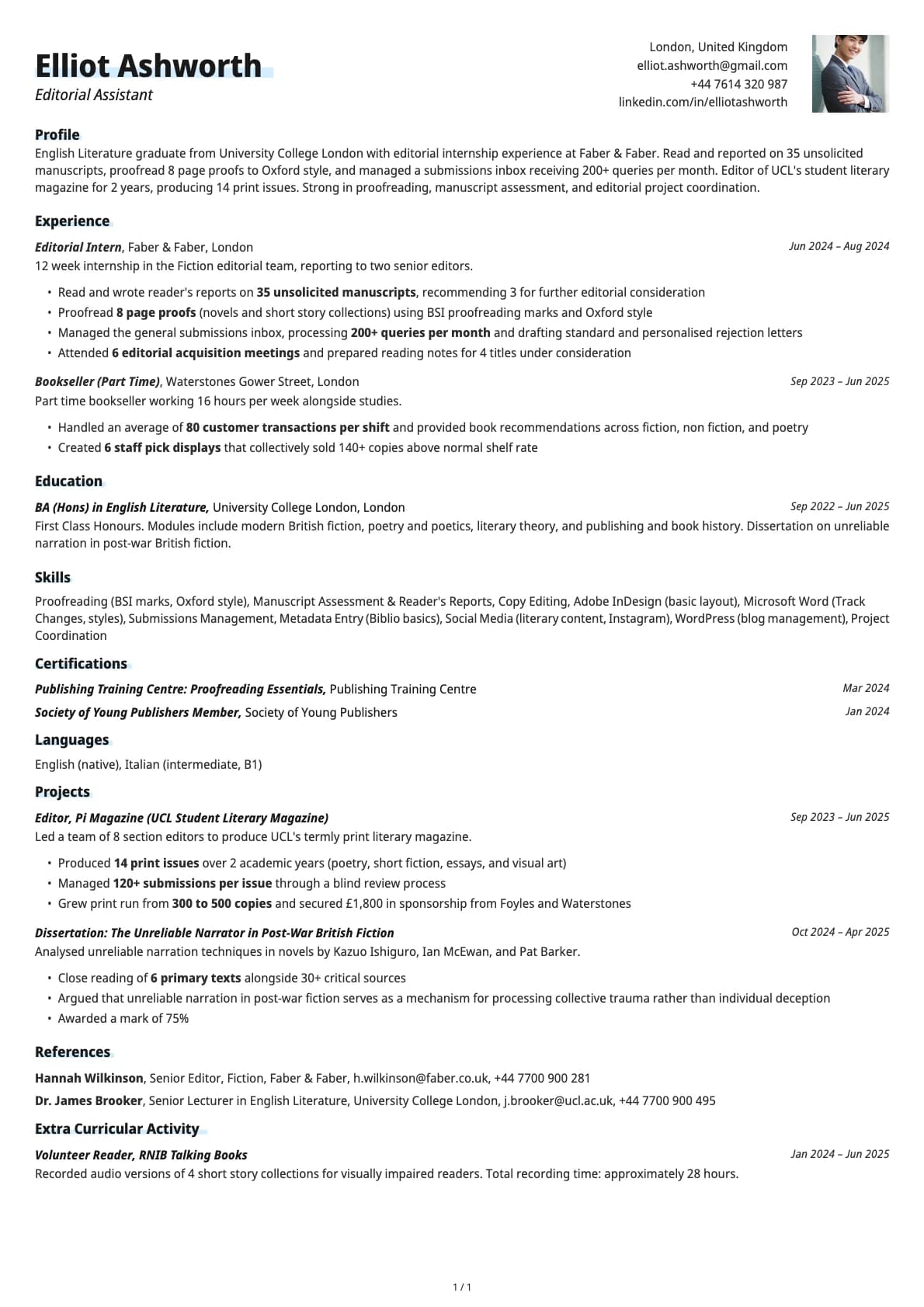
Editorial Assistant
An editorial assistant resume example for English literature graduates, showing proofreading, manuscript handling, and publishing industry experience.
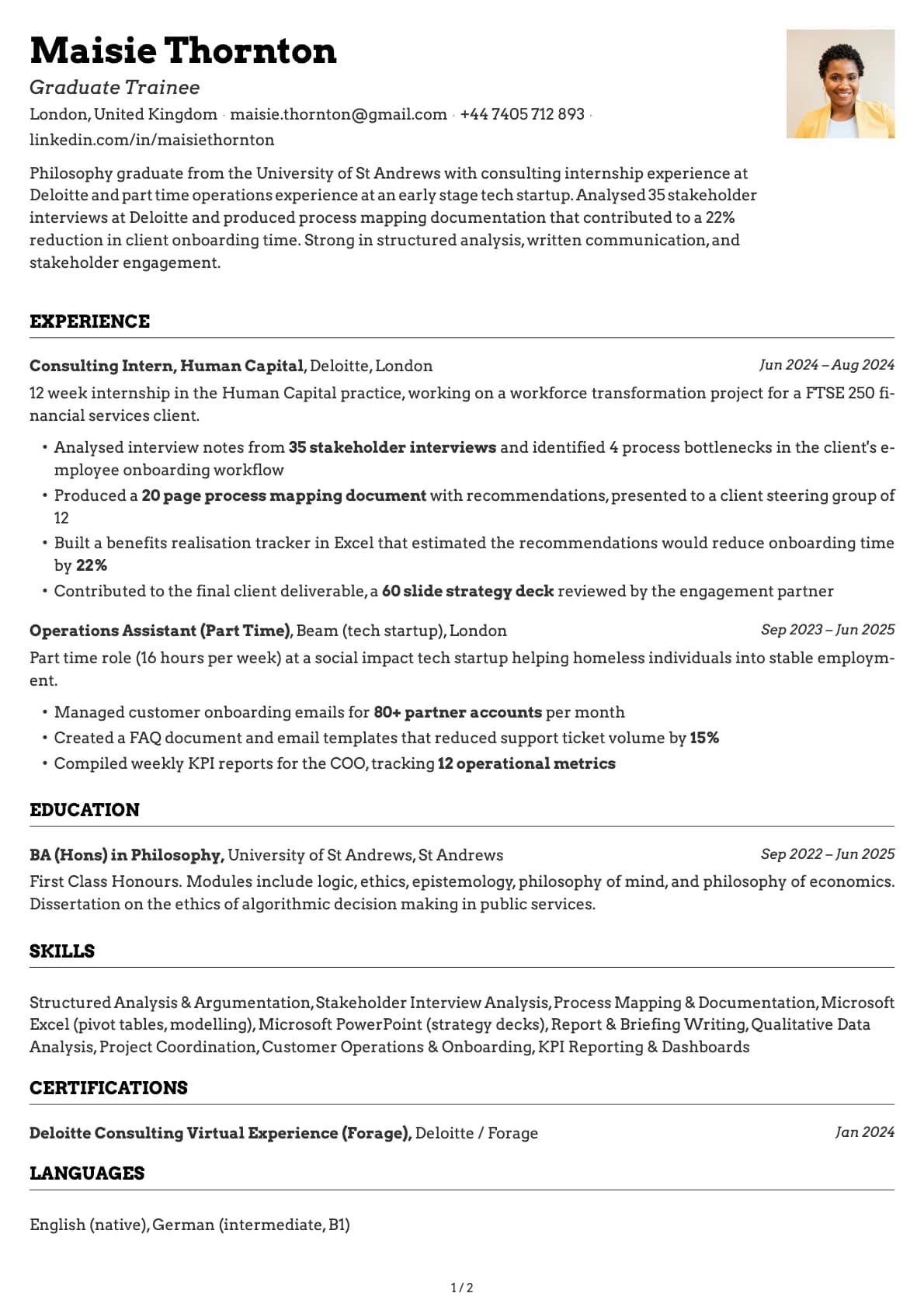
Graduate Trainee
A graduate trainee resume example for philosophy graduates, showing transferable analytical skills, structured thinking, and commercial awareness.
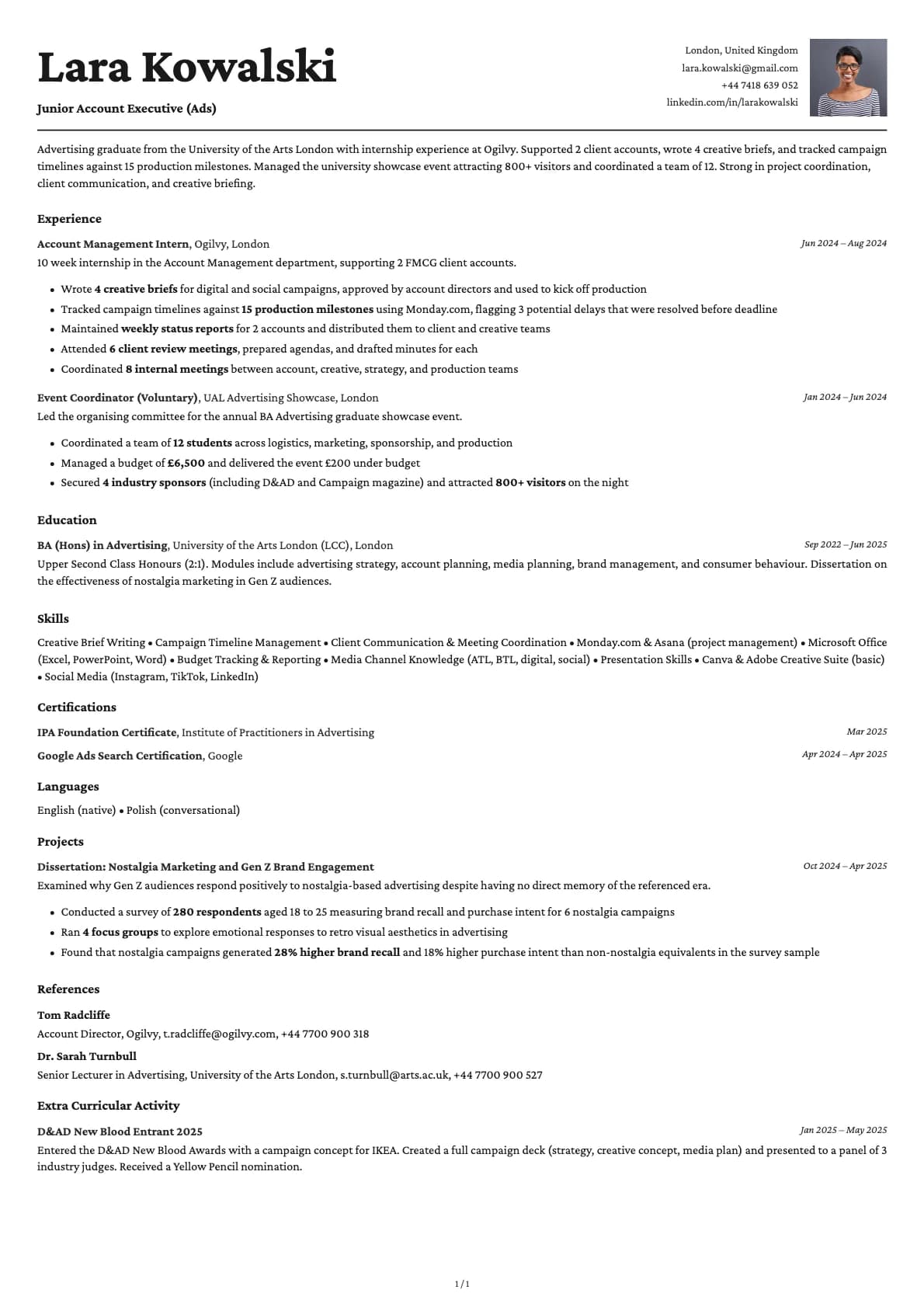
Junior Account Executive (Ads)
A junior account executive resume example for advertising graduates, showing campaign management, client liaison, and creative briefing experience.
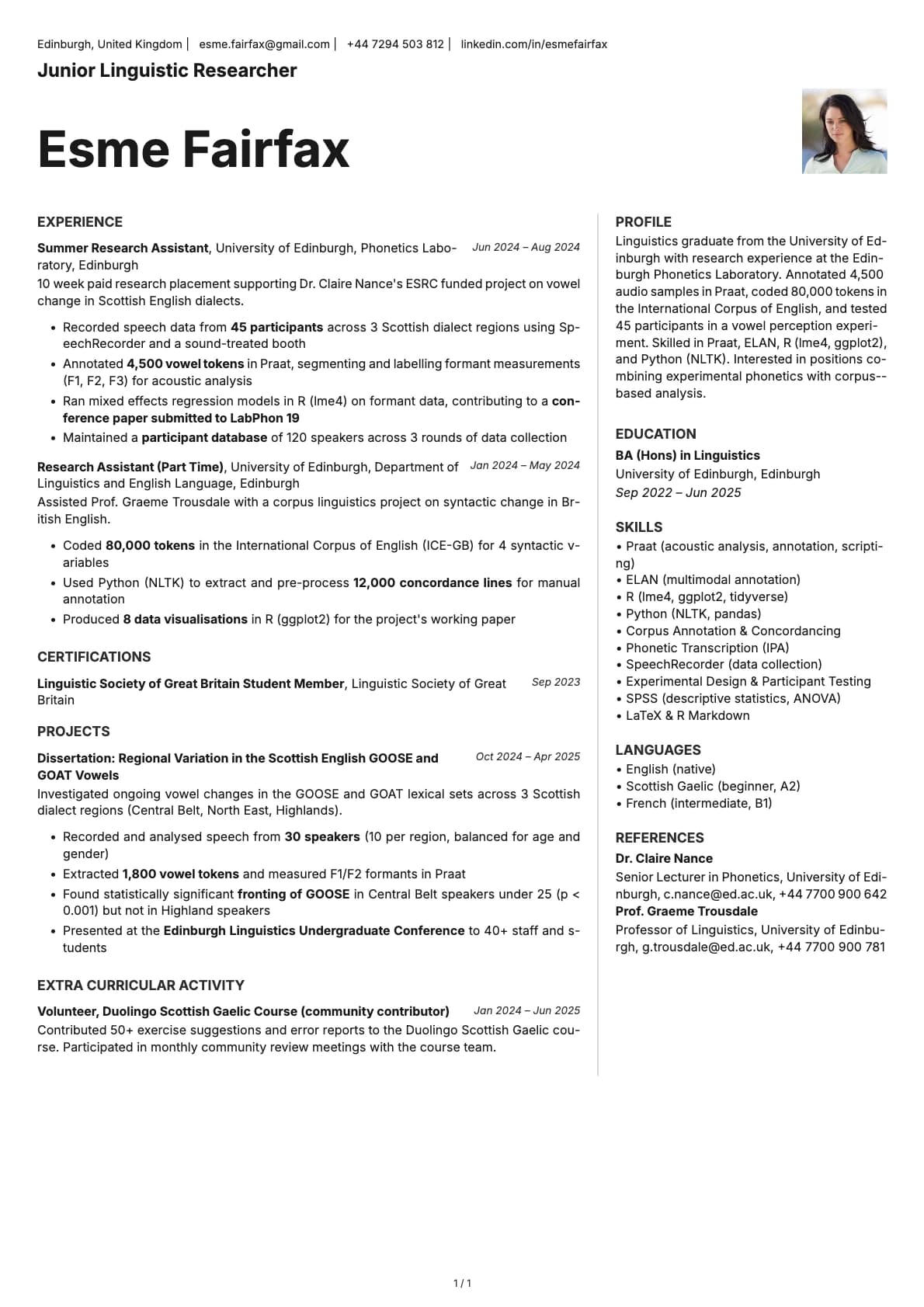
Junior Linguistic Researcher
A junior linguistic researcher resume example for linguistics graduates, showing corpus analysis, phonetic fieldwork, and computational linguistics skills.
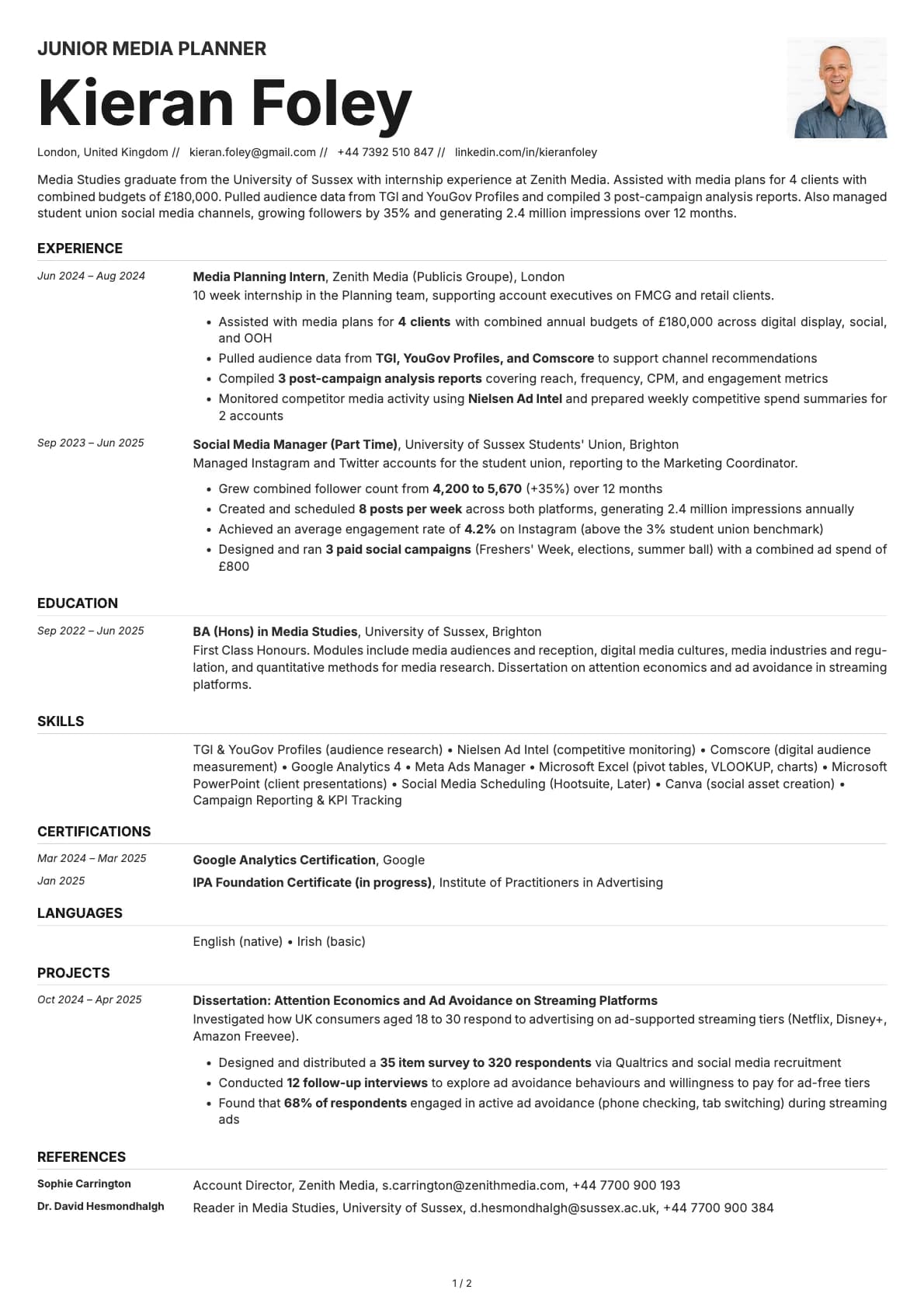
Junior Media Planner
A junior media planner resume example for media studies graduates, showing campaign planning, audience research, and media buying tool experience.
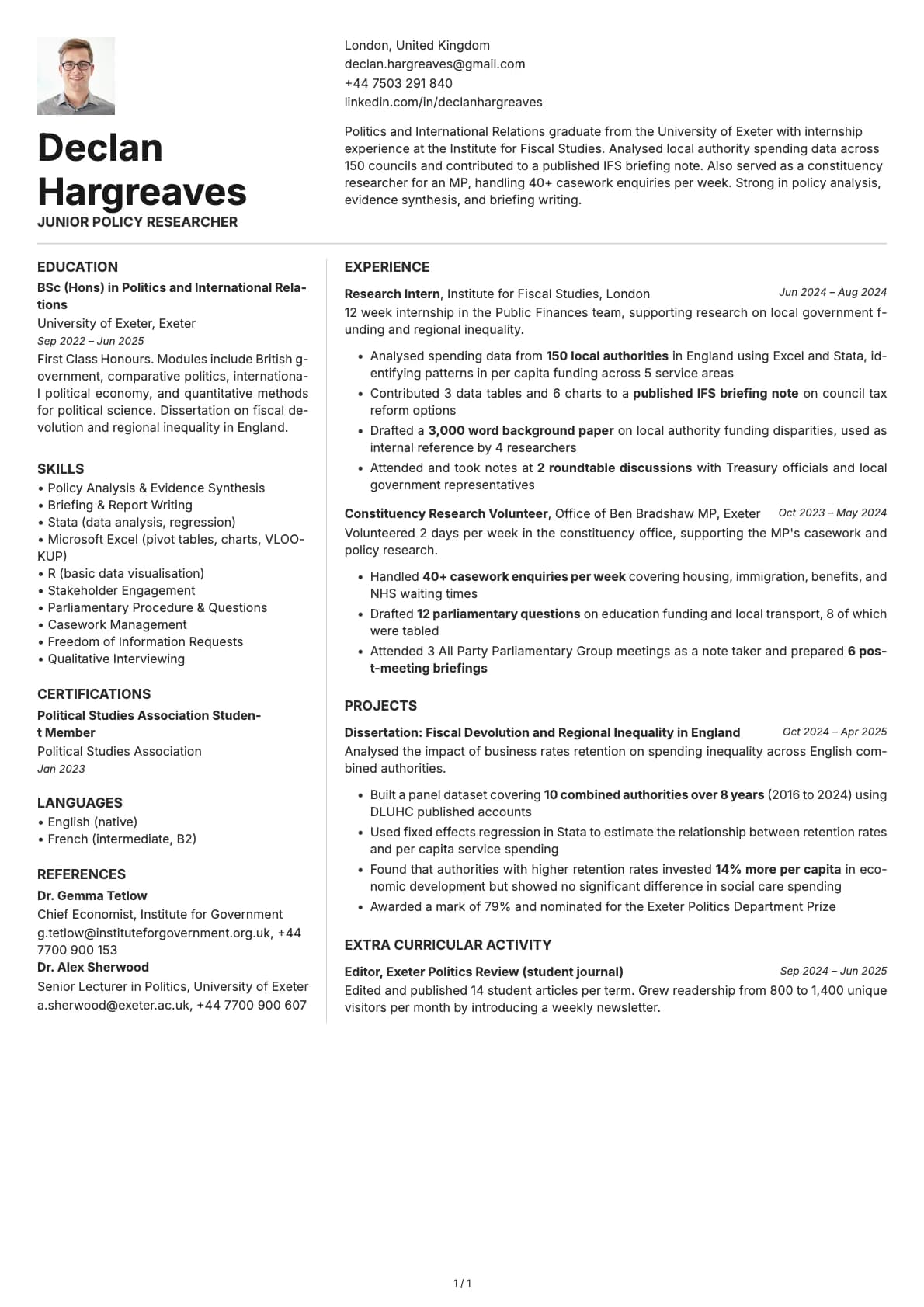
Junior Policy Researcher
A junior policy researcher resume example for politics and international relations graduates, showing policy analysis, briefing writing, and research skills.
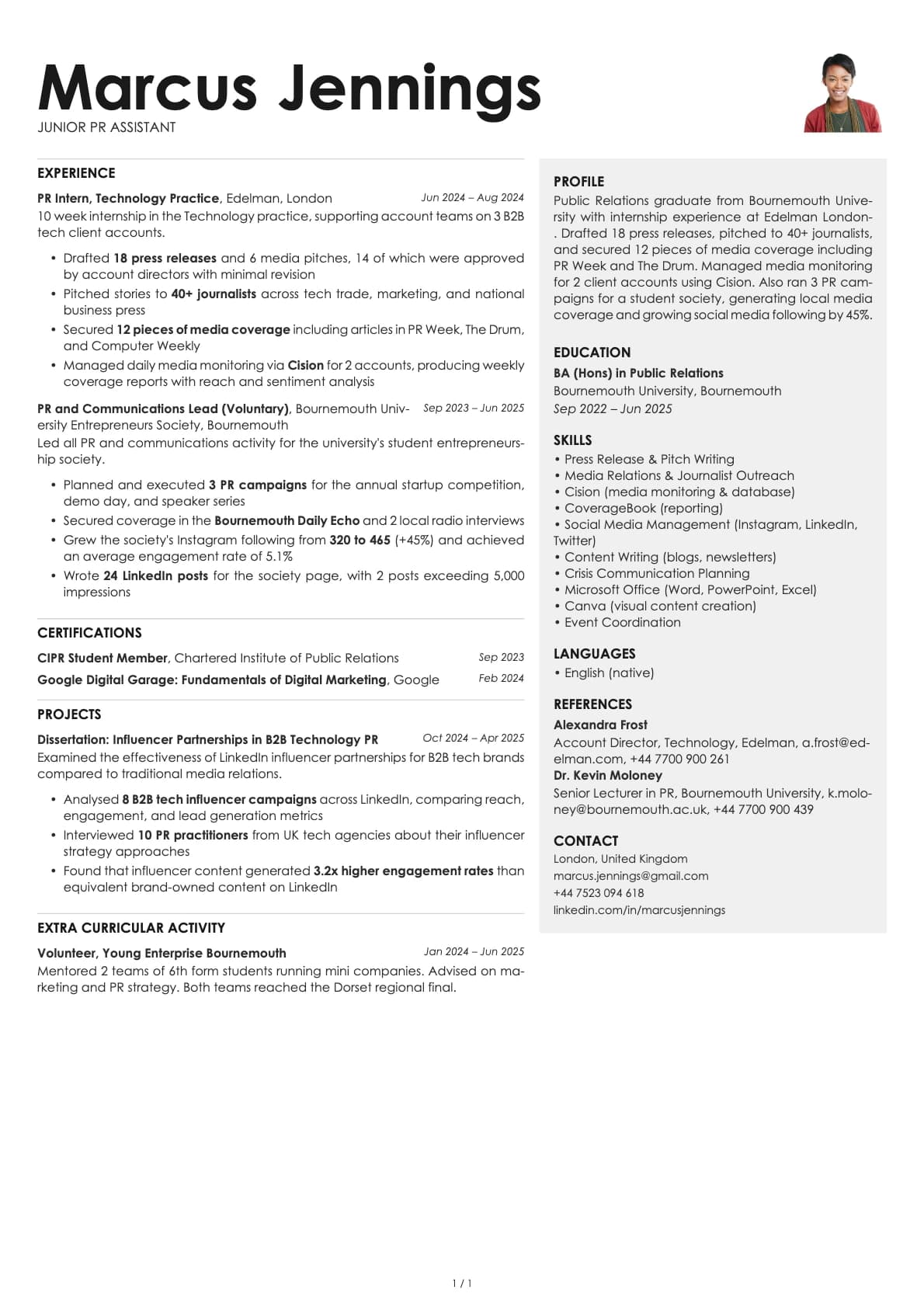
Junior PR Assistant
A junior PR assistant resume example for public relations graduates, showing media coverage results, press release writing, and campaign metrics.