Research Assistant Resume Example
A research assistant resume example for psychology graduates, showing how to present participant recruitment, data collection, and SPSS analysis skills.

Laddro Team
Free to use. No account needed to start.
Free to use. No account needed to start.
Overview
Psychology is the most popular undergraduate degree in the UK. Every year, thousands of graduates compete for a limited number of research assistant positions in universities, NHS trusts, and private research organisations. The resumes that get shortlisted are not the ones that list "research skills" as a competence. They are the ones that show exactly what research the applicant has done: how many participants they recruited, what software they used for analysis, and what publications resulted from their work.
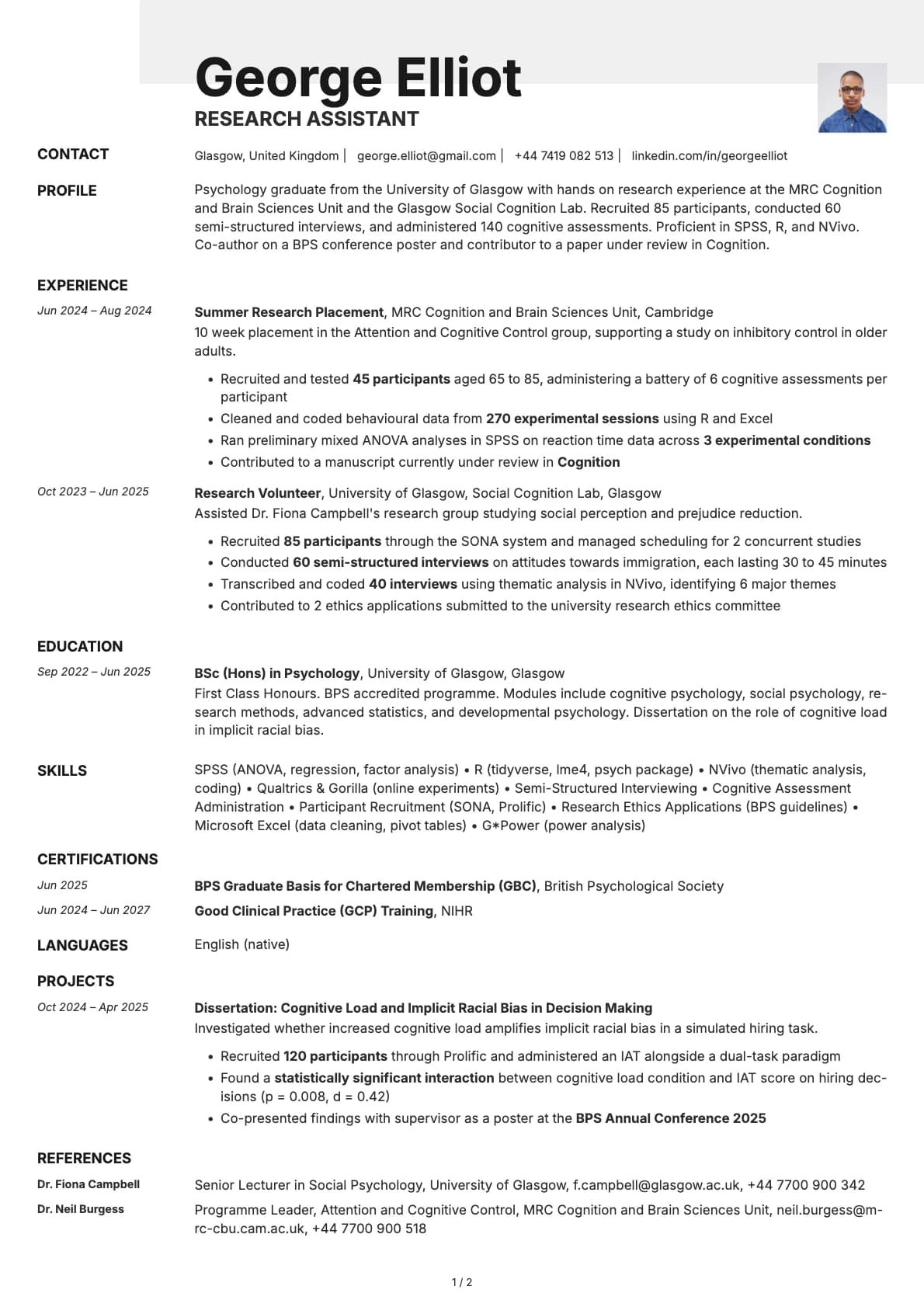
This resume belongs to George, a Psychology BSc graduate from the University of Glasgow who worked as a research volunteer in the university's Social Cognition Lab and completed a summer placement at the MRC Cognition and Brain Sciences Unit in Cambridge. His resume works because it is packed with the specific details that principal investigators actually care about.
Participant recruitment and data collection
For psychology research assistant roles, your ability to recruit participants and collect data is often more important than your ability to analyse it. George's resume mentions recruiting 85 participants for a study, conducting 60 semi-structured interviews, and administering 140 cognitive assessments. These numbers tell the PI that he can handle the practical demands of running a study.
If you have experience with online data collection (Qualtrics, Gorilla, Prolific), mention those platforms too. Many research groups now run mixed online and in person studies.
Ethics applications and BPS guidelines
If you contributed to an ethics application, say so. Writing or contributing to an ethics submission shows you understand informed consent, participant welfare, and data governance. George mentions contributing to 2 ethics applications submitted to the university research ethics committee.
Statistical software and analysis
SPSS is still the most widely used tool in UK psychology departments, but R is gaining ground. George lists both, along with specific analysis types (ANOVA, regression, multilevel modelling). He also lists NVivo for qualitative analysis, which is important if you have done any thematic analysis or interview coding.
For quantitative roles, also mention G*Power (for power analysis), JASP (for Bayesian statistics), and any experience with effect size reporting.
Publications and conference presentations
Even as a graduate, you may have contributed to work that was published or presented. George is listed as a co-author on a poster at the British Psychological Society annual conference. He also contributed to a paper currently under review. Both of these go on the resume.
Build your own version
Open this layout in the builder and swap in your own details. It takes a few minutes.
Free to use. No account needed to start.
Was this resume example helpful?
Rate this example to help us create better content for you.
4.8 average from 156 ratingsRelated resume examples
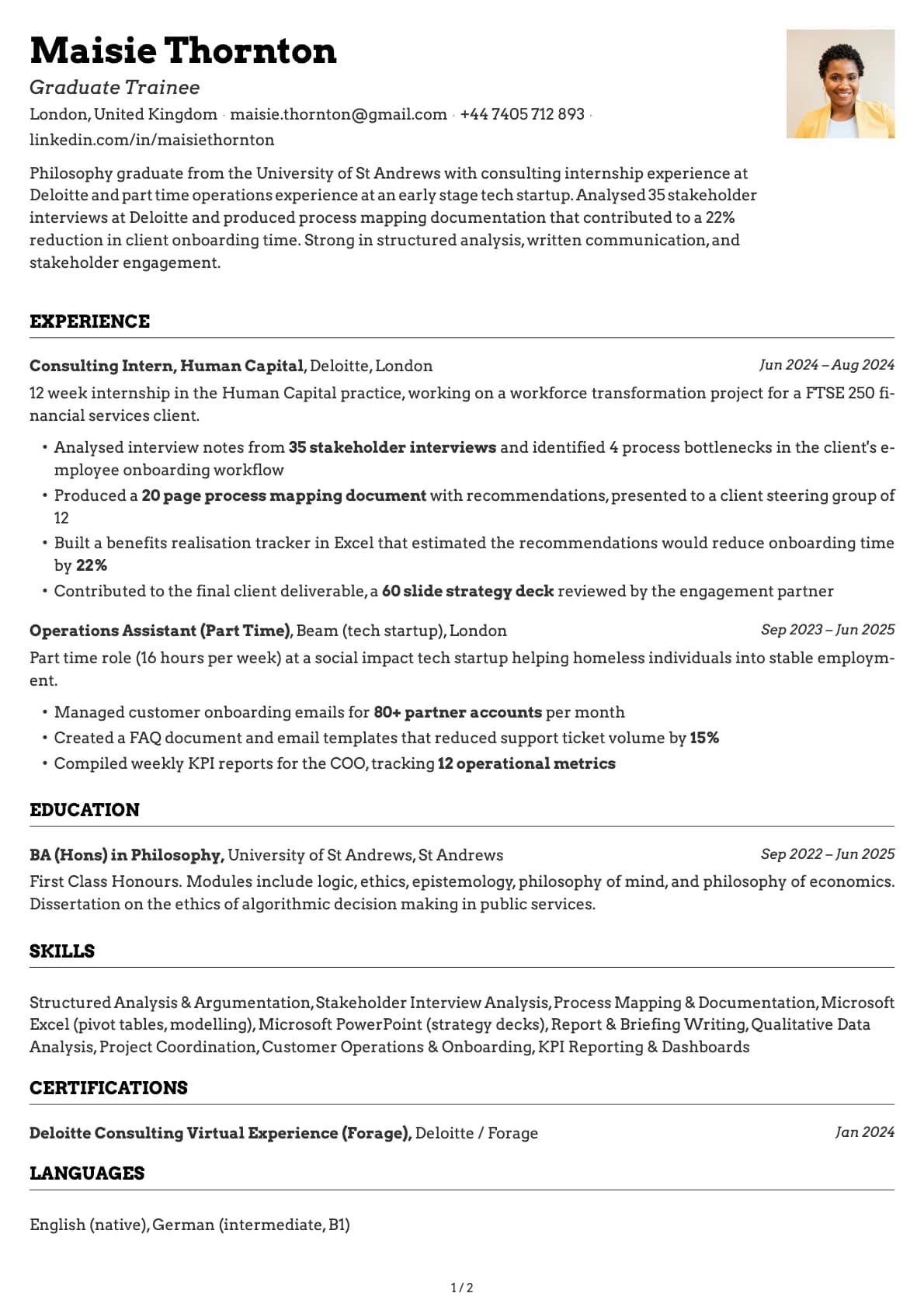
Graduate Trainee
A graduate trainee resume example for philosophy graduates, showing transferable analytical skills, structured thinking, and commercial awareness.
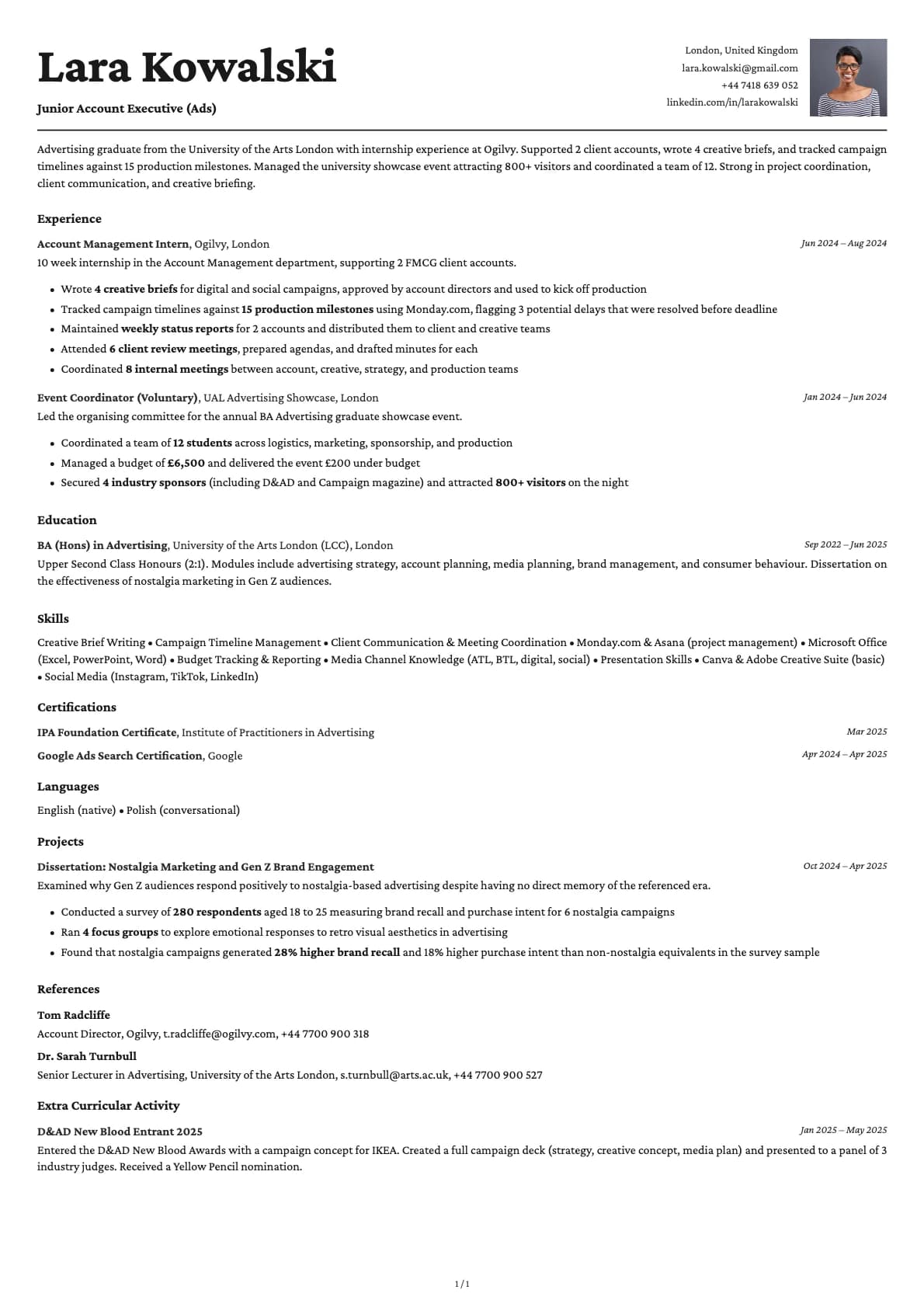
Junior Account Executive (Ads)
A junior account executive resume example for advertising graduates, showing campaign management, client liaison, and creative briefing experience.
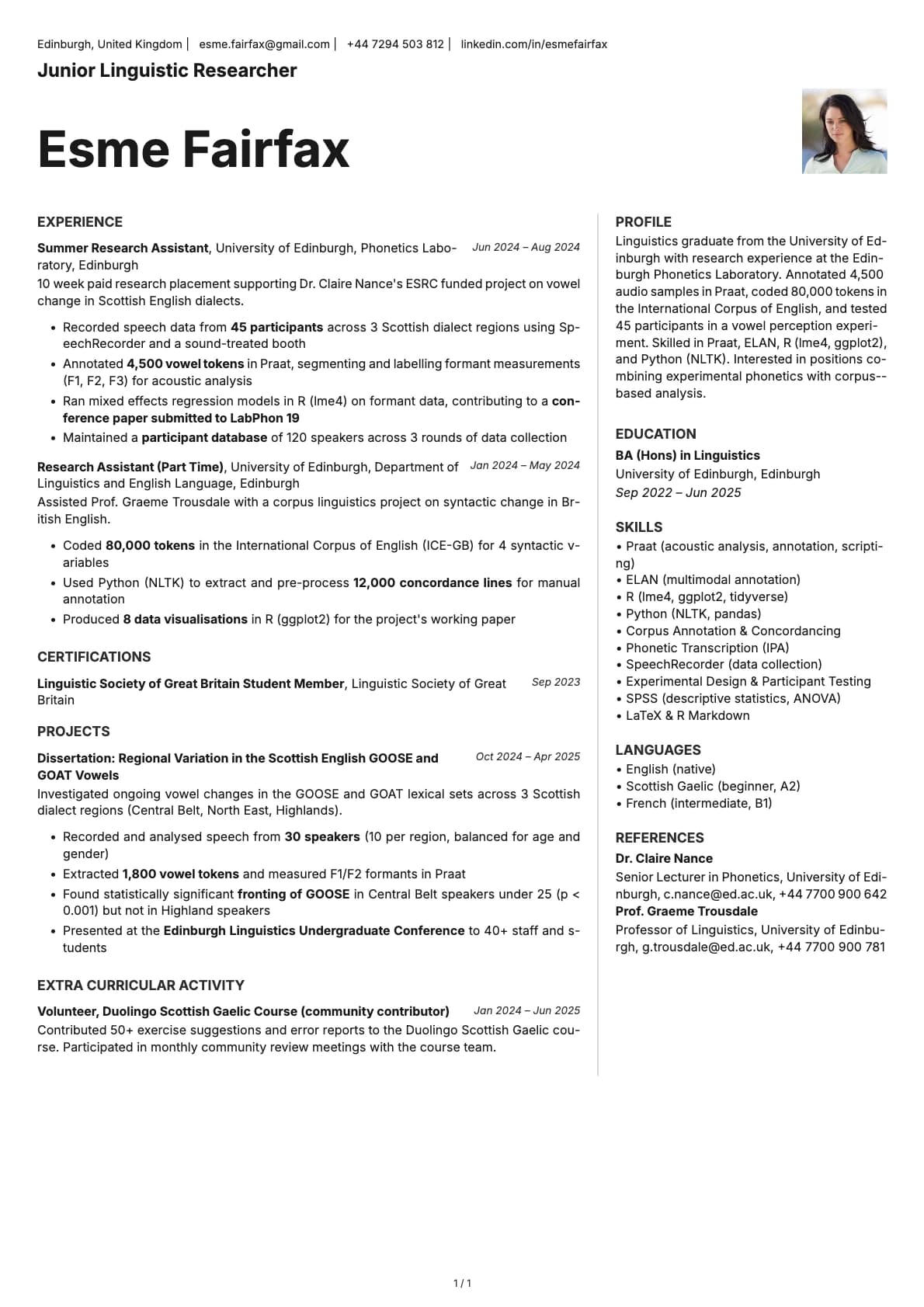
Junior Linguistic Researcher
A junior linguistic researcher resume example for linguistics graduates, showing corpus analysis, phonetic fieldwork, and computational linguistics skills.
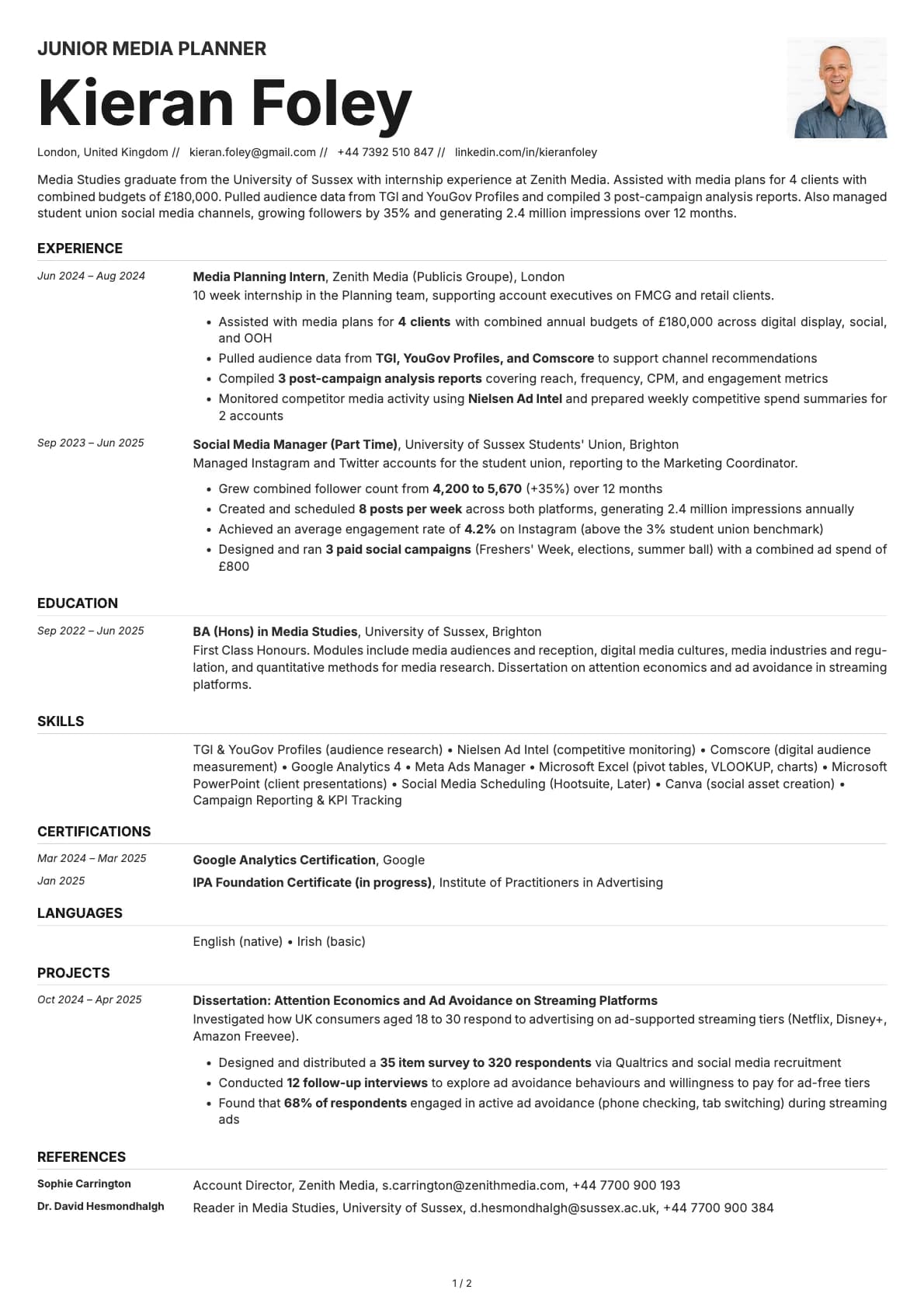
Junior Media Planner
A junior media planner resume example for media studies graduates, showing campaign planning, audience research, and media buying tool experience.
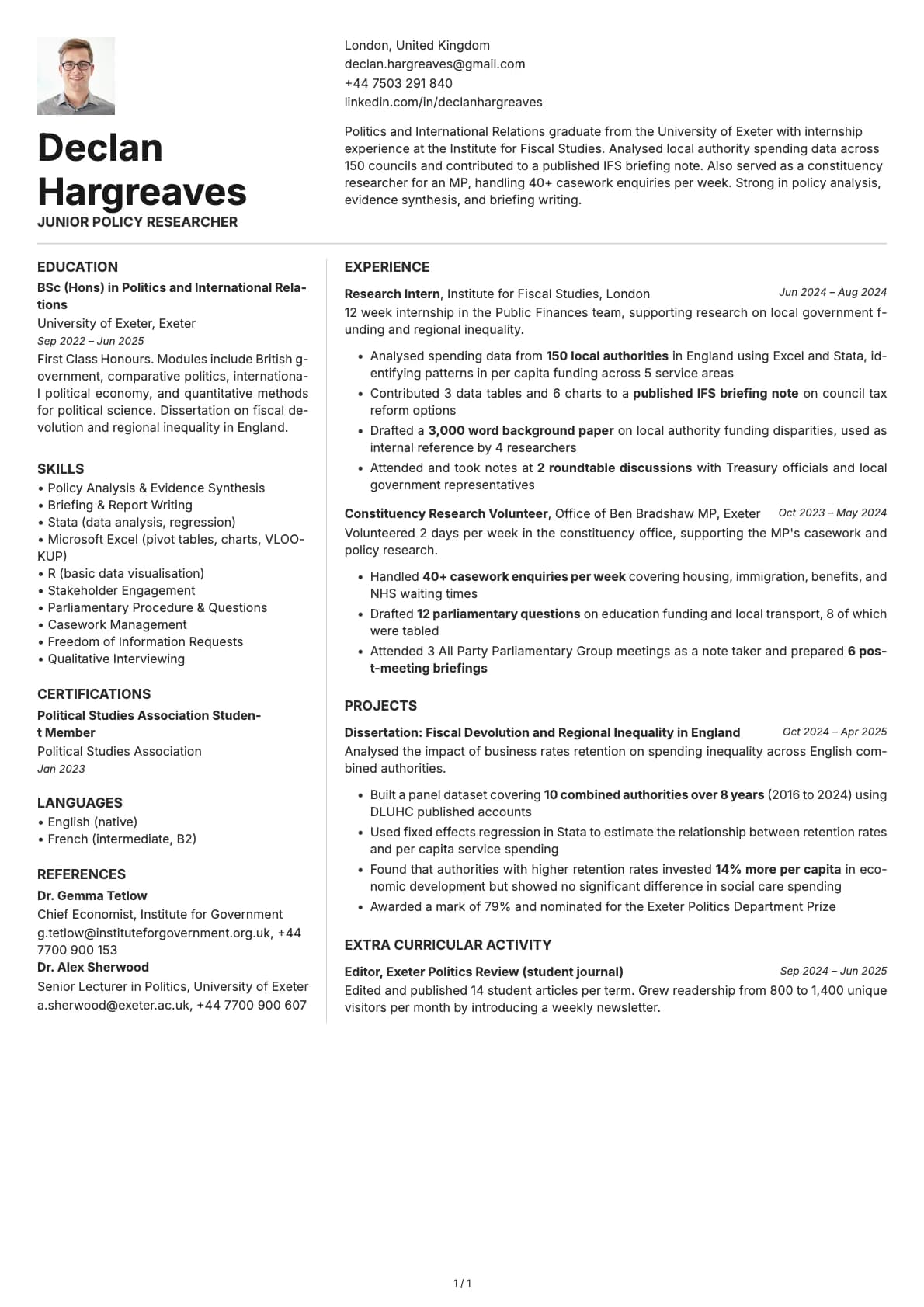
Junior Policy Researcher
A junior policy researcher resume example for politics and international relations graduates, showing policy analysis, briefing writing, and research skills.
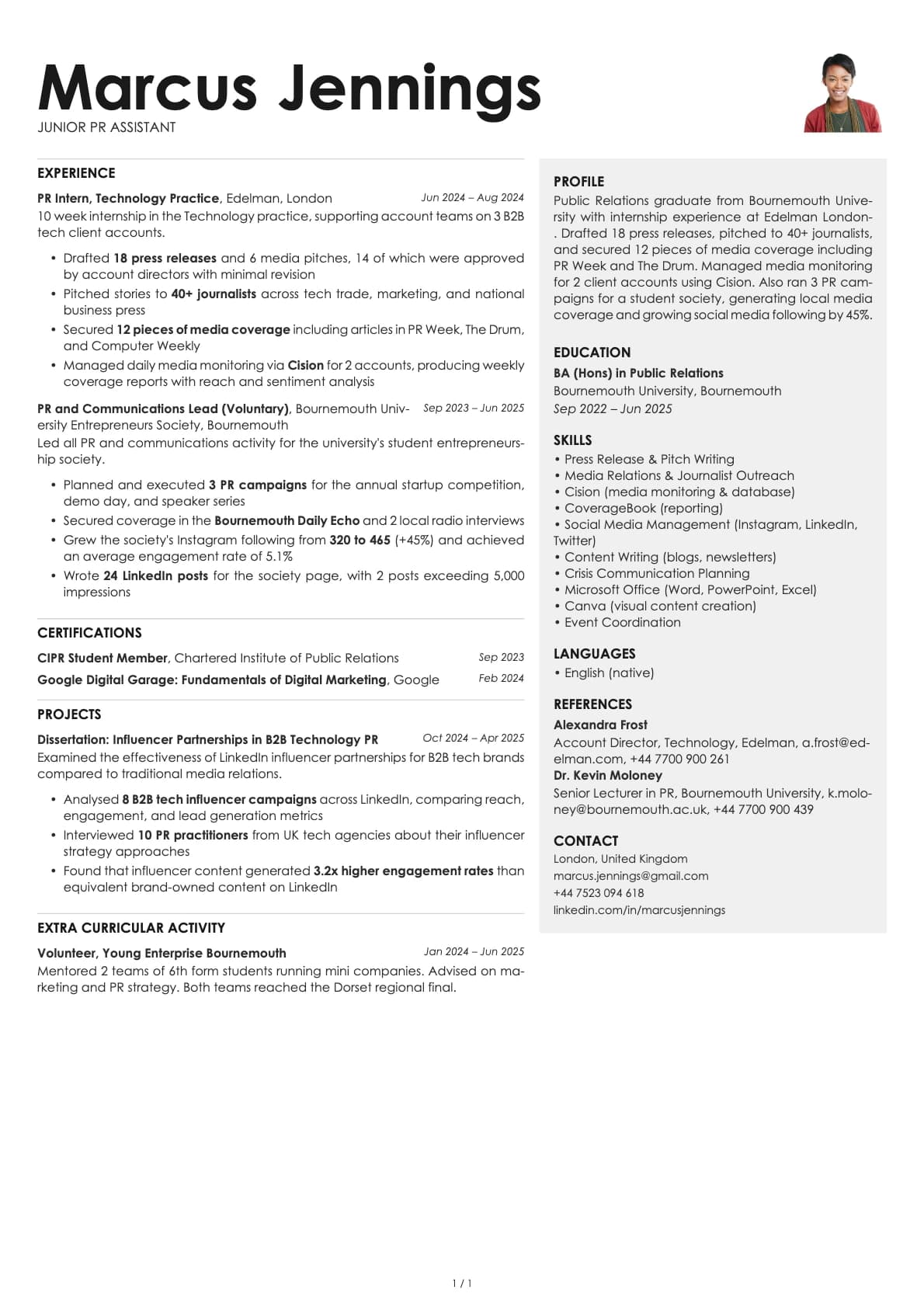
Junior PR Assistant
A junior PR assistant resume example for public relations graduates, showing media coverage results, press release writing, and campaign metrics.
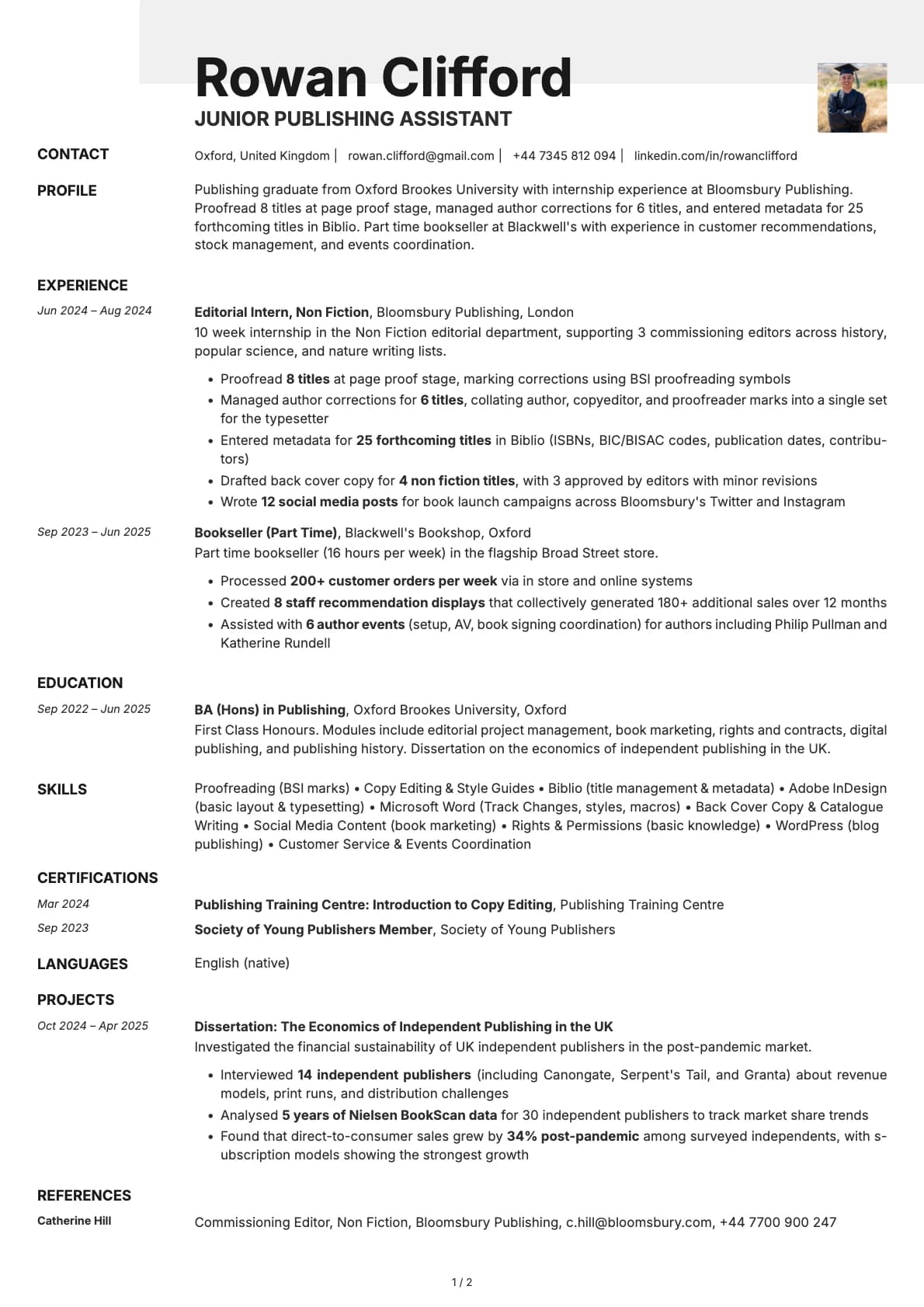
Junior Publishing Assistant
A junior publishing assistant resume example for publishing graduates, showing manuscript handling, production workflows, and rights management basics.
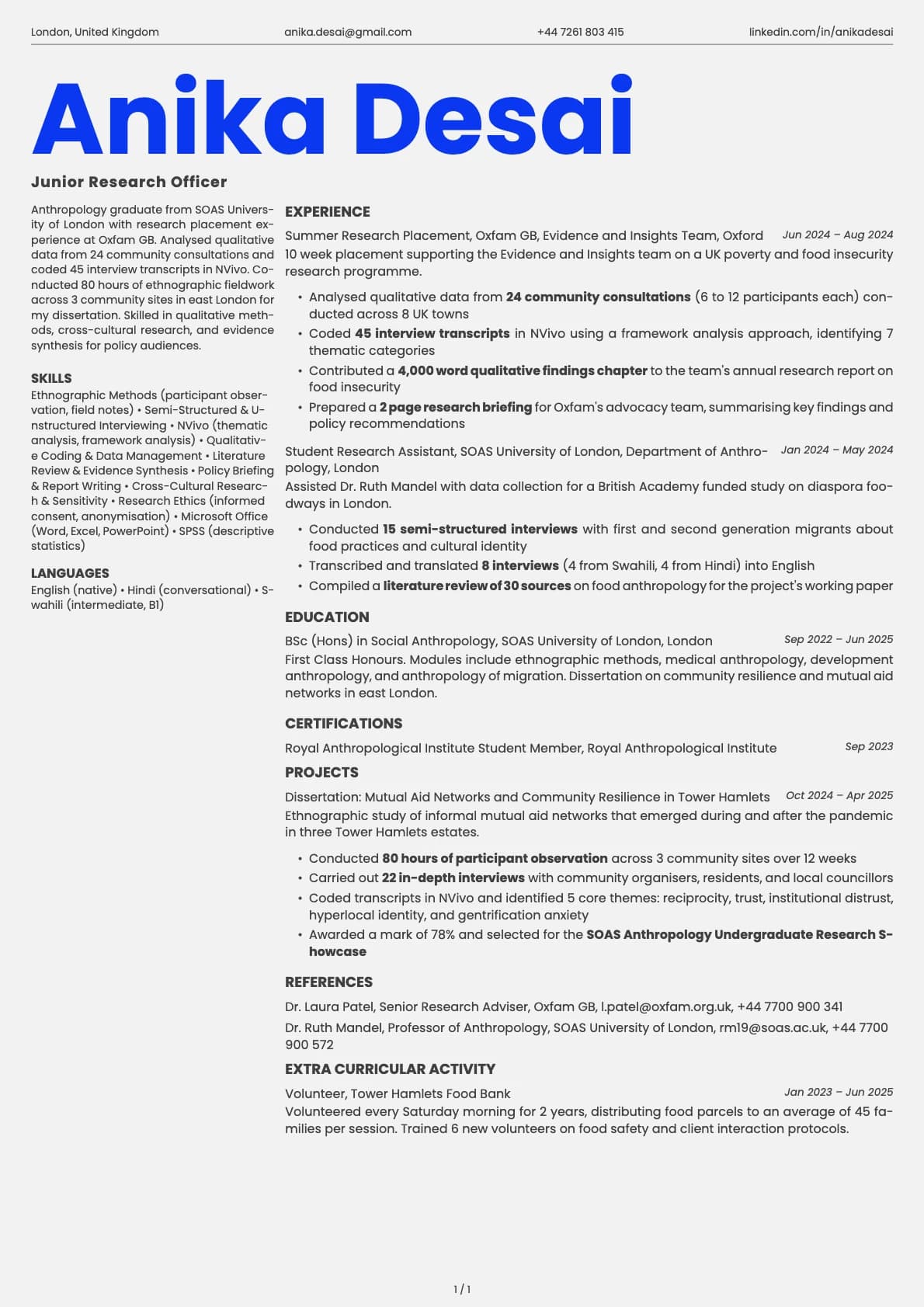
Junior Research Officer
A junior research officer resume example for anthropology graduates, showing ethnographic fieldwork, qualitative analysis, and cross-cultural research skills.
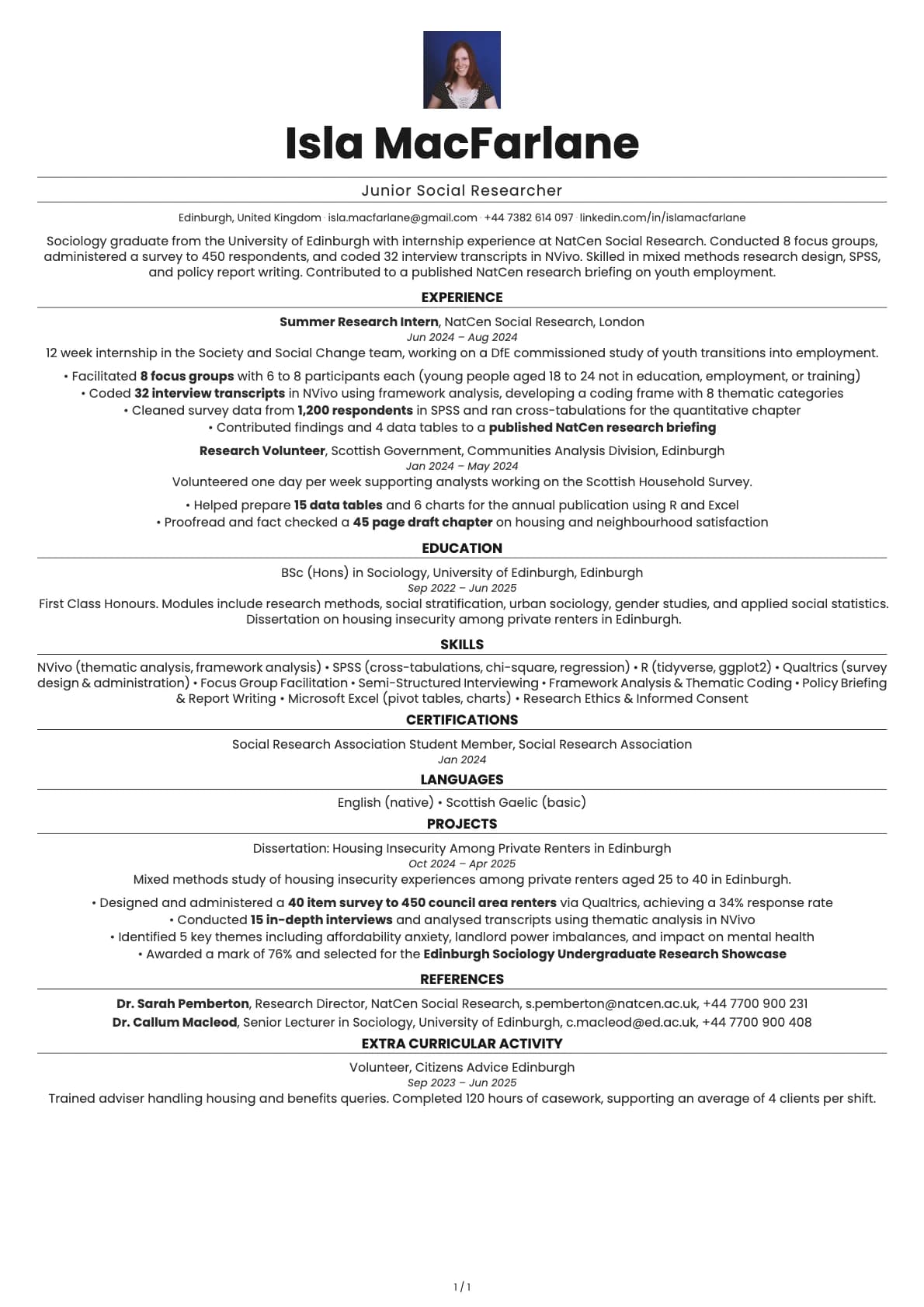
Junior Social Researcher
A junior social researcher resume example for sociology graduates, showing qualitative and quantitative methods, NVivo, and policy research skills.
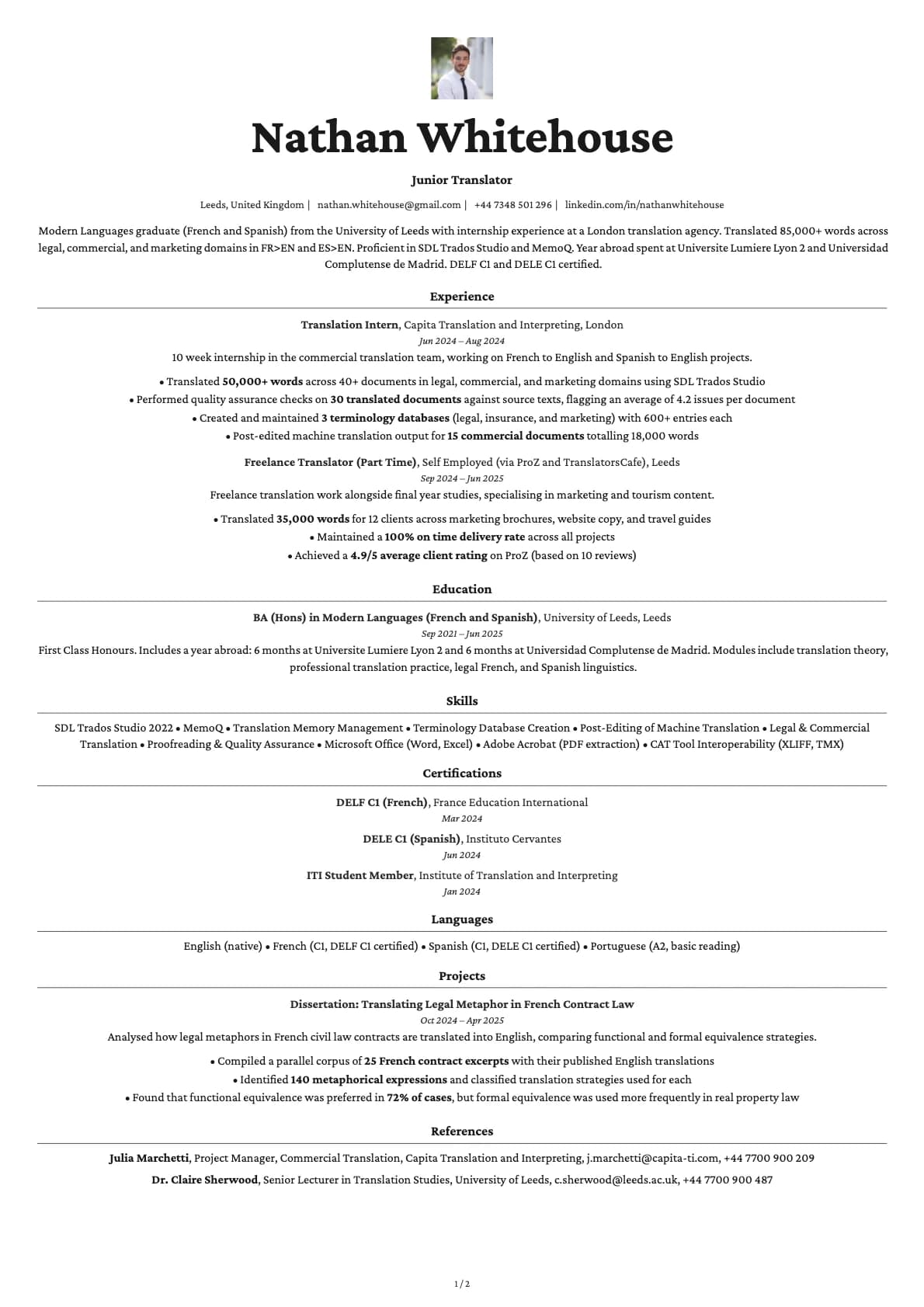
Junior Translator
A junior translator resume example for languages graduates, showing translation volume, CAT tools, and subject matter specialisation.
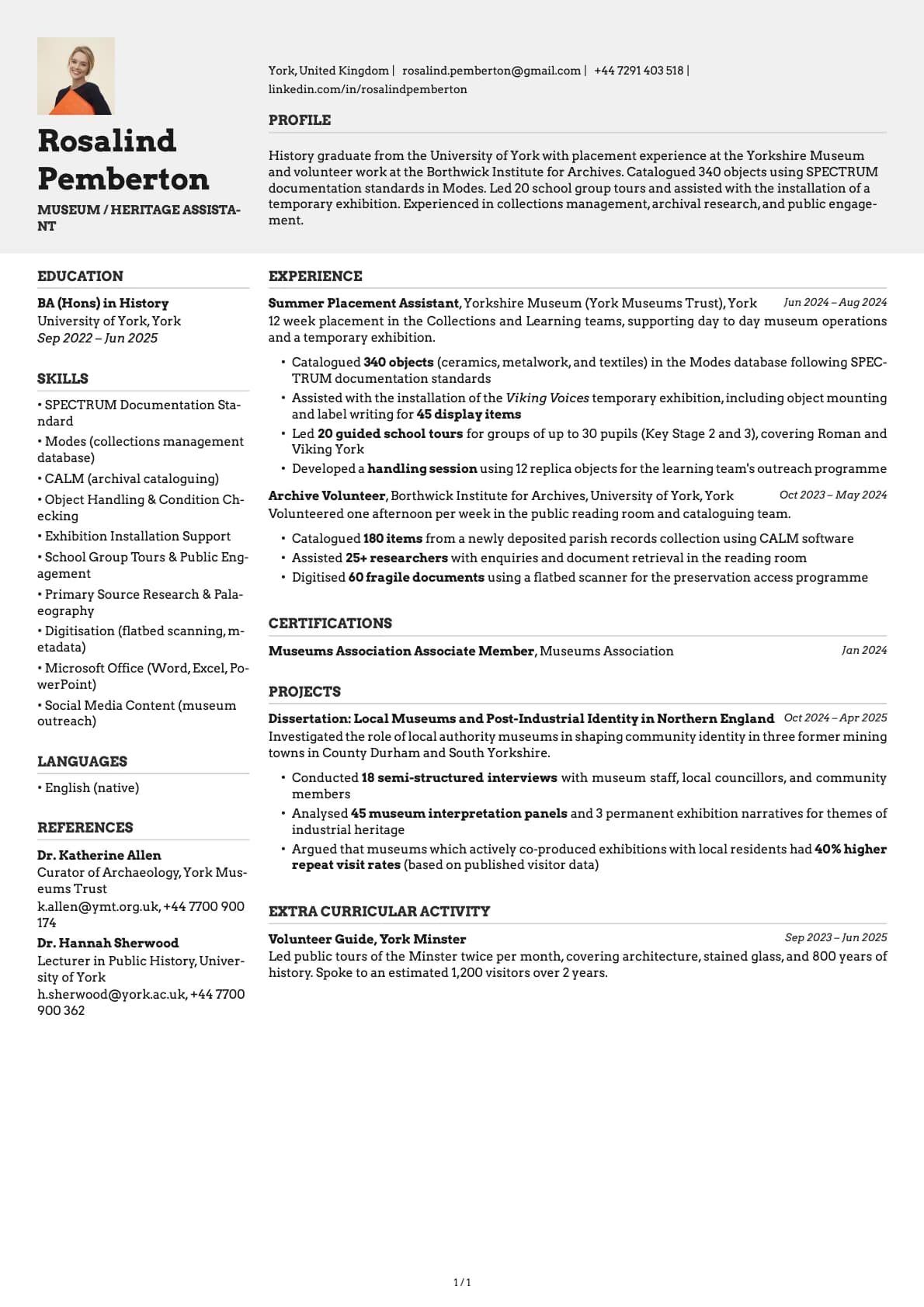
Museum / Heritage Assistant
A museum and heritage assistant resume example for history graduates, showing collections management, visitor engagement, and archival research skills.
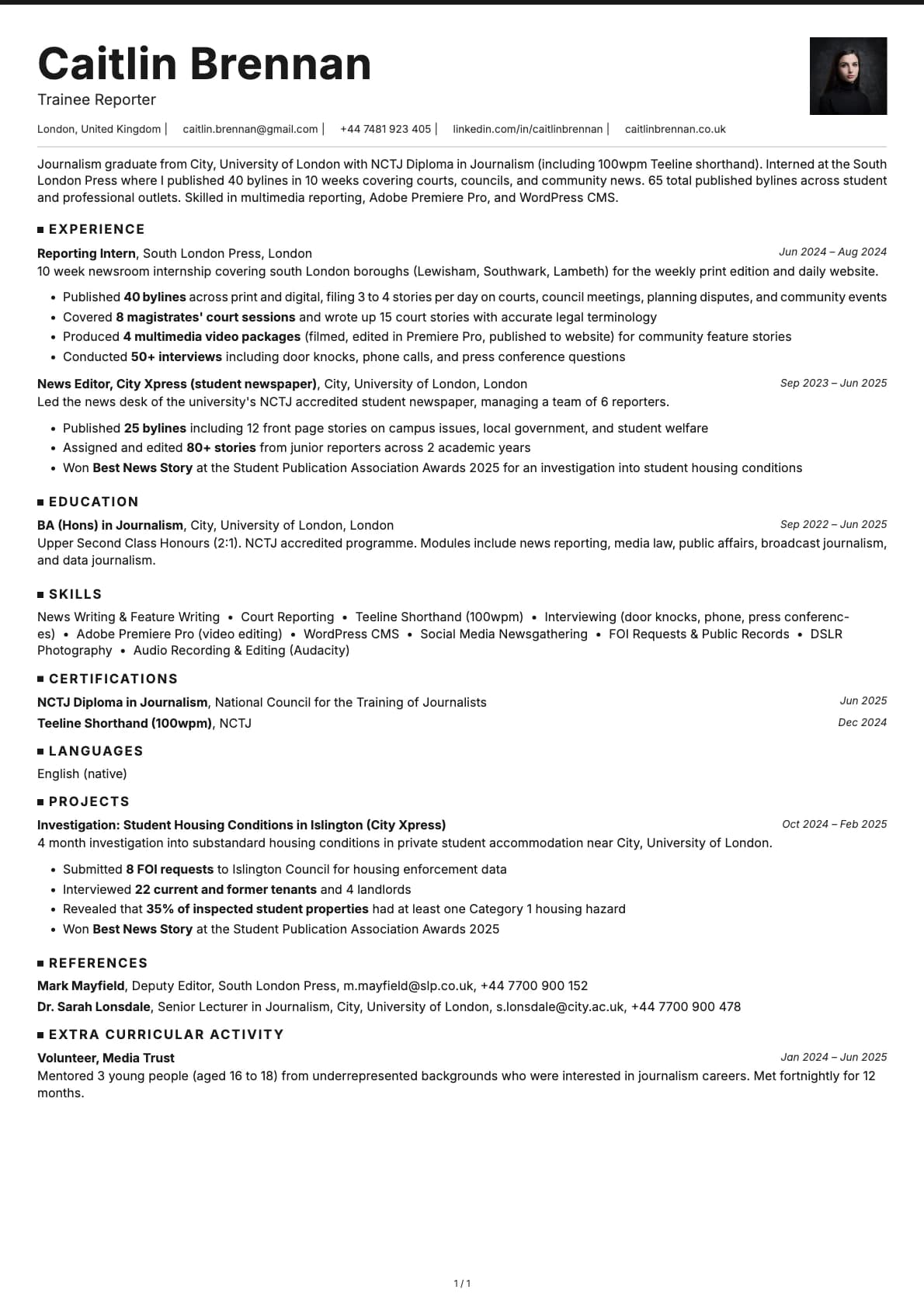
Trainee Reporter
A trainee reporter resume example for journalism graduates, showing published bylines, newsroom experience, and multimedia storytelling skills.