Junior Policy Researcher Resume Example
A junior policy researcher resume example for politics and international relations graduates, showing policy analysis, briefing writing, and research skills.

Laddro Team
Free to use. No account needed to start.
Free to use. No account needed to start.
Overview
Politics and International Relations graduates have a clear path into policy research, but the competition for roles at think tanks, government departments, and NGOs is intense. The Institute for Government, Chatham House, the Resolution Foundation, and the Civil Service Fast Stream all attract hundreds of applicants per position. Your resume needs to demonstrate that you can analyse policy, write clearly for non specialist audiences, and handle evidence.
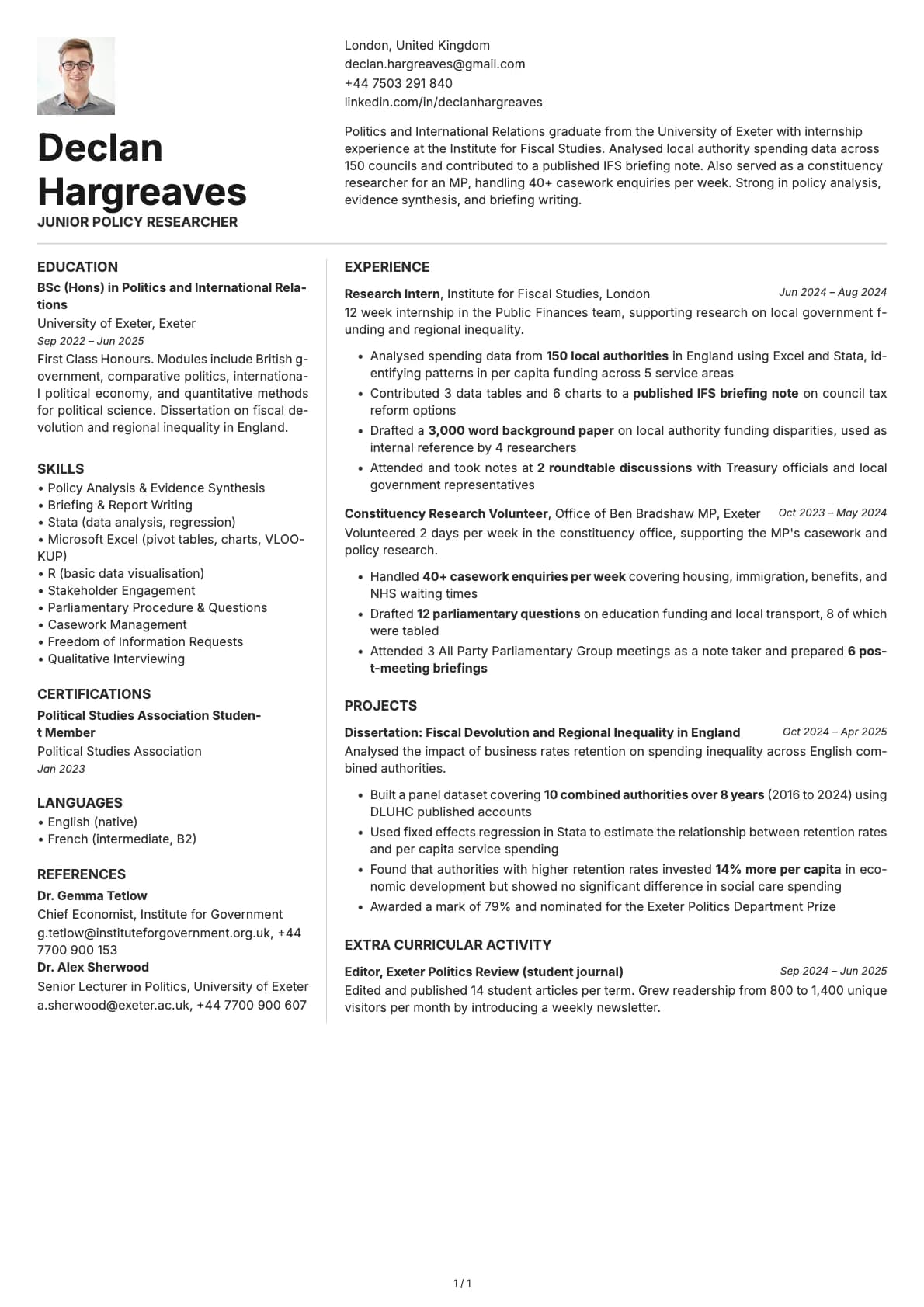
This resume belongs to Declan, a Politics and International Relations BSc graduate from the University of Exeter who interned at the Institute for Fiscal Studies and volunteered as a constituency researcher for an MP. His resume works because every bullet describes a deliverable: a briefing paper, a data analysis, a stakeholder meeting attended.
Think tank internships
If you interned at a think tank, lead with the specific publications or projects you contributed to. Declan's IFS internship involved analysing spending data from 150 local authorities, contributing to a published briefing note, and preparing charts for a public presentation. These are tangible outputs that a hiring manager can verify.
Parliamentary experience
Working for an MP, even as a volunteer, gives you exposure to the policy process that no academic programme can replicate. Declan handled 40+ constituency casework enquiries per week, drafted 12 parliamentary questions, and attended 3 All Party Parliamentary Group meetings as a note taker. Each of these is a concrete contribution to the political process.
Evidence synthesis and briefing writing
Policy research roles require you to synthesise large volumes of evidence into concise, actionable documents. If you have written a policy briefing, a research summary, or a background note, describe it with word count and topic. "Drafted a 3,000 word briefing on local authority funding disparities" is much stronger than "strong written communication skills."
Quantitative skills for policy roles
Many policy researcher positions now expect some quantitative competence. Declan lists Excel, Stata, and R alongside his qualitative skills. Even basic proficiency with data analysis and visualisation sets you apart from candidates who can only do qualitative work.
Build your own version
Open this layout in the builder and swap in your own details. It takes a few minutes.
Free to use. No account needed to start.
Was this resume example helpful?
Rate this example to help us create better content for you.
4.7 average from 119 ratingsRelated resume examples
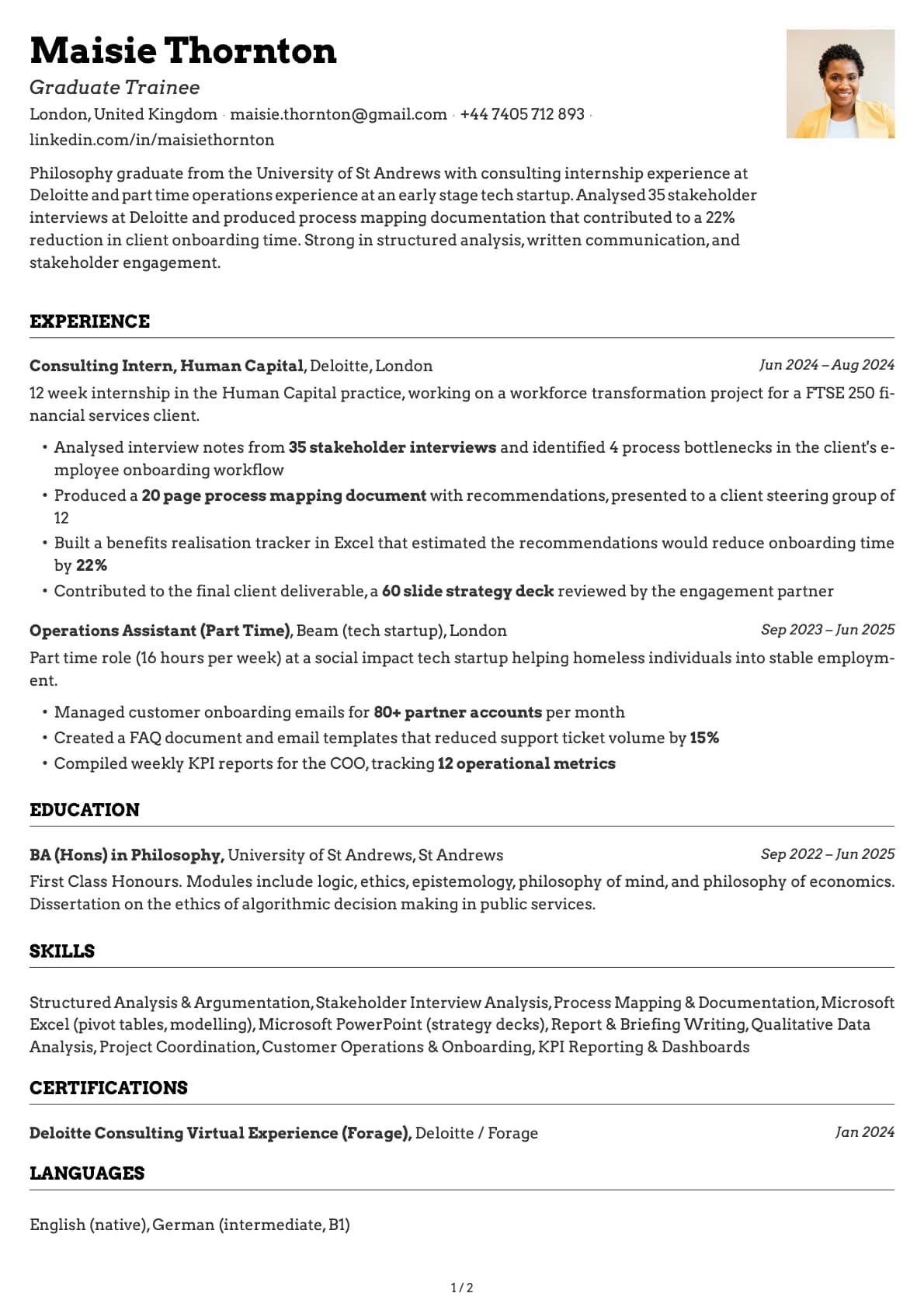
Graduate Trainee
A graduate trainee resume example for philosophy graduates, showing transferable analytical skills, structured thinking, and commercial awareness.
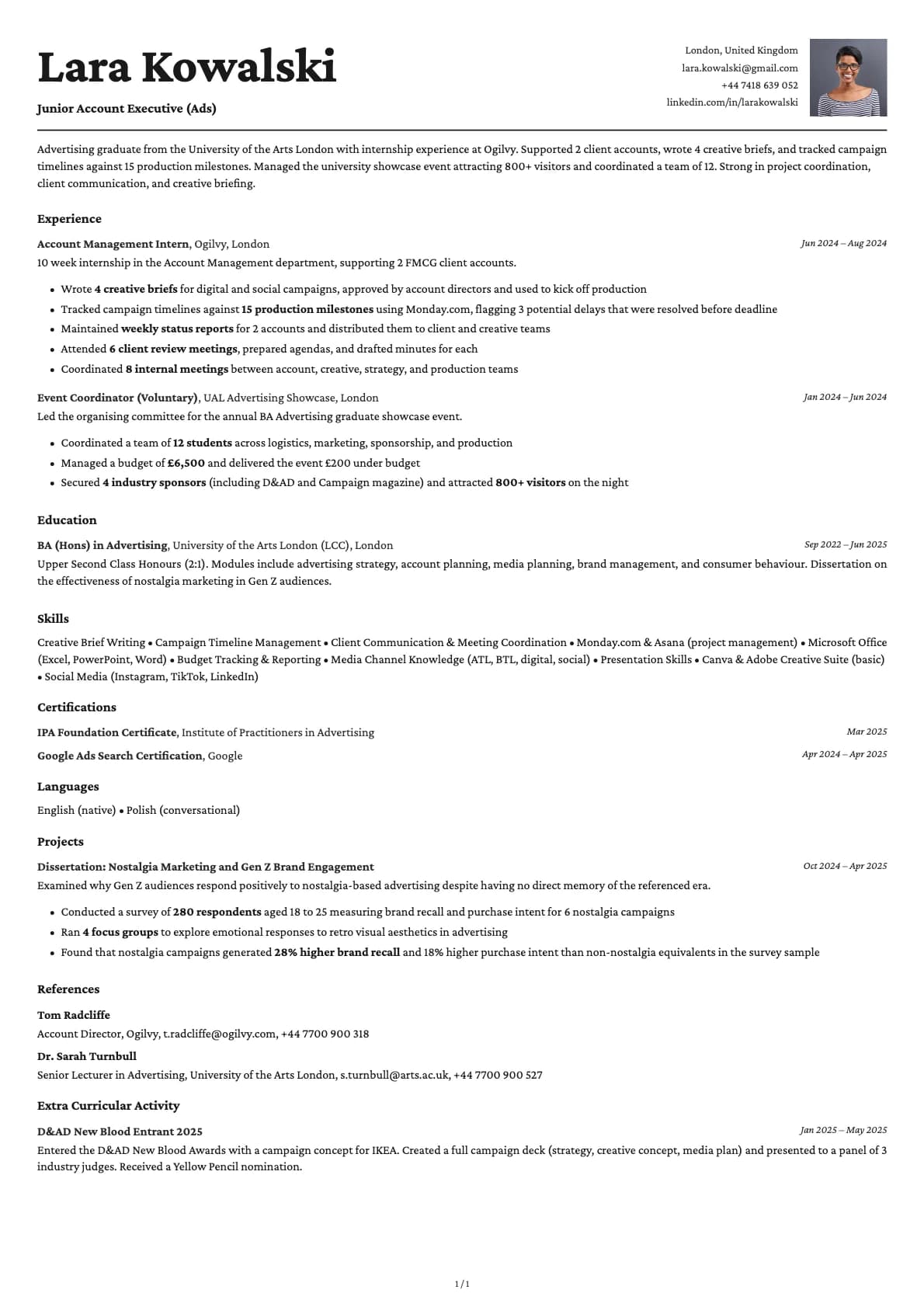
Junior Account Executive (Ads)
A junior account executive resume example for advertising graduates, showing campaign management, client liaison, and creative briefing experience.
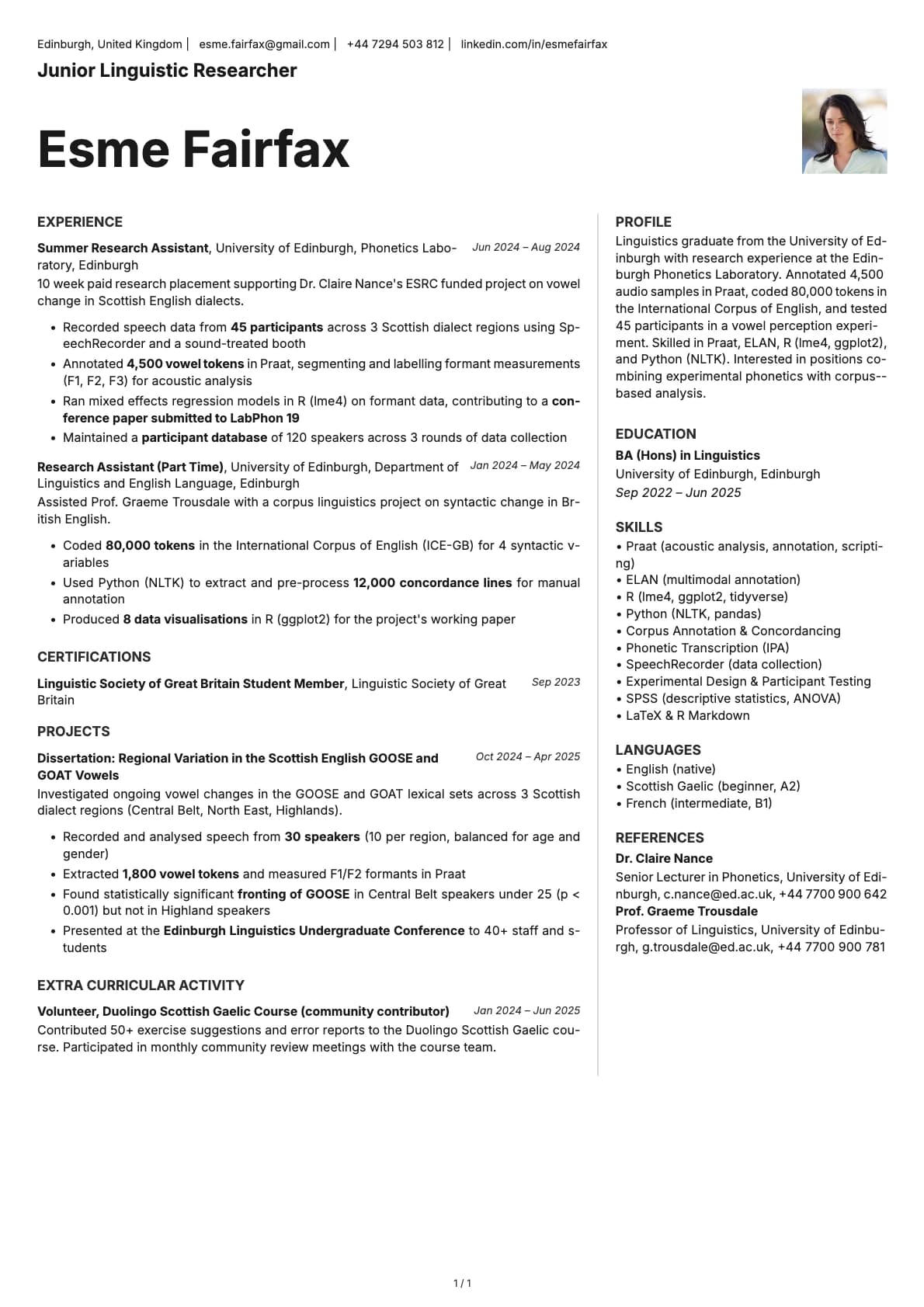
Junior Linguistic Researcher
A junior linguistic researcher resume example for linguistics graduates, showing corpus analysis, phonetic fieldwork, and computational linguistics skills.
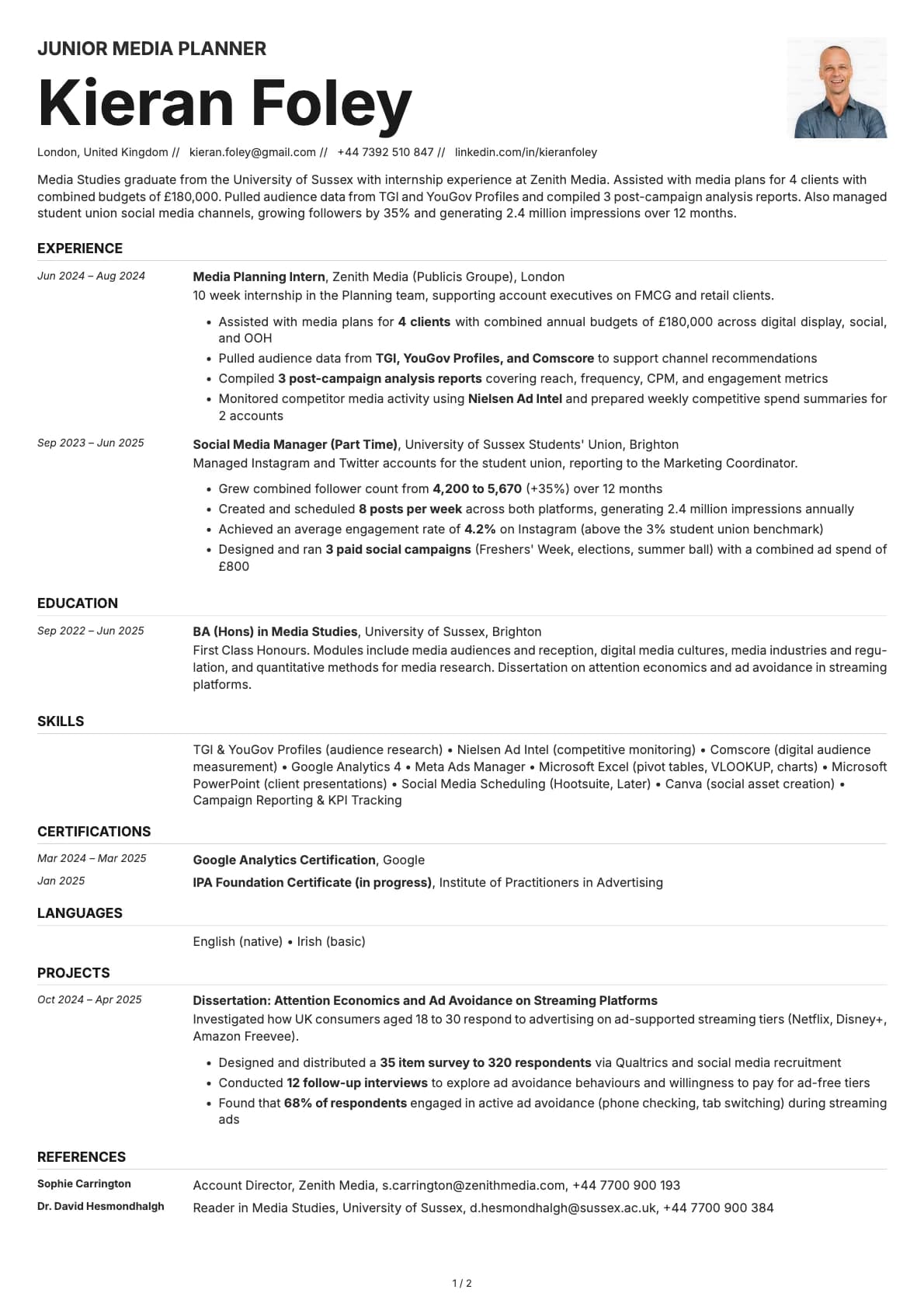
Junior Media Planner
A junior media planner resume example for media studies graduates, showing campaign planning, audience research, and media buying tool experience.
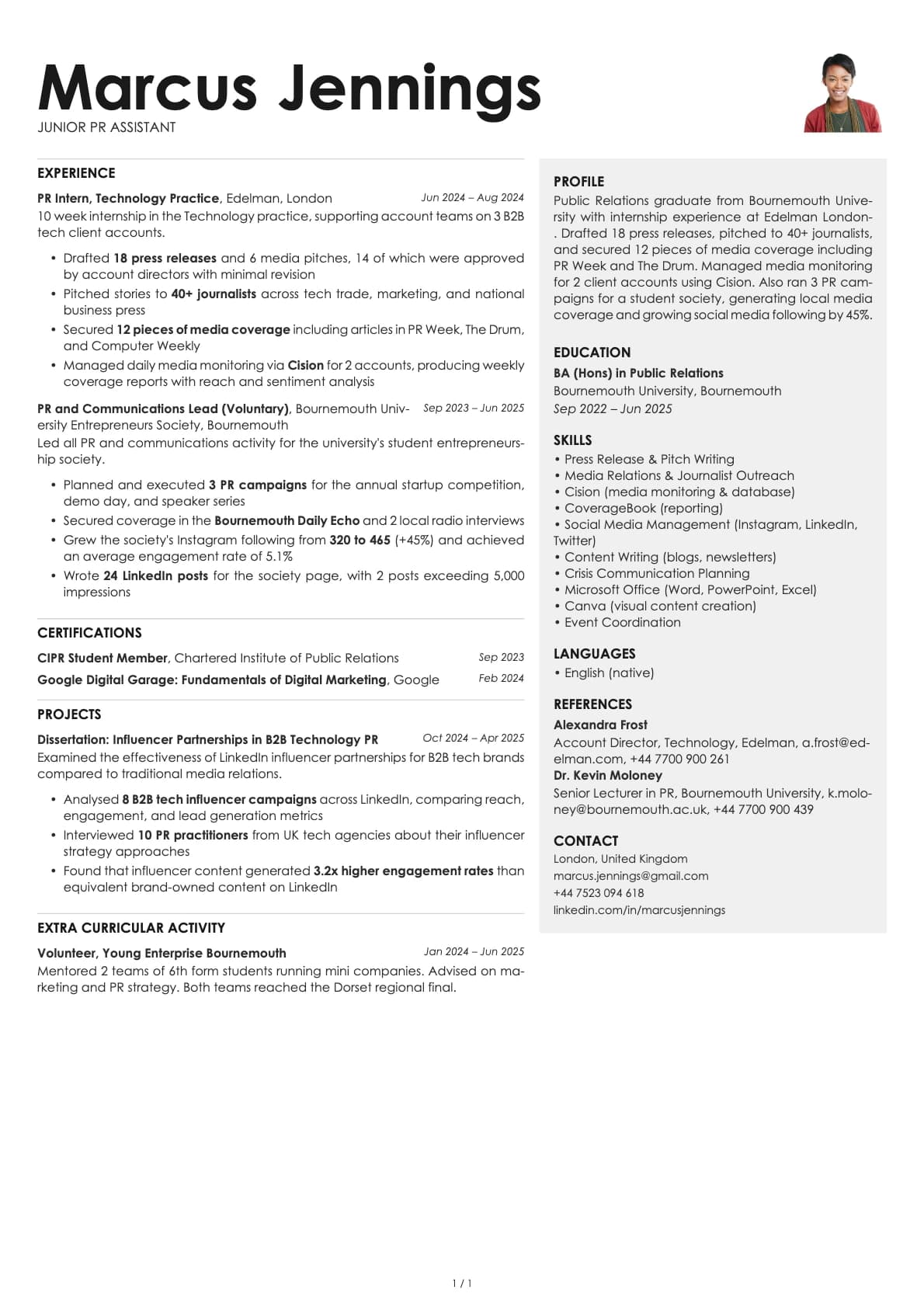
Junior PR Assistant
A junior PR assistant resume example for public relations graduates, showing media coverage results, press release writing, and campaign metrics.
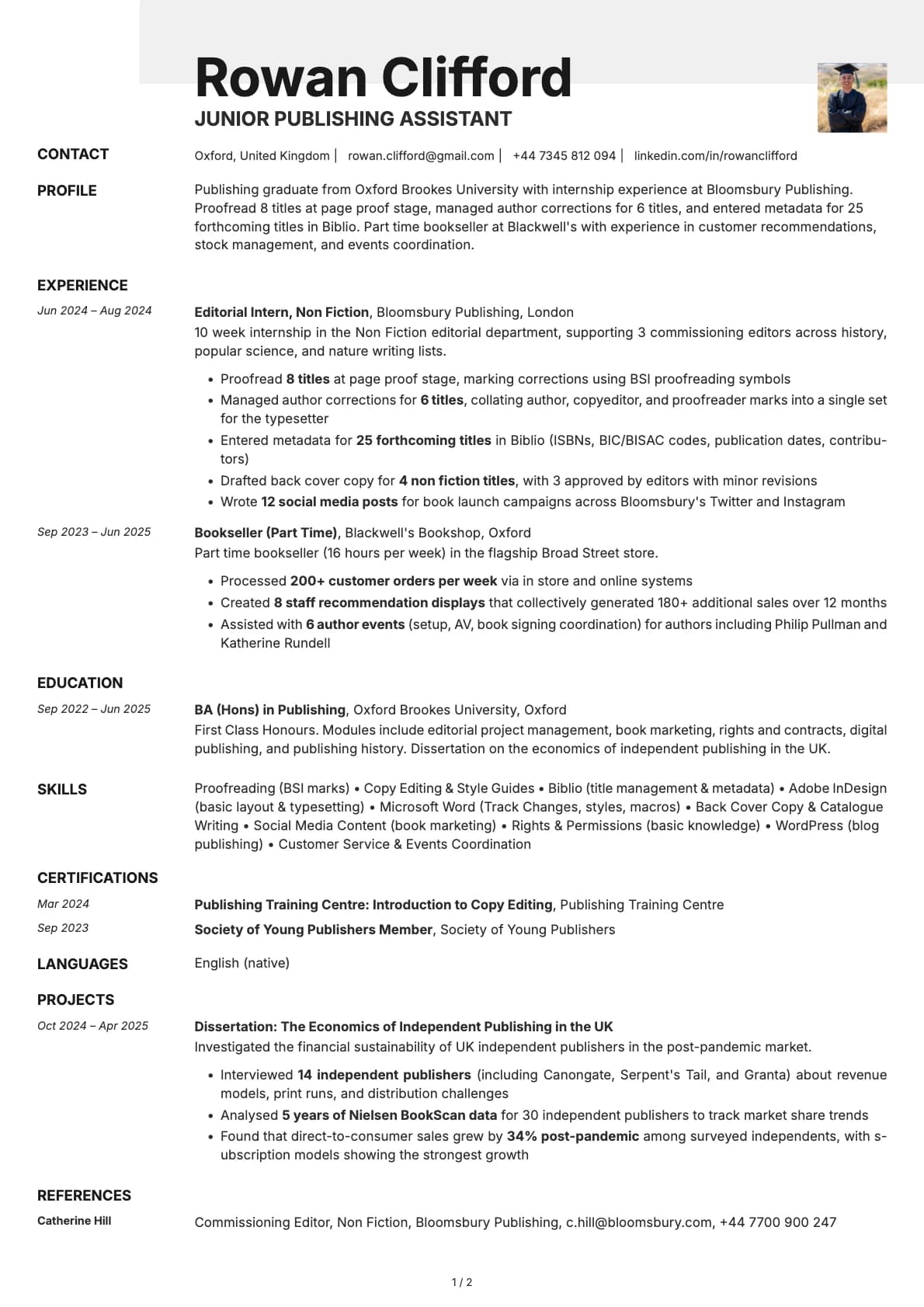
Junior Publishing Assistant
A junior publishing assistant resume example for publishing graduates, showing manuscript handling, production workflows, and rights management basics.
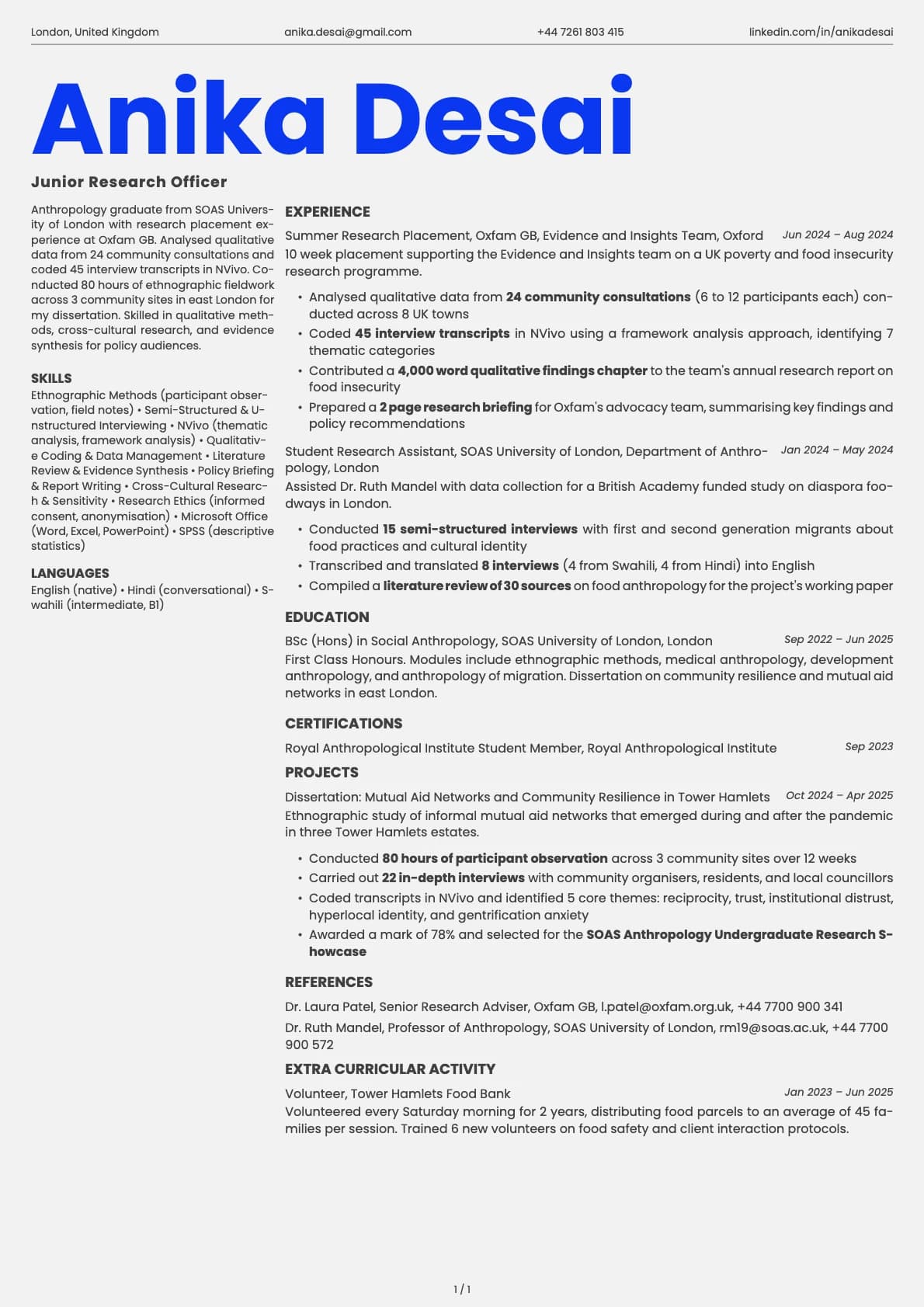
Junior Research Officer
A junior research officer resume example for anthropology graduates, showing ethnographic fieldwork, qualitative analysis, and cross-cultural research skills.
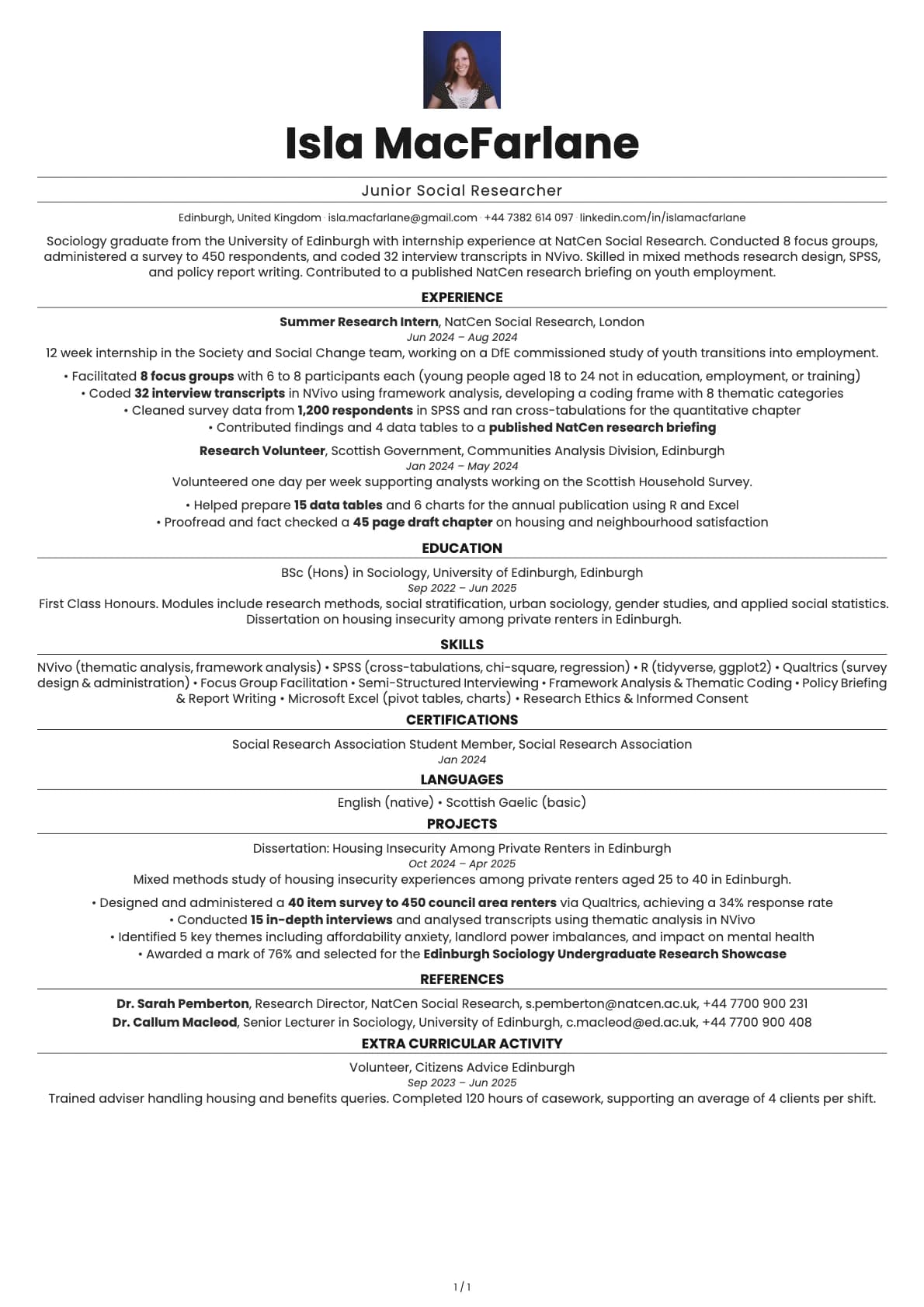
Junior Social Researcher
A junior social researcher resume example for sociology graduates, showing qualitative and quantitative methods, NVivo, and policy research skills.
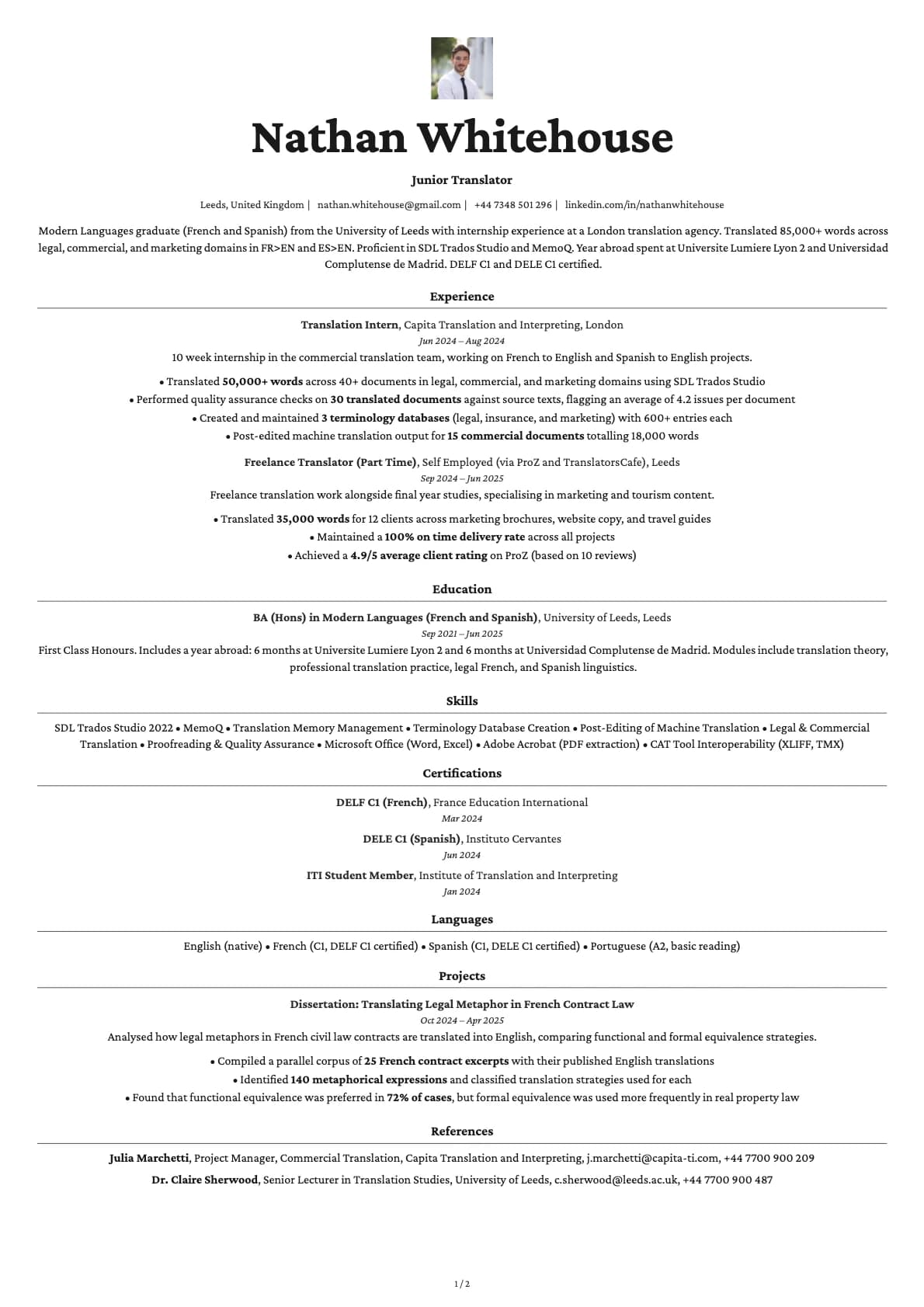
Junior Translator
A junior translator resume example for languages graduates, showing translation volume, CAT tools, and subject matter specialisation.
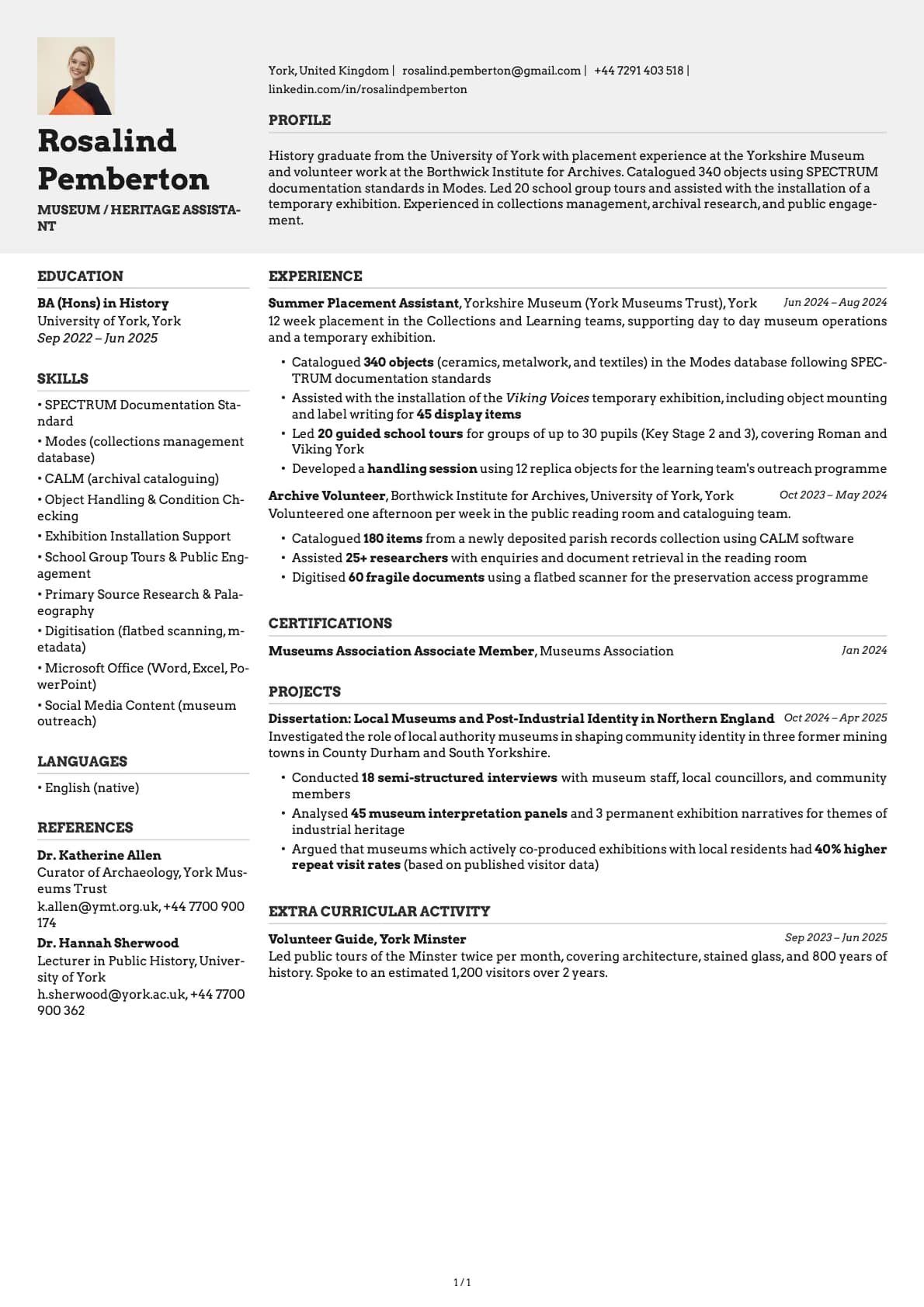
Museum / Heritage Assistant
A museum and heritage assistant resume example for history graduates, showing collections management, visitor engagement, and archival research skills.
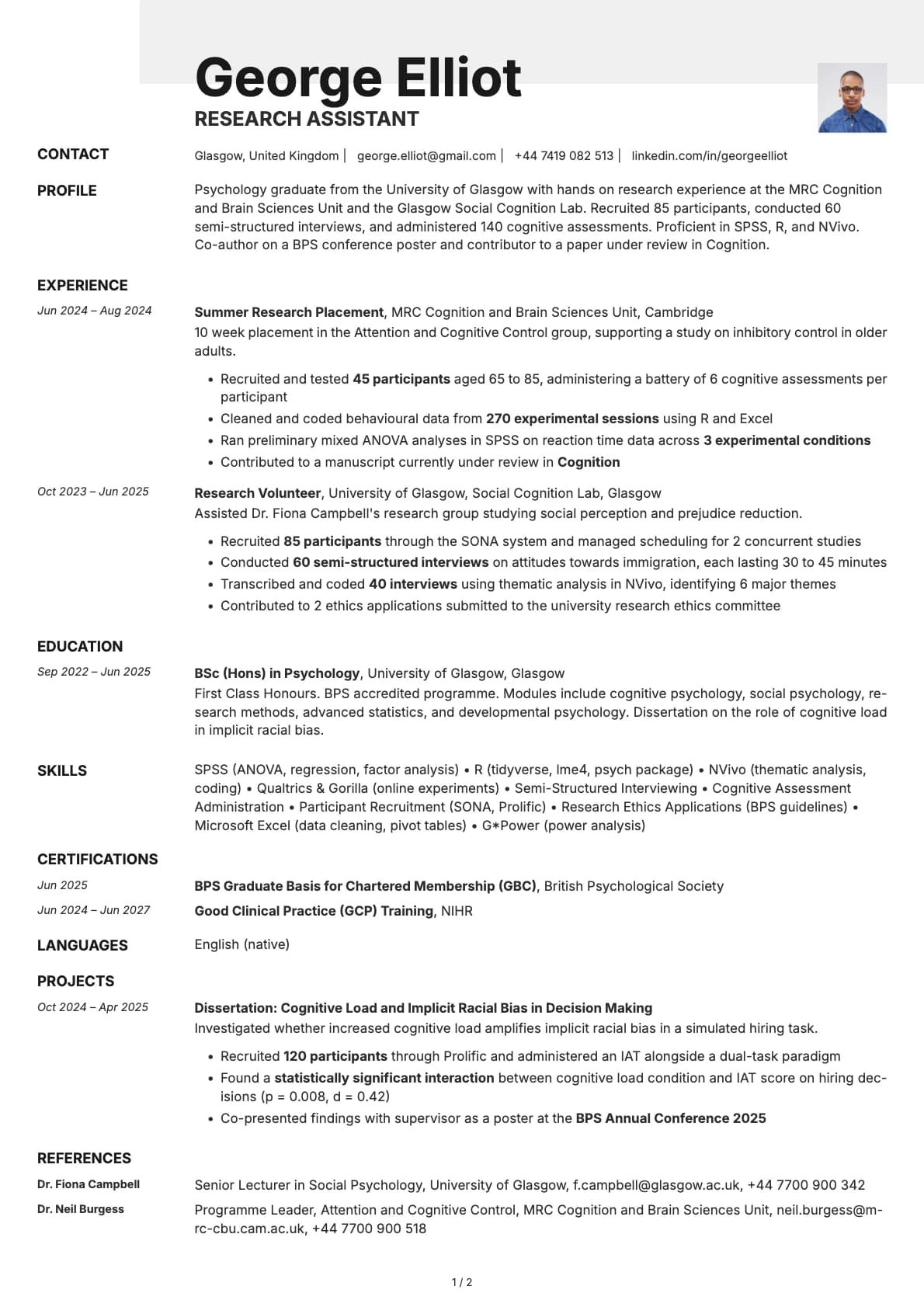
Research Assistant
A research assistant resume example for psychology graduates, showing how to present participant recruitment, data collection, and SPSS analysis skills.
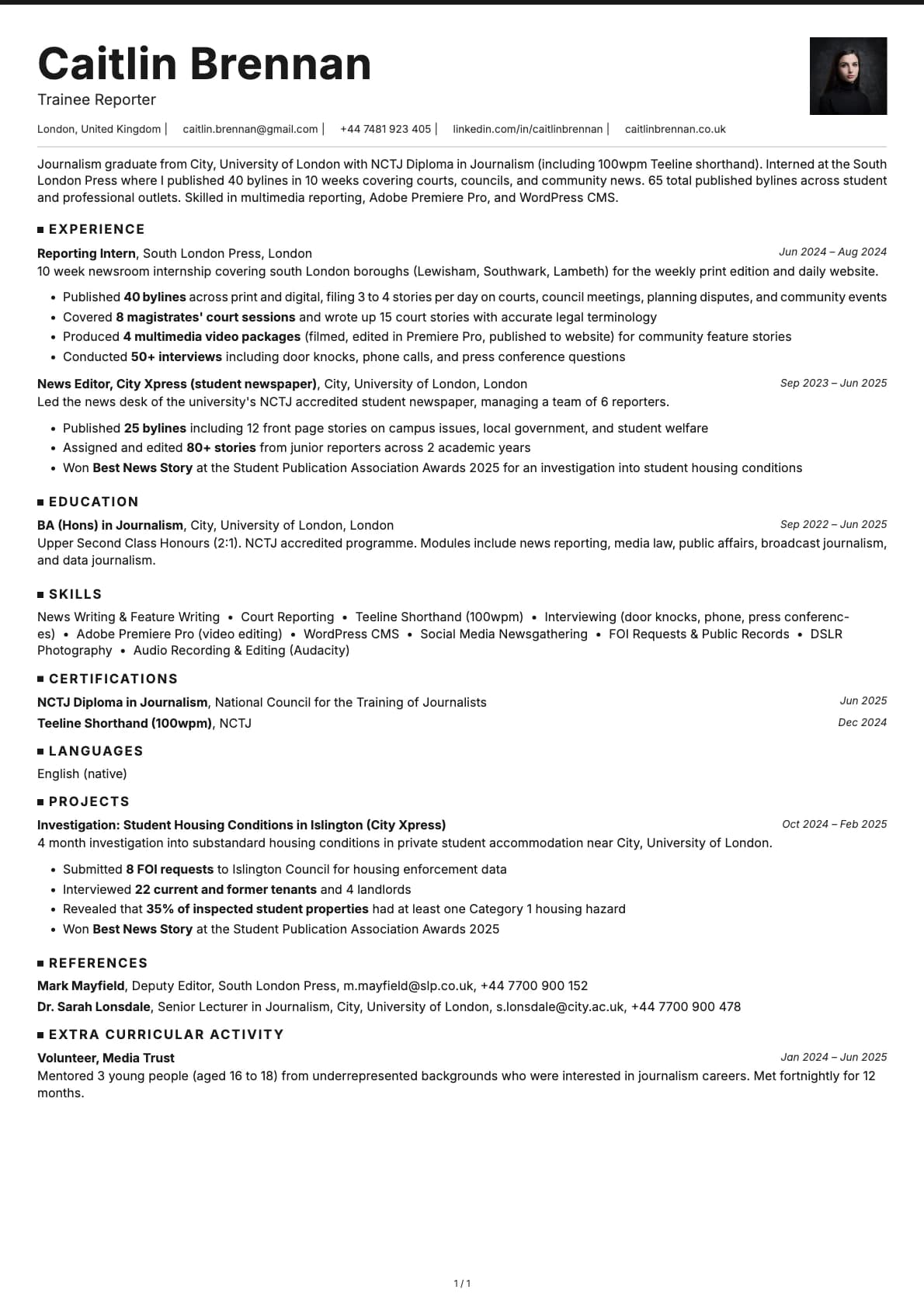
Trainee Reporter
A trainee reporter resume example for journalism graduates, showing published bylines, newsroom experience, and multimedia storytelling skills.