Junior Linguistic Researcher Resume Example
A junior linguistic researcher resume example for linguistics graduates, showing corpus analysis, phonetic fieldwork, and computational linguistics skills.

Laddro Team
Free to use. No account needed to start.
Free to use. No account needed to start.
Overview
Linguistics graduates occupy a valuable niche in the research job market. Their skills span phonetics, syntax, semantics, corpus analysis, and computational methods, all of which are in demand at universities, language technology companies, and research organisations. The challenge is presenting these technical skills on a resume in a way that non linguists can understand.
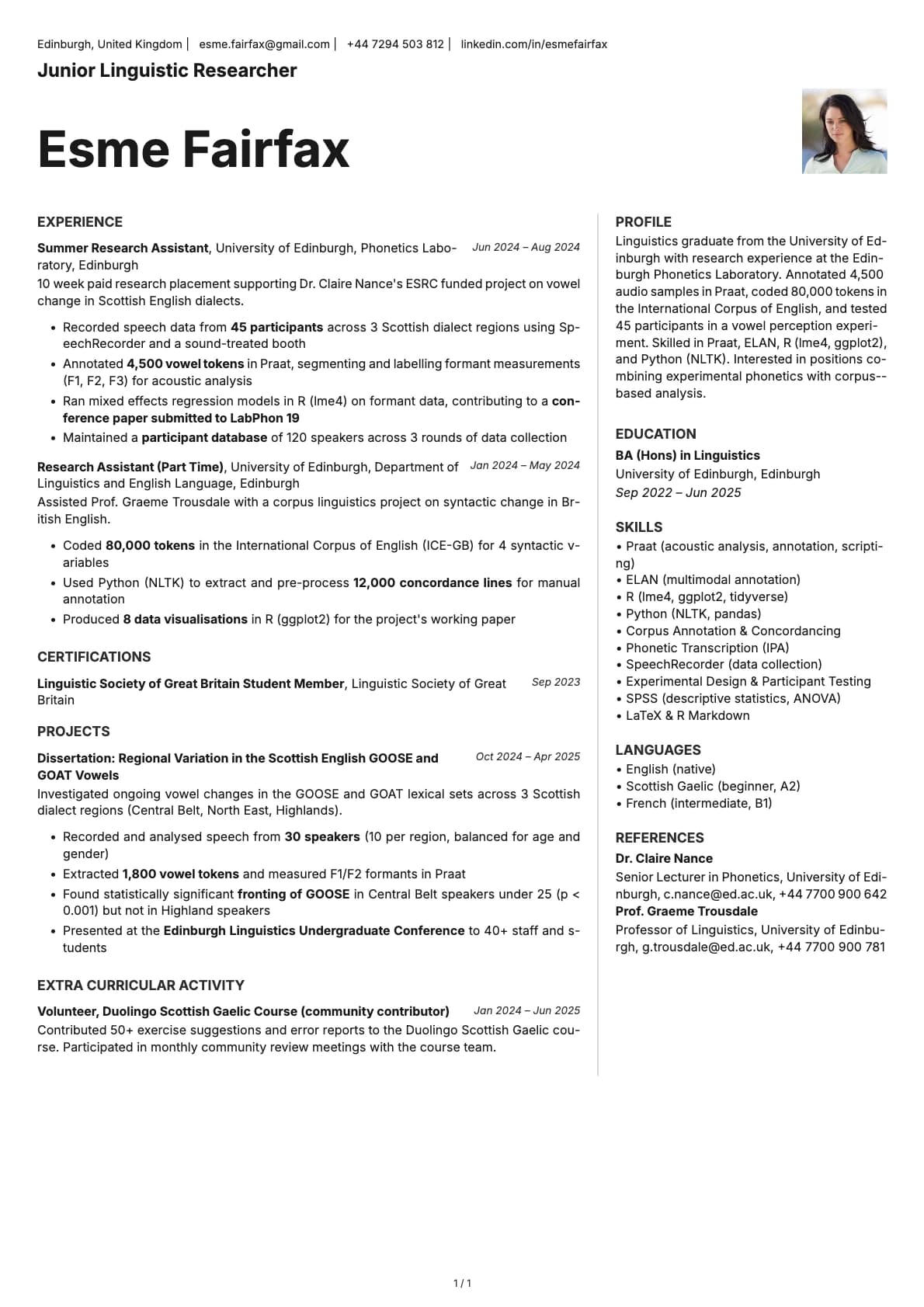
This resume belongs to Esme, a Linguistics BA graduate from the University of Edinburgh who completed a summer research placement at the Phonetics Laboratory and worked as a research assistant on a corpus linguistics project. Her resume works because it quantifies her research contributions: 4,500 audio samples annotated, 80,000 tokens coded in a corpus, and 45 participants tested in a phonetics experiment.
Phonetics and experimental methods
If you have conducted phonetic experiments, describe the methodology, participant count, and instruments. Esme's resume mentions recording and annotating speech data from 45 participants using Praat, conducting acoustic analysis of 4,500 vowel tokens, and measuring formant frequencies across 3 dialect groups.
Name the software: Praat, ELAN, Audacity, SpeechRecorder. These are the tools that phonetics labs use, and listing them tells a PI you can start contributing immediately.
Corpus linguistics and annotation
Corpus work involves large scale data processing. If you annotated, tagged, or coded corpus data, state the corpus name, the number of tokens or texts, and the annotation scheme. Esme coded 80,000 tokens in the International Corpus of English (ICE-GB) for syntactic features using the ICE annotation scheme.
For computational linguistics roles, also mention any work with NLTK, spaCy, or other NLP libraries.
Fieldwork and language documentation
If you conducted linguistic fieldwork (recording speakers of under-documented languages, collecting dialect data, running sociolinguistic interviews), describe it with specific participant counts and recording hours. This kind of experience is especially valued for roles at institutions like SOAS, the Endangered Languages Archive, or the British Library Sound Archive.
Statistical analysis
Modern linguistics is quantitative. If you used R, SPSS, or Python for statistical analysis of linguistic data, specify the types of analyses: mixed effects models, chi-square tests, logistic regression, or multidimensional scaling. Esme lists R with lme4 and ggplot2, which signals she can handle the statistical demands of experimental linguistics research.
Build your own version
Open this layout in the builder and swap in your own details. It takes a few minutes.
Free to use. No account needed to start.
Was this resume example helpful?
Rate this example to help us create better content for you.
4.6 average from 82 ratingsRelated resume examples
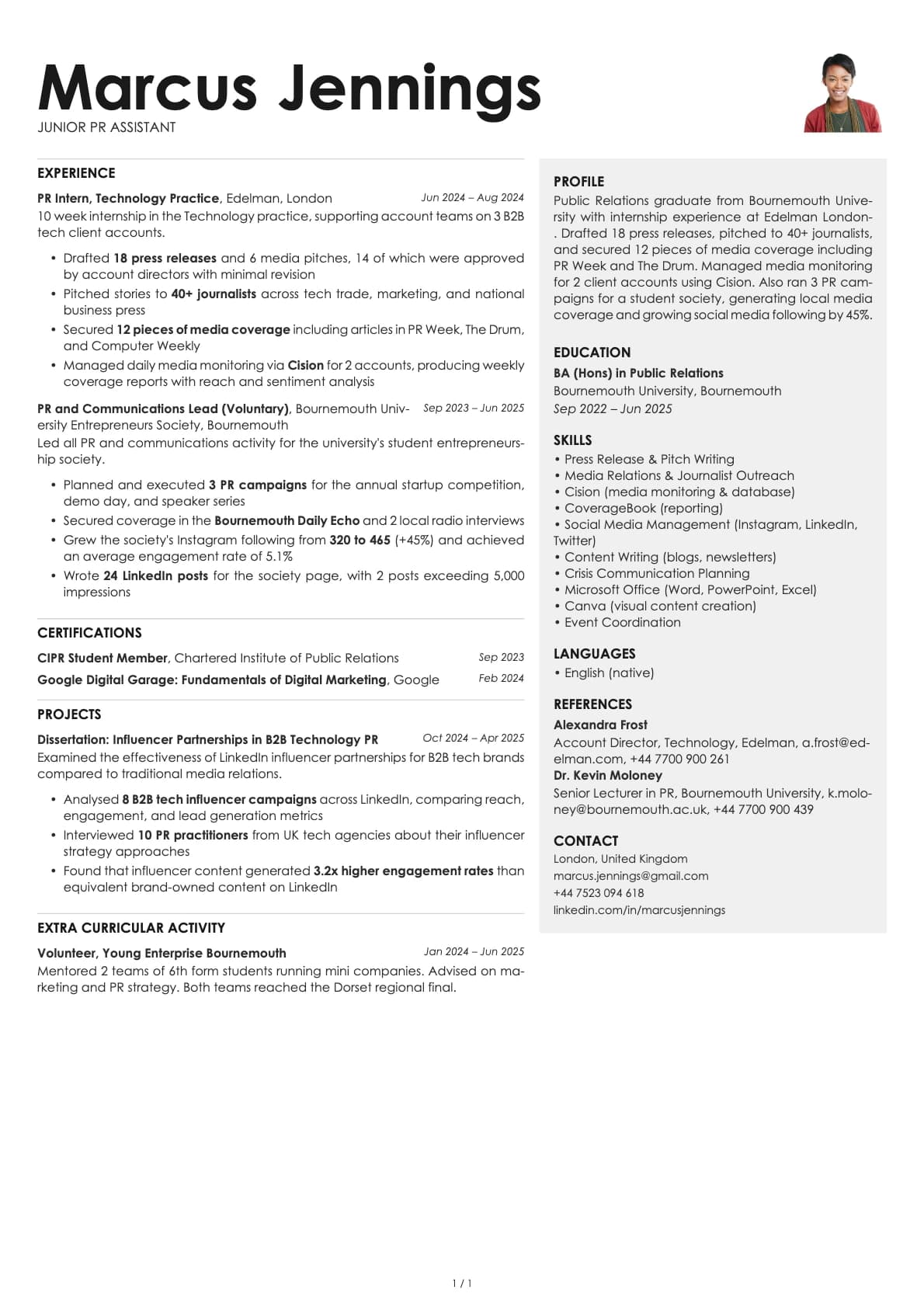
Junior PR Assistant
A junior PR assistant resume example for public relations graduates, showing media coverage results, press release writing, and campaign metrics.
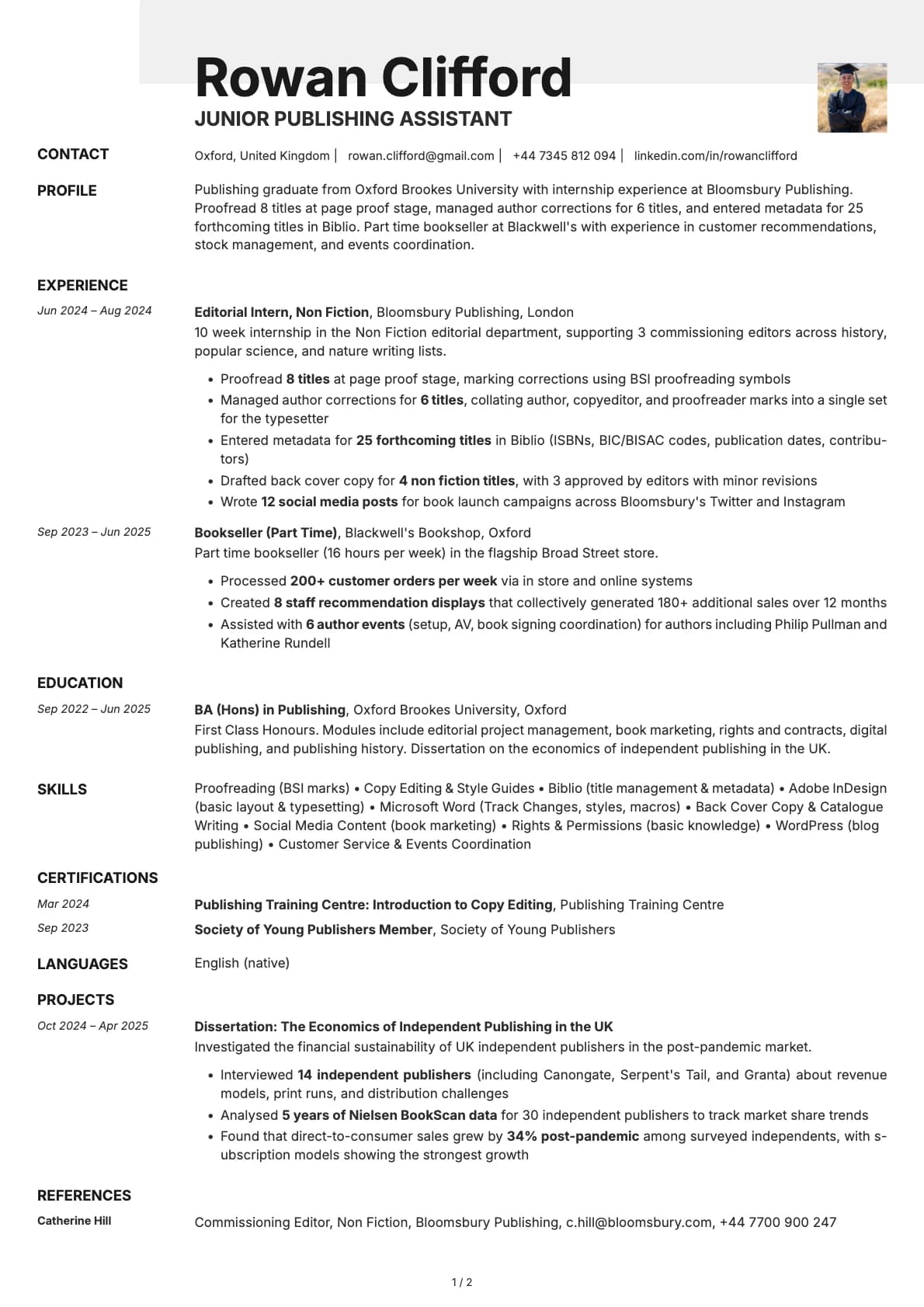
Junior Publishing Assistant
A junior publishing assistant resume example for publishing graduates, showing manuscript handling, production workflows, and rights management basics.
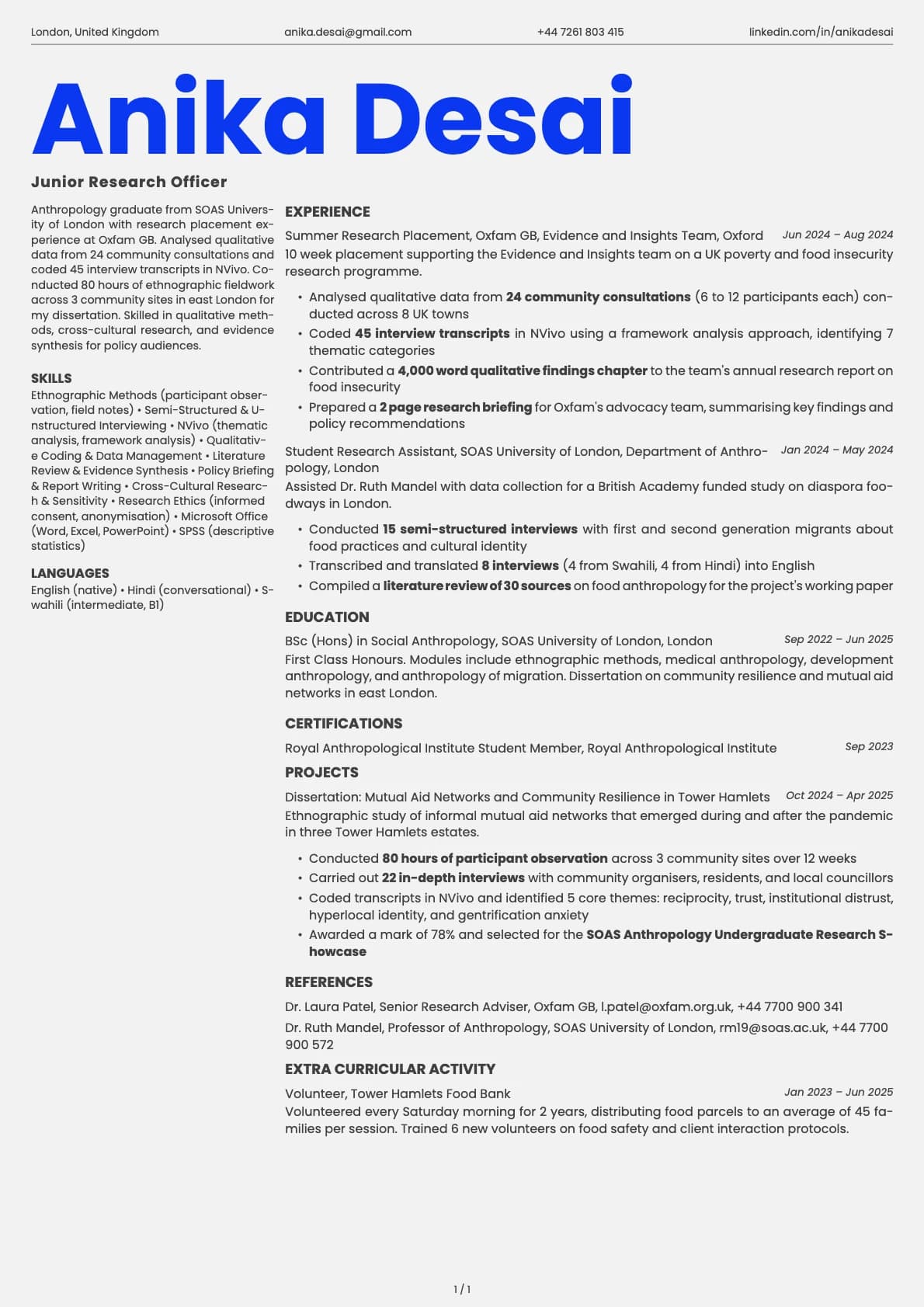
Junior Research Officer
A junior research officer resume example for anthropology graduates, showing ethnographic fieldwork, qualitative analysis, and cross-cultural research skills.
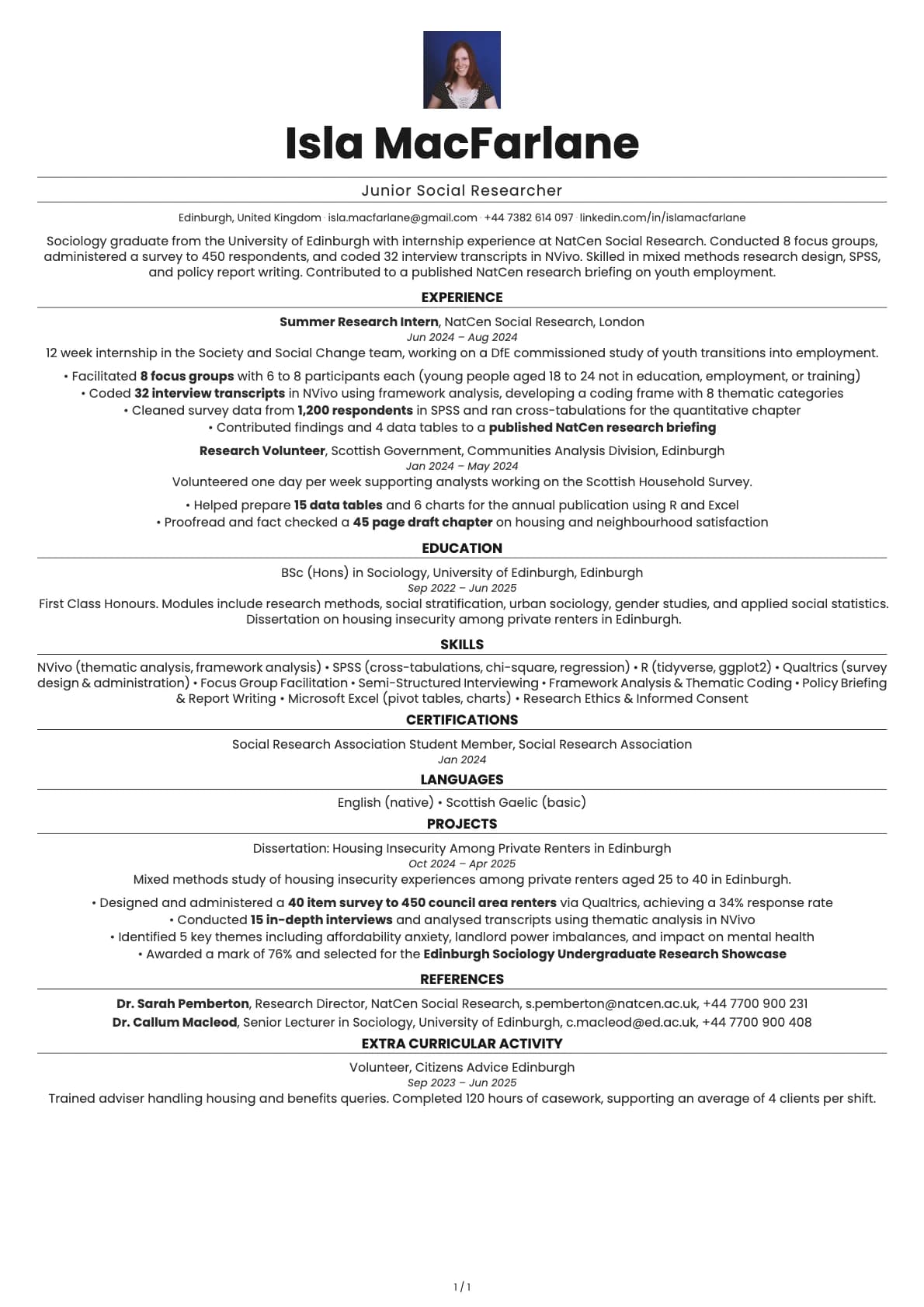
Junior Social Researcher
A junior social researcher resume example for sociology graduates, showing qualitative and quantitative methods, NVivo, and policy research skills.
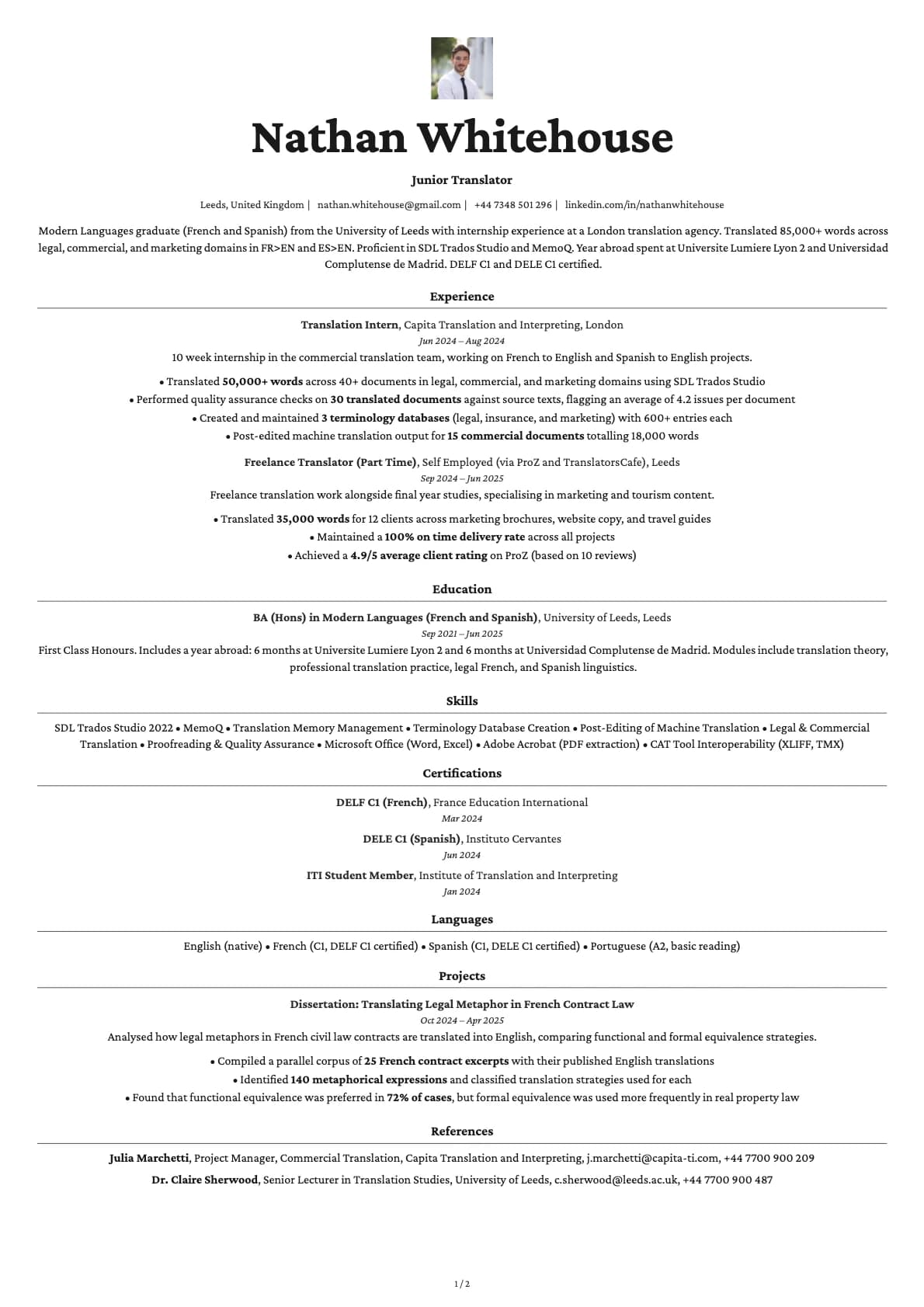
Junior Translator
A junior translator resume example for languages graduates, showing translation volume, CAT tools, and subject matter specialisation.
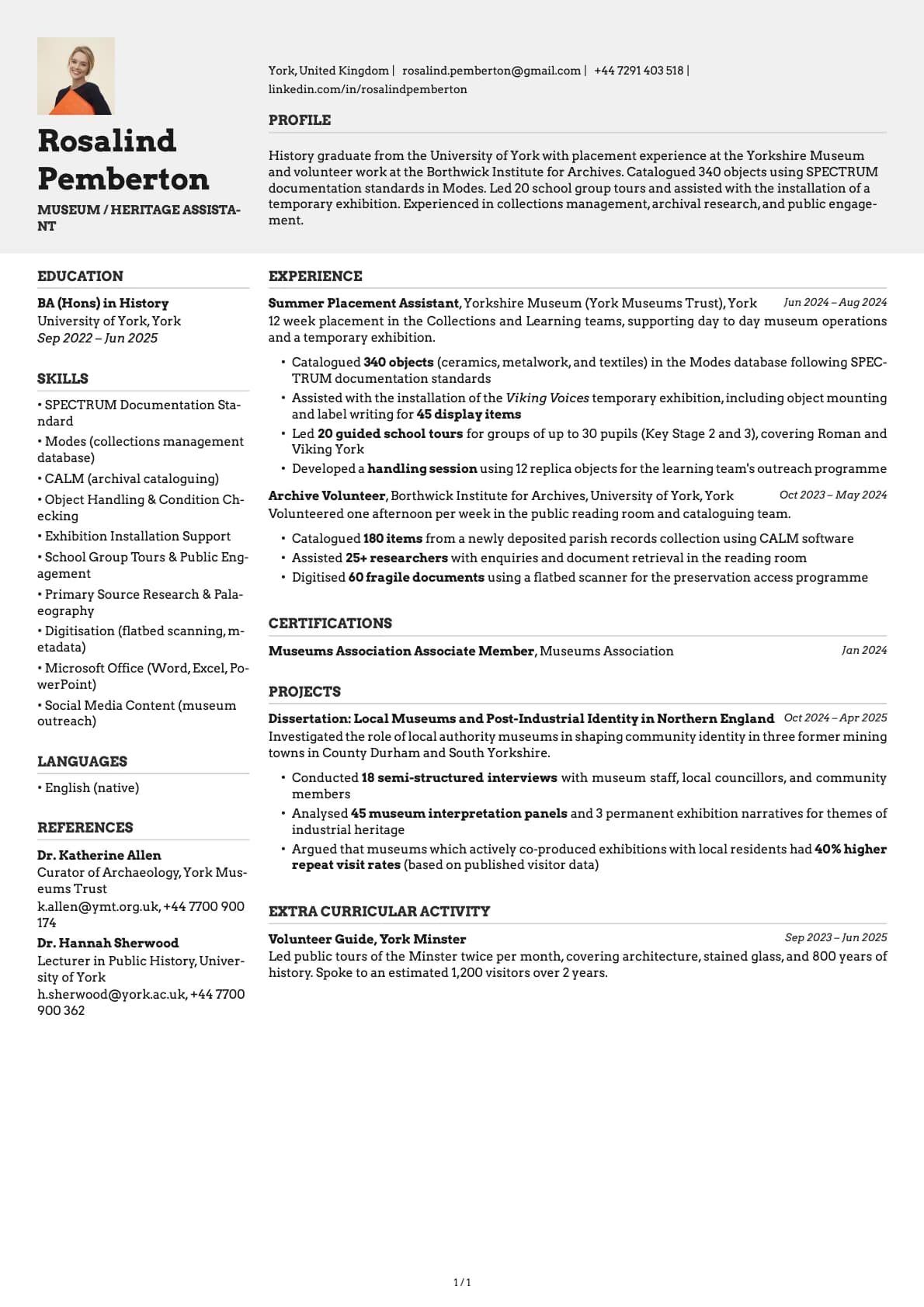
Museum / Heritage Assistant
A museum and heritage assistant resume example for history graduates, showing collections management, visitor engagement, and archival research skills.
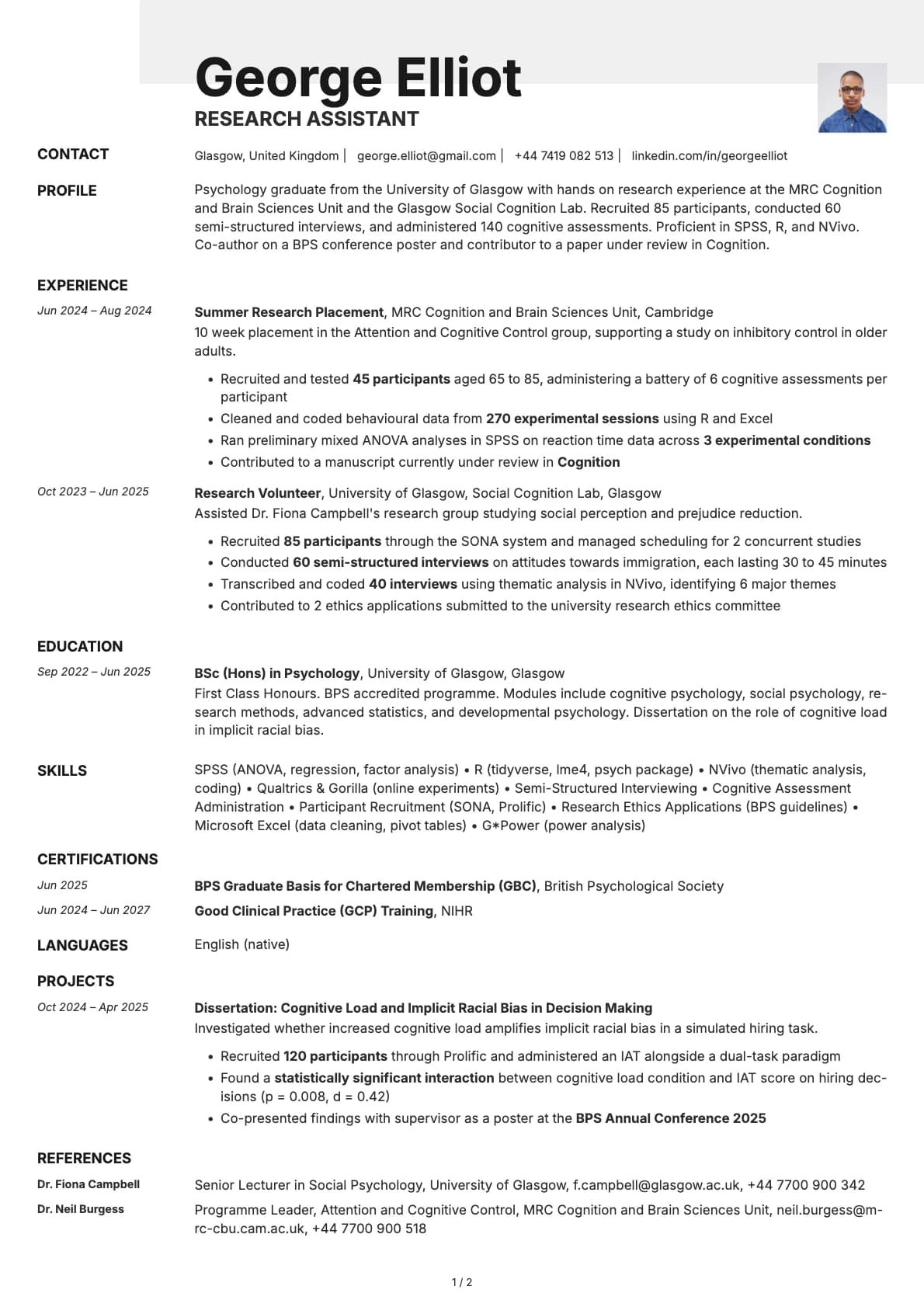
Research Assistant
A research assistant resume example for psychology graduates, showing how to present participant recruitment, data collection, and SPSS analysis skills.
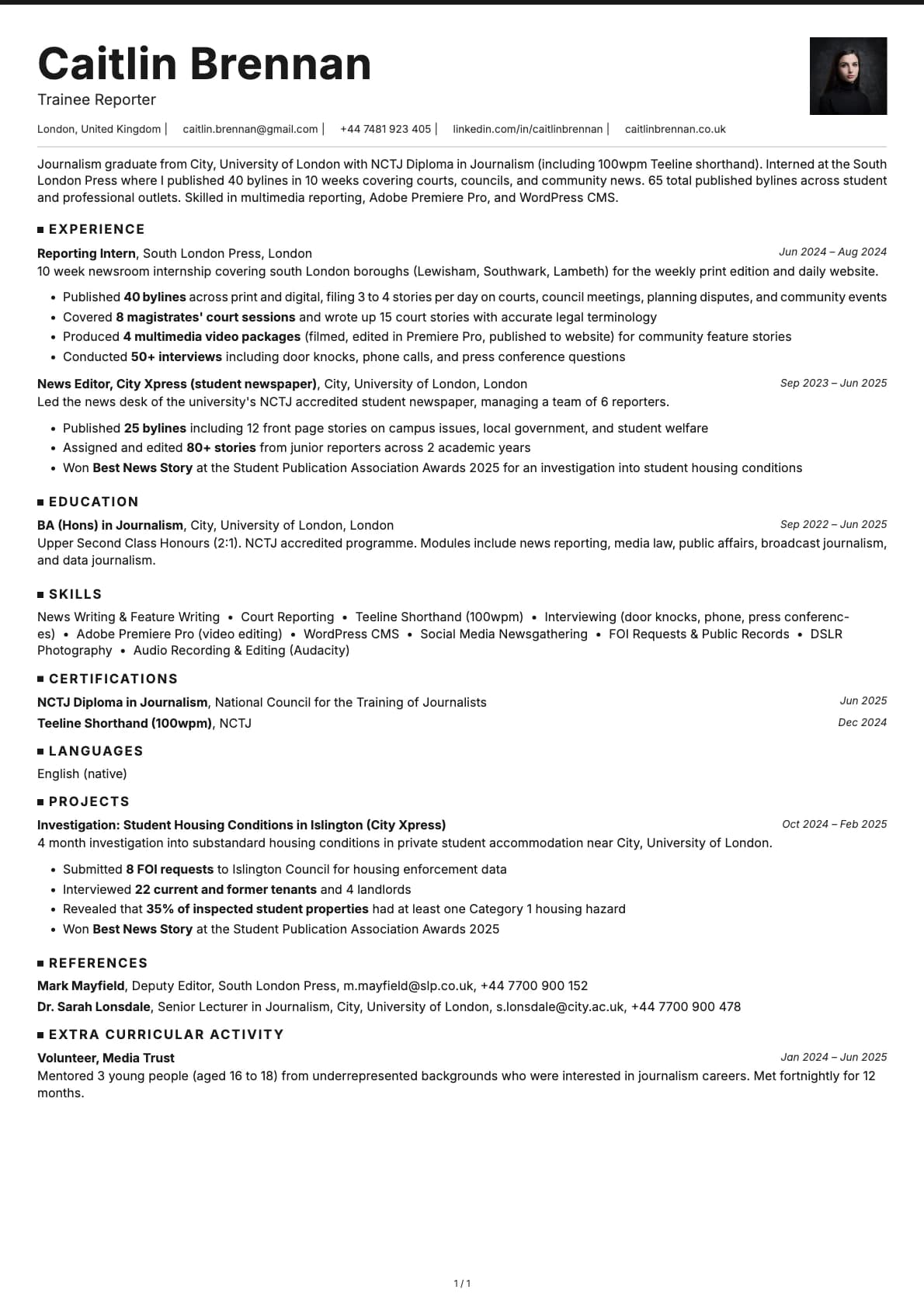
Trainee Reporter
A trainee reporter resume example for journalism graduates, showing published bylines, newsroom experience, and multimedia storytelling skills.
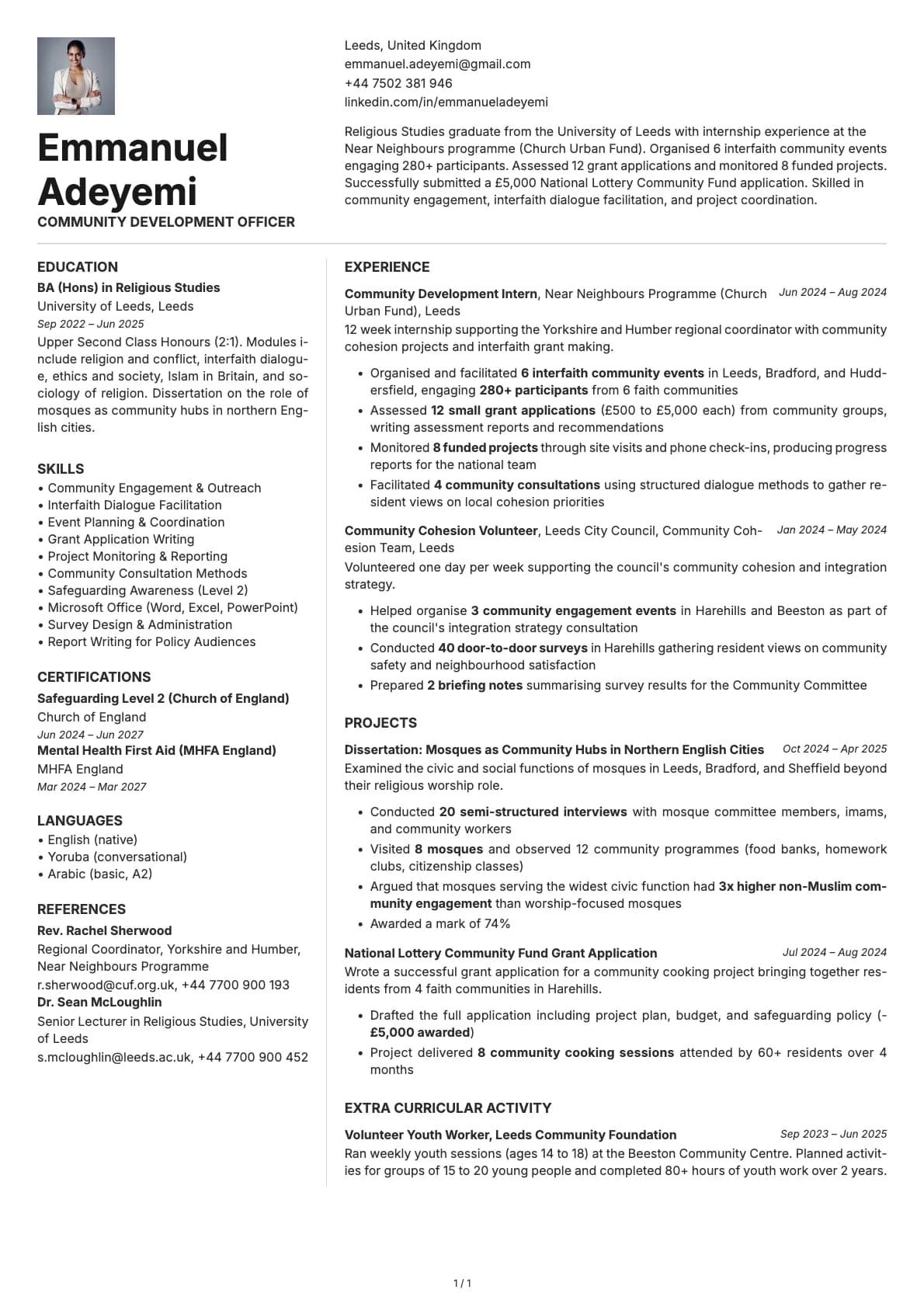
Community Development Officer
A community development officer resume example for religious studies graduates, showing interfaith work, community engagement, and project management skills.
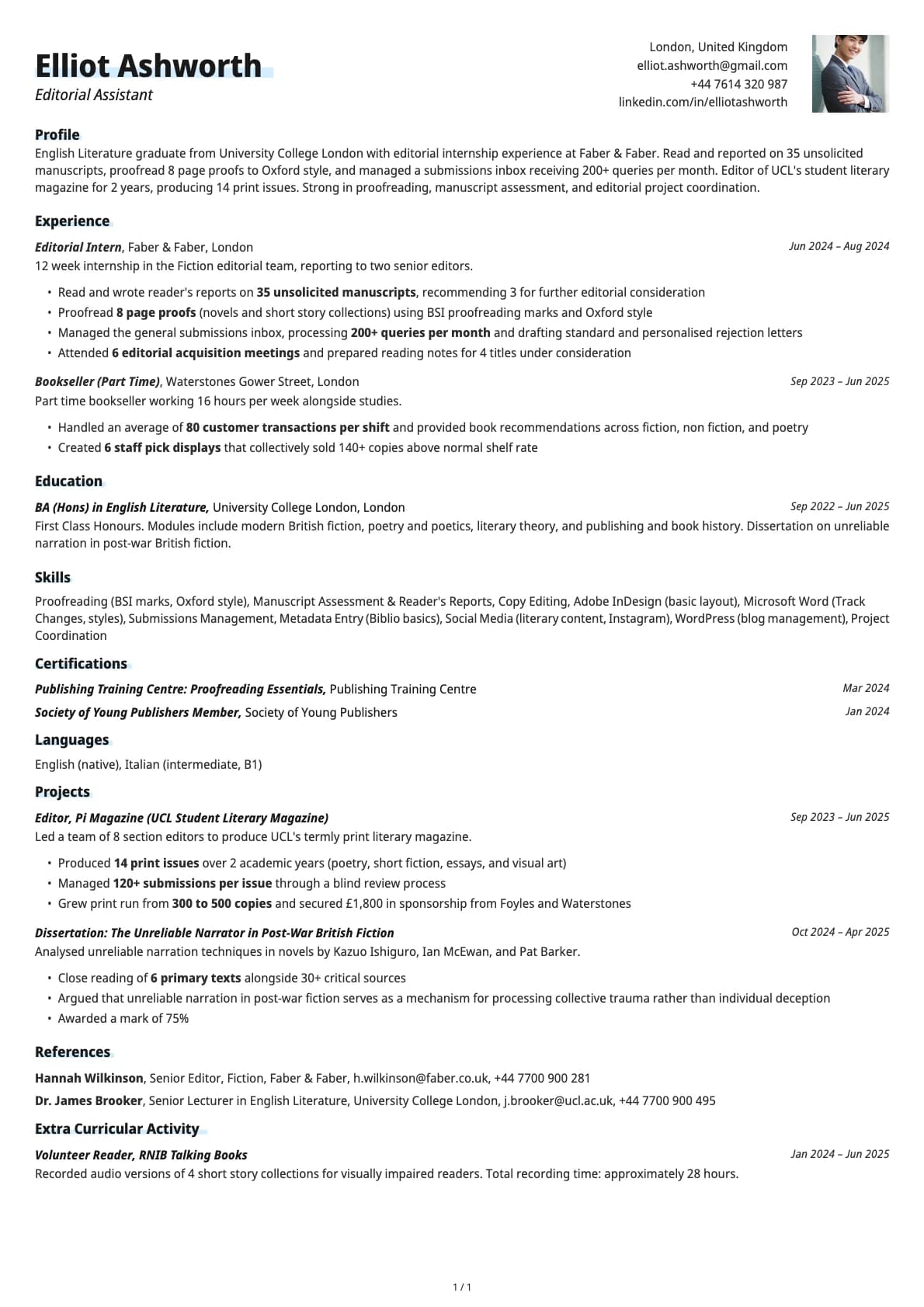
Editorial Assistant
An editorial assistant resume example for English literature graduates, showing proofreading, manuscript handling, and publishing industry experience.
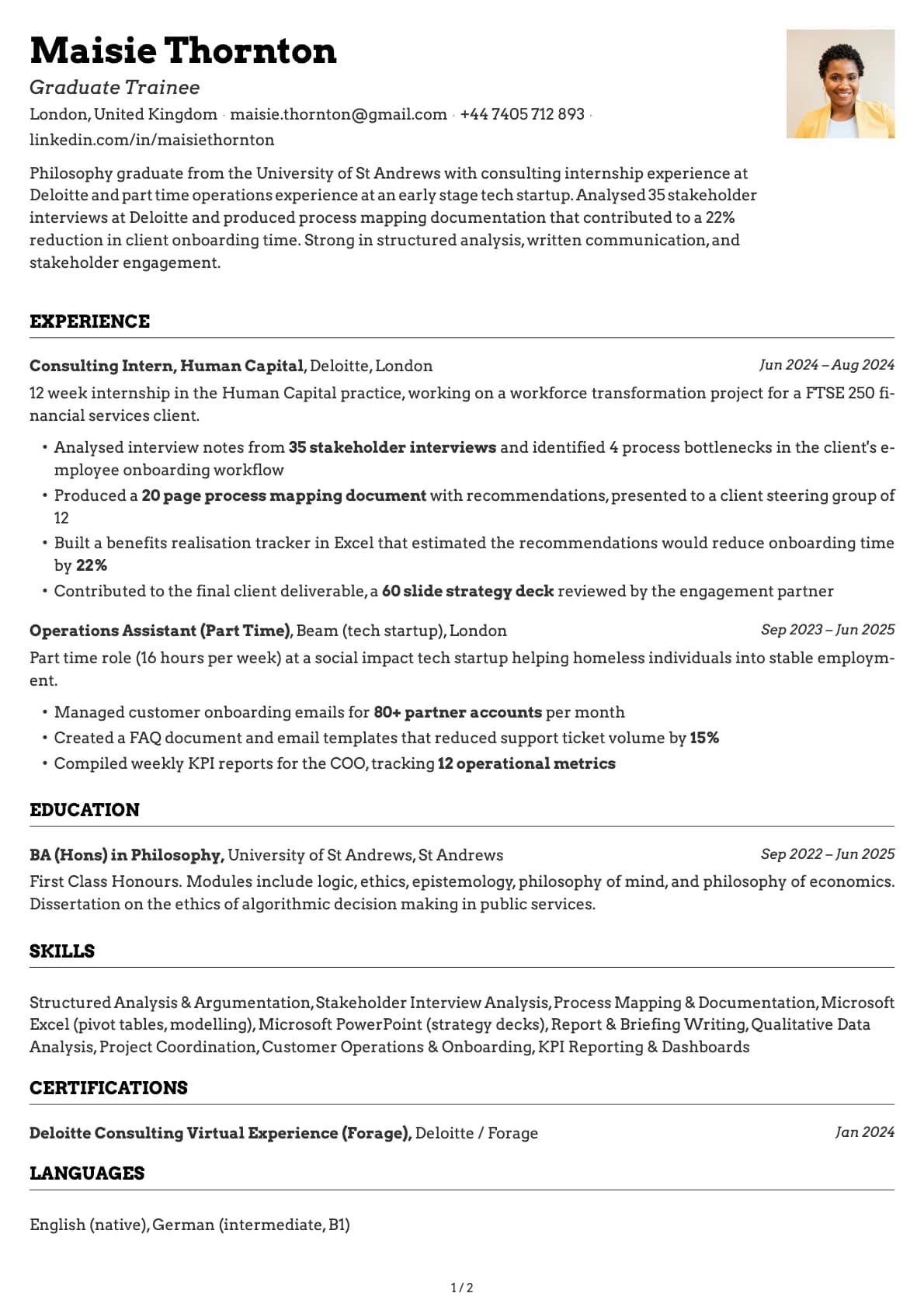
Graduate Trainee
A graduate trainee resume example for philosophy graduates, showing transferable analytical skills, structured thinking, and commercial awareness.
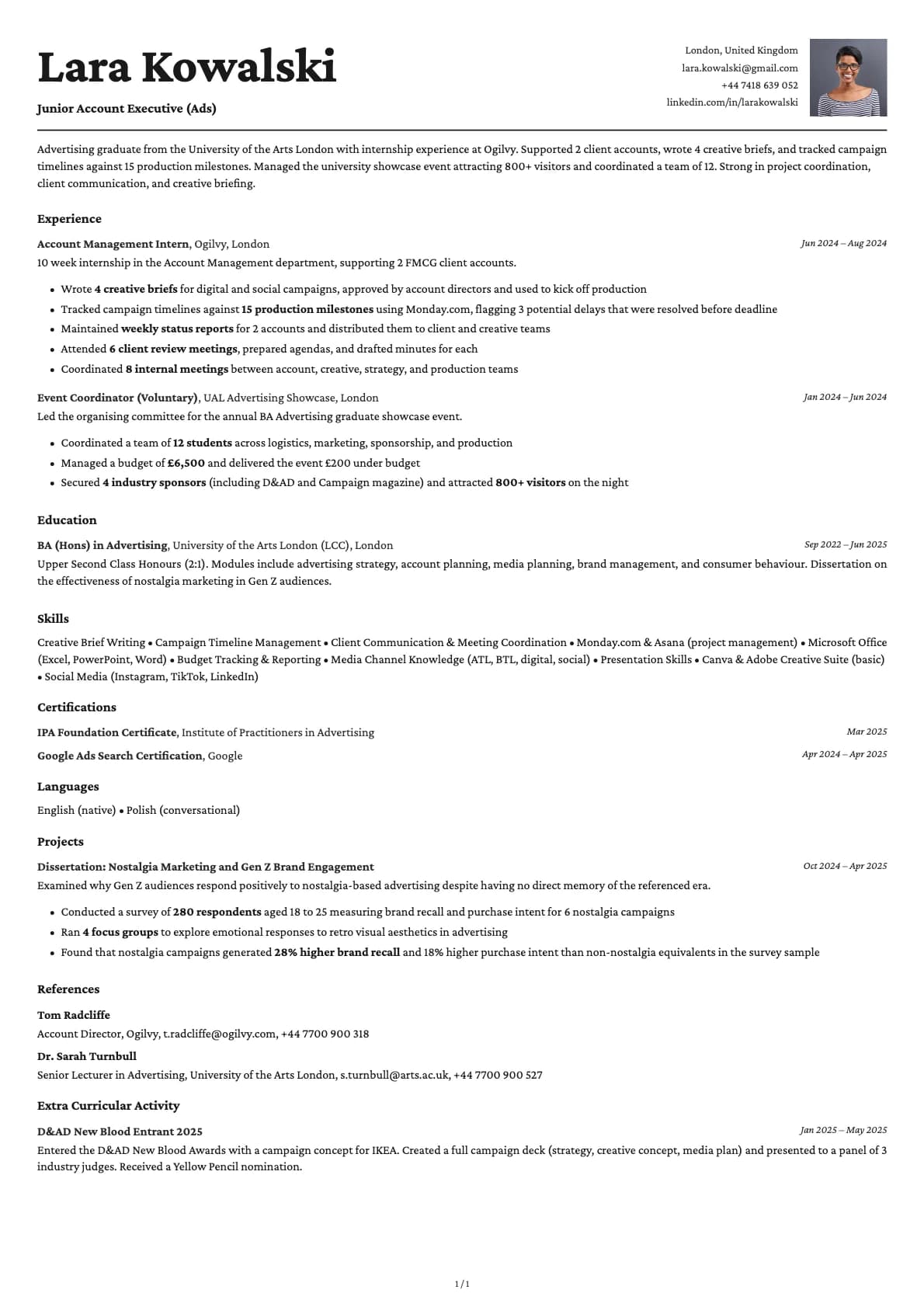
Junior Account Executive (Ads)
A junior account executive resume example for advertising graduates, showing campaign management, client liaison, and creative briefing experience.