HR Assistant Resume Example
An HR assistant resume example with onboarding metrics, ATS screening numbers, and a CIPD Level 3 qualification.

Laddro Team
Free to use. No account needed to start.
Free to use. No account needed to start.
Overview
HR assistant is one of those roles where the job description says "support the HR team" and the actual job is fifty different things at once. You are screening CVs, chasing DBS checks, processing payroll changes, answering employee queries, and booking induction sessions. All before lunch.
The problem with most HR assistant resumes is they read like a copy of the job ad. "Assisted with recruitment." "Supported onboarding." That tells the hiring manager nothing about how much work you actually handled or how well you did it.
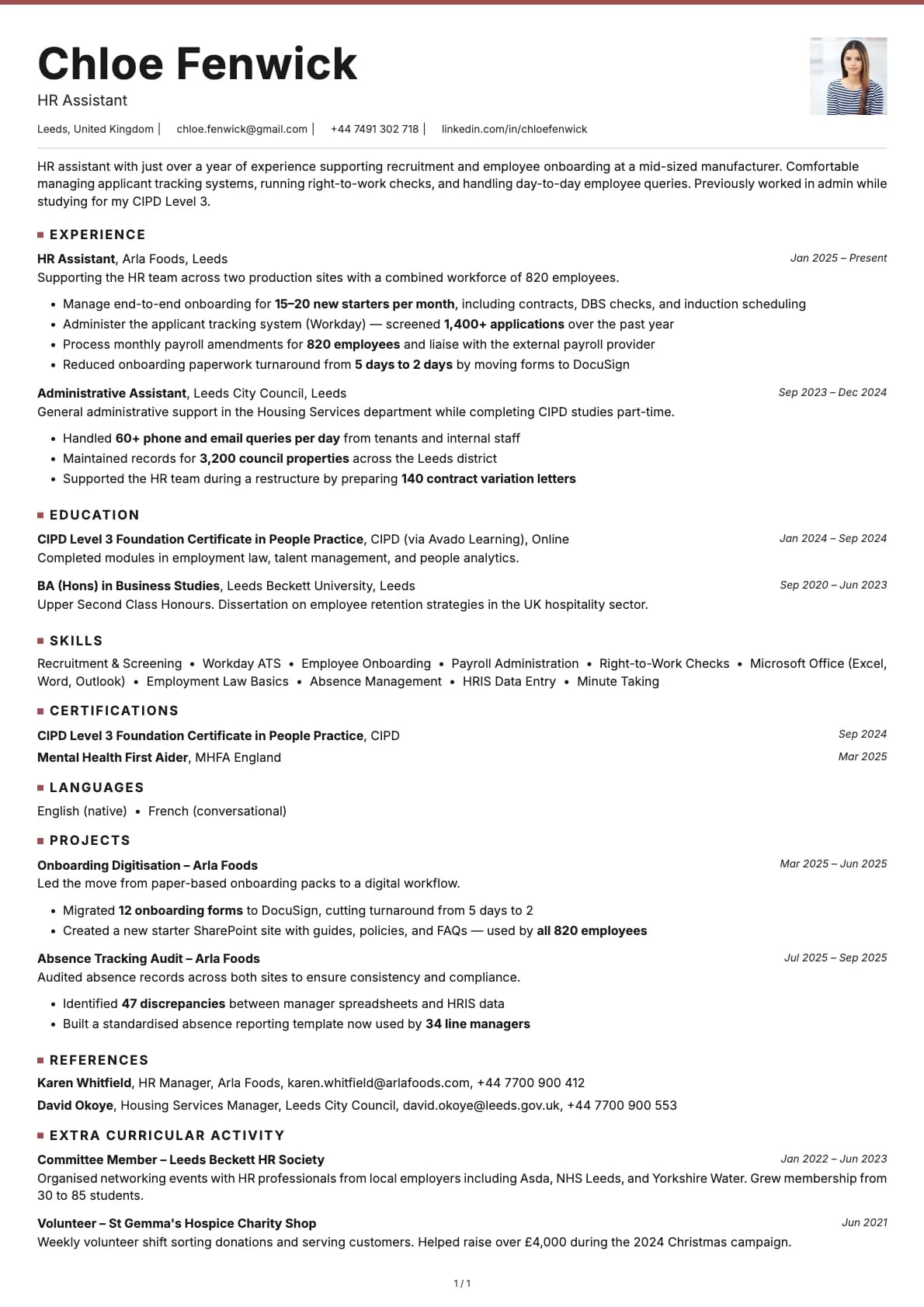
This resume belongs to Chloe, an HR assistant at Arla Foods in Leeds with just over a year of HR experience and a CIPD Level 3. Before that, she worked in admin at Leeds City Council while studying. It is not a long career history. But the resume works because every bullet has a number or a specific outcome attached to it.
Write a summary that shows your scope
When you only have one or two years of experience, the temptation is to pad your summary with adjectives. Do not do that. Instead, tell the reader three things: what your current role involves, what systems you use, and what qualification you are working towards.
Here is Chloe's:
HR assistant with just over a year of experience supporting recruitment and employee onboarding at a mid-sized manufacturer. Comfortable managing applicant tracking systems, running right-to-work checks, and handling day-to-day employee queries. Previously worked in admin while studying for my CIPD Level 3.
No fluff. She names the type of company (mid-sized manufacturer), what she does daily (ATS, right-to-work, employee queries), and mentions her CIPD. A hiring manager can read this in five seconds and know whether to keep going.
Your formula: One sentence on your current role. One sentence listing your daily tasks with system names. One sentence on your qualification or what you are studying towards.
Make your experience bullets count
HR assistant roles can feel routine. But routine is not the same as unimpressive. The key is showing the volume and the outcome.
Look at these bullets from the resume:
"Manage end-to-end onboarding for 15-20 new starters per month, including contracts, DBS checks, and induction scheduling"
"Administer the applicant tracking system (Workday), screened 1,400+ applications over the past year"
"Reduced onboarding paperwork turnaround from 5 days to 2 days by moving forms to DocuSign"
Each one gives a number. 15-20 new starters. 1,400 applications. 5 days to 2. The hiring manager is not guessing about the workload. They can see it.
The last bullet is especially useful because it shows initiative. Moving forms to DocuSign is not a groundbreaking idea. But it is a real improvement that saved real time. And at assistant level, showing that you spotted a problem and fixed it sets you apart from candidates who just describe tasks.
If you do not have big numbers, think about what you do in a day. How many queries? How many records? How many new starters per month? Count something.
How to handle a non-HR previous role
Most people do not start their career in HR. Chloe's previous job was as an administrative assistant at Leeds City Council. She could have just listed generic admin duties. Instead, she pulled out the HR-relevant parts:
"Supported the HR team during a restructure by preparing 140 contract variation letters"
"Handled 60+ phone and email queries per day from tenants and internal staff"
The first bullet directly connects to HR work. The second shows volume and customer service skills, which are relevant to handling employee queries. Even if your previous role was in retail, reception, or education, look for the tasks that connect to what an HR team does: dealing with people, managing records, keeping processes on track.
CIPD and certifications: where to put them
For HR roles at every level, CIPD qualifications carry weight. If you have a Level 3 or are studying towards one, put it in both your education section and your certifications section.
Chloe lists her CIPD Level 3 Foundation Certificate in People Practice under education with the modules she covered (employment law, talent management, people analytics). She also includes a Mental Health First Aider certification. Neither of these are expensive or hard to get, but both show the hiring manager she is investing in the profession.
If you are studying towards a CIPD qualification, list it with an expected completion date. Hiring managers in HR understand the CIPD pathway and seeing "in progress" is better than leaving it off entirely.
Projects show initiative at any level
One thing that separates this resume from a typical assistant-level CV is the projects section. Chloe lists two:
The onboarding digitisation project, where she moved 12 forms to DocuSign and created a SharePoint site for all 820 employees. And an absence tracking audit, where she found 47 discrepancies between manager spreadsheets and the HRIS and built a standardised template for 34 line managers.
These are not huge strategic initiatives. They are small, practical improvements. But they tell the hiring manager: this person does not just do what they are told. They look for problems and fix them.
If you have done anything like this, even if nobody called it a "project," put it on your resume. Cleaned up a spreadsheet? Built a template? Fixed a process? That counts.
Mistakes that HR assistant applicants make
Listing systems without context. Writing "Workday" in your skills section is fine. Writing "Administer the applicant tracking system (Workday) and screened 1,400+ applications" is much better. Show what you did with the system.
No numbers at all. HR assistant work is measurable. How many employees at the site? How many starters per month? How many payroll records do you process? If your resume has zero numbers, the hiring manager has no way to compare your workload to what they need.
Forgetting the CIPD. If you have it, mention it. If you are working towards it, mention that too. Many HR teams require CIPD as a minimum. Leaving it off could mean your CV gets filtered out before anyone reads it.
Using a two-column or heavily designed template. HR teams often use ATS software to screen applicants. Fancy layouts break the parsing. Stick with a clean, single-column format. This resume uses Graphite, which is about as safe as it gets.
One more thing
Read the job ad carefully before you submit. HR assistant roles vary wildly. Some are mostly recruitment-focused. Others are payroll-heavy. Some sit in a shared services centre handling 500 queries a week. Adjust your bullets to match whatever the ad emphasises. If they want someone who knows Workday, make sure Workday is visible in your first three bullets, not buried at the bottom of your skills list.
Build your own version
Open this layout in the builder and swap in your own details. It takes a few minutes.
Free to use. No account needed to start.
Was this resume example helpful?
Rate this example to help us create better content for you.
4.7 average from 134 ratingsRelated resume examples
Administrative Assistant
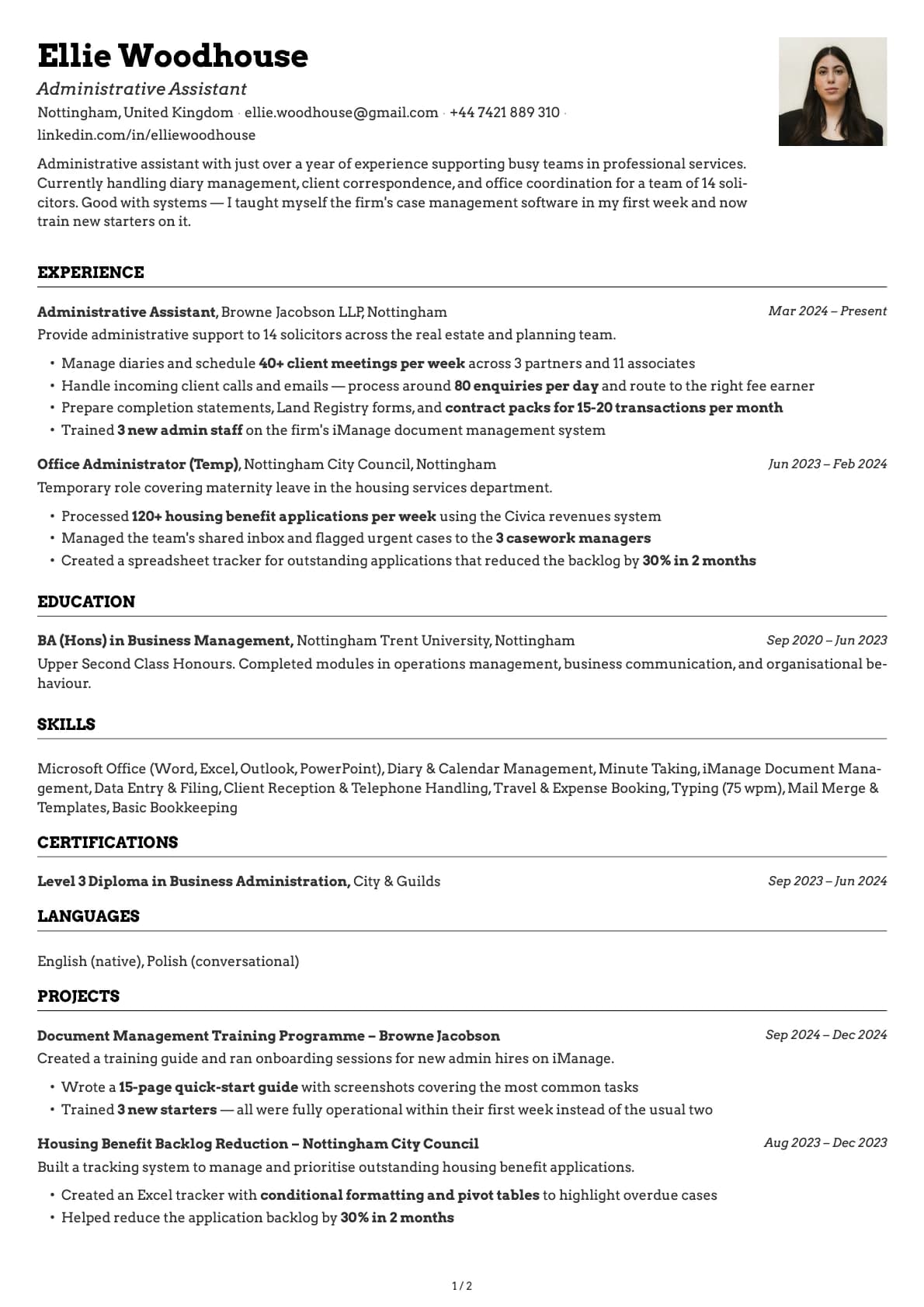
An administrative assistant resume example with law firm experience, showing how to present volume of work, systems knowledge.
Executive Assistant
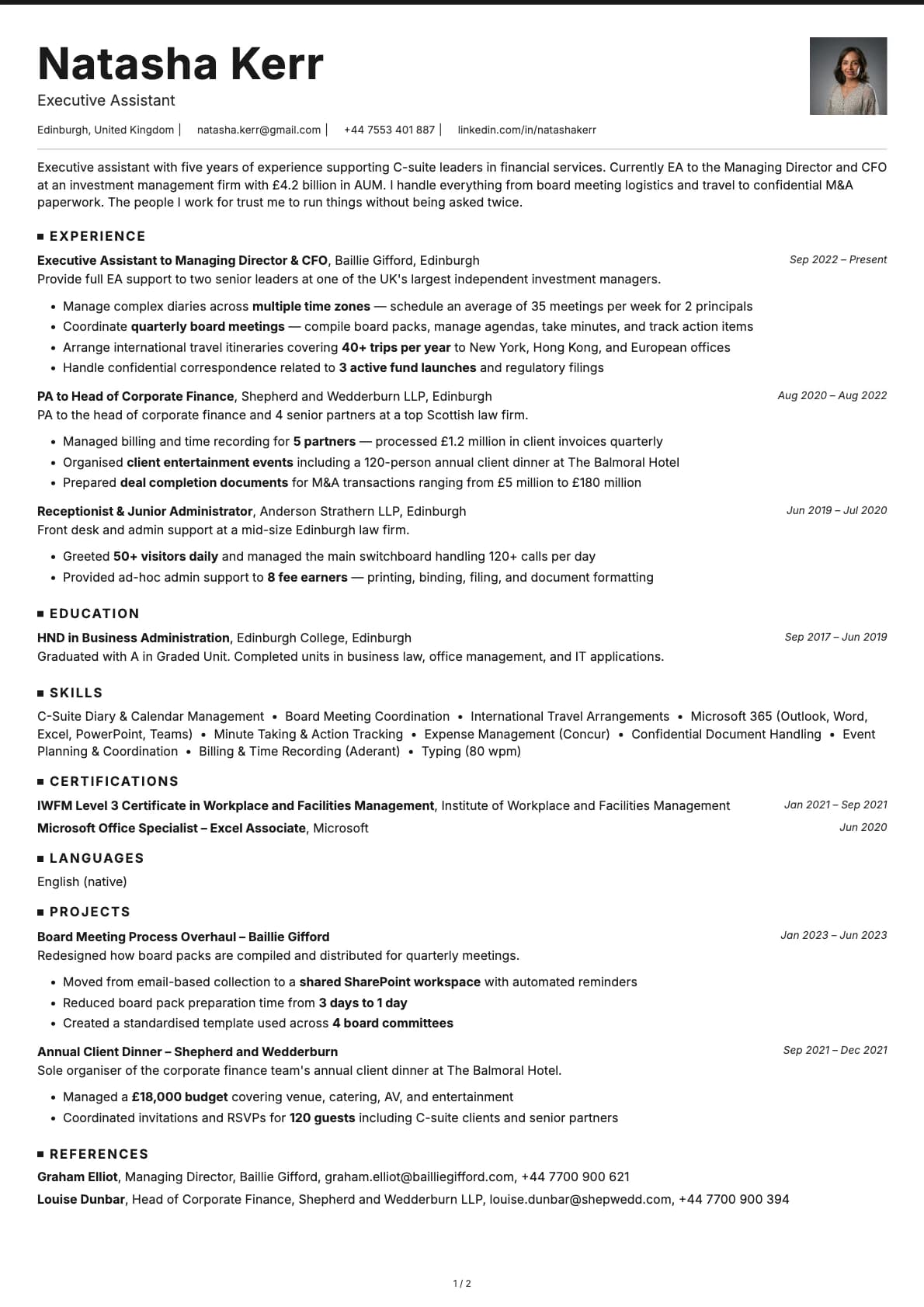
An executive assistant resume example supporting C-suite leaders in financial services.
Office Manager
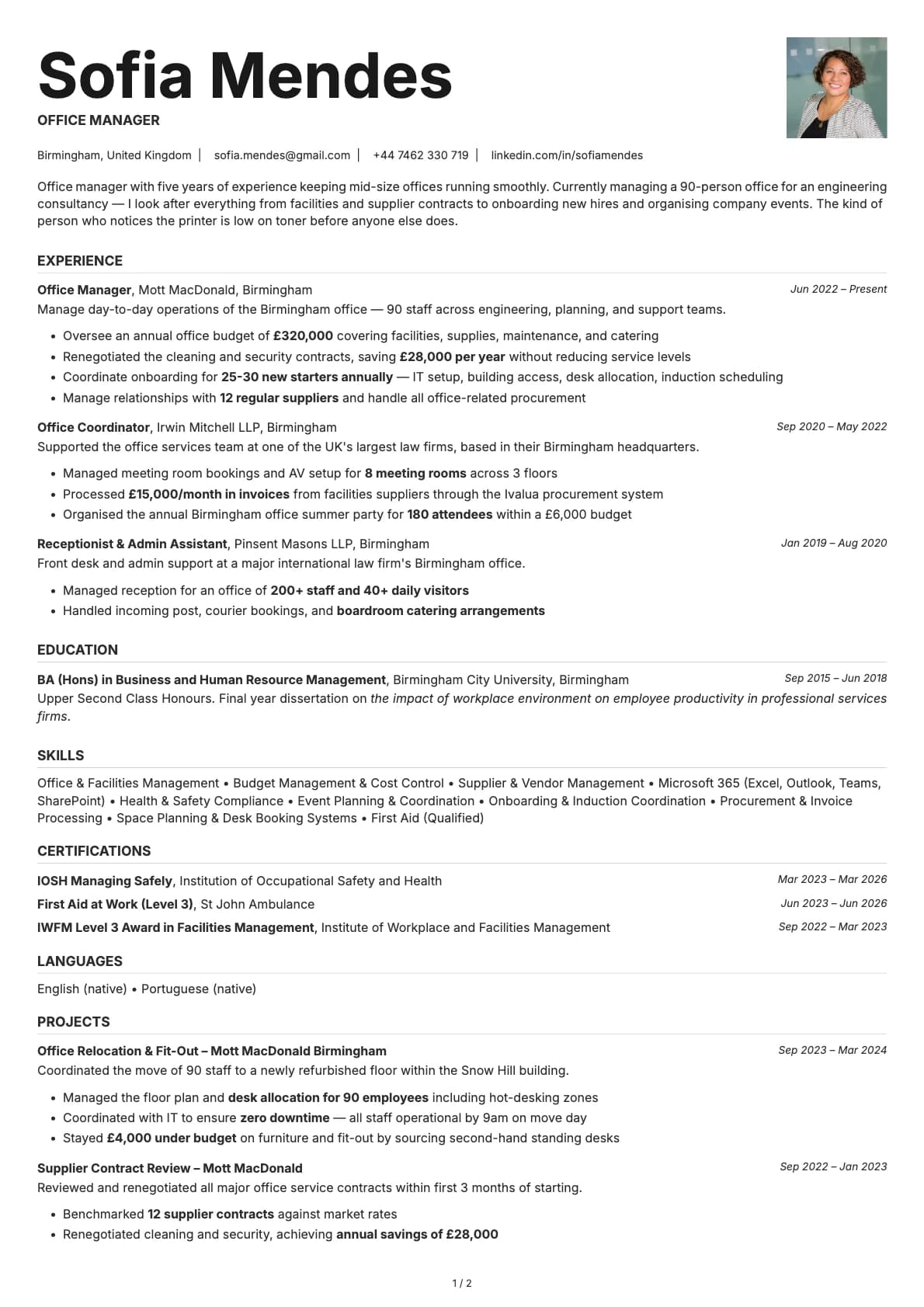
An office manager resume example with budget management, supplier negotiations, and onboarding coordination.
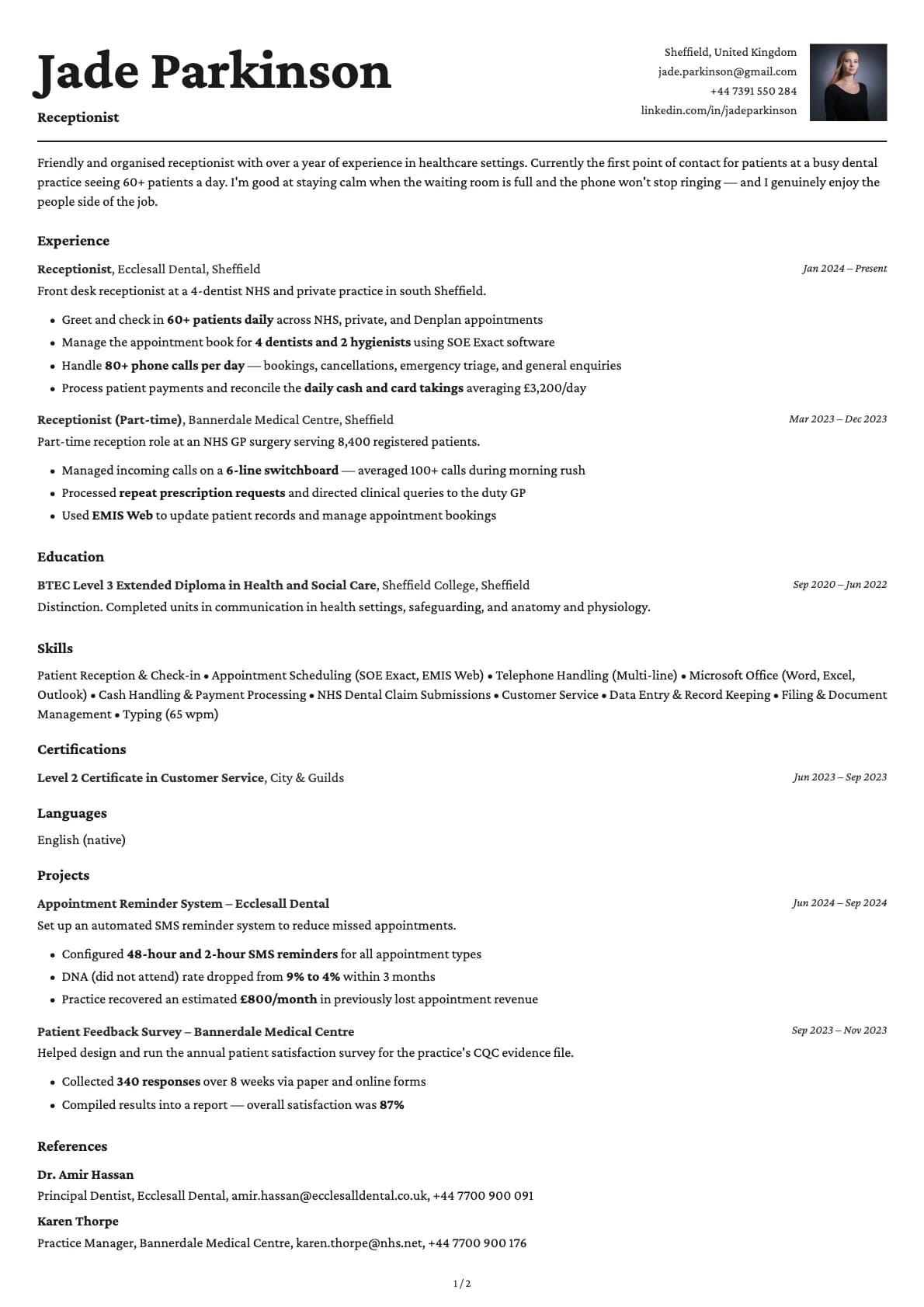
Receptionist
A receptionist resume example from a healthcare setting with patient volumes, phone handling stats, and a process improvement that cut missed.
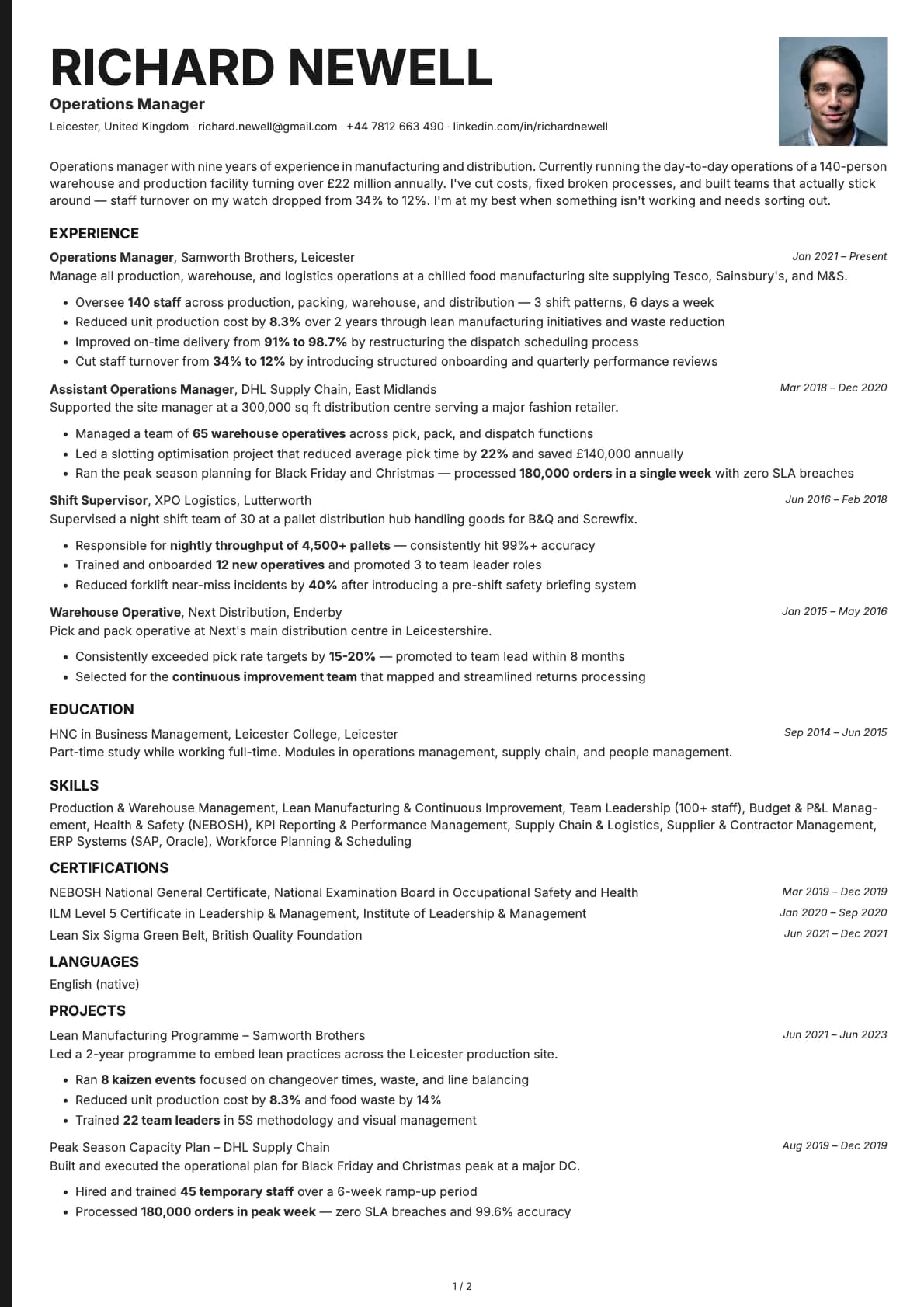
Operations Manager
An operations manager resume example with production KPIs, lean manufacturing results, and team leadership numbers.
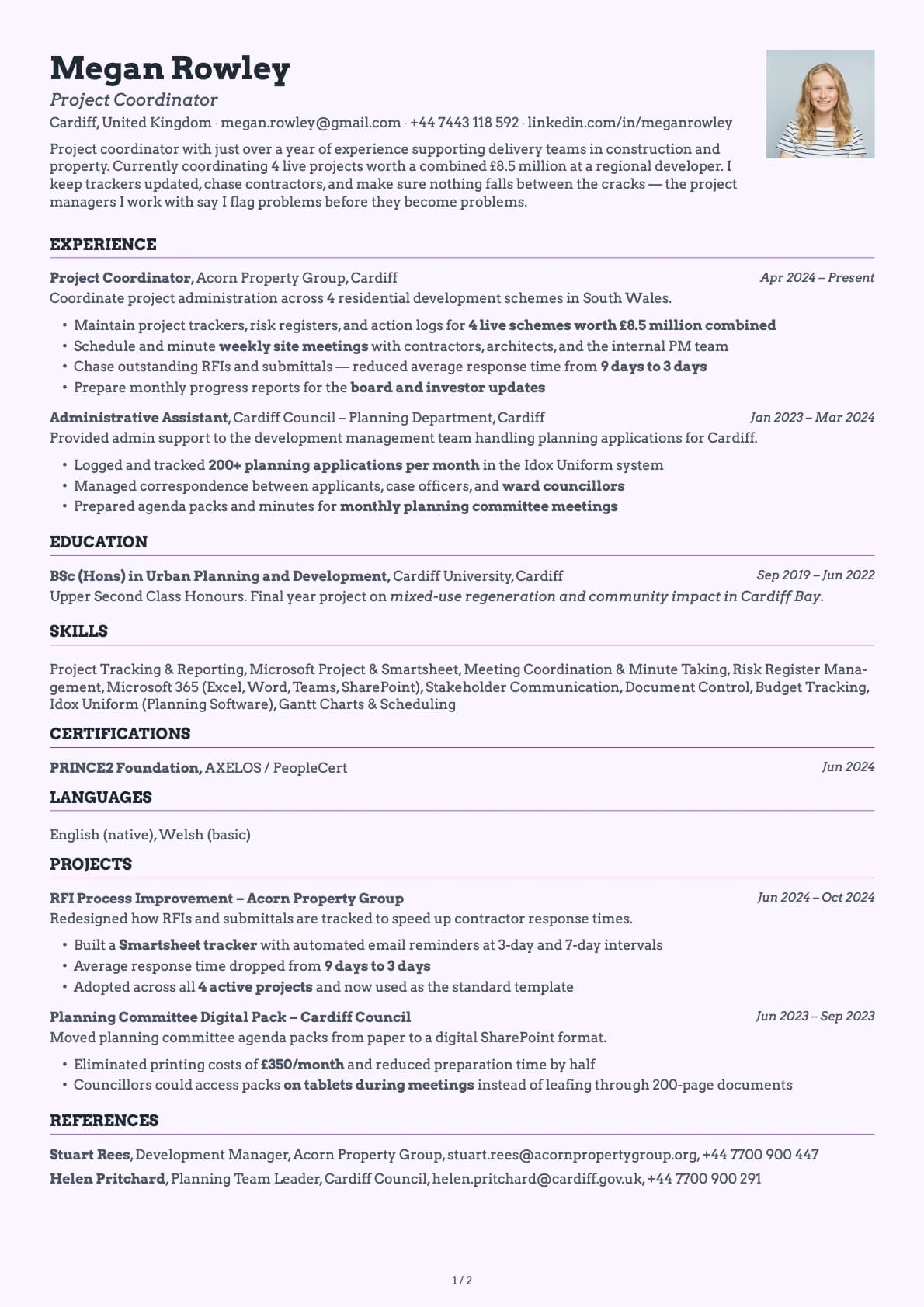
Project Coordinator
A project coordinator resume example with construction project tracking, process improvements, and real cost savings from an early-career professional.
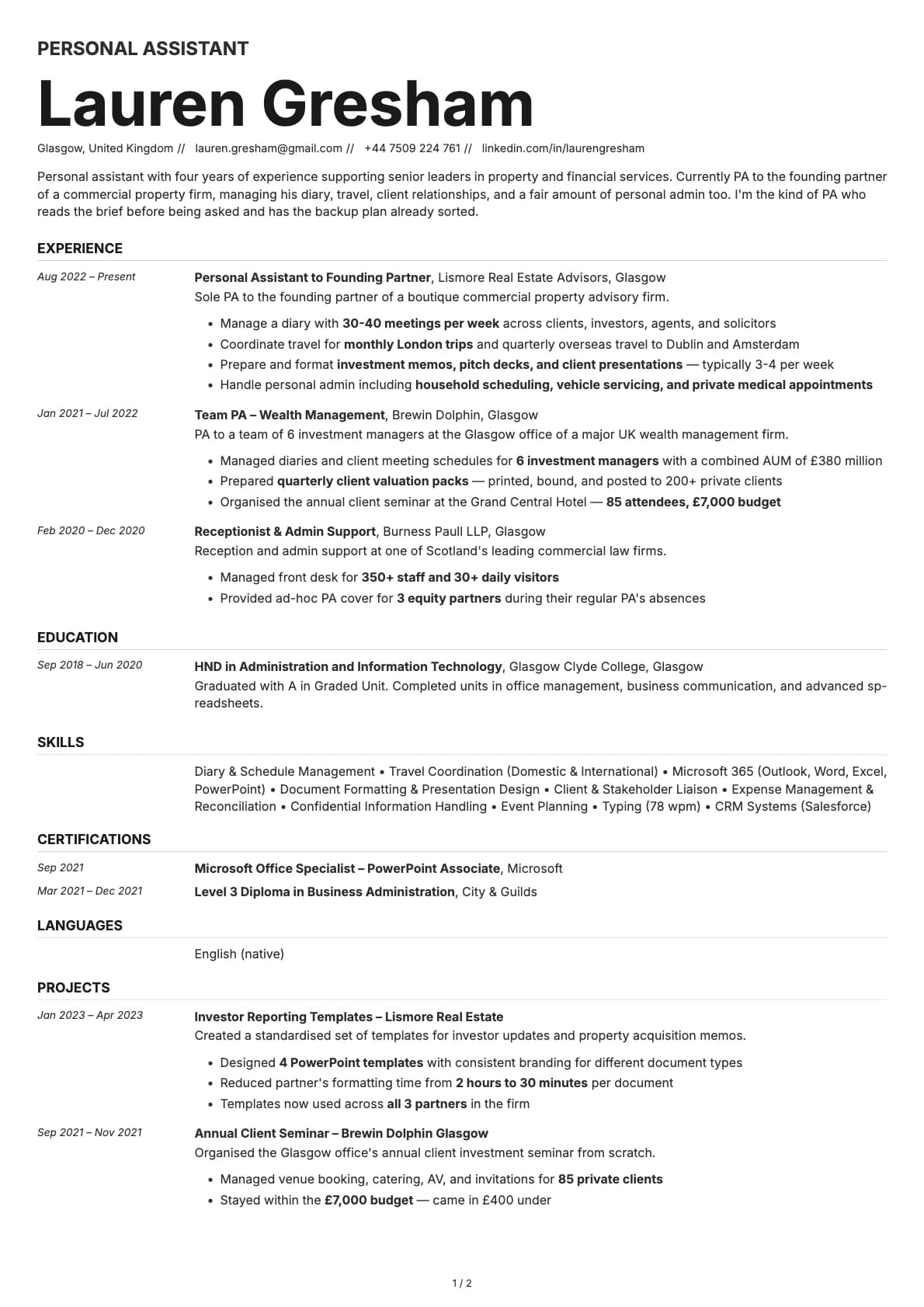
Personal Assistant
A personal assistant resume example showing how to present diary management, event coordination, and executive support with real numbers.
Related articles

AI Is Screening Your Resume Before Any Human Sees It
AI screens most resumes before a human ever reads them. 97.4% of Fortune 500 companies run an ATS. This is what that means for you and what you can do about it.

The Best Resume Builders in 2026, Compared Honestly
Resume.io, Zety, Enhancv, Kickresume, Teal, and Laddro compared honestly: real pricing, free tiers, mobile apps, and where each tool wins. All prices checked in September 2026.

Burnout Recovery: A Real Timeline, Not 'Take a Bubble Bath'
55% of the U.S. workforce is burned out. Recovery takes 3 to 12 months. Here's what that actually looks like, stage by stage.