Personal Assistant Resume Example
A personal assistant resume example showing how to present diary management, event coordination, and executive support with real numbers.

Laddro Team
Free to use. No account needed to start.
Free to use. No account needed to start.
Overview
A personal assistant resume has a unique problem. The better you are at your job, the more invisible your work becomes. Everything runs smoothly and nobody thinks about why. So when it comes time to write a resume, many PAs struggle to explain what they actually do beyond "supported a senior executive."
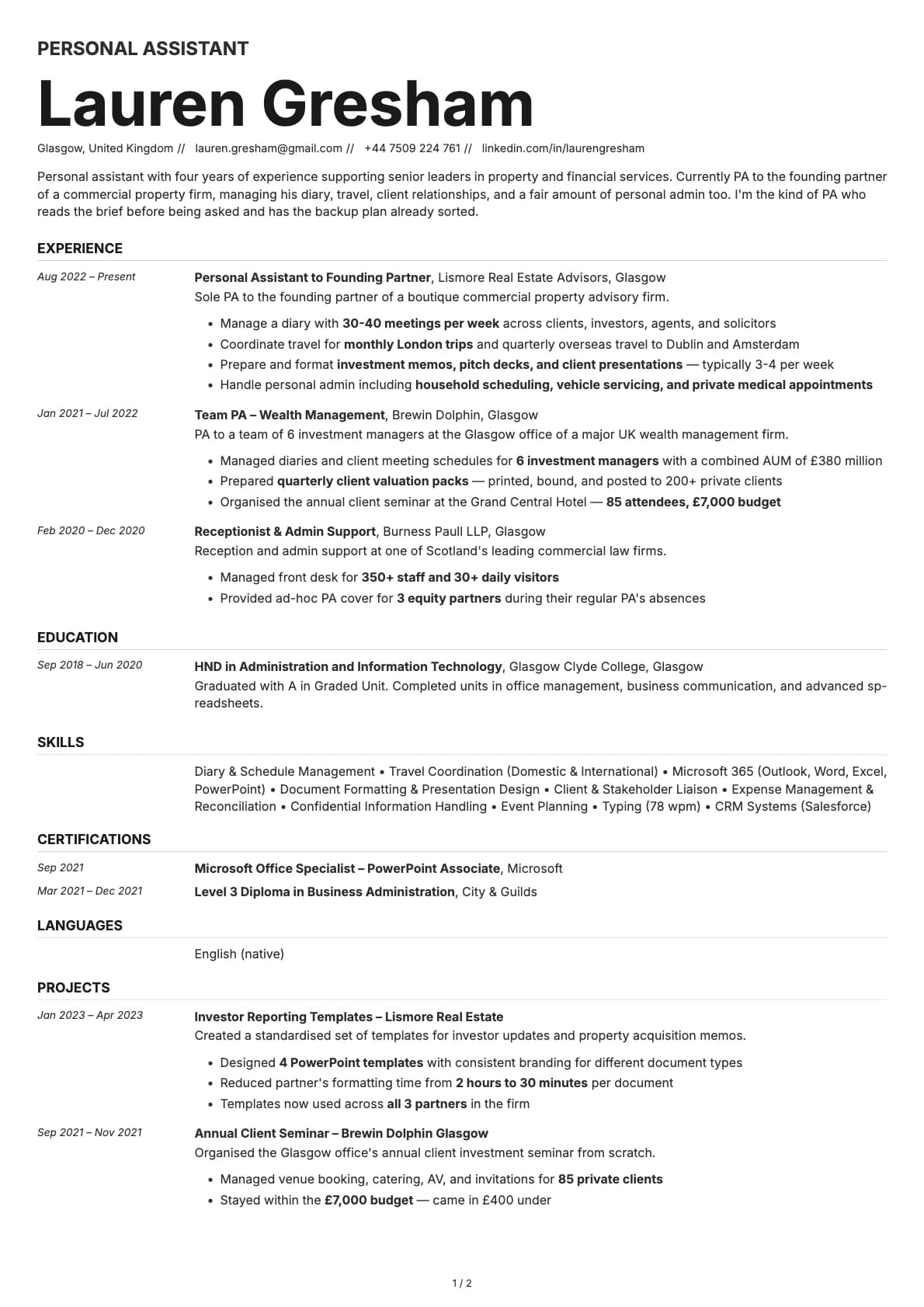
This resume belongs to Lauren Gresham, a PA with four years of experience in Glasgow. She currently supports the founding partner of a commercial property advisory firm, and before that she was team PA to six investment managers at Brewin Dolphin. She also started as a receptionist at Burness Paull, one of Scotland's top law firms.
What makes this resume work is specificity. Diary volumes, event budgets, team sizes, and concrete process improvements. Let us break down each section so you can apply the same approach.
Write a summary that shows your working style
Most PA summaries say something like "highly organised professional with excellent communication skills." Every PA says that. It tells the reader nothing.
Here is Lauren's summary approach. She names the industries she has worked in (property and financial services), names her current boss's role (founding partner), and lists the actual scope of her work (diary, travel, client relationships, personal admin). Then she adds a line about how she works: "I'm the kind of PA who reads the brief before being asked and has the backup plan already sorted."
That last sentence is doing real work. It tells the hiring manager what it would be like to work with her. Not a list of generic traits, but a specific working style.
For your resume: Write one sentence about your experience level and industries. One sentence about what you currently manage. And one sentence about how you work. Delete everything else.
How to quantify PA work (it is easier than you think)
PAs often say "I don't have numbers to put on my resume." But you do. You just need to know where to look.
Lauren's resume is full of them:
"Manage a diary with 30-40 meetings per week across clients, investors, agents, and solicitors"
"Managed diaries and client meeting schedules for 6 investment managers with a combined AUM of £380 million"
"Organised the annual client seminar at the Grand Central Hotel, 85 attendees, £7,000 budget"
None of these are dramatic achievements. They are just the job described with enough detail that the reader can picture the workload. How many meetings do you schedule per week? How many people do you support? How big was the last event you organised? What was the budget?
The formula: What you manage + how much of it + who it is for.
Show the range of what you handle
One thing that sets a strong PA resume apart is showing breadth. A PA is not just a diary manager. Lauren's resume covers:
- Diary management (30-40 meetings per week)
- Travel coordination (monthly London trips, quarterly international)
- Document preparation (investment memos, pitch decks, presentations)
- Personal admin (household scheduling, vehicle servicing, medical appointments)
- Event planning (85-person client seminar)
- Client liaison and stakeholder management
If you only list one or two of these, the hiring manager might assume that is all you can do. Spread your bullets across different types of work so they can see the full picture.
Projects matter more than you think
Lauren includes a project where she created standardised PowerPoint templates for investor updates. It sounds small. But look at the detail:
"Reduced partner's formatting time from 2 hours to 30 minutes per document"
"Templates now used across all 3 partners in the firm"
She identified a problem (the partner was spending too long formatting documents), created a solution (standardised templates), and the result was measurable (time saved, adopted firm-wide). That is exactly the kind of initiative that gets you hired at the next level.
If you have ever set up a new filing system, moved something from paper to digital, created a template, or improved a process, write it up the same way. Problem, solution, result.
Skills section: match the job listing
Lauren lists 10 skills including her typing speed (78 wpm) and specific software (Salesforce, Microsoft 365). The typing speed is a smart inclusion because many PA job listings ask for it. If you have a fast typing speed, put a number on it. It is more convincing than "excellent typing skills."
Also note that she lists "Confidential Information Handling" as a skill. For PAs who work with senior executives, discretion is part of the job. Naming it explicitly tells the hiring manager you understand that.
Mistakes that cost PA candidates interviews
Describing your boss's job instead of yours. "Supported the CEO in managing a £50 million division" sounds impressive but tells the reader nothing about what YOU did. Instead: "Managed the CEO's diary, coordinated board meeting logistics for 12 directors, and prepared monthly board packs."
Leaving out software. If you use Outlook, SAP Concur, Salesforce, SharePoint, or any specific booking or expense system, list it. Many companies filter CVs by software keywords.
Not mentioning personal admin. Some PAs think personal admin sounds unprofessional. It is actually a selling point. Managing someone's personal life alongside their professional diary shows a high level of trust. If you handle personal admin, say so.
Using a flashy template. PA roles at corporate firms and financial services companies are conservative. Stick with a clean, single-column layout. Lauren's resume uses Zinc, which is minimal and professional.
One more thing
PAs get hired on trust. The hiring manager needs to believe you can handle sensitive information, think ahead, and keep things running without constant supervision. Your resume should demonstrate all three through specific examples, not through adjectives. Show the diary volume, the event you organised on budget, the process you fixed. Let the work speak for itself.
Build your own version
Open this layout in the builder and swap in your own details. It takes a few minutes.
Free to use. No account needed to start.
Was this resume example helpful?
Rate this example to help us create better content for you.
4.7 average from 134 ratingsRelated resume examples
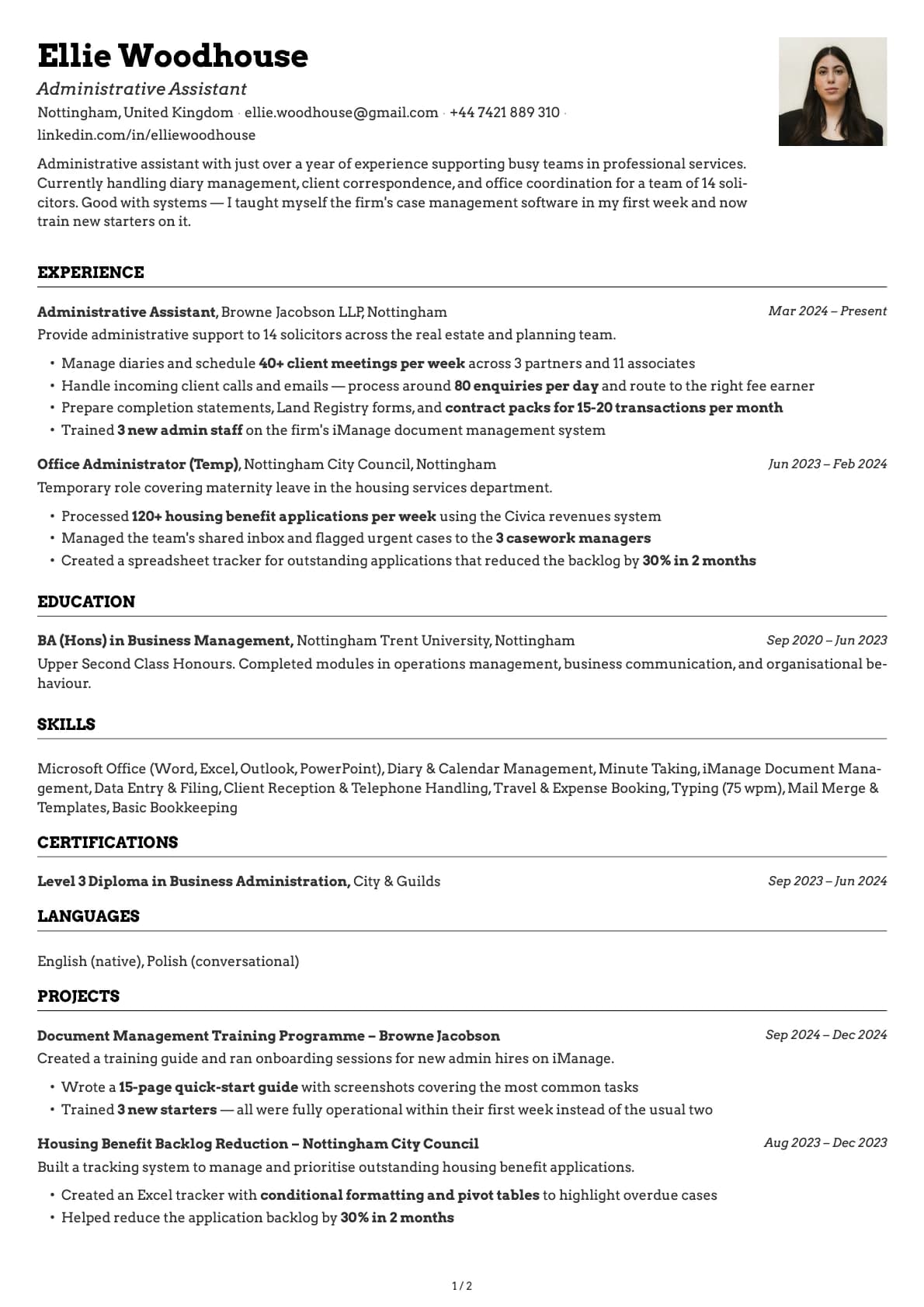
Administrative Assistant
An administrative assistant resume example with law firm experience, showing how to present volume of work, systems knowledge.
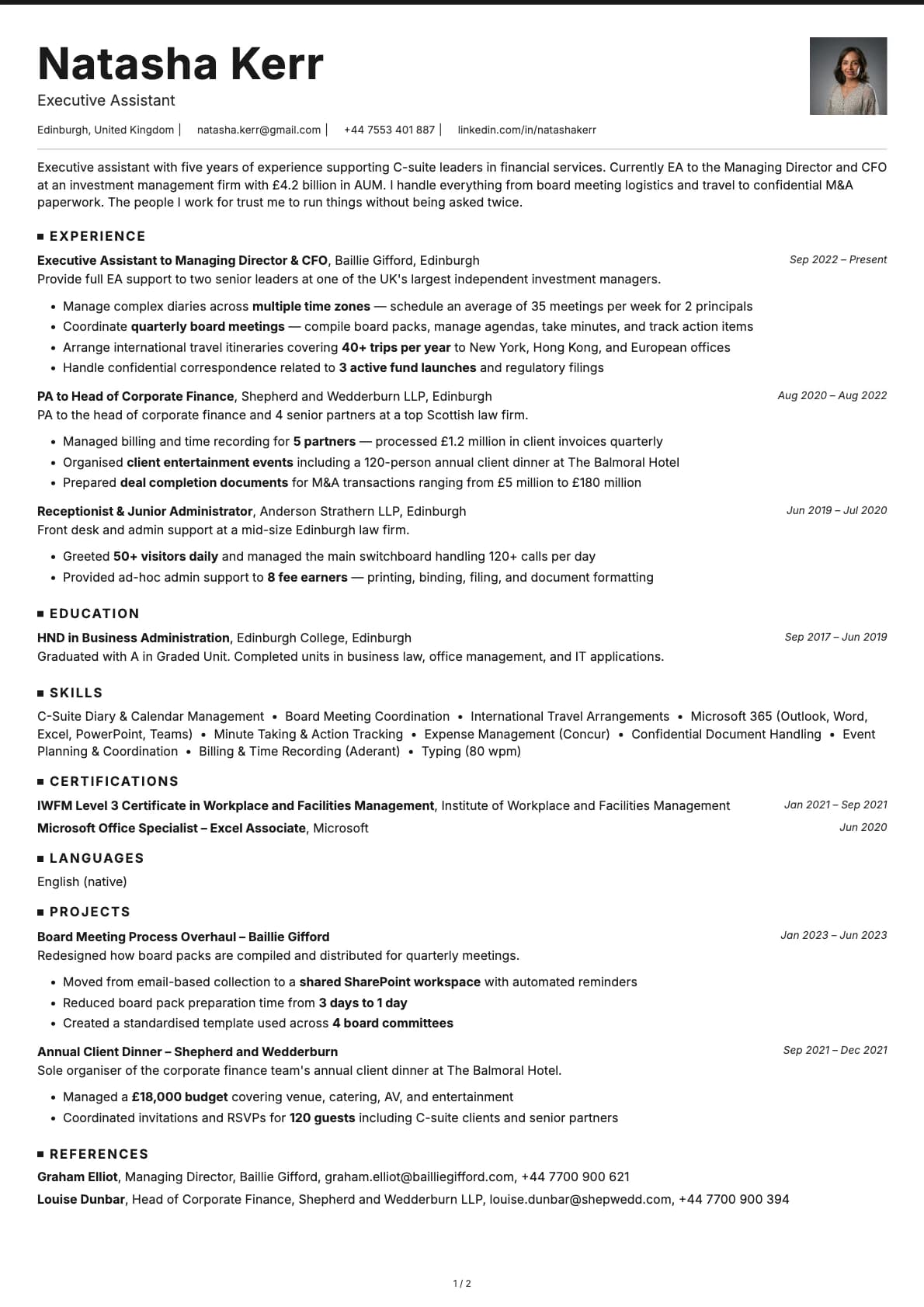
Executive Assistant
An executive assistant resume example supporting C-suite leaders in financial services.
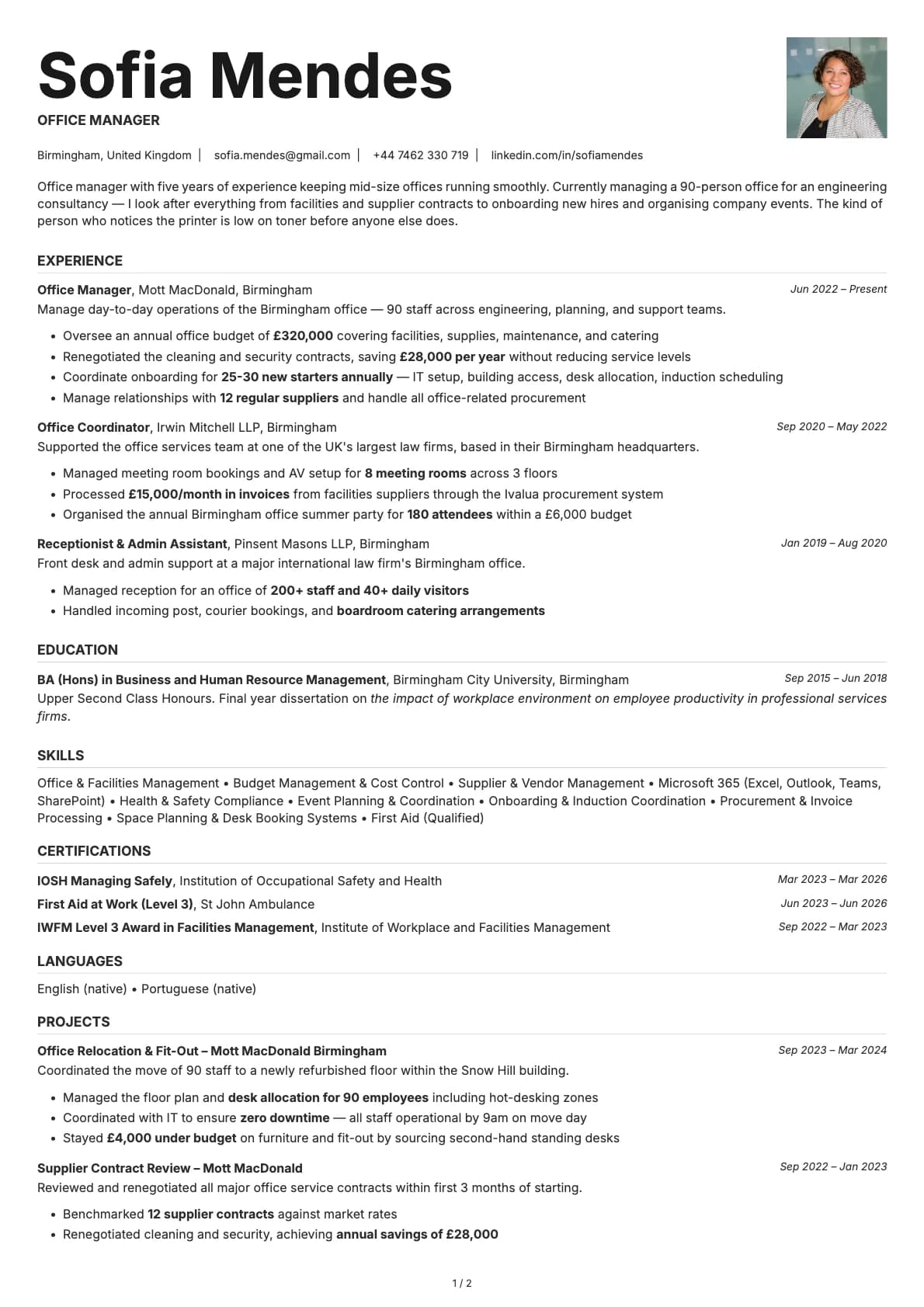
Office Manager
An office manager resume example with budget management, supplier negotiations, and onboarding coordination.
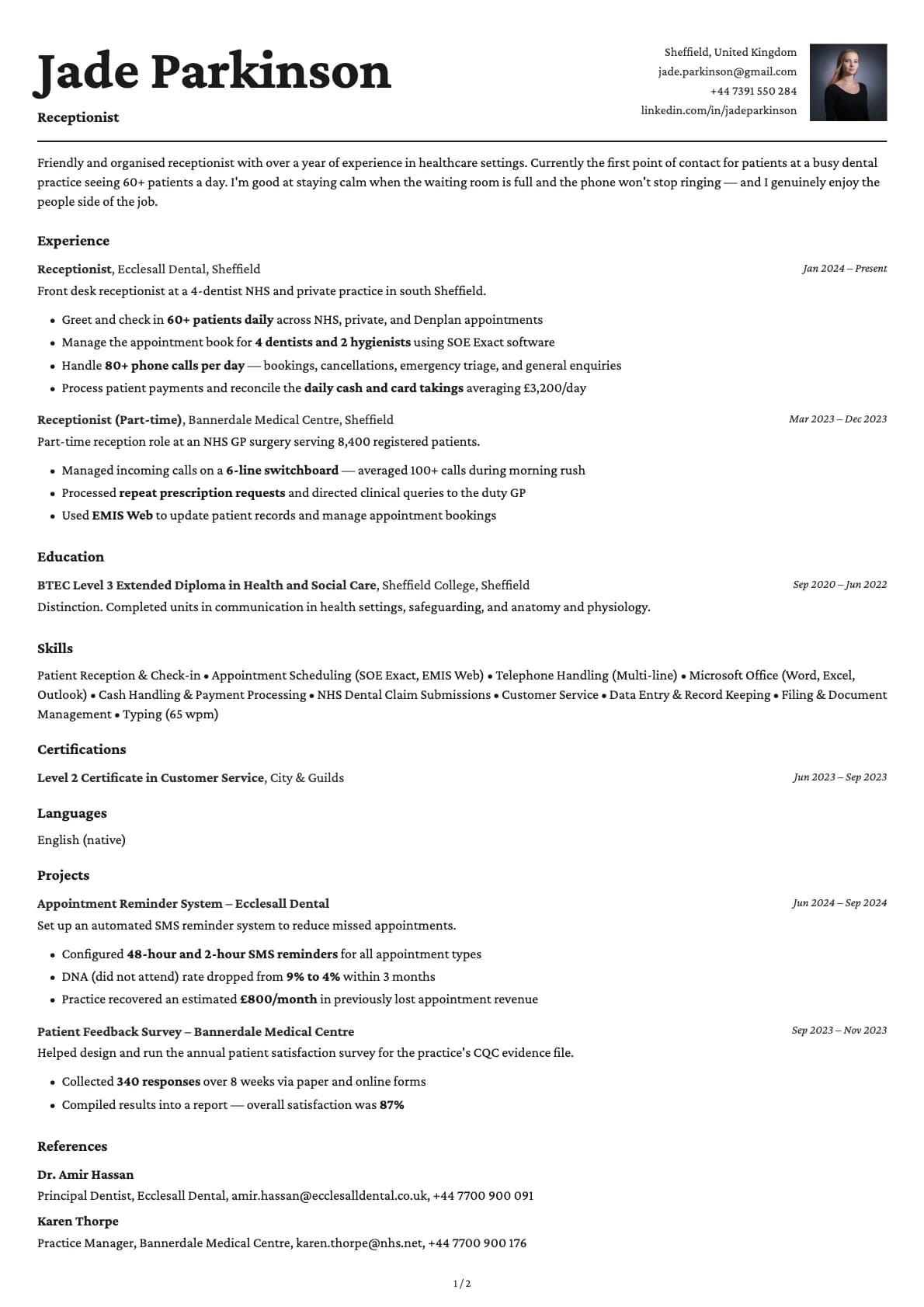
Receptionist
A receptionist resume example from a healthcare setting with patient volumes, phone handling stats, and a process improvement that cut missed.
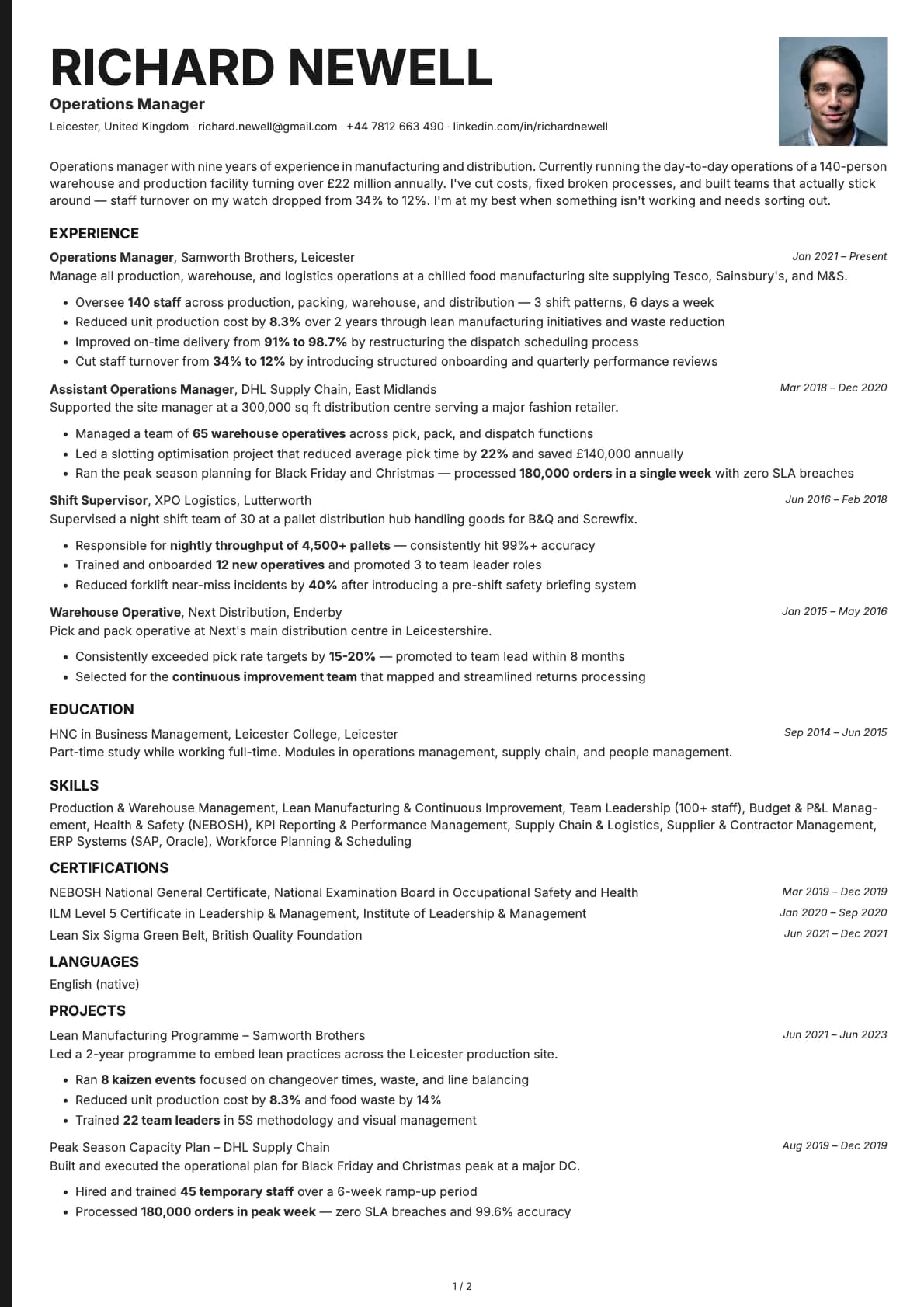
Operations Manager
An operations manager resume example with production KPIs, lean manufacturing results, and team leadership numbers.
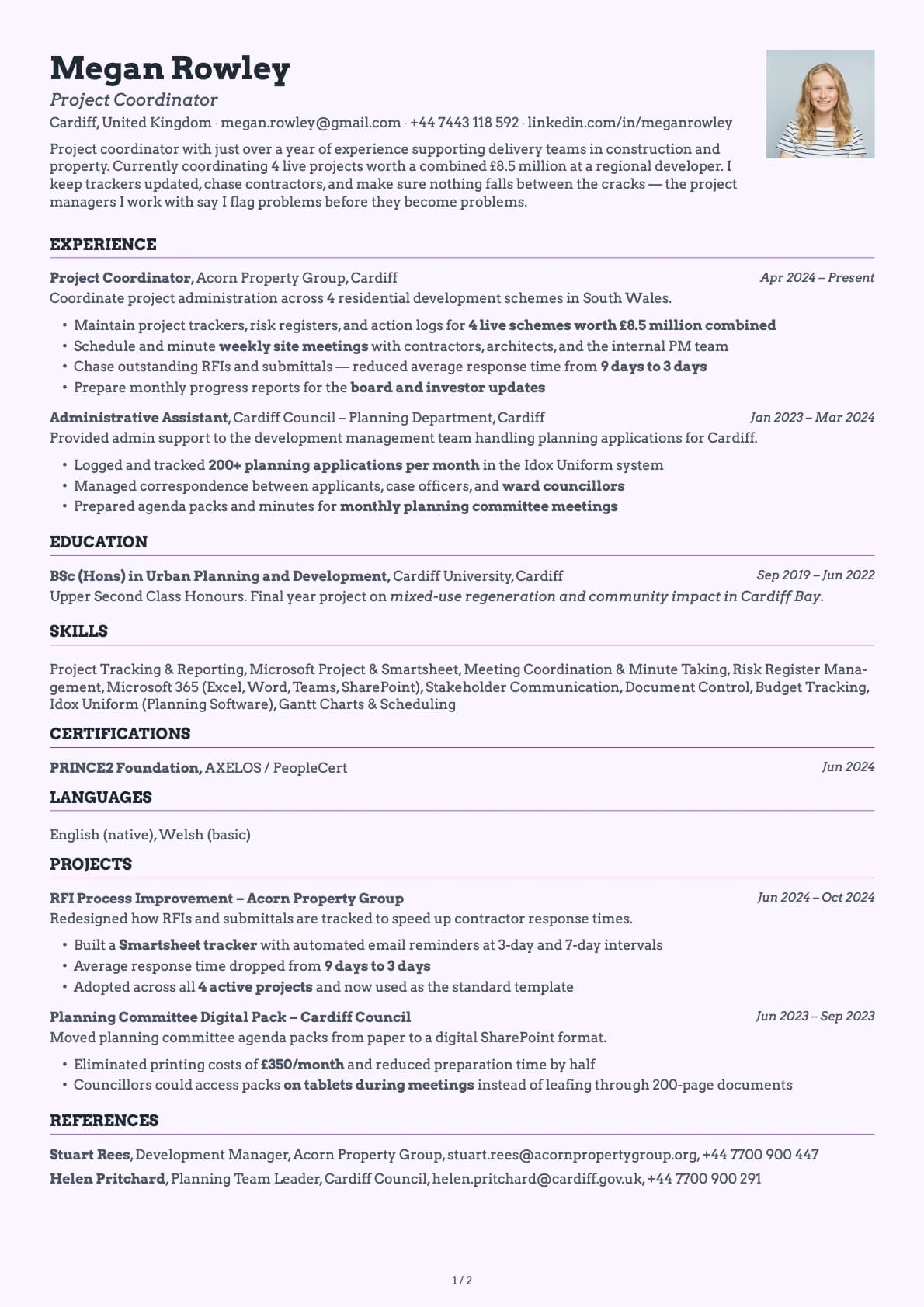
Project Coordinator
A project coordinator resume example with construction project tracking, process improvements, and real cost savings from an early-career professional.
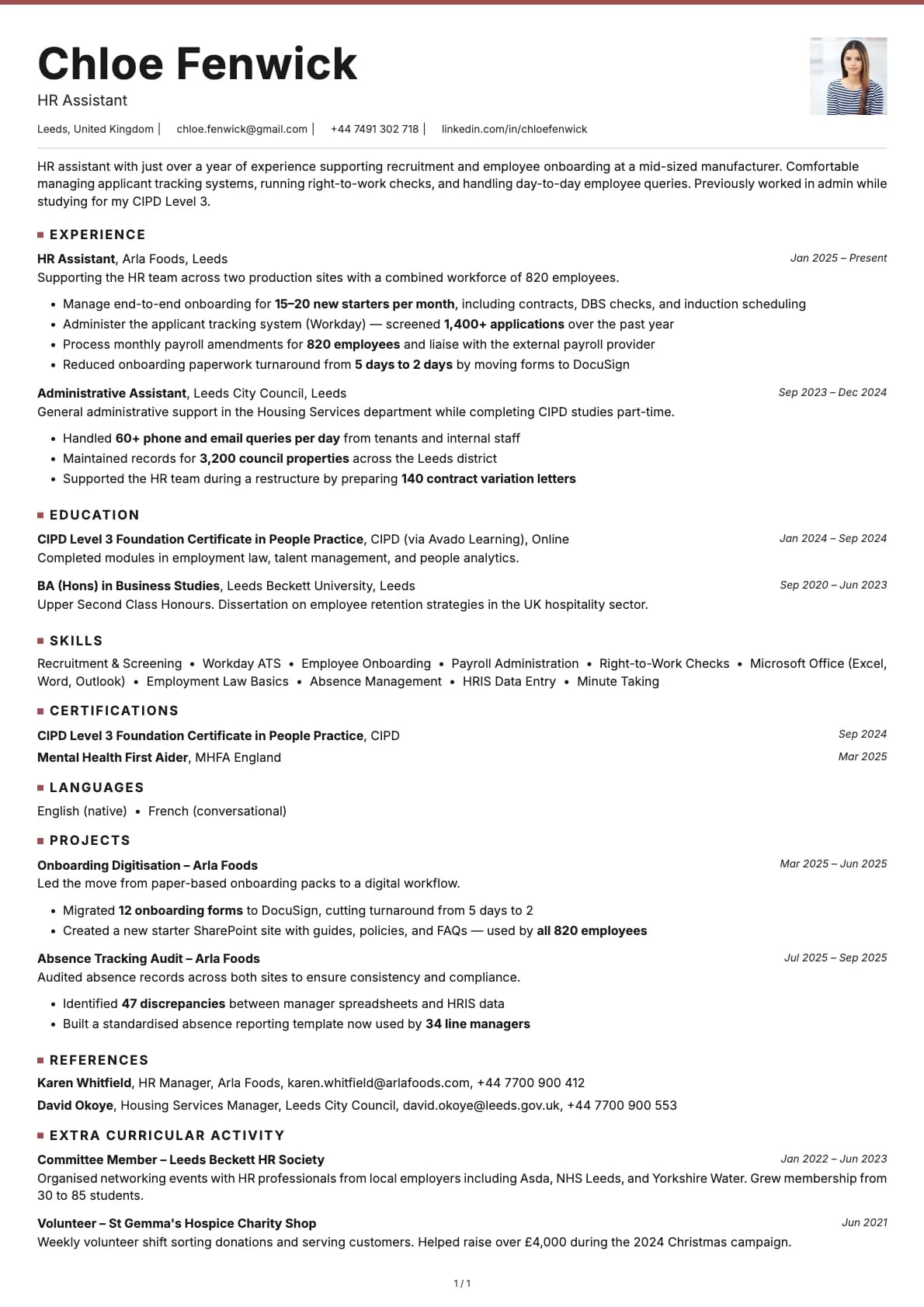
HR Assistant
An HR assistant resume example with onboarding metrics, ATS screening numbers, and a CIPD Level 3 qualification.
Related articles

AI Is Screening Your Resume Before Any Human Sees It
AI screens most resumes before a human ever reads them. 97.4% of Fortune 500 companies run an ATS. This is what that means for you and what you can do about it.

The Best Resume Builders in 2026, Compared Honestly
Resume.io, Zety, Enhancv, Kickresume, Teal, and Laddro compared honestly: real pricing, free tiers, mobile apps, and where each tool wins. All prices checked in September 2026.

Burnout Recovery: A Real Timeline, Not 'Take a Bubble Bath'
55% of the U.S. workforce is burned out. Recovery takes 3 to 12 months. Here's what that actually looks like, stage by stage.