Electrical Engineer Resume Example
An electrical engineer resume example with building services design experience at Arup and WSP.

Laddro Team
Free to use. No account needed to start.
Free to use. No account needed to start.
Overview
Electrical engineering resumes in building services have a specific problem. The hiring manager reading yours probably has a very clear picture of what they need: someone who knows the regulations, can use the software, and has worked on projects at a similar scale. Vague phrases like "designed electrical systems for various projects" do not help them work out if you are that person.
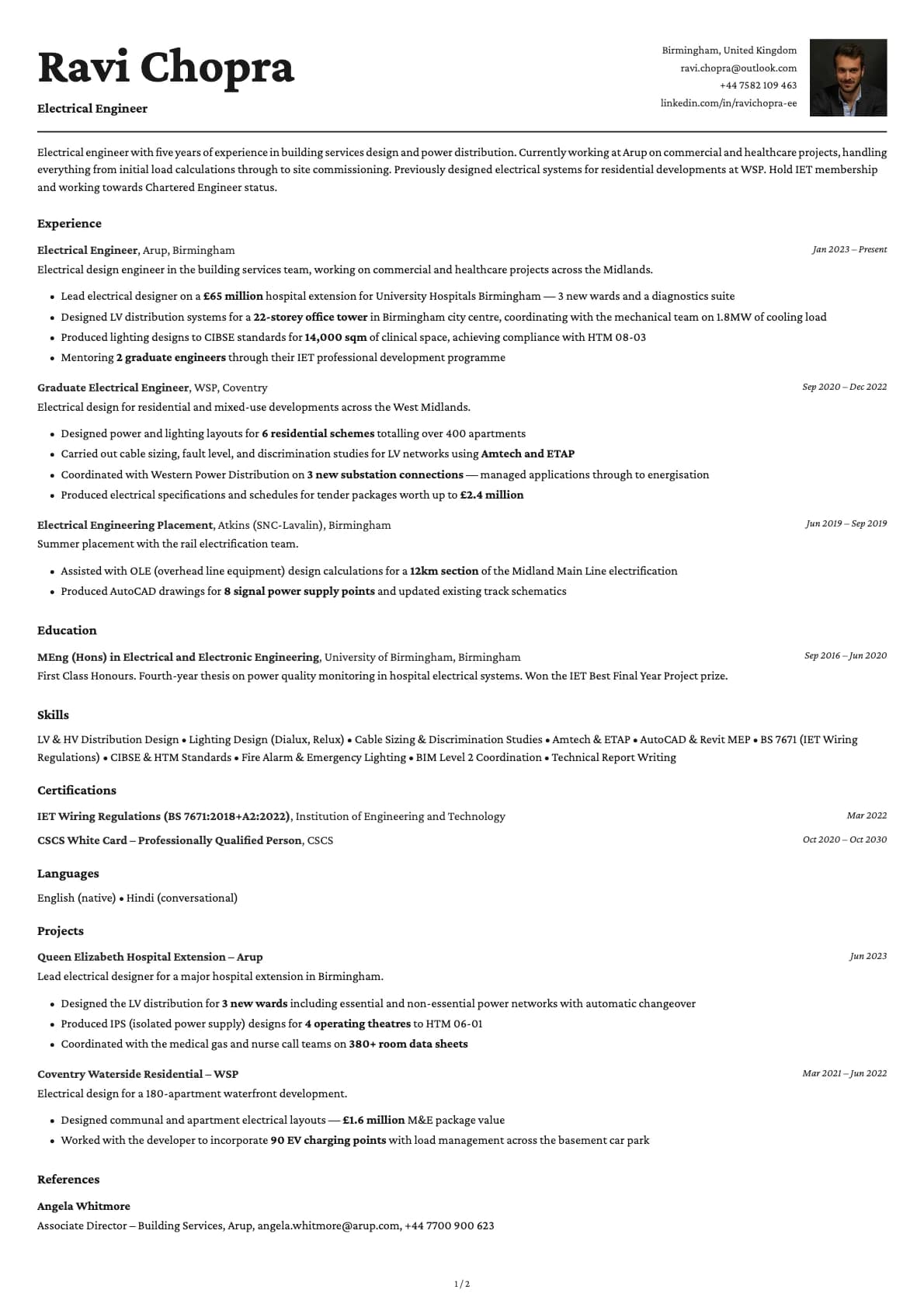
This resume belongs to Ravi, an electrical engineer with five years of experience. He currently works at Arup in Birmingham on commercial and healthcare projects. Before that, he designed electrical systems for residential developments at WSP, and he did a summer placement at Atkins on rail electrification. The resume ties all of this together with specific project values, technical standards, and clear progression from graduate to lead designer.
Here is what works and what you can apply to your own resume.
Your summary needs project types and scale
When a principal engineer or hiring manager picks up your resume, they want to know three things fast: how much experience you have, what types of projects you work on, and what level of responsibility you hold.
Here is the summary from this resume:
Electrical engineer with five years of experience in building services design and power distribution. Currently working at Arup on commercial and healthcare projects, handling everything from initial load calculations through to site commissioning.
No wasted words. It names the discipline (building services and power distribution), the project types (commercial and healthcare), and the scope (load calcs to commissioning). That last part is important because it tells the recruiter this person is not just doing calculations in the background. They see projects through to site.
For your summary: Name your specialism, your project types, the scale you work at, and where you are in your career (e.g., working towards CEng). Skip anything that every electrical engineer could say about themselves.
Experience bullets: name the project, name the standard
In building services, the details matter. A recruiter wants to know not just that you designed a lighting scheme, but how big the space was and which standard you designed to.
Look at this bullet:
Produced lighting designs to CIBSE standards for 14,000 sqm of clinical space, achieving compliance with HTM 08-03
That one line tells the recruiter: you know CIBSE lighting standards, you have worked on clinical environments (which have strict requirements), the project was large (14,000 sqm), and you know your HTMs. Compare that with "designed lighting for a healthcare project."
Another strong example:
Lead electrical designer on a £65 million hospital extension for University Hospitals Birmingham. 3 new wards and a diagnostics suite
Project value and scope in one bullet. In consulting and contracting, project value is how people judge the scale of your experience. If you are working on a £65 million project, say so.
The formula: What you designed + The standard or regulation + The scale (sqm, number of units, project value) + The outcome.
How to present your graduate or early career roles
If you are a graduate engineer or recently qualified, look at how this resume handles the WSP role:
Designed power and lighting layouts for 6 residential schemes totalling over 400 apartments
And the placement at Atkins:
Assisted with OLE design calculations for a 12km section of the Midland Main Line electrification
Neither of these claim to be lead designer work. But they are specific about what was done and at what scale. The WSP bullets also mention software (Amtech and ETAP) and the process of coordinating substation connections with the DNO. These are real, verifiable tasks that show the recruiter this person has done the actual work.
If you are writing about your first role, mention the software tools you used, the standards you followed, and the types of projects you worked on. Even if you were assisting a senior engineer, describe your specific contribution.
Skills: group them by discipline
This resume lists 10 skills, and they cover the key areas an electrical engineer interviewer would look for: design tools (Dialux, Relux, Amtech, ETAP), CAD platforms (AutoCAD, Revit MEP), regulations (BS 7671, CIBSE, HTM), and practical systems (fire alarm, emergency lighting, BIM coordination).
If you have space, consider grouping these:
- Software: Amtech, ETAP, Dialux, AutoCAD, Revit MEP
- Standards: BS 7671, CIBSE, HTM 06-01, HTM 08-03, BS 5839
- Disciplines: LV/HV distribution, lighting design, fire alarm, emergency lighting
This makes it faster for a recruiter to scan. And for ATS screening, having the exact standard numbers (not just "IET Wiring Regulations" but "BS 7671:2018+A2:2022") helps with keyword matching.
Certifications and professional development
For electrical engineers, professional registration matters. This resume mentions IET membership and working towards Chartered Engineer status. If you are on the CEng path, say so clearly. If you have your CSCS card (this resume lists the White Card for professionally qualified persons), include it because many site-based roles require it.
The 18th Edition cert (BS 7671:2018+A2:2022) is almost a baseline requirement. If you have it, list it with the amendment number. If you do not, get it. It is one of the first things a recruiter will look for.
Projects section: expand on your best work
The projects section lets you go deeper on the work you are most proud of. This resume highlights the Queen Elizabeth Hospital Extension:
Designed the LV distribution for 3 new wards including essential and non-essential power networks with automatic changeover. Produced IPS designs for 4 operating theatres to HTM 06-01.
That level of detail is perfect for a technical interview. It shows you know the difference between essential and non-essential power supplies, you understand IPS requirements for operating theatres, and you can reference the correct HTM.
Mistakes that cost interviews
Not mentioning standards by name. In building services, the standards are the language. If you know BS 7671, CIBSE Guide A, HTM 06-01, or BS 5839, spell them out. Do not assume the recruiter will infer them from your project descriptions.
Listing software without context. "Proficient in Revit" is weak. "Produced BIM Level 2 coordinated models in Revit MEP for a 22-storey office tower" is strong. Always tie the tool to the work.
Skipping mentoring or leadership. If you supervise graduates, mentor trainees, or lead design reviews, include it. The jump from engineer to senior engineer often depends on evidence of developing others.
Using a fancy template. Engineering recruiters tend to be conservative. A clean, single-column layout with clear headings is safer than anything with sidebars or colour blocks. This resume uses Cobalt, which is minimal and professional.
One more thing
If you are working towards CEng or IEng, mention it. If you have published papers, presented at IET events, or contributed to design guides, include those too. In engineering, professional development activities signal ambition and engagement with the industry in a way that a standard work history alone does not.
Build your own version
Open this layout in the builder and swap in your own details. It takes a few minutes.
Free to use. No account needed to start.
Was this resume example helpful?
Rate this example to help us create better content for you.
4.8 average from 118 ratingsRelated resume examples
Civil Engineer
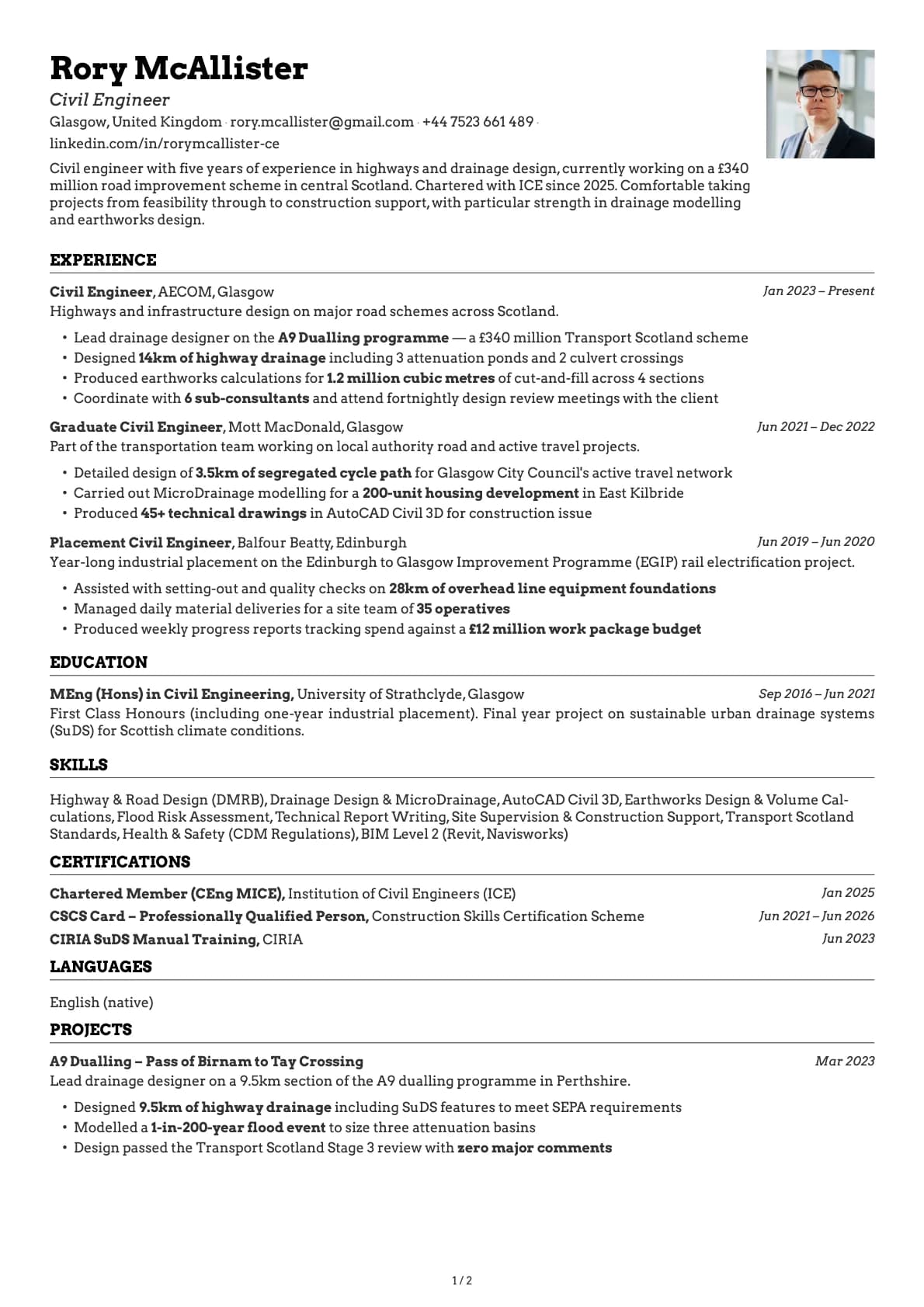
A civil engineer resume example with highways and drainage design experience at AECOM and Mott MacDonald.
Structural Engineer
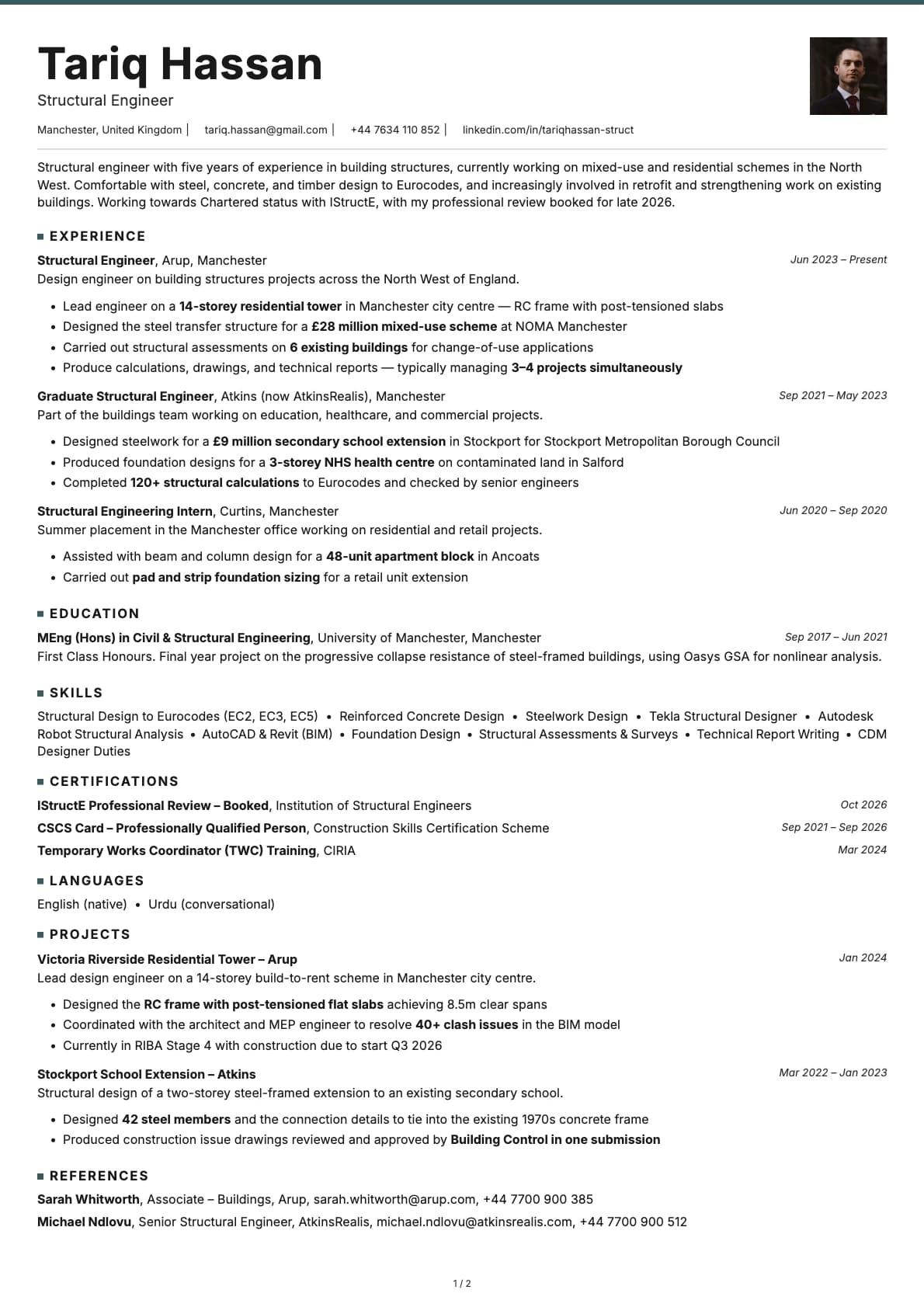
A structural engineer resume example with 5 years of experience at Arup and Atkins.
Electrician
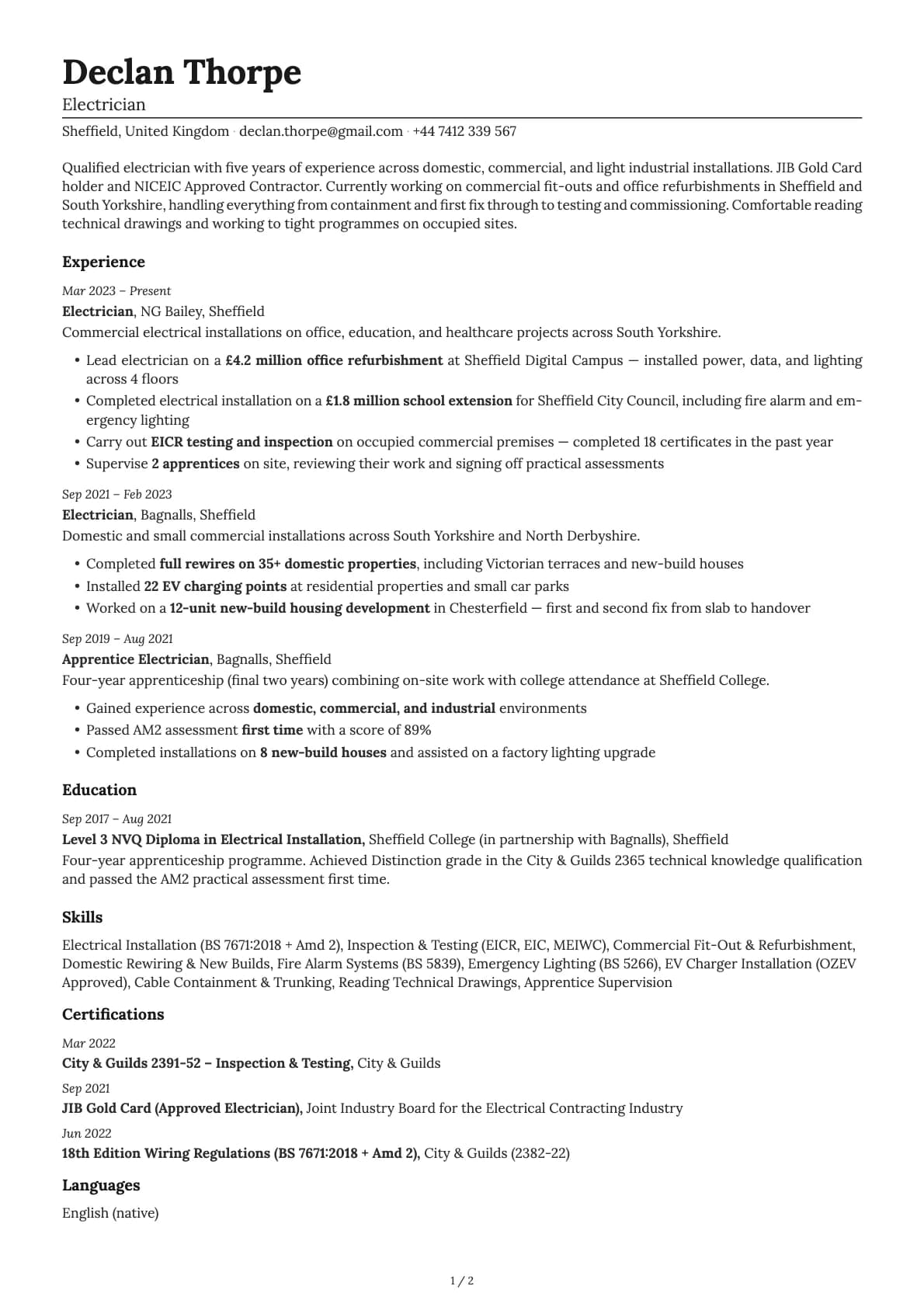
An electrician resume example with commercial and domestic installation experience.
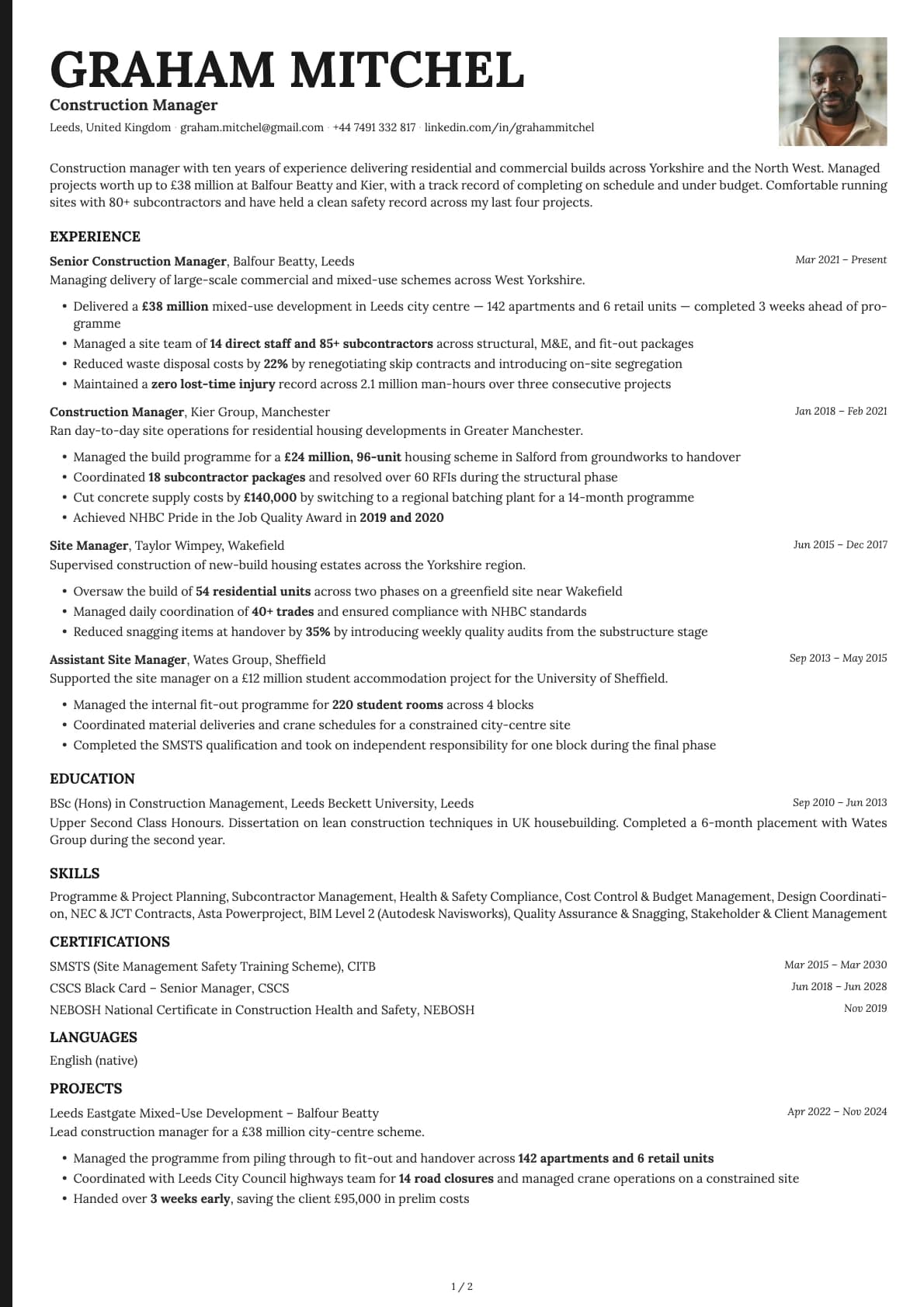
Construction Manager
A construction manager resume example with 10 years of experience delivering projects up to £38 million at Balfour Beatty and Kier.
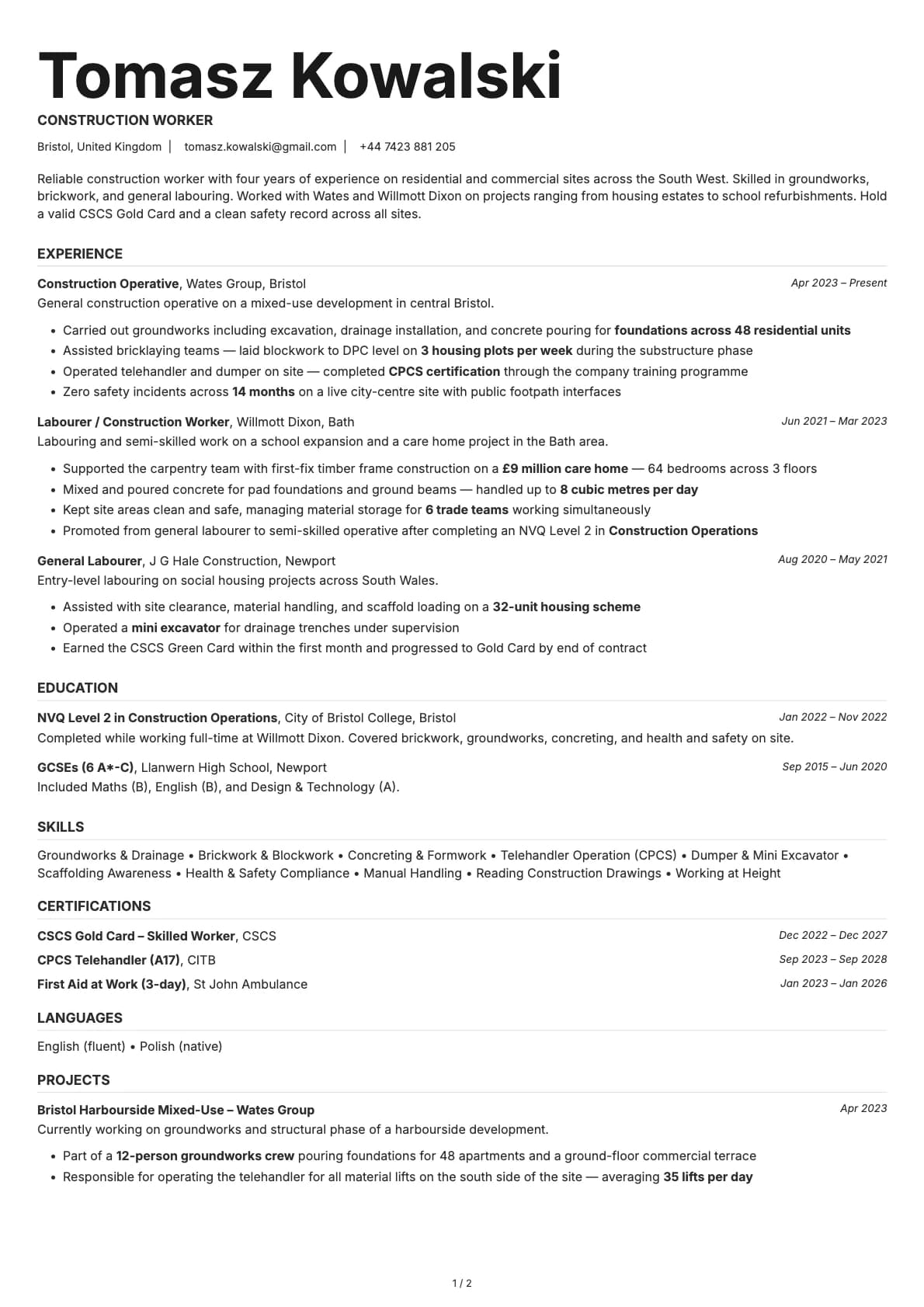
Construction Worker
A construction worker resume example with 4 years of site experience at Wates and Willmott Dixon.
Related articles

AI Is Screening Your Resume Before Any Human Sees It
AI screens most resumes before a human ever reads them. 97.4% of Fortune 500 companies run an ATS. This is what that means for you and what you can do about it.

The Best Resume Builders in 2026, Compared Honestly
Resume.io, Zety, Enhancv, Kickresume, Teal, and Laddro compared honestly: real pricing, free tiers, mobile apps, and where each tool wins. All prices checked in September 2026.

Burnout Recovery: A Real Timeline, Not 'Take a Bubble Bath'
55% of the U.S. workforce is burned out. Recovery takes 3 to 12 months. Here's what that actually looks like, stage by stage.