Graduate Probation Officer Resume Example
A graduate probation officer resume example with prison placement experience and risk assessment skills.

Laddro Team
Free to use. No account needed to start.
Free to use. No account needed to start.
Overview
Probation officer roles are among the most challenging and rewarding positions in the public sector. You work directly with people who have committed offences, assessing risk, supporting rehabilitation, and coordinating with courts, social work, and housing. Employers want to see that you can handle difficult situations, work across agencies, and write clear, accurate assessments.
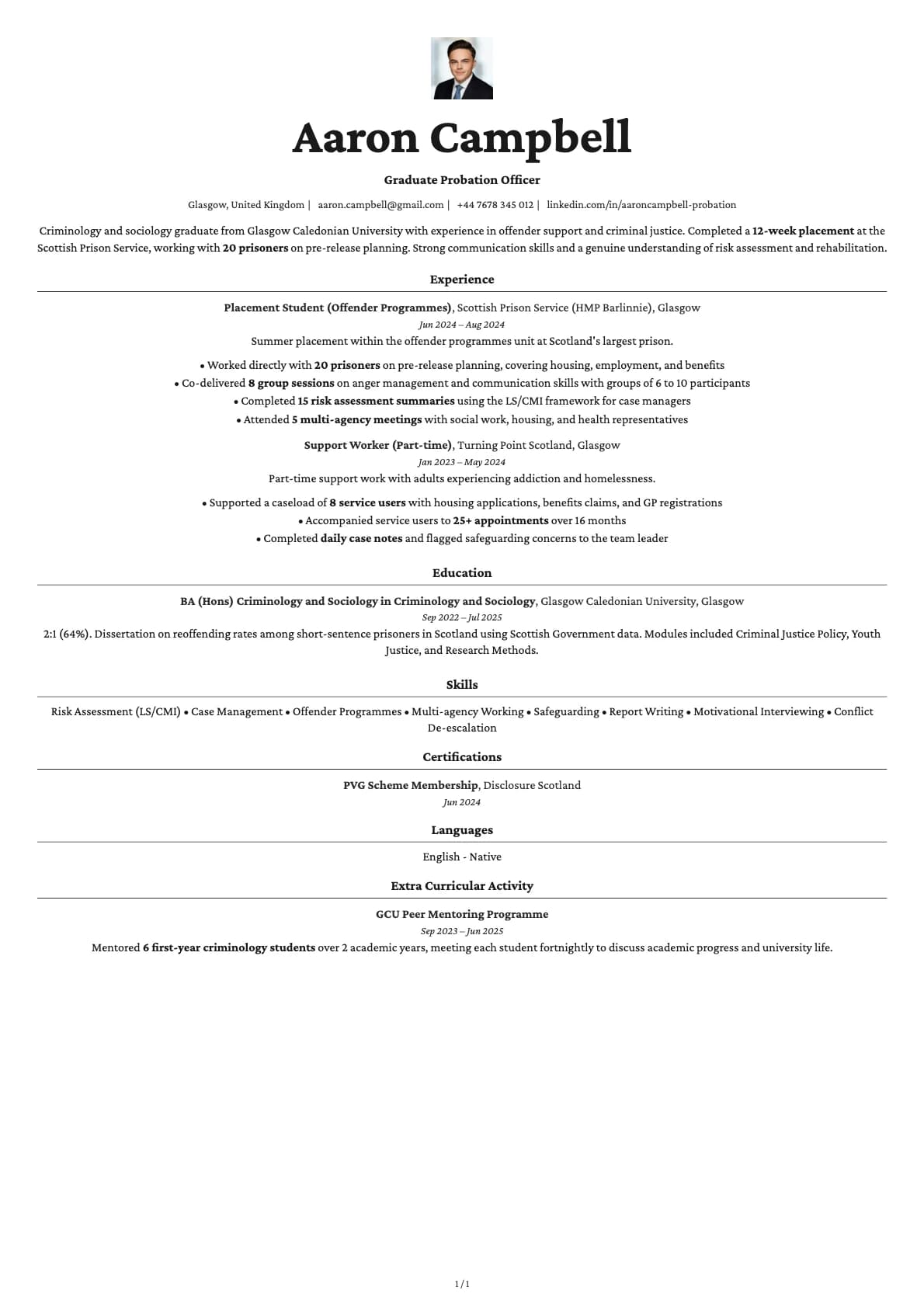
Aaron Campbell is a criminology graduate from Glasgow Caledonian University who completed a placement at HMP Barlinnie and worked part-time as a support worker at Turning Point Scotland. His resume is effective because it shows direct experience with offender support, risk assessment, and multi-agency working.
What Makes This Resume Work
Prison placement with direct offender contact. Working with 20 prisoners on pre-release planning shows Aaron has experience with the core work of probation: helping people transition from custody to the community. It also shows he can work safely in a challenging environment.
Risk assessment using the LS/CMI framework. Completing 15 risk assessment summaries using the standard tool shows Aaron already understands the methodology probation officers use. This is a specific technical skill that employers value highly.
Support work experience that builds credibility. Supporting 8 service users at Turning Point Scotland with housing, benefits, and health appointments shows Aaron has sustained experience with vulnerable adults, not just a one-off placement. It also demonstrates his ability to maintain case notes and flag safeguarding concerns.
Multi-agency meeting attendance. Being present at 5 multi-agency meetings shows Aaron understands how different services work together. Probation is inherently collaborative, and experience attending these meetings is valuable evidence of readiness for the role.
Key Takeaways
For probation officer applications, describe every type of offender contact you have had, the risk assessment tools you used, and the multi-agency meetings you attended. If you have worked in support services, describe your caseload, the types of support you provided, and any safeguarding actions you took. Name the frameworks you know (LS/CMI, OASys, etc.) and any relevant training. This is a profession where practical experience and resilience matter more than academic grades.
Build your own version
Open this layout in the builder and swap in your own details. It takes a few minutes.
Free to use. No account needed to start.
Was this resume example helpful?
Rate this example to help us create better content for you.
4.7 average from 90 ratingsRelated resume examples

Junior Marketing Coordinator
A junior marketing coordinator resume example for graduates entering the field. See how to turn retail work, volunteering, and a marketing degree into a strong application.
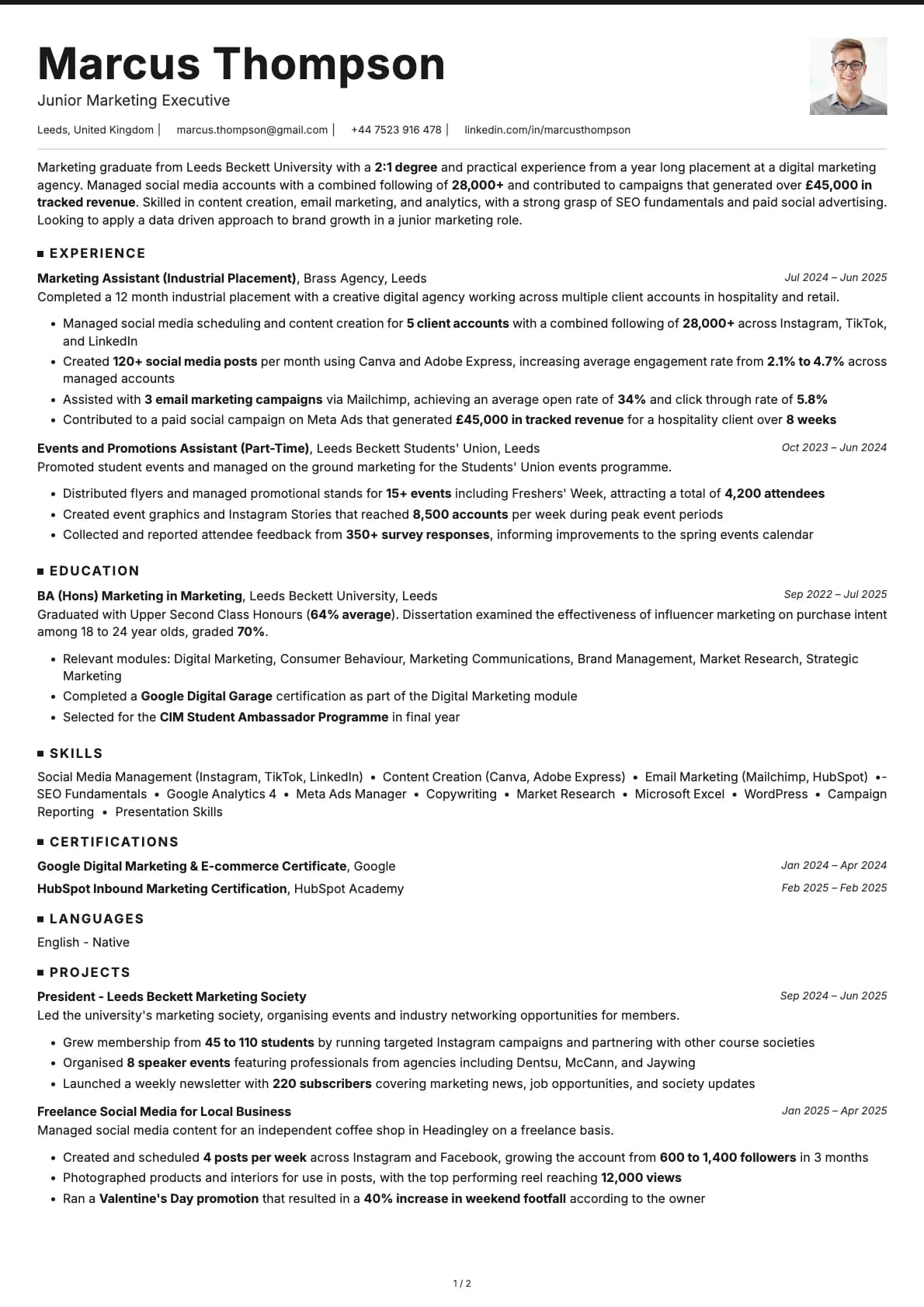
Junior Marketing Executive
A junior marketing executive resume example for recent graduates. See how to showcase social media skills, campaign results, and agency experience effectively.
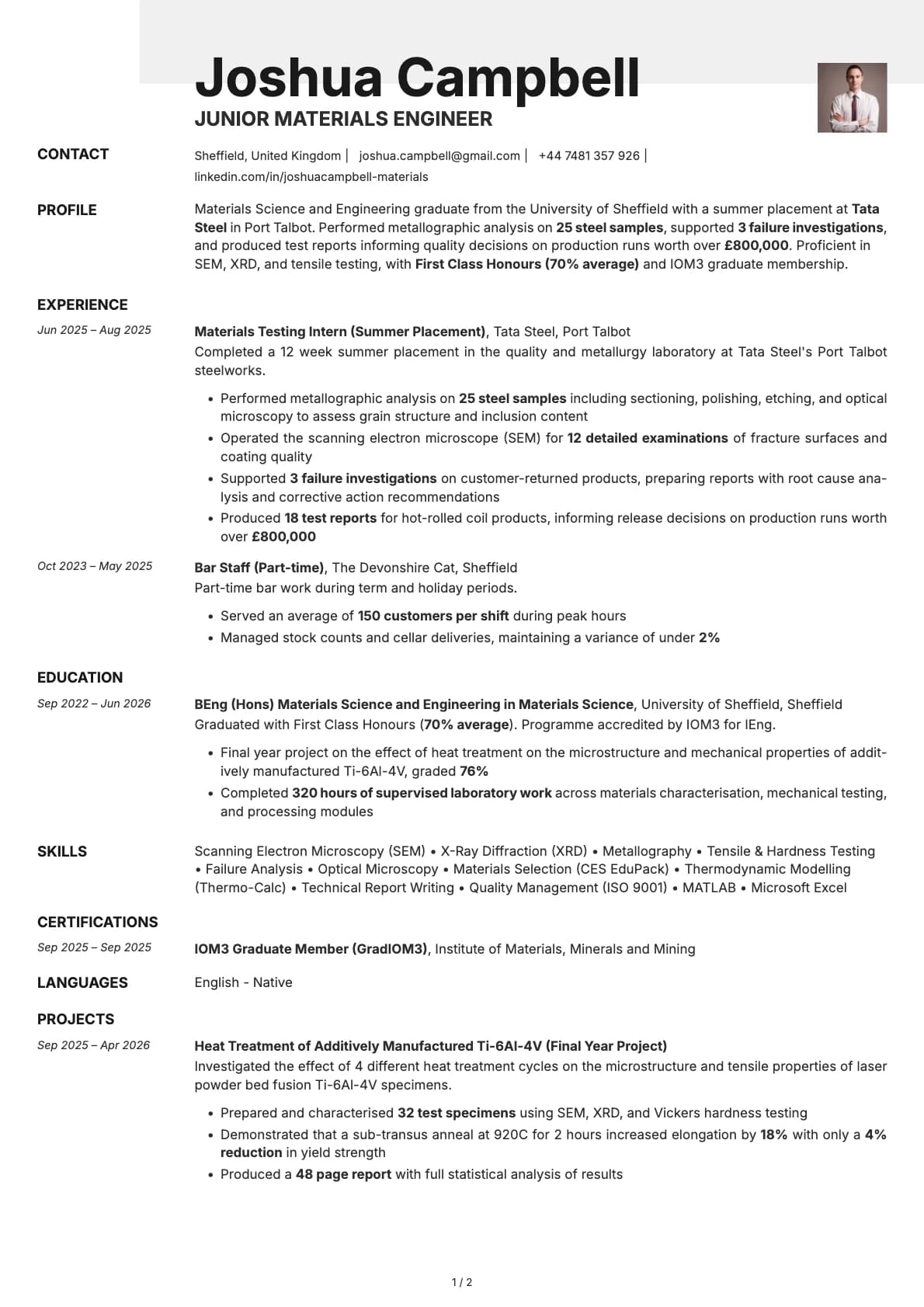
Junior Materials Engineer
A junior materials engineer resume example with metallurgical testing experience, SEM analysis skills, and IOM3 membership.

Junior Mechanical Engineer
A junior mechanical engineer resume example with a year in industry placement. See how to present CAD skills, FEA experience, and engineering projects on your graduate CV.
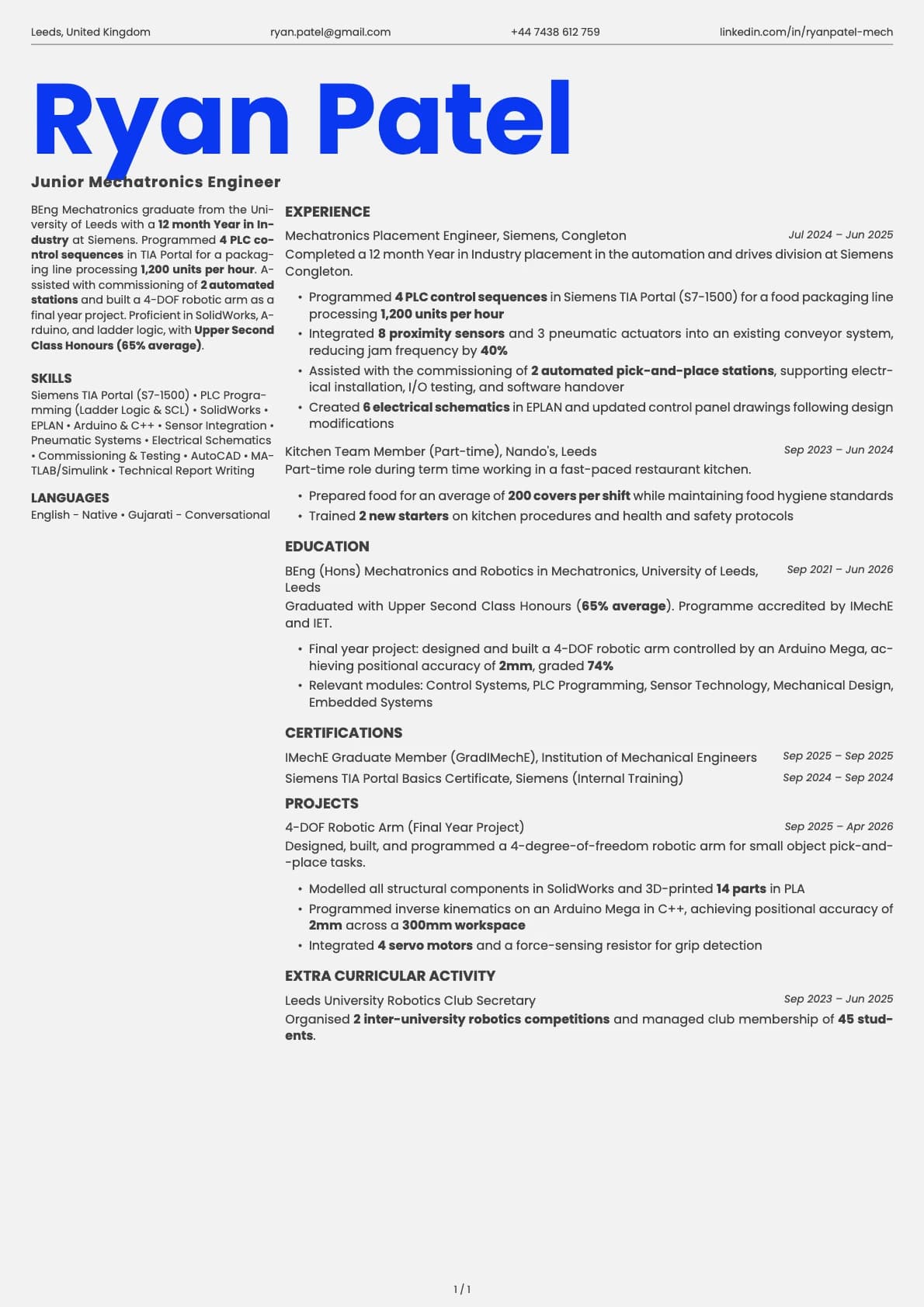
Junior Mechatronics Engineer
A junior mechatronics engineer resume example with PLC programming experience, SolidWorks proficiency, and an industrial automation placement.
Junior Mental Health Worker
A junior mental health worker resume example with voluntary placement experience, assessment tools, and youth support numbers for psychology graduates.
Junior ML Engineer
A junior ML engineer resume example with deployed models, TensorFlow projects, and AWS SageMaker experience from an AI and ML MSc graduate starting their career.
Junior Mobile Developer
A junior mobile developer resume example for graduates. See how to present published apps, App Store downloads, and mobile internship experience to land your first mobile dev role.
Junior Mortgage Adviser
A junior mortgage adviser resume example with Nationwide placement experience and CeMAP qualification in progress.
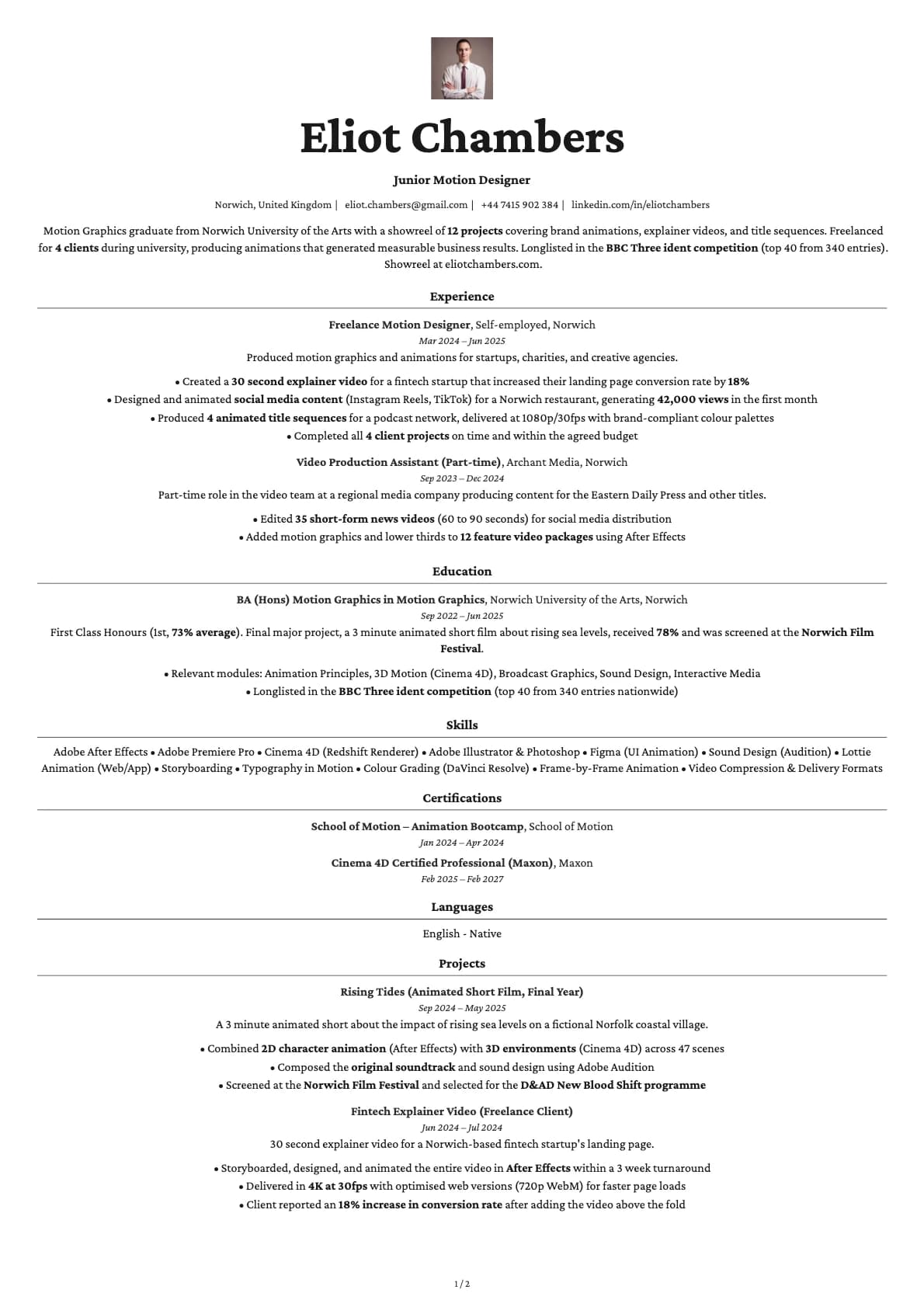
Junior Motion Designer
A junior motion designer resume example with After Effects projects, client animations, and showreel details from a Motion Graphics BA graduate entering the field.

Junior Network Engineer
A junior network engineer resume example with CCNA, an MSP apprenticeship, and a home lab. See how to present networking skills and certifications for your first engineering role.
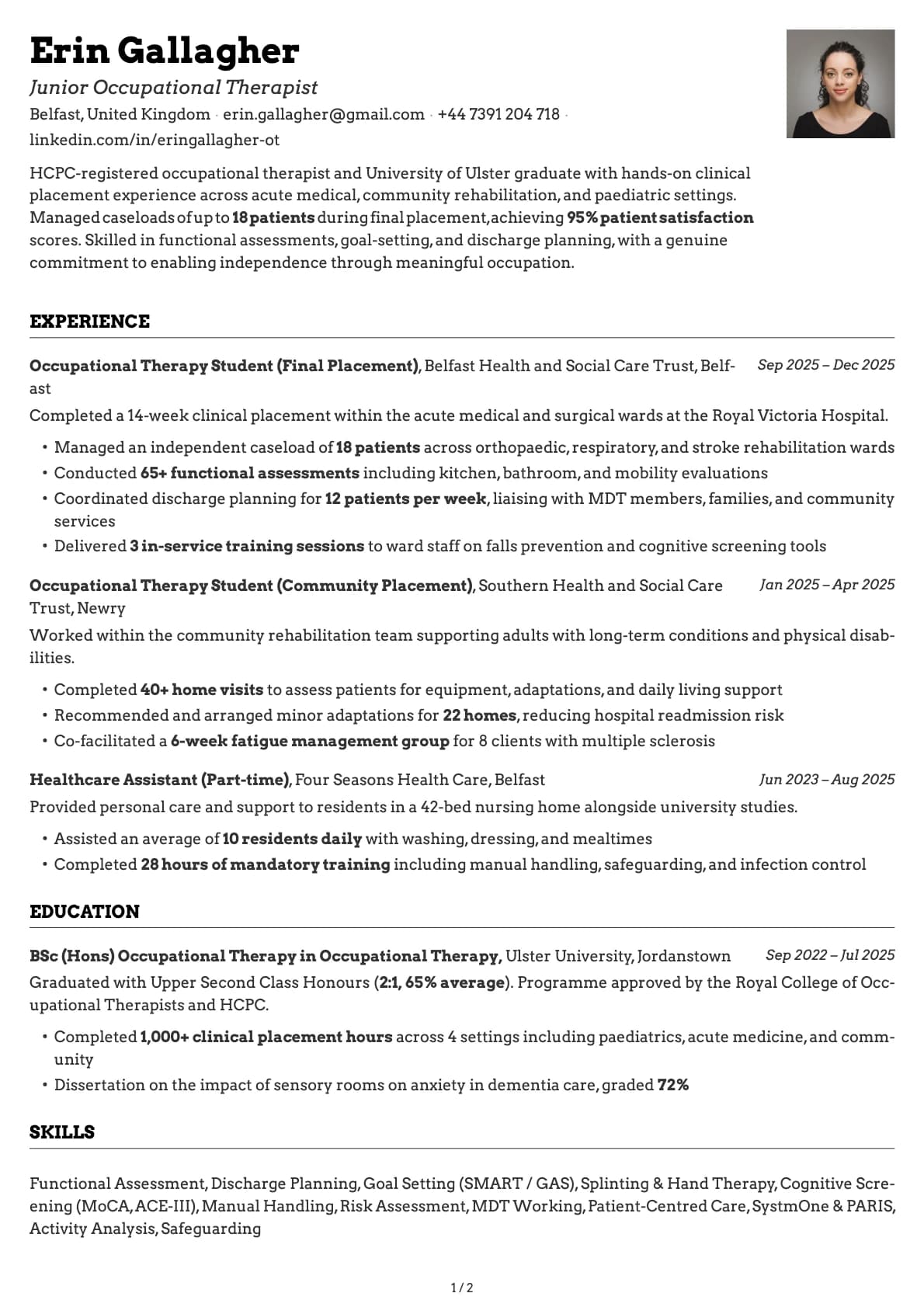
Junior Occupational Therapist
A junior occupational therapist resume example with clinical placement experience, HCPC registration, and real patient outcome numbers for new graduates.