Graduate Process Engineer Resume Example
A graduate process engineer resume example with chemical plant placement experience, HAZOP participation, and IChemE membership.

Laddro Team
Free to use. No account needed to start.
Free to use. No account needed to start.
Overview
Process engineering roles in the chemical, pharmaceutical, and oil and gas sectors demand graduates who can bridge the gap between academic process design and real plant operation. Companies like INEOS, GSK, and Johnson Matthey want to see that you understand mass and energy balances in a commercial context, not just in a university problem sheet. HAZOP awareness, process simulation software, and an understanding of safety culture are expected from day one.
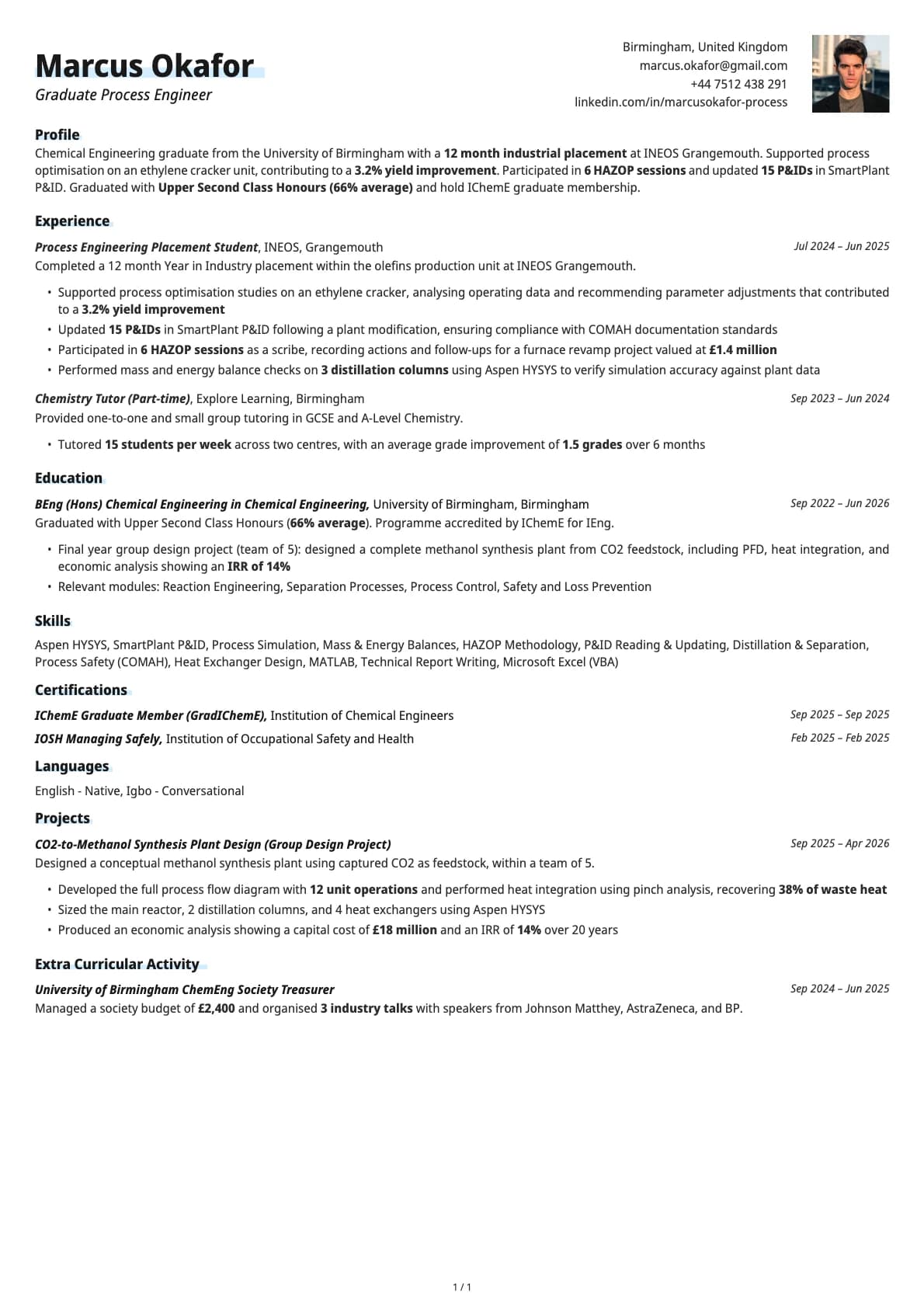
This resume belongs to Marcus Okafor, a Chemical Engineering graduate from the University of Birmingham who completed a 12 month industrial placement at INEOS Grangemouth. During that placement he supported process optimisation work that contributed to a 3.2% yield improvement on an ethylene cracker unit, participated in 6 HAZOP sessions, and updated 15 P&IDs in SmartPlant P&ID.
What Makes This Resume Work
Yield improvement is quantified and commercially meaningful. A 3.2% yield improvement on an ethylene cracker is a significant result. Naming this figure, rather than vaguely describing "process optimisation," gives the reader a concrete achievement to assess and shows that Marcus understands the commercial impact of engineering work.
HAZOP participation demonstrates safety awareness. Process safety is paramount in the chemical industry. Attending 6 HAZOP sessions as a placement student is unusual and shows that Marcus was trusted to contribute to a formal safety assessment process, not just observe.
P&ID experience connects design to operations. Updating 15 P&IDs is a tangible deliverable that shows Marcus can read, interpret, and maintain the primary process documentation used on a live plant. This skill is directly transferable to any process engineering role.
Key Takeaways
Graduate process engineers should reference the specific processes, units, or products they worked with on placement, and quantify any improvements they contributed to. Mention HAZOP or safety-related activities explicitly, name the simulation and documentation tools you used (Aspen HYSYS, SmartPlant), and include IChemE membership to demonstrate professional engagement. A final year design project with a full process flow diagram and economic analysis shows you can handle the breadth of process engineering, not just the calculations.
Build your own version
Open this layout in the builder and swap in your own details. It takes a few minutes.
Free to use. No account needed to start.
Was this resume example helpful?
Rate this example to help us create better content for you.
4.7 average from 89 ratingsRelated resume examples
Junior Office Manager
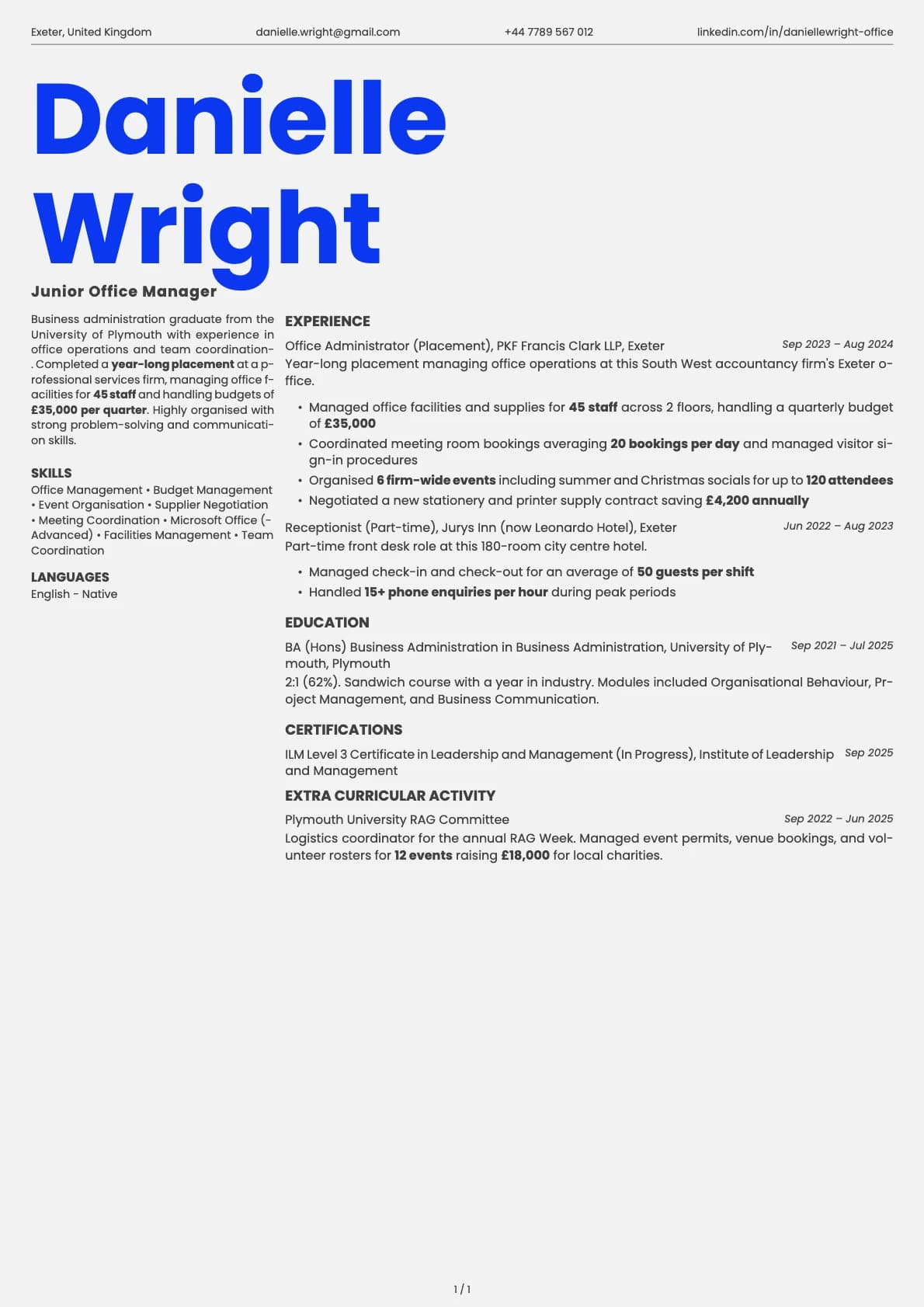
A junior office manager resume example with professional services placement and facilities management experience.
Junior Officer (Armed Forces)
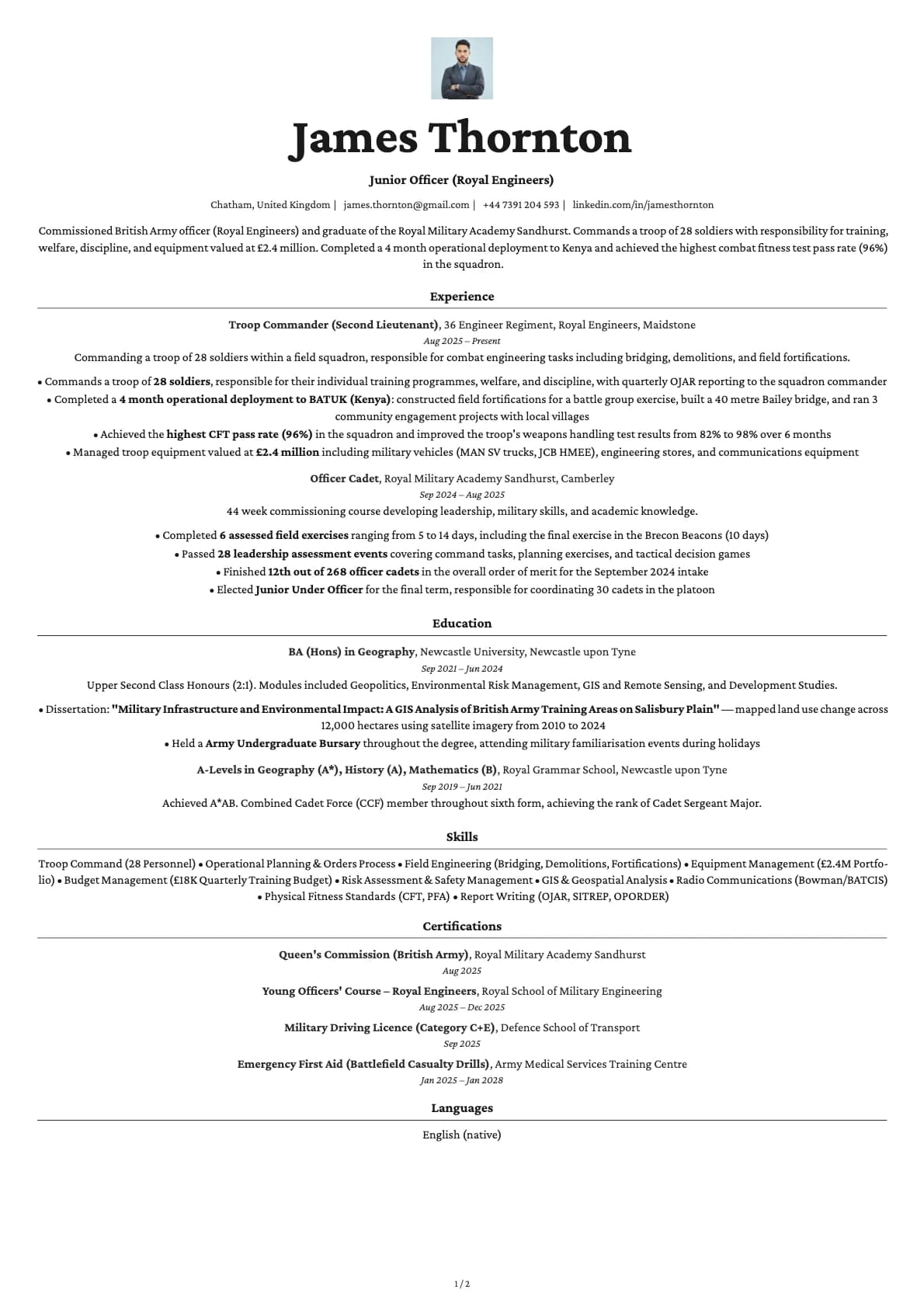
A junior officer resume example for armed forces graduates transitioning from Sandhurst or the commissioning course. See how to present your military leadership, operational deployments, and command experience.
Junior Operations Coordinator
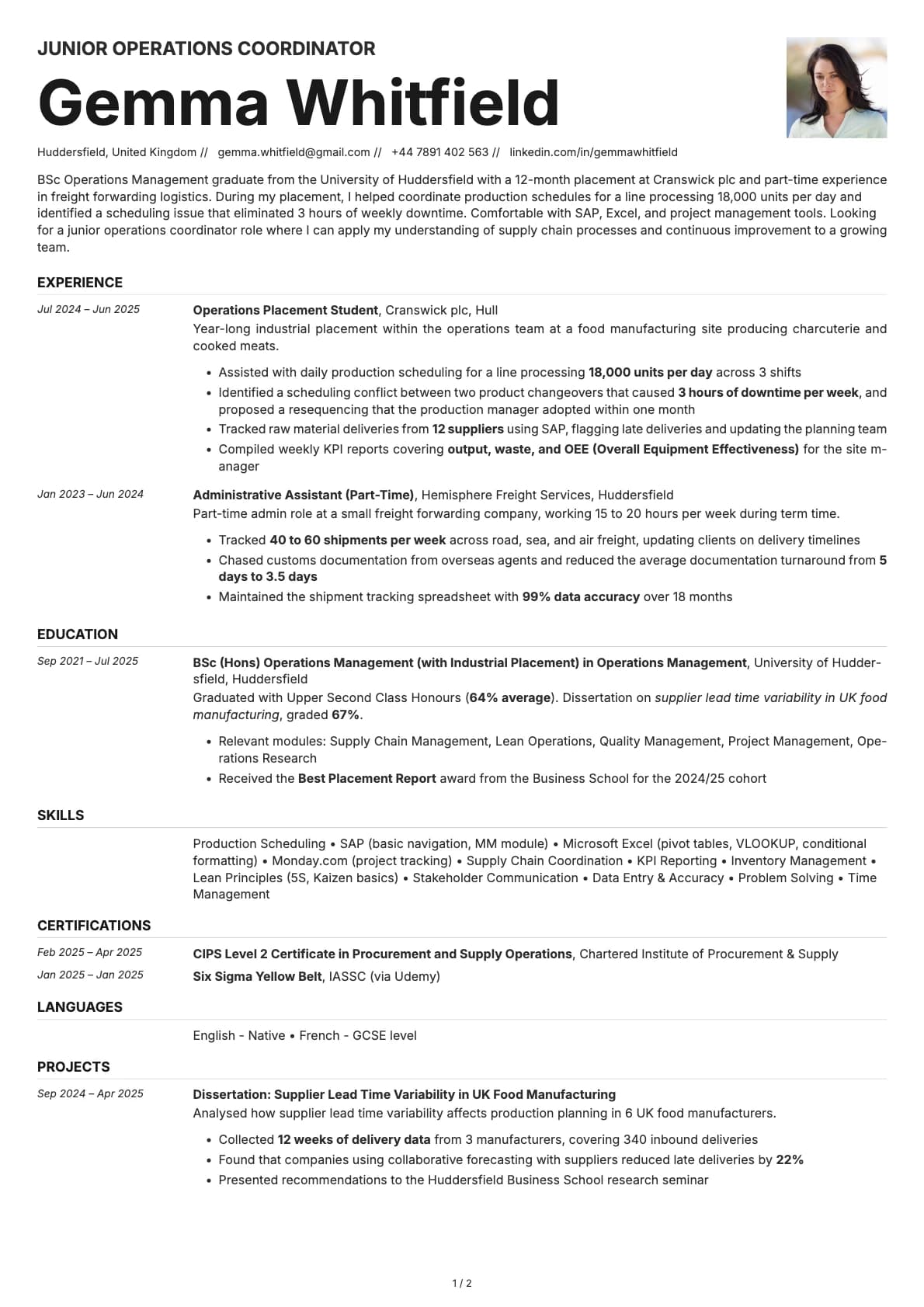
A junior operations coordinator resume example for operations management graduates. See how logistics experience and process improvements impress employers.
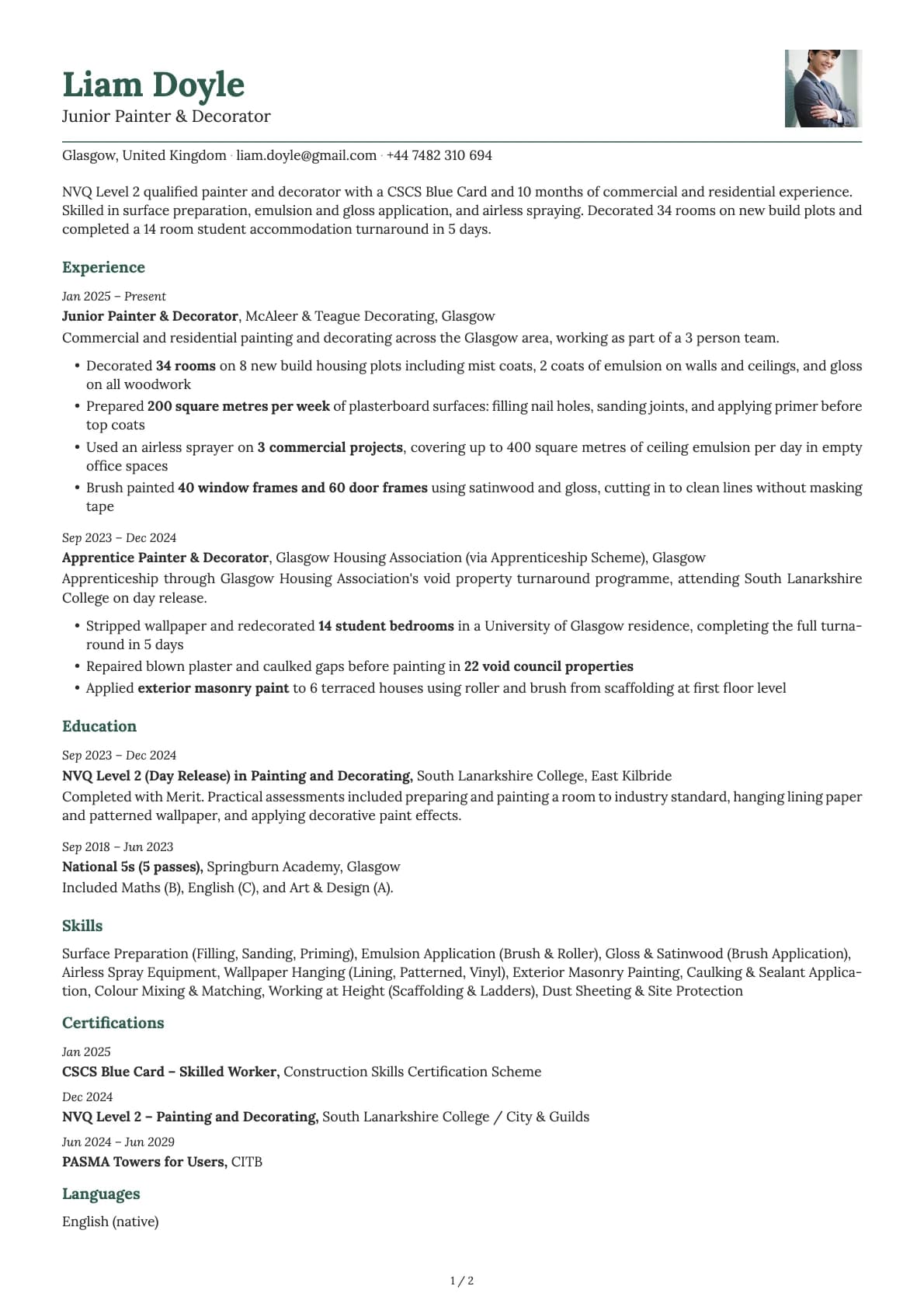
Junior Painter & Decorator
A junior painter and decorator resume example for NVQ qualified painters. See how to present your decorating skills, site experience, and CSCS card details.
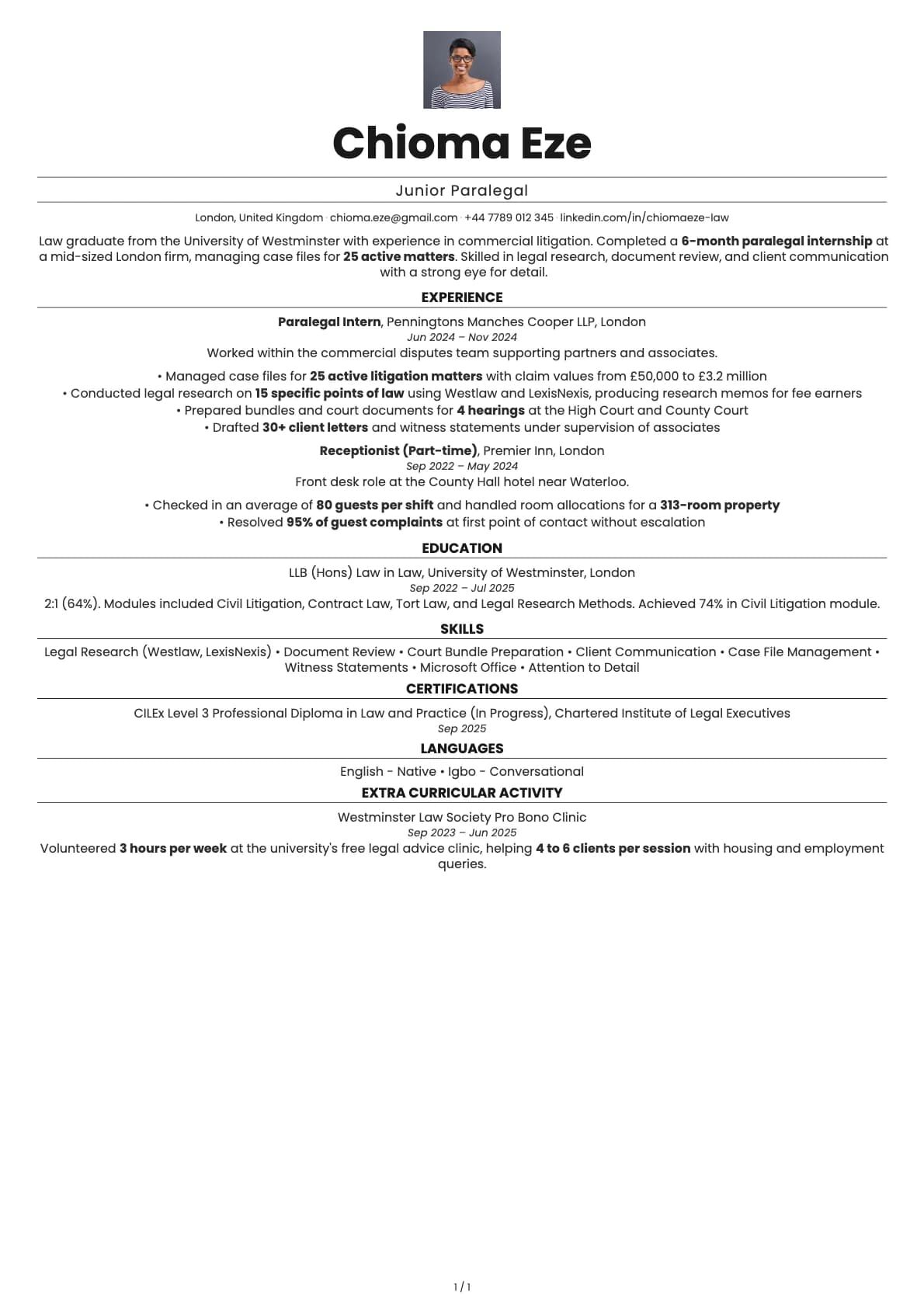
Junior Paralegal
A junior paralegal resume example with litigation internship experience and legal research skills.
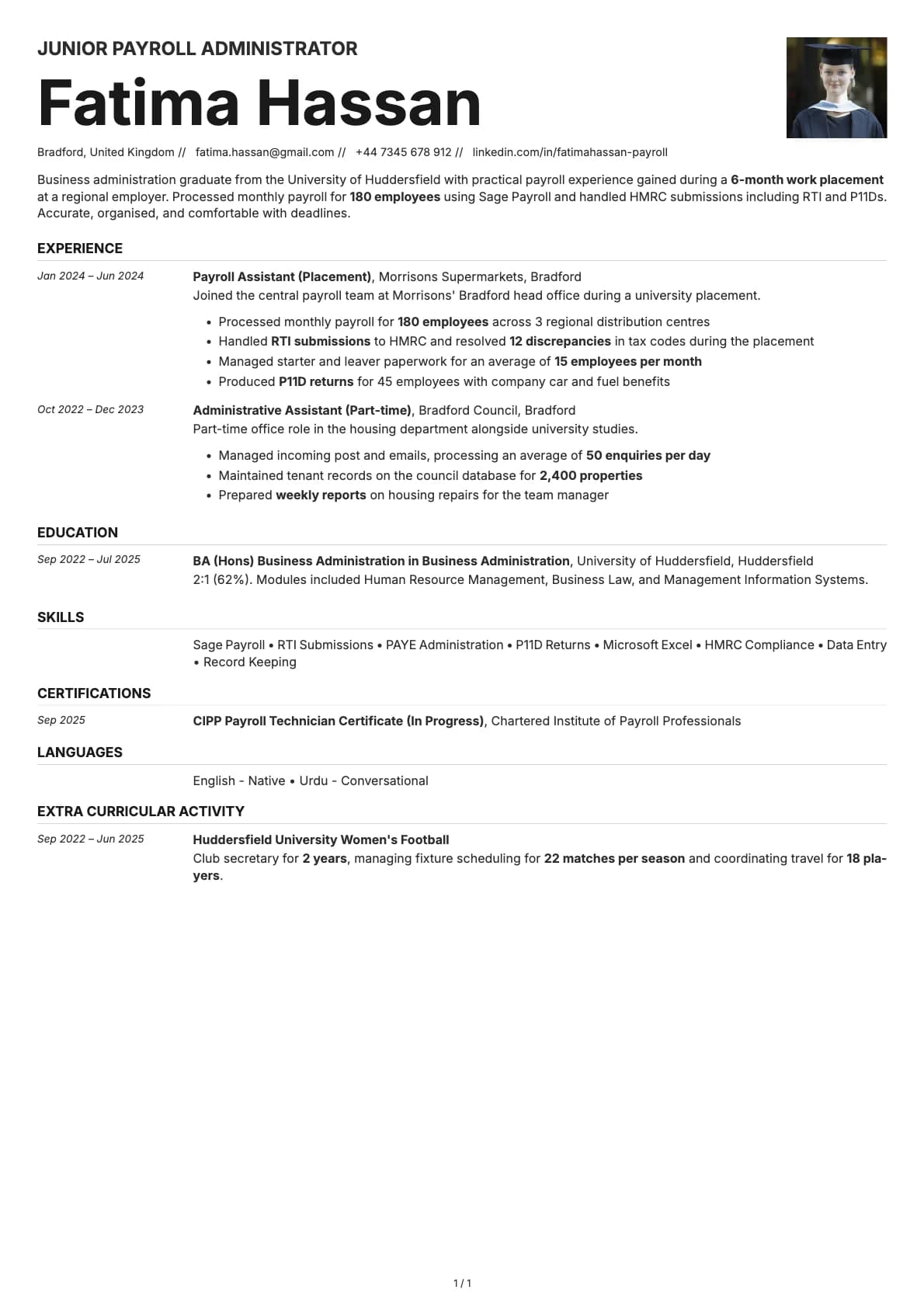
Junior Payroll Administrator
A junior payroll administrator resume example with Morrisons placement experience and Sage Payroll skills.
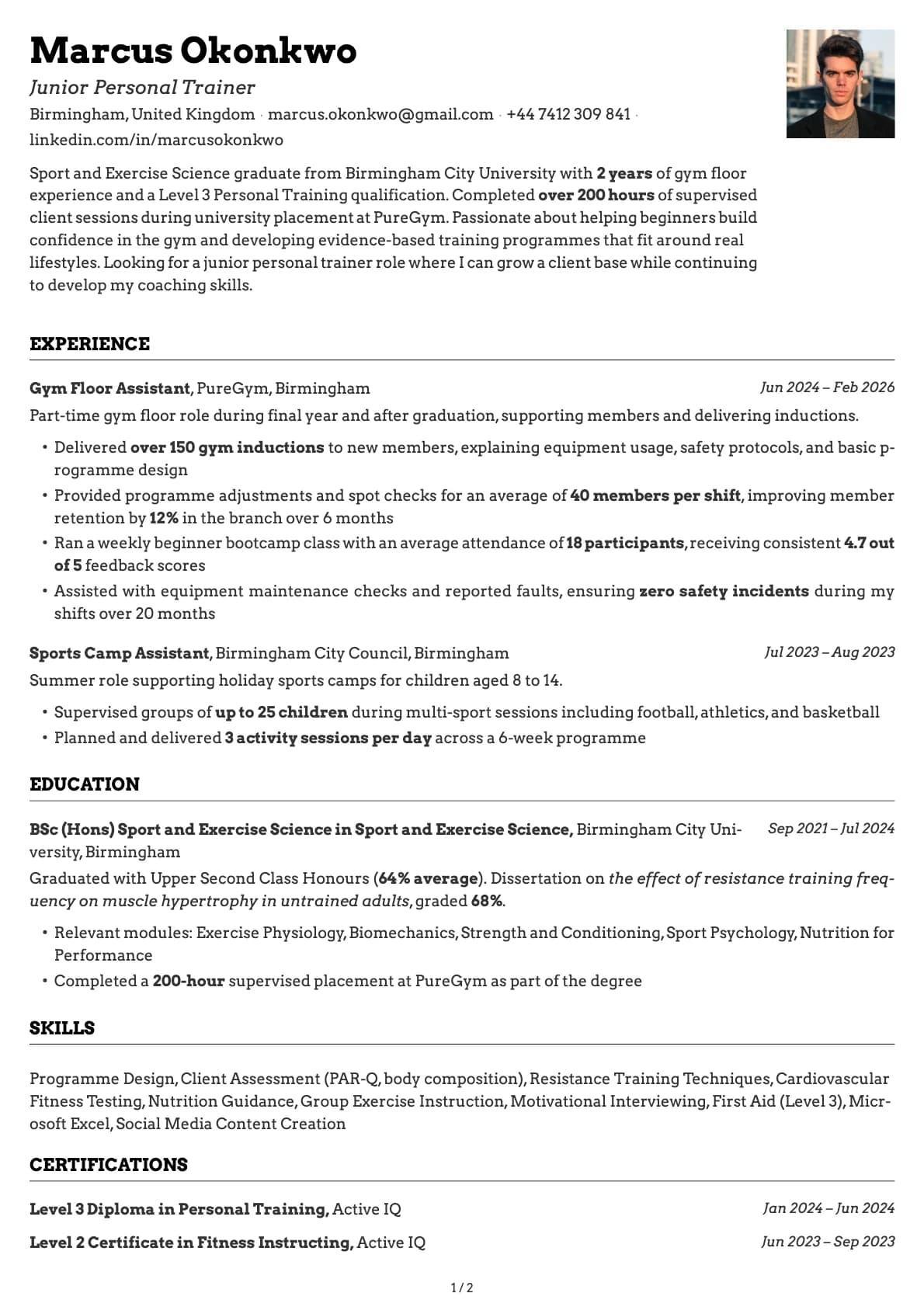
Junior Personal Trainer
A junior personal trainer resume example showing how to combine a sport science degree, Level 3 PT qualification, and gym floor experience at PureGym.
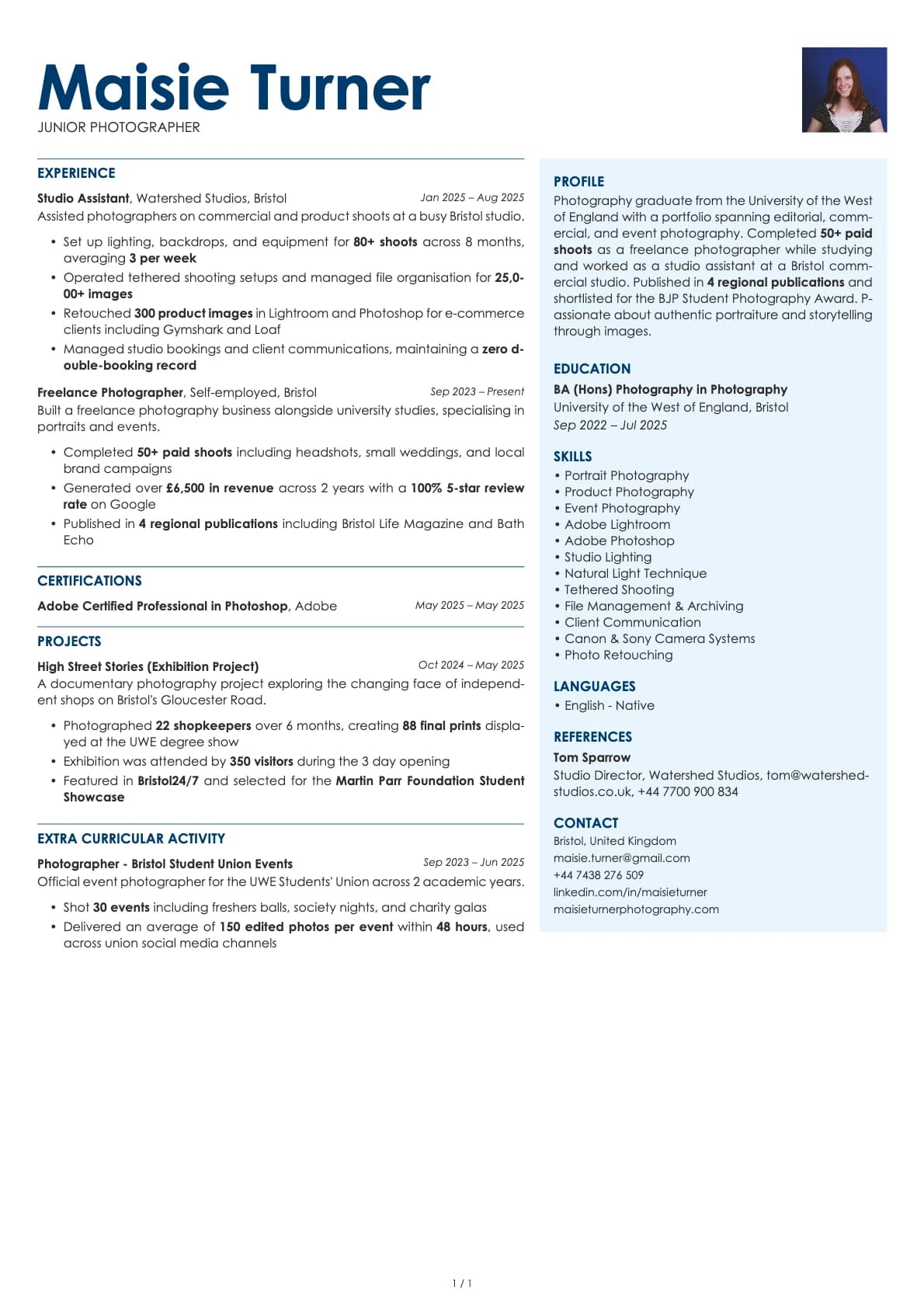
Junior Photographer
A junior photographer resume example for graduates. See how to present freelance work, studio experience, and published images to land your first photography role.
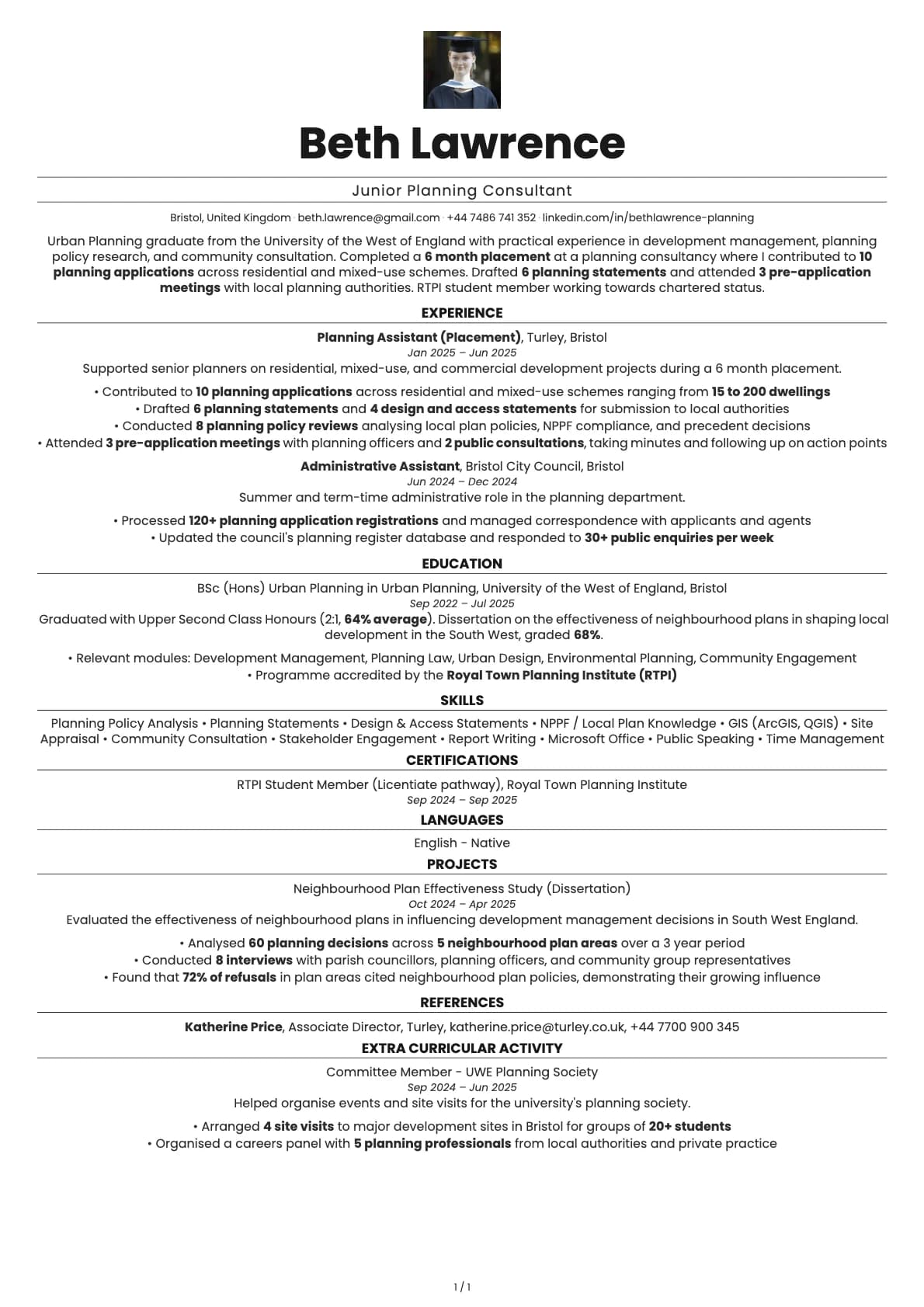
Junior Planning Consultant
A junior planning consultant resume example for graduates. See how to present planning application experience, policy analysis, and RTPI membership to land your first planning role.
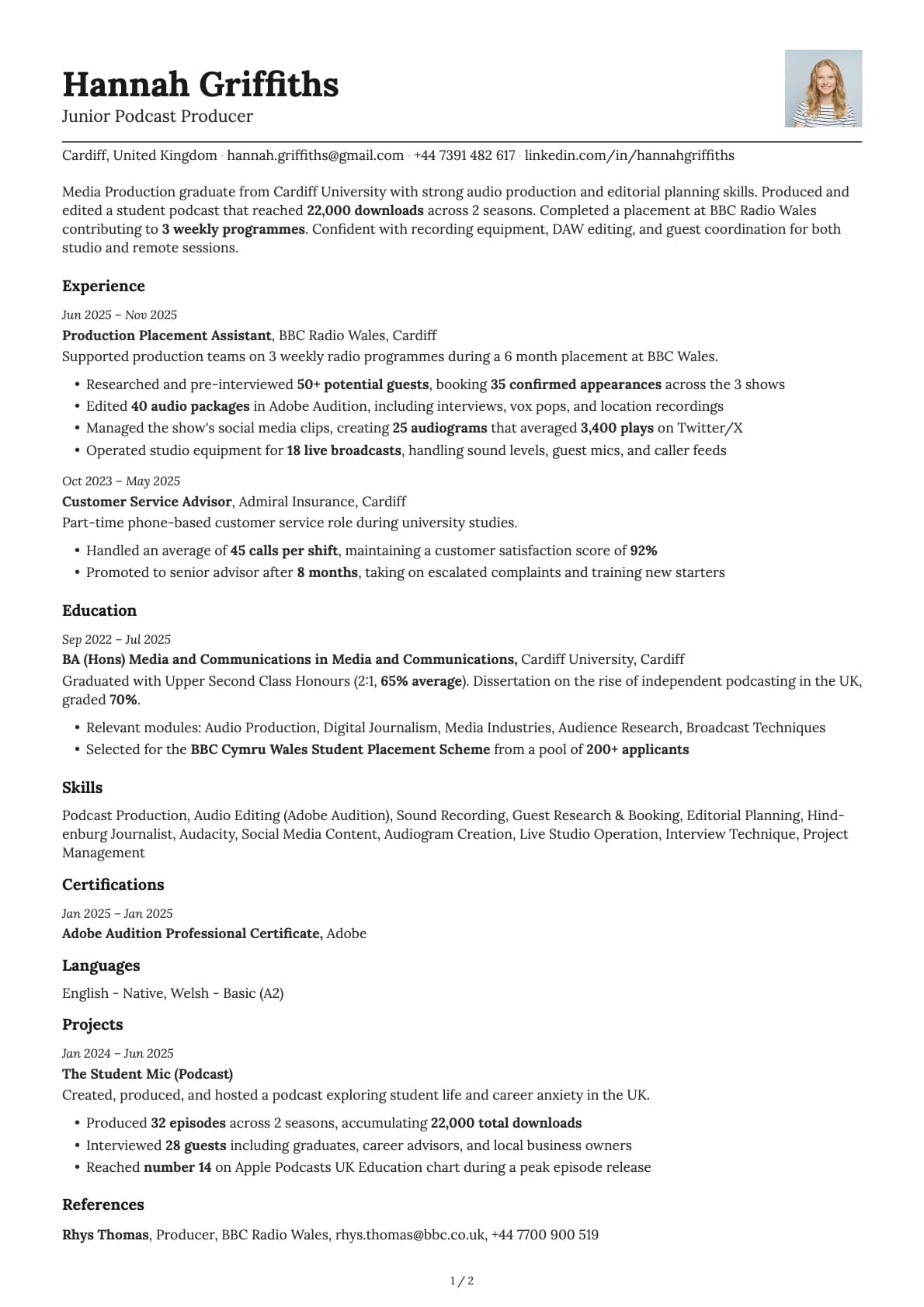
Junior Podcast Producer
A junior podcast producer resume example for graduates. See how to present audio production skills, download numbers, and broadcasting experience to land your first podcast role.
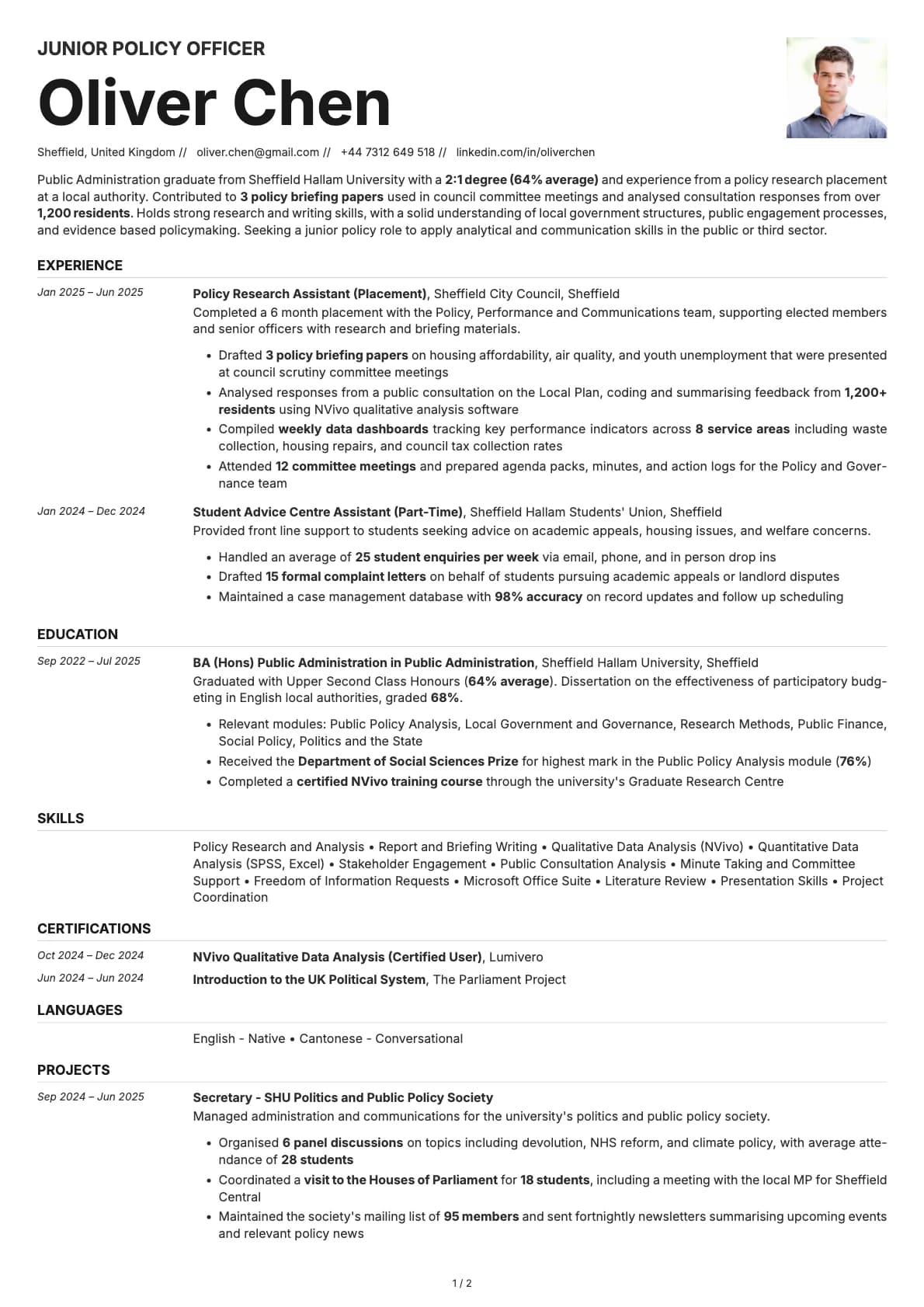
Junior Policy Officer
A junior policy officer resume example for public administration graduates. See how to present research skills, briefing writing, and council placement experience.
Junior PR Executive
A junior PR executive resume example for recent graduates. See how to showcase media placements, event coordination, and communication skills to land your first PR role.