Junior Materials Engineer Resume Example
A junior materials engineer resume example with metallurgical testing experience, SEM analysis skills, and IOM3 membership.

Laddro Team
Free to use. No account needed to start.
Free to use. No account needed to start.
Overview
Materials engineering underpins manufacturing, aerospace, energy, and construction. Employers need graduates who understand the relationship between microstructure, processing, and performance, and who can carry out testing, failure analysis, and material selection with confidence. Hands-on lab experience is essential. If you can operate a scanning electron microscope, run tensile tests, and interpret the results within a commercial context, you are already ahead of most applicants.
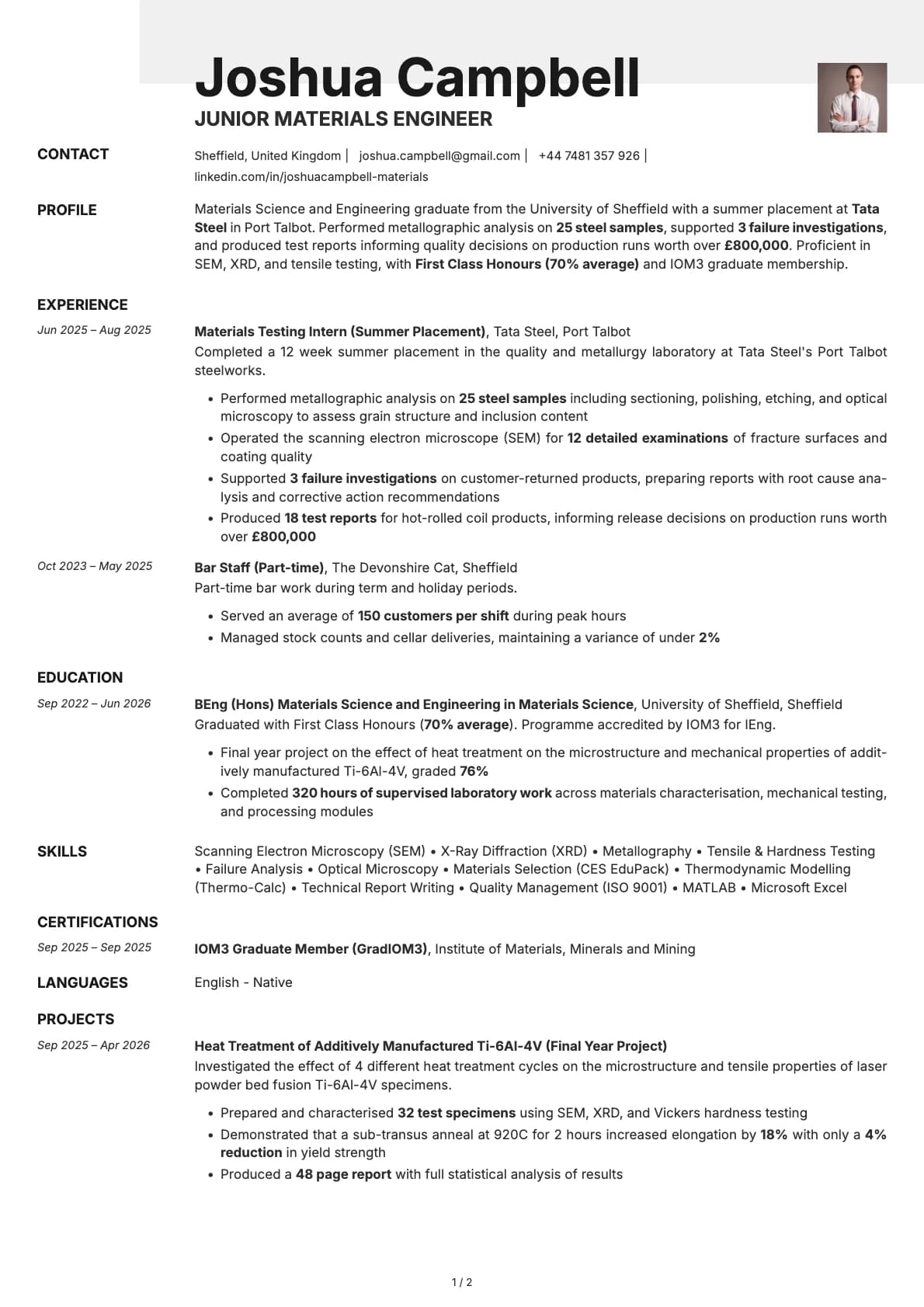
This resume belongs to Joshua Campbell, a Materials Science and Engineering graduate from the University of Sheffield who completed a summer placement at Tata Steel in Port Talbot. He performed metallographic analysis on 25 steel samples, supported failure investigations on 3 customer complaints, and produced test reports that informed quality decisions on production runs worth over £800,000.
What Makes This Resume Work
Lab work is quantified with sample counts. Stating 25 samples analysed gives the reader a clear picture of throughput and hands-on experience. This is far more effective than writing "metallographic analysis experience" without context.
Failure investigation experience demonstrates analytical thinking. Supporting 3 customer complaint investigations shows that Joshua has been involved in real problem-solving, not just routine testing. Failure analysis requires root cause thinking, which is a skill employers prize in junior engineers.
Financial context links lab work to business outcomes. Referencing £800,000 in production value shows that the quality testing Joshua performed had direct commercial consequences. This demonstrates awareness that materials engineering is not just a lab exercise but a function that protects revenue and reputation.
Key Takeaways
Junior materials engineers should list the specific testing equipment they have operated (SEM, XRD, tensile testing machines) and quantify their lab output. Reference any failure analysis or quality work, naming the material types and standards used. IOM3 membership demonstrates professional engagement, and a final year project involving original experimental work shows that you can design and execute a research programme, not just follow a lab script.
Build your own version
Open this layout in the builder and swap in your own details. It takes a few minutes.
Free to use. No account needed to start.
Was this resume example helpful?
Rate this example to help us create better content for you.
4.5 average from 71 ratingsRelated resume examples
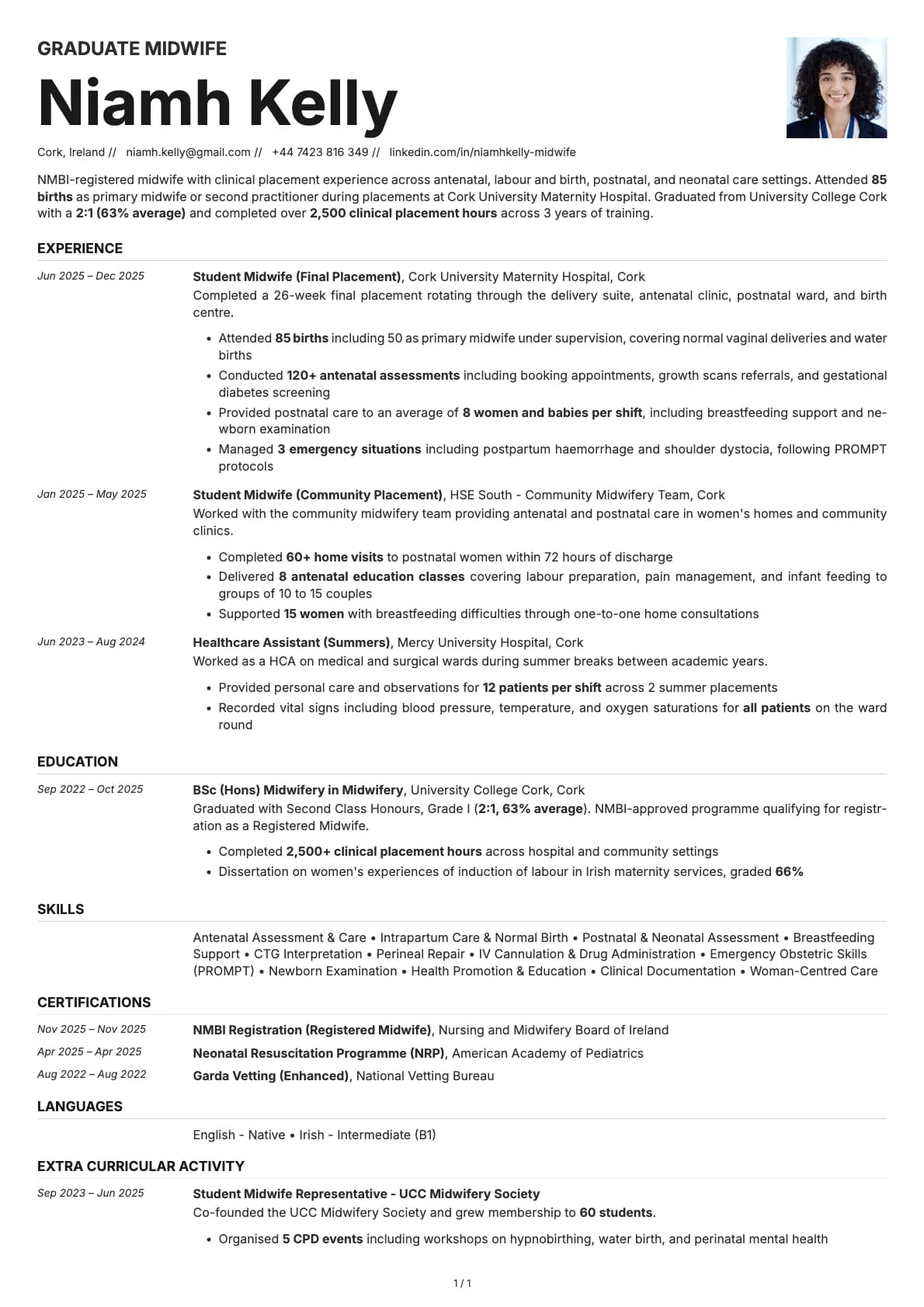
Graduate Midwife
A graduate midwife resume example with birth attendance numbers, NMBI registration, and clinical placement hours for newly qualified midwives.
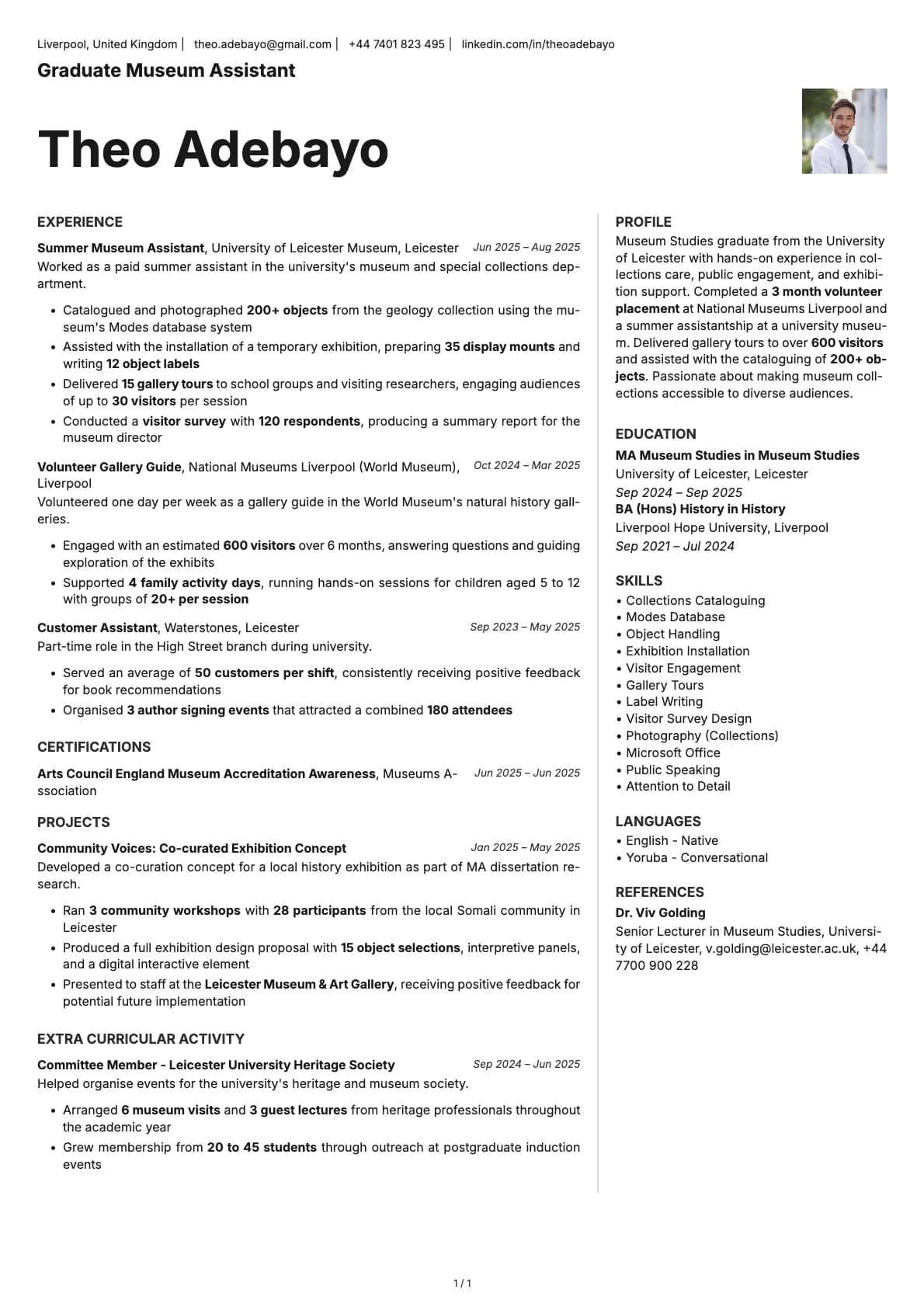
Graduate Museum Assistant
A graduate museum assistant resume example. See how to present collections experience, gallery tours, and museum studies qualifications to land your first museum role.
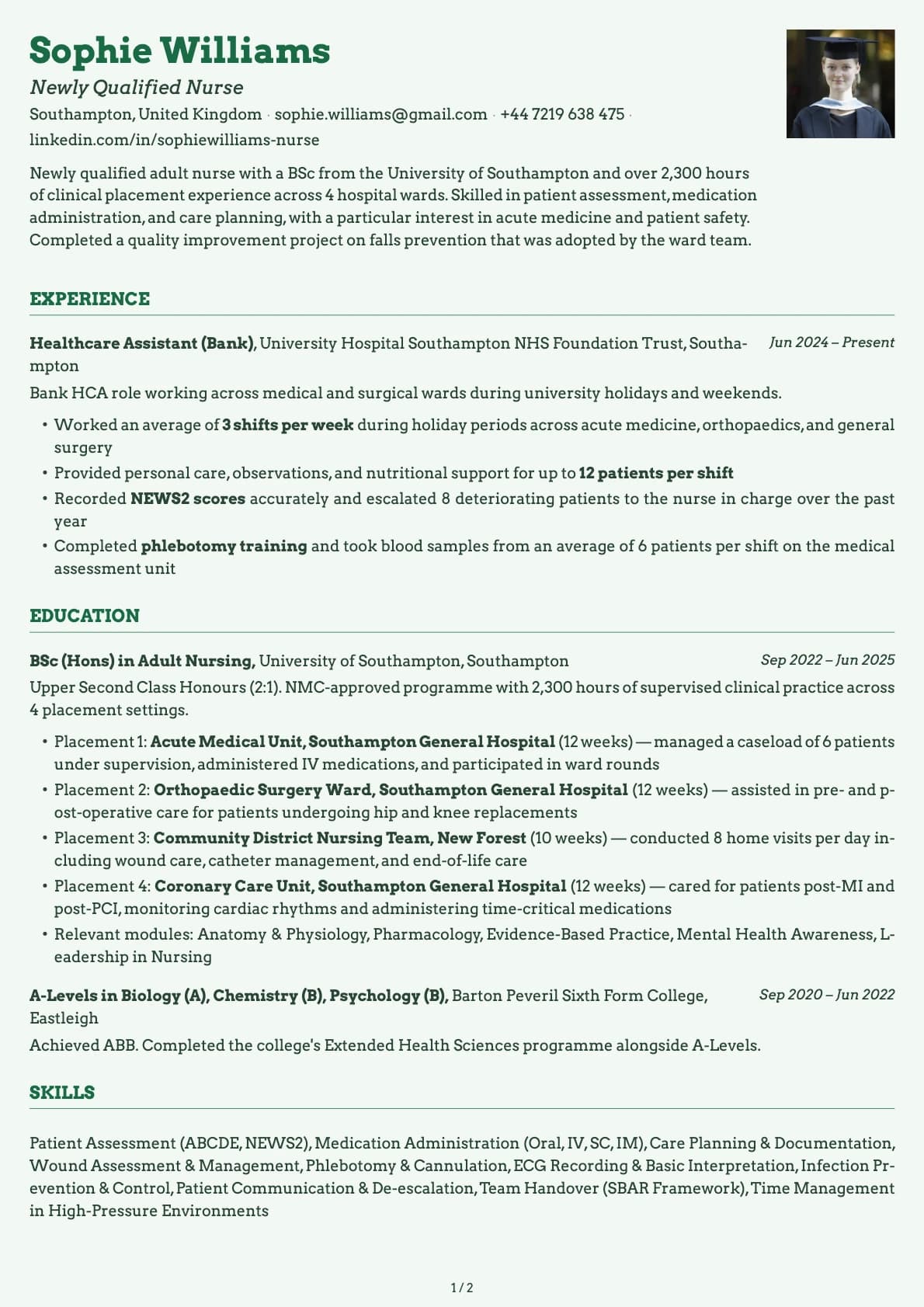
Graduate Nurse
A graduate nurse resume example for recently qualified nurses. See how to present your clinical placements, patient care experience, and NMC registration to land your first nursing role.
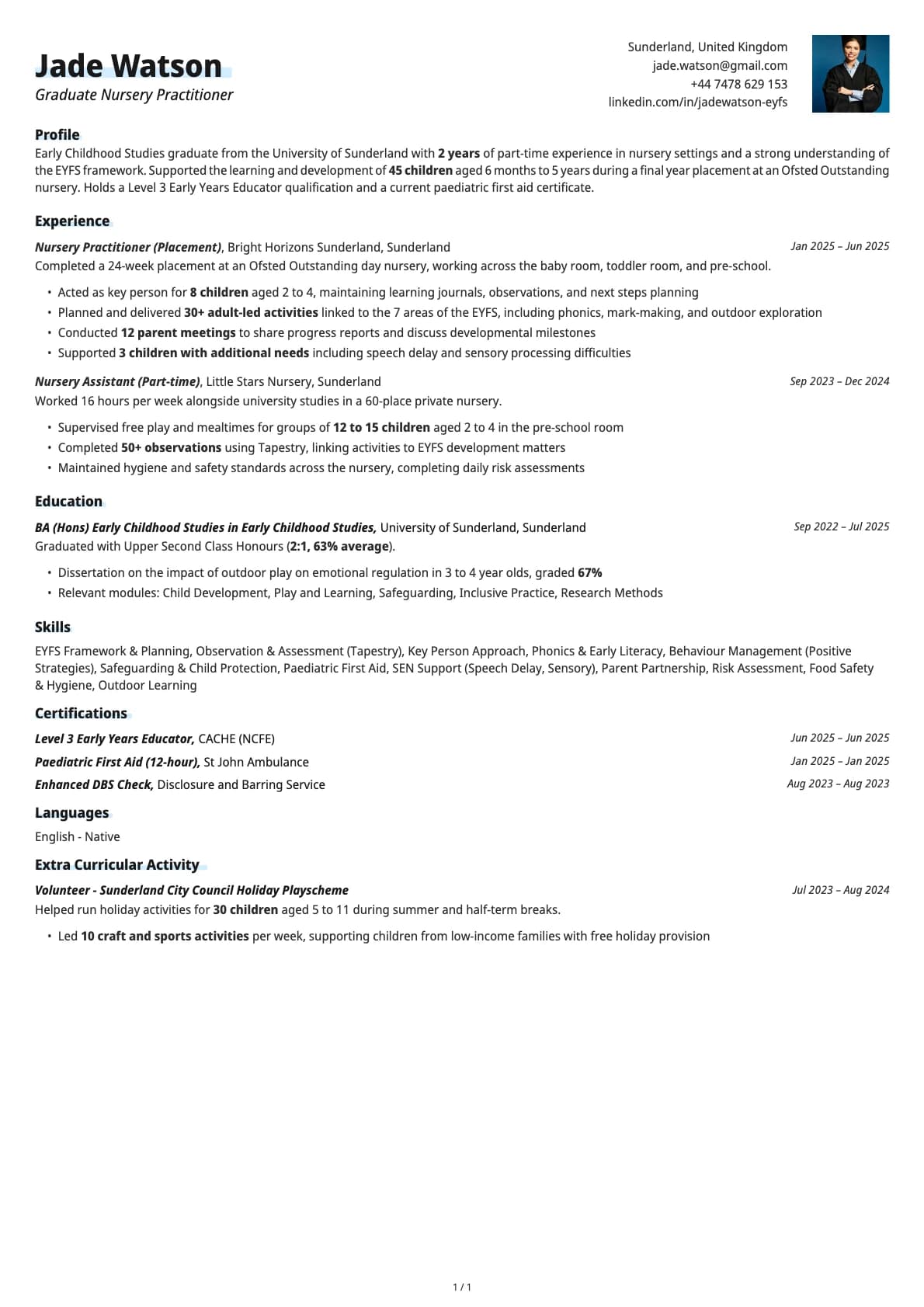
Graduate Nursery Practitioner
A graduate nursery practitioner resume example with EYFS experience, key person responsibilities, and Level 3 Early Years Educator qualification.
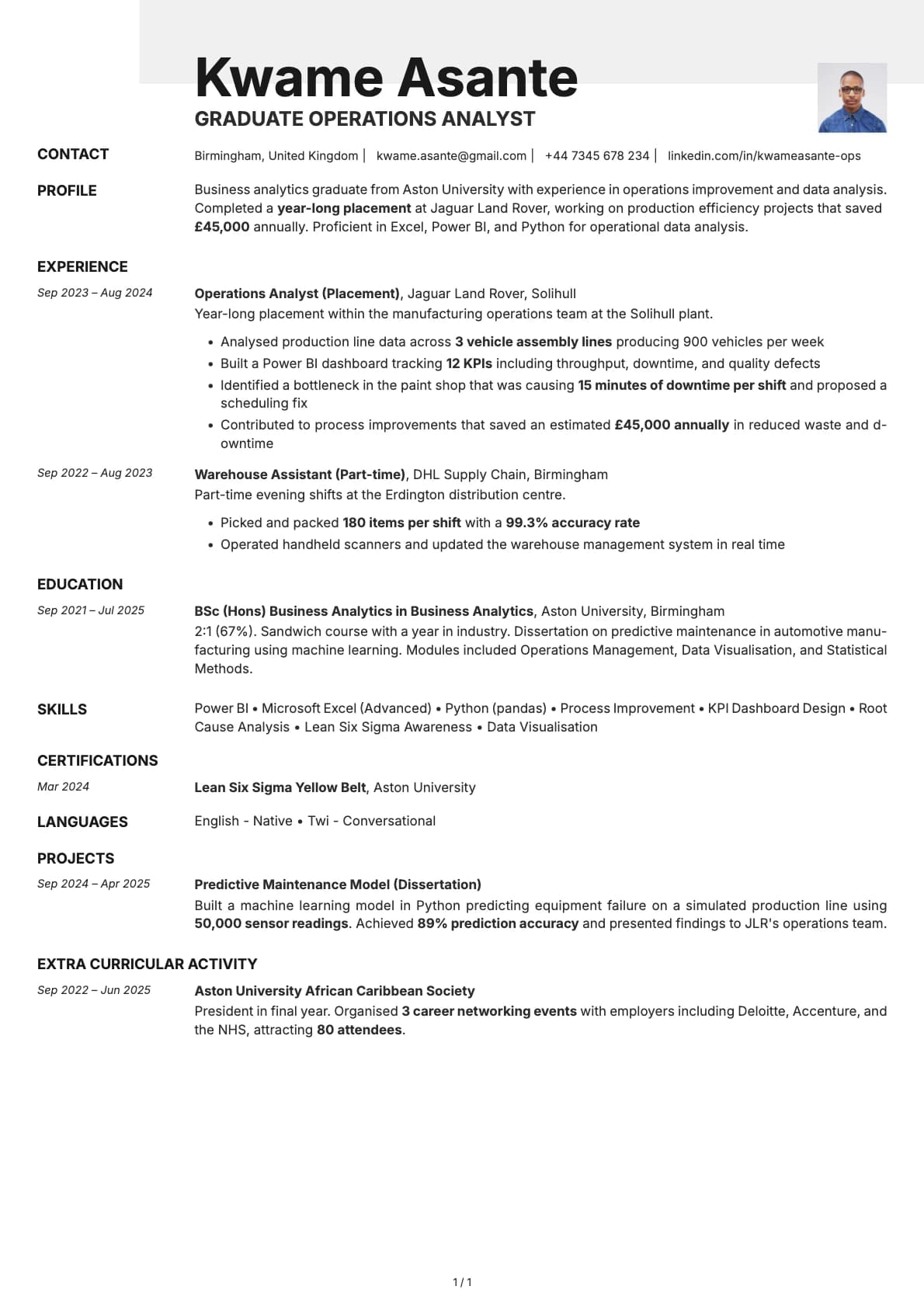
Graduate Operations Analyst
A graduate operations analyst resume example with Jaguar Land Rover placement and data analysis skills.
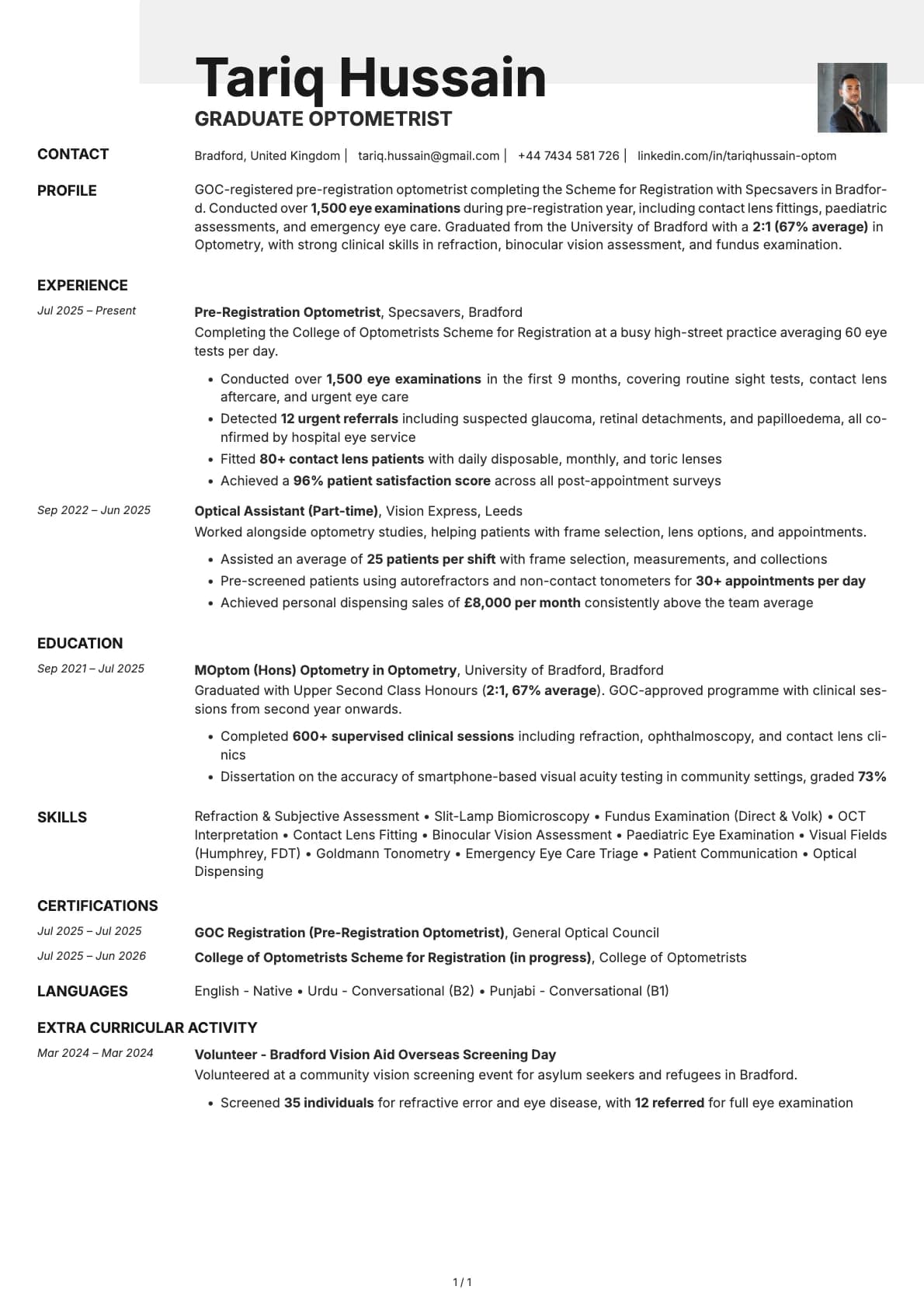
Graduate Optometrist
A graduate optometrist resume example with pre-registration experience, GOC registration, and eye examination numbers for newly qualifying optometrists.
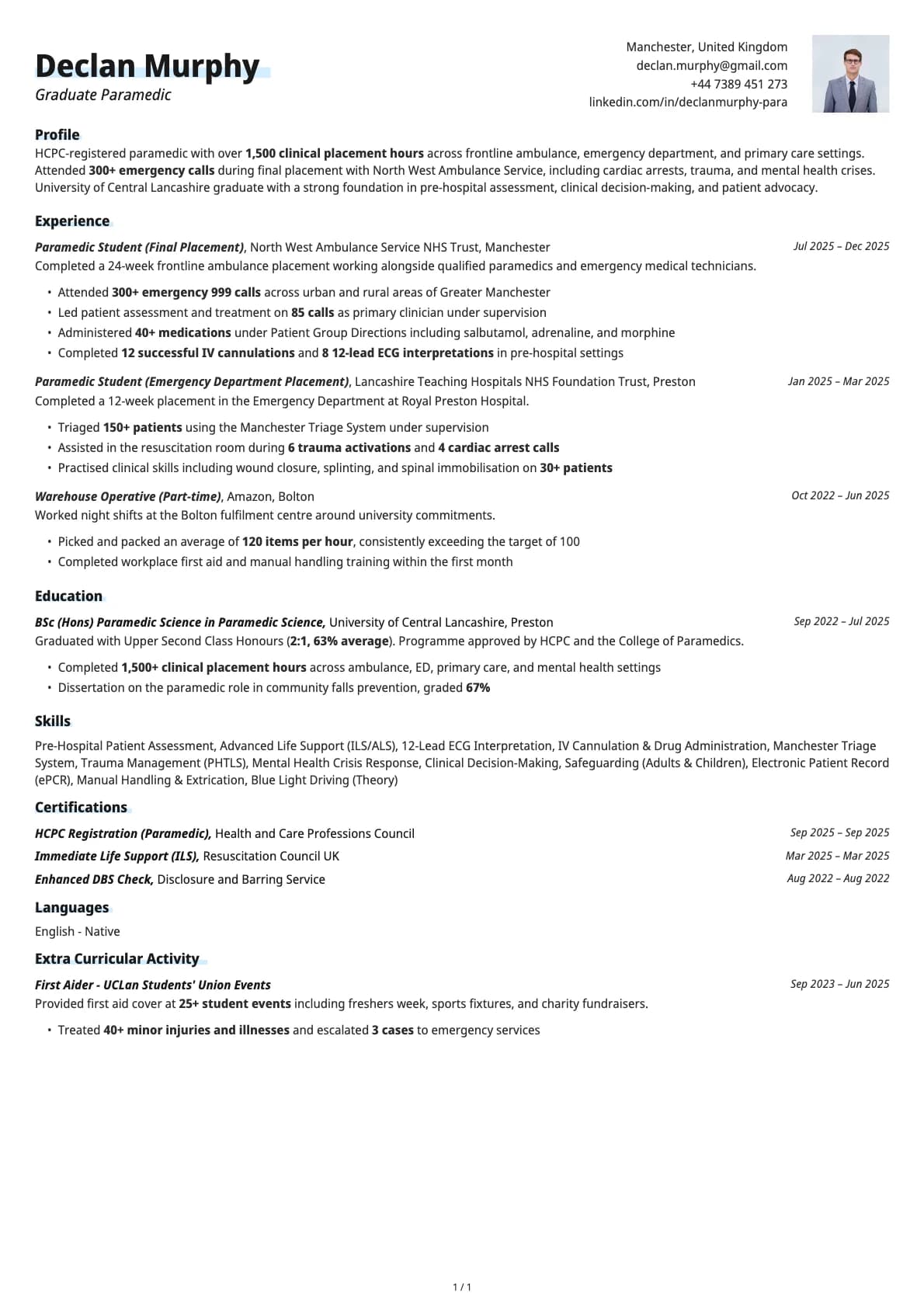
Graduate Paramedic
A graduate paramedic resume example with frontline placement hours, HCPC registration, and emergency call numbers for newly qualified paramedics.
Graduate Pension Administrator
A graduate pension administrator resume example with Mercer internship and benefit calculation experience.
Graduate Planner
A graduate planner resume example for town planning MA graduates. See how to present your RTPI accredited degree, planning applications experience, and policy knowledge.
Graduate Police Officer
A graduate police officer resume example showing how to turn retail security, victim support volunteering, and a criminology degree into a strong PSNI application.
Graduate Policy Analyst
A graduate policy analyst resume example with Northern Ireland Assembly internship and public policy research experience.
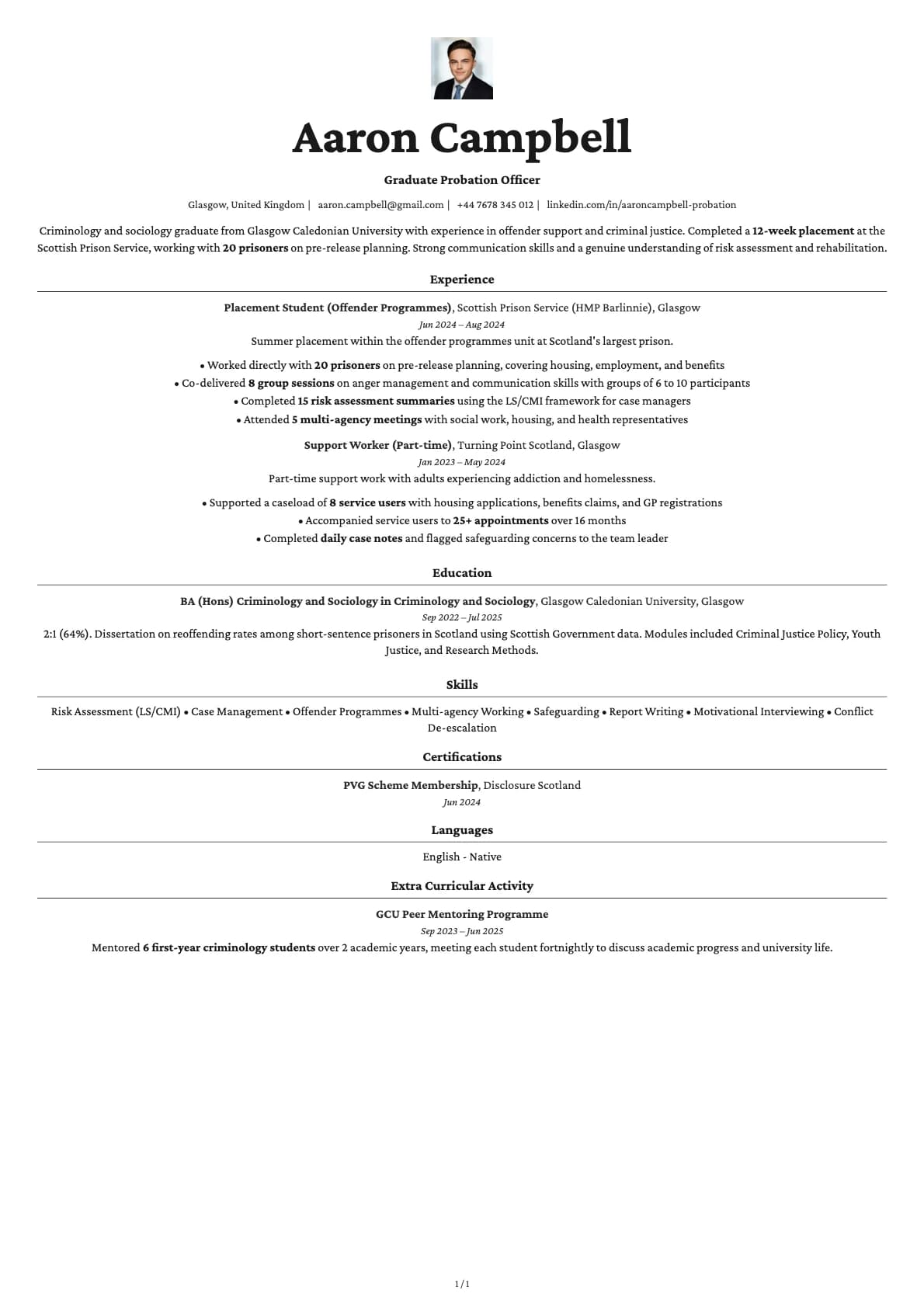
Graduate Probation Officer
A graduate probation officer resume example with prison placement experience and risk assessment skills.