Junior ML Engineer Resume Example
A junior ML engineer resume example with deployed models, TensorFlow projects, and AWS SageMaker experience from an AI and ML MSc graduate starting their career.

Laddro Team
Free to use. No account needed to start.
Free to use. No account needed to start.
Overview
ML engineering sits between data science and software engineering. You need to build models, but you also need to deploy, monitor, and maintain them in production. Hiring managers at this level want to see that you understand MLOps pipelines, not just Jupyter notebooks. Deployed models, inference latency numbers, and CI/CD for ML workflows are what separate strong candidates from the rest.
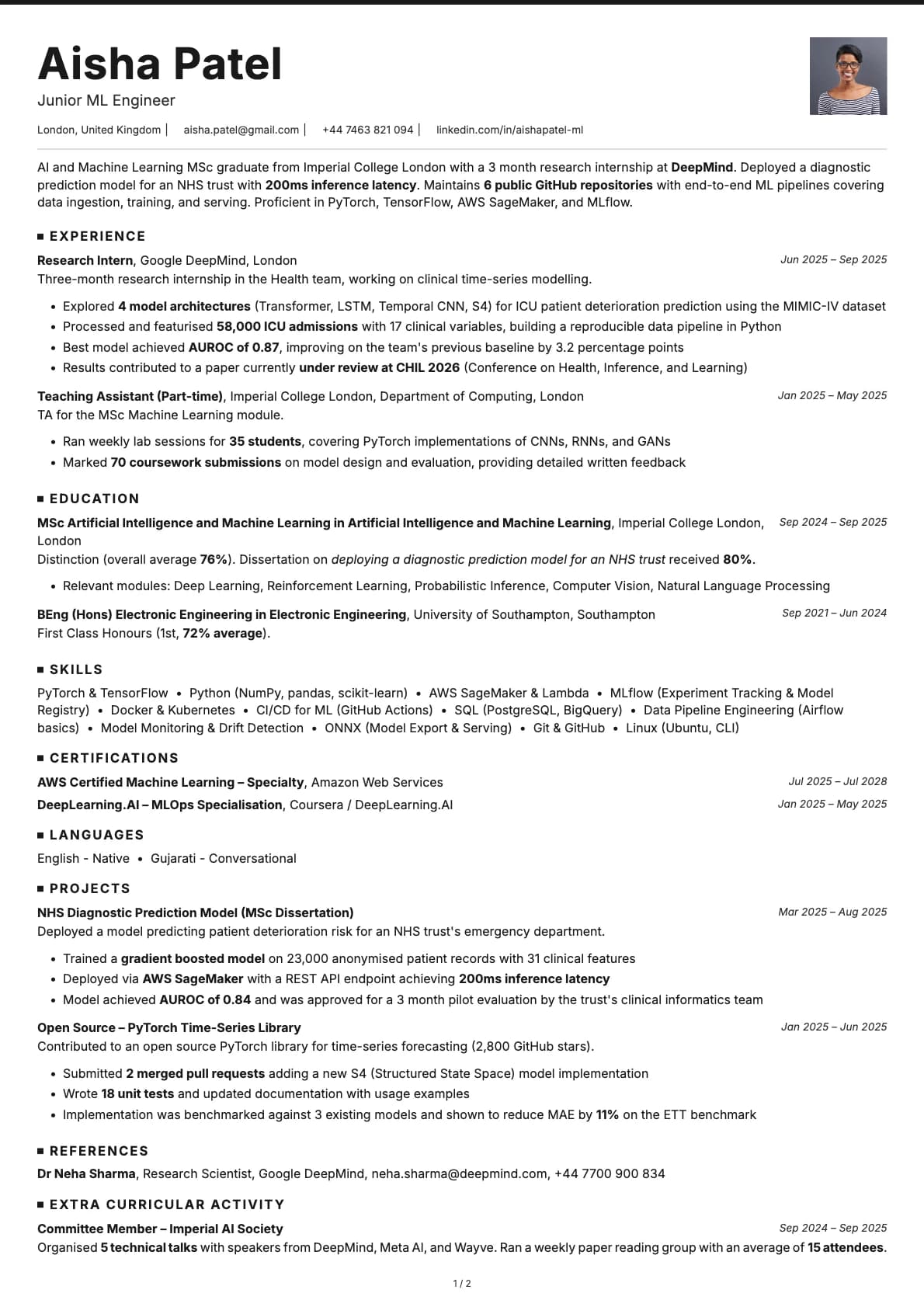
This resume belongs to Aisha Patel, an AI and Machine Learning MSc graduate from Imperial College London. She completed a 3 month research internship at DeepMind, deployed a production model during her dissertation project with an NHS trust, and maintains 6 public repositories with end-to-end ML pipelines. Her resume works because every model is described with deployment context, not just training accuracy.
What Makes This Resume Work
The DeepMind internship is an exceptional credential. Even a short research internship at one of the world's leading AI labs immediately positions Aisha as a serious candidate. She describes her contribution with specifics: model architectures explored, datasets processed, and results contributed to a paper.
Deployed models are distinguished from research experiments. Aisha's NHS project involved deploying a model that processed real patient data and returned predictions within 200ms. This production focus separates her from candidates who only show notebook-based experiments.
MLOps tools are named alongside ML frameworks. Docker, AWS SageMaker, MLflow, and GitHub Actions appear alongside PyTorch and TensorFlow. This shows Aisha understands the full lifecycle of ML systems, not just the modelling step.
The AWS Machine Learning Specialty certification validates cloud ML skills. At the junior level, this certification signals that Aisha can deploy models on AWS infrastructure, which is a common requirement in UK ML engineering roles.
Key Takeaways
Junior ML engineer resumes must show deployed models, not just trained models. Include inference latency, serving infrastructure, and monitoring setup alongside accuracy metrics. Name your MLOps tools (SageMaker, MLflow, Kubeflow) and describe your CI/CD pipeline for model updates. A research internship or industry dissertation project is your strongest asset. Maintain public GitHub repos with complete, reproducible pipelines.
Build your own version
Open this layout in the builder and swap in your own details. It takes a few minutes.
Free to use. No account needed to start.
Was this resume example helpful?
Rate this example to help us create better content for you.
4.8 average from 144 ratingsRelated resume examples
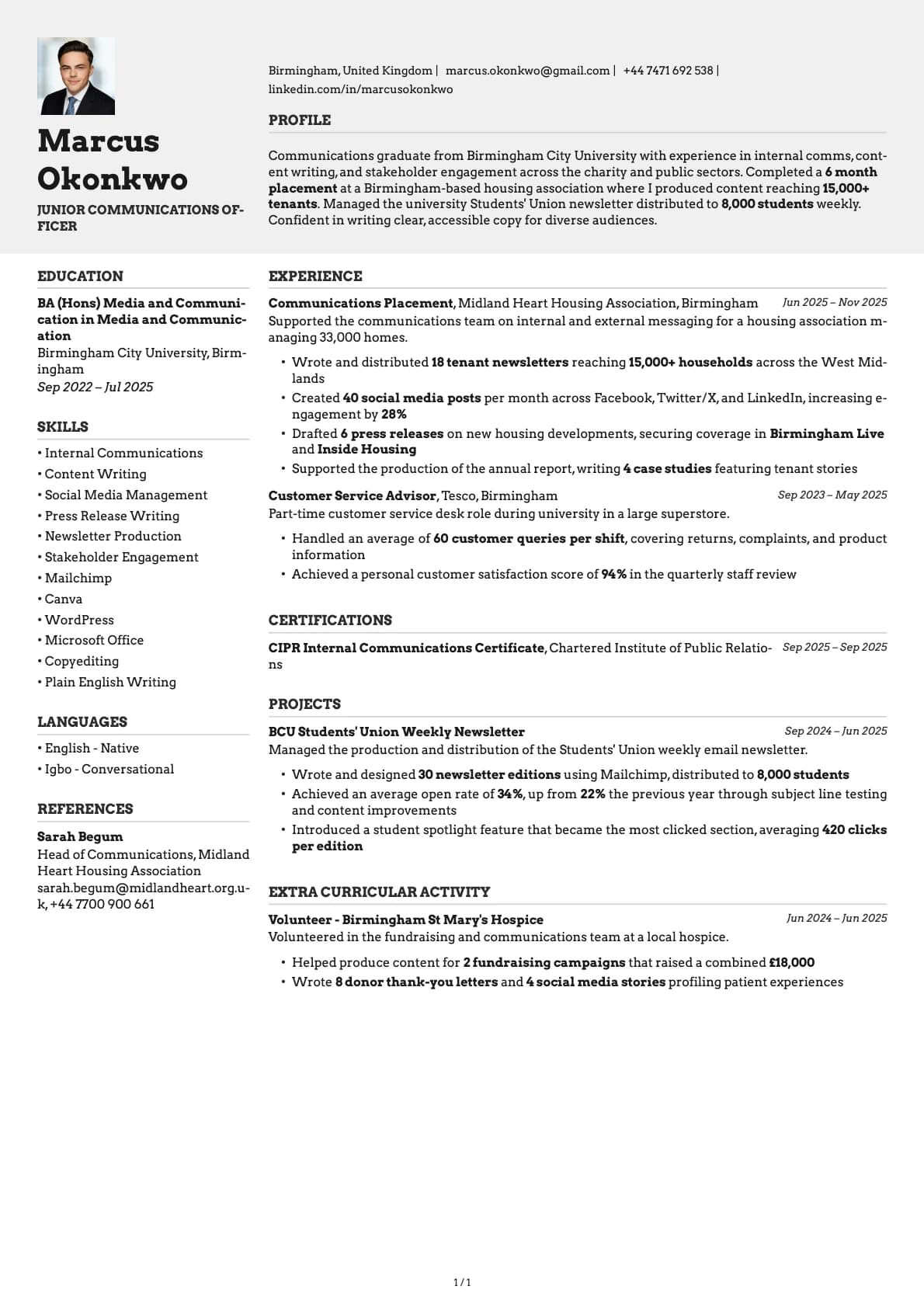
Junior Communications Officer
A junior communications officer resume example for graduates. See how to present internal comms, content writing, and stakeholder engagement experience to land your first comms role.
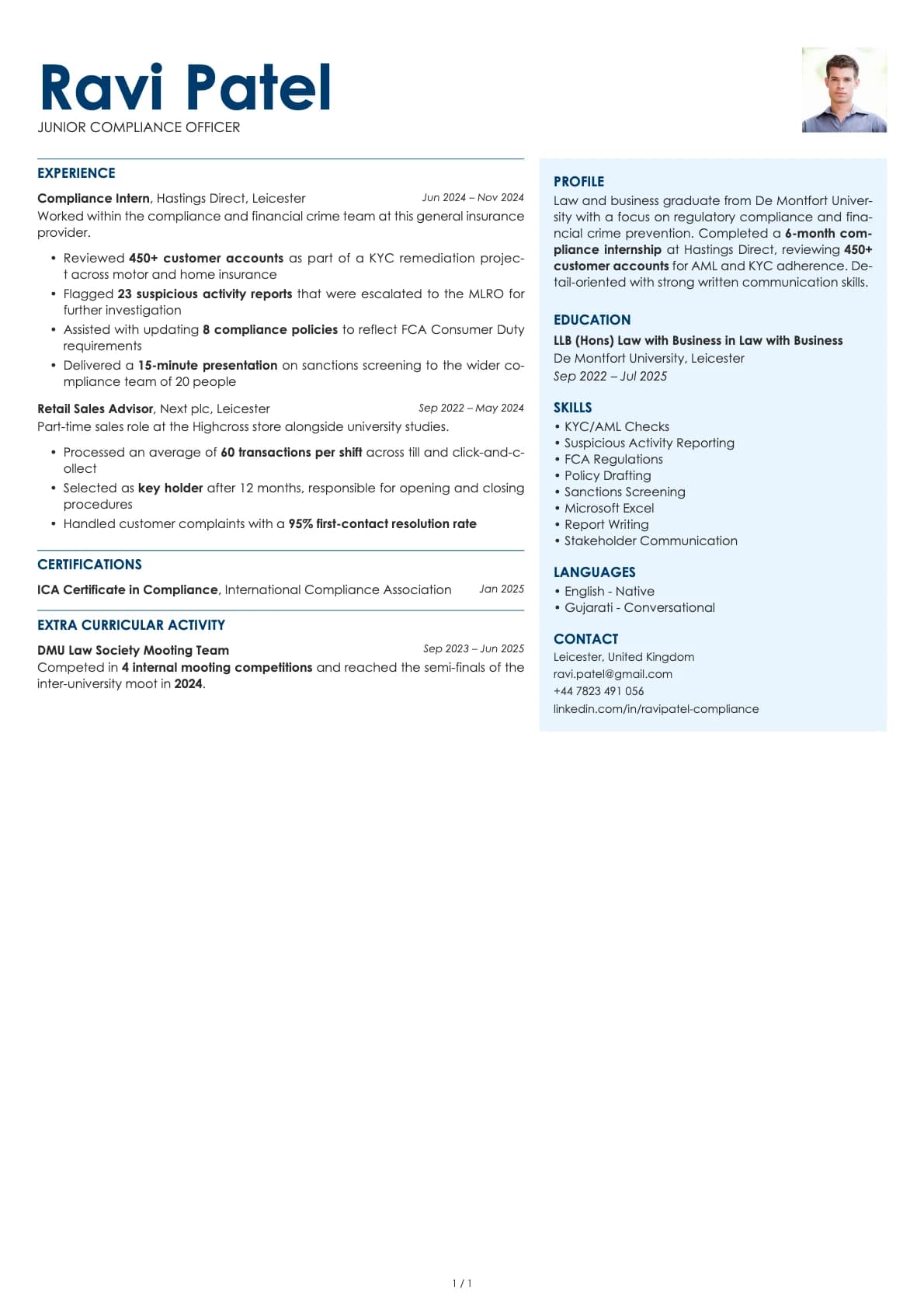
Junior Compliance Officer
A junior compliance officer resume example with insurance compliance internship experience and AML knowledge.
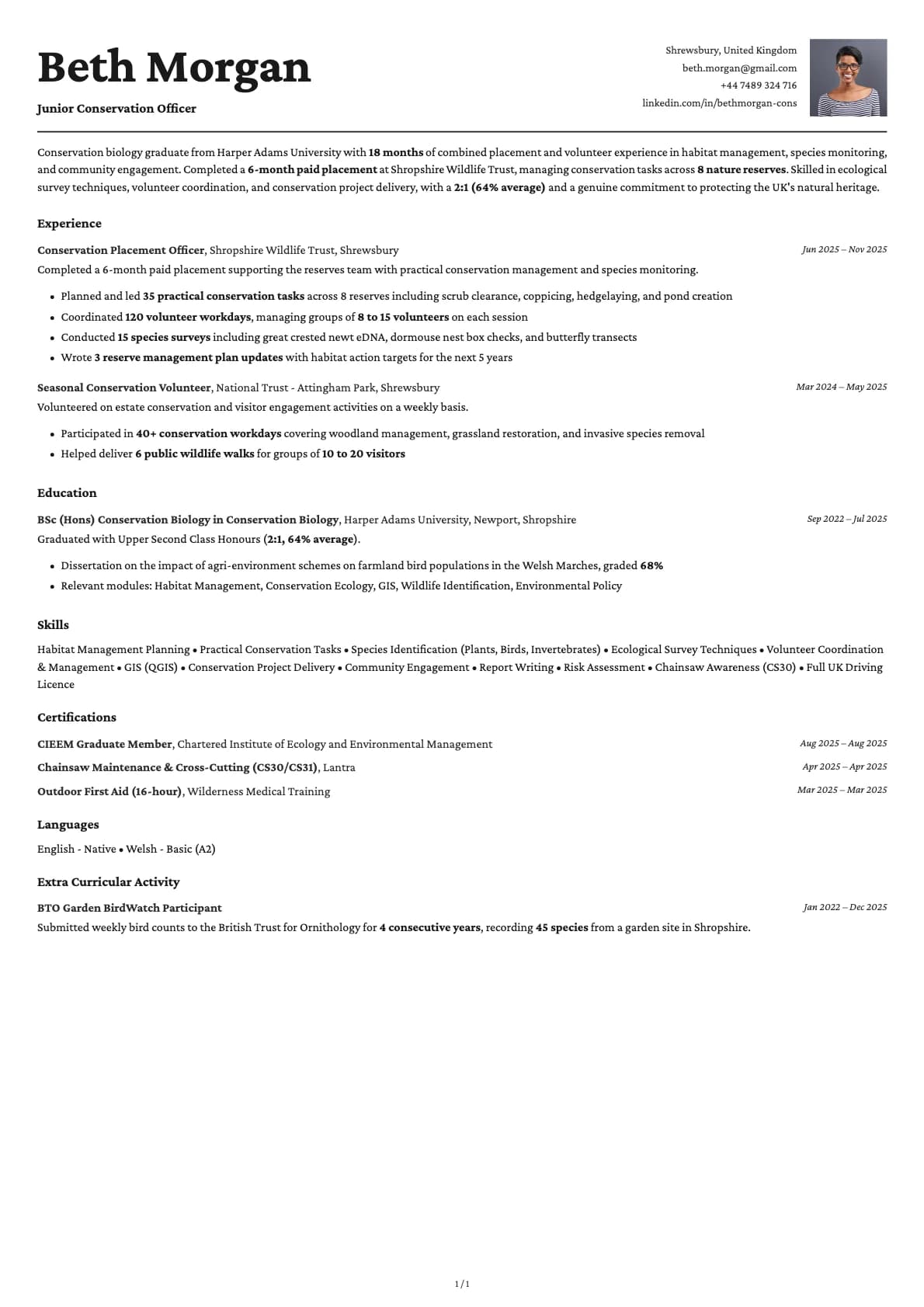
Junior Conservation Officer
A junior conservation officer resume example with wildlife trust placement experience, volunteer coordination, and habitat management skills.
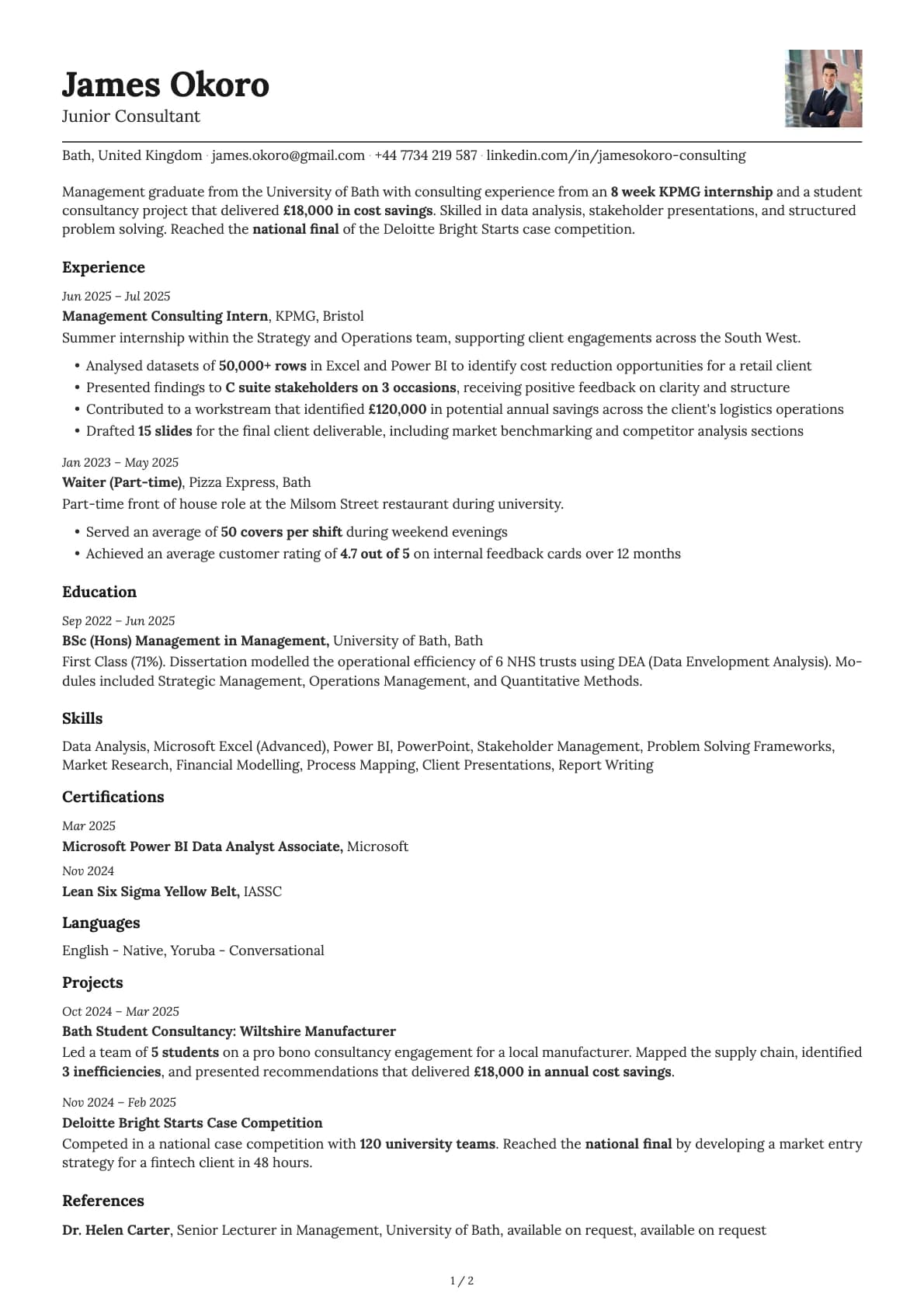
Junior Consultant
A junior consultant resume example with management degree, Big Four internship, and client facing project delivery experience.
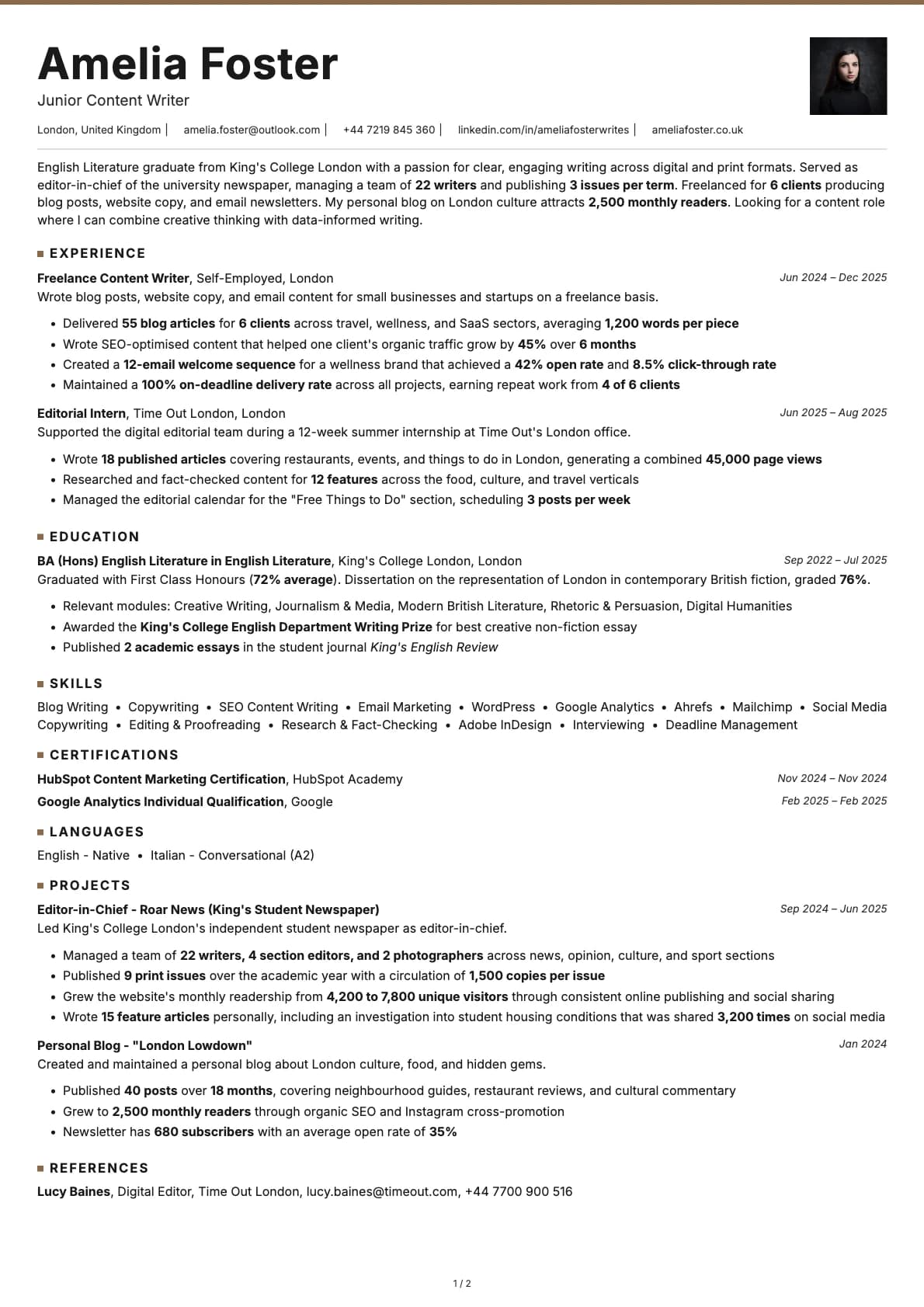
Junior Content Writer
A junior content writer resume example for recent graduates. See how to showcase your writing portfolio, SEO knowledge, and published work to land your first content role.

Junior Copywriter
A junior copywriter resume example for English graduates. See how to present freelance writing, student newspaper experience, and a portfolio to land your first agency or in-house role.
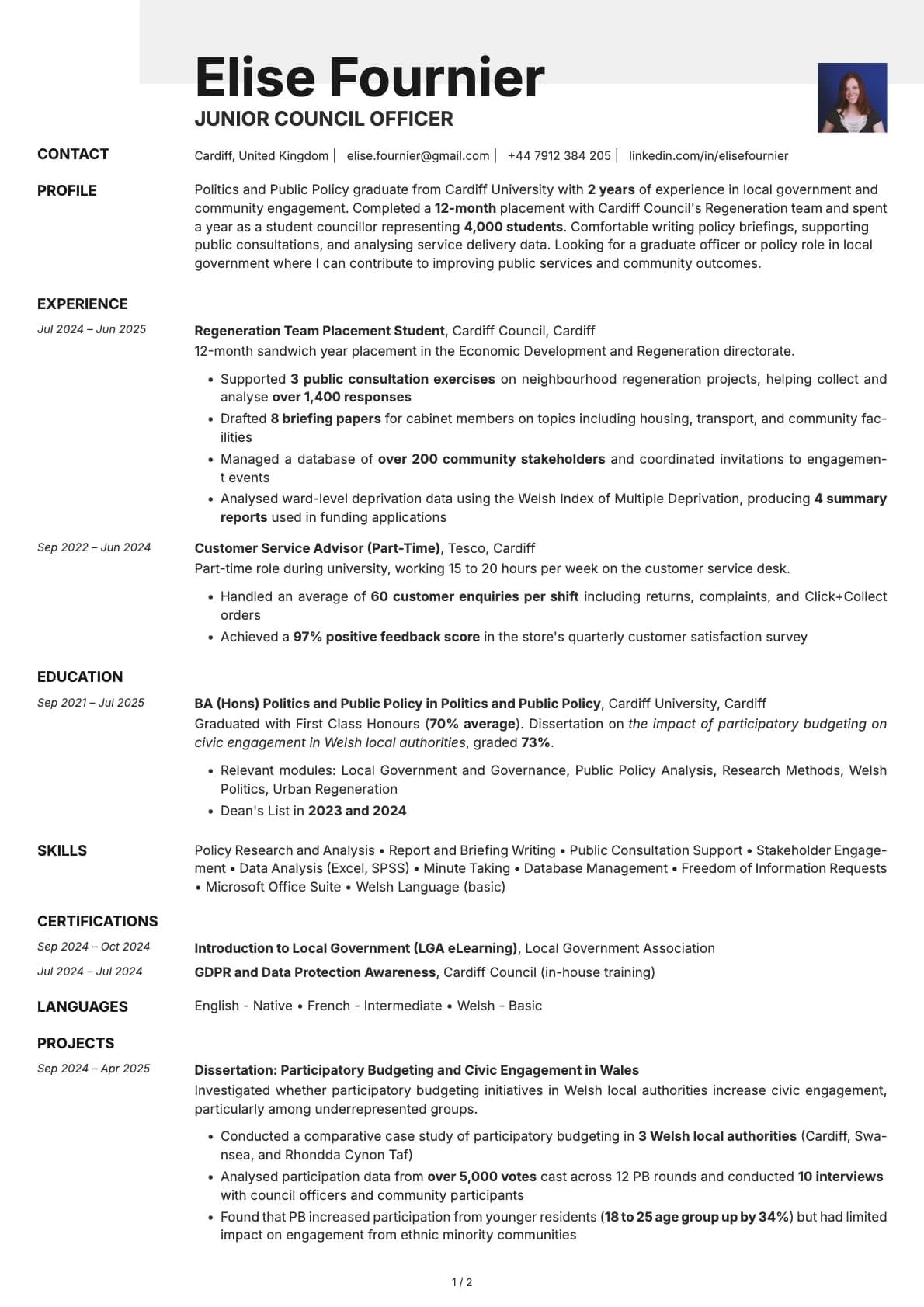
Junior Council Officer
A junior council officer resume example showing how to turn a council placement, student politics, and a public policy degree into a local government career.
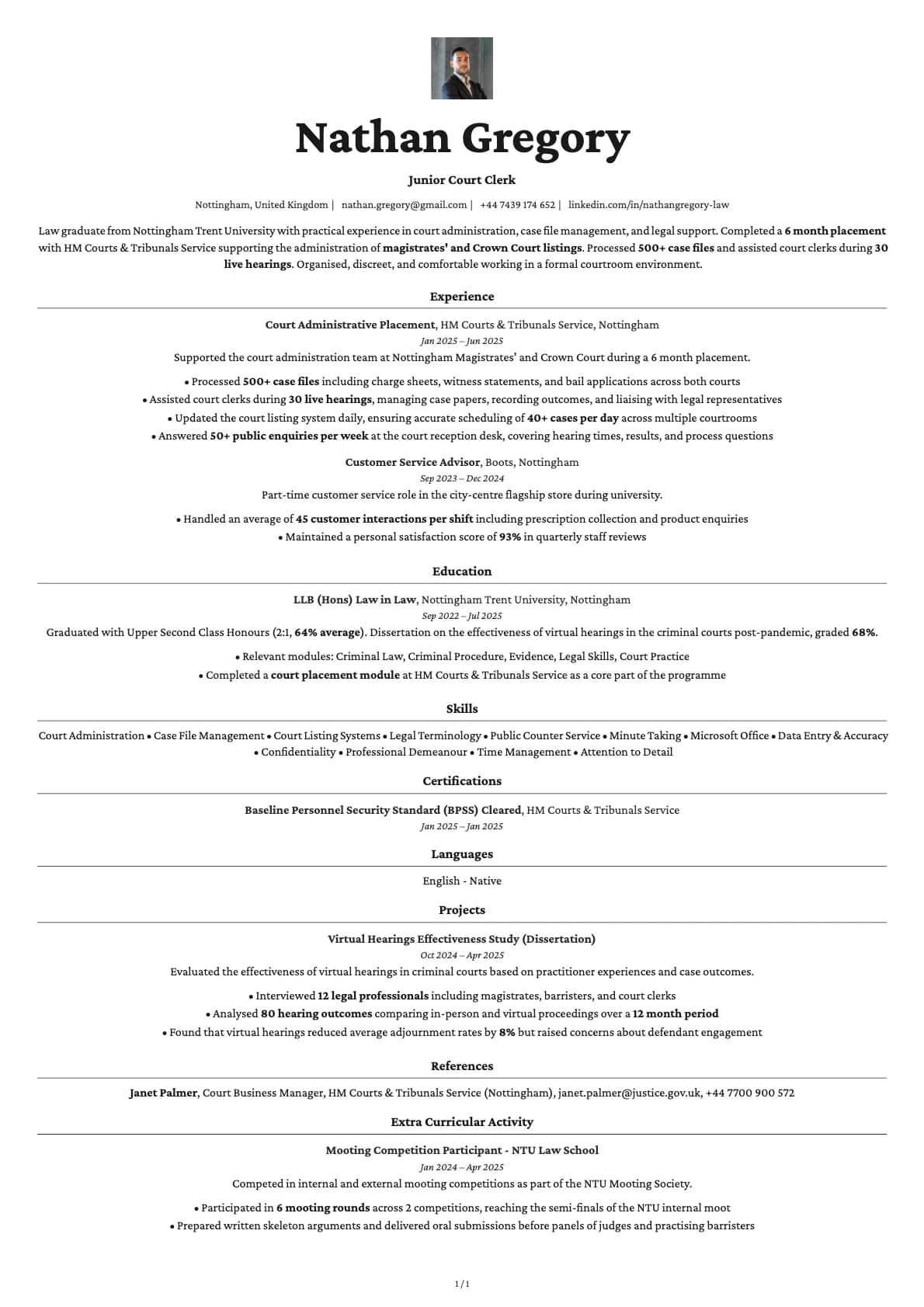
Junior Court Clerk
A junior court clerk resume example for law graduates. See how to present court administration experience, case file management, and HMCTS placement work to land your first court clerk role.
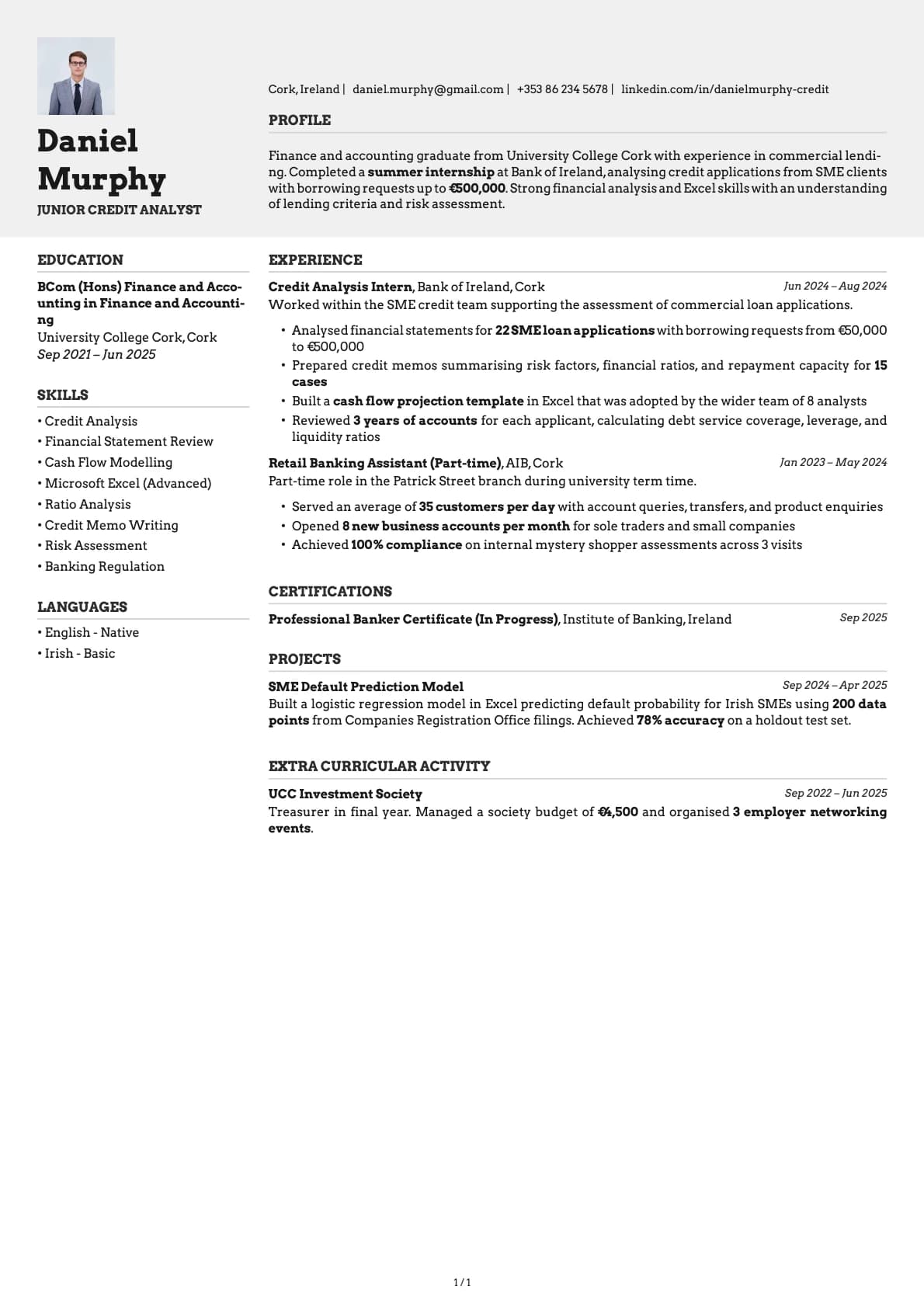
Junior Credit Analyst
A junior credit analyst resume example with Bank of Ireland internship experience and financial analysis skills.
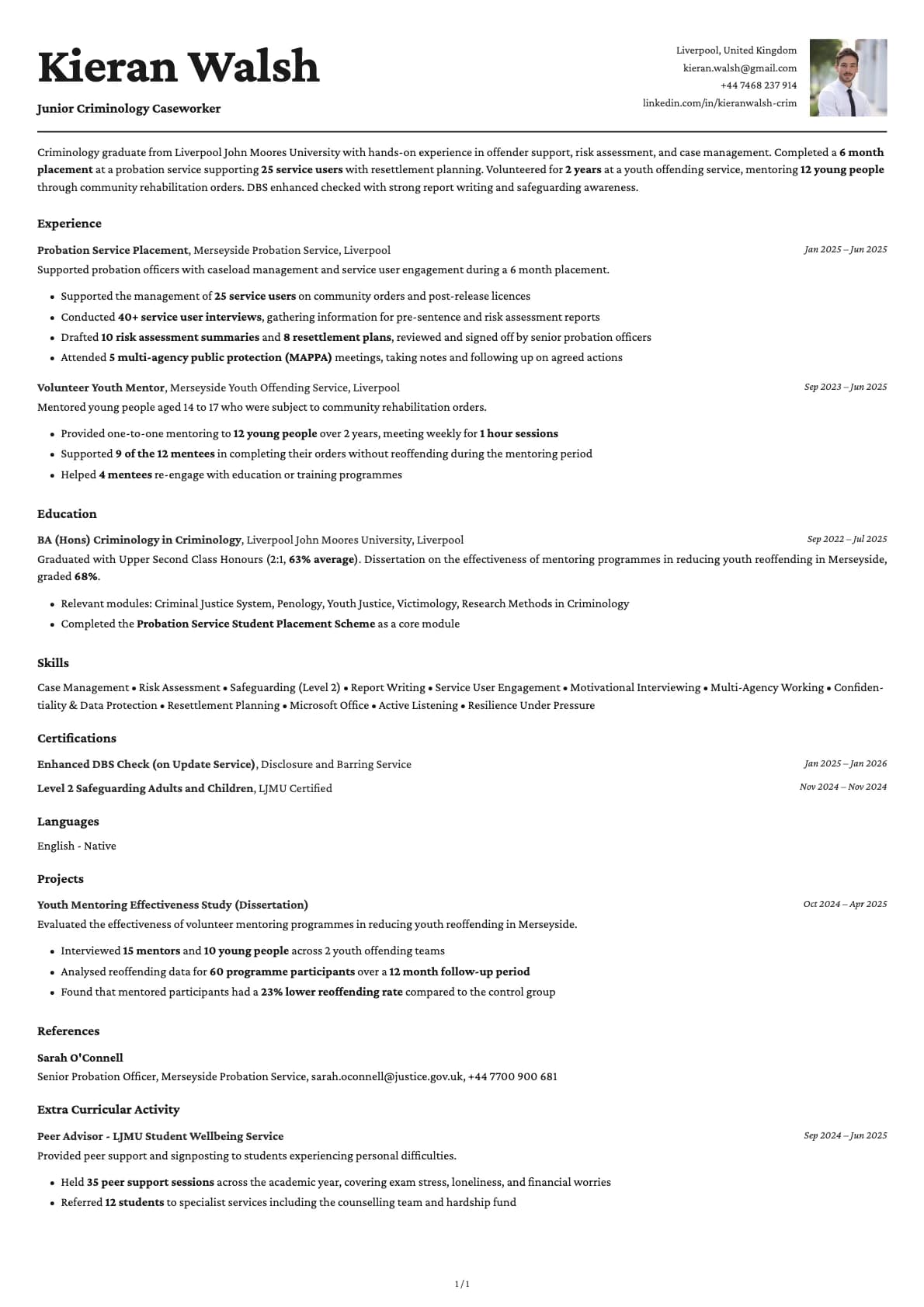
Junior Criminology Caseworker
A junior criminology caseworker resume example for graduates. See how to present probation experience, risk assessment skills, and mentoring work to land your first caseworker role.
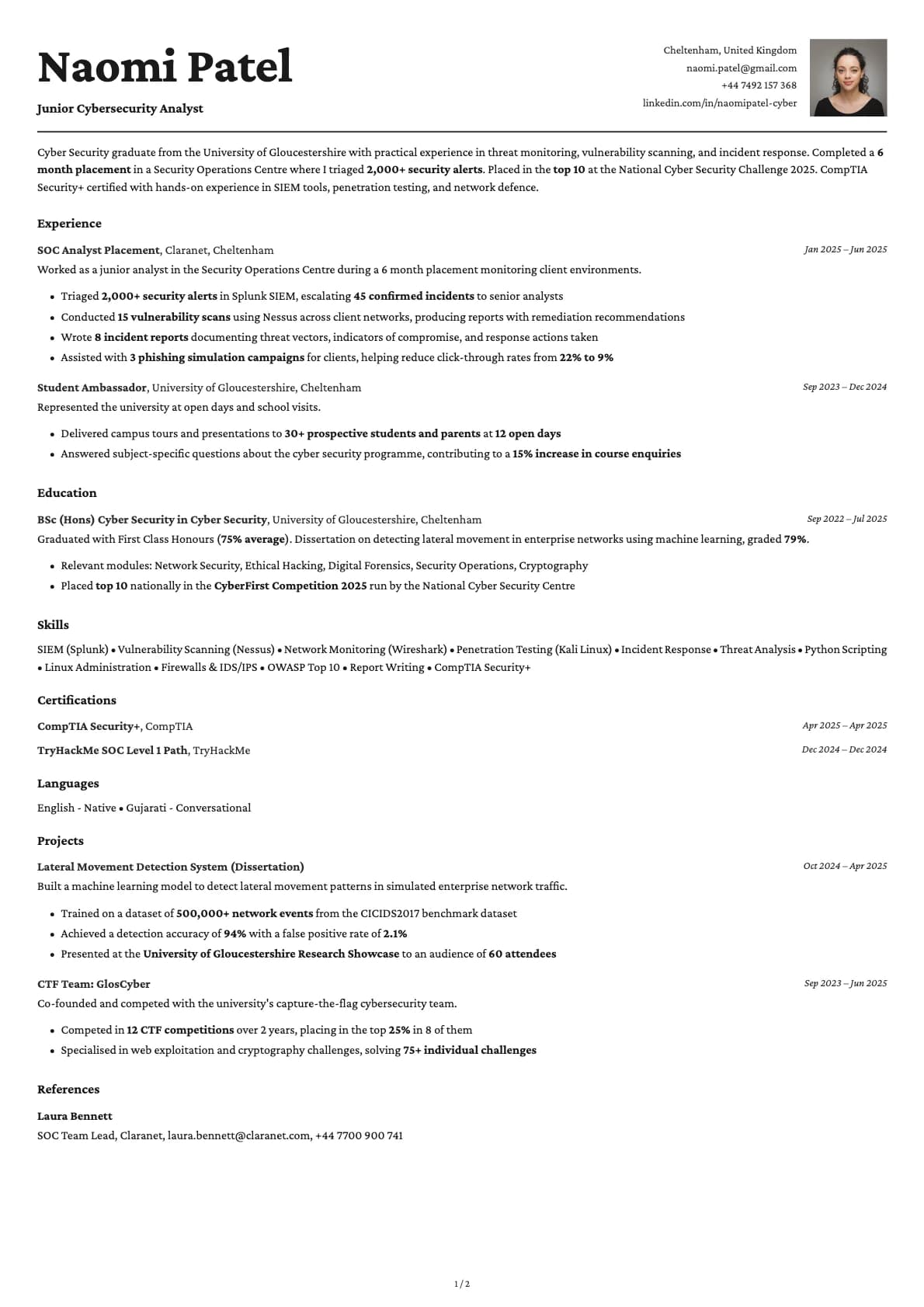
Junior Cybersecurity Analyst
A junior cybersecurity analyst resume example for graduates. See how to present SOC experience, CTF competitions, and Security+ certification to land your first cyber role.
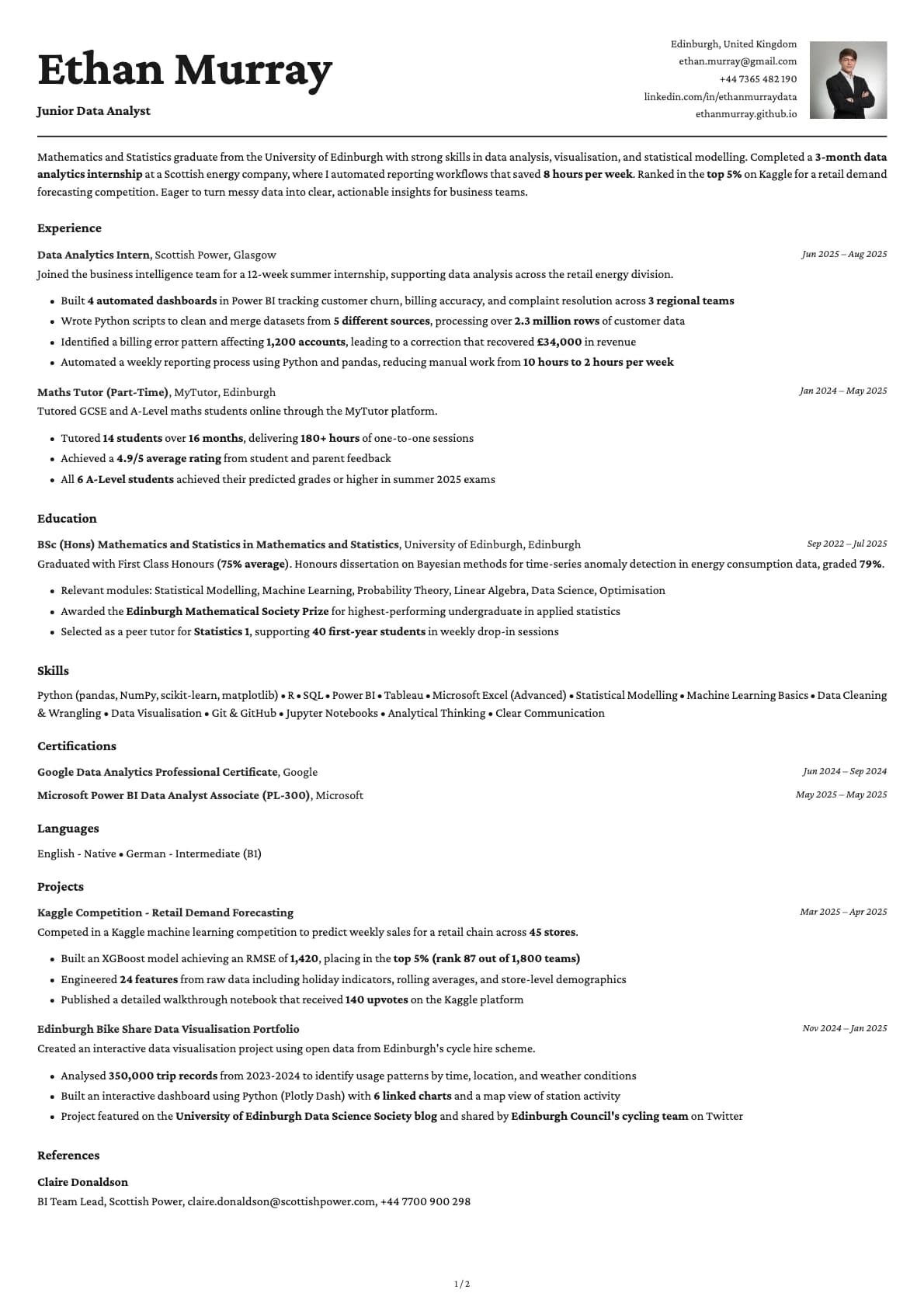
Junior Data Analyst
A junior data analyst resume example for recent graduates. See how to showcase your SQL skills, Python projects, and analytical experience to land your first analyst role.