Junior Occupational Therapist Resume Example
A junior occupational therapist resume example with clinical placement experience, HCPC registration, and real patient outcome numbers for new graduates.

Laddro Team
Free to use. No account needed to start.
Free to use. No account needed to start.
Overview
Landing your first Band 5 occupational therapy role is competitive. NHS trusts and private providers receive dozens of applications from newly qualified OTs, and the ones who get interviews are those who can show exactly what they did on placement, not just where they went. Your resume needs to read like a clinical portfolio summary, not a module list.
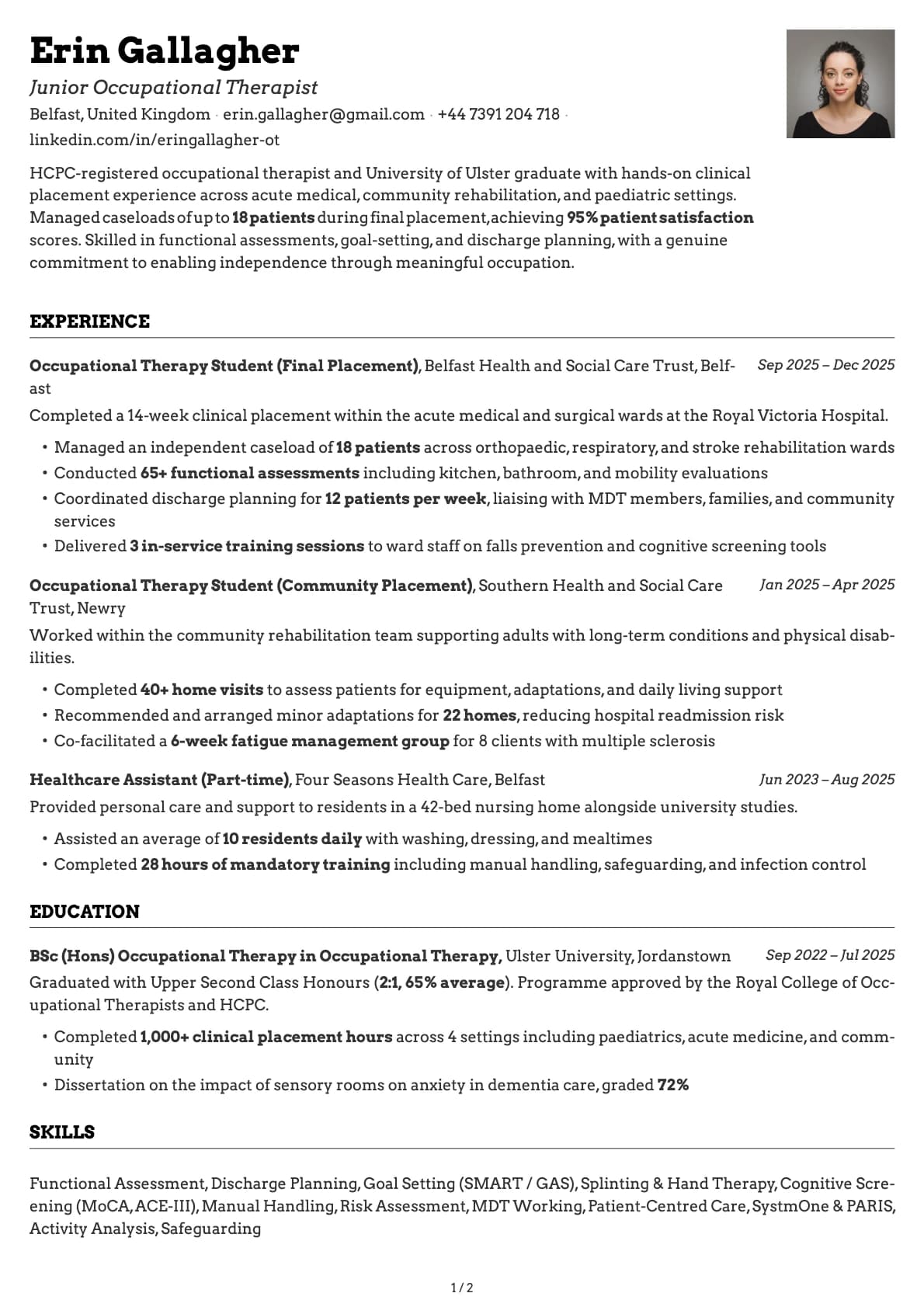
This resume belongs to Erin Gallagher, a newly HCPC-registered OT who graduated from Ulster University. She completed placements across acute medical wards, community rehabilitation, and paediatric settings, managing caseloads of up to 18 patients independently. She also worked as a healthcare assistant throughout university, which gave her practical patient-facing experience before she even started placement.
What Makes This Resume Work
Clinical placements are listed as jobs, not education footnotes. Erin treats each placement like a real role, with a company name, date range, and quantified bullets. This is important because NHS hiring panels assess placement experience the same way they assess paid employment. She includes caseload numbers, assessment counts, and discharge figures so the reader can gauge her readiness for a Band 5 workload.
The summary leads with registration and clinical scope. Hiring managers for OT roles want to know two things immediately: are you HCPC registered, and what settings have you worked in? Erin answers both in the first sentence, then follows with a caseload number and a patient satisfaction figure. There is no wasted space on vague statements about being passionate.
Supporting experience fills in the gaps. The healthcare assistant role shows Erin has been working in care settings for over two years. This matters because it tells employers she understands the realities of shift work, manual handling, and patient dignity before stepping into a qualified role.
Certifications and CPD show professional awareness. Including HCPC registration prominently, along with food safety training, signals that Erin takes her professional obligations seriously. For a newly qualified therapist, this attention to detail goes a long way.
Key Takeaways
If you are a newly qualified OT writing your first resume, treat your placements as the main event. List them under experience with full details, quantify everything you can (caseload size, assessments completed, groups run, training delivered), and make sure your HCPC registration is impossible to miss. Any paid care work you did alongside your degree is worth including because it demonstrates stamina and commitment to the sector.
Build your own version
Open this layout in the builder and swap in your own details. It takes a few minutes.
Free to use. No account needed to start.
Was this resume example helpful?
Rate this example to help us create better content for you.
4.7 average from 94 ratingsRelated resume examples
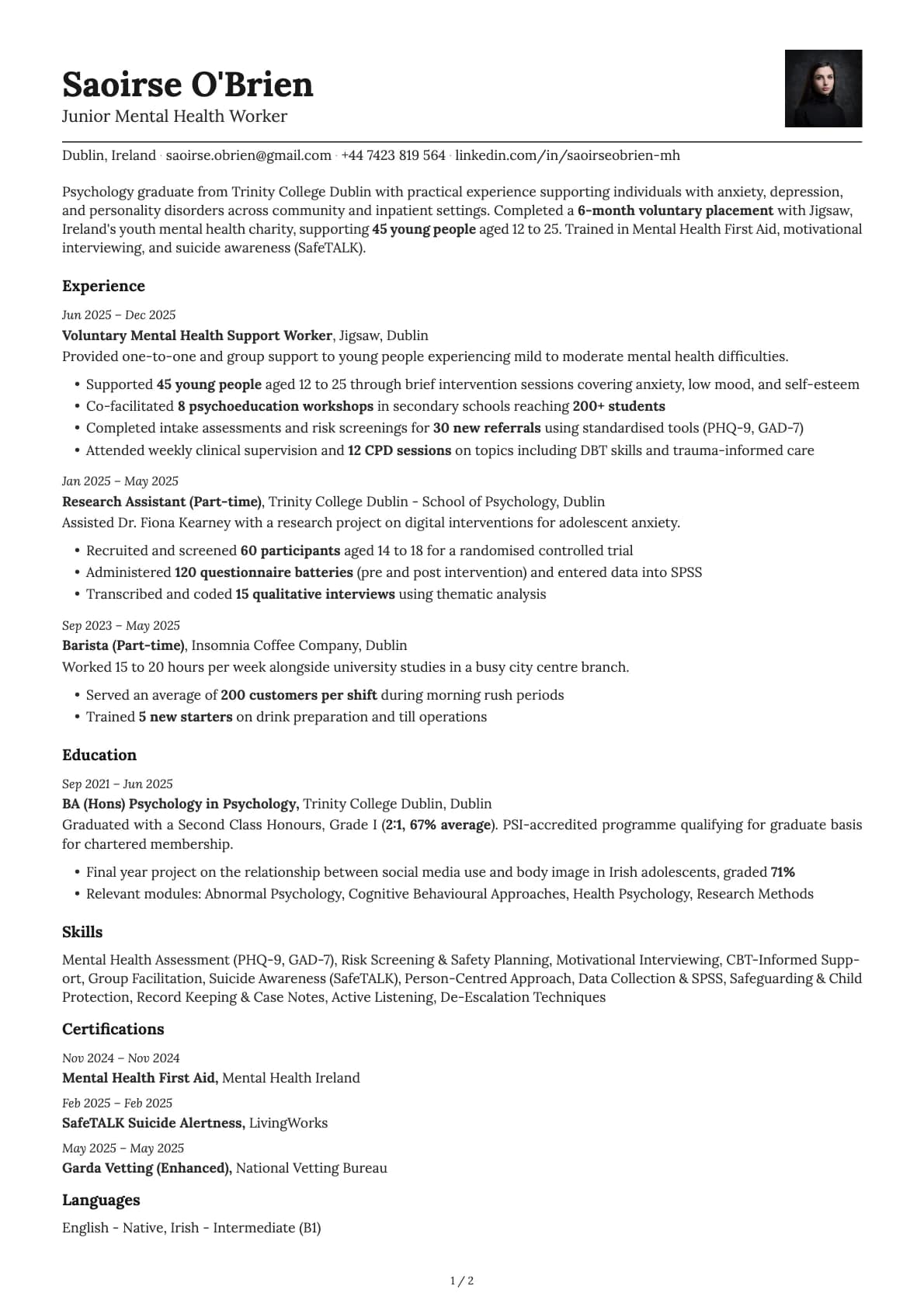
Junior Mental Health Worker
A junior mental health worker resume example with voluntary placement experience, assessment tools, and youth support numbers for psychology graduates.
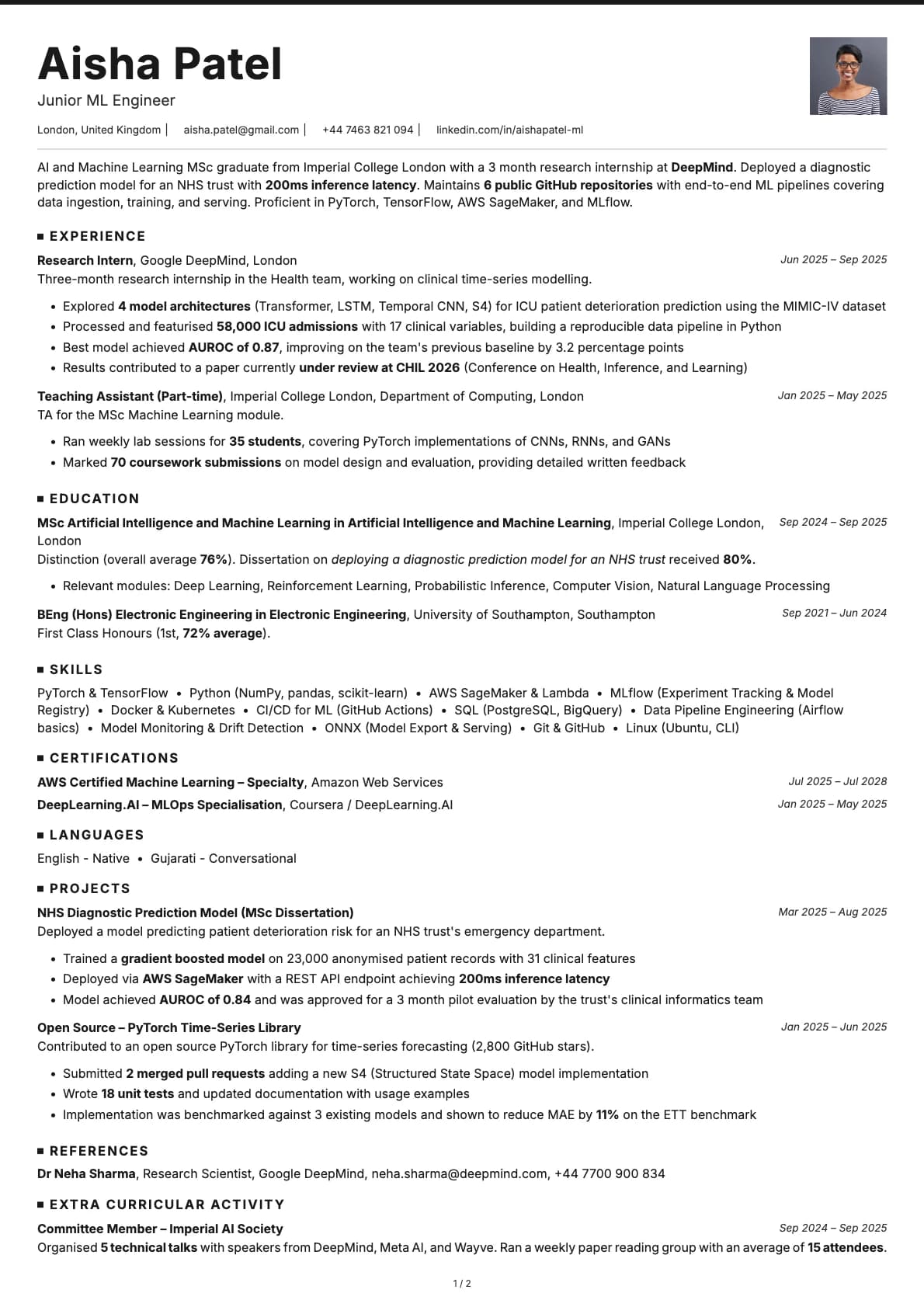
Junior ML Engineer
A junior ML engineer resume example with deployed models, TensorFlow projects, and AWS SageMaker experience from an AI and ML MSc graduate starting their career.
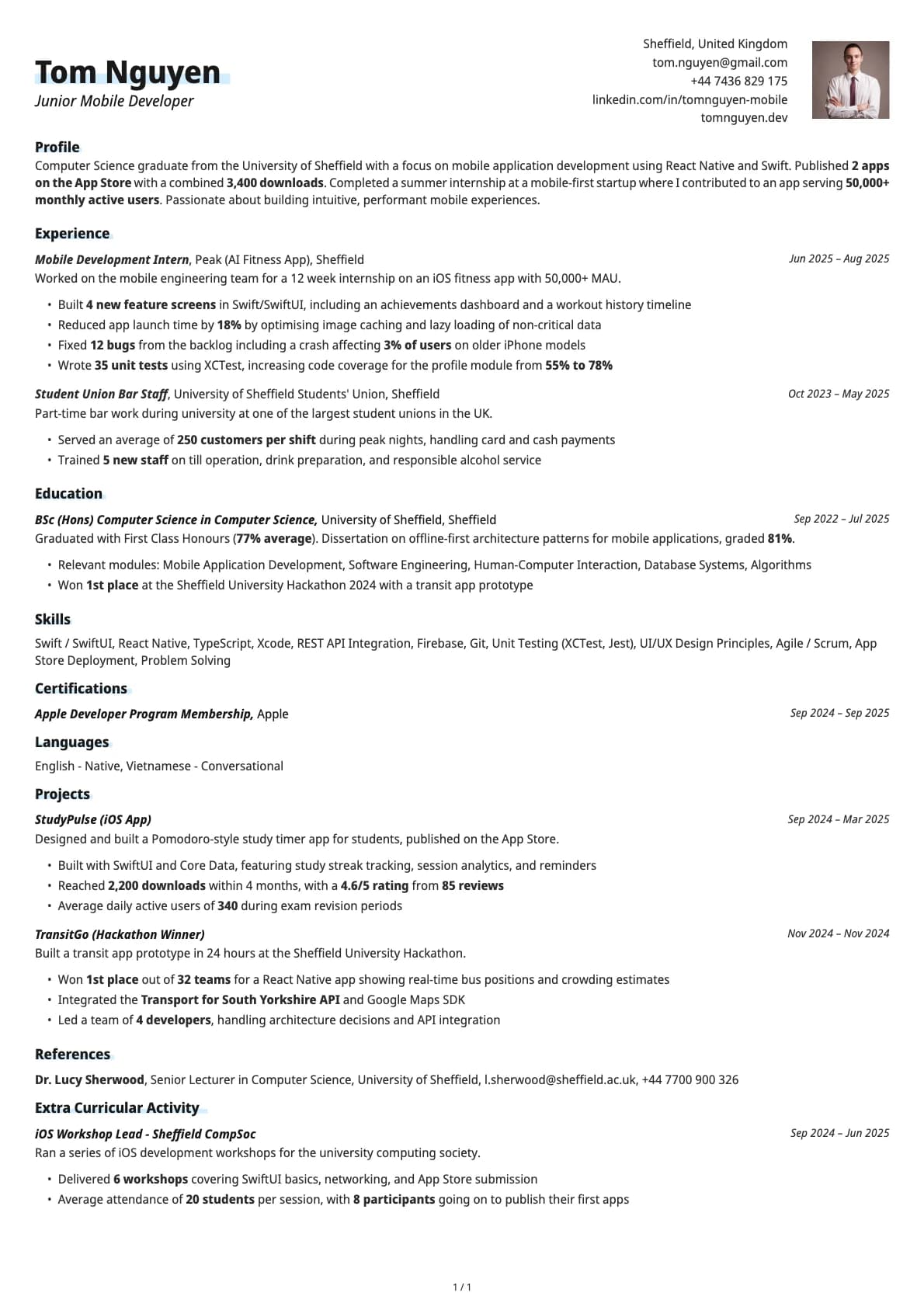
Junior Mobile Developer
A junior mobile developer resume example for graduates. See how to present published apps, App Store downloads, and mobile internship experience to land your first mobile dev role.
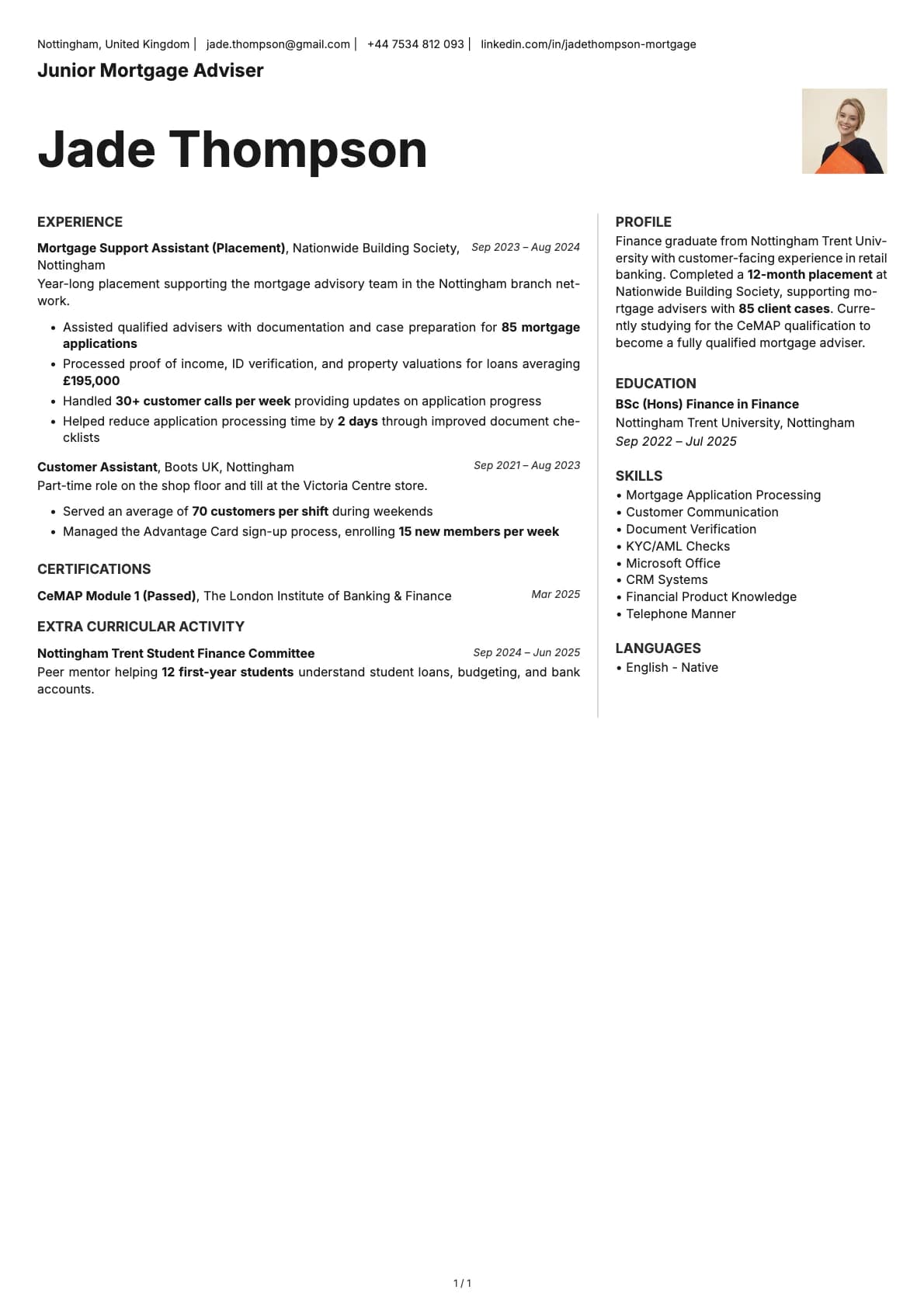
Junior Mortgage Adviser
A junior mortgage adviser resume example with Nationwide placement experience and CeMAP qualification in progress.
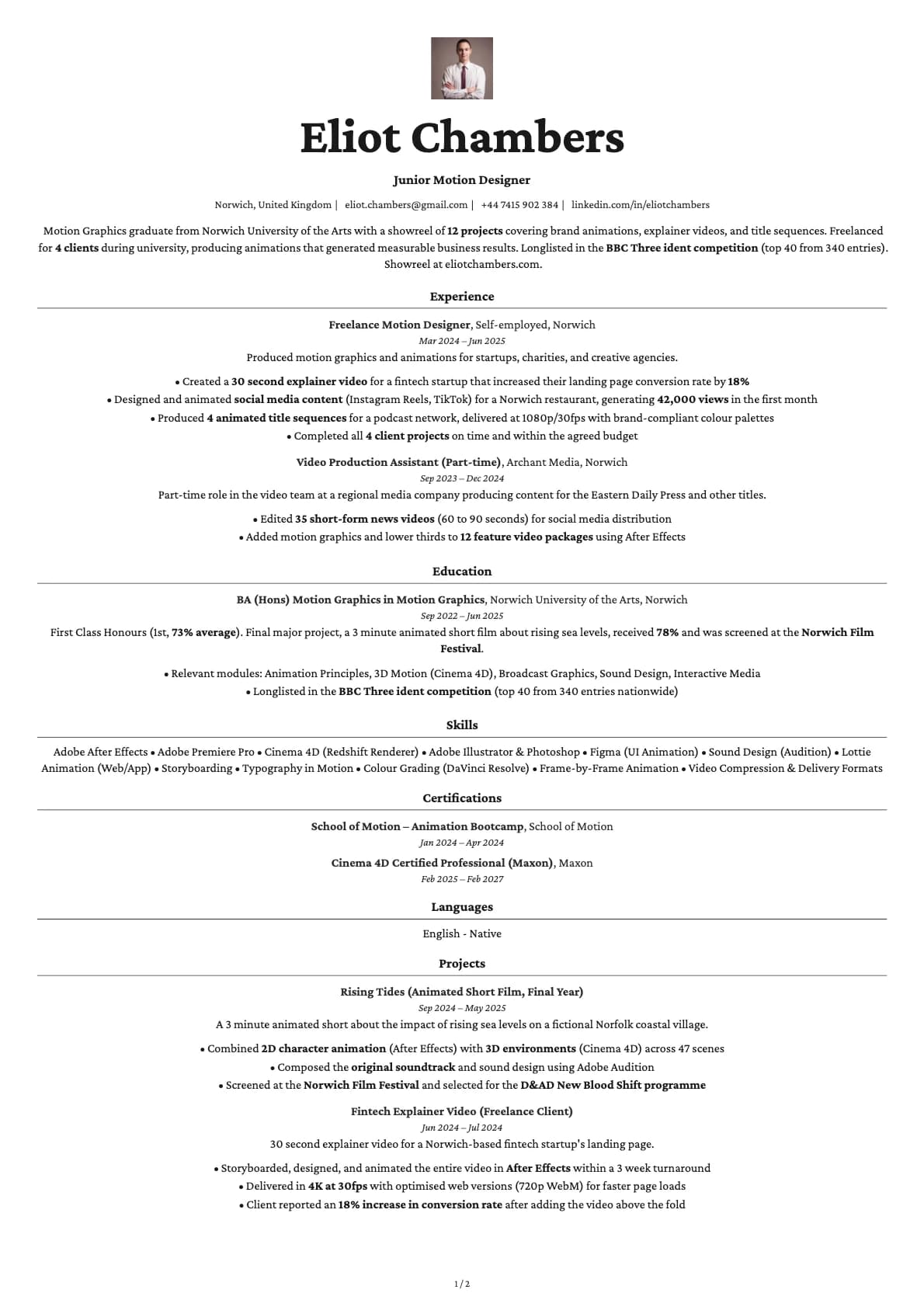
Junior Motion Designer
A junior motion designer resume example with After Effects projects, client animations, and showreel details from a Motion Graphics BA graduate entering the field.

Junior Network Engineer
A junior network engineer resume example with CCNA, an MSP apprenticeship, and a home lab. See how to present networking skills and certifications for your first engineering role.
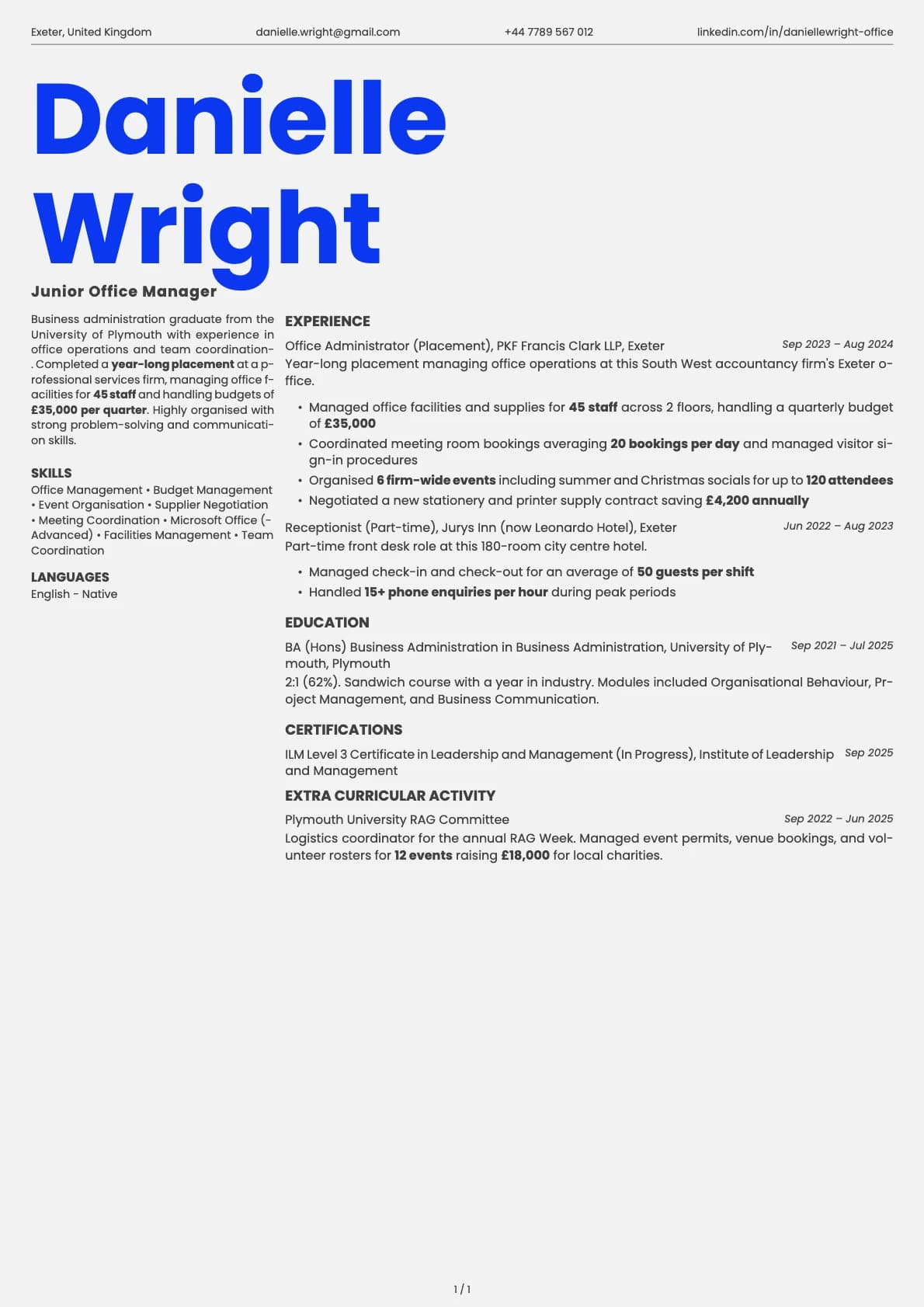
Junior Office Manager
A junior office manager resume example with professional services placement and facilities management experience.
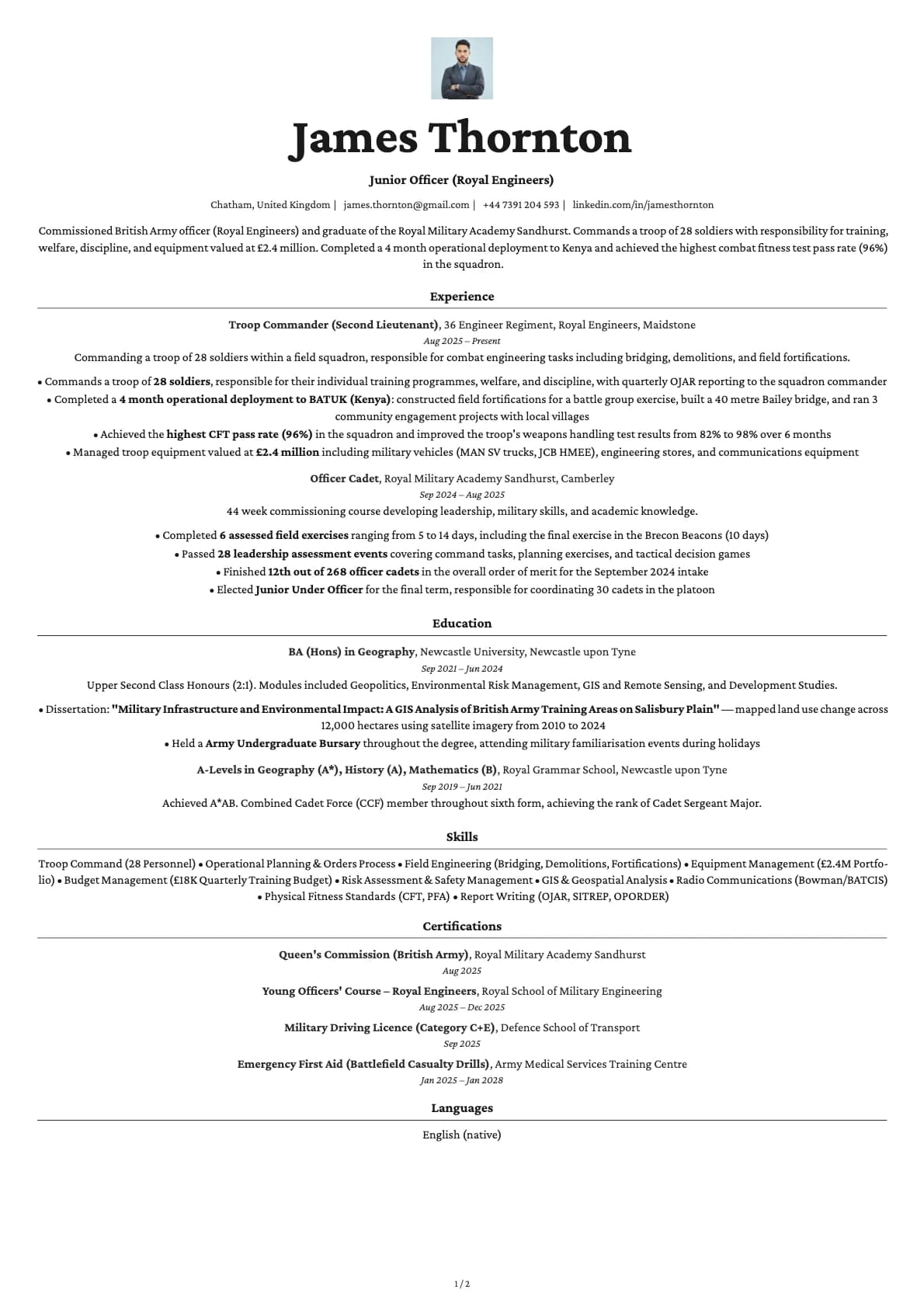
Junior Officer (Armed Forces)
A junior officer resume example for armed forces graduates transitioning from Sandhurst or the commissioning course. See how to present your military leadership, operational deployments, and command experience.
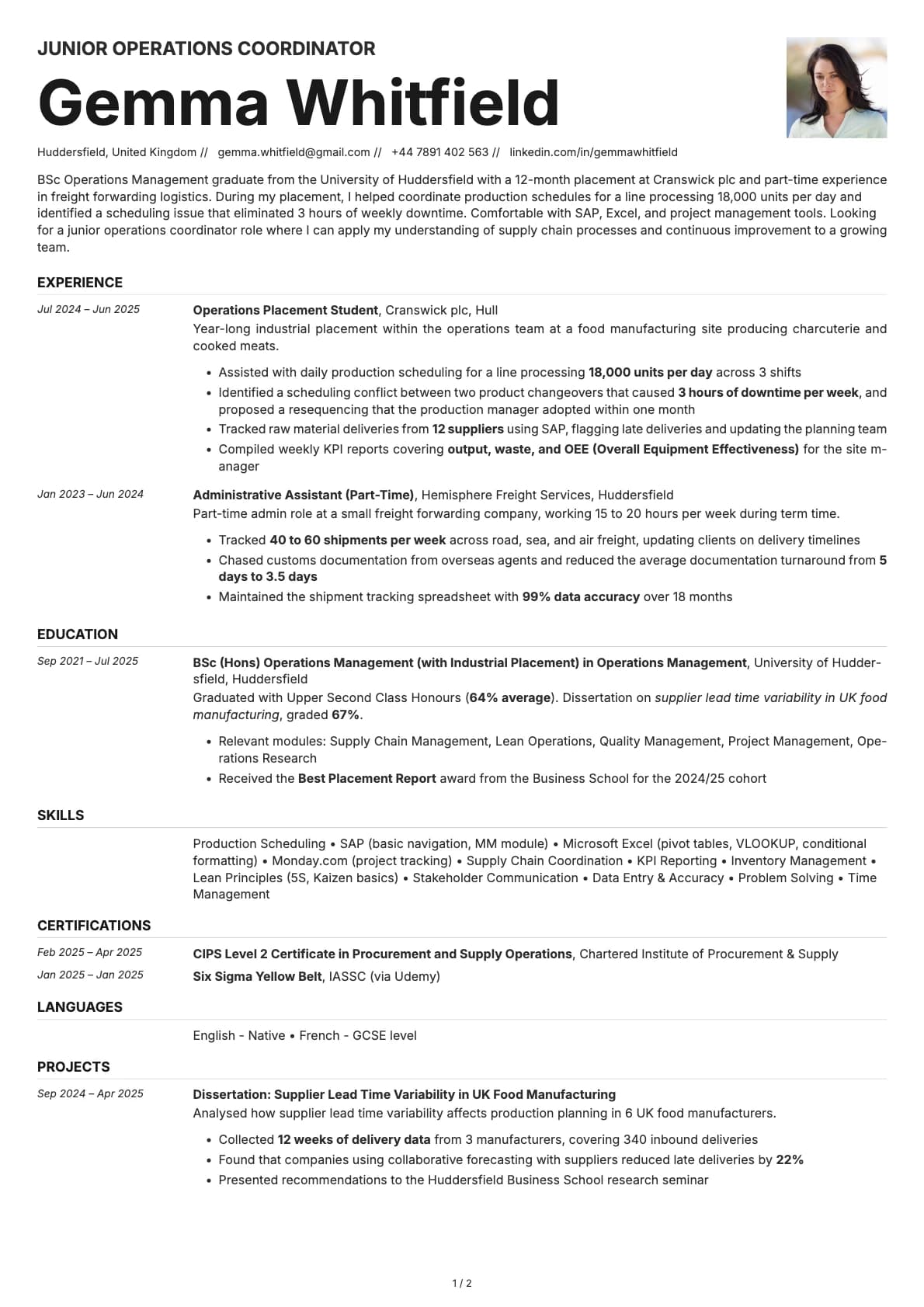
Junior Operations Coordinator
A junior operations coordinator resume example for operations management graduates. See how logistics experience and process improvements impress employers.
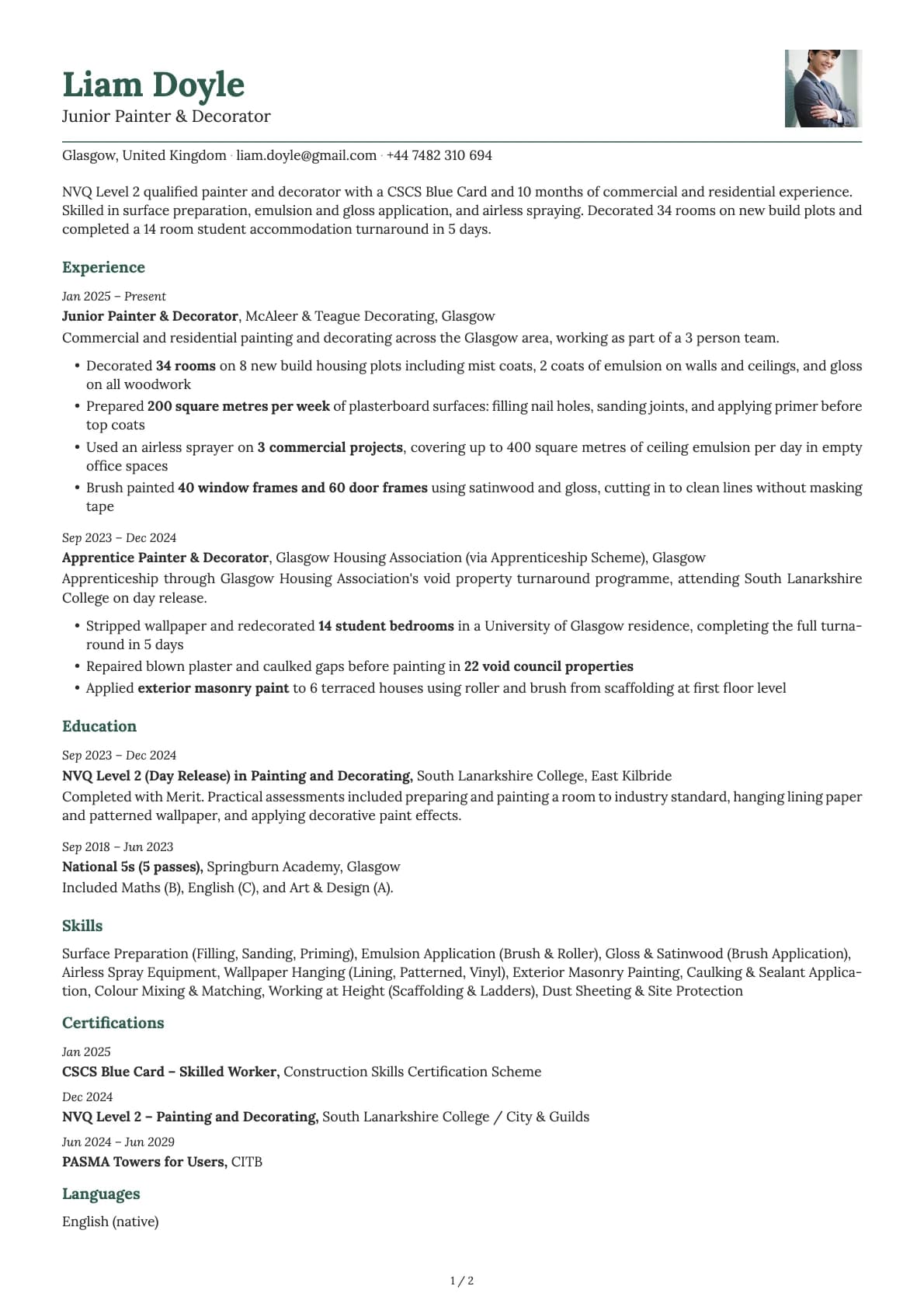
Junior Painter & Decorator
A junior painter and decorator resume example for NVQ qualified painters. See how to present your decorating skills, site experience, and CSCS card details.
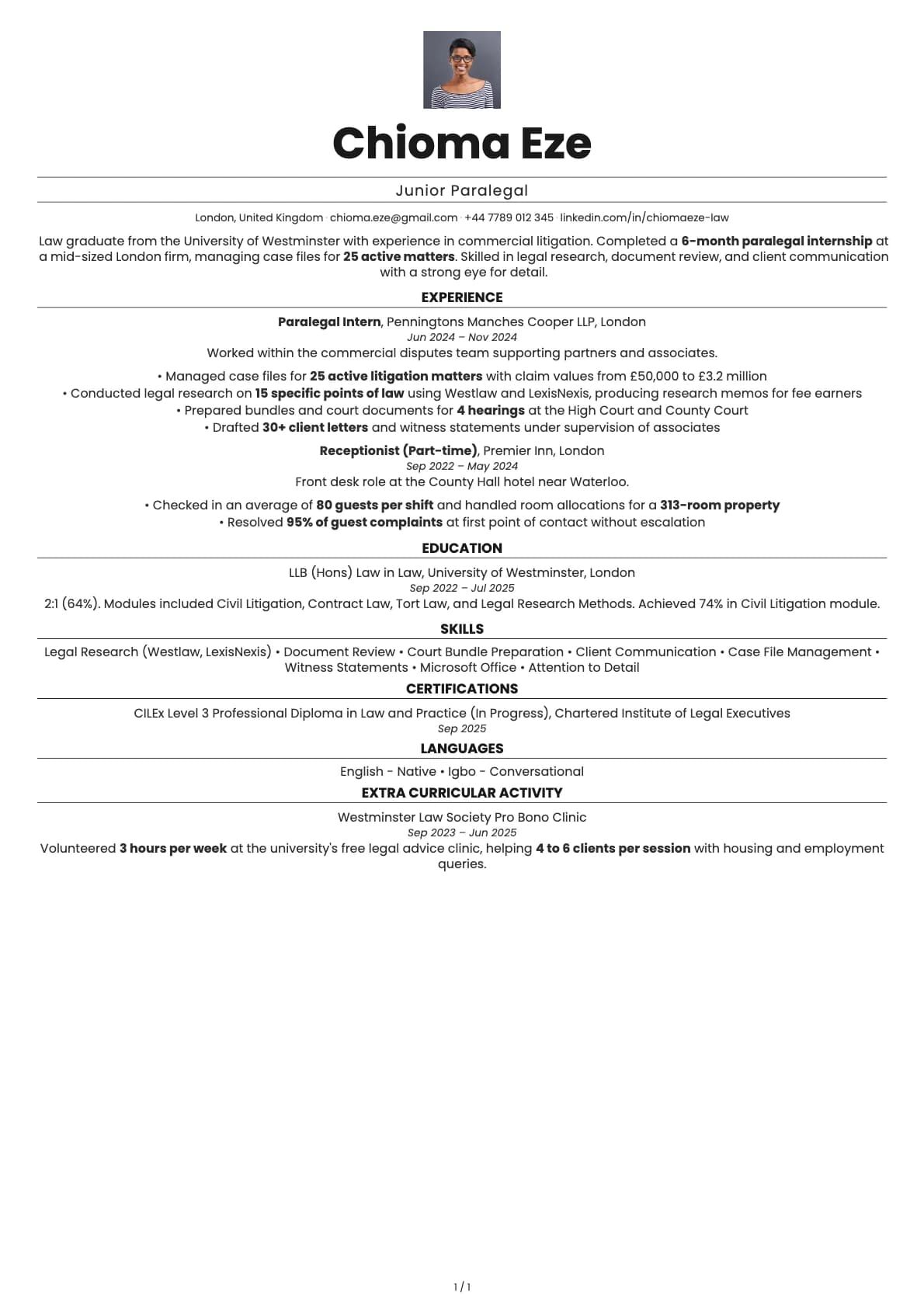
Junior Paralegal
A junior paralegal resume example with litigation internship experience and legal research skills.
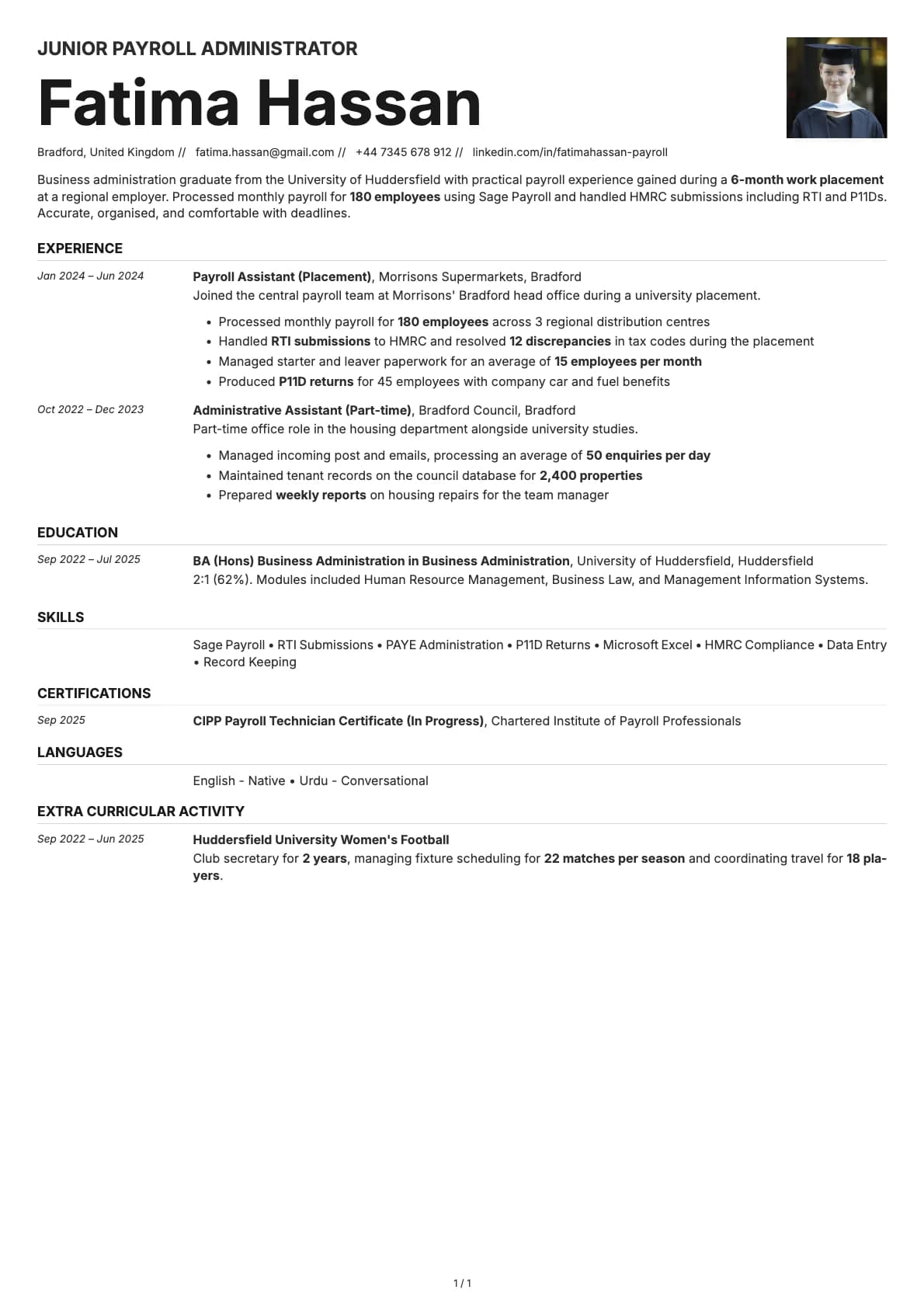
Junior Payroll Administrator
A junior payroll administrator resume example with Morrisons placement experience and Sage Payroll skills.