Junior Mental Health Worker Resume Example
A junior mental health worker resume example with voluntary placement experience, assessment tools, and youth support numbers for psychology graduates.

Laddro Team
Free to use. No account needed to start.
Free to use. No account needed to start.
Overview
Mental health support roles are expanding rapidly across the NHS, HSE, and voluntary sector, but competition for entry-level positions remains fierce. Employers want evidence that you have spent time in clinical or community settings, not just studied mental health in a lecture hall. Voluntary placements, research experience, and relevant certifications are what separate your application from the stack.
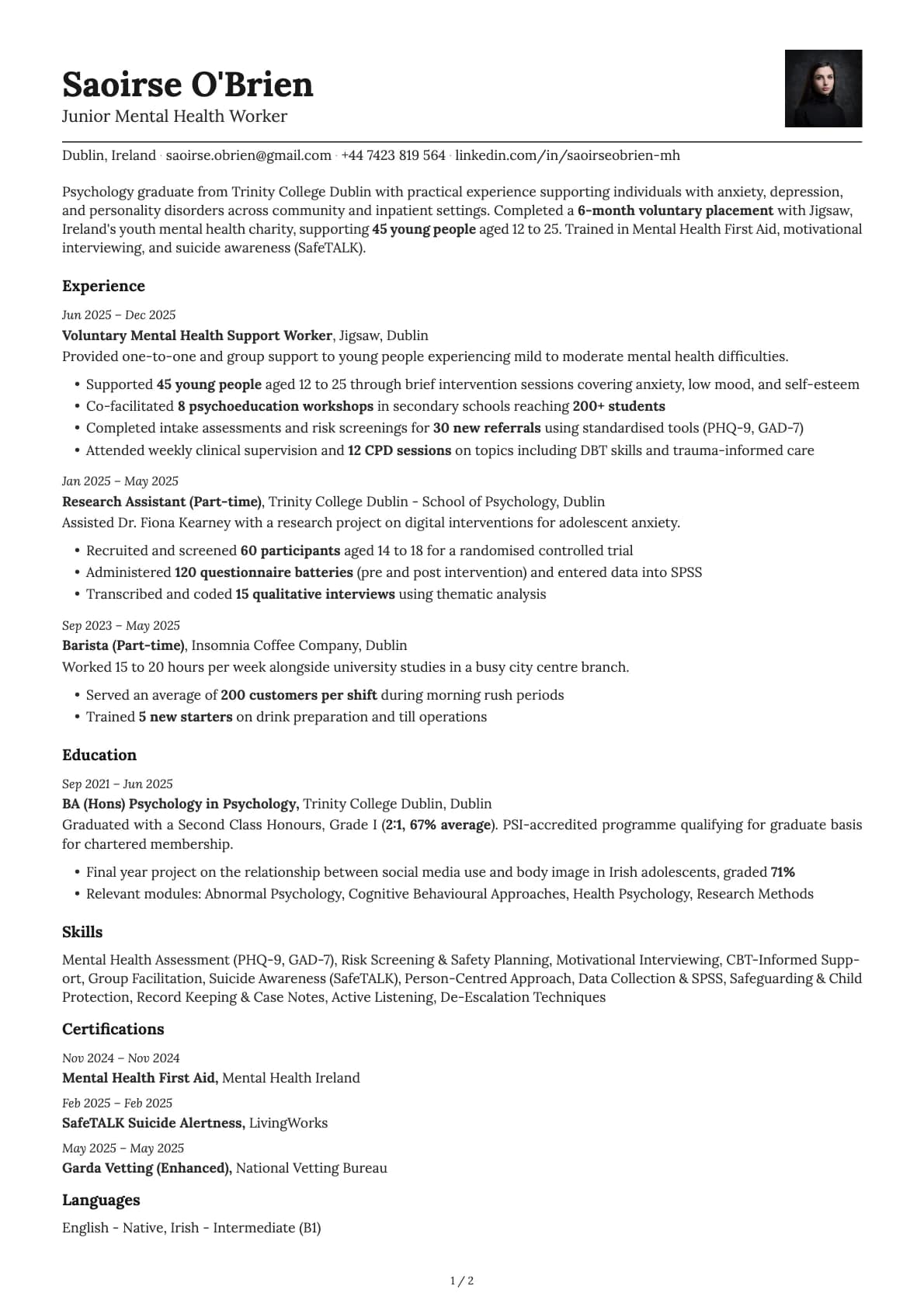
This resume belongs to Saoirse O'Brien, a psychology graduate from Trinity College Dublin who completed a six-month placement with Jigsaw, Ireland's national youth mental health charity. She supported 45 young people through brief interventions, co-delivered workshops in schools, and completed intake assessments using standardised screening tools. She also worked as a research assistant on an adolescent anxiety study.
What Makes This Resume Work
The voluntary placement is treated as a real clinical role. Saoirse lists her Jigsaw placement with the same level of detail as a paid position. She includes the number of young people supported, workshops delivered, referrals assessed, and CPD sessions attended. This is essential because many mental health worker roles require evidence of direct client contact, and voluntary experience counts.
Research experience demonstrates analytical skills. The research assistant role shows she can recruit participants, administer standardised measures, and analyse qualitative data. These skills transfer directly to roles that involve outcome monitoring, service evaluation, or audit work within mental health teams.
Certifications address employer requirements directly. Mental Health First Aid, SafeTALK, and Garda Vetting are all commonly listed as essential or desirable criteria in mental health job specifications. Having them already in place removes a barrier for employers.
Key Takeaways
Psychology graduates applying for mental health worker roles should prioritise voluntary or placement experience and present it with the same rigour as paid employment. Include specific numbers for client contacts, assessments completed, and groups delivered. Relevant certifications like Mental Health First Aid and SafeTALK are worth completing before you apply, and research experience adds depth to your application even if the role itself is not research-focused.
Build your own version
Open this layout in the builder and swap in your own details. It takes a few minutes.
Free to use. No account needed to start.
Was this resume example helpful?
Rate this example to help us create better content for you.
4.7 average from 91 ratingsRelated resume examples
Junior Backend Developer
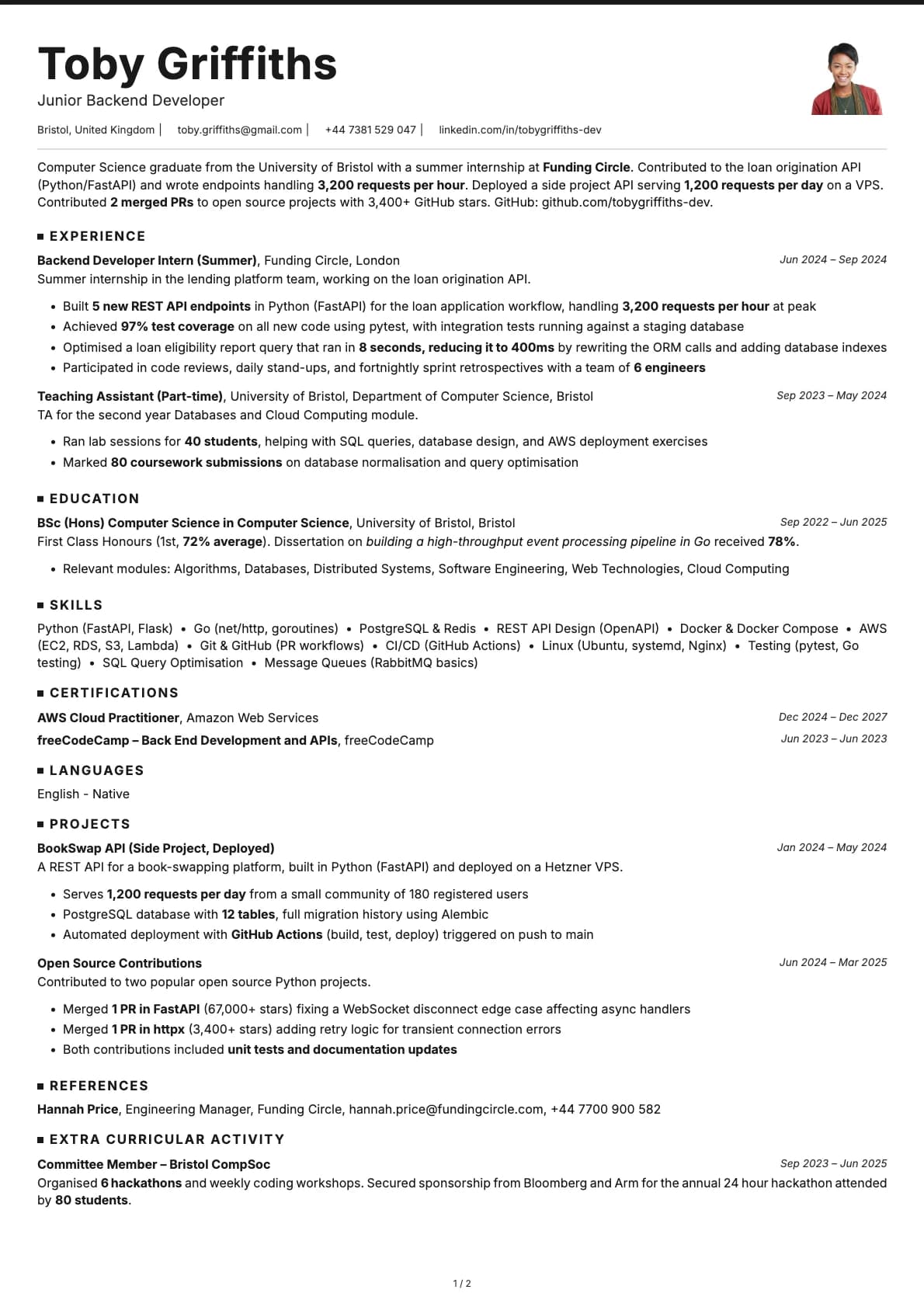
A junior backend developer resume example with REST API projects, PostgreSQL experience, and deployed services from a Computer Science BSc graduate entering development.
Junior Bank Associate
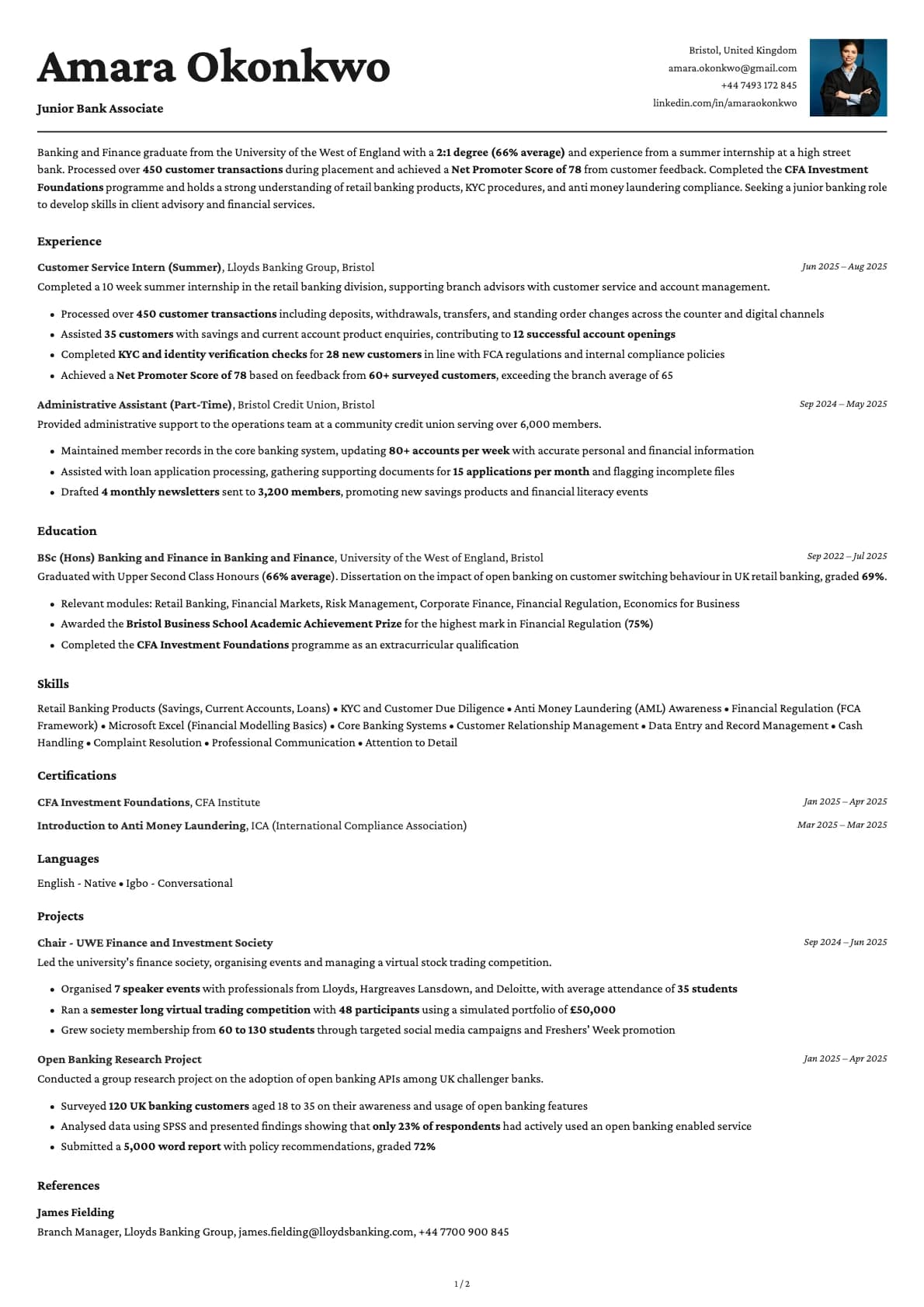
A junior bank associate resume example for banking graduates. See how to present your compliance knowledge, customer service skills, and internship experience.
Junior Biomedical Engineer
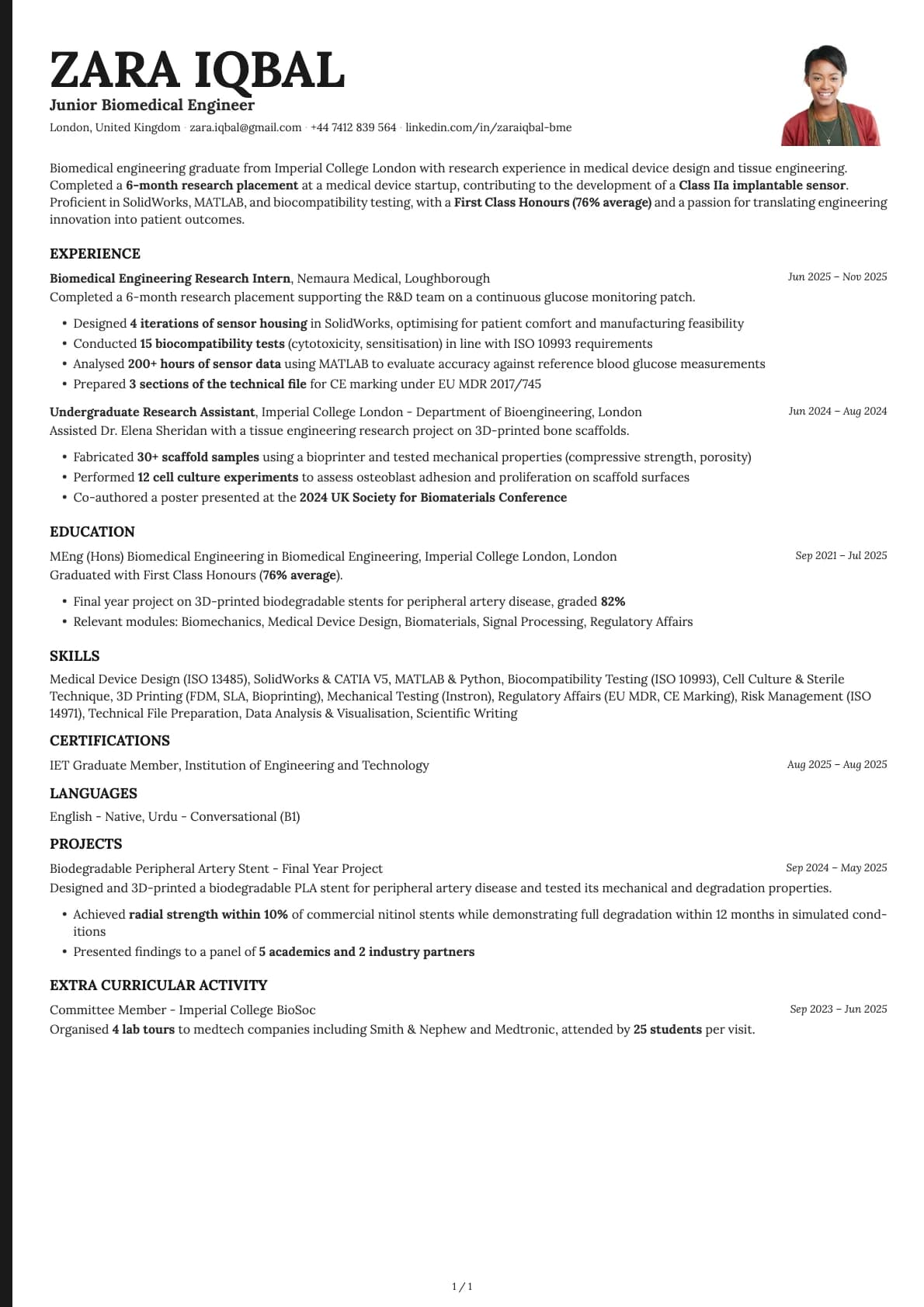
A junior biomedical engineer resume example with medical device R&D experience, ISO standards knowledge, and research publications.
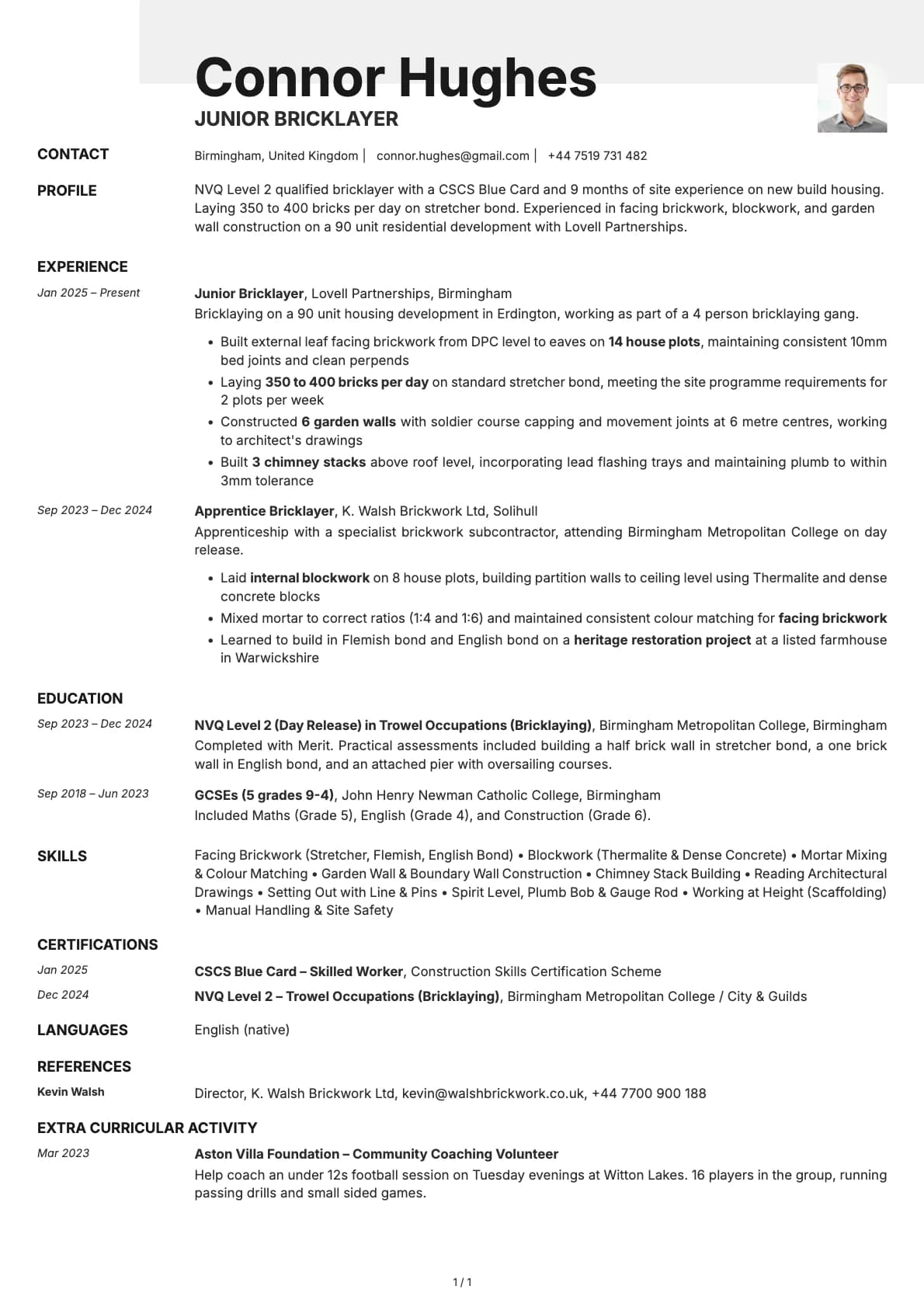
Junior Bricklayer
A junior bricklayer resume example for NVQ qualified bricklayers entering the trade. See how to present your bricklaying skills, CSCS card, and site experience.

Junior Business Analyst
A junior business analyst resume example for career changers. See how to use retail management and a business degree to break into business analysis.
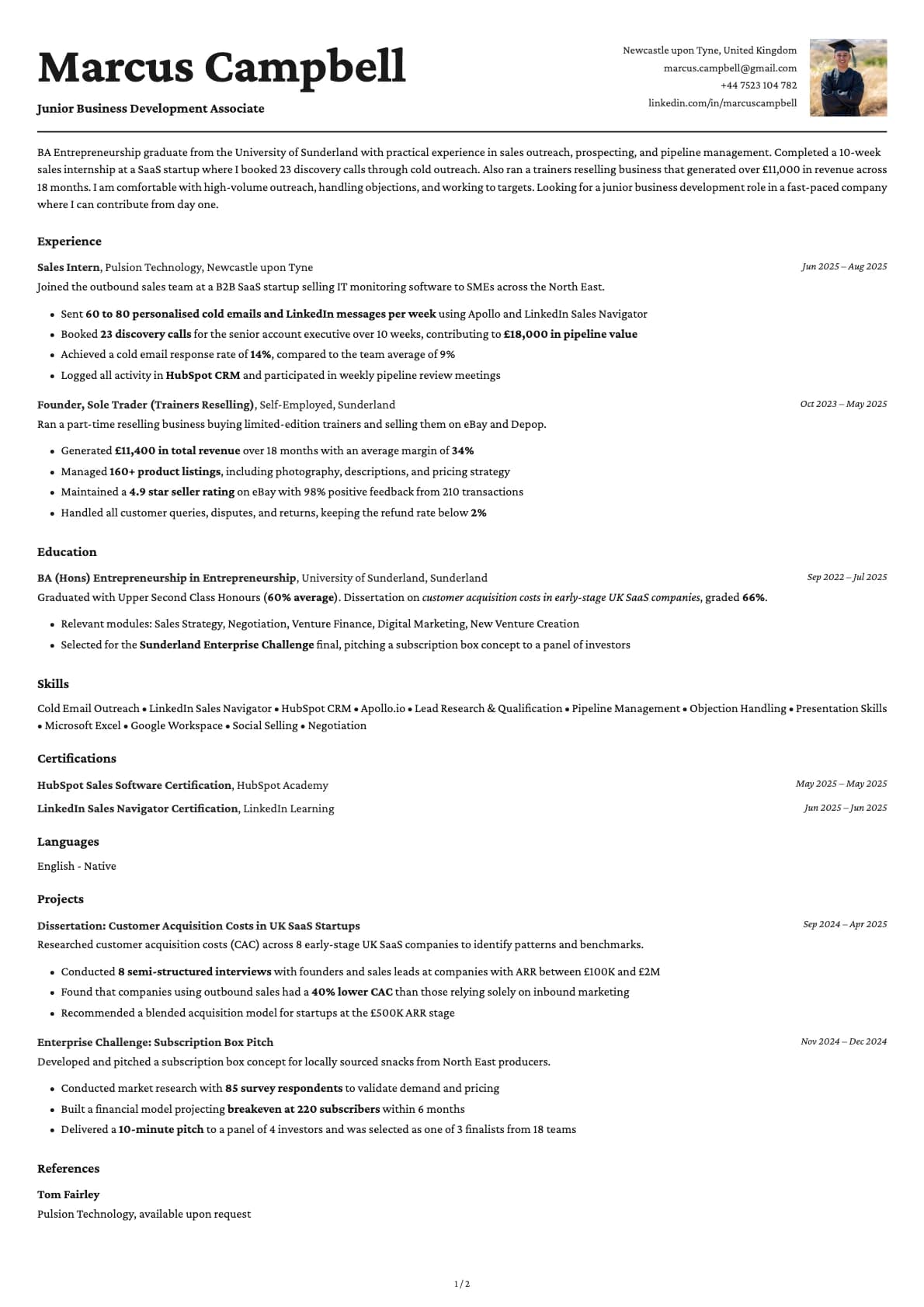
Junior Business Development Associate
A junior business development associate resume example for entrepreneurship graduates. See how cold outreach metrics and startup experience win interviews.
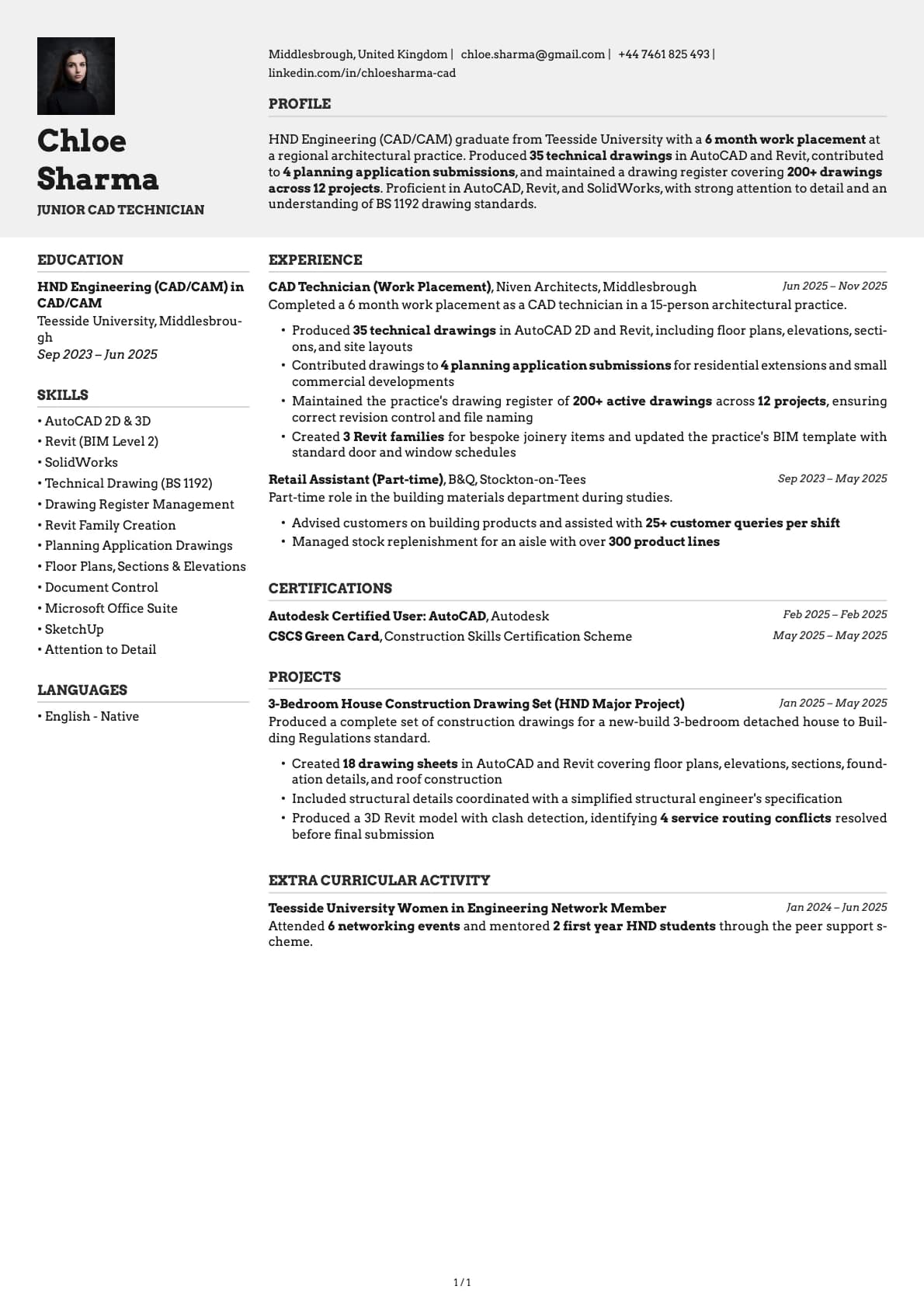
Junior CAD Technician
A junior CAD technician resume example with HND qualification, AutoCAD and Revit proficiency, and architectural practice experience.
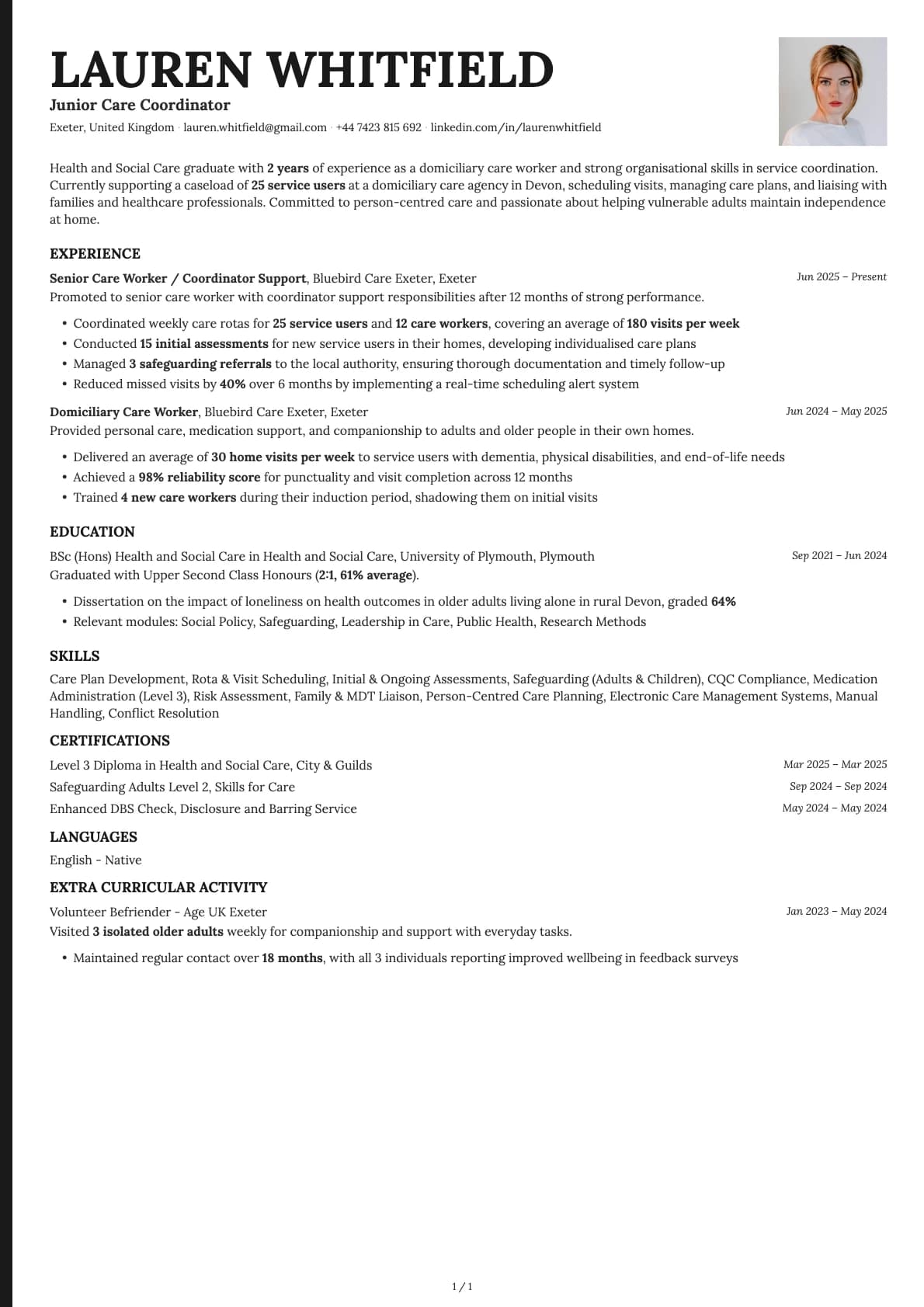
Junior Care Coordinator
A junior care coordinator resume example with domiciliary care experience, rota management numbers, and CQC compliance for new coordinators.
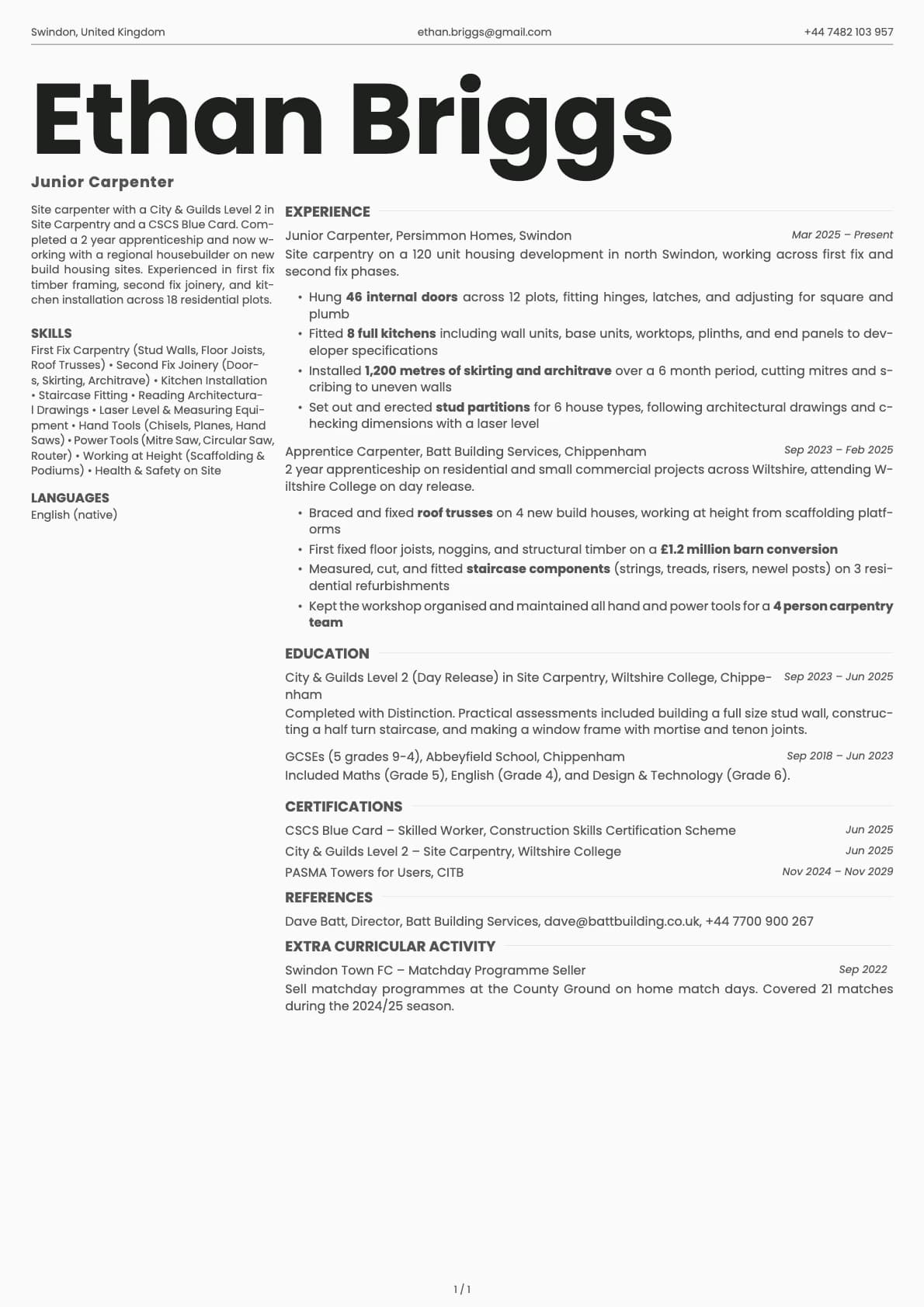
Junior Carpenter
A junior carpenter resume example for carpentry apprenticeship graduates. See how to present your City & Guilds, site joinery experience, and CSCS card details.
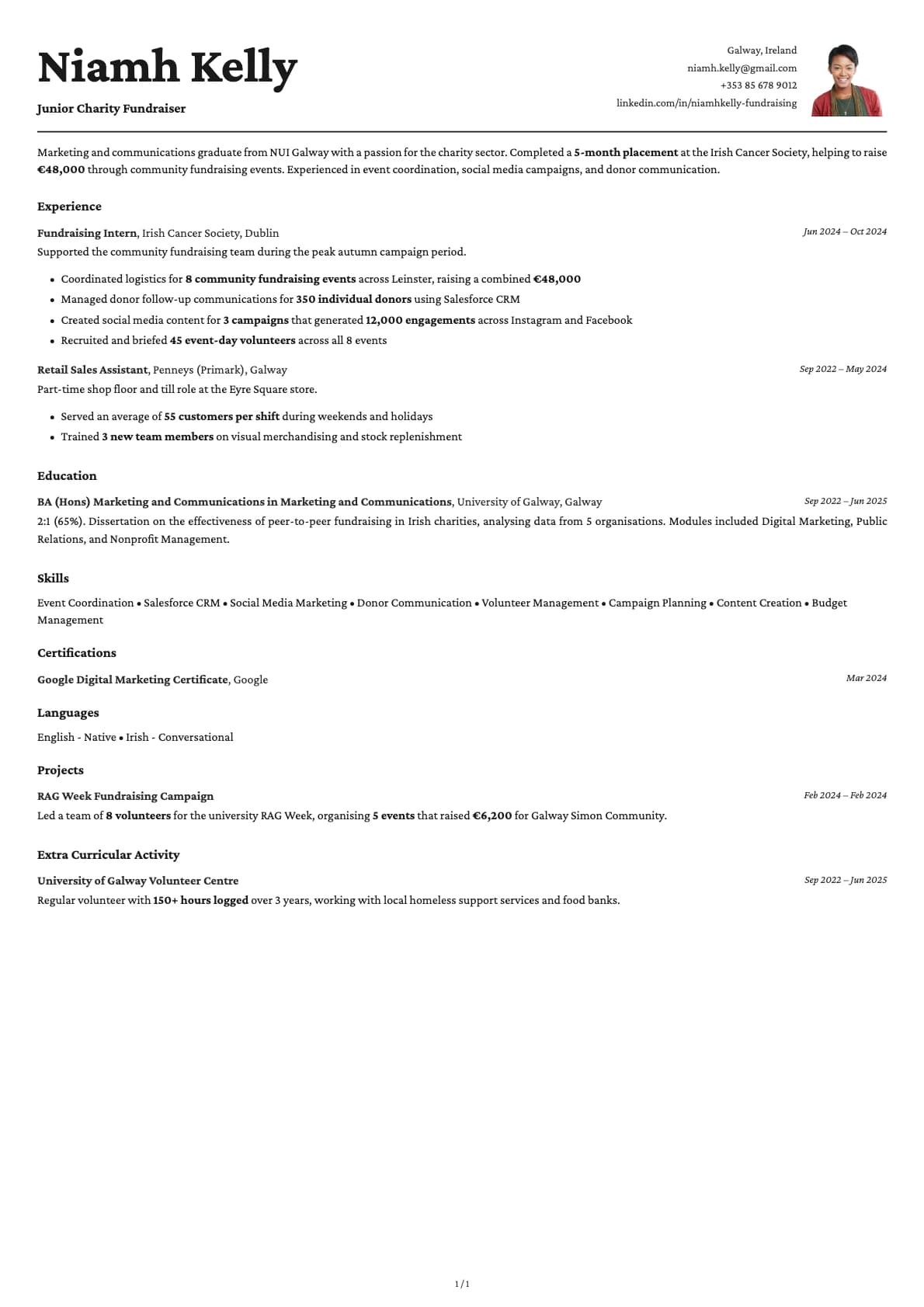
Junior Charity Fundraiser
A junior charity fundraiser resume example with Irish Cancer Society internship and event coordination experience.
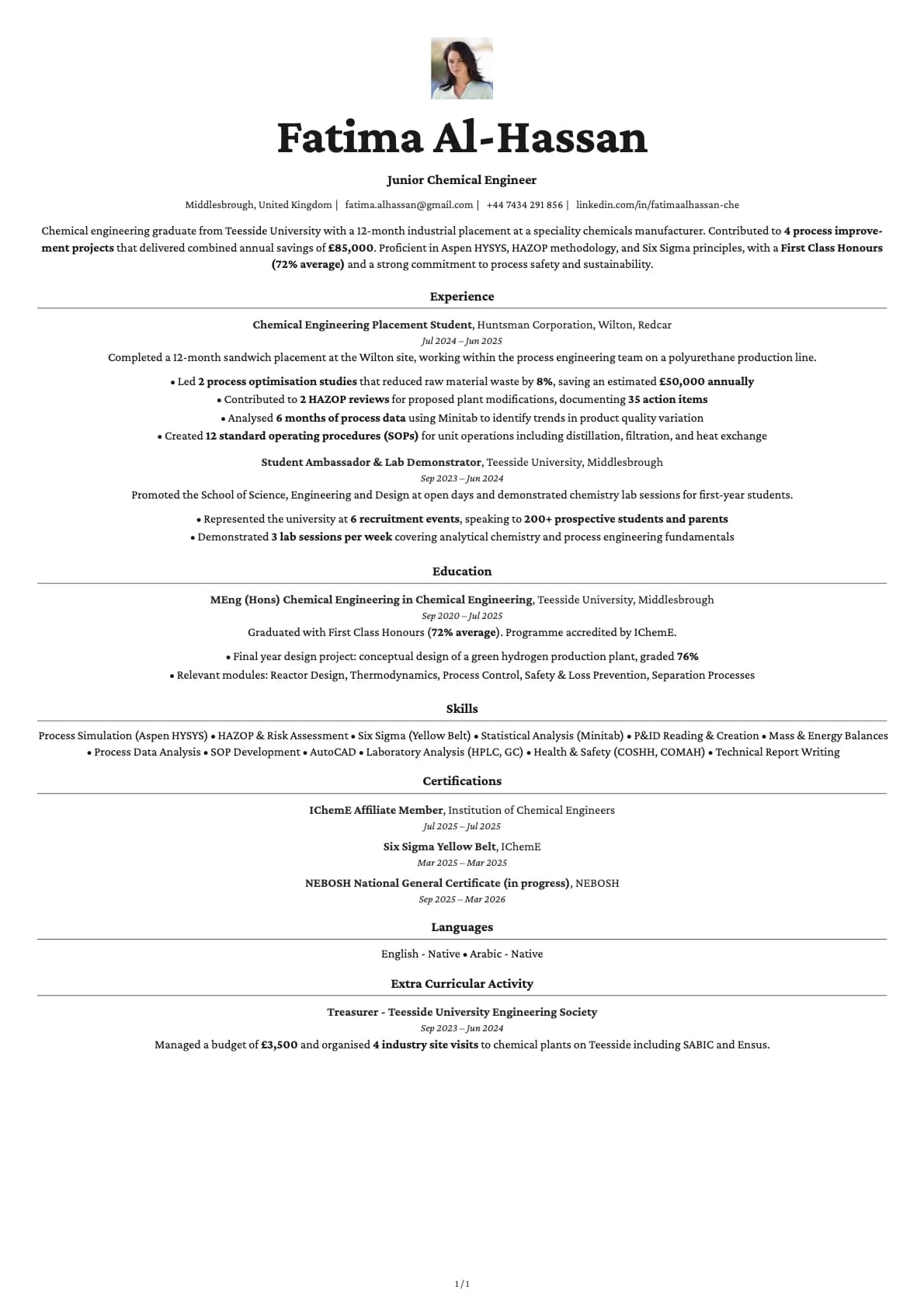
Junior Chemical Engineer
A junior chemical engineer resume example with industrial placement experience, process improvement savings, and IChemE membership for graduates.
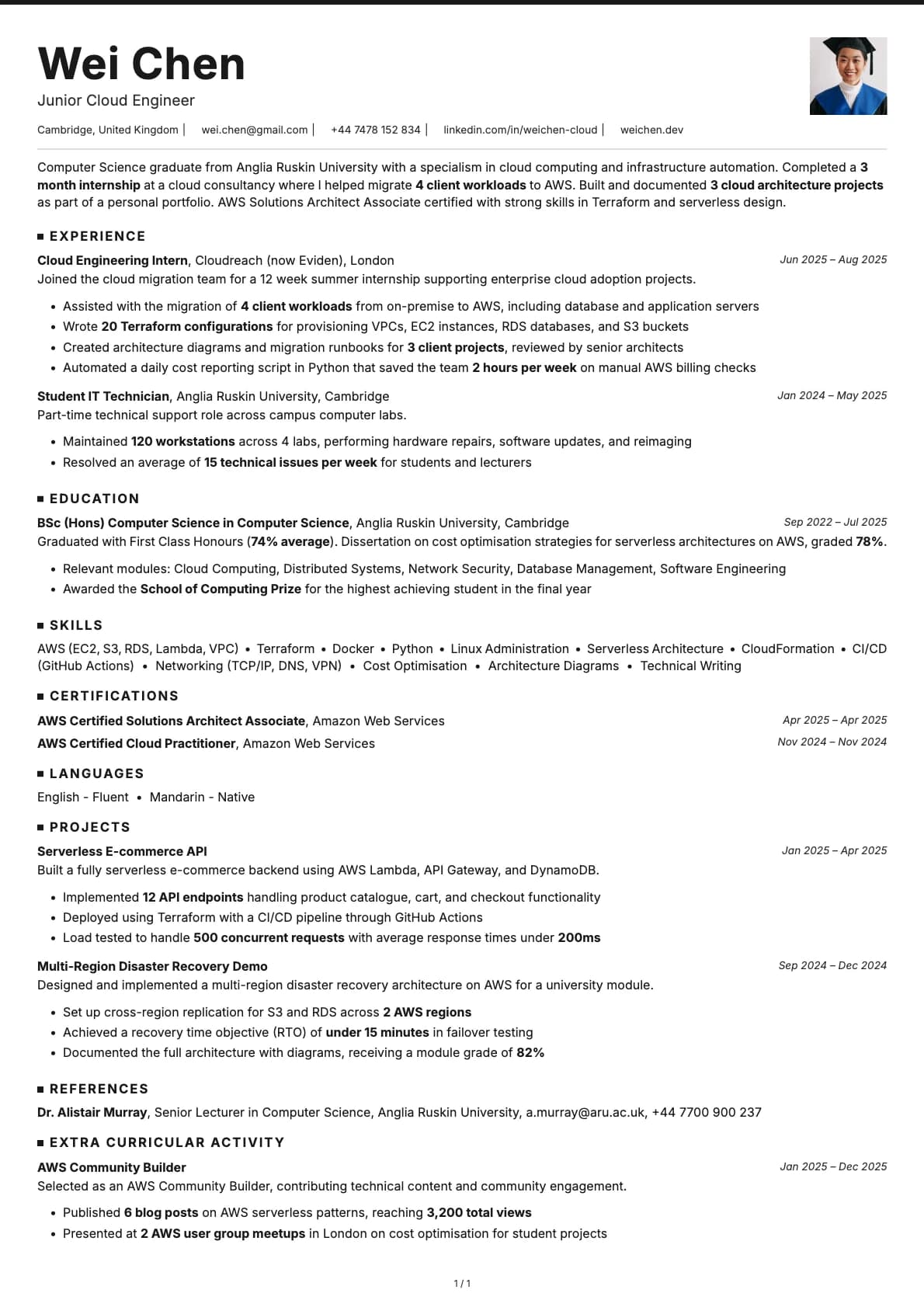
Junior Cloud Engineer
A junior cloud engineer resume example for graduates. Learn how to present AWS experience, Terraform skills, and cloud certifications to land your first cloud engineering role.