Content Writer Cover Letter Example
A content writer cover letter example targeting a B2B SaaS role at Sage.

Laddro Team
Free to use. No account needed to start.
Free to use. No account needed to start.
Overview
Content writer cover letters are, ironically, often badly written. Many candidates lean on vague claims about storytelling or describe themselves as "keen wordsmiths." The problem is that content writing is a measurable discipline. Traffic, rankings, conversions, and engagement can all be tracked. A strong cover letter should treat writing as a business skill with quantifiable outcomes, not as an abstract creative talent.
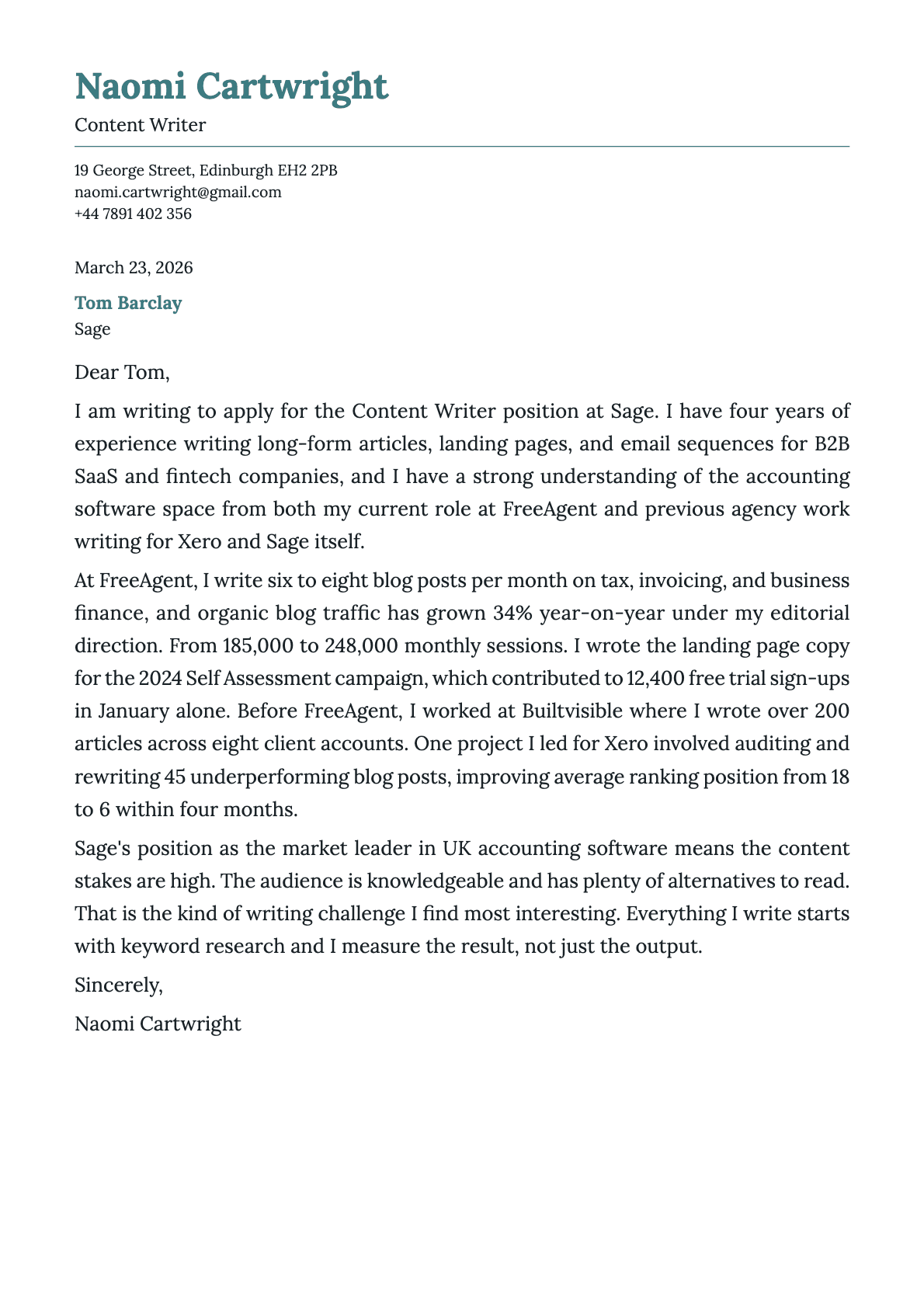
This cover letter belongs to Naomi Cartwright, a content writer with four years of experience in B2B SaaS and fintech, applying for a role at Sage. Her letter works because she treats her writing output the way a marketer would: in terms of traffic growth, conversion numbers, and ranking improvements.
The opening: niche expertise matters
Naomi opens by defining her writing niche precisely. She does not say she is a content writer who can write about anything. She says she has experience writing for B2B SaaS and fintech, and then drops a specific detail that makes the hiring manager pay attention: she has already written for Sage, at her previous agency.
I have a strong understanding of the accounting software space from both my current role at FreeAgent and previous agency work writing for Xero and Sage itself.
That single sentence does more work than a paragraph of generic claims. If you are applying to a company you have already written for (or an industry you already know well), say so immediately. It is the strongest possible proof of relevance.
For your letter: be specific about your content niche. "Content writer" is a job title. "B2B SaaS content writer specialising in accounting and fintech" is a positioning statement that tells the hiring manager exactly why you are relevant.
The body: traffic, conversions, and rankings
The middle paragraph gives four concrete results. The blog traffic growth at FreeAgent (34% year-on-year, from 185,000 to 248,000 monthly sessions) shows she can drive organic growth at scale. The Self Assessment landing page (12,400 free trial sign-ups) shows she can write conversion copy, not just blog posts. The Xero content audit (45 posts rewritten, average ranking from position 18 to position 6) shows she can improve existing content, not just create new pieces.
The 200+ articles across eight client accounts at Builtvisible adds volume. It tells the reader she can produce at high cadence across different brands and maintain quality.
The key insight: content writing roles are increasingly measured by SEO and conversion metrics. If your cover letter only talks about the quality of your prose, you are missing what hiring managers actually evaluate. Include traffic numbers, ranking improvements, conversion rates, or sign-up figures wherever you can.
The closing: understanding the audience
Naomi's closing acknowledges the competitive landscape of writing for Sage. "The audience is knowledgeable and has plenty of alternatives to read." This shows she understands the challenge: writing for accounting professionals requires accuracy and depth, not fluffy content.
The final line is strong: "Everything I write starts with keyword research and I measure the result, not just the output." This positions her as a writer who thinks like a marketer, which is exactly what SaaS companies want.
What makes this letter effective
Naomi proves she can write by writing well. The letter itself is clear, structured, and free of filler. That is not a coincidence. For a content writer, the cover letter is a work sample. Every sentence should demonstrate the skills you are claiming to have.
The letter also balances breadth (200+ articles, eight clients) with depth (specific campaign results, ranking improvements). This combination shows she can handle volume without sacrificing quality.
Mistakes content writers make in cover letters
Treating the cover letter as a creative writing sample. Unless you are applying for a creative writing role, do not write your cover letter in a literary style. B2B content roles want clear, structured, evidence-based writing. Your cover letter should demonstrate exactly that.
Not mentioning SEO. If the role involves any organic content, you need to show SEO awareness. Mention keyword research, on-page optimisation, content audits, or ranking improvements. If you have used tools like Ahrefs, SEMrush, or Clearscope, name them.
Forgetting about conversion. Traffic is only half the story. If you have written landing pages, email sequences, or other conversion-focused content, include the results. Sign-ups, downloads, demo requests, or trial starts are the metrics that connect your writing to business outcomes.
Being vague about output volume. Hiring managers want to know how much you can produce. If you write six to eight posts per month, say so. If you can handle higher volumes, mention that. Content teams often run on tight editorial calendars, and knowing your capacity matters.
Not naming your tools and processes. Content management systems (WordPress, Contentful), SEO tools (Ahrefs, SEMrush), and project management tools (Asana, Trello) are all worth mentioning. They show you can slot into existing workflows without a long ramp-up period.
Was this cover letter example helpful?
Rate this example to help us create better content for you.
4.7 average from 168 ratingsBuild your own version
Open this layout in the builder and swap in your own details. It takes a few minutes.
Free to use. No account needed to start.
Related cover letter examples
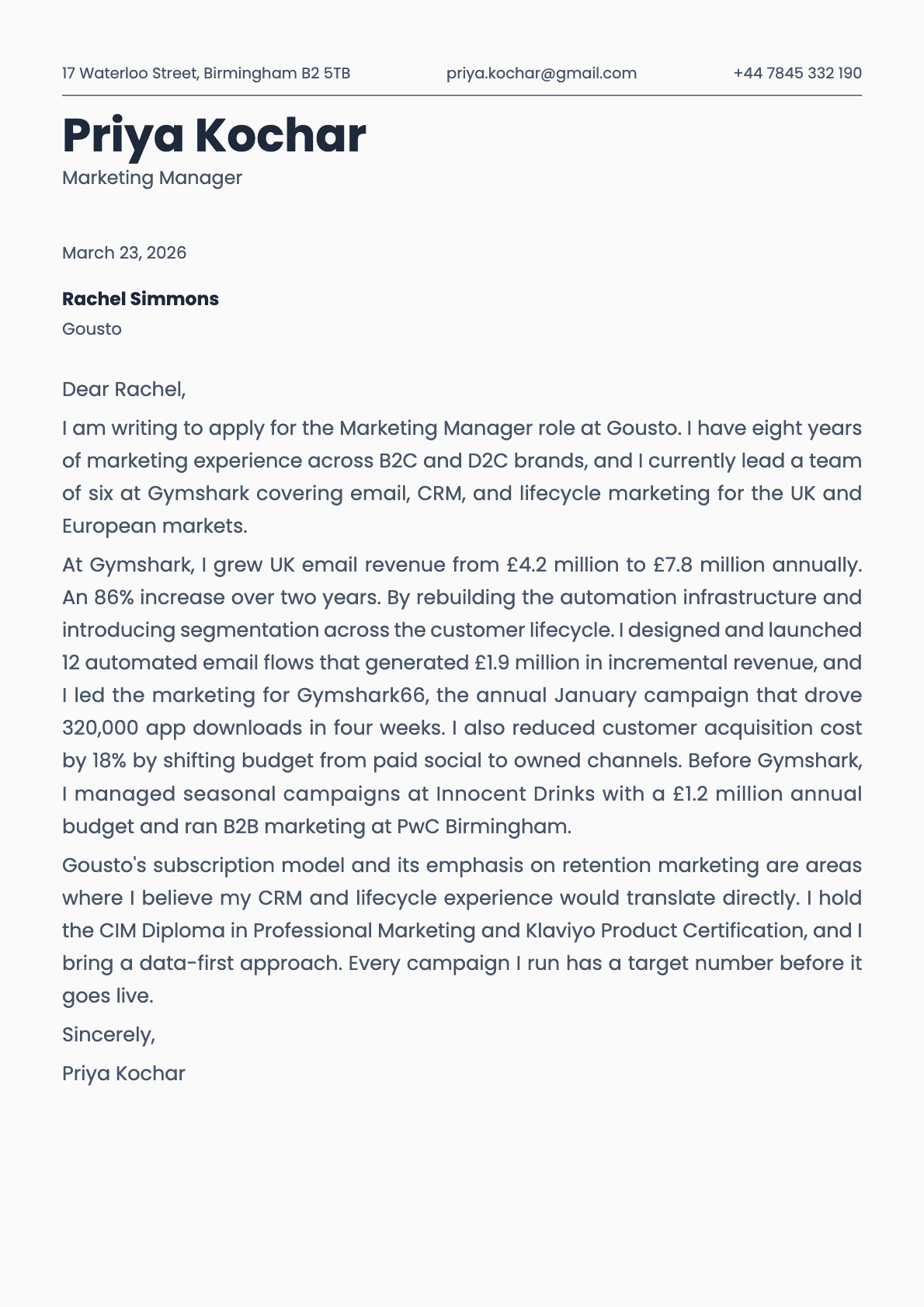
Marketing Manager
A marketing manager cover letter example targeting a D2C role at Gousto.
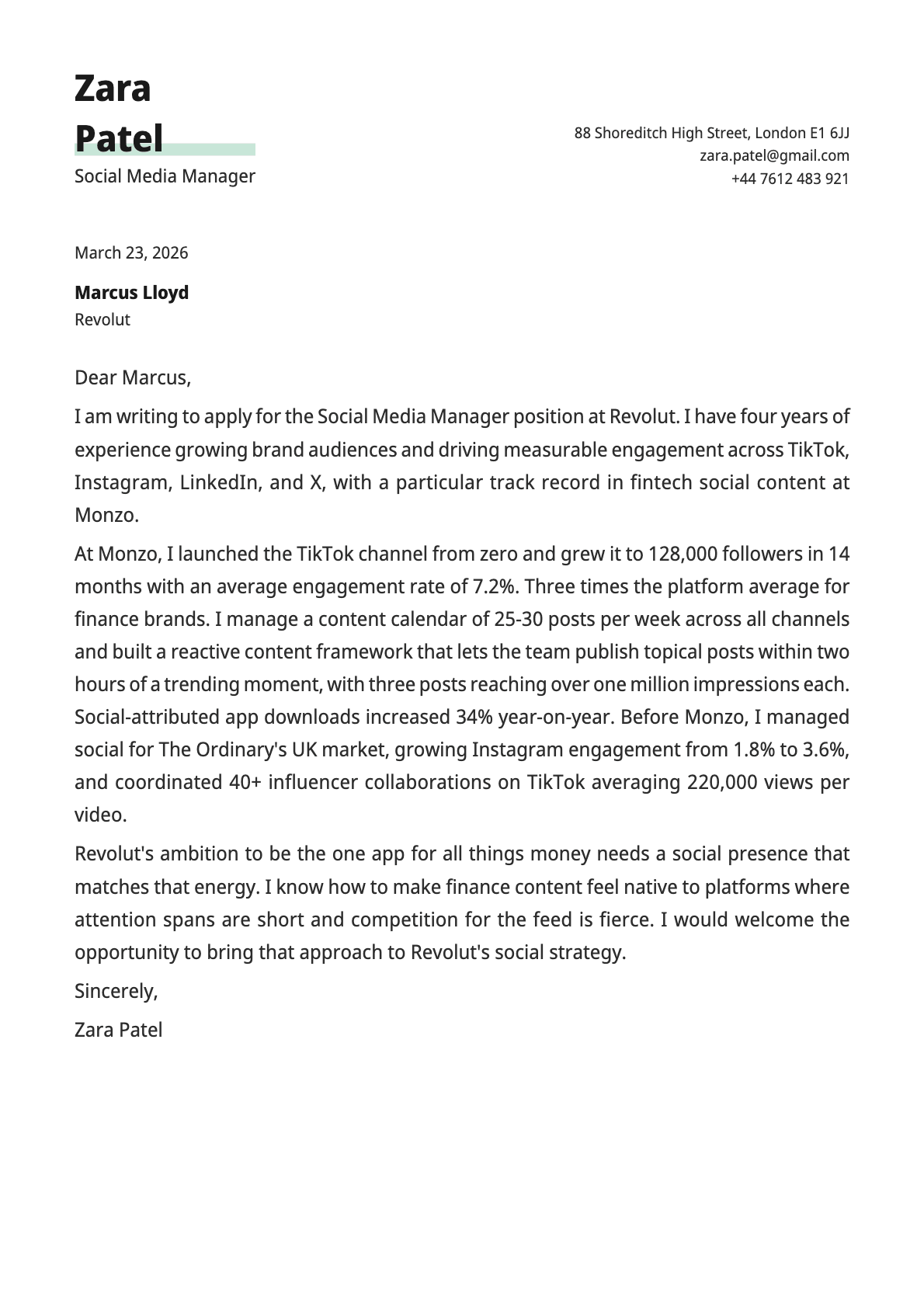
Social Media Manager
A social media manager cover letter example targeting Revolut.
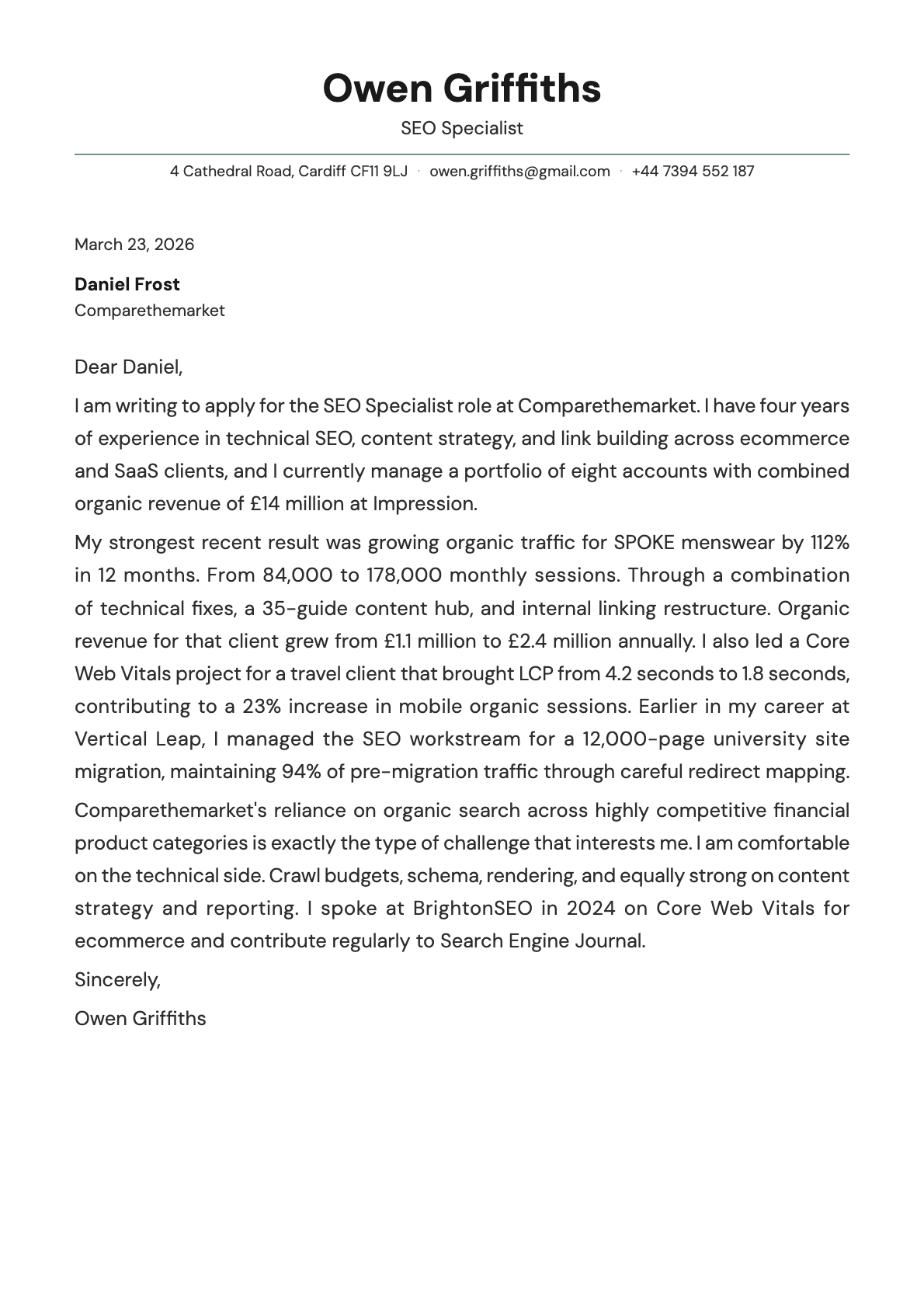
SEO Specialist
An SEO specialist cover letter example targeting Comparethemarket.
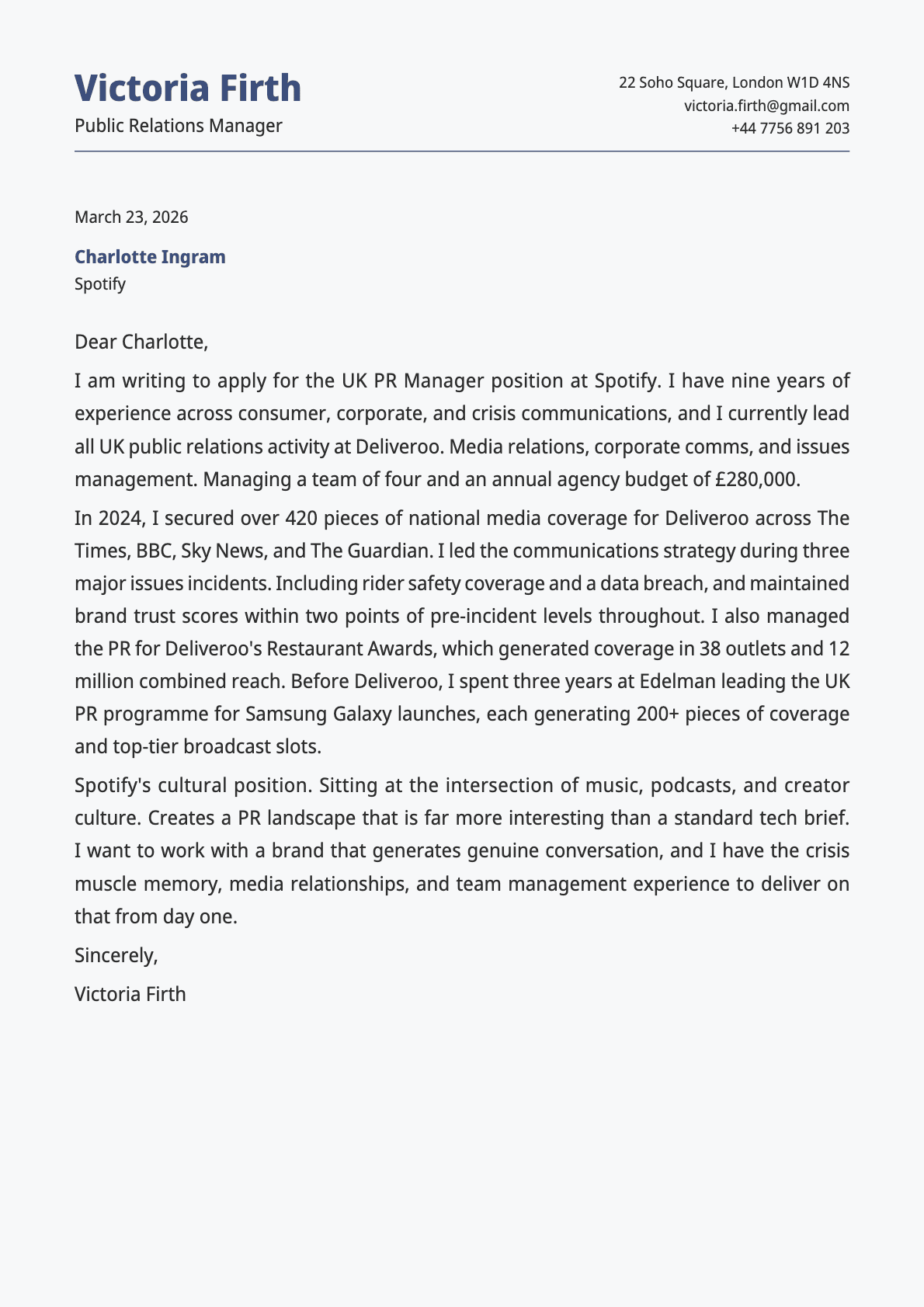
Public Relations Manager
A PR manager cover letter example targeting Spotify.
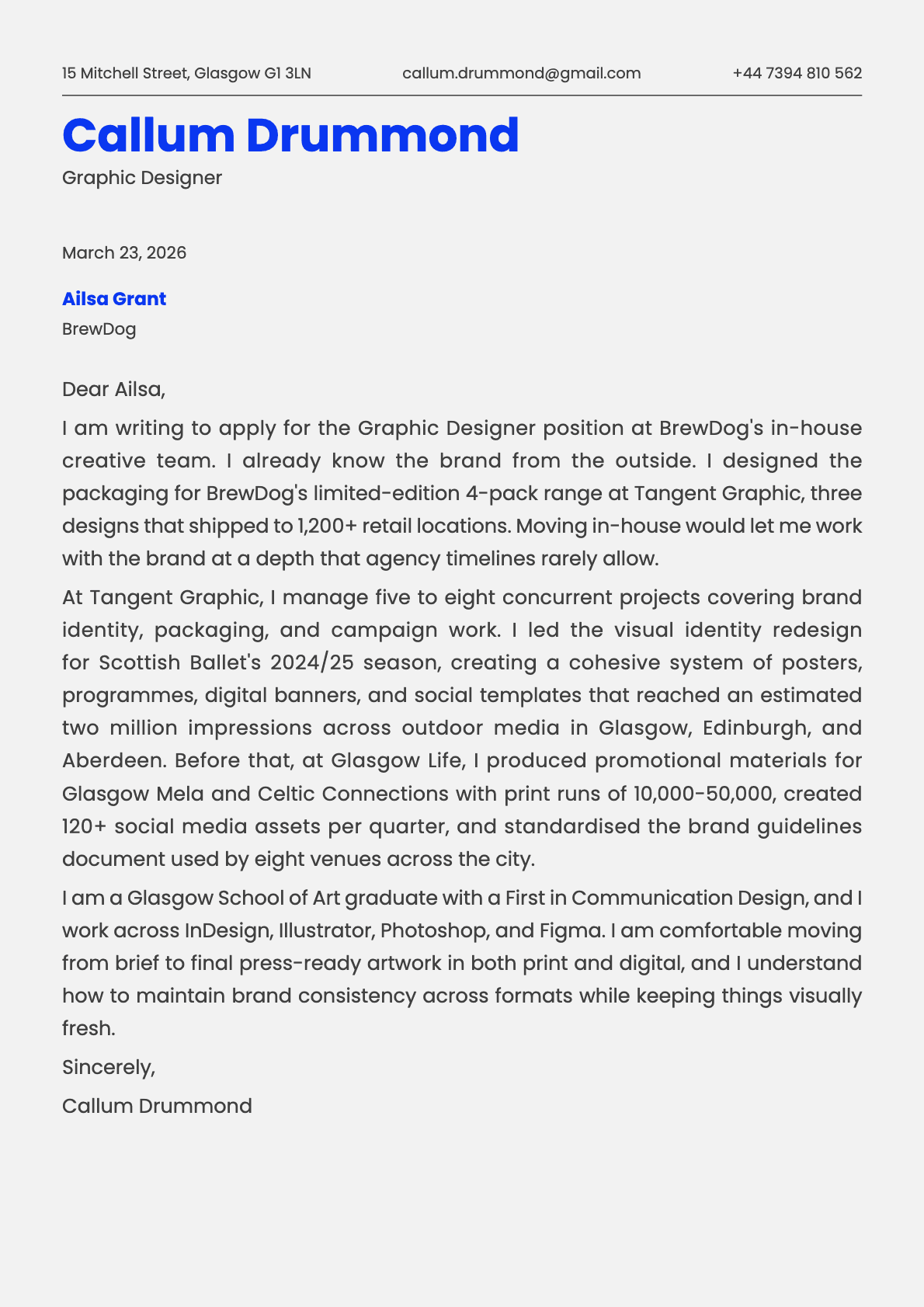
Graphic Designer
A graphic designer cover letter example targeting an in-house role at BrewDog.
Related articles

AI Is Screening Your Resume Before Any Human Sees It
AI screens most resumes before a human ever reads them. 97.4% of Fortune 500 companies run an ATS. This is what that means for you and what you can do about it.

The Best Resume Builders in 2026, Compared Honestly
Resume.io, Zety, Enhancv, Kickresume, Teal, and Laddro compared honestly: real pricing, free tiers, mobile apps, and where each tool wins. All prices checked in September 2026.

Burnout Recovery: A Real Timeline, Not 'Take a Bubble Bath'
55% of the U.S. workforce is burned out. Recovery takes 3 to 12 months. Here's what that actually looks like, stage by stage.