Marketing Manager Cover Letter Example
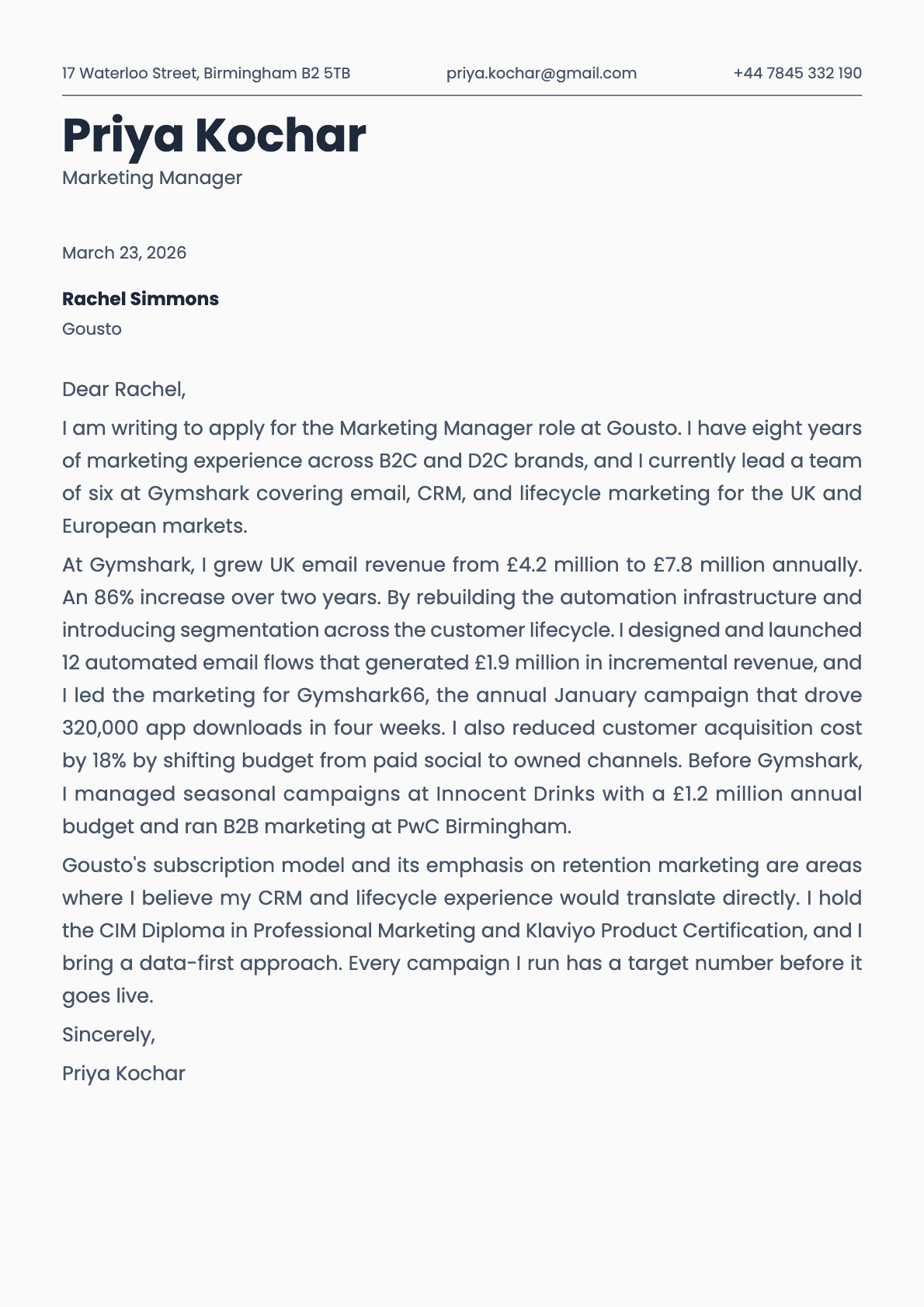
A marketing manager cover letter example targeting a D2C role at Gousto.

Laddro Team
Free to use. No account needed to start.
Free to use. No account needed to start.
Overview
Marketing manager cover letters often fall into one of two traps. Either they are full of buzzwords ("data-driven, results-oriented marketing professional") that could apply to anyone, or they list channel experience without ever connecting it to commercial outcomes. Hiring managers at D2C and B2C brands want to see one thing above all: did your marketing make the business money?
This cover letter belongs to Priya Kochar, a marketing manager with eight years of experience, currently leading CRM and lifecycle marketing at Gymshark. She is applying for a Marketing Manager role at Gousto. Her letter works because every claim ties back to a revenue number or a measurable improvement.
The opening: seniority, channels, and team
Priya opens with her total experience, the type of brands she has worked with (B2C and D2C), and her current scope. She manages a team of six at Gymshark covering email, CRM, and lifecycle marketing for UK and European markets. That is a lot of context packed into two sentences.
This approach works because it gives the hiring manager an immediate sense of her level. She is not a solo contributor running a few email campaigns. She is leading a team, managing channels, and working across markets. The scope of the role is clear before the reader even gets to the detail.
For your letter: state your team size, the channels you own, and the markets you cover. These three details establish your seniority more effectively than any job title can.
The body: revenue is the headline
The middle paragraph leads with Priya's strongest number: growing UK email revenue from £4.2 million to £7.8 million. An 86% increase. That single figure justifies the entire letter. Everything else is supporting evidence.
She then gives three more examples. The 12 automated email flows that generated £1.9 million in incremental revenue show technical CRM skills. The Gymshark66 campaign (320,000 app downloads in four weeks) shows she can execute large-scale brand campaigns. The 18% reduction in customer acquisition cost shows strategic thinking about channel mix.
The Innocent Drinks and PwC experience adds breadth without taking up too much space. One sentence each, enough to show she has worked in different environments.
The formula: lead with your biggest revenue or growth number. Follow it with two or three supporting examples that show different capabilities (automation, campaign execution, cost efficiency). Close with earlier experience for breadth. This structure works for any marketing manager letter.
The closing: product fit and measurement mindset
Priya's closing connects Gousto's subscription model to her CRM and retention expertise. This is a smart move because subscription businesses live and die by retention metrics, and she has just spent two paragraphs proving she knows how to drive them.
The final line, "Every campaign I run has a target number before it goes live," is a simple statement that says a lot. It tells the reader she is metrics-driven without using the phrase "data-driven," which has been drained of all meaning through overuse.
What makes this letter effective
Priya treats the cover letter as a business case. Here is what I have achieved, here is the commercial impact, and here is why those skills are relevant to your business. There is no fluff about being keen about marketing or loving the brand. The numbers make the case.
The letter also shows progression. Agency work at PwC, brand-side at Innocent, then leadership at Gymshark. The reader can see a career trajectory, which matters for senior roles where hiring managers want someone who will continue to grow.
Mistakes marketing managers make in cover letters
Leading with channels instead of results. "I have experience in email marketing, social media, paid search, and content marketing" is a list of things you have done. "I grew UK email revenue by 86% over two years" is a result. Always lead with results.
Using marketing jargon as a substitute for substance. "Leveraging omnichannel strategies to drive customer engagement and brand awareness" says nothing. Strip out the jargon and write plainly about what you did and what happened as a result.
Not connecting your experience to the company's business model. A cover letter for a subscription business should emphasise retention and lifecycle marketing. A letter for a marketplace should emphasise acquisition and conversion. Tailor your examples to match how the company makes money.
Omitting team management. If you manage people, say so. Marketing manager roles at this level require team leadership, and if your letter reads like you work alone, you may be screened out for roles that need people management skills.
Was this cover letter example helpful?
Rate this example to help us create better content for you.
4.8 average from 174 ratingsBuild your own version
Open this layout in the builder and swap in your own details. It takes a few minutes.
Free to use. No account needed to start.
Related cover letter examples
Social Media Manager
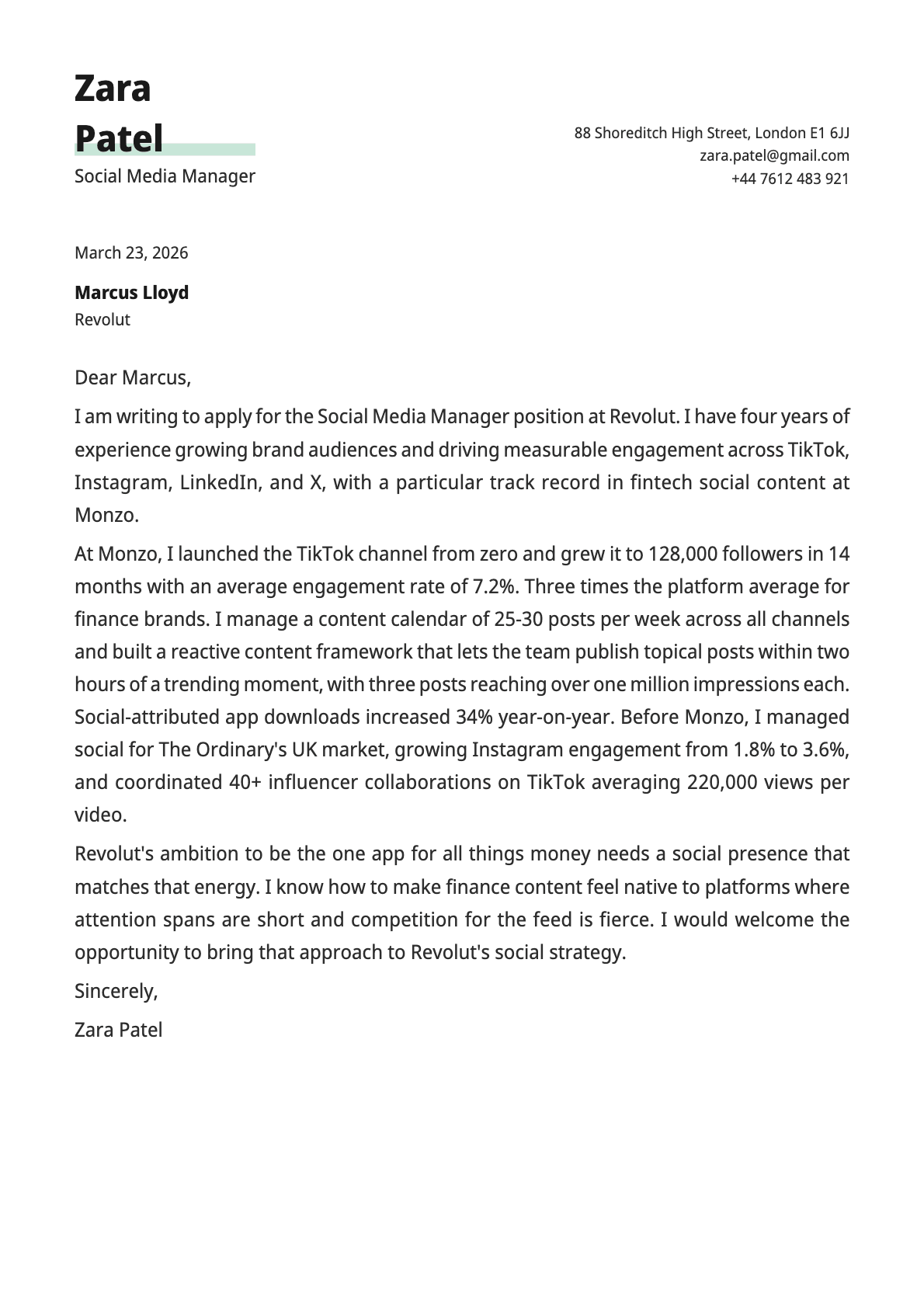
A social media manager cover letter example targeting Revolut.
Content Writer
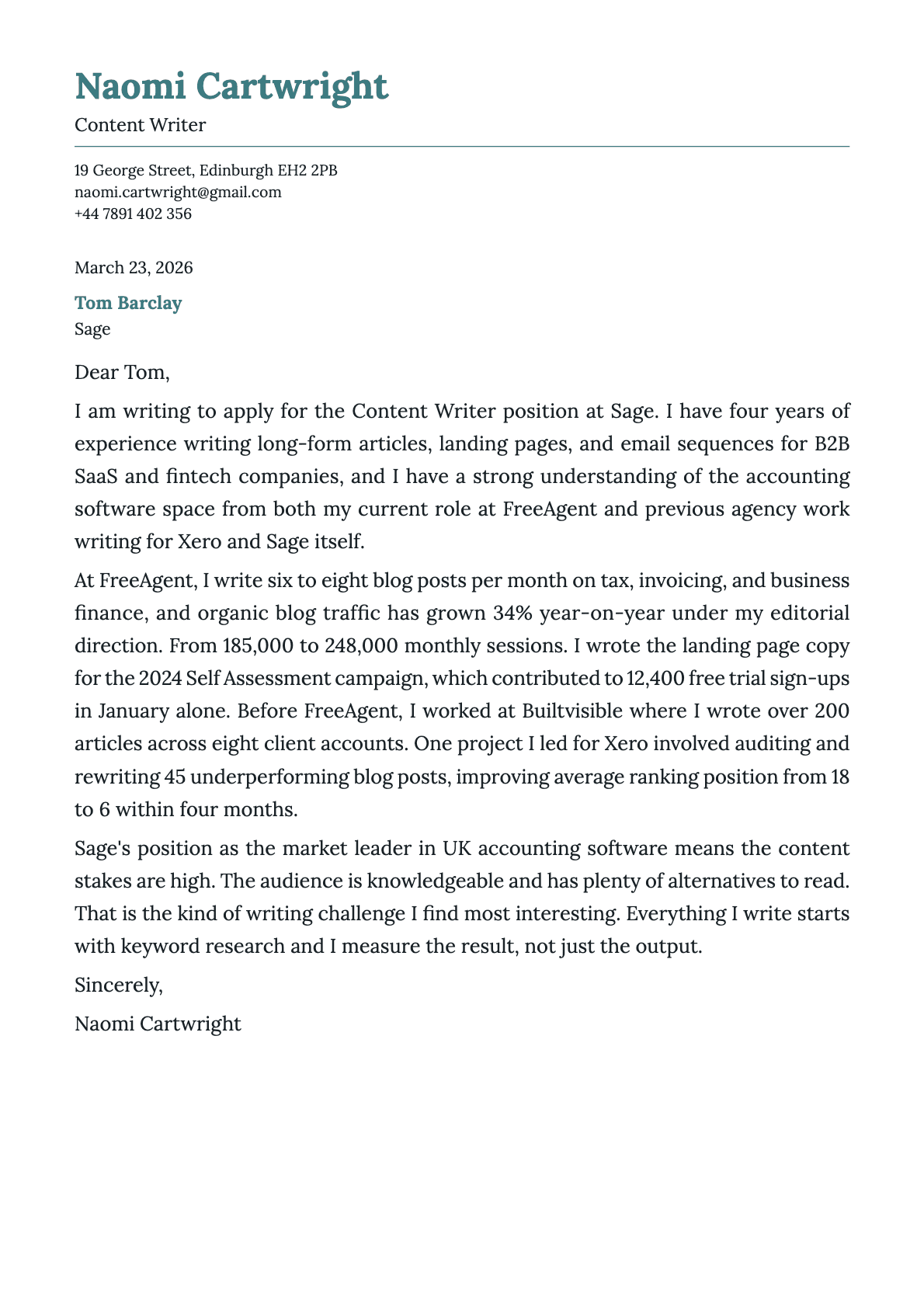
A content writer cover letter example targeting a B2B SaaS role at Sage.
SEO Specialist
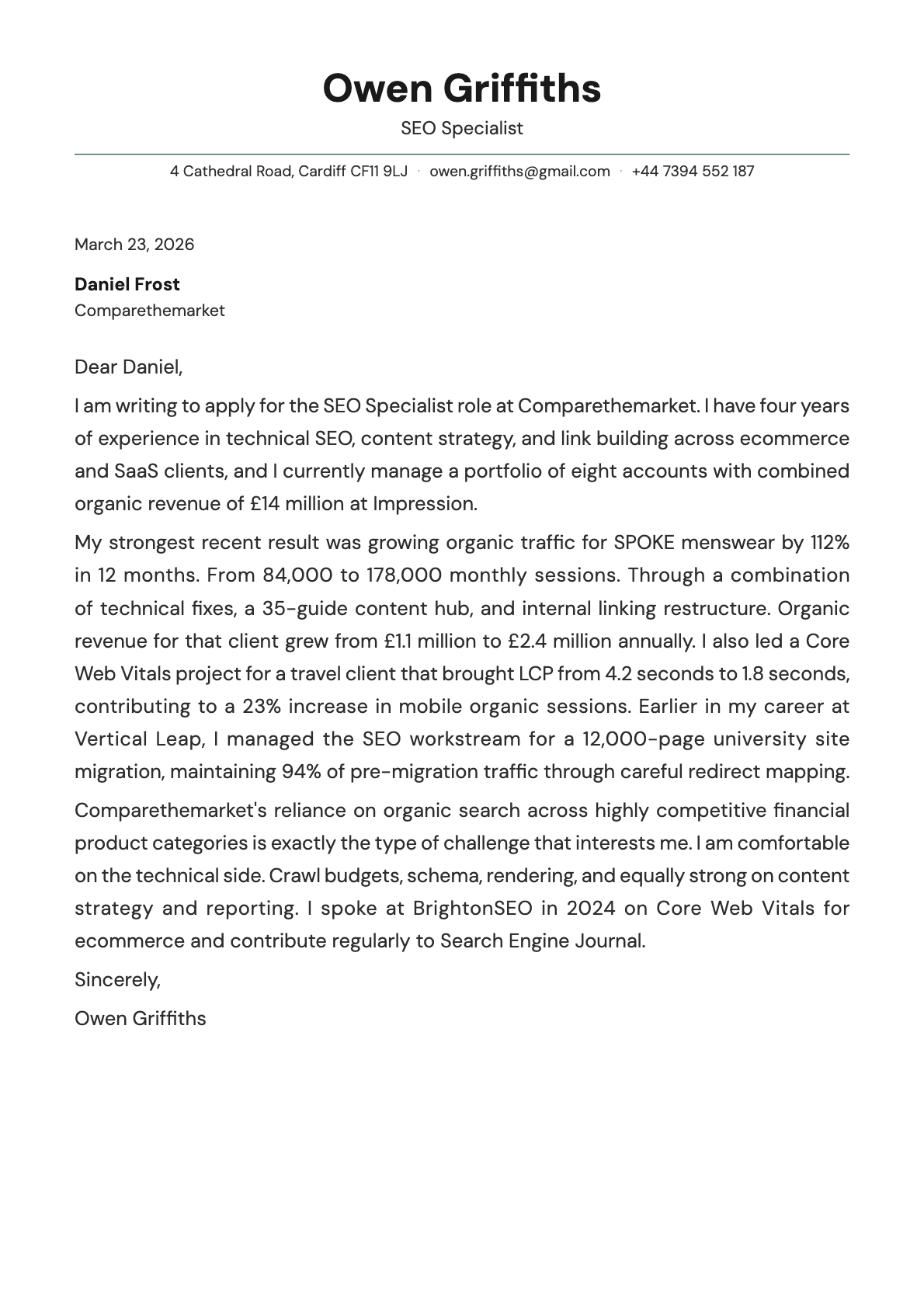
An SEO specialist cover letter example targeting Comparethemarket.
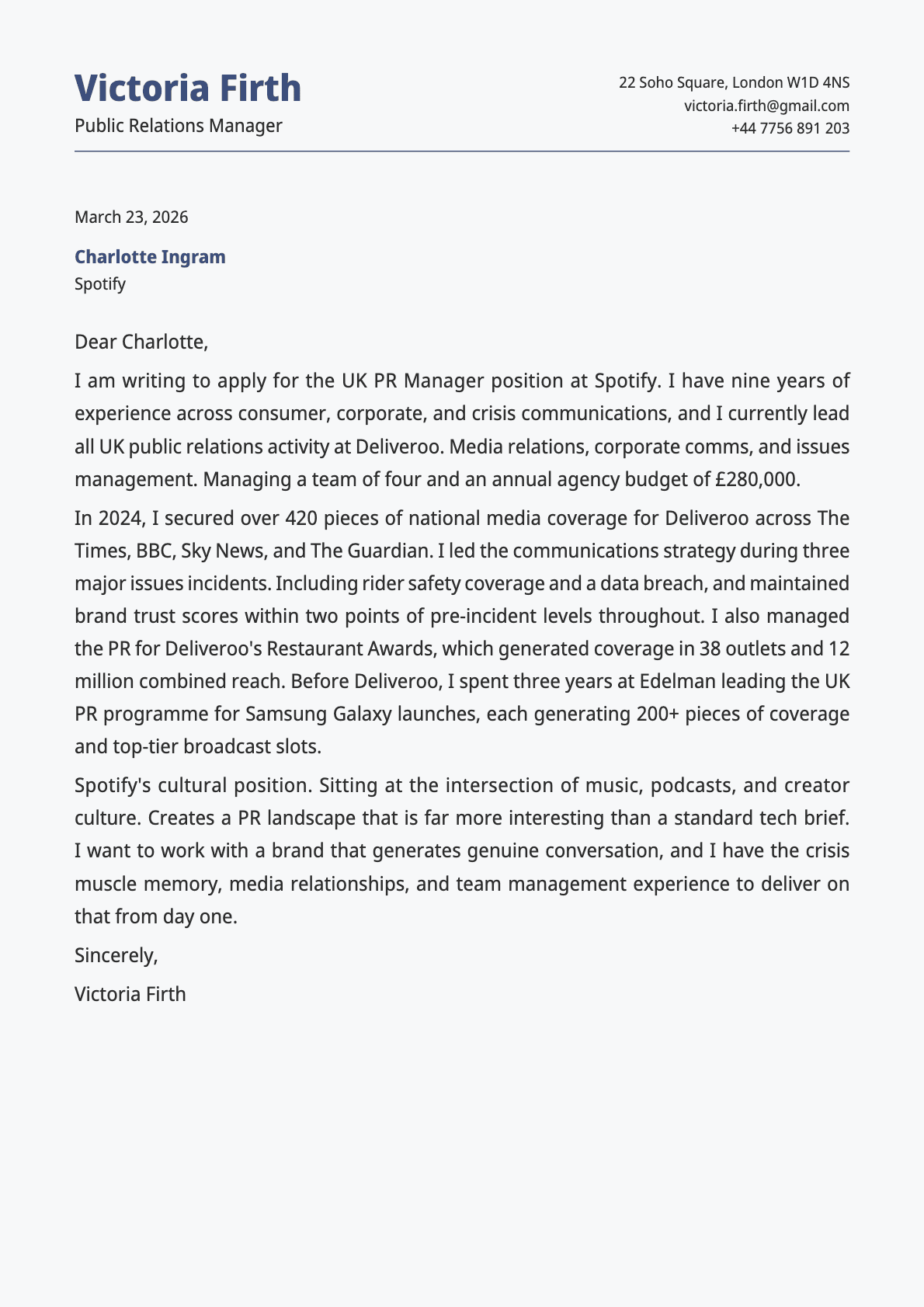
Public Relations Manager
A PR manager cover letter example targeting Spotify.
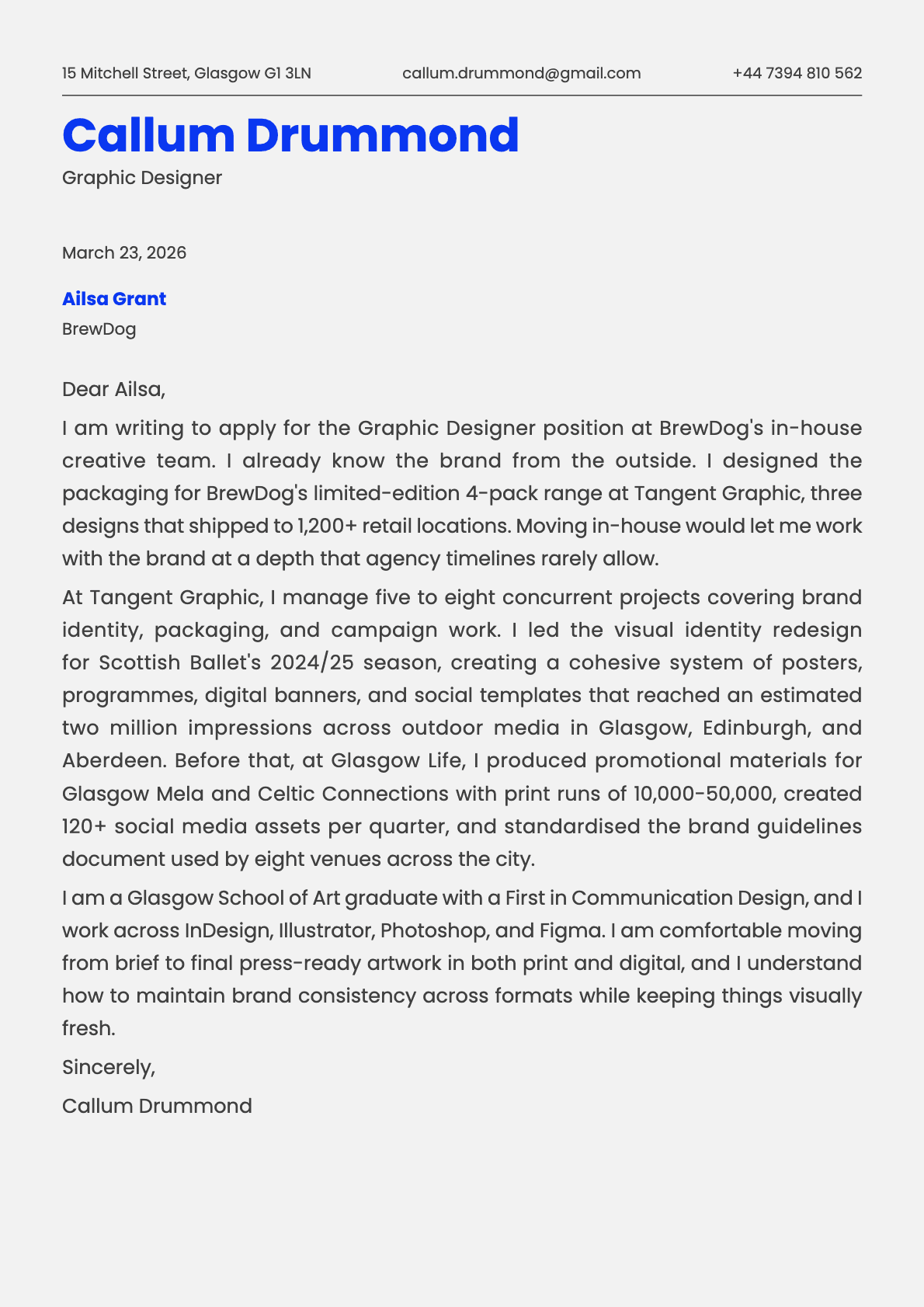
Graphic Designer
A graphic designer cover letter example targeting an in-house role at BrewDog.
Related articles

AI Is Screening Your Resume Before Any Human Sees It
AI screens most resumes before a human ever reads them. 97.4% of Fortune 500 companies run an ATS. This is what that means for you and what you can do about it.

The Best Resume Builders in 2026, Compared Honestly
Resume.io, Zety, Enhancv, Kickresume, Teal, and Laddro compared honestly: real pricing, free tiers, mobile apps, and where each tool wins. All prices checked in September 2026.

Burnout Recovery: A Real Timeline, Not 'Take a Bubble Bath'
55% of the U.S. workforce is burned out. Recovery takes 3 to 12 months. Here's what that actually looks like, stage by stage.