Social Media Manager Cover Letter Example
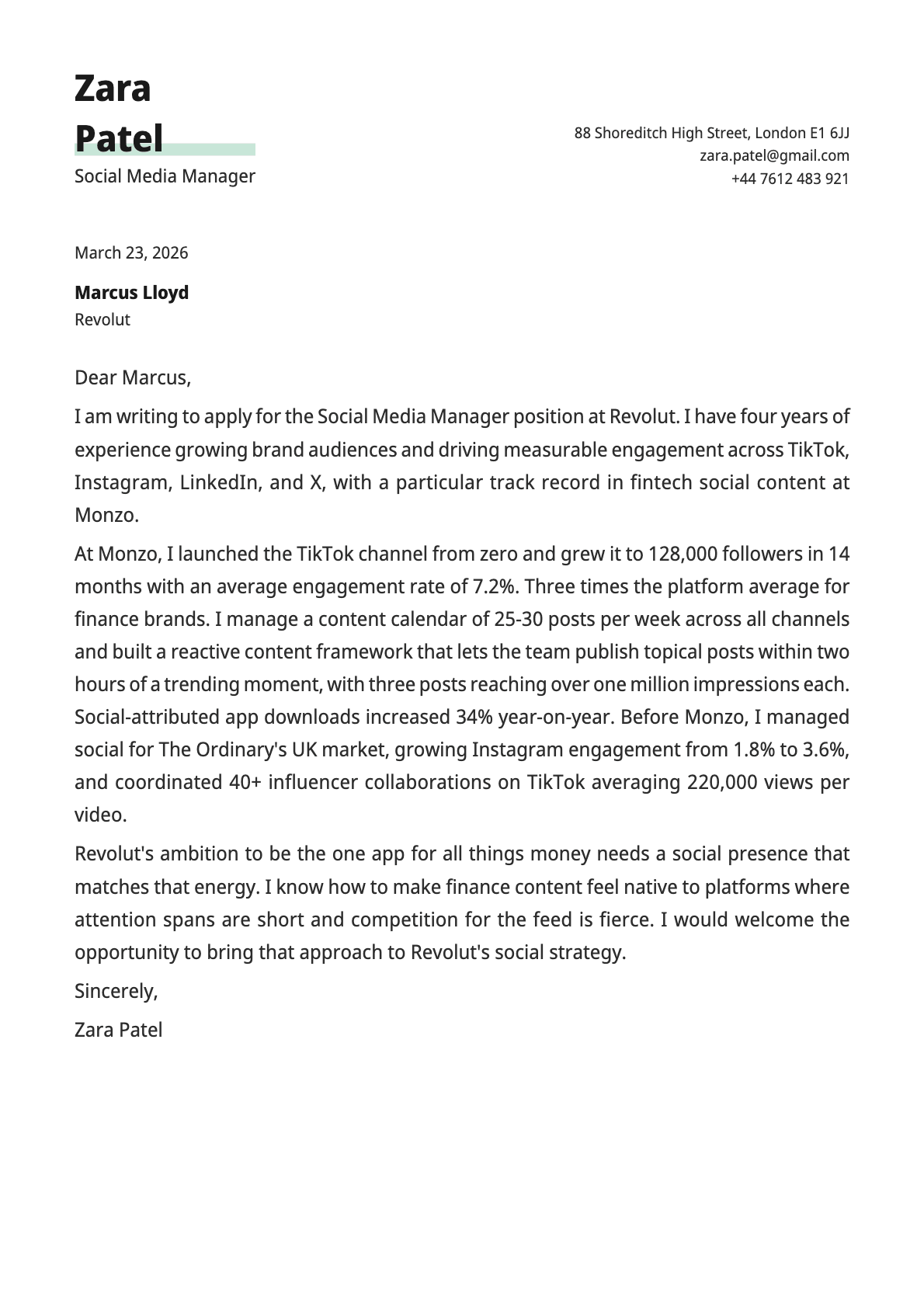
A social media manager cover letter example targeting Revolut.

Laddro Team
Free to use. No account needed to start.
Free to use. No account needed to start.
Overview
Social media manager cover letters are tricky because the work is highly visible but often poorly quantified. Most candidates describe their content in qualitative terms: "I create engaging content that builds brand communities." That sounds fine, but it does not tell the hiring manager whether you actually grew anything, drove any business results, or can operate at the speed social media demands.
This cover letter belongs to Zara Patel, a social media manager with four years of experience at Monzo and The Ordinary, applying for a role at Revolut. Her letter works because she translates creative social media work into hard numbers: follower counts, engagement rates, impression milestones, and app download attribution.
The opening: platform specificity and brand relevance
Zara names the platforms she works across (TikTok, Instagram, LinkedIn, X) and immediately connects her experience to fintech, which is Revolut's space. She does not say she has "social media experience." She says she has "a particular track record in fintech social content at Monzo."
That specificity matters. Social media for a finance brand is fundamentally different from social media for a fashion brand. The content restrictions, the audience expectations, and the compliance considerations are all different. By naming fintech specifically, Zara signals that she understands these differences.
For your letter: always name the specific platforms you manage and the industry context. "Social media experience" is too broad to be useful. "Four years growing fintech brand audiences across TikTok and Instagram" tells a clear story.
The body: growth metrics that prove capability
The middle paragraph is packed with numbers. The TikTok channel launch (zero to 128,000 followers in 14 months, 7.2% engagement rate, three times the finance platform average) is the headline. It shows she can build an audience from nothing on a platform that is notoriously difficult for finance brands.
She then adds operational detail: 25-30 posts per week, a reactive content framework with a two-hour turnaround, and three posts that each exceeded one million impressions. The business outcome (34% increase in social-attributed app downloads) ties the social metrics to something the company actually cares about.
The Ordinary experience adds range. Growing Instagram engagement from 1.8% to 3.6% and managing 40+ influencer collaborations with an average of 220,000 views per video shows she can deliver results across different industries and platforms.
The lesson for social media managers: always connect your metrics to business outcomes. Follower growth and engagement rates are important, but hiring managers want to know whether that translated into downloads, sign-ups, leads, or revenue. If you can draw that line, do it.
The closing: understanding the brand voice
Zara's closing is short but effective. She references Revolut's brand positioning ("the one app for all things money") and frames the challenge in terms she clearly understands: making finance content feel native to platforms with short attention spans.
This is not generic flattery. It is a statement about the specific creative challenge the role involves, and it demonstrates that Zara has thought about how her skills apply to Revolut's particular situation.
What this letter gets right
The balance between creative ability and analytical rigour is the strongest aspect of this letter. Zara shows she can create content that performs (the TikTok growth, the viral posts) and that she measures everything (engagement rates, platform benchmarks, attributed downloads). That combination is exactly what senior social media roles require.
The letter also moves fast. Every sentence contains a fact or a number. There is no padding about passion for social media or love of content creation. The work speaks for itself.
Mistakes to avoid in social media manager cover letters
Talking about platforms without metrics. "I manage TikTok and Instagram accounts" is a responsibility. "I grew TikTok from zero to 128,000 followers with a 7.2% engagement rate" is a result. Always use the second version.
Forgetting about business attribution. Social media metrics are meaningless to a hiring manager if you cannot connect them to business outcomes. App downloads, website traffic, lead generation, or sales attribution. Find the link and make it explicit.
Being vague about content volume. Posting cadence matters. If you manage 25+ posts per week across multiple platforms, that shows you can operate at high volume. If you manage a lower cadence with higher production value, explain that. Either way, give the reader a sense of your output.
Not mentioning influencer or creator work. If you have managed influencer collaborations, UGC campaigns, or creator partnerships, include them. These are increasingly important parts of social media management and many hiring managers specifically look for this experience.
Ignoring platform-specific knowledge. Each platform has its own algorithm, best practices, and audience behaviour. Showing that you understand the differences (not just that you post on multiple platforms) signals genuine expertise.
Was this cover letter example helpful?
Rate this example to help us create better content for you.
4.7 average from 189 ratingsBuild your own version
Open this layout in the builder and swap in your own details. It takes a few minutes.
Free to use. No account needed to start.
Related cover letter examples
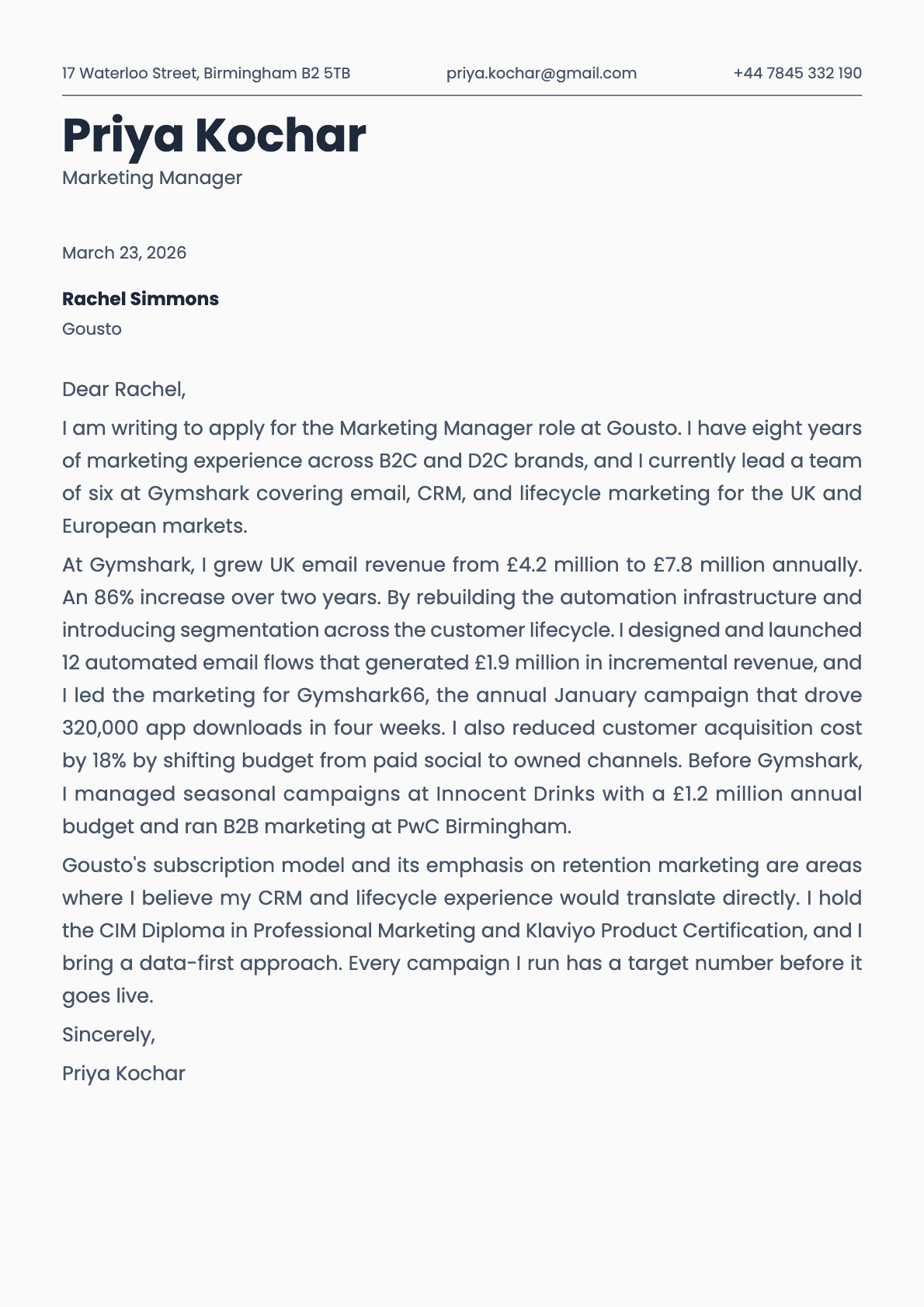
Marketing Manager
A marketing manager cover letter example targeting a D2C role at Gousto.
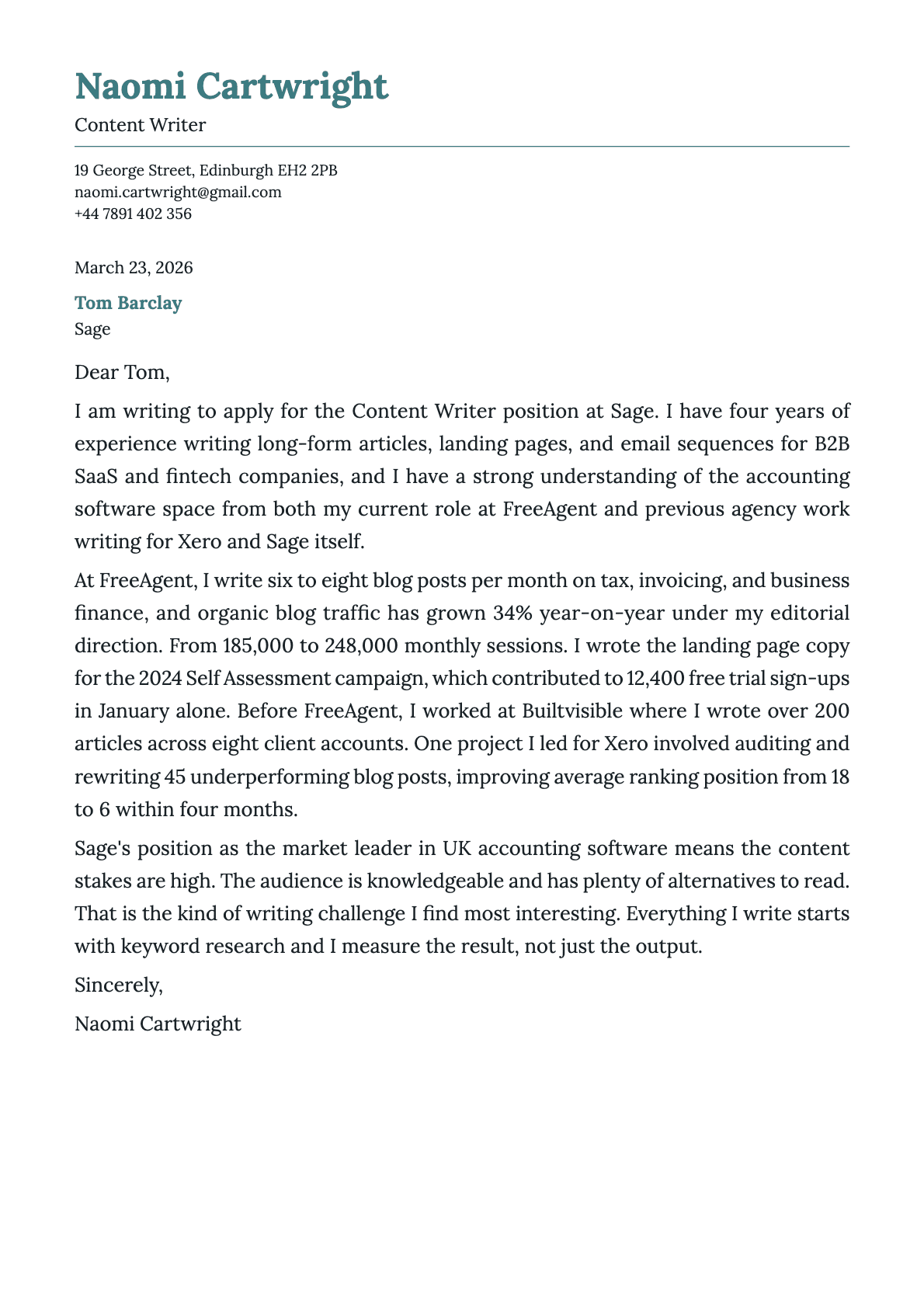
Content Writer
A content writer cover letter example targeting a B2B SaaS role at Sage.
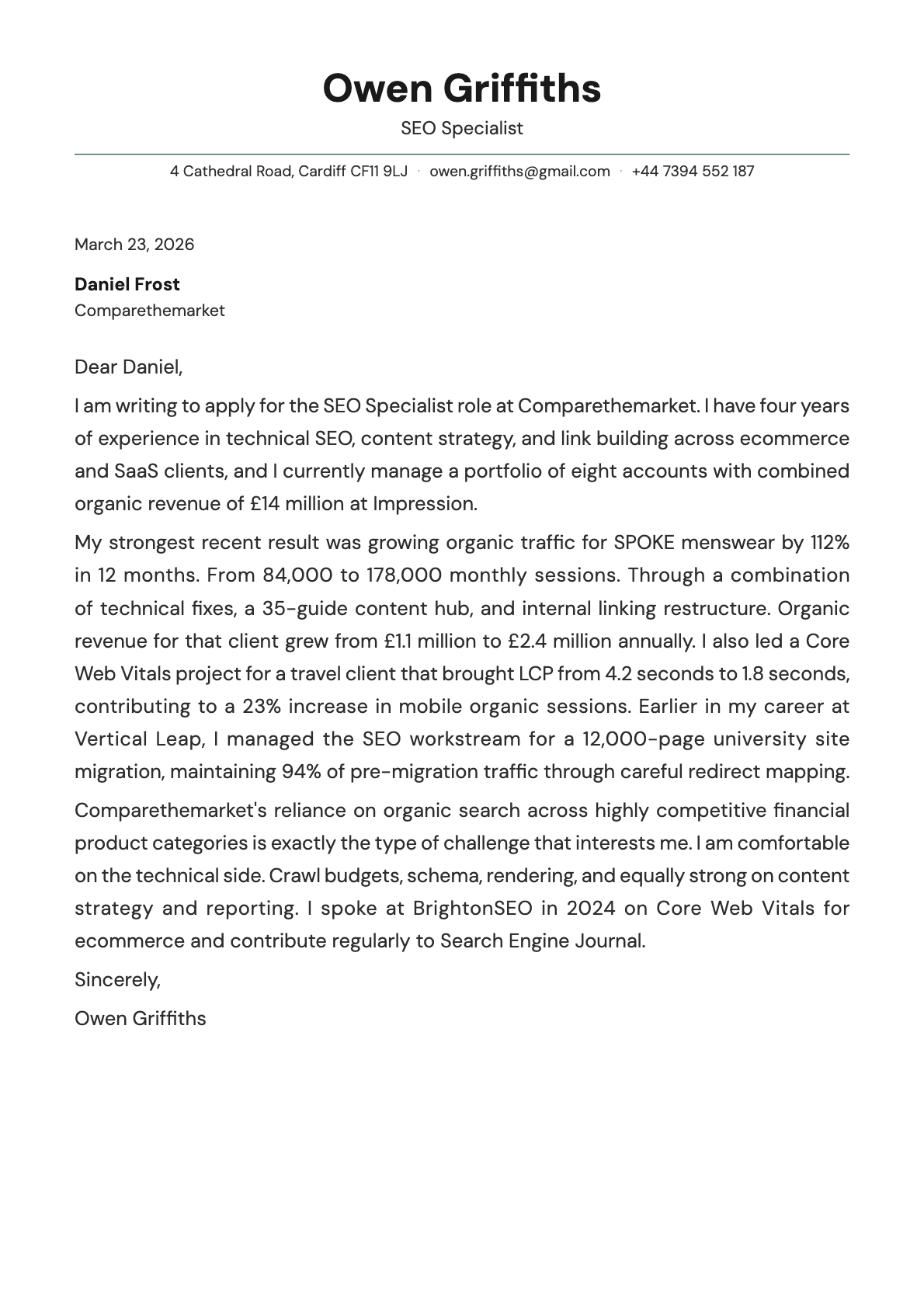
SEO Specialist
An SEO specialist cover letter example targeting Comparethemarket.
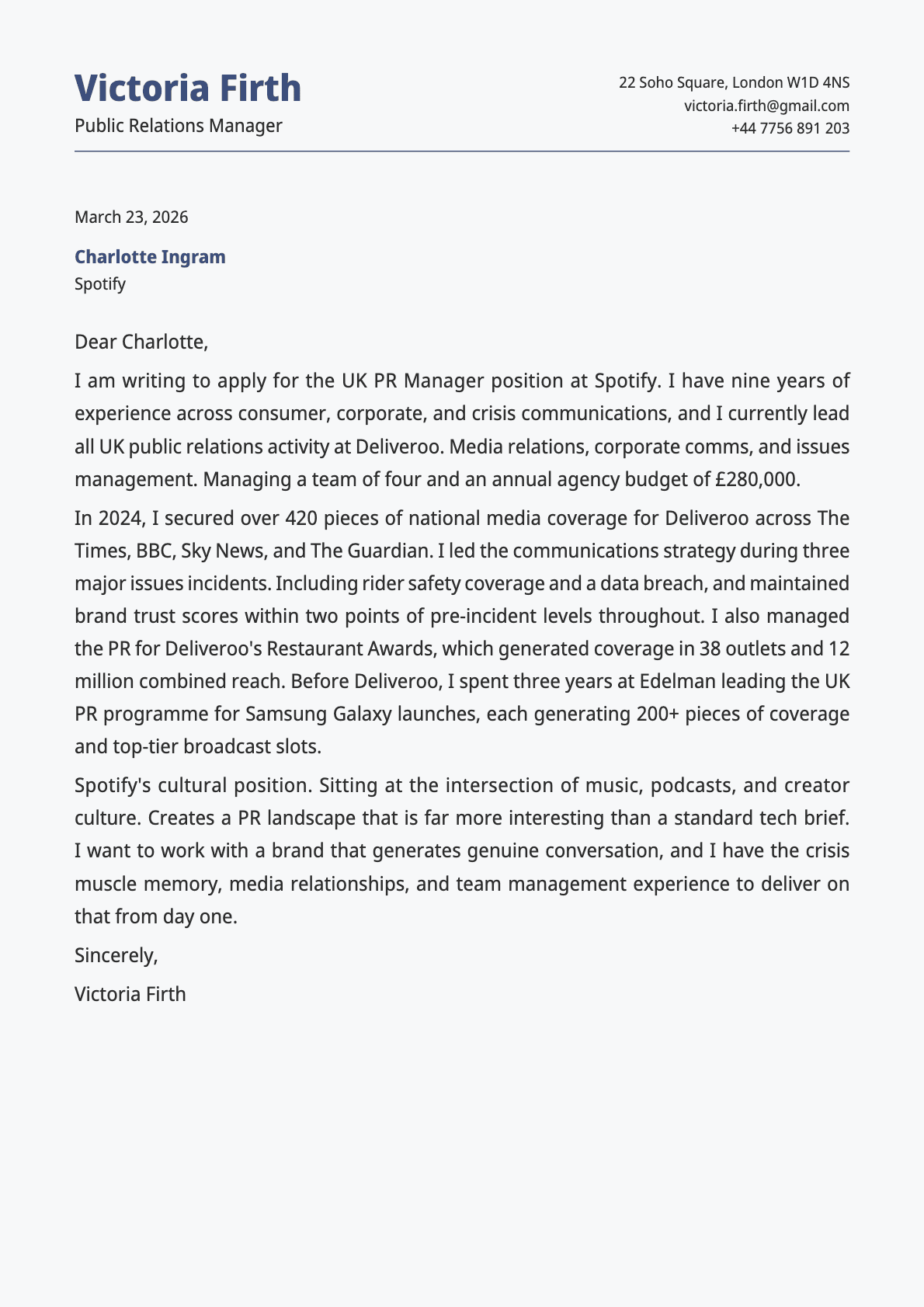
Public Relations Manager
A PR manager cover letter example targeting Spotify.
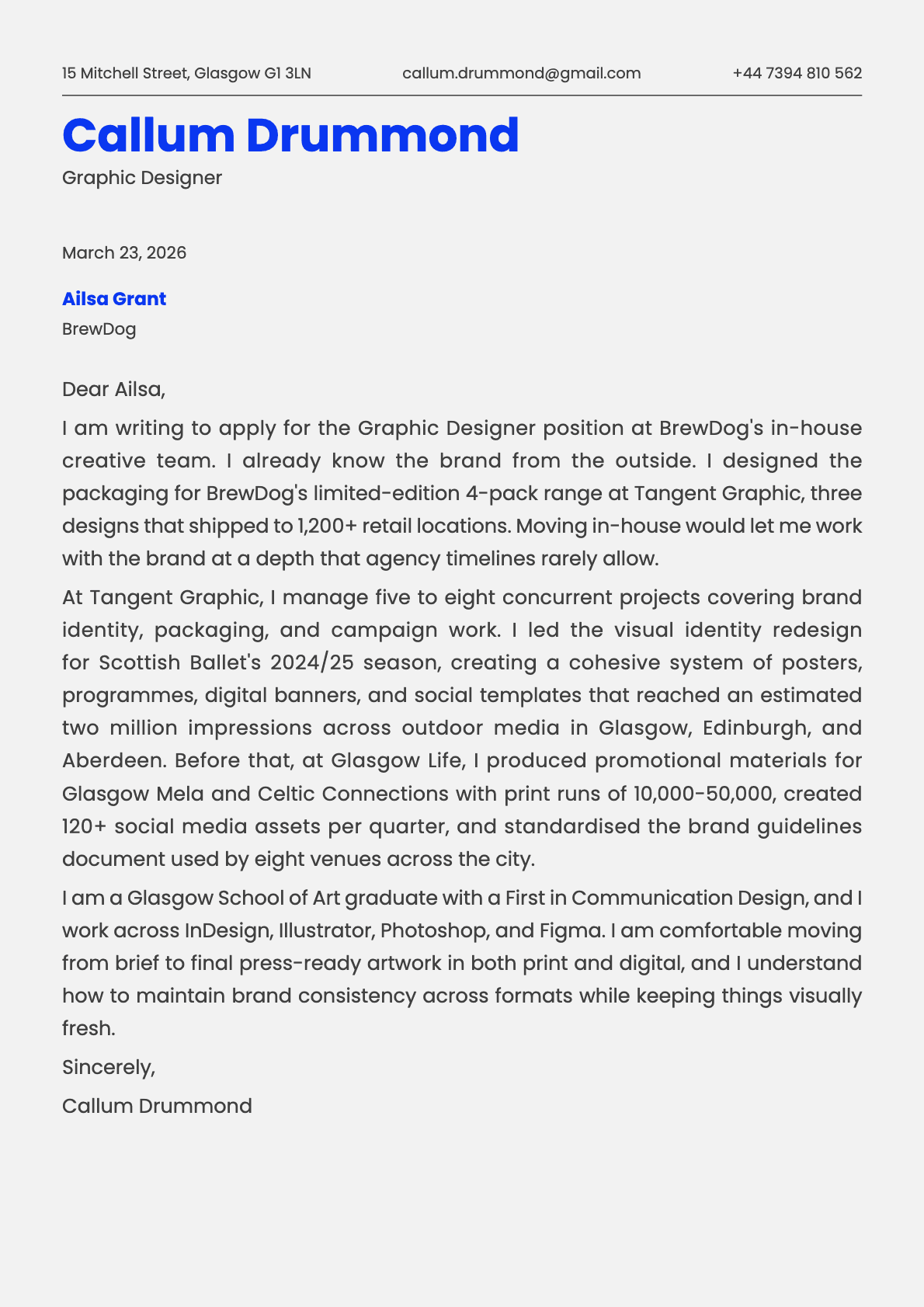
Graphic Designer
A graphic designer cover letter example targeting an in-house role at BrewDog.
Related articles

AI Is Screening Your Resume Before Any Human Sees It
AI screens most resumes before a human ever reads them. 97.4% of Fortune 500 companies run an ATS. This is what that means for you and what you can do about it.

The Best Resume Builders in 2026, Compared Honestly
Resume.io, Zety, Enhancv, Kickresume, Teal, and Laddro compared honestly: real pricing, free tiers, mobile apps, and where each tool wins. All prices checked in September 2026.

Burnout Recovery: A Real Timeline, Not 'Take a Bubble Bath'
55% of the U.S. workforce is burned out. Recovery takes 3 to 12 months. Here's what that actually looks like, stage by stage.