Public Relations Manager Cover Letter Example
A PR manager cover letter example targeting Spotify.

Laddro Team
Free to use. No account needed to start.
Free to use. No account needed to start.
Overview
PR manager cover letters need to do something that many PR professionals struggle with when talking about themselves: be specific. It is easy to describe PR work in sweeping terms. "Led media relations and managed the brand reputation." But these statements do not tell the hiring manager how many pieces of coverage you secured, what outlets you placed stories in, or how you handled things when they went wrong.
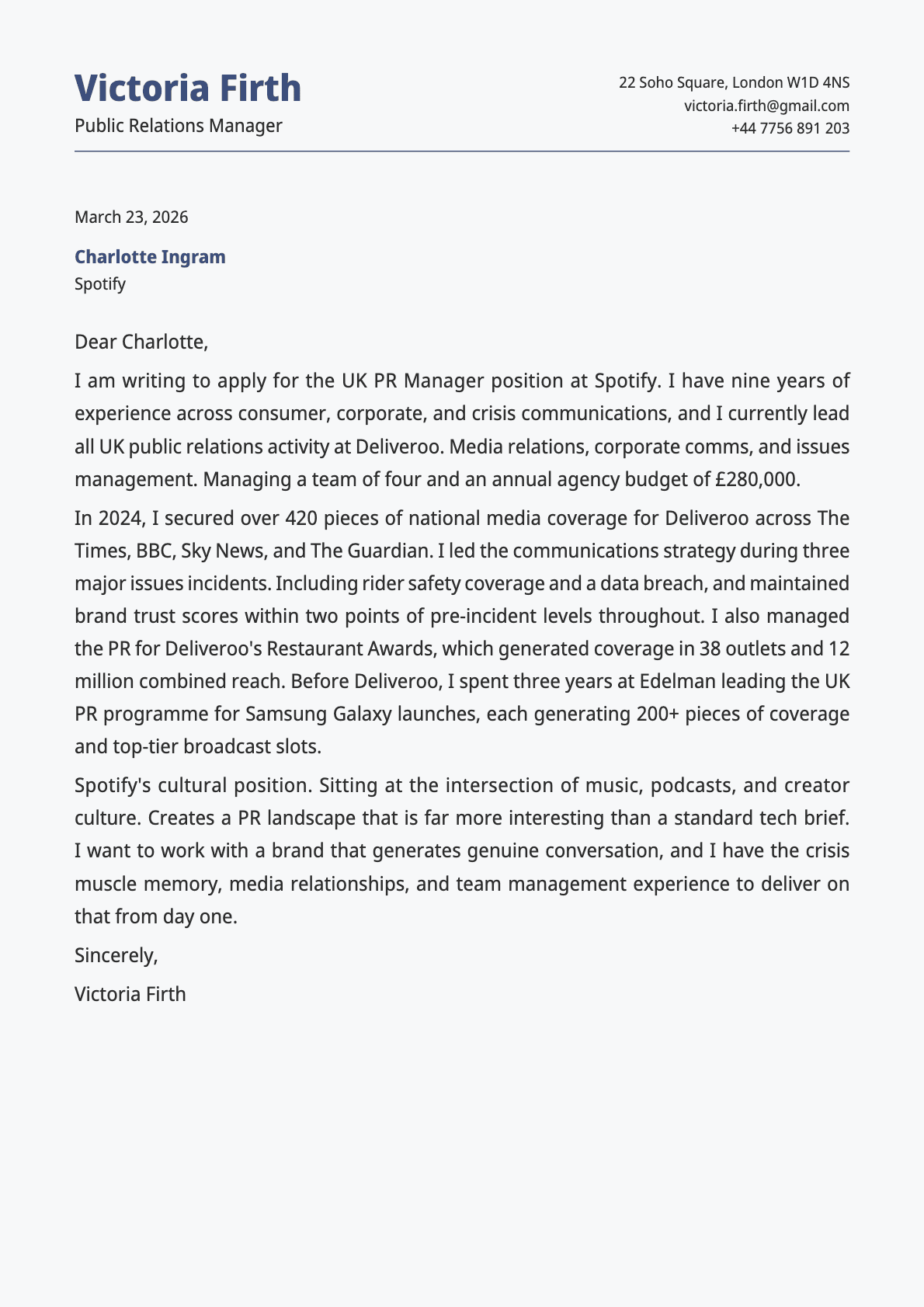
This letter belongs to Victoria Firth, a PR manager with nine years of experience, currently leading UK public relations at Deliveroo. She is applying for the UK PR Manager role at Spotify. Her letter works because she quantifies everything: coverage volumes, outlet names, reach figures, agency budgets, and crisis outcomes.
The opening: scope and seniority
Victoria opens by covering the full scope of her role in one sentence: media relations, corporate comms, and issues management. She then adds the operational details: a team of four and an annual agency budget of £280,000.
This is effective because it establishes her seniority immediately. She is not pitching individual stories. She is running a function. The team size and budget figure make that clear without requiring a lengthy explanation.
For your letter: if you manage a PR function, lead with the scope. Name the disciplines you cover (media relations, corporate communications, crisis, internal comms) and include team size and budget if you have them. These details establish your level more effectively than any job title.
The body: coverage, crisis, and campaigns
The middle paragraph covers three distinct PR capabilities. The 420 pieces of national coverage across named outlets (The Times, BBC, Sky News, The Guardian) shows media relations strength. The crisis communications work (three incidents, brand trust maintained within two points) shows she can protect a brand under pressure. The Restaurant Awards campaign (38 outlets, 12 million reach) shows she can create news, not just respond to it.
The Samsung experience at Edelman adds agency-side credibility and shows she has worked with a major consumer technology brand at launch scale.
The key for PR cover letters: show the full range. Media relations is the foundation, but senior PR roles require crisis skills, campaign thinking, and often corporate communications. If you only describe one dimension of PR, you look like a specialist when the role needs a generalist.
The closing: brand fit
Victoria's closing is the most creative part of the letter. She describes Spotify's cultural position at the intersection of music, podcasts, and creator culture, and frames it as a more interesting PR challenge than a standard tech brief. This shows genuine enthusiasm grounded in an understanding of what the role involves.
The final sentence is direct and confident: she has "the crisis muscle memory, media relationships, and team management experience to deliver on that from day one." That is not a soft ask. It is a statement of readiness.
What this letter does well
Victoria writes like a PR professional should: clearly, confidently, and with an awareness of her audience. The letter is structured like a media pitch. Lead with the strongest angle (scope and results), provide supporting evidence (crisis, campaigns), and close with the hook (why this brand, why now).
The numbers throughout the letter are its backbone. Without them, the claims would be generic. With them, each sentence becomes verifiable and credible.
Mistakes PR professionals make in cover letters
Being vague about media results. "Secured widespread media coverage" means nothing. "Secured 420 pieces of national coverage including The Times, BBC, and Sky News" means everything. Name the outlets and quantify the volume.
Ignoring crisis communications. If you have crisis experience, include it. Many PR manager roles list crisis skills as essential, and most candidates do not address it in their cover letters. Describing how you handled a real incident (without breaching confidentiality) sets you apart.
Not mentioning measurement. PR measurement has evolved significantly. If you use AVE, reach, share of voice, sentiment analysis, or attribution modelling, mention your approach. Hiring managers want to know you can demonstrate the value of your work.
Writing in PR-speak. "Thought leadership," "brand storytelling," and "stakeholder engagement" are industry terms that have lost most of their meaning. Write plainly about what you did. "I placed the CEO on BBC Breakfast to discuss the company's sustainability report" is more powerful than "I developed thought leadership opportunities for senior stakeholders."
Underselling team management. If you manage a team or external agencies, quantify it. Team size, agency budget, and reporting lines all help the reader understand your leadership scope.
Was this cover letter example helpful?
Rate this example to help us create better content for you.
4.7 average from 109 ratingsBuild your own version
Open this layout in the builder and swap in your own details. It takes a few minutes.
Free to use. No account needed to start.
Related cover letter examples
Marketing Manager
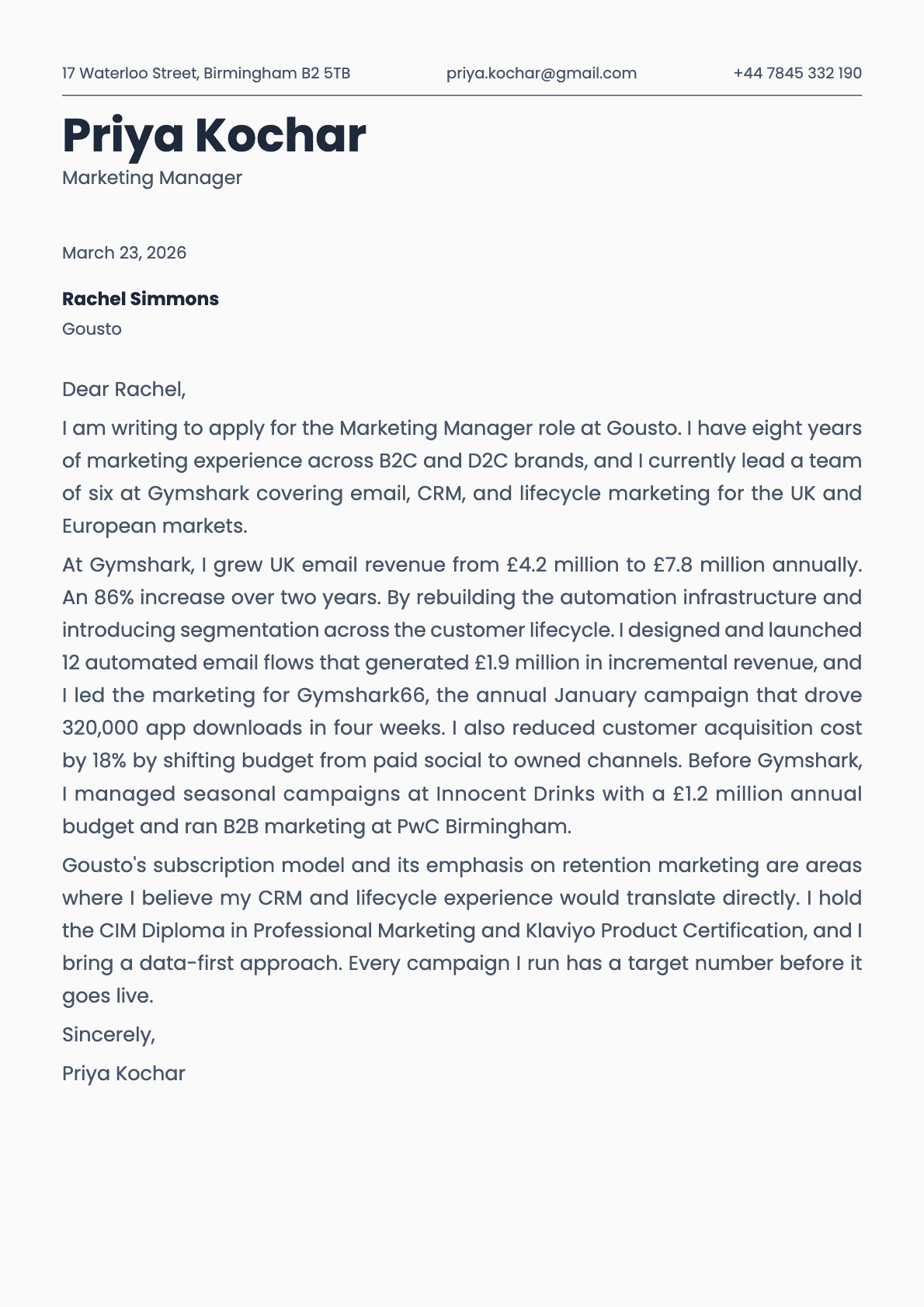
A marketing manager cover letter example targeting a D2C role at Gousto.
Social Media Manager
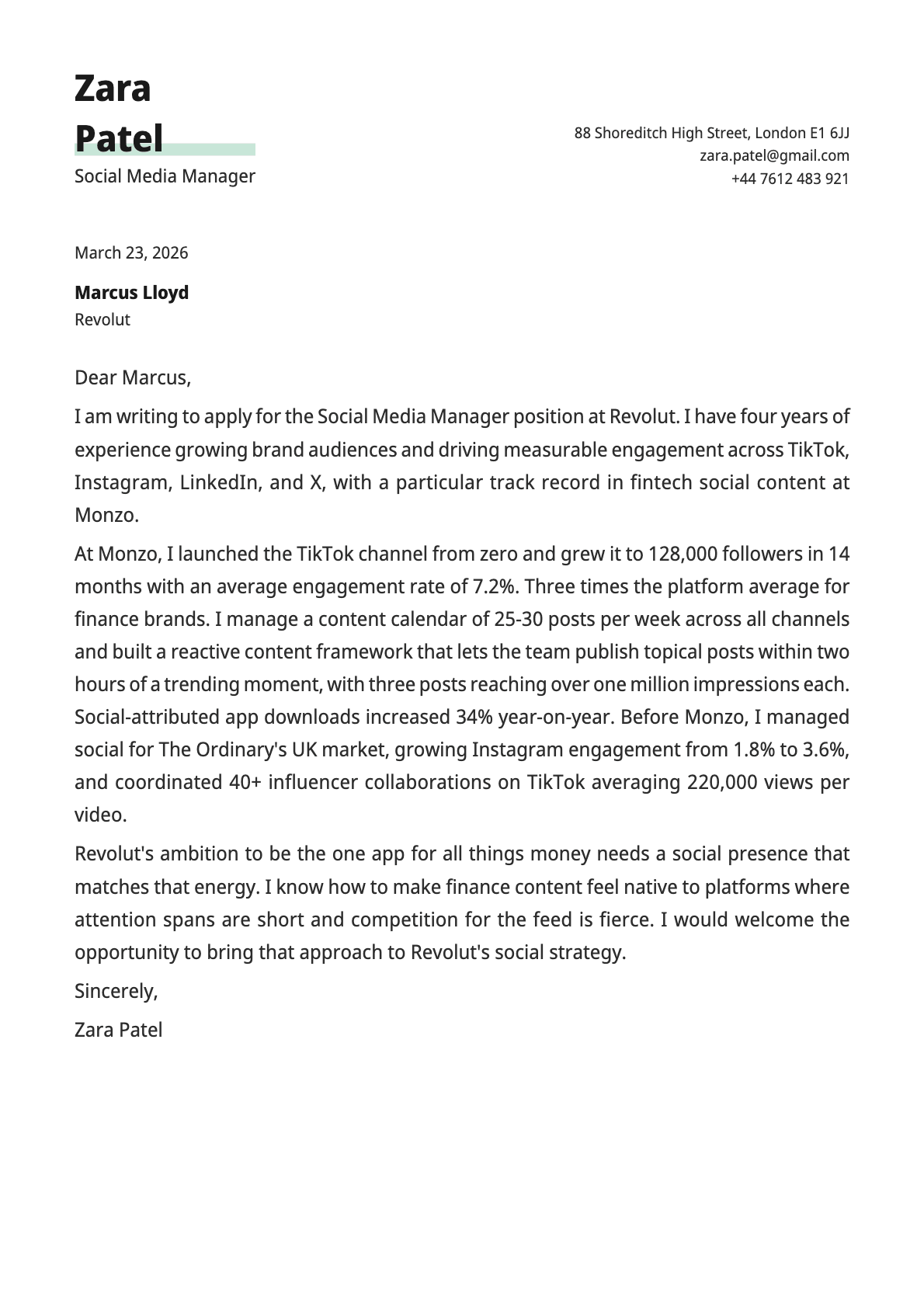
A social media manager cover letter example targeting Revolut.
Content Writer
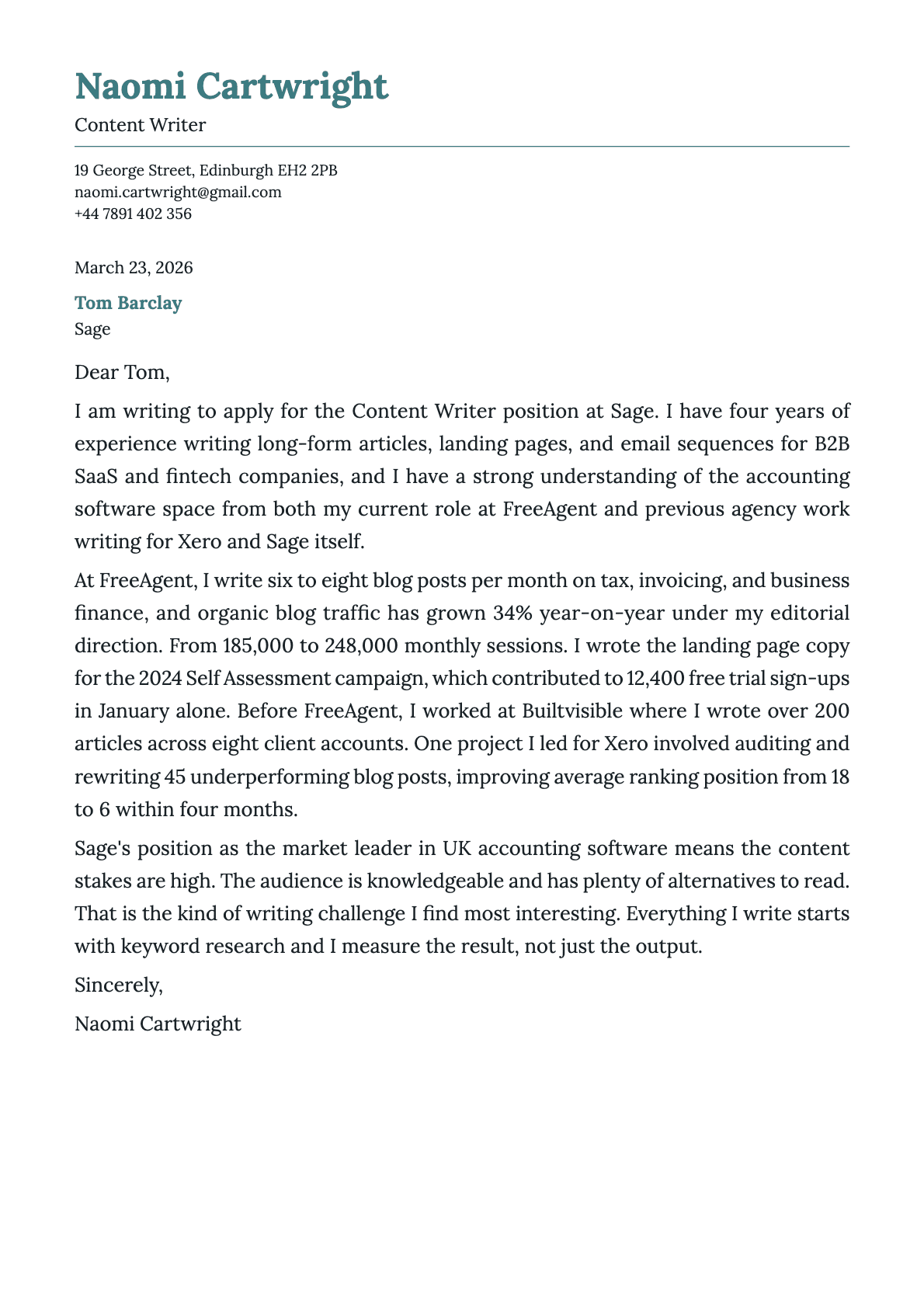
A content writer cover letter example targeting a B2B SaaS role at Sage.
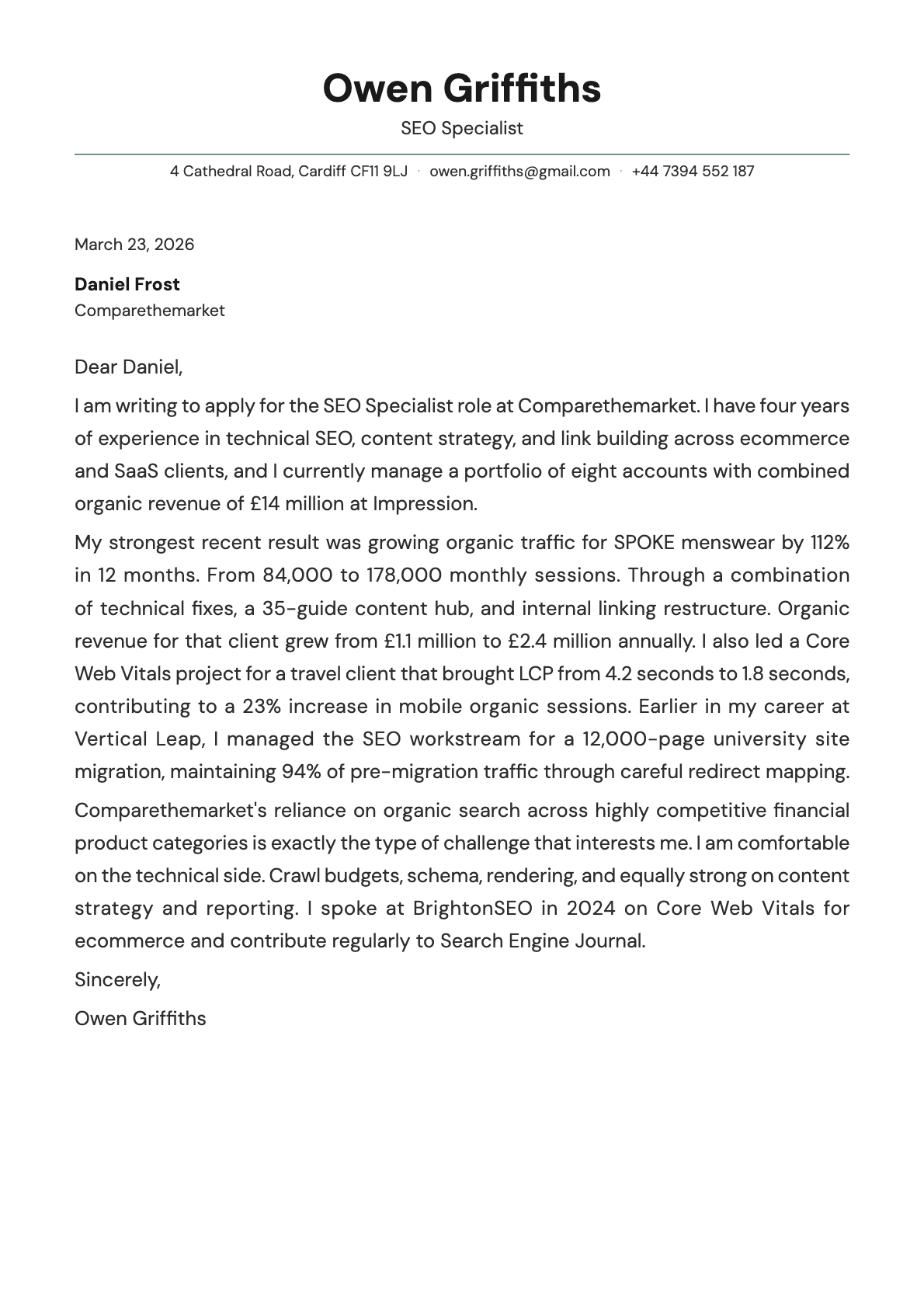
SEO Specialist
An SEO specialist cover letter example targeting Comparethemarket.
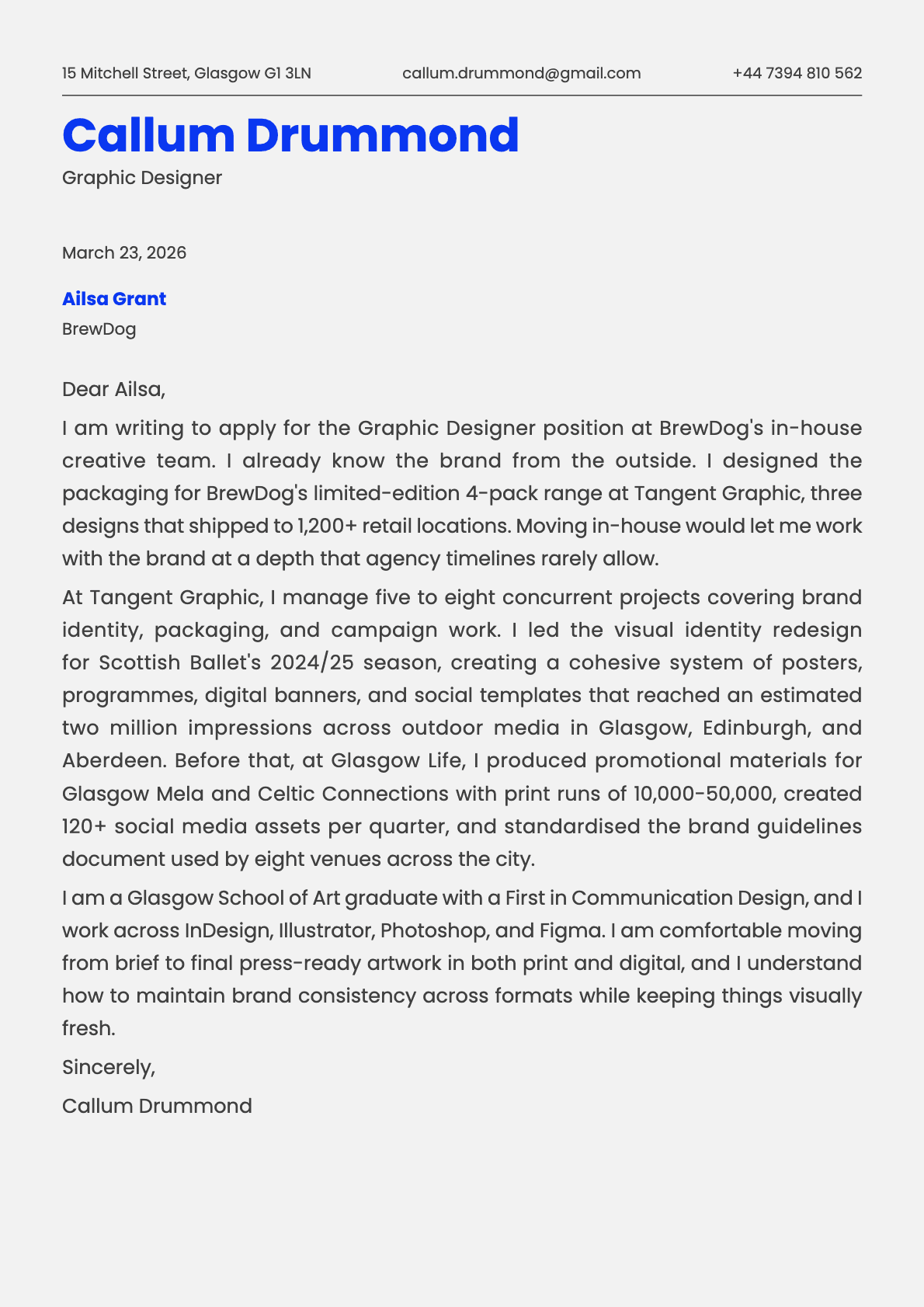
Graphic Designer
A graphic designer cover letter example targeting an in-house role at BrewDog.
Related articles

AI Is Screening Your Resume Before Any Human Sees It
AI screens most resumes before a human ever reads them. 97.4% of Fortune 500 companies run an ATS. This is what that means for you and what you can do about it.

The Best Resume Builders in 2026, Compared Honestly
Resume.io, Zety, Enhancv, Kickresume, Teal, and Laddro compared honestly: real pricing, free tiers, mobile apps, and where each tool wins. All prices checked in September 2026.

Burnout Recovery: A Real Timeline, Not 'Take a Bubble Bath'
55% of the U.S. workforce is burned out. Recovery takes 3 to 12 months. Here's what that actually looks like, stage by stage.