Copywriter Resume Example
A copywriter resume example with McCann and Saatchi & Saatchi experience. See how to showcase your portfolio, campaign results, and tone of voice.

Laddro Team
Free to use. No account needed to start.
Free to use. No account needed to start.
Overview
Most copywriter resumes read like a generic list of soft skills. "Creative thinker with a flair for words." That tells a creative director nothing. They want to see what you have written, who it was for, and whether it actually worked.
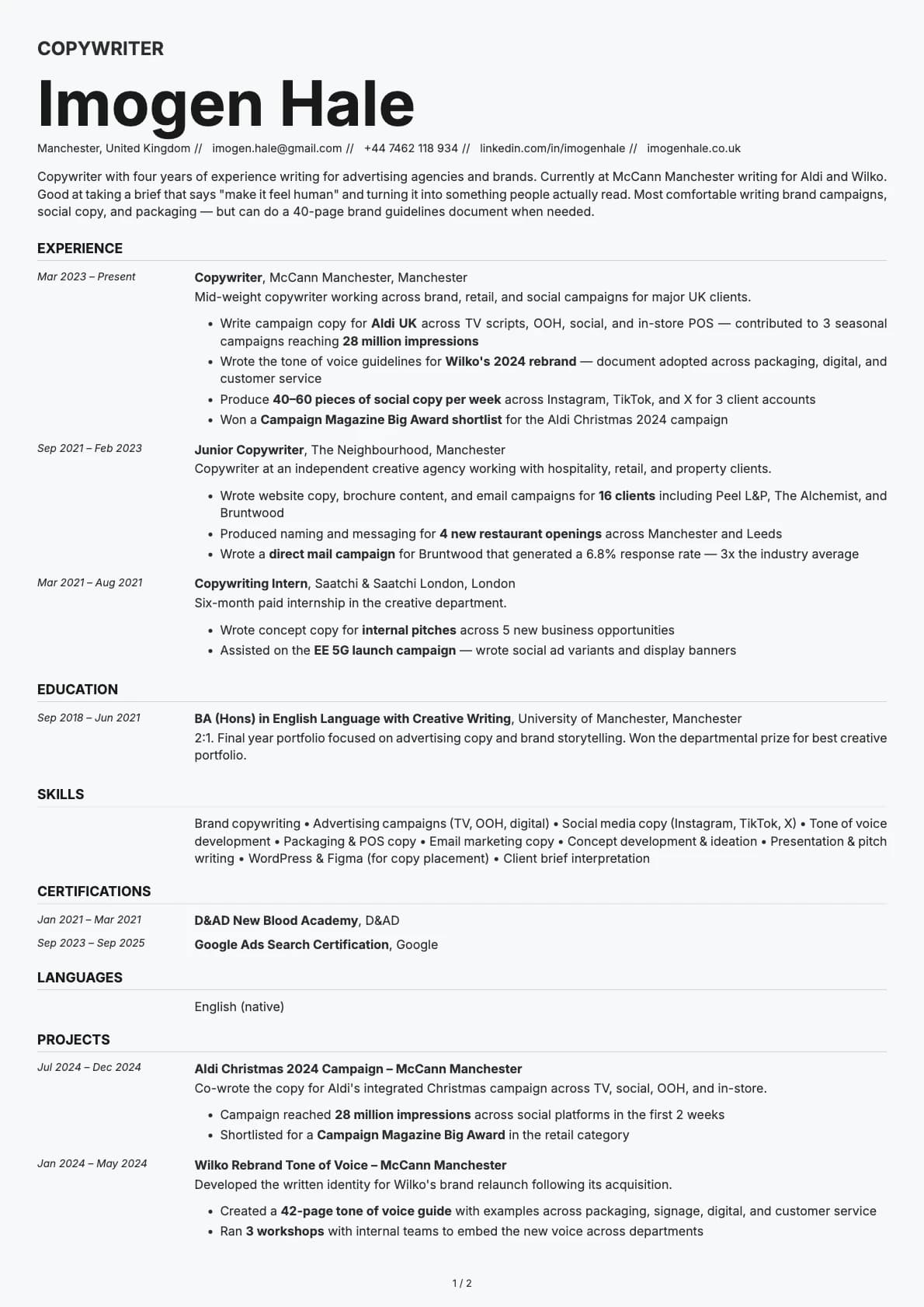
This resume belongs to a mid-weight copywriter with four years of experience across three agencies, including McCann Manchester and Saatchi & Saatchi. She currently writes for Aldi and Wilko. What makes it work is that every bullet point names a client, a deliverable, or a result. There is no vague talk about "crafting compelling narratives." Just real campaigns with real numbers.
Let us walk through each section and show you how to do the same.
Your summary should read like a pitch, not a bio
Creative directors skim resumes fast. Your summary needs to answer: How many years? Where do you work now? What kind of writing do you actually do?
Here is the summary from this resume:
Copywriter with four years of experience writing for advertising agencies and brands. Currently at McCann Manchester writing for Aldi and Wilko. Good at taking a brief that says "make it feel human" and turning it into something people actually read.
Notice the tone. It sounds like a real person, not a LinkedIn profile. It names two recognisable clients immediately. And it tells the reader what kind of briefs this person handles.
The formula: Years of experience + current agency and clients + what type of copy you write best. That is it. Three sentences, maximum.
Name the clients. Name the campaigns.
This is where copywriter resumes live or die. Your experience section needs specifics, not descriptions of your job.
Look at this bullet:
"Write campaign copy for Aldi UK across TV scripts, OOH, social, and in-store POS, contributed to 3 seasonal campaigns reaching 28 million impressions"
That is one sentence and the reader already knows: it is a major client, the work spans multiple channels, and there is a number attached. Compare that to "wrote copy for various advertising campaigns." Same job. Completely different impression.
Here is another strong one from the junior role:
"Wrote a direct mail campaign for Bruntwood that generated a 6.8% response rate, 3x the industry average"
Even at a small independent agency, this person found a way to quantify the result. Direct mail has a known average response rate. Beating it by 3x is worth stating.
What to do: For every role, list the biggest clients by name. Pick your best 2-3 deliverables and attach a number. It can be impressions, response rates, word counts, or even how many pieces you produce per week ("40-60 pieces of social copy per week" is a legitimate proof point).
Show range, not just headlines
Agencies hire copywriters who can switch between a TV script and a 40-page brand guidelines document. This resume shows that range:
- TV scripts and OOH for Aldi
- Tone of voice guidelines for Wilko's rebrand (a 42-page document)
- Social copy across Instagram, TikTok, and X
- Direct mail and email campaigns at The Neighbourhood
If you only list campaign work, the reader might wonder whether you can handle the less glamorous stuff. And if you only list web copy, they might not think you can do big ideas. Show both.
The internship still matters
Even a 6-month internship at a good agency carries weight if you describe it properly. Look at how this resume handles the Saatchi & Saatchi placement:
"Wrote concept copy for internal pitches across 5 new business opportunities"
"Assisted on the EE 5G launch campaign, wrote social ad variants and display banners"
Two bullets. No fluff. The reader knows this person contributed to real pitches and a real campaign during their internship. If you have agency internship experience, do not bury it under vague descriptions. Name the campaigns. Name the brands.
Awards and side projects
In advertising, awards matter. They are how agencies prove the quality of their work, and by extension, yours. This resume mentions a Campaign Magazine Big Award shortlist. Even a shortlist is worth including.
But do not pad the awards section with participation certificates. If you have not won anything yet, skip this section entirely and use the space for something else. The Wilko tone of voice project on this resume is arguably more impressive than most awards because it shows the person can do strategic, long-form work that shapes an entire brand.
Side projects also carry weight in this industry. This person co-hosts a copywriting podcast and mentors design students. Both signal someone who is genuinely engaged with the craft, not just clocking in and out.
Mistakes that cost interviews
Submitting a resume without a portfolio link. In copywriting, your resume opens the door. Your portfolio closes the deal. Always include a link to your website or book. This resume includes imogenhale.co.uk in the header.
Listing "Microsoft Office" as a skill. Everyone has it. Replace it with tools that actually matter for the job: Figma (for reviewing layouts), WordPress (if you publish content), or any project management tool the agency uses.
Writing your resume in a boring, corporate voice. Your resume IS a writing sample. If it reads like a legal document, the creative director will assume your copy does too. Write it the way you would write for a client. This resume does that well.
Not showing volume. Agencies need to know you can handle pace. "40-60 pieces of social copy per week" tells the reader this person can produce under pressure. If your output is high, say so.
One last thing
Your resume is the first piece of copy the creative director reads from you. Treat it like a brief. Know your audience (they have seen 200 of these this month). Know your objective (get to the portfolio review stage). And keep it tight. Every word on the page should earn its place, just like in an ad.
Build your own version
Open this layout in the builder and swap in your own details. It takes a few minutes.
Free to use. No account needed to start.
Was this resume example helpful?
Rate this example to help us create better content for you.
4.7 average from 132 ratingsRelated resume examples
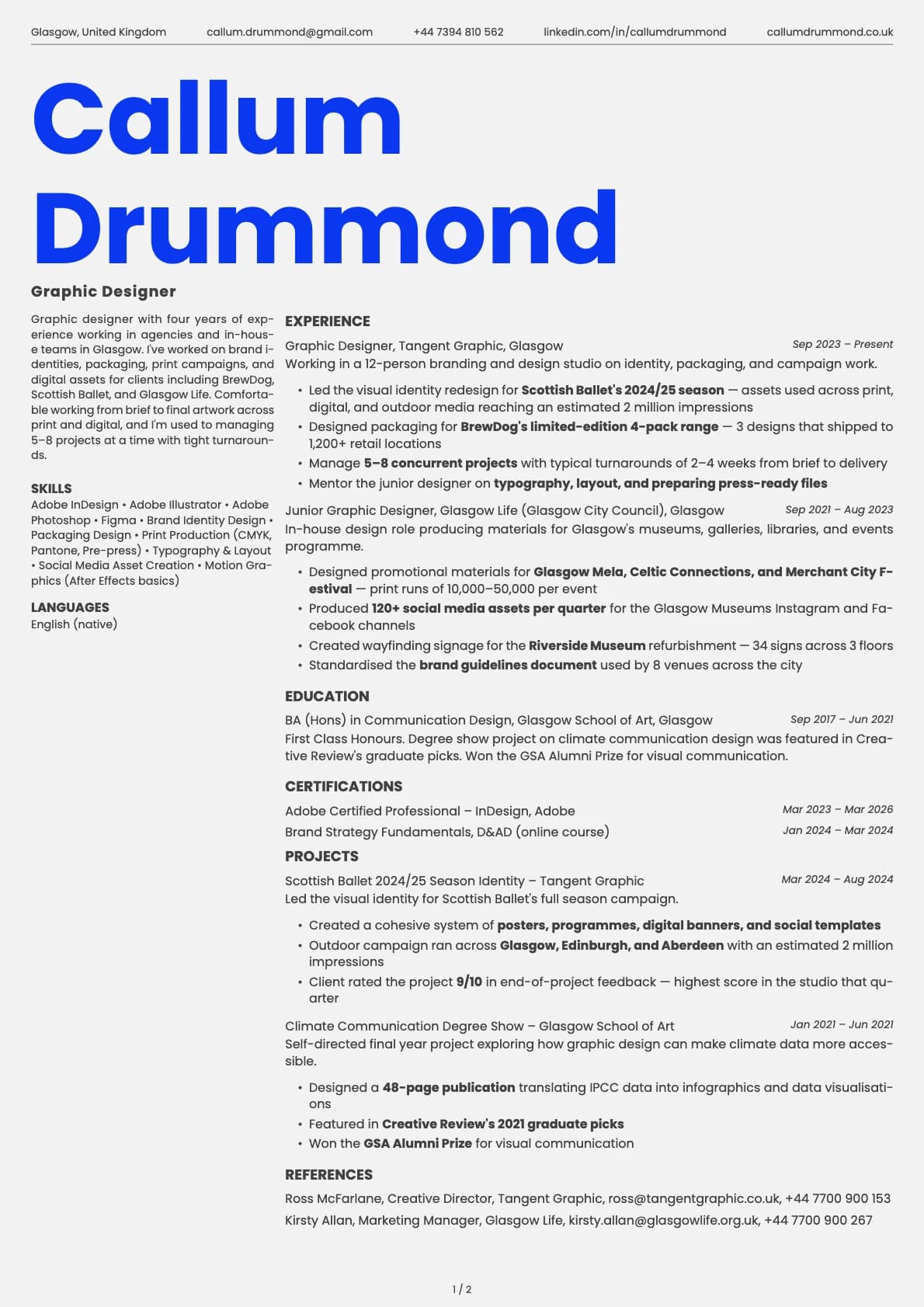
Graphic Designer
A graphic designer resume example with agency and in-house experience in branding, packaging, and print.
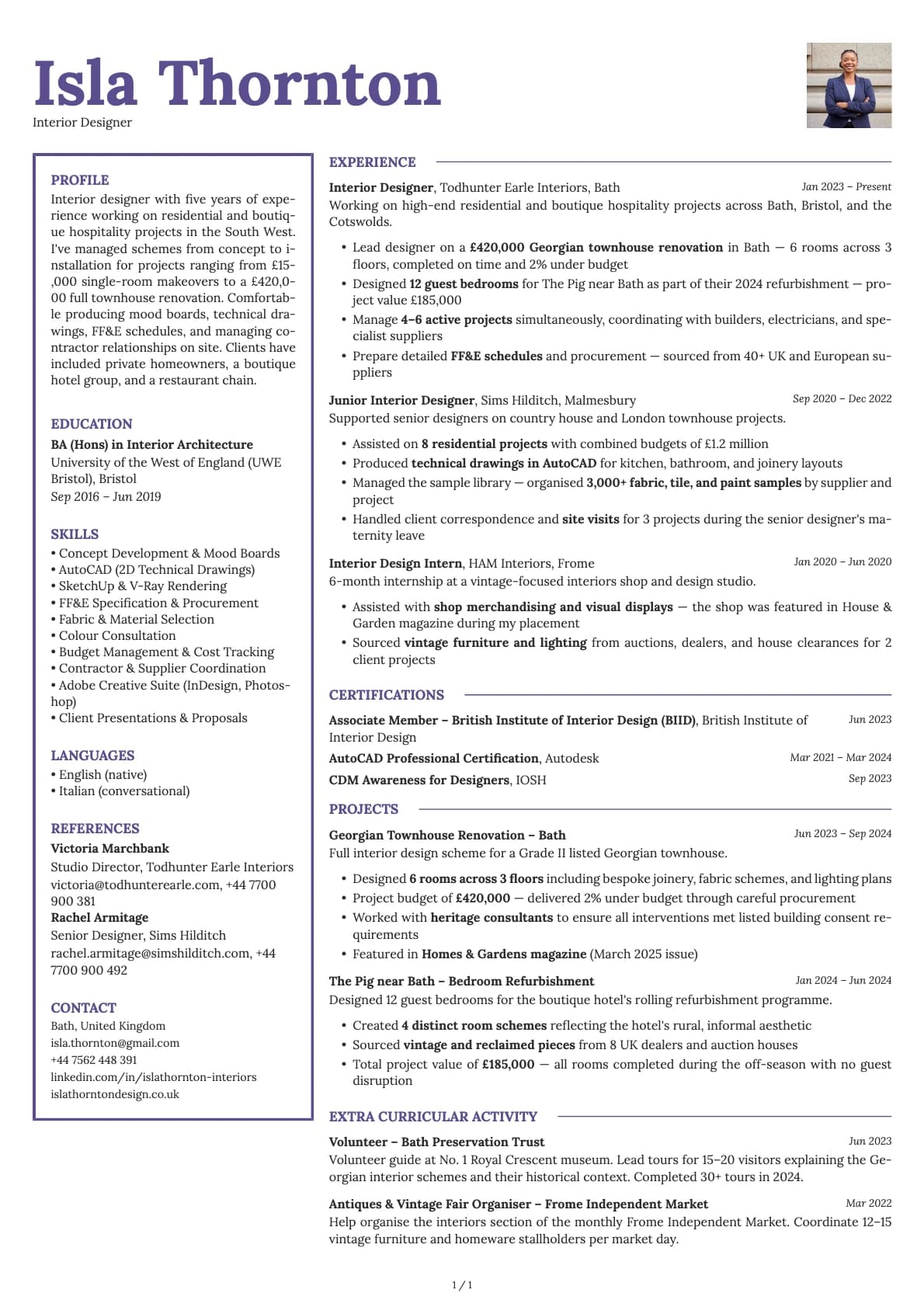
Interior Designer
An interior designer resume example with project budgets, client types, and FF&E details. See how to present residential and hospitality design experience.
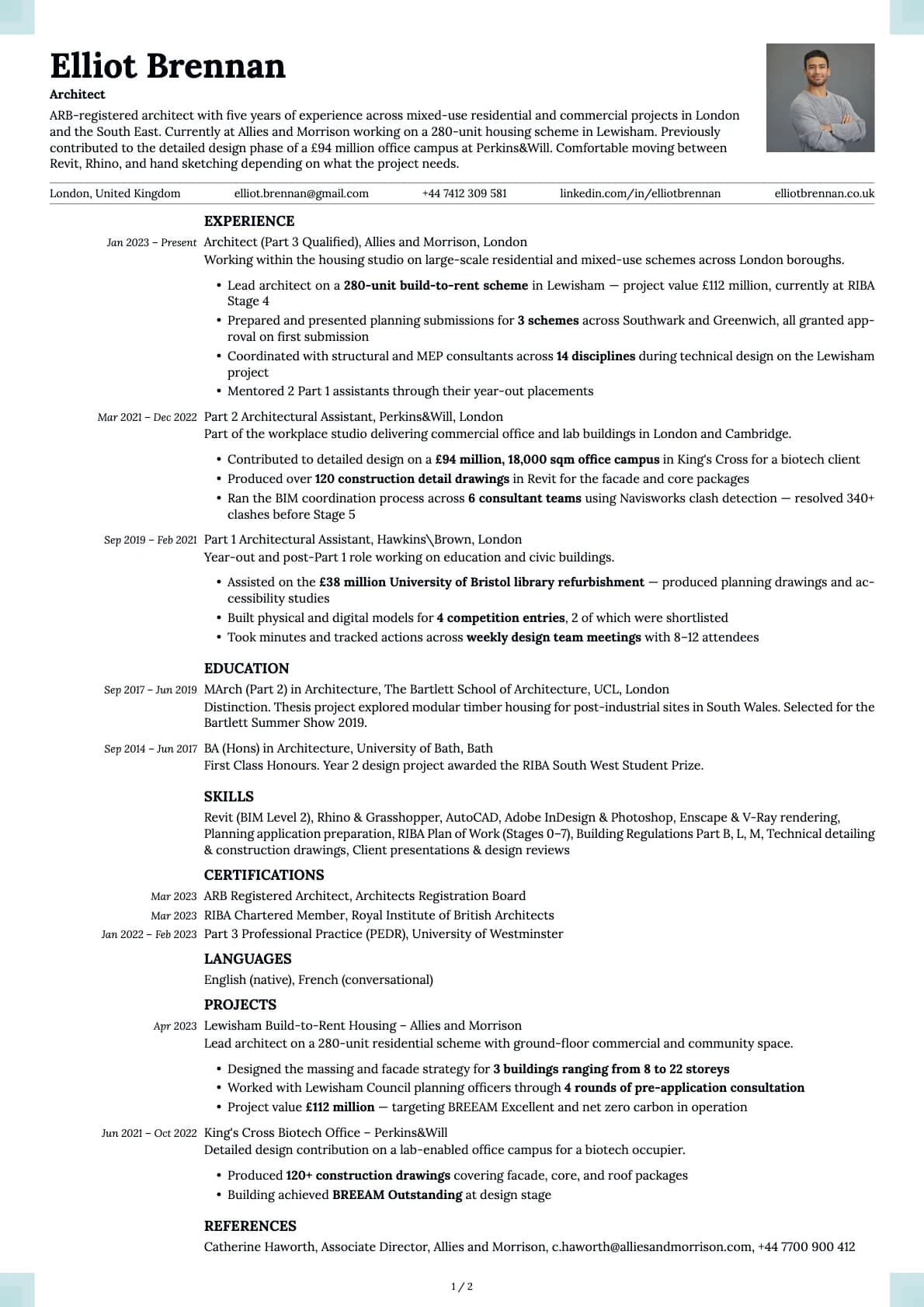
Architect
An ARB-registered architect resume example with RIBA Stage 4 project experience, BIM coordination.
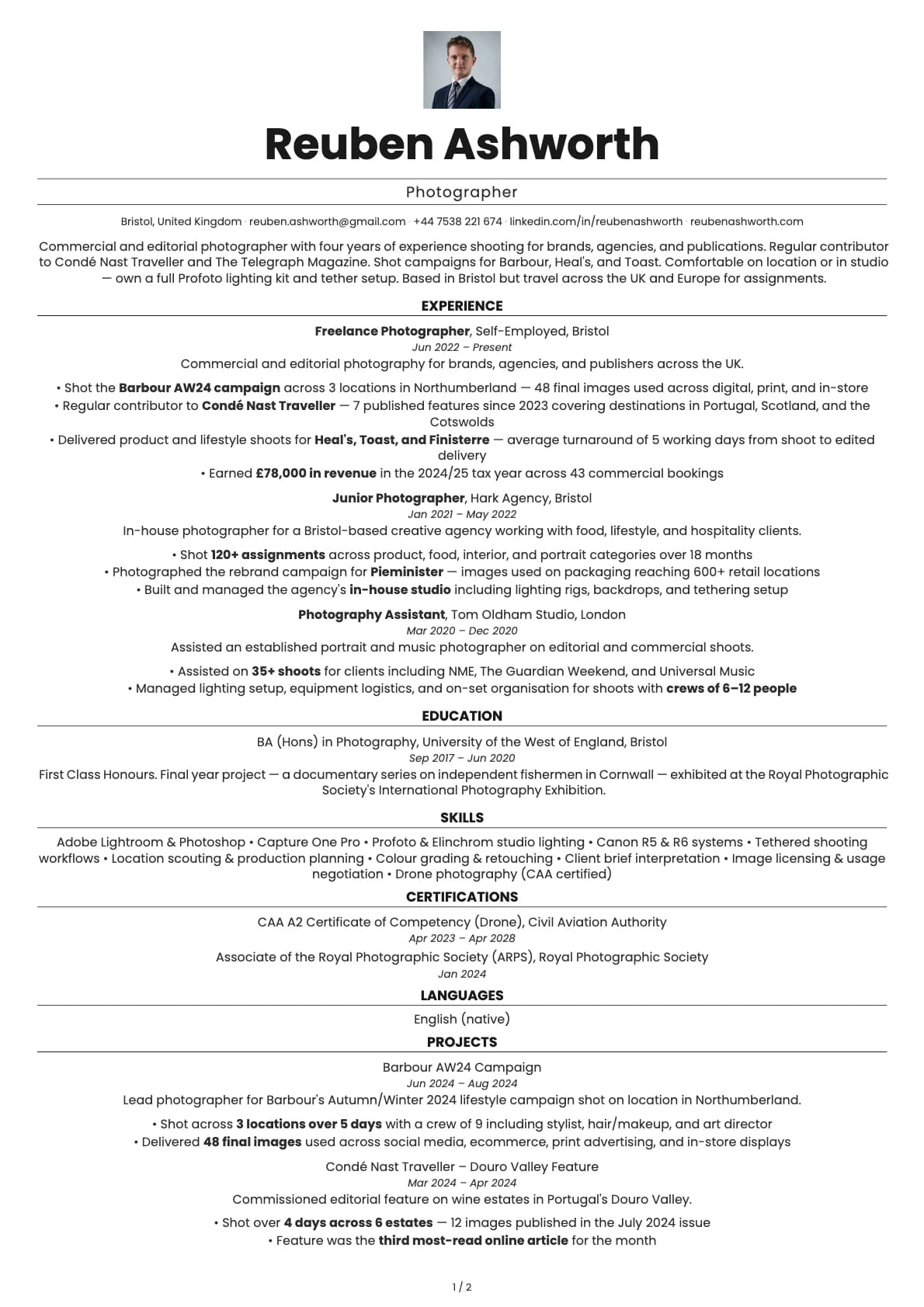
Photographer
A photographer resume example with commercial campaign work, editorial credits, and revenue figures from a freelance career.
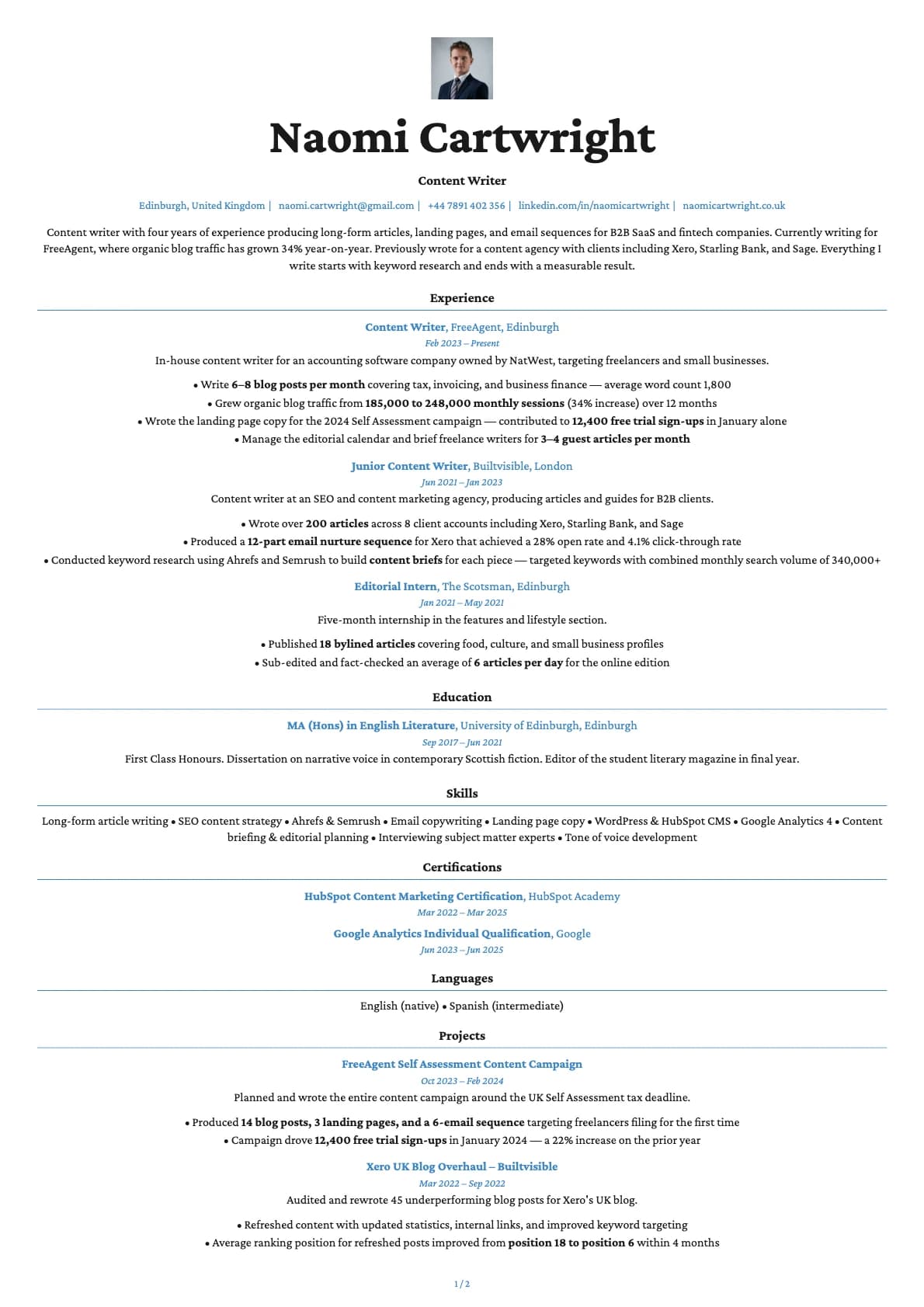
Content Writer
A content writer resume example with in-house and agency experience writing for FreeAgent, Xero, and Starling Bank.
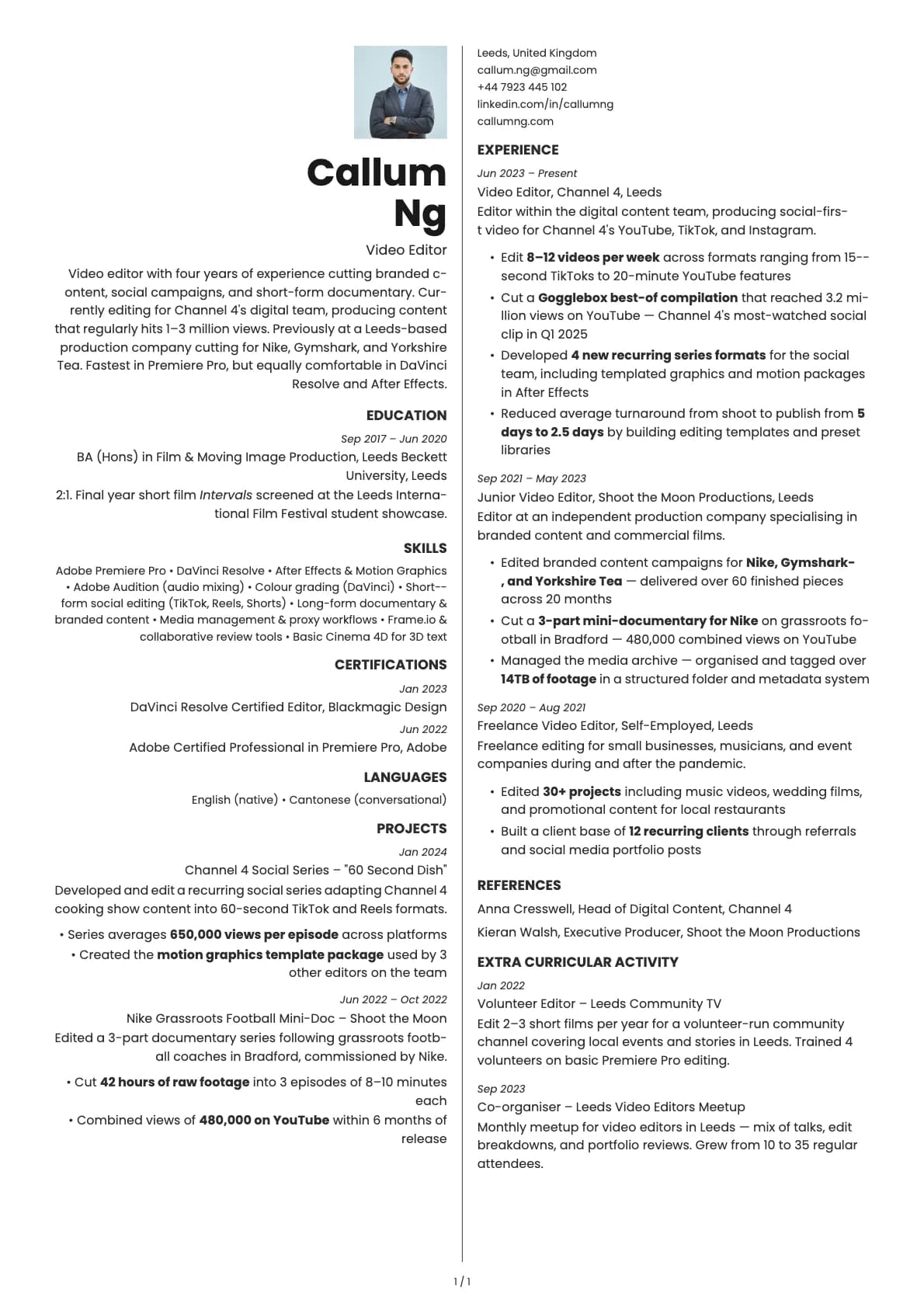
Video Editor
A video editor resume example with 4 years of experience cutting branded content and social video at Channel 4.
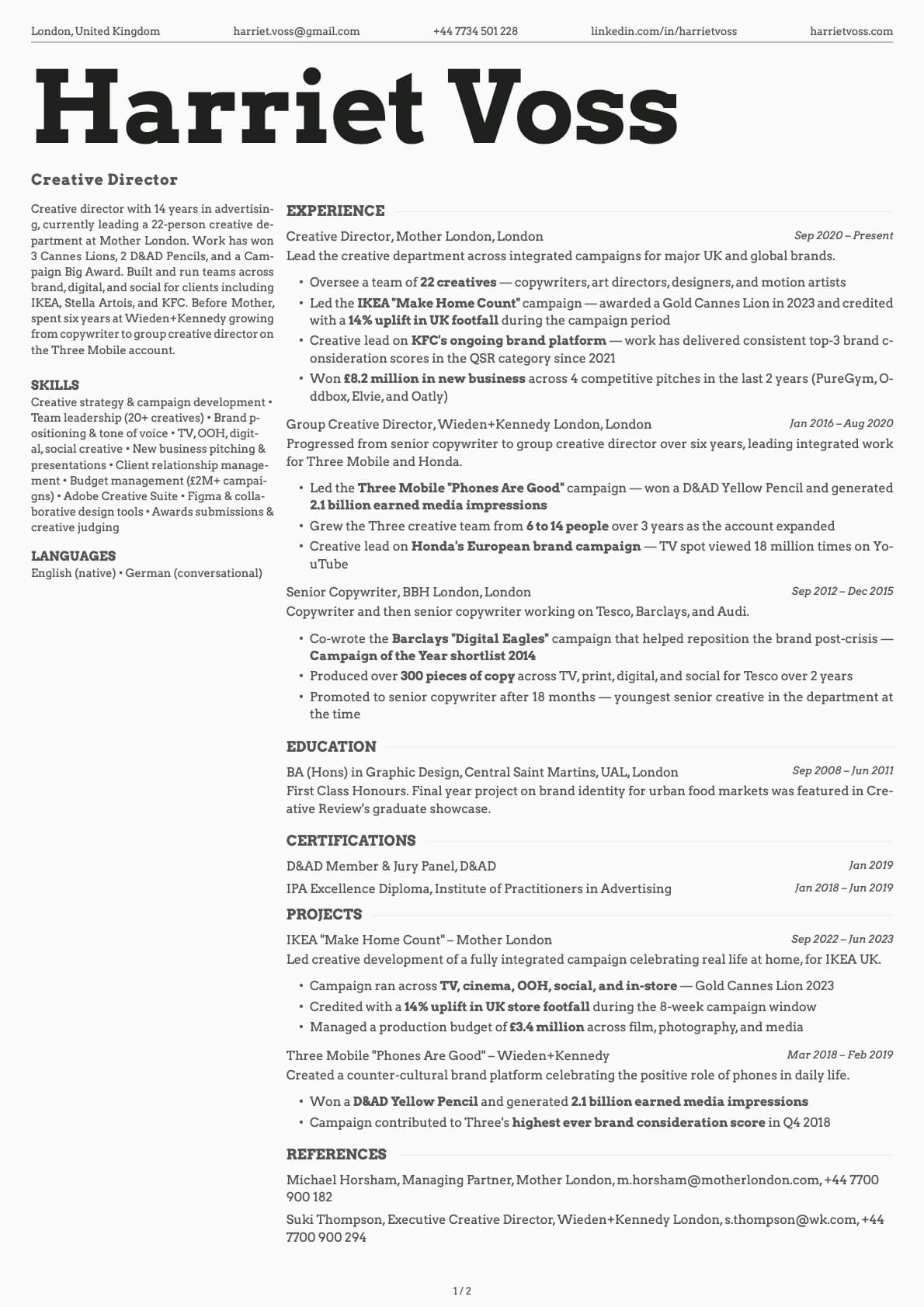
Creative Director
A creative director resume example with 14 years in advertising, Cannes Lions wins.
Related articles

AI Is Screening Your Resume Before Any Human Sees It
AI screens most resumes before a human ever reads them. 97.4% of Fortune 500 companies run an ATS. This is what that means for you and what you can do about it.

The Best Resume Builders in 2026, Compared Honestly
Resume.io, Zety, Enhancv, Kickresume, Teal, and Laddro compared honestly: real pricing, free tiers, mobile apps, and where each tool wins. All prices checked in September 2026.

Burnout Recovery: A Real Timeline, Not 'Take a Bubble Bath'
55% of the U.S. workforce is burned out. Recovery takes 3 to 12 months. Here's what that actually looks like, stage by stage.