Photographer Resume Example
A photographer resume example with commercial campaign work, editorial credits, and revenue figures from a freelance career.

Laddro Team
Free to use. No account needed to start.
Free to use. No account needed to start.
Overview
Most photographers do not think they need a resume. Portfolio first, resume second. And for many gigs, that is true. But when you are pitching to an agency, applying for an in-house role, or responding to a brand RFP, a well-written resume does something your portfolio cannot: it shows the business side. Budgets you have managed, turnaround times, client names, revenue.
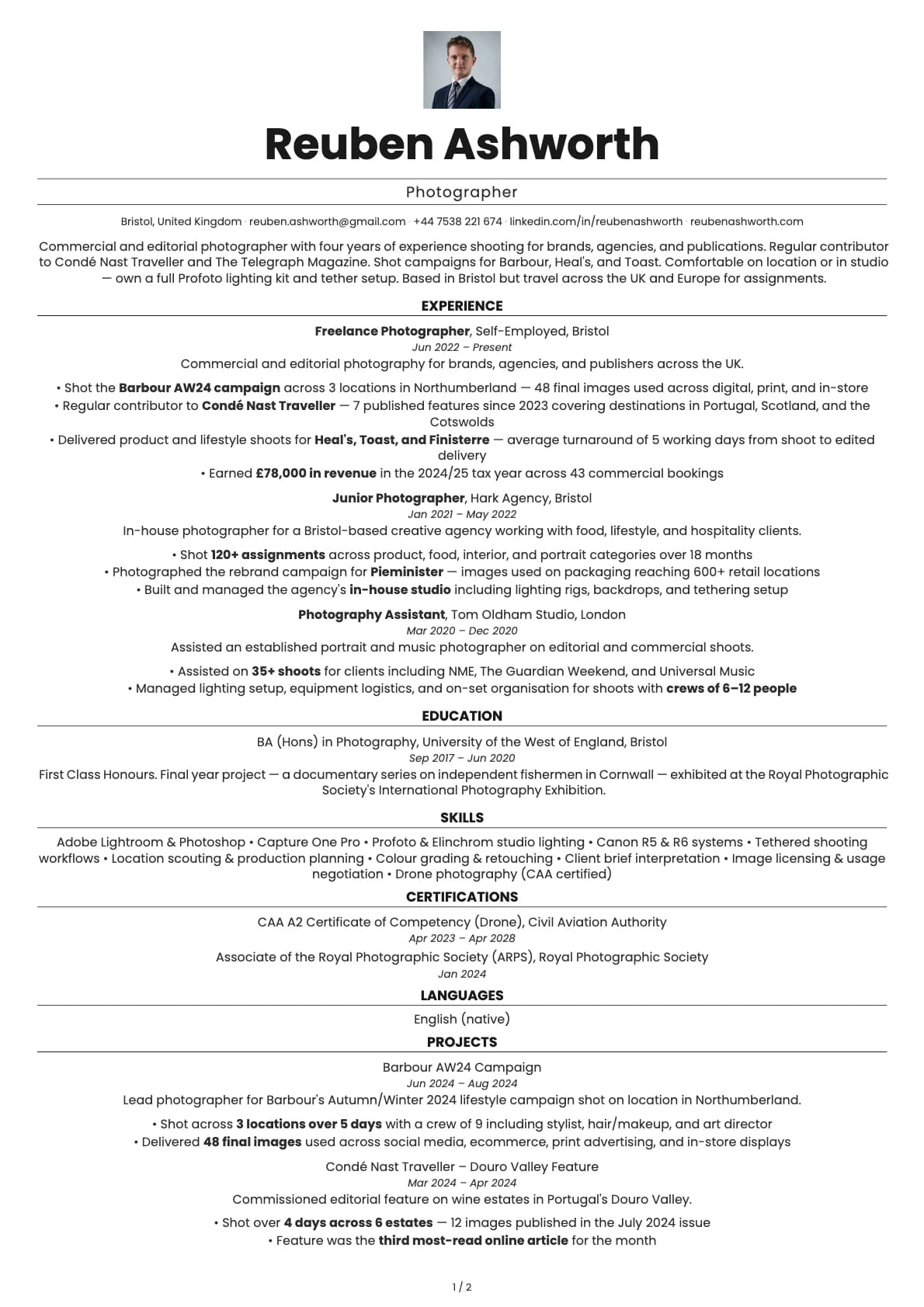
This resume belongs to Reuben Ashworth, a commercial and editorial photographer based in Bristol with four years of experience. He shoots for brands like Barbour, Heal's, and Toast, and regularly contributes to Conde Nast Traveller and The Telegraph Magazine. Before going freelance, he was a junior photographer at a creative agency and assisted an established portrait photographer in London.
Let us look at why this resume works and how to apply the same approach to yours.
Your summary is a pitch, not a bio
Photographers often write summaries that sound like an Instagram bio. "Creative visual storyteller with a keen eye for light and composition." Nobody hiring a photographer needs to be told you have a keen eye. They assumed that when you applied.
Reuben's summary takes a different approach. It names his clients (Barbour, Heal's, Toast), his editorial credits (Conde Nast Traveller, The Telegraph Magazine), and his practical capabilities (Profoto lighting kit, tether setup). He even mentions he is based in Bristol but travels for assignments.
That summary answers every question an art director or brand manager would have before opening his portfolio: Who has he shot for? What kind of work? Is he set up for studio and location? Will he travel?
For yours: Name your biggest clients or publications. Say what kind of photography you do. Mention your kit or setup if it is relevant. Skip the adjectives entirely.
How to write experience when you are freelance
Freelance photographers struggle with the experience section because the work is project-based, not role-based. Reuben handles this well by treating his freelance career as a single job entry with bullet points that highlight different types of work.
Look at these bullets:
"Shot the Barbour AW24 campaign across 3 locations in Northumberland, 48 final images used across digital, print, and in-store"
"Regular contributor to Conde Nast Traveller, 7 published features since 2023"
"Earned £78,000 in revenue in the 2024/25 tax year across 43 commercial bookings"
Each bullet shows a different thing: a major brand campaign, ongoing editorial work, and business viability. That last one is important. If you are freelance and applying for contract or retainer work, showing that you run a real business with real revenue tells the client you are professional and reliable.
The formula for freelance bullets: Client name + what you shot + how it was used (or the result).
Earlier roles: show the progression
Even if you are fully freelance now, showing where you started adds credibility. Reuben's resume includes his junior role at Hark Agency (120+ assignments, built the in-house studio) and his assistant role at Tom Oldham Studio (35+ shoots for NME, The Guardian Weekend).
The assistant role is especially useful. It shows he learned from an established photographer and worked with real publications from early on. If you assisted anyone whose name carries weight, include it. Art directors and editors notice.
For in-house roles, focus on volume and variety. "Shot 120+ assignments across product, food, interior, and portrait categories" tells the reader this person can handle any brief, not just one niche.
Skills: gear and software, not soft skills
A photographer's skills section should be technical and practical. Reuben lists Adobe Lightroom & Photoshop, Capture One Pro, Profoto & Elinchrom lighting, Canon R5 & R6 systems, tethered shooting workflows, and drone photography (CAA certified).
Notice what is NOT there: "creative thinking," "time management," or "teamwork." Those are implied by the work itself. The skills section is for tools, software, and certifications that a client or employer can check against their requirements.
If you shoot drone footage, list your CAA certification. If you work with specific camera systems or lighting brands, name them. If you use Capture One instead of Lightroom (or both), say so. These details matter when someone is deciding whether you can work with their existing workflow.
Certifications photographers actually need
Reuben has two: his CAA A2 Certificate of Competency for drone work and his ARPS (Associate of the Royal Photographic Society). The drone cert is practical. More brands want aerial shots, and you cannot legally fly commercially without it. The ARPS is an industry recognition that adds credibility, especially for editorial work.
If you have a drone license, list it. If you have completed any recognised photography qualifications or industry accreditations, include them. But do not pad this section with weekend workshops. Stick to certifications that a client would actually care about.
Mistakes photographers make on their resumes
No client names. If you have shot for recognisable brands or publications, name them. "Shot campaigns for various fashion and lifestyle brands" is vague. "Shot campaigns for Barbour, Heal's, and Toast" is specific and immediately credible.
No numbers. How many images were delivered? How many publications featured your work? What was the turnaround time? Numbers make abstract creative work feel concrete and professional.
Ignoring the business side. Revenue, number of bookings, turnaround times, crew sizes. These things matter to clients who need to know you can deliver on time and on budget.
Using a text-heavy template. Photographers should pick a template that is clean and visual. Reuben uses Quartz, which allows for a professional layout without competing with his portfolio. Your resume is not the place to showcase your design skills. Keep it simple and let your portfolio do that work.
One more thing
A photographer's resume is not a replacement for a portfolio. It is the document that sits next to it. The portfolio shows what your work looks like. The resume shows what it is like to work with you: your turnaround time, your client roster, your reliability, your business sense. Make sure both tell a consistent story.
Build your own version
Open this layout in the builder and swap in your own details. It takes a few minutes.
Free to use. No account needed to start.
Was this resume example helpful?
Rate this example to help us create better content for you.
4.7 average from 98 ratingsRelated resume examples
Graphic Designer
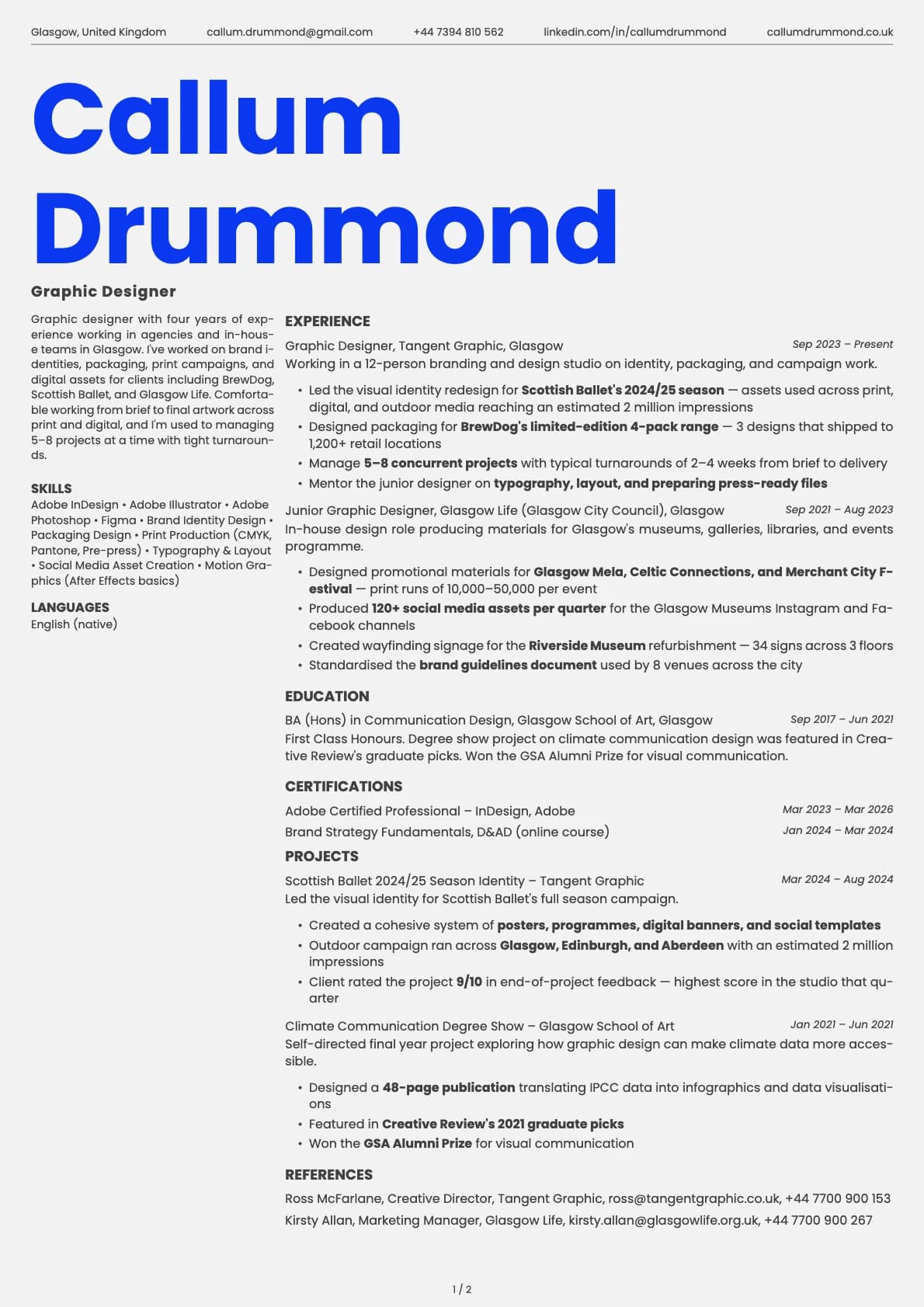
A graphic designer resume example with agency and in-house experience in branding, packaging, and print.
Interior Designer
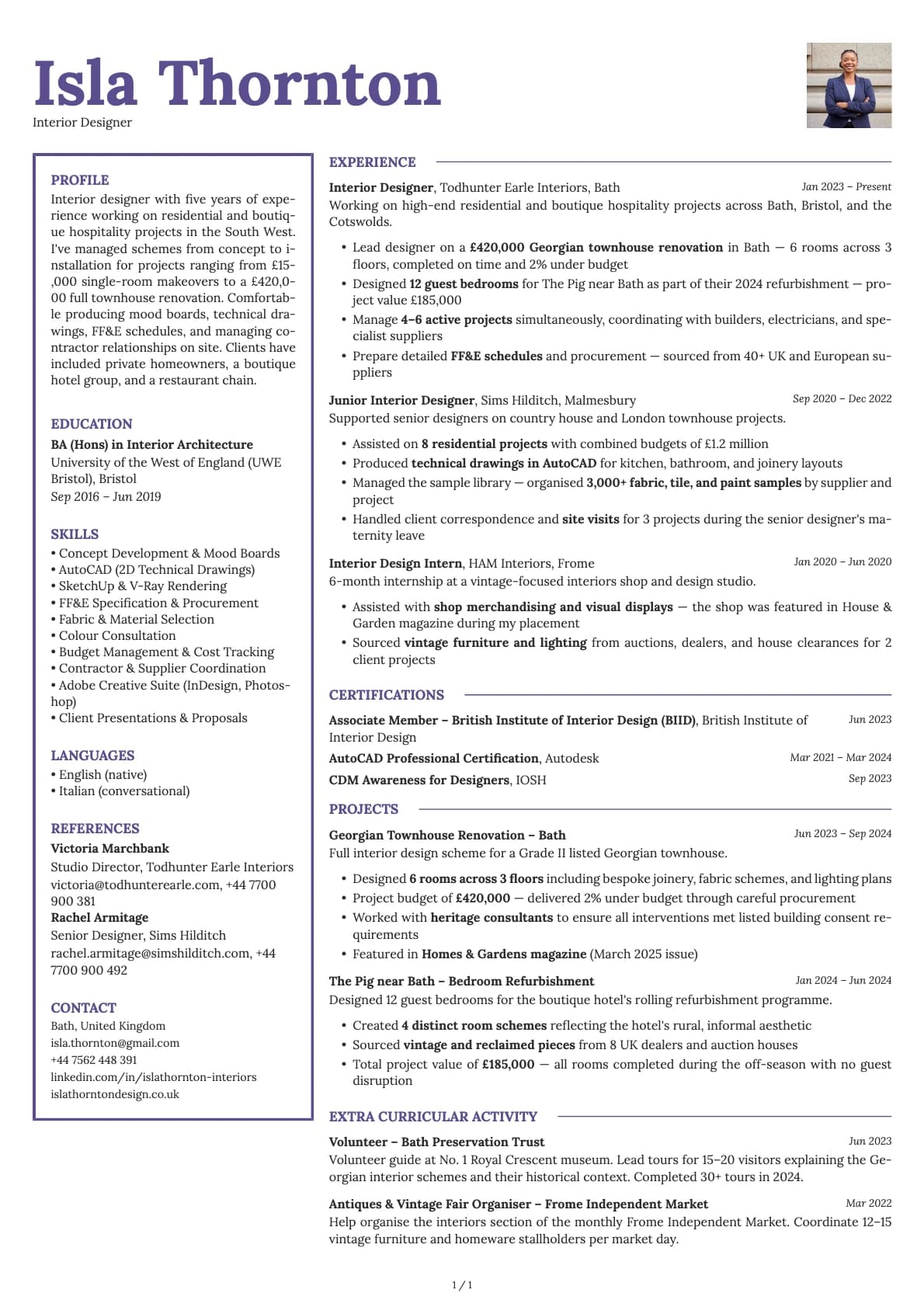
An interior designer resume example with project budgets, client types, and FF&E details. See how to present residential and hospitality design experience.
Architect
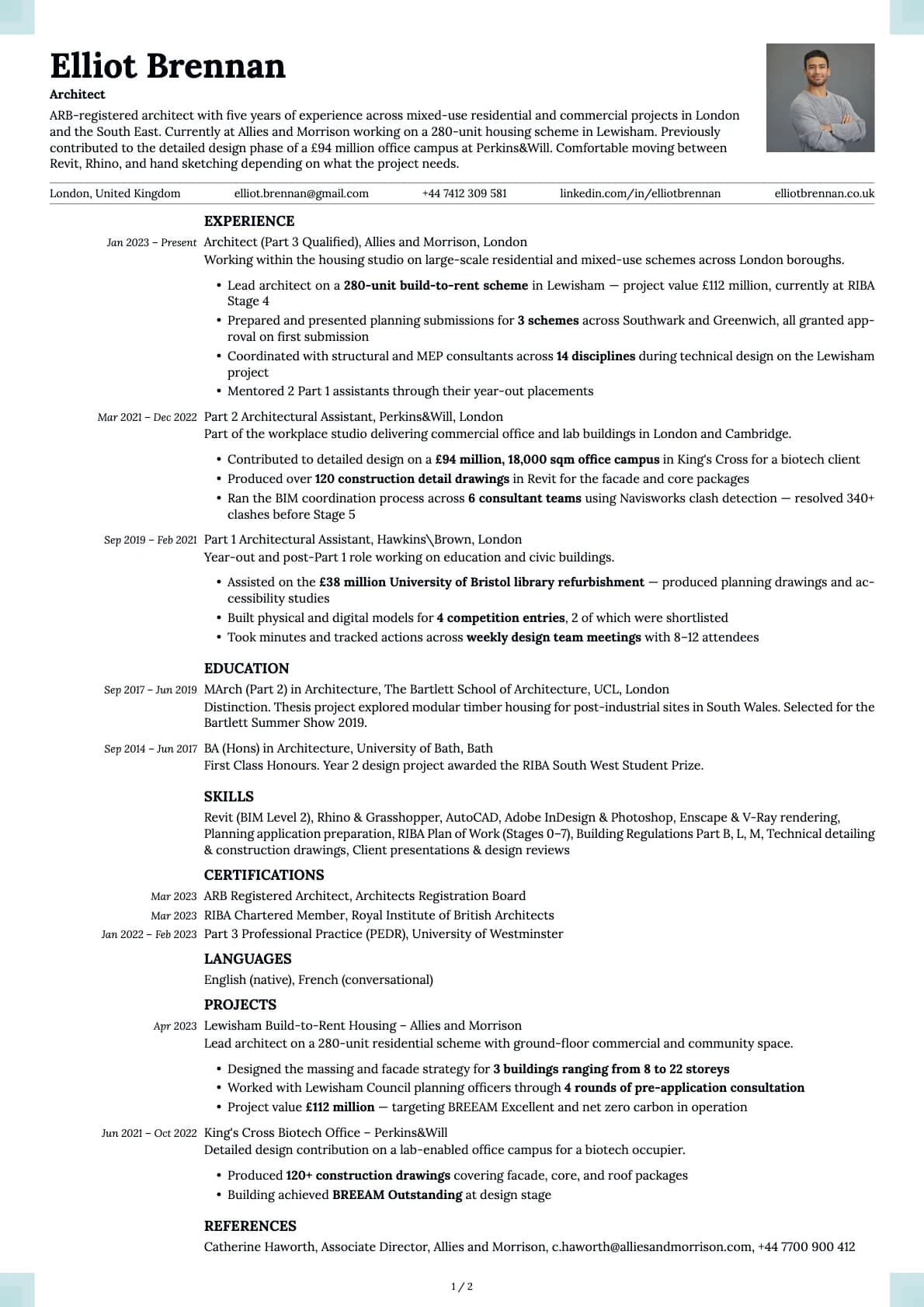
An ARB-registered architect resume example with RIBA Stage 4 project experience, BIM coordination.
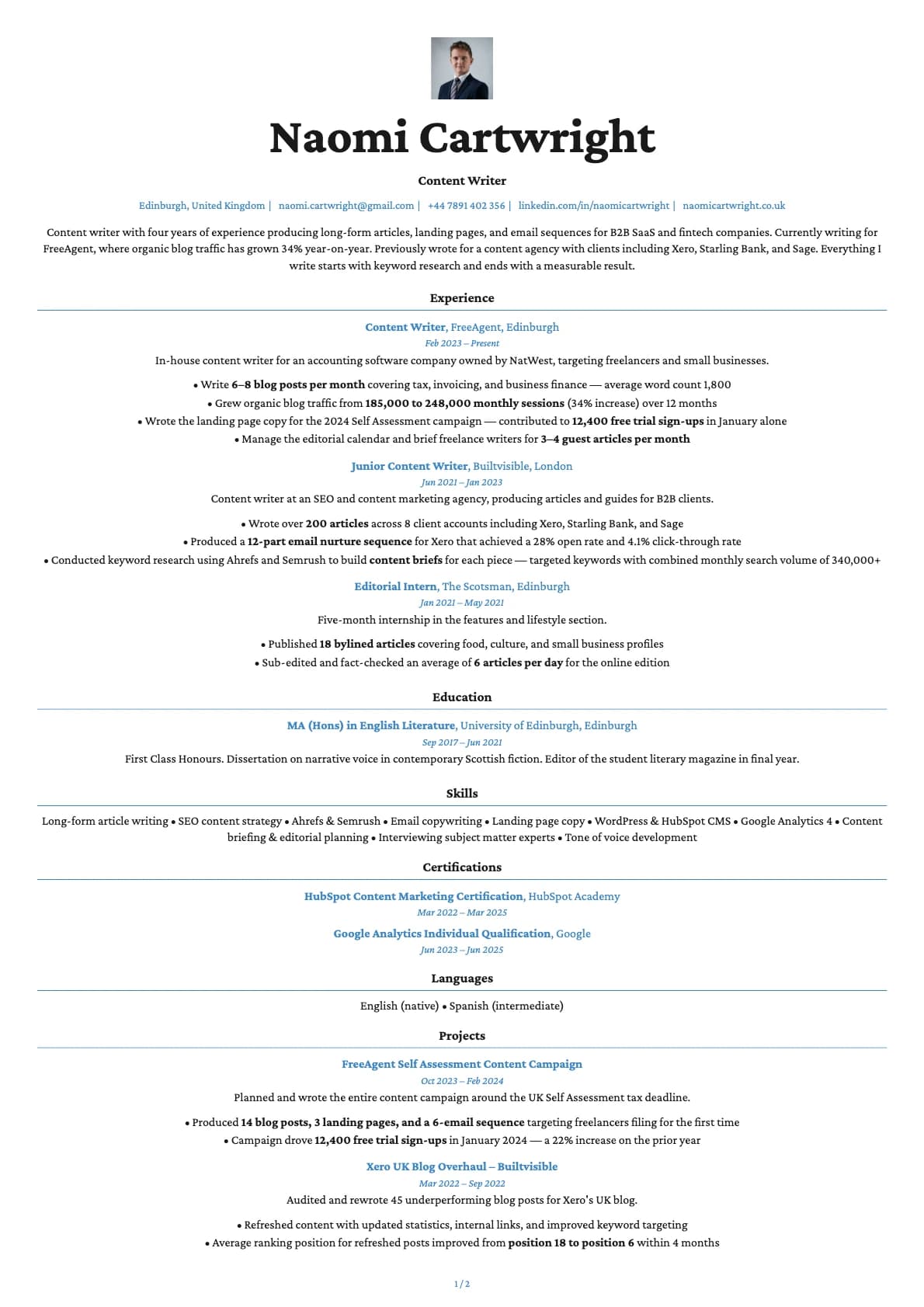
Content Writer
A content writer resume example with in-house and agency experience writing for FreeAgent, Xero, and Starling Bank.
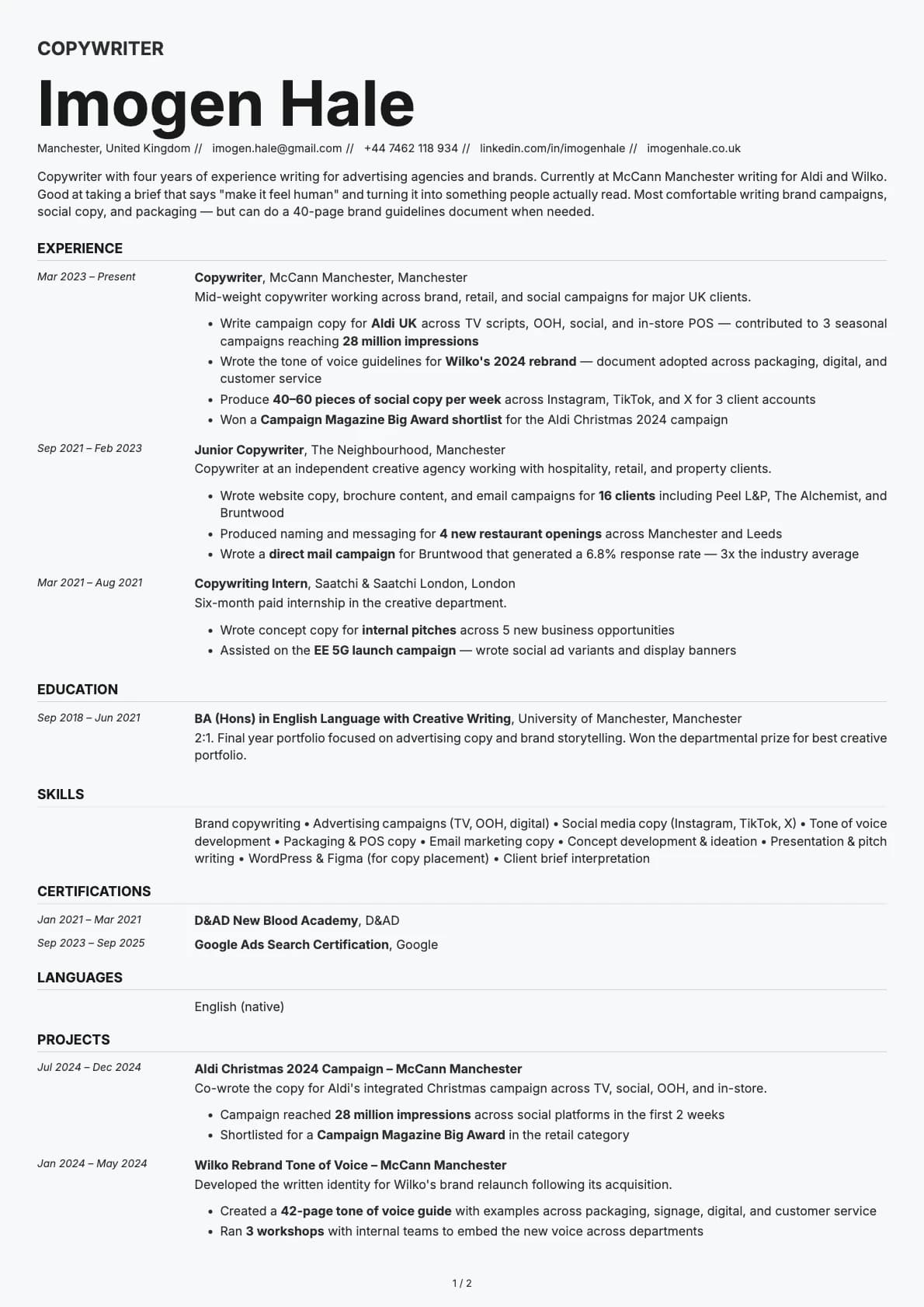
Copywriter
A copywriter resume example with McCann and Saatchi & Saatchi experience. See how to showcase your portfolio, campaign results, and tone of voice.
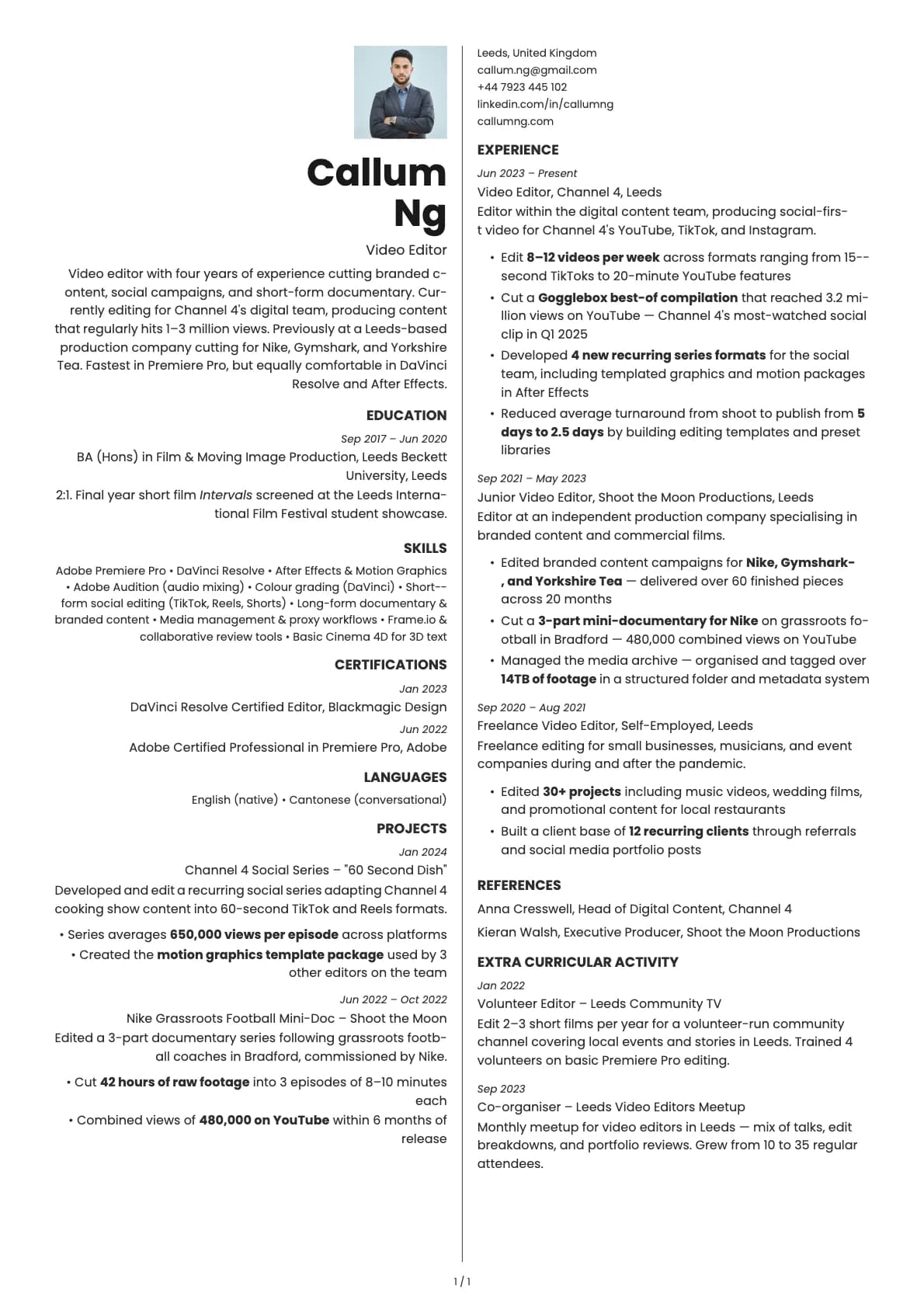
Video Editor
A video editor resume example with 4 years of experience cutting branded content and social video at Channel 4.
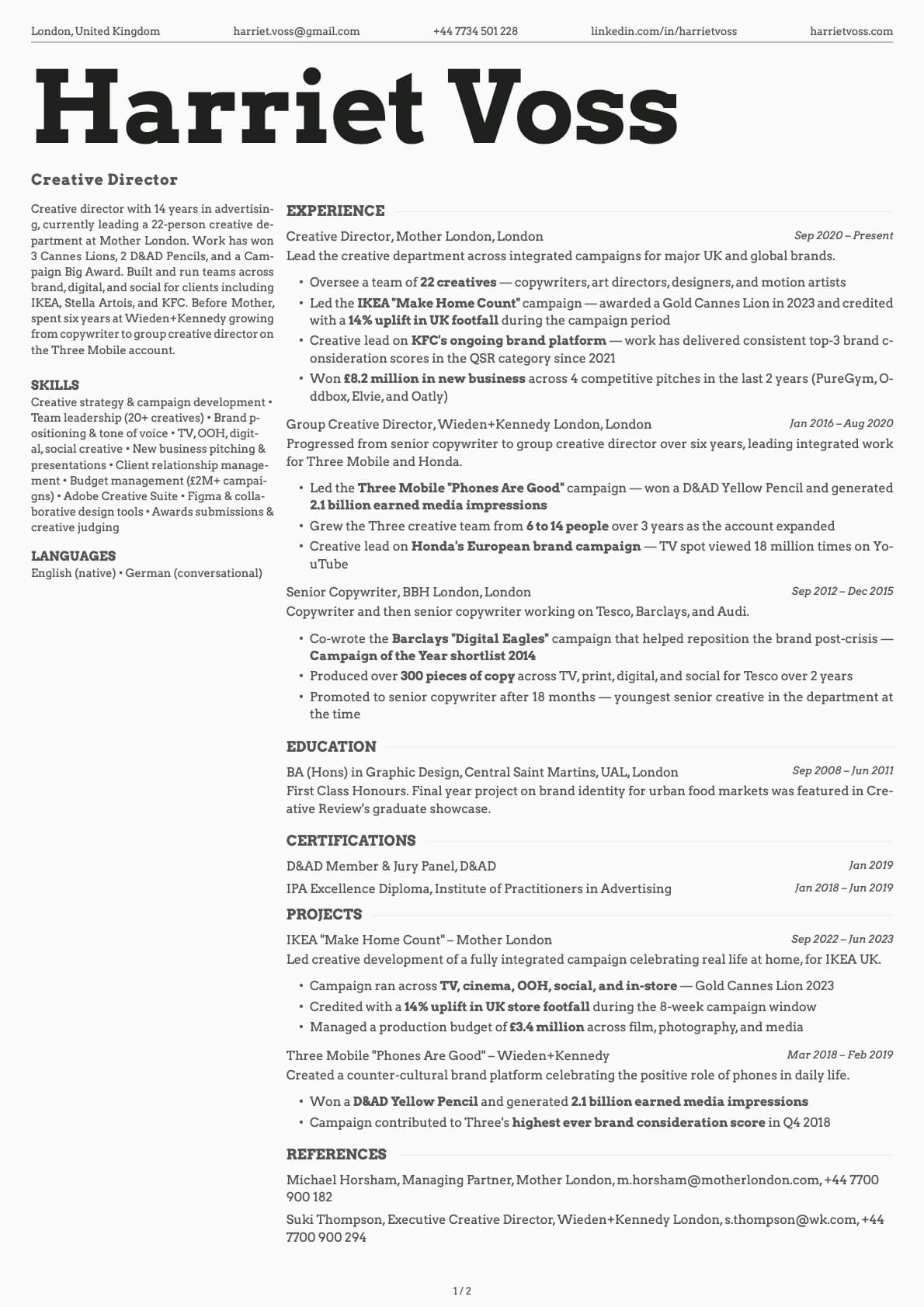
Creative Director
A creative director resume example with 14 years in advertising, Cannes Lions wins.
Related articles

AI Is Screening Your Resume Before Any Human Sees It
AI screens most resumes before a human ever reads them. 97.4% of Fortune 500 companies run an ATS. This is what that means for you and what you can do about it.

The Best Resume Builders in 2026, Compared Honestly
Resume.io, Zety, Enhancv, Kickresume, Teal, and Laddro compared honestly: real pricing, free tiers, mobile apps, and where each tool wins. All prices checked in September 2026.

Burnout Recovery: A Real Timeline, Not 'Take a Bubble Bath'
55% of the U.S. workforce is burned out. Recovery takes 3 to 12 months. Here's what that actually looks like, stage by stage.