Childcare Worker Resume Example
A childcare worker resume example with nursery and private nanny experience.

Laddro Team
Free to use. No account needed to start.
Free to use. No account needed to start.
Overview
Childcare resumes tend to fall into two traps. Either they are too vague ("provided a safe and nurturing environment") or they read like a safeguarding policy document instead of a resume. Neither helps you get the job.
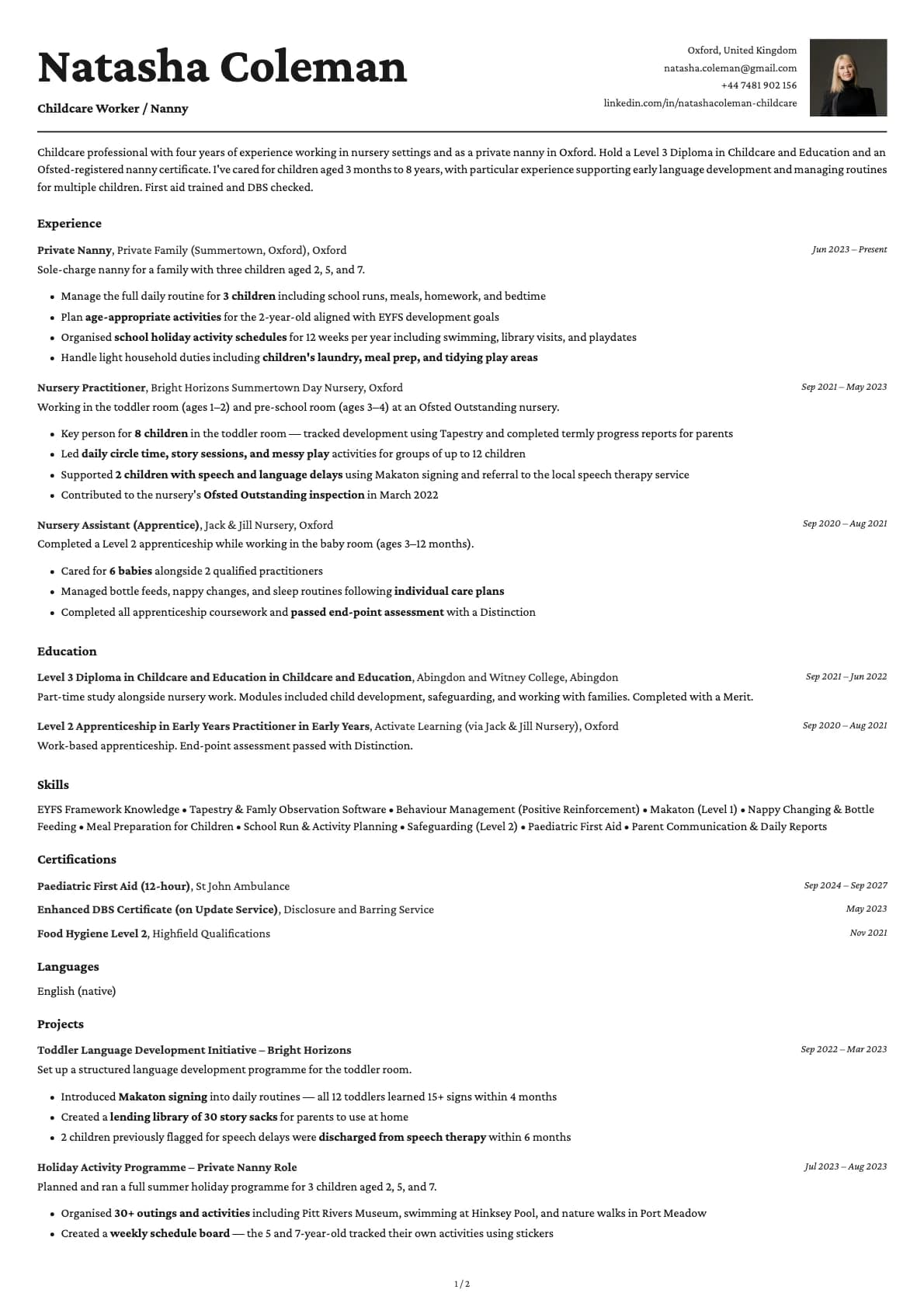
This resume belongs to Natasha Coleman, a childcare professional in Oxford with four years of experience across nursery settings and a private nanny role. She holds a Level 3 Diploma in Childcare and Education, is Ofsted-registered, and has worked with children aged 3 months to 8 years. What makes this resume work is that it shows the practical reality of the job. How many children. What age ranges. What specific outcomes she achieved. Not just that she "cared for children."
Let us look at how she structures each section and what you can take from it.
Your summary needs credentials upfront
Parents and nursery managers are checking the same things first: qualifications, DBS status, and first aid. If those are not in your summary, they might not read far enough to find them.
Here is what this resume opens with:
Childcare professional with four years of experience working in nursery settings and as a private nanny in Oxford. Hold a Level 3 Diploma in Childcare and Education and an Ofsted-registered nanny certificate. I've cared for children aged 3 months to 8 years, with particular experience supporting early language development.
Four sentences. She covers her experience length, her qualifications, her age range, and a specialism. The DBS and first aid mentions appear at the end. For childcare roles, this order matters because qualifications are the first filter.
For yours: Start with your qualification level. If you have a Level 3, say so immediately. If you are Level 2, that is fine for many roles, but be upfront about it. Then give your age range experience and any specialism you have developed.
Writing experience for nursery roles
Nursery managers want to know your ratio experience, your key person responsibilities, and whether you can link activities to the EYFS framework. Generic lines about "planning activities" do not cut it.
Look at these bullets from the Bright Horizons role:
"Key person for 8 children in the toddler room, tracked development using system and completed termly progress reports for parents"
"Supported 2 children with speech and language delays using Makaton signing and referral to the local speech therapy service"
The first bullet tells the manager exactly how many children she was responsible for and which systems she used. system is widely used in nurseries, so naming it is a free keyword match. The second shows she can identify and support additional needs, which is increasingly important in EYFS settings.
The formula for nursery bullets: How many children + what age group + what you specifically did + what tool or framework you used.
Writing experience for nanny roles
Private nanny experience is tricky to write because there is no company name that a hiring manager will recognise. This resume handles it by being specific about the family setup:
"Sole-charge nanny for a family with three children aged 2, 5, and 7"
"Sole-charge" is the key phrase here. It tells the reader immediately that she is managing everything on her own without another adult in the house. That is a different level of responsibility from a shared-care or nursery role.
The bullets then cover daily routine management, EYFS-aligned activities for the youngest child, and school holiday planning. Each one shows a different aspect of the nanny role. Routine management, educational planning, and organisational skills.
If you are writing about a nanny position, name the area (not the family) and describe the setup. "Sole-charge nanny for two children aged 1 and 4 in North London" gives the reader everything they need.
Projects that show real impact
The project section on this resume is strong. The Toddler Language Development Initiative at Bright Horizons shows a structured intervention with measurable outcomes:
"Introduced Makaton signing into daily routines, all 12 toddlers learned 15+ signs within 4 months"
"2 children previously flagged for speech delays were discharged from speech therapy within 6 months"
That second line is powerful. Two children were taken off the speech therapy caseload. That is a real outcome that any nursery manager or parent would value. If you have been involved in any development programme, sensory activities, transition support, or behaviour management initiative, write about the outcome.
Certifications are non-negotiable
For childcare roles, your certifications section is as important as your experience. This resume lists three:
Paediatric First Aid (12-hour). This is a legal requirement for working unsupervised with children. If yours has expired, renew it before you apply. Nurseries cannot employ you without it.
Enhanced DBS on the Update Service. Listing the Update Service detail is smart. It means the employer can check your status online instantly instead of waiting for a new DBS application. If you are not on the Update Service, consider signing up. It costs about fourteen pounds a year and makes the hiring process faster.
Food Hygiene Level 2. Relevant if you are preparing meals for children, which most childcare workers are.
If you hold any additional training like Makaton, allergy awareness, or SEN support, add those as well. Every certification is a reason for the employer to shortlist you over someone without it.
Skills: match them to the job advert
The skills on this resume are specific to childcare. "EYFS Framework Knowledge" and "system & Famly Observation Software" come first because they are the most relevant to nursery roles. "Safeguarding (Level 2)" and "Paediatric First Aid" follow.
One good detail: "Behaviour Management (Positive Reinforcement)" signals her approach without being vague. "Behaviour management" alone could mean anything. Adding the method shows she knows current best practice.
When you are writing your skills list, read the job advert first. If it mentions "experience with SEN children," make sure something on your resume reflects that. If it says "knowledge of the EYFS," use that exact phrase.
Mistakes that lose childcare interviews
Not listing your DBS status. If a nursery manager does not see DBS mentioned, they will assume you do not have one. Always include it, with the Update Service detail if applicable.
Vague activity descriptions. "Planned fun activities for the children" tells the manager nothing. "Led daily circle time, story sessions, and messy play activities for groups of up to 12 children" tells them exactly what you do and at what scale.
Missing age ranges. Childcare is split by age. A toddler room practitioner has different skills from a pre-school room practitioner. Be specific about the ages you have worked with.
Forgetting to mention observation tools. If you have used system, Famly, ParentZone, or any other observation platform, list it. Many nurseries use these systems and will prefer someone who already knows how to log observations and write progress summaries.
One more thing
Childcare hiring is built on trust. Parents and managers need to feel confident that you are safe, qualified, and genuinely good at looking after children. Your resume should prove all three. Lead with your qualifications, describe your work with specific numbers and ages, and always include your certifications. The personality shows through in the interview. The resume just needs to get you there.
Build your own version
Open this layout in the builder and swap in your own details. It takes a few minutes.
Free to use. No account needed to start.
Was this resume example helpful?
Rate this example to help us create better content for you.
4.7 average from 118 ratingsRelated resume examples
Teacher
A secondary English teacher resume example with 5 years of experience and measurable GCSE results.
Substitute Teacher
A substitute teacher resume example with 9 years of supply experience across primary and secondary schools.
Teaching Assistant
A teaching assistant resume example for an entry-level TA with phonics intervention experience and SEND support.
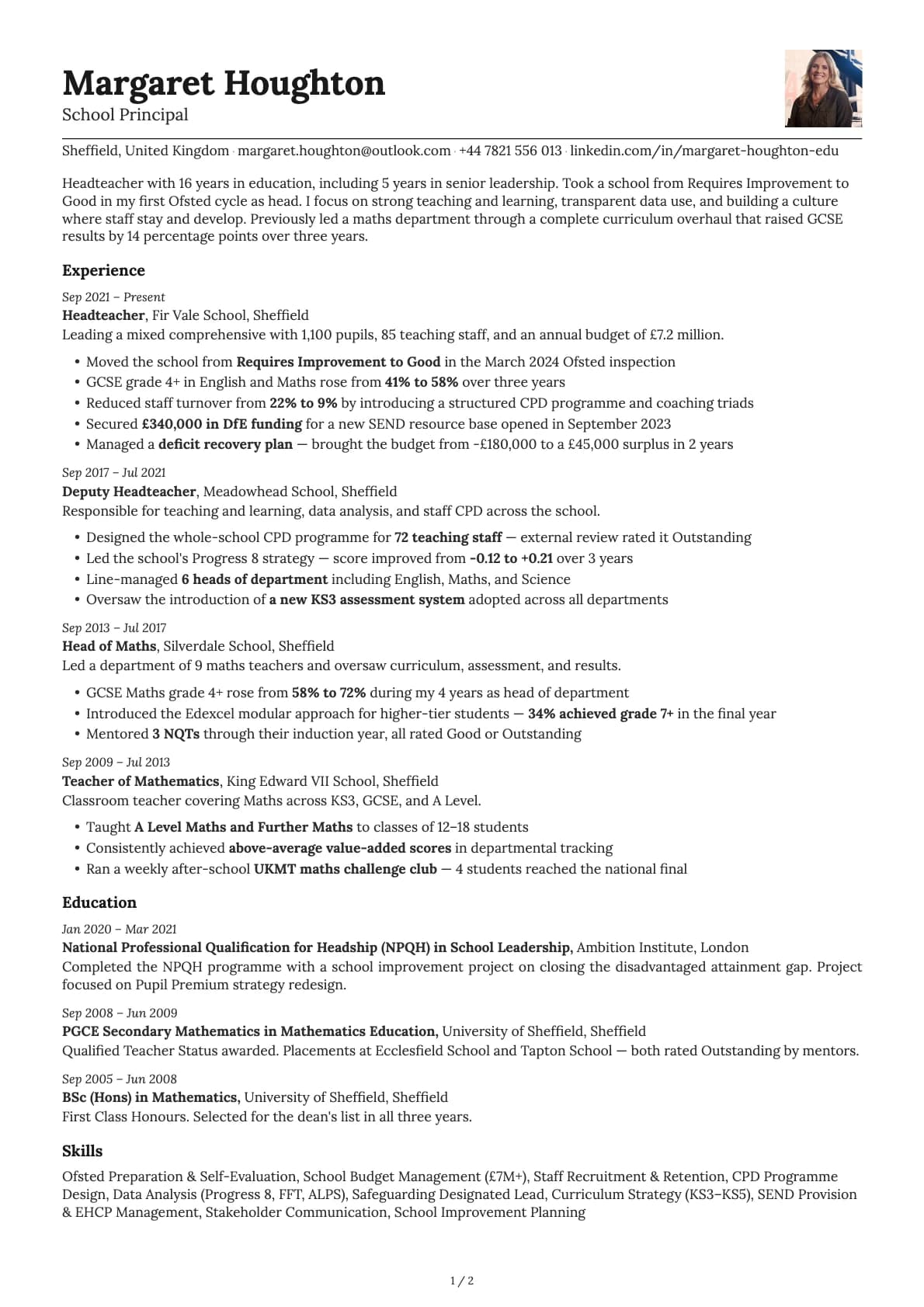
School Principal
A school principal resume example with Ofsted outcomes, GCSE results, and budget management.
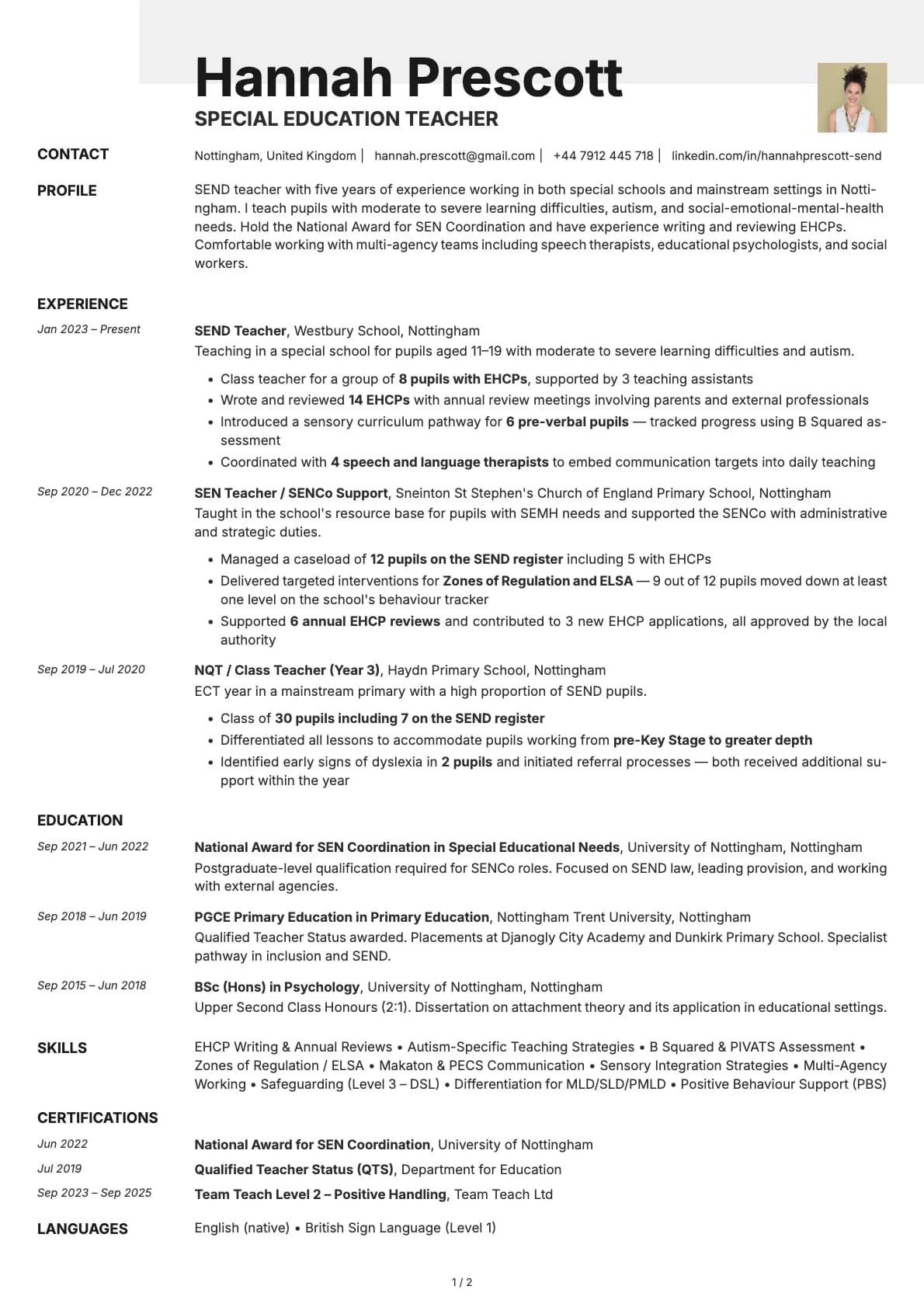
Special Education Teacher
A special education teacher resume example with EHCP experience, intervention outcomes, and multi-agency collaboration.
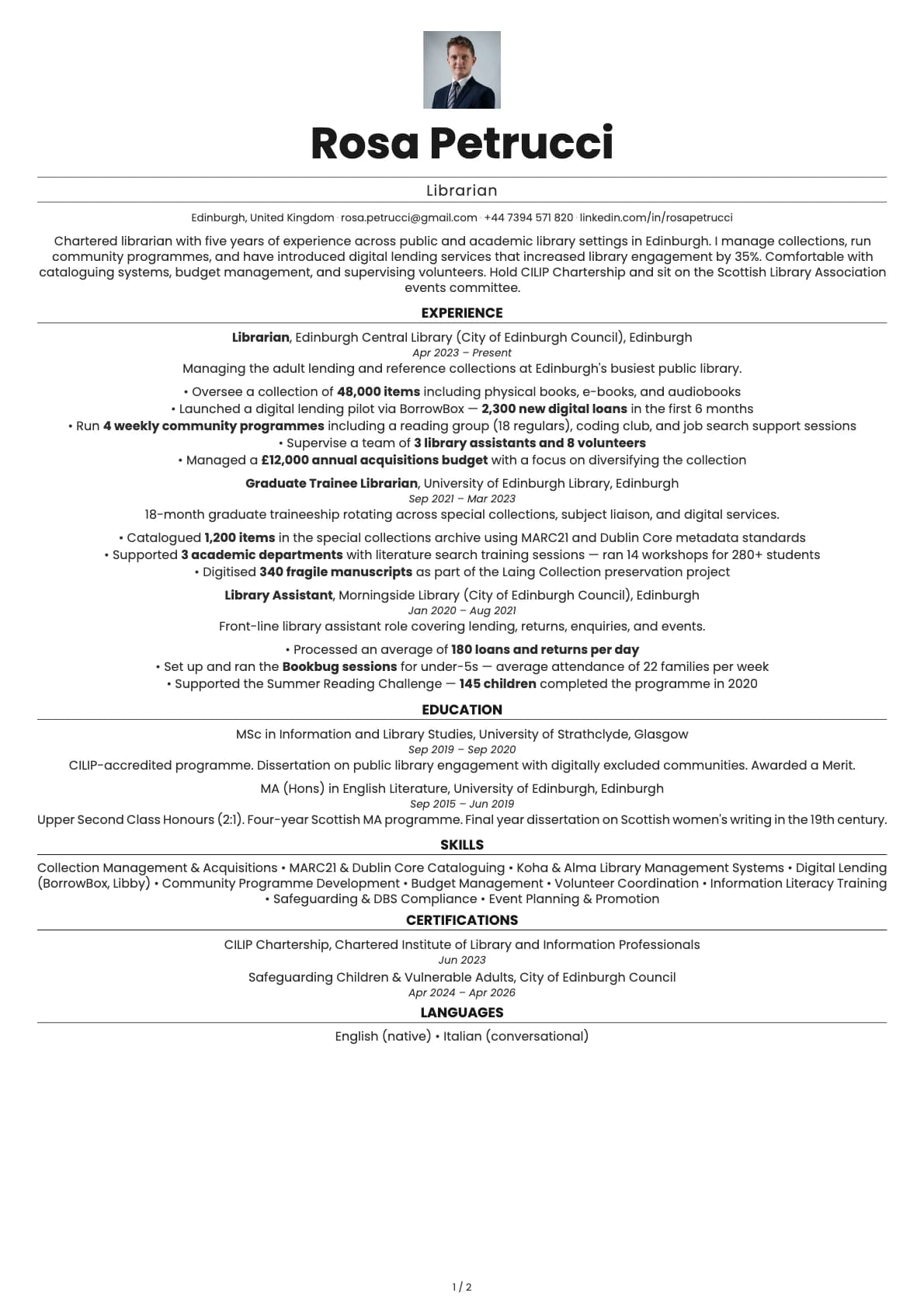
Librarian
A librarian resume example with community programme numbers, collection management specifics, and digital lending results.
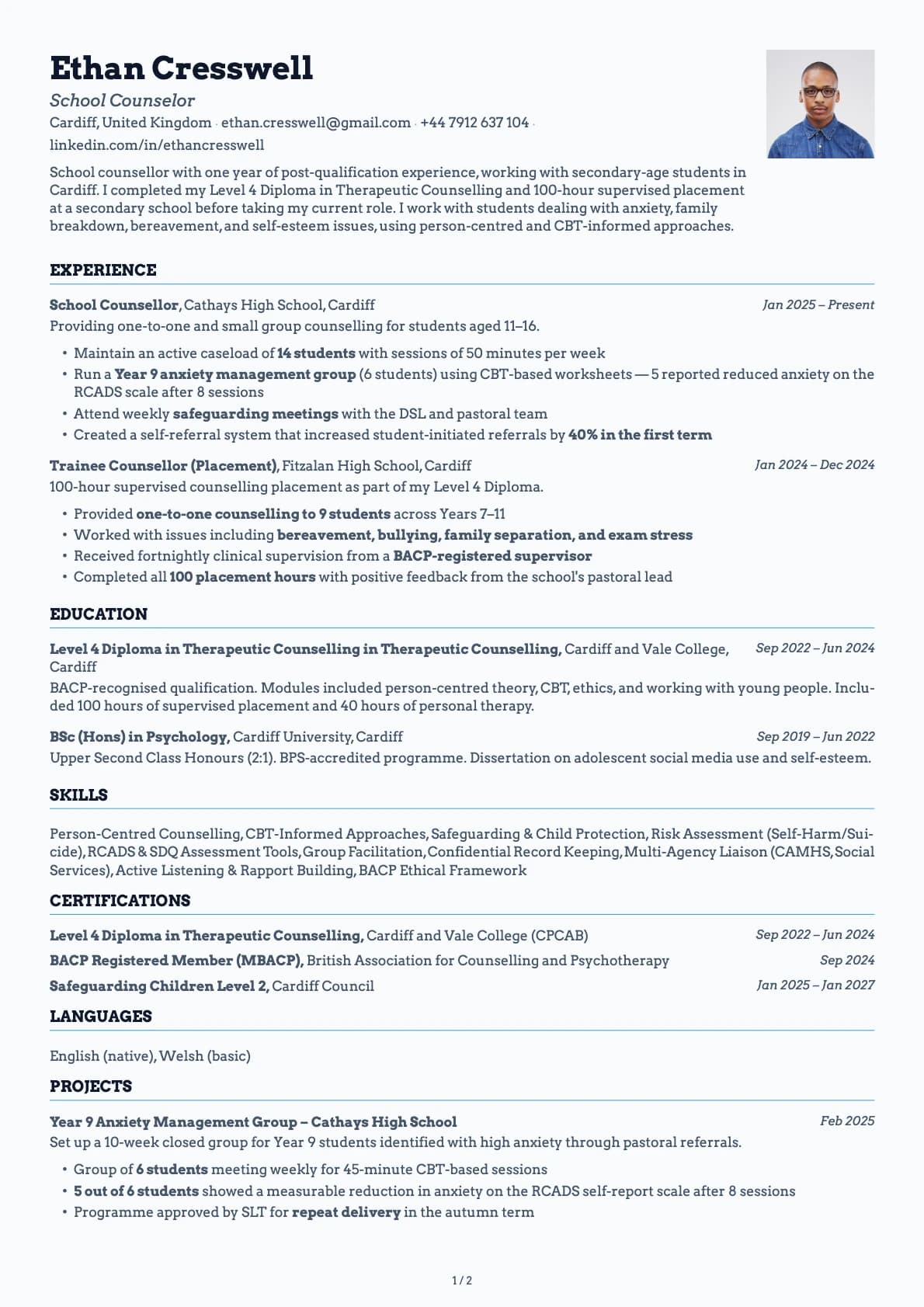
School Counselor
A school counselor resume example with caseload numbers, group therapy outcomes, and safeguarding experience.
Related articles

AI Is Screening Your Resume Before Any Human Sees It
AI screens most resumes before a human ever reads them. 97.4% of Fortune 500 companies run an ATS. This is what that means for you and what you can do about it.

The Best Resume Builders in 2026, Compared Honestly
Resume.io, Zety, Enhancv, Kickresume, Teal, and Laddro compared honestly: real pricing, free tiers, mobile apps, and where each tool wins. All prices checked in September 2026.

Burnout Recovery: A Real Timeline, Not 'Take a Bubble Bath'
55% of the U.S. workforce is burned out. Recovery takes 3 to 12 months. Here's what that actually looks like, stage by stage.