School Counselor Resume Example
A school counselor resume example with caseload numbers, group therapy outcomes, and safeguarding experience.

Laddro Team
Free to use. No account needed to start.
Free to use. No account needed to start.
Overview
School counsellor resumes sit in an awkward space. You are a therapeutic professional, but you work inside an education system. Your hiring panel probably includes a headteacher who understands Ofsted and budgets, and maybe a pastoral lead who understands caseloads and safeguarding. Your resume has to speak to both.
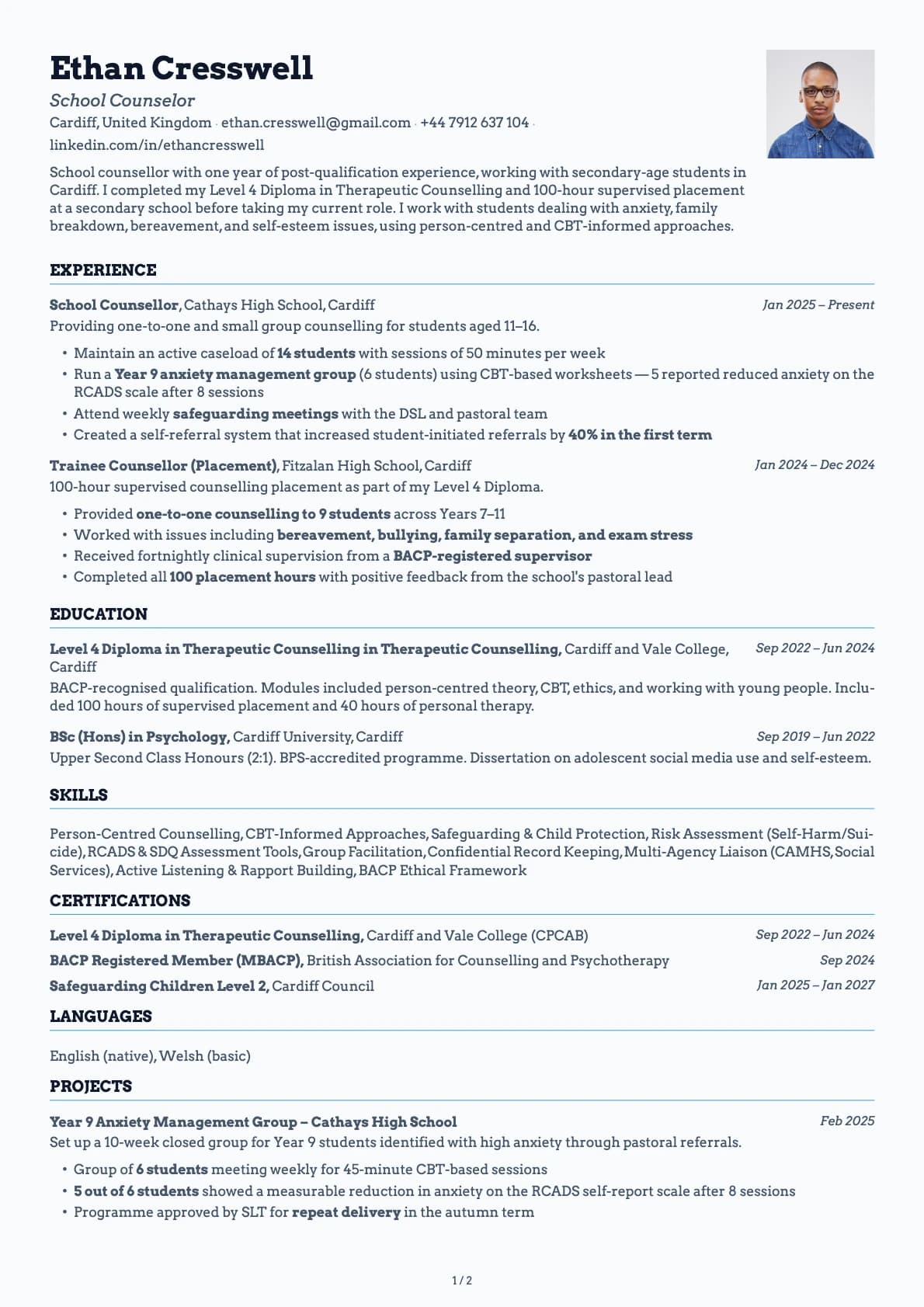
This resume belongs to Ethan Cresswell, a school counsellor with one year of post-qualification experience at a secondary school in Cardiff. Before that, he completed a 100-hour supervised placement at another Cardiff secondary. He works with students dealing with anxiety, family breakdown, bereavement, and self-esteem issues using person-centred and CBT-informed approaches.
Even with limited post-qualification experience, this resume works because it uses specific numbers and outcomes instead of vague therapeutic language. Let us look at how.
Your summary needs to answer the practical questions
School leaders hiring a counsellor want to know: What is your qualification? What age group do you work with? What issues have you handled? And what approach do you use?
This summary answers all four:
"School counsellor with one year of post-qualification experience, working with secondary-age students in Cardiff. I work with students dealing with anxiety, family breakdown, bereavement, and self-esteem issues, using person-centred and CBT-informed approaches."
No filler. No "I am deeply committed to supporting young people." Every counsellor is committed. What matters is your qualification level, your client group, and your therapeutic modality. State those clearly and move on.
Caseload numbers prove your capacity
One thing that separates a strong counselling resume from a weak one is specifics about caseload. This resume includes:
"Maintain an active caseload of 14 students with sessions of 50 minutes per week"
That single line tells the hiring panel: this person can manage a full timetable of sessions. They know how many students you are seeing, how long each session runs, and that you are doing it on a weekly schedule. Compare that with "provided counselling support to students." Same job, completely different impression.
For placement experience, the same principle applies:
"Provided one-to-one counselling to 9 students across Years 7, 11"
Even though the number is smaller (it was a placement), it still gives the reader a concrete picture.
Show outcomes, not just attendance
Therapeutic work can feel hard to quantify. But school counsellors often have access to outcome measures. This resume uses them:
"Run a Year 9 anxiety management group (6 students) using CBT-based worksheets, 5 reported reduced anxiety on the RCADS scale after 8 sessions"
The RCADS is a recognized assessment tool. Citing it by name shows you are measuring outcomes properly, not just relying on gut feeling. If you use SDQ, CORE-YP, YP-CORE, or any other validated measure, name it and give the results.
Not every piece of work will have a neat percentage improvement. But you can still quantify things. "Created a self-referral system that increased student-initiated referrals by 40% in the first term" shows an operational improvement that makes the counselling service more accessible.
Safeguarding and multi-agency work
Schools care about safeguarding. A lot. If you attend safeguarding meetings, work with the Designated Safeguarding Lead, or liaise with external agencies like CAMHS or social services, it needs to be on your resume.
"Attend weekly safeguarding meetings with the DSL and pastoral team"
This is a simple line but it tells the school you already understand how counselling fits into the wider safeguarding framework. If you have made referrals to CAMHS, attended multi-agency meetings, or been involved in child protection processes, include those too.
Placement experience counts
If you are early in your career (like Ethan), your placement is still valuable resume content. The key is to treat it like a real job entry and include specifics:
"Completed all 100 placement hours with positive feedback from the school's pastoral lead"
"Received fortnightly clinical supervision from a BACP-registered supervisor"
These details reassure the hiring panel that your training was structured and supervised. They also show that you understand the importance of clinical supervision, which is non-negotiable in this profession.
Certifications and registration
For school counselling roles, your BACP registration (or equivalent) is the first thing the panel checks. Put it in the certifications section:
This resume lists the Level 4 Diploma in Therapeutic Counselling, BACP Registered Member (MBACP), and Safeguarding Children Level 2. All three are directly relevant.
If you are working toward BACP accreditation or studying for a higher qualification, list it with an expected completion date. "Working toward BACP accreditation (expected 2027)" shows you are developing professionally without overstating your current credentials.
Mistakes school counsellors make on resumes
Using only therapeutic jargon. The headteacher on the panel may not know what "unconditional positive regard" means in practice. Translate your approach into plain language where possible, and always connect it to student outcomes.
Not mentioning the school context. "Provided counselling to young people" could be a private practice, a charity, or a school. Be specific: name the school, the age range, and the setting (mainstream, PRU, SEND provision).
Skipping safeguarding. If your resume does not mention safeguarding, DSL contact, or child protection awareness, the panel will wonder why. It is central to working in schools.
Ignoring group work. Many schools want counsellors who can run groups as well as one-to-one sessions. If you have facilitated group work of any kind, include it with the topic, group size, and outcomes.
One final thought
School counselling roles are often advertised through the school directly or through local authority listings. The person specification will usually list essential and desirable criteria. Go through it line by line and make sure your resume addresses every essential criterion explicitly. If they ask for "experience of working with young people with anxiety," your resume should contain the word "anxiety" and a specific example. Do not make the panel guess.
Build your own version
Open this layout in the builder and swap in your own details. It takes a few minutes.
Free to use. No account needed to start.
Was this resume example helpful?
Rate this example to help us create better content for you.
4.7 average from 97 ratingsRelated resume examples
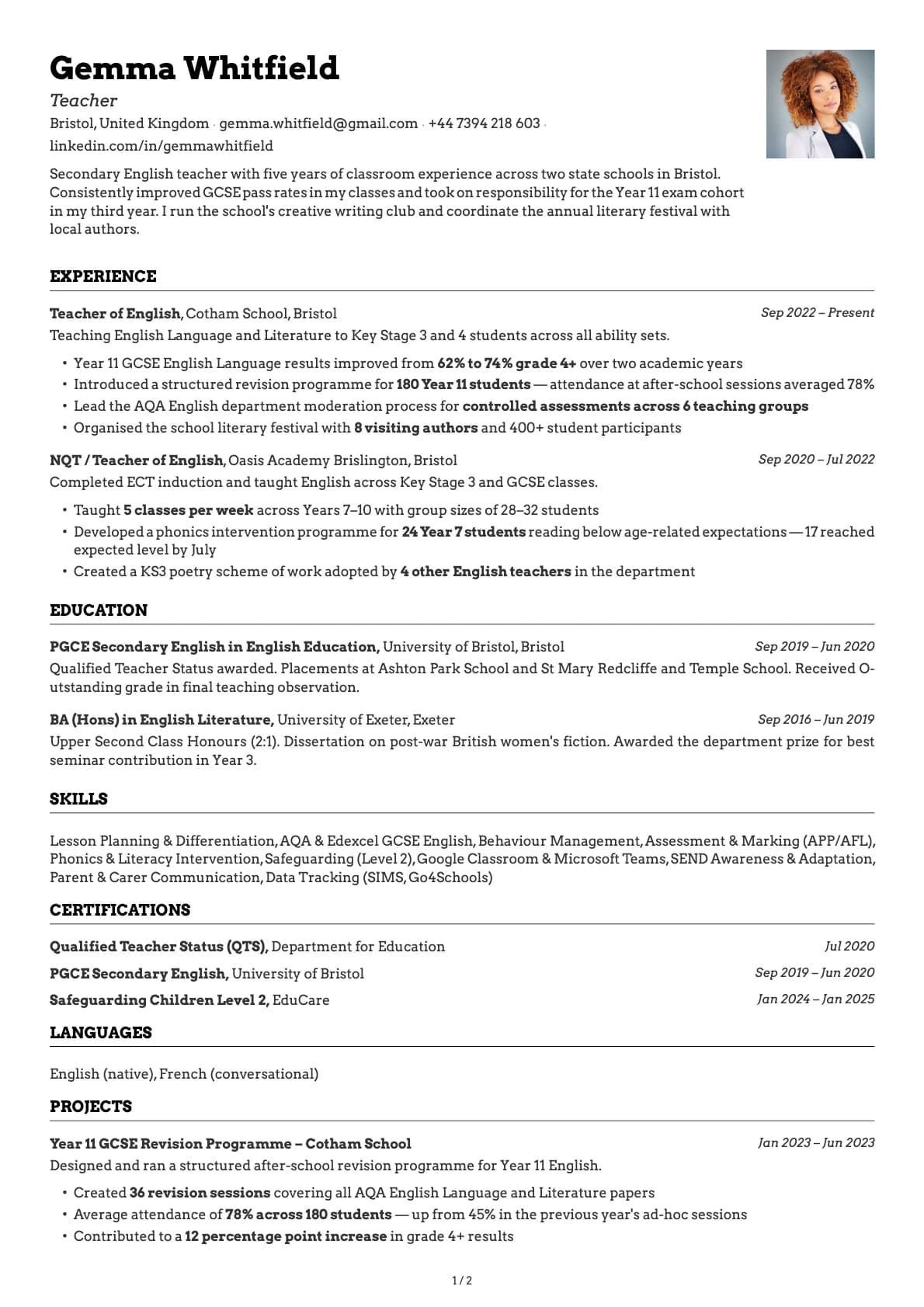
Teacher
A secondary English teacher resume example with 5 years of experience and measurable GCSE results.
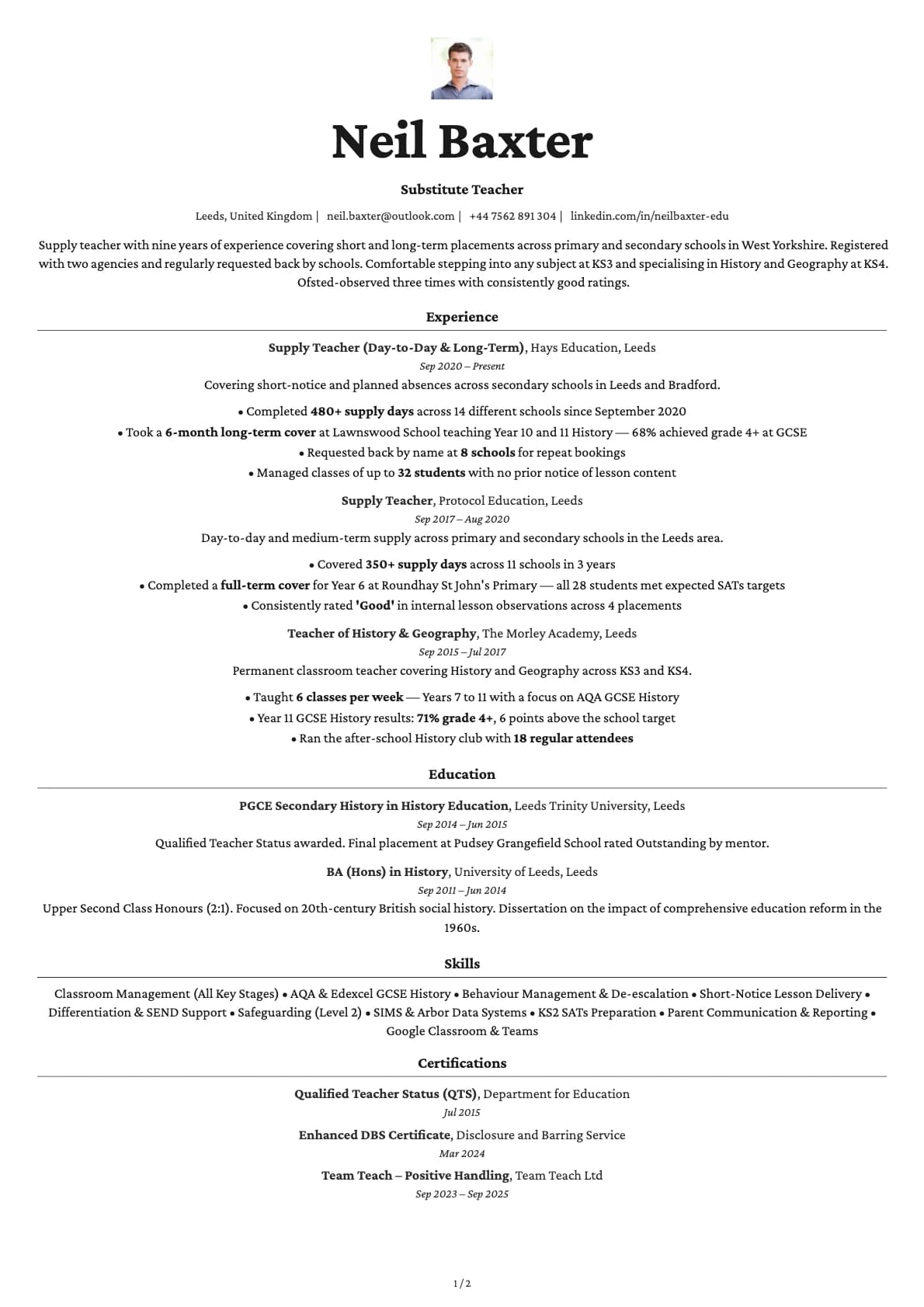
Substitute Teacher
A substitute teacher resume example with 9 years of supply experience across primary and secondary schools.
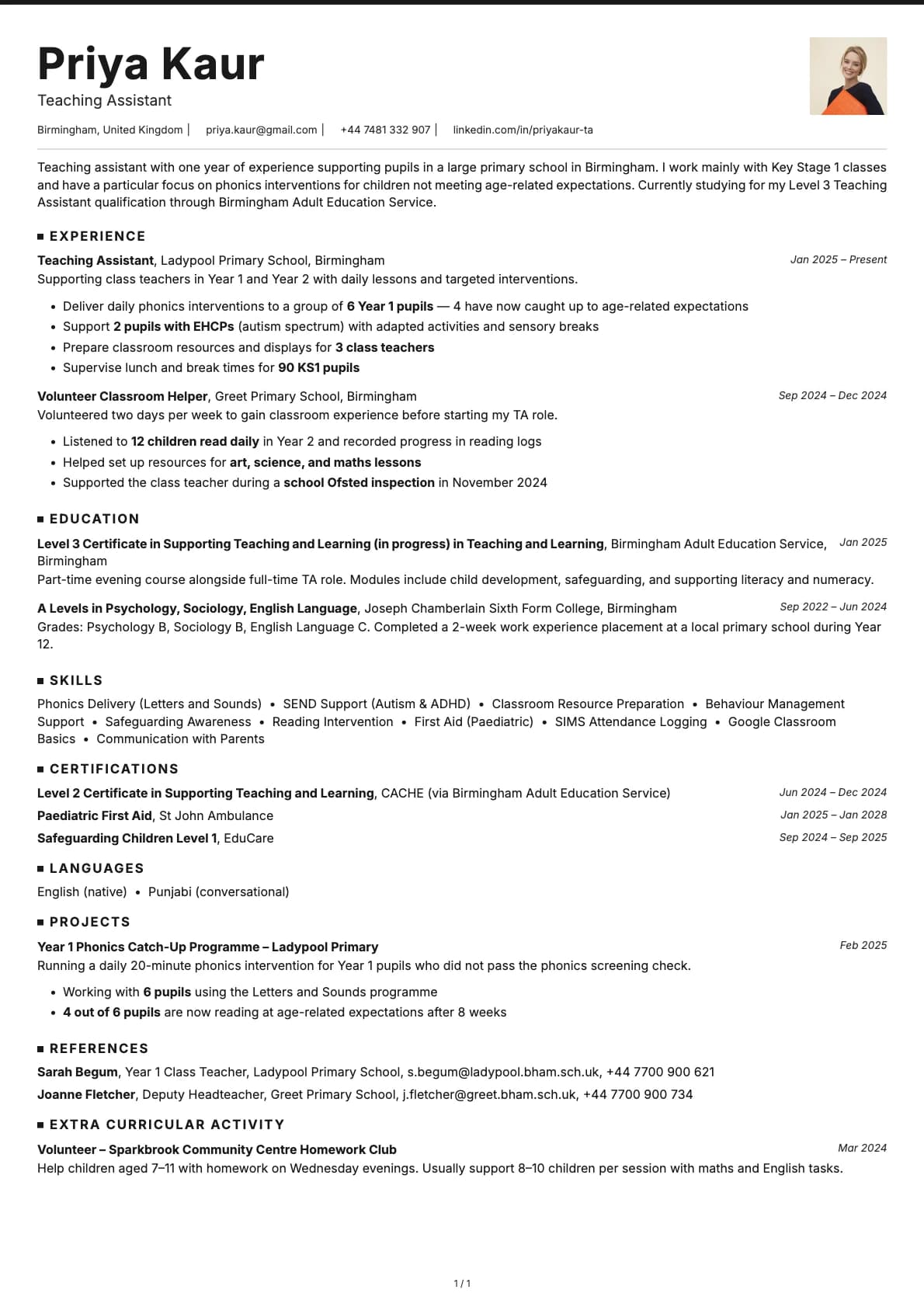
Teaching Assistant
A teaching assistant resume example for an entry-level TA with phonics intervention experience and SEND support.
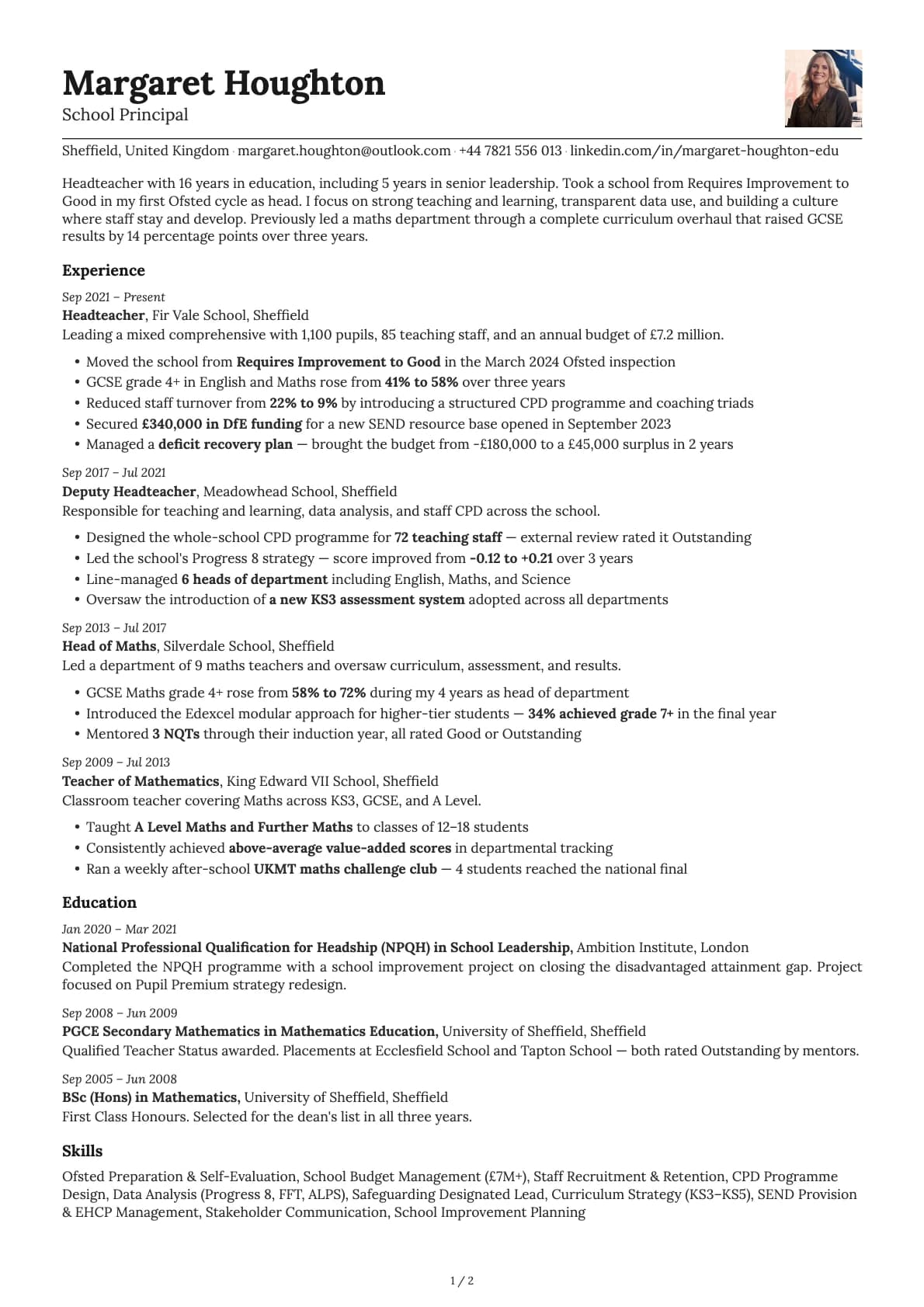
School Principal
A school principal resume example with Ofsted outcomes, GCSE results, and budget management.
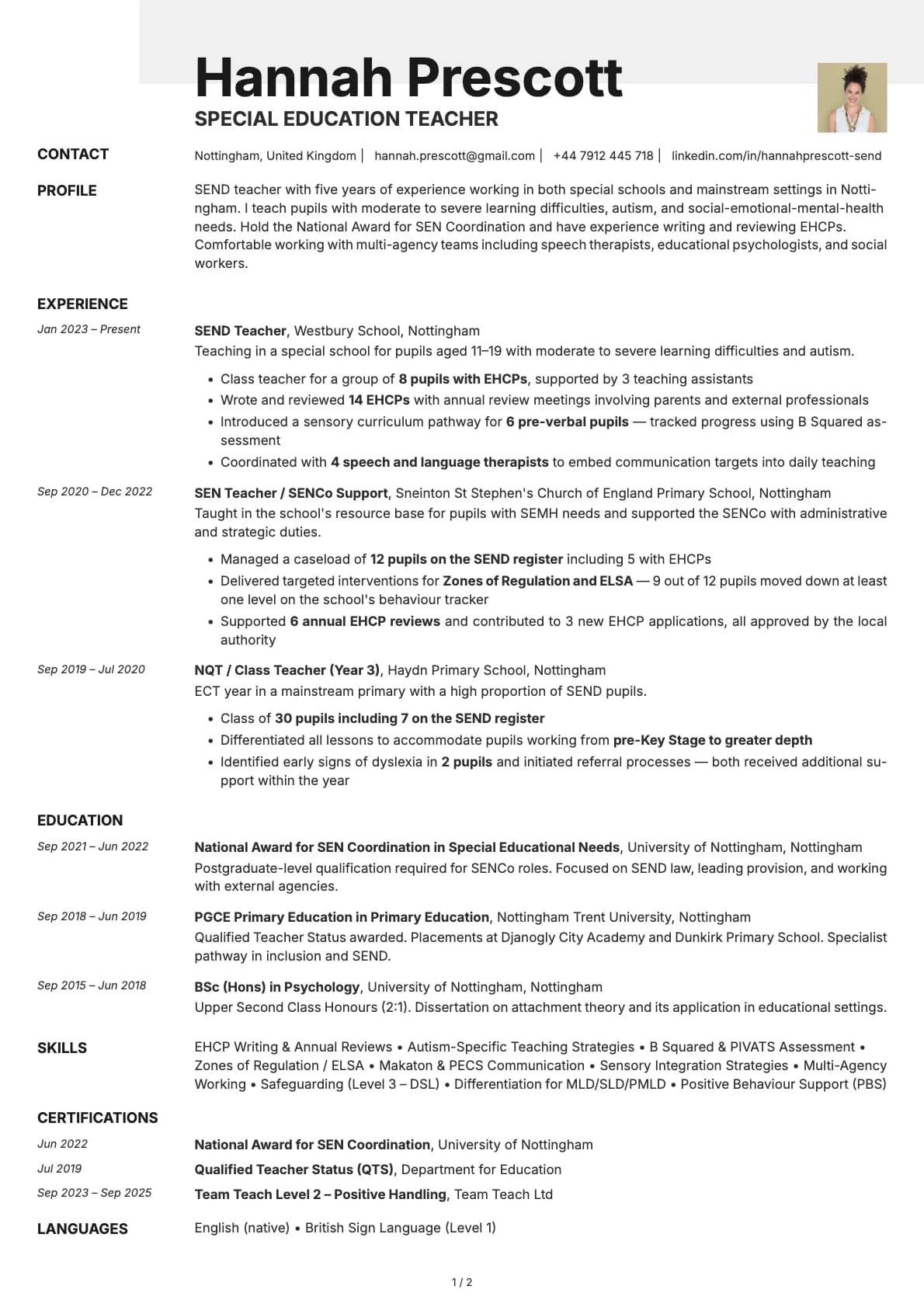
Special Education Teacher
A special education teacher resume example with EHCP experience, intervention outcomes, and multi-agency collaboration.
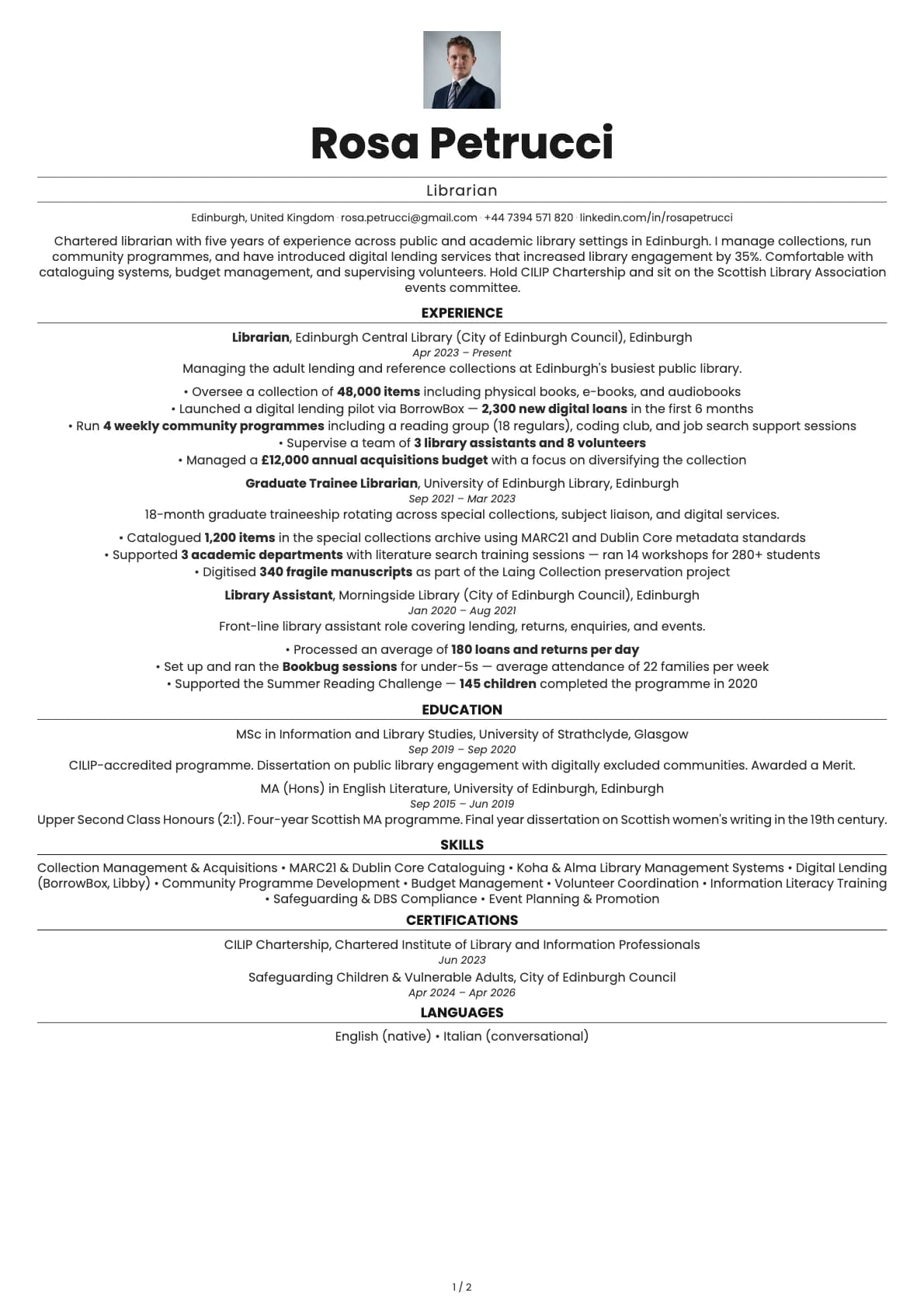
Librarian
A librarian resume example with community programme numbers, collection management specifics, and digital lending results.
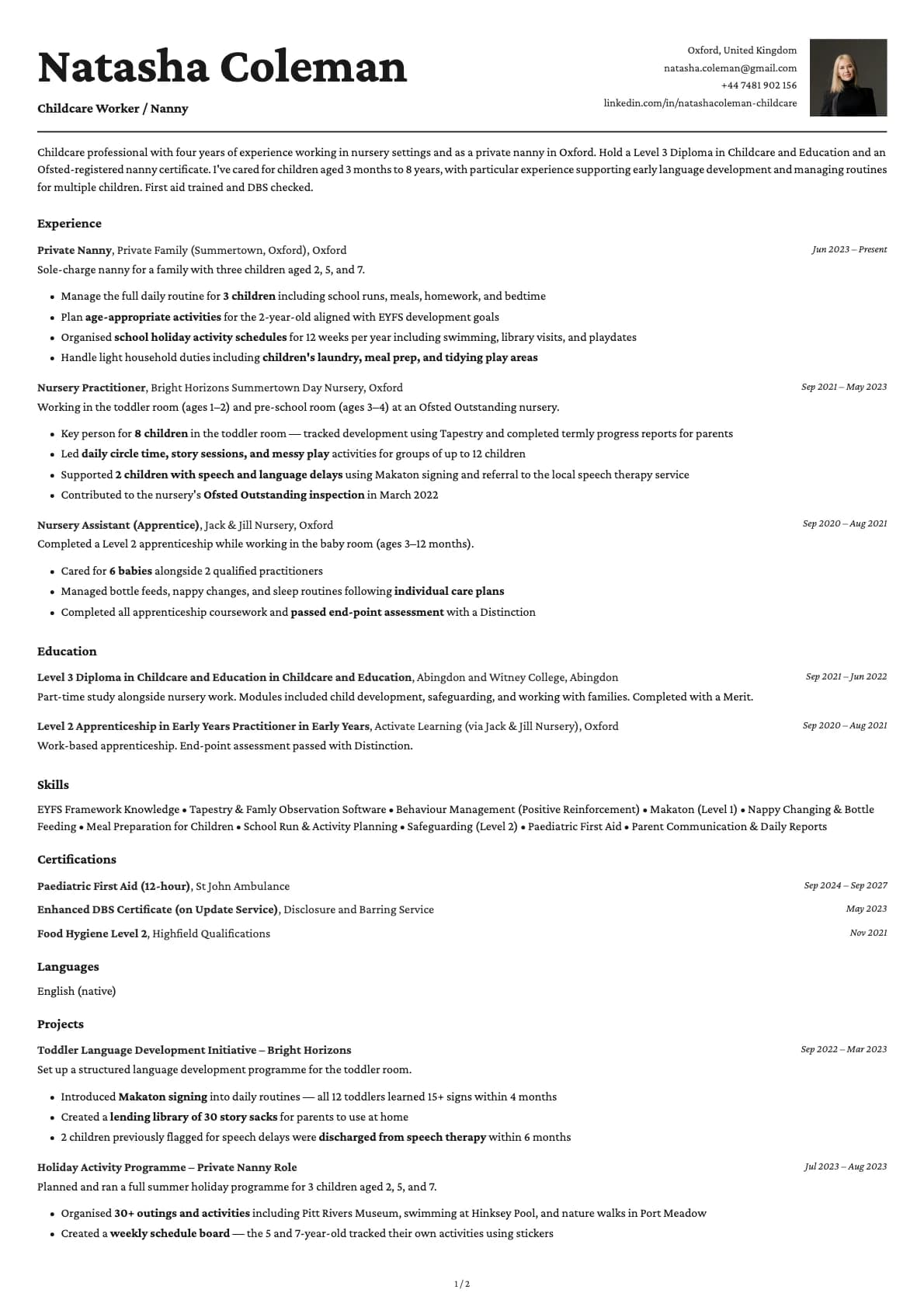
Childcare Worker / Nanny
A childcare worker resume example with nursery and private nanny experience.
Related articles

AI Is Screening Your Resume Before Any Human Sees It
AI screens most resumes before a human ever reads them. 97.4% of Fortune 500 companies run an ATS. This is what that means for you and what you can do about it.

The Best Resume Builders in 2026, Compared Honestly
Resume.io, Zety, Enhancv, Kickresume, Teal, and Laddro compared honestly: real pricing, free tiers, mobile apps, and where each tool wins. All prices checked in September 2026.

Burnout Recovery: A Real Timeline, Not 'Take a Bubble Bath'
55% of the U.S. workforce is burned out. Recovery takes 3 to 12 months. Here's what that actually looks like, stage by stage.