Librarian Resume Example
A librarian resume example with community programme numbers, collection management specifics, and digital lending results.

Laddro Team
Free to use. No account needed to start.
Free to use. No account needed to start.
Overview
Librarian resumes tend to be heavy on soft skills and light on specifics. "Organized community events" and "managed library resources" show up on nearly every one. The problem? Those phrases describe the job description, not your actual work.
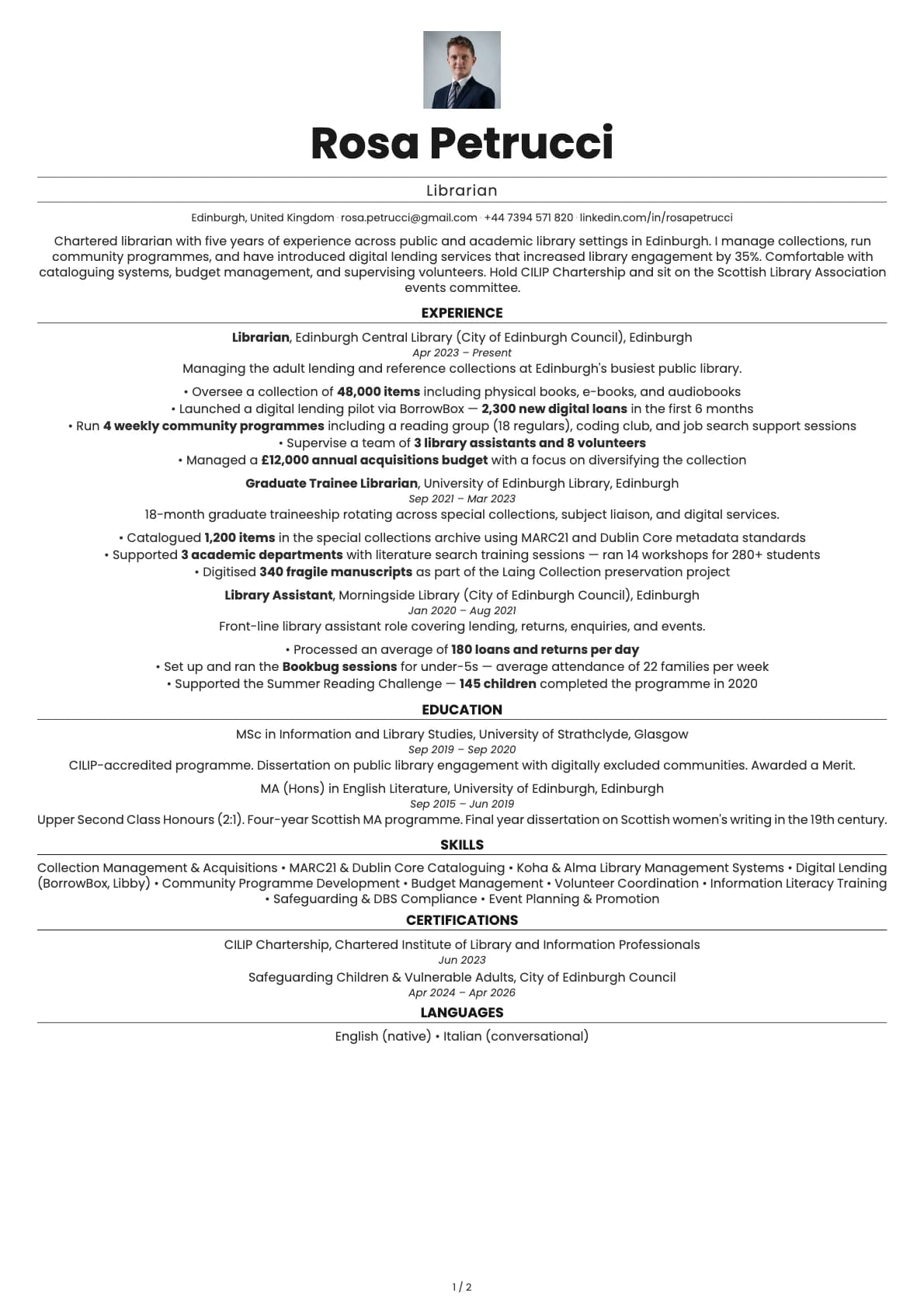
This resume belongs to Rosa Petrucci, a chartered librarian with five years of experience across public and academic libraries in Edinburgh. She currently manages a collection of 48,000 items at Edinburgh Central Library, runs four weekly community programmes, and launched a digital lending pilot that generated 2,300 new loans in six months.
What makes this resume work is that every bullet has a number or a name attached to it. Let us break it down.
Write a summary that names your setting and your best number
Hiring managers in libraries want to know three things fast: What kind of library do you work in? How long have you been doing this? And what have you actually done that goes beyond shelving books?
Here is Rosa's summary:
Chartered librarian with five years of experience across public and academic library settings in Edinburgh. I manage collections, run community programmes, and have introduced digital lending services that increased library engagement by 35%.
Two sentences in and the reader already knows: she is chartered, she has worked in both public and academic settings, and she has a quantifiable result. No fluff about "a love of books and reading" or "dedication to literacy."
Your formula: State your chartership status (or equivalent), name the type of libraries you work in, then give your single strongest achievement with a number.
How to write your experience bullets
The biggest mistake librarians make on resumes is describing their duties instead of their results. Every librarian issues books and answers enquiries. Your resume needs to show what YOU specifically built, changed, or improved.
Look at how Rosa handles her current role at Edinburgh Central Library:
"Launched a digital lending pilot via BorrowBox. 2,300 new digital loans in the first 6 months"
"Run 4 weekly community programmes including a reading group (18 regulars), coding club, and job search support sessions"
"Managed a £12,000 annual acquisitions budget with a focus on diversifying the collection"
Each bullet answers a different question. The first shows initiative (she launched something new). The second shows breadth (four different programmes, named specifically). The third shows she is trusted with money.
The pattern is: What you did + the scale + what happened because of it.
Even if you work in a small branch library, you can follow the same structure. "Ran the Summer Reading Challenge. 145 children completed the programme" is much stronger than "supported summer reading activities."
Your academic or trainee experience still matters
If you came through a graduate traineeship or academic library route, do not downplay it. Look at how Rosa describes her time at the University of Edinburgh:
"Catalogued 1,200 items in the special collections archive using MARC21 and Dublin Core metadata standards"
"Supported 3 academic departments with literature search training sessions. Ran 14 workshops for 280+ students"
Those bullets show technical cataloguing skill (MARC21, Dublin Core) alongside teaching ability (14 workshops, 280 students). Both are things hiring managers scan for. If you have metadata standards experience, name the standards. If you have run training sessions, say how many and for whom.
Skills: name your systems
This resume lists Koha, Alma, BorrowBox, and Libby. That matters more than most librarians realise. Many library services are locked into a specific library management system, and if you already know theirs, you skip weeks of onboarding.
If you use Koha, Alma, Sierra, or any other LMS, list it by name. Same for digital lending platforms. "Digital lending" is vague. "BorrowBox and Libby" tells the recruiter exactly what you can do on day one.
Also note that Rosa includes "Safeguarding & DBS Compliance." If you work with children or vulnerable adults (and most public librarians do), include your safeguarding training. It is often a person specification requirement and an easy keyword miss.
CILIP Chartership and other certifications
If you are a chartered member of CILIP, put it front and centre. It is the professional standard for librarians in the UK, and many local authority job postings list it as essential or desirable.
Rosa lists her CILIP Chartership first, then her safeguarding certificate. The order tells the recruiter: professional credential first, compliance requirement second.
If you are working towards chartership, list it with an expected date. "CILIP Chartership (in progress, expected 2027)" signals professional development without overclaiming.
Projects show what you built, not just what you maintained
The two projects on this resume are strong because they tell a story beyond day-to-day duties. The Digital Lending Pilot shows Rosa can plan, implement, and measure a new service. The Laing Collection Digitisation shows she can handle delicate archival work.
If you have started a reading group, launched a new event series, reorganised a collection, or built a local studies display, that is a project. Frame it as: what was the need, what did you do, and what was the result.
Mistakes that hurt librarian applications
Listing "customer service" without context. Every librarian deals with the public. Instead, describe the setting. "Front-line library assistant role covering 180 loans and returns per day" gives the recruiter a workload picture.
Ignoring digital skills. Library services are moving online fast. If you have experience with e-lending platforms, digital skills workshops, or online catalogue management, make sure it appears on your resume. Omitting it suggests you are stuck in a print-only mindset.
Using a creative template with sidebars and colour blocks. Many local authority ATS systems cannot parse complex layouts. Stick with a clean, single-column format. This resume uses Quartz, which keeps things readable without any parsing issues.
Not mentioning volunteer coordination. If you manage volunteers (and Rosa manages 8), include it. It shows leadership and people management skills that transfer directly to supervisory roles.
One more thing
Read the person specification carefully before you apply. Local authority library jobs are scored against it. If the spec says "experience with community engagement," do not call it "outreach" on your resume. Use their exact language. The shortlisting panel is matching your words against their criteria, sometimes with a checklist in front of them.
Build your own version
Open this layout in the builder and swap in your own details. It takes a few minutes.
Free to use. No account needed to start.
Was this resume example helpful?
Rate this example to help us create better content for you.
4.7 average from 112 ratingsRelated resume examples
Teacher
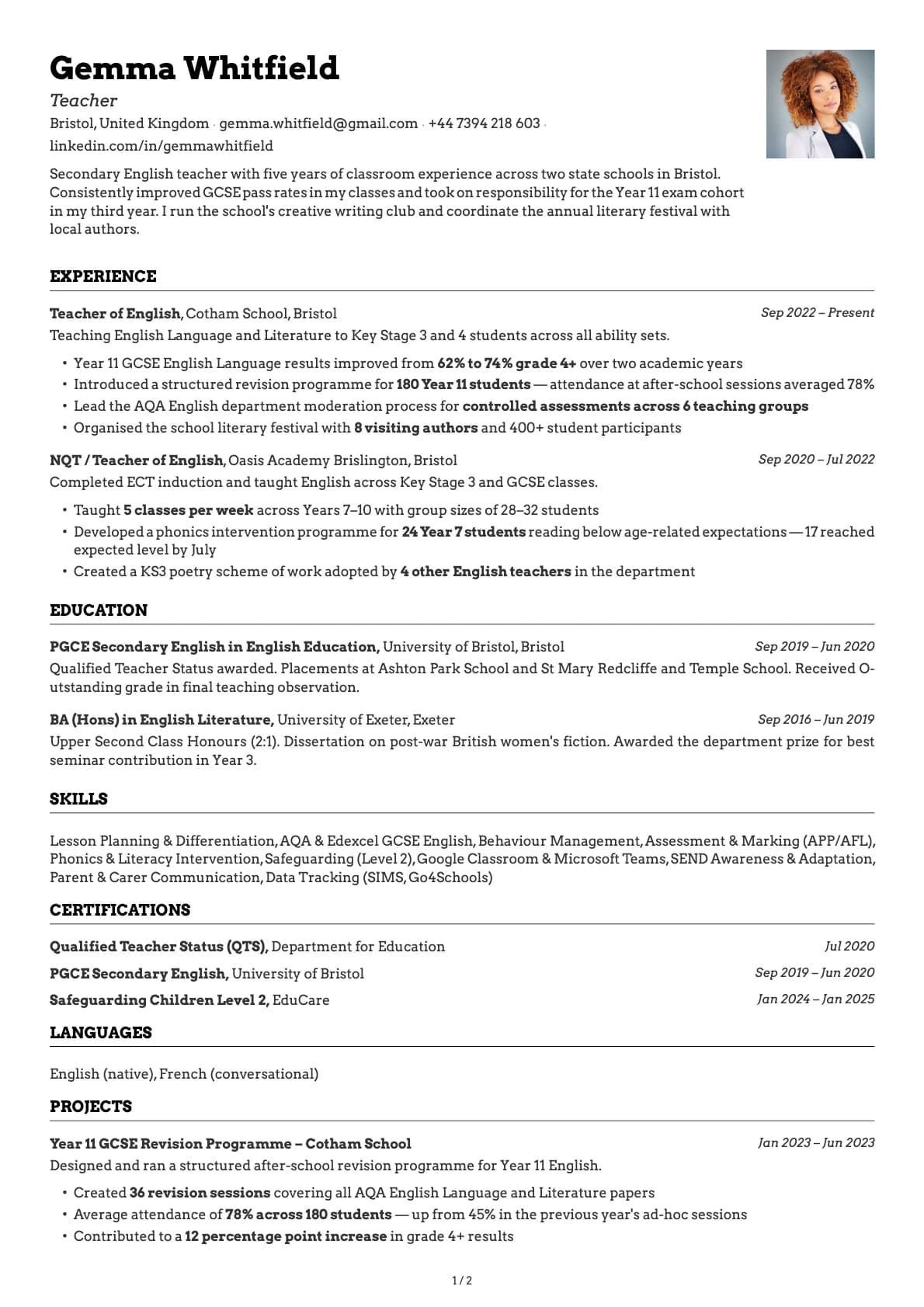
A secondary English teacher resume example with 5 years of experience and measurable GCSE results.
Substitute Teacher
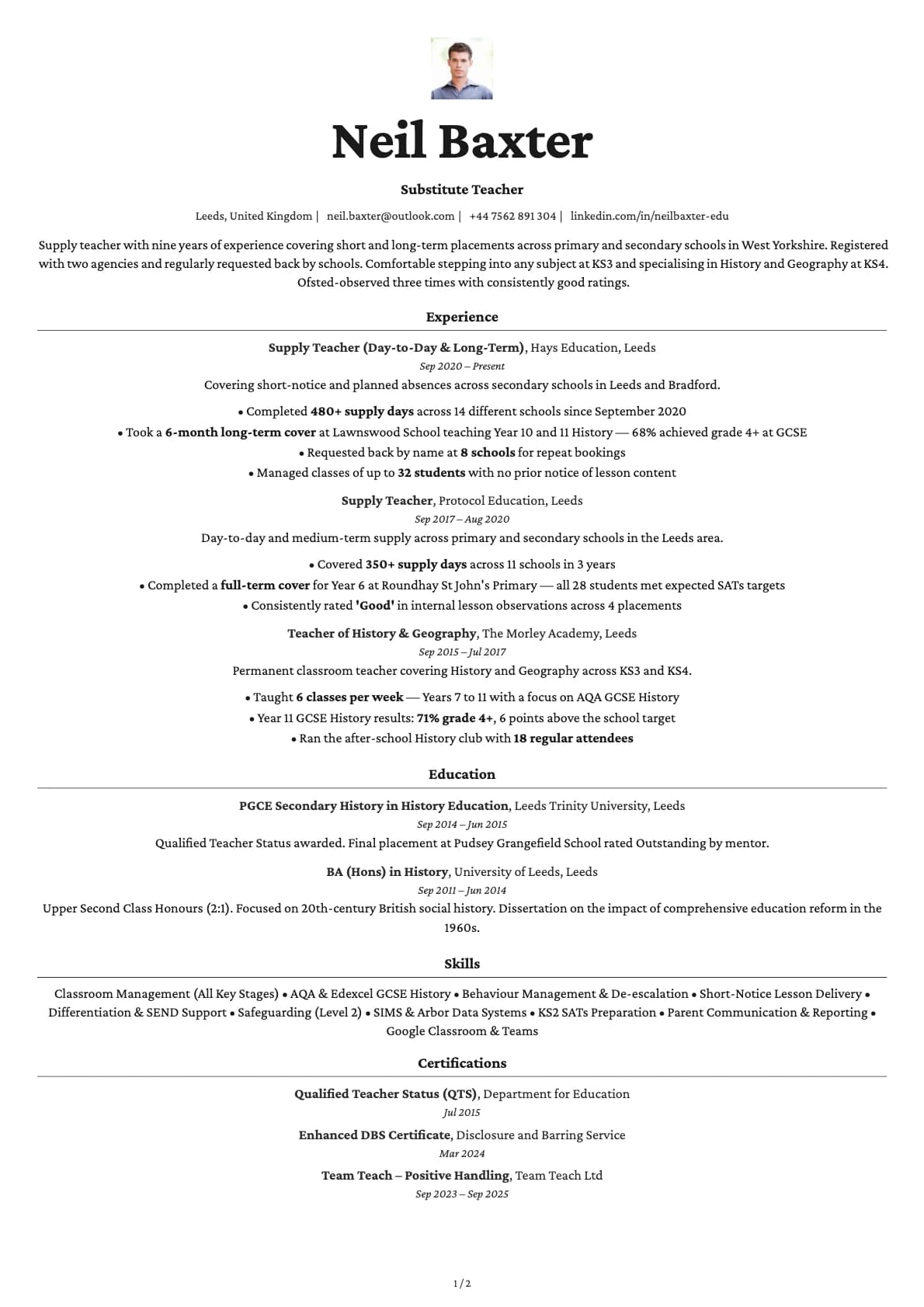
A substitute teacher resume example with 9 years of supply experience across primary and secondary schools.
Teaching Assistant
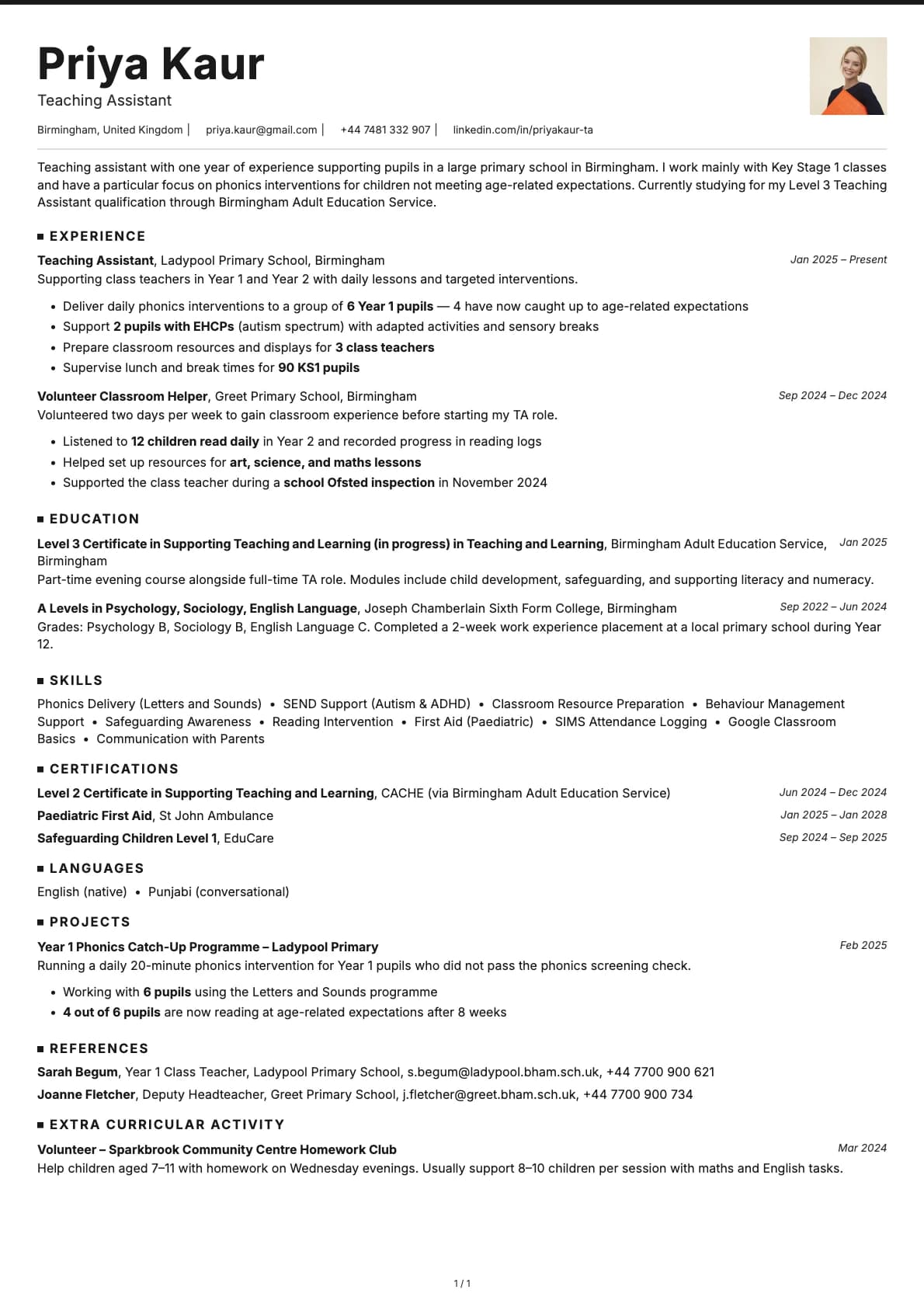
A teaching assistant resume example for an entry-level TA with phonics intervention experience and SEND support.
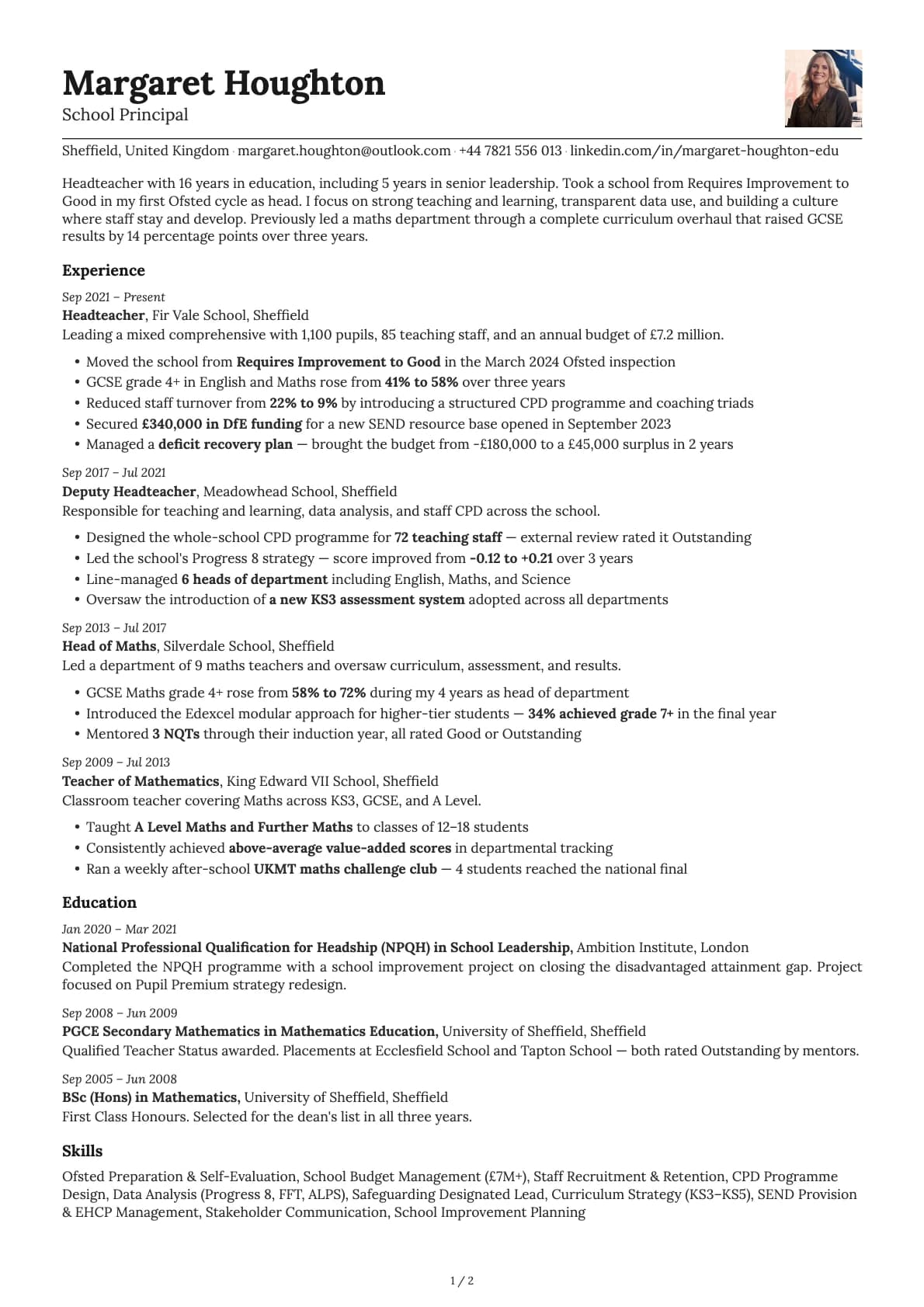
School Principal
A school principal resume example with Ofsted outcomes, GCSE results, and budget management.
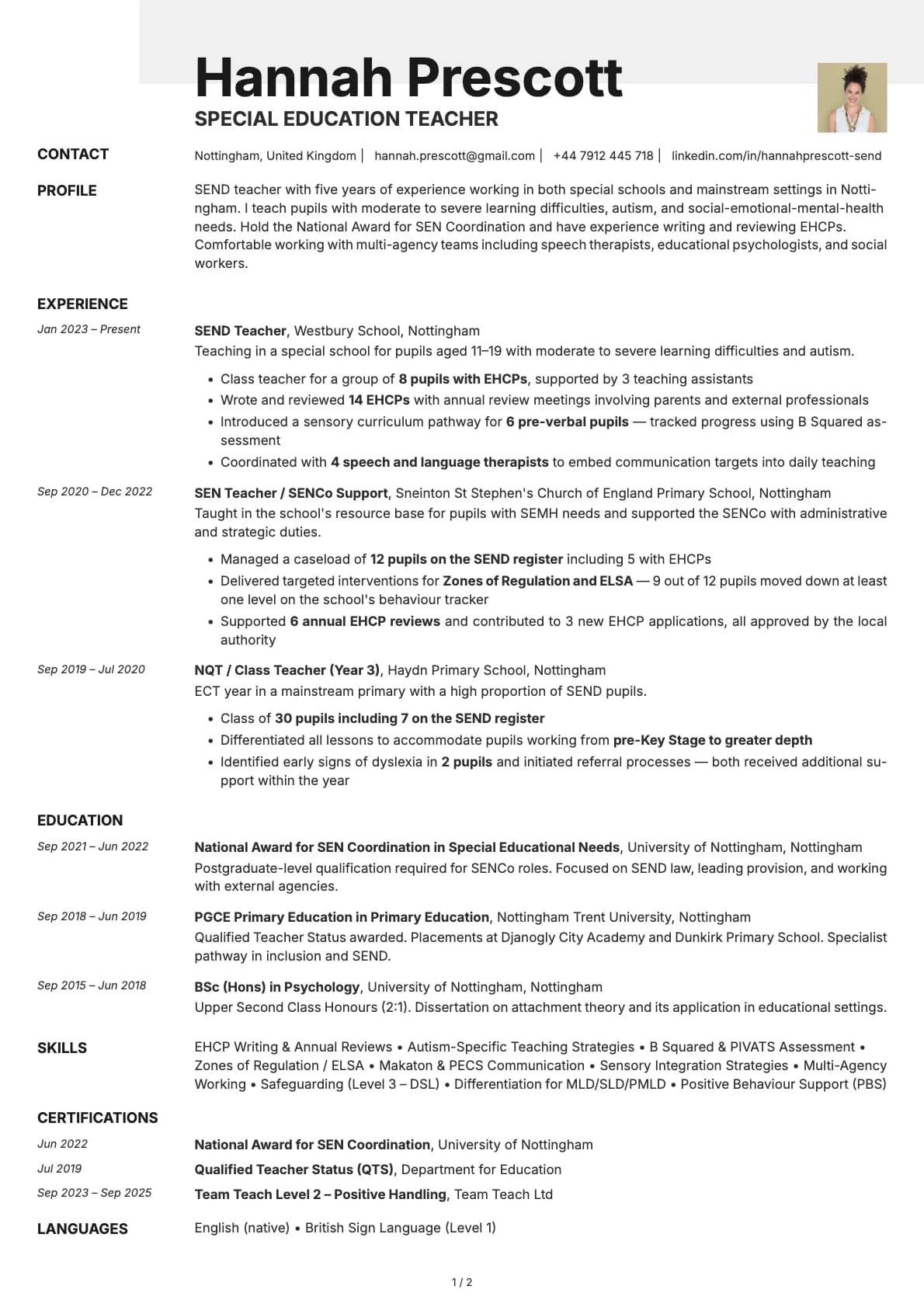
Special Education Teacher
A special education teacher resume example with EHCP experience, intervention outcomes, and multi-agency collaboration.
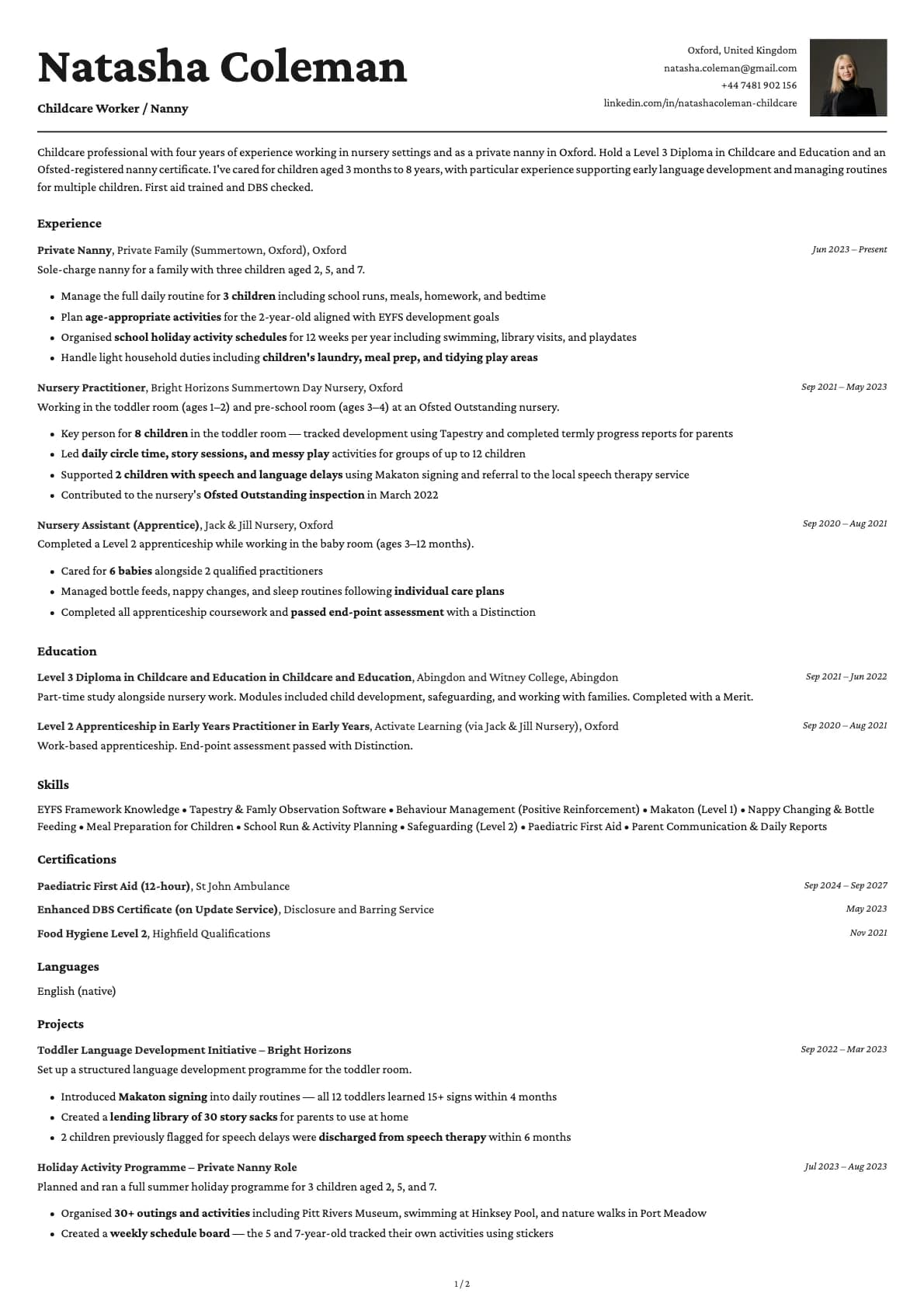
Childcare Worker / Nanny
A childcare worker resume example with nursery and private nanny experience.
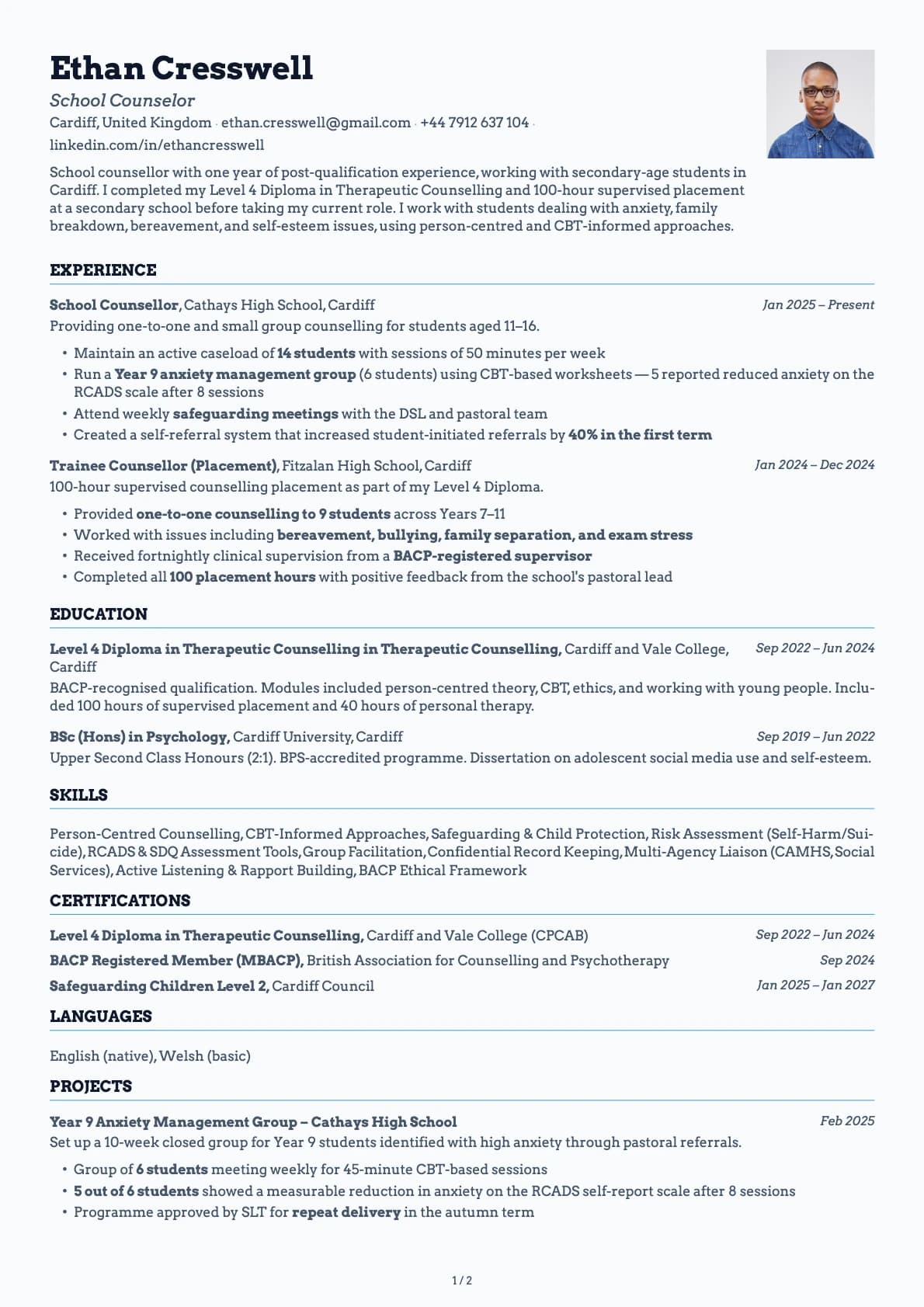
School Counselor
A school counselor resume example with caseload numbers, group therapy outcomes, and safeguarding experience.
Related articles

AI Is Screening Your Resume Before Any Human Sees It
AI screens most resumes before a human ever reads them. 97.4% of Fortune 500 companies run an ATS. This is what that means for you and what you can do about it.

The Best Resume Builders in 2026, Compared Honestly
Resume.io, Zety, Enhancv, Kickresume, Teal, and Laddro compared honestly: real pricing, free tiers, mobile apps, and where each tool wins. All prices checked in September 2026.

Burnout Recovery: A Real Timeline, Not 'Take a Bubble Bath'
55% of the U.S. workforce is burned out. Recovery takes 3 to 12 months. Here's what that actually looks like, stage by stage.