Graduate Operations Analyst Resume Example
A graduate operations analyst resume example with Jaguar Land Rover placement and data analysis skills.

Laddro Team
Free to use. No account needed to start.
Free to use. No account needed to start.
Overview
Operations analyst roles sit at the intersection of data and business improvement. You use data to understand how processes work, identify inefficiencies, and propose solutions that save time and money. Employers want graduates who can work with real operational data, build dashboards, and communicate findings to teams that are not data-literate.
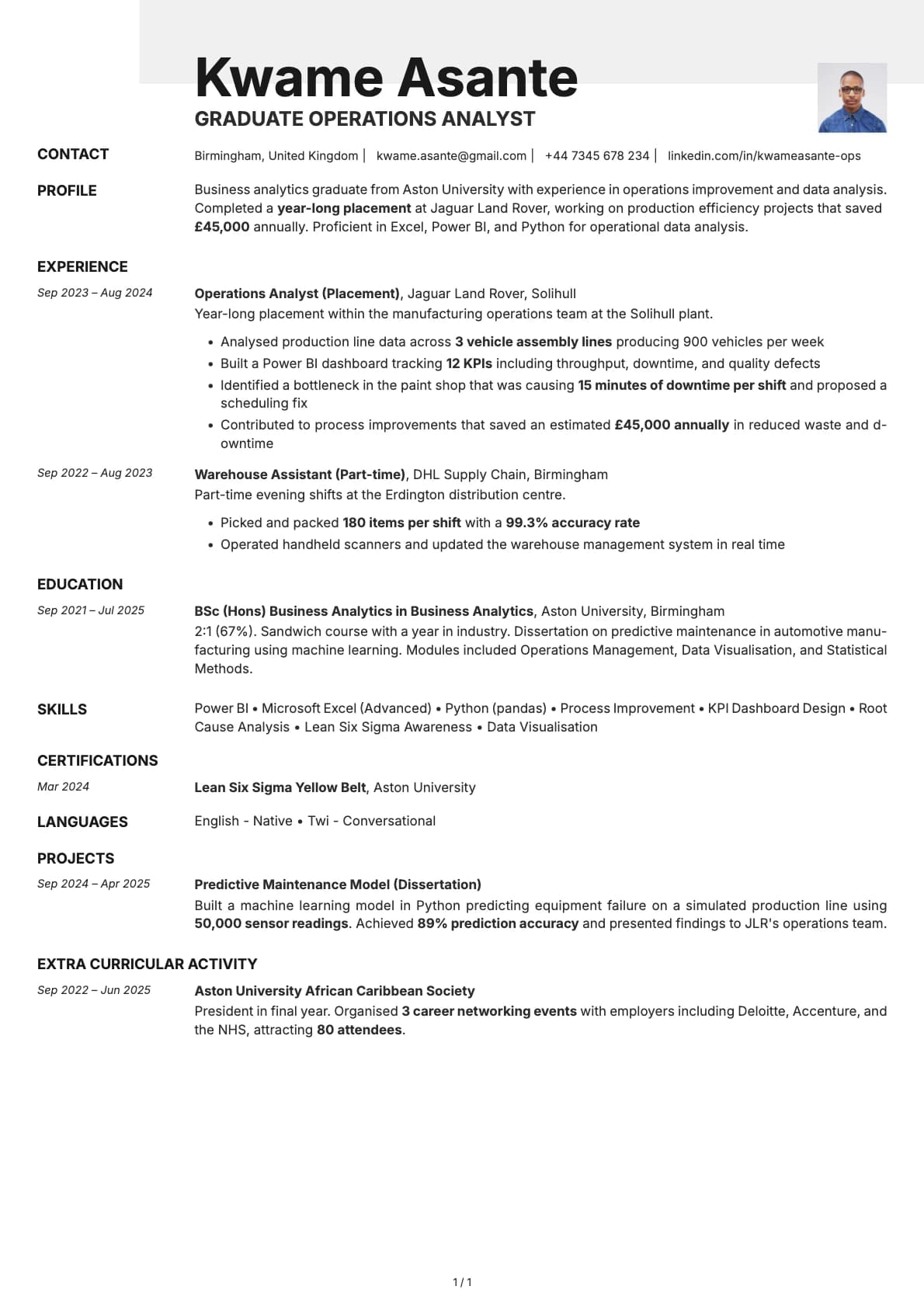
Kwame Asante is a business analytics graduate from Aston University who completed a year-long placement at Jaguar Land Rover in Solihull. His resume stands out because it shows direct manufacturing operations experience, a Power BI dashboard tracking 12 KPIs, and cost savings of £45,000.
What Makes This Resume Work
Automotive manufacturing experience at scale. Analysing data from 3 assembly lines producing 900 vehicles per week is the kind of scale that immediately tells a recruiter this was serious, high-impact work. It anchors the rest of the resume in a credible operational context.
A dashboard that the team actually used. Building a Power BI dashboard tracking 12 KPIs is valuable because it shows Kwame created a tool for ongoing use, not just a one-off analysis. This demonstrates an understanding of how operational teams need to consume data.
A specific problem identified and solved. Finding a paint shop bottleneck causing 15 minutes of downtime per shift and proposing a fix is a concrete example of the analytical thinking operations teams value. It shows Kwame can move from data to diagnosis to recommendation.
A dissertation project with industry relevance. Building a predictive maintenance model using 50,000 sensor readings and achieving 89% accuracy shows real technical depth. Presenting it to JLR's operations team adds further credibility.
Key Takeaways
For graduate operations analyst roles, describe the data you worked with, the tools you used (Power BI, Excel, Python), and the business outcomes of your analysis. If you built dashboards or reports, name the KPIs they tracked and the audience they served. If you identified problems or proposed solutions, describe them with specifics including the time saved, cost reduced, or efficiency gained. A Lean Six Sigma certification at any level adds real value to your application.
Build your own version
Open this layout in the builder and swap in your own details. It takes a few minutes.
Free to use. No account needed to start.
Was this resume example helpful?
Rate this example to help us create better content for you.
4.8 average from 104 ratingsRelated resume examples
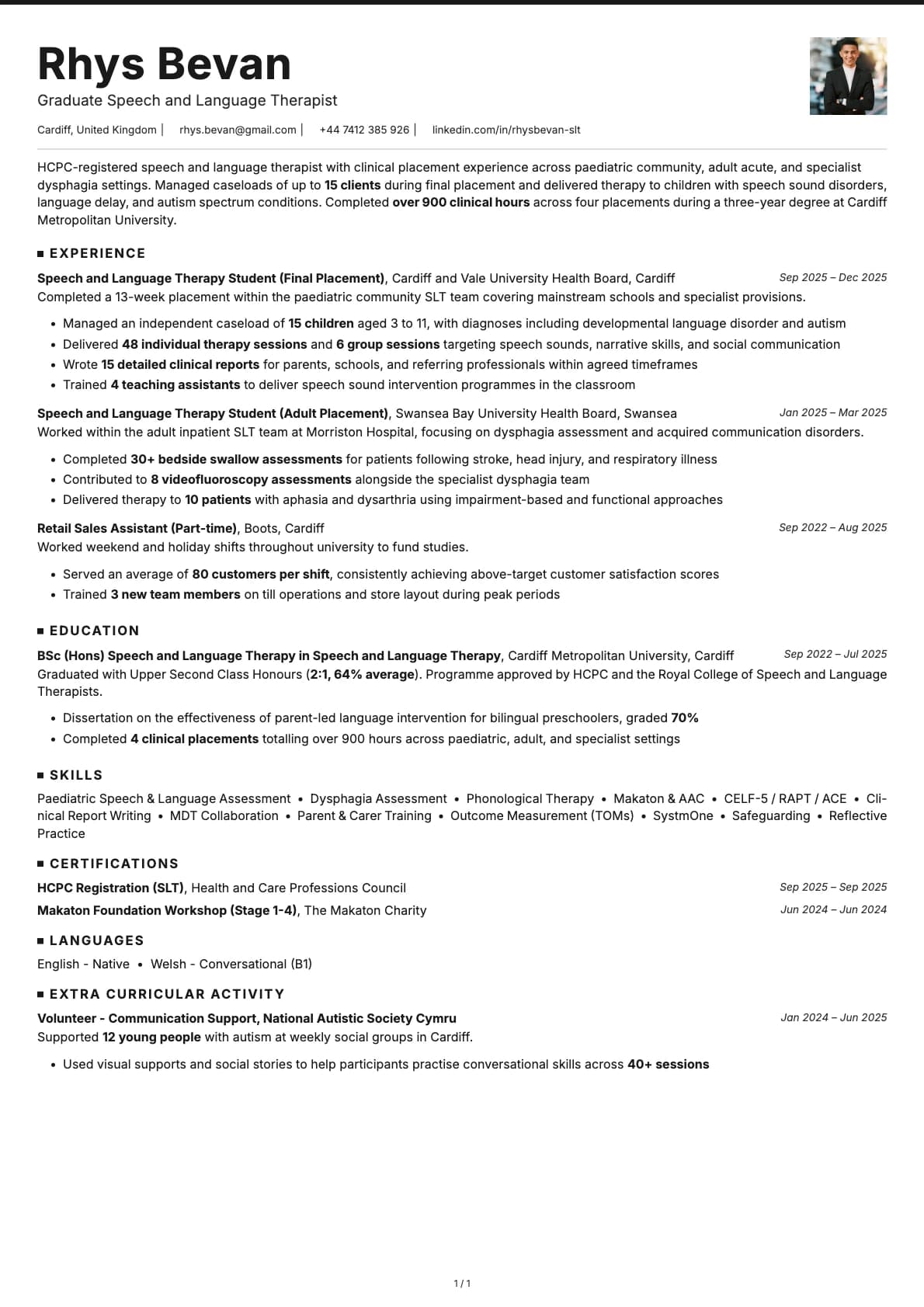
Graduate Speech and Language Therapist
A graduate speech and language therapist resume example with clinical placement hours, HCPC registration, and paediatric caseload numbers.
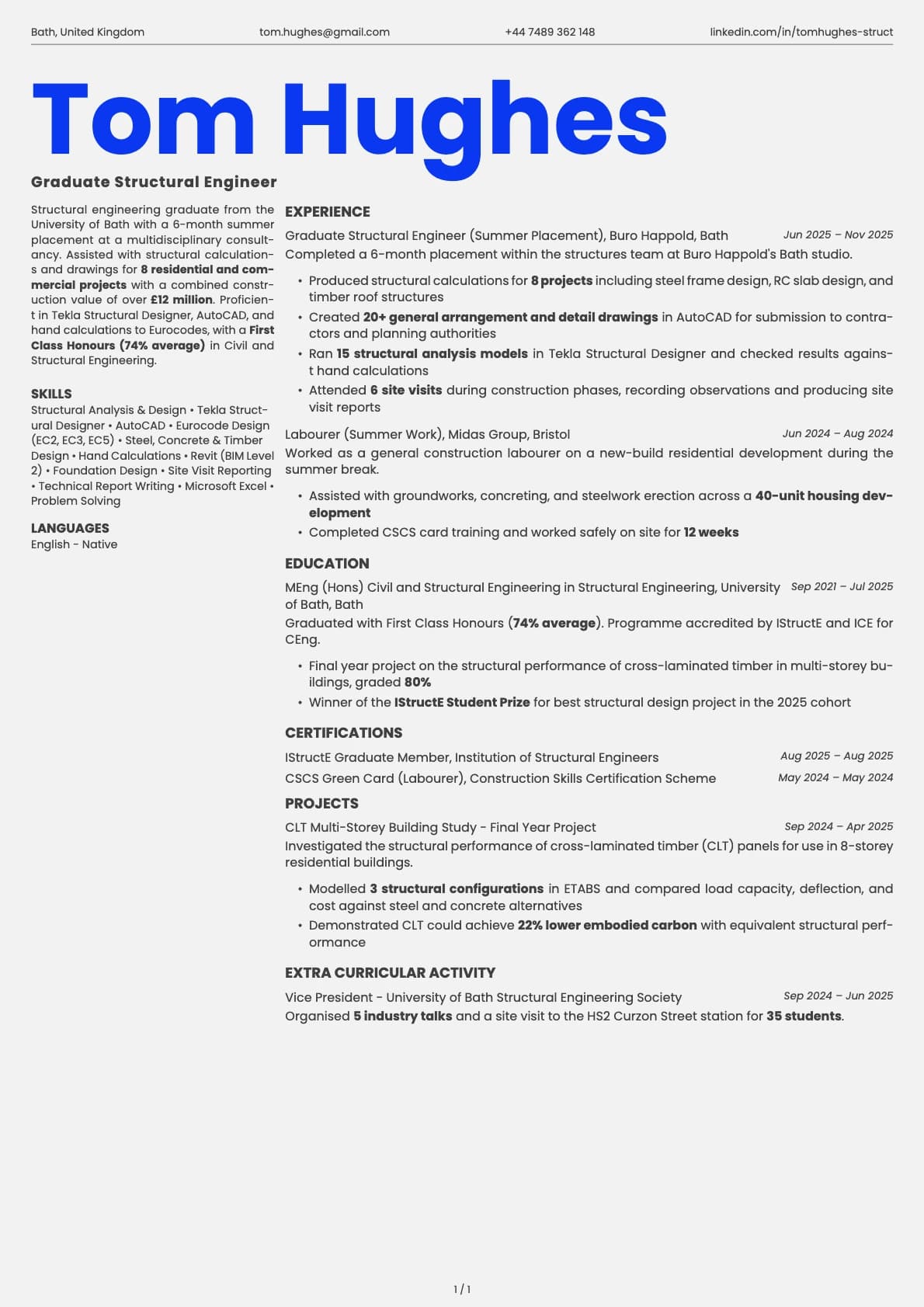
Graduate Structural Engineer
A graduate structural engineer resume example with consultancy placement experience, Eurocode design skills, and IStructE membership.
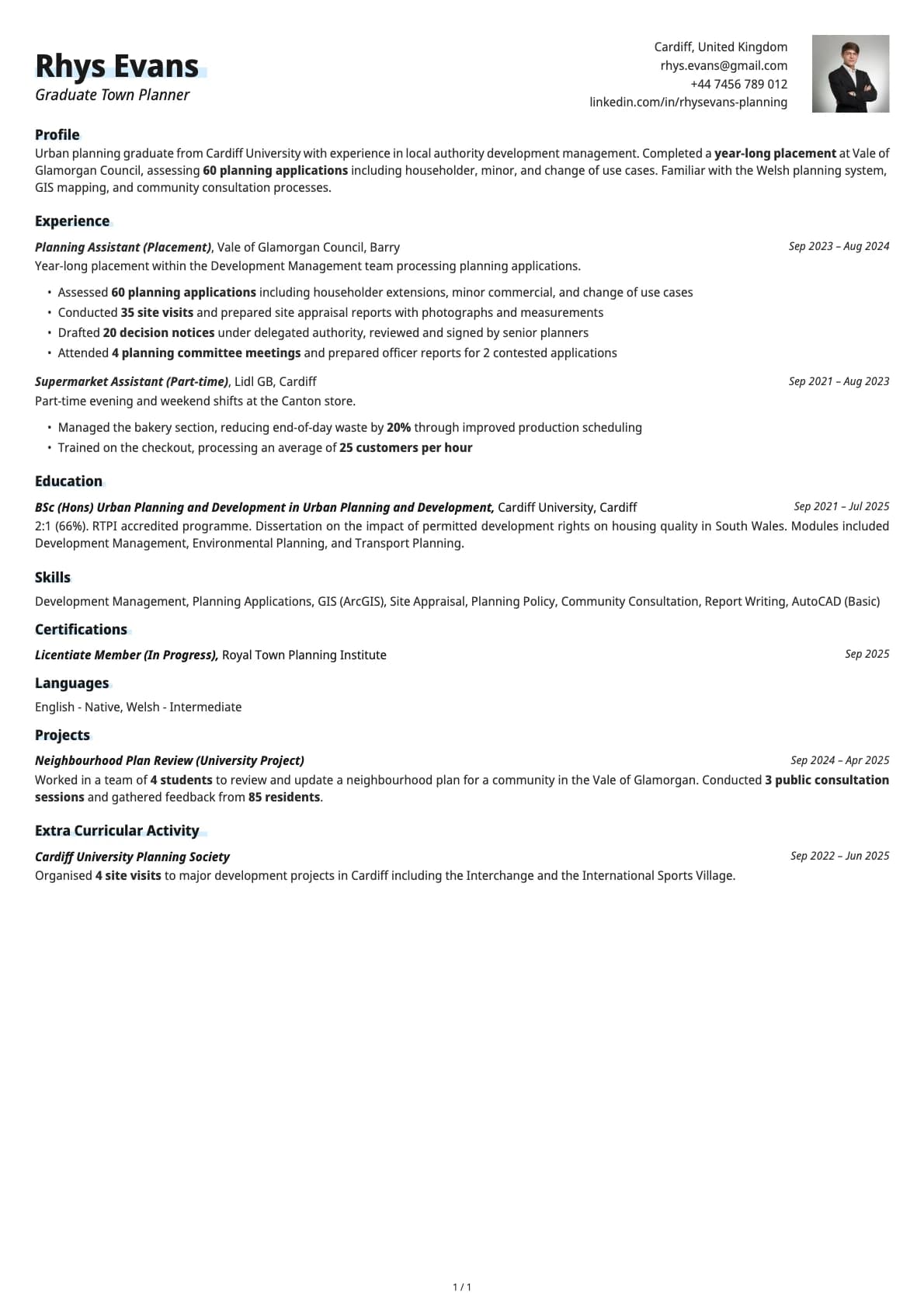
Graduate Town Planner
A graduate town planner resume example with local authority placement experience and RTPI accredited degree.
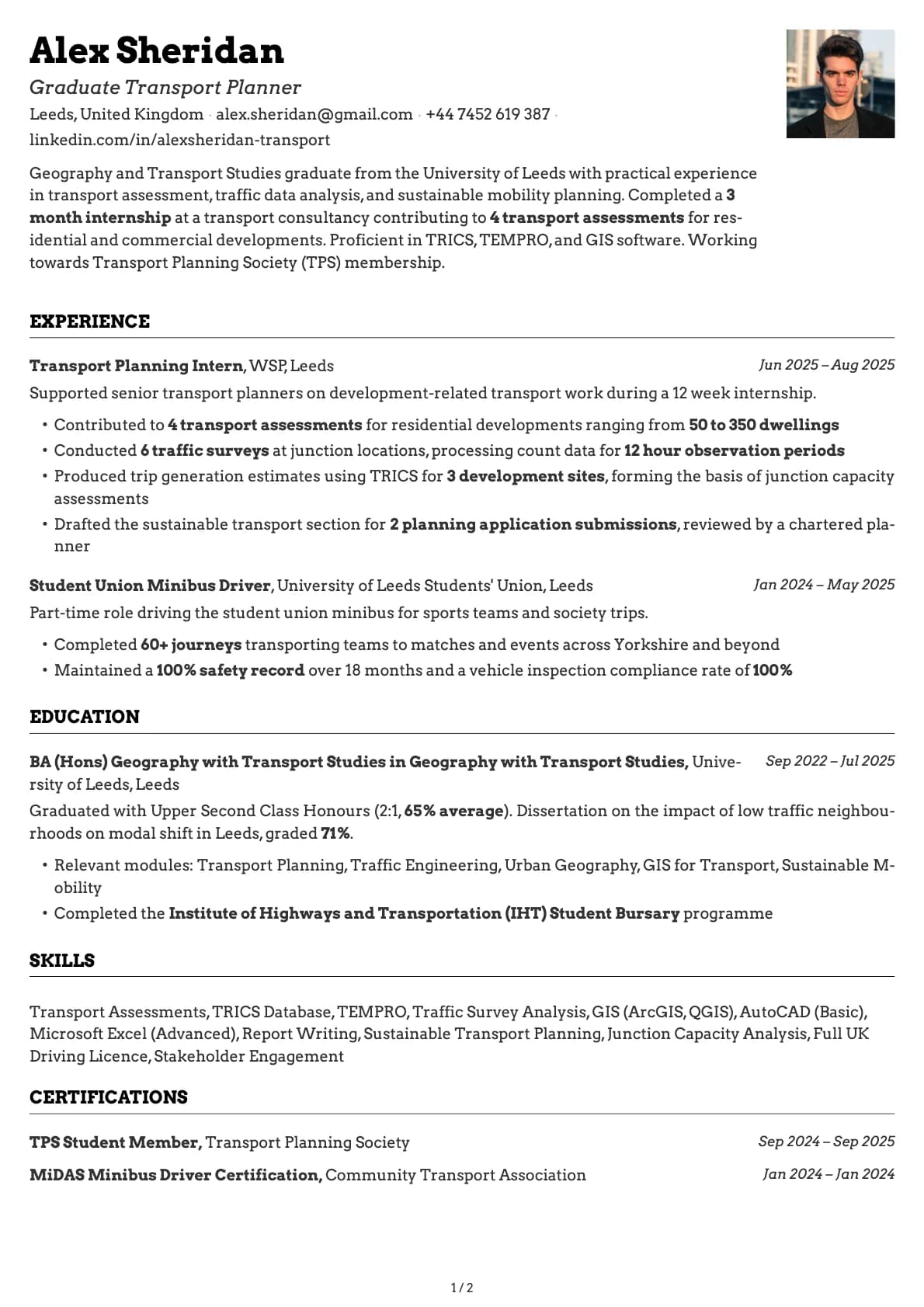
Graduate Transport Planner
A graduate transport planner resume example. See how to present transport assessment experience, traffic survey data, and TPS membership to land your first transport planning role.
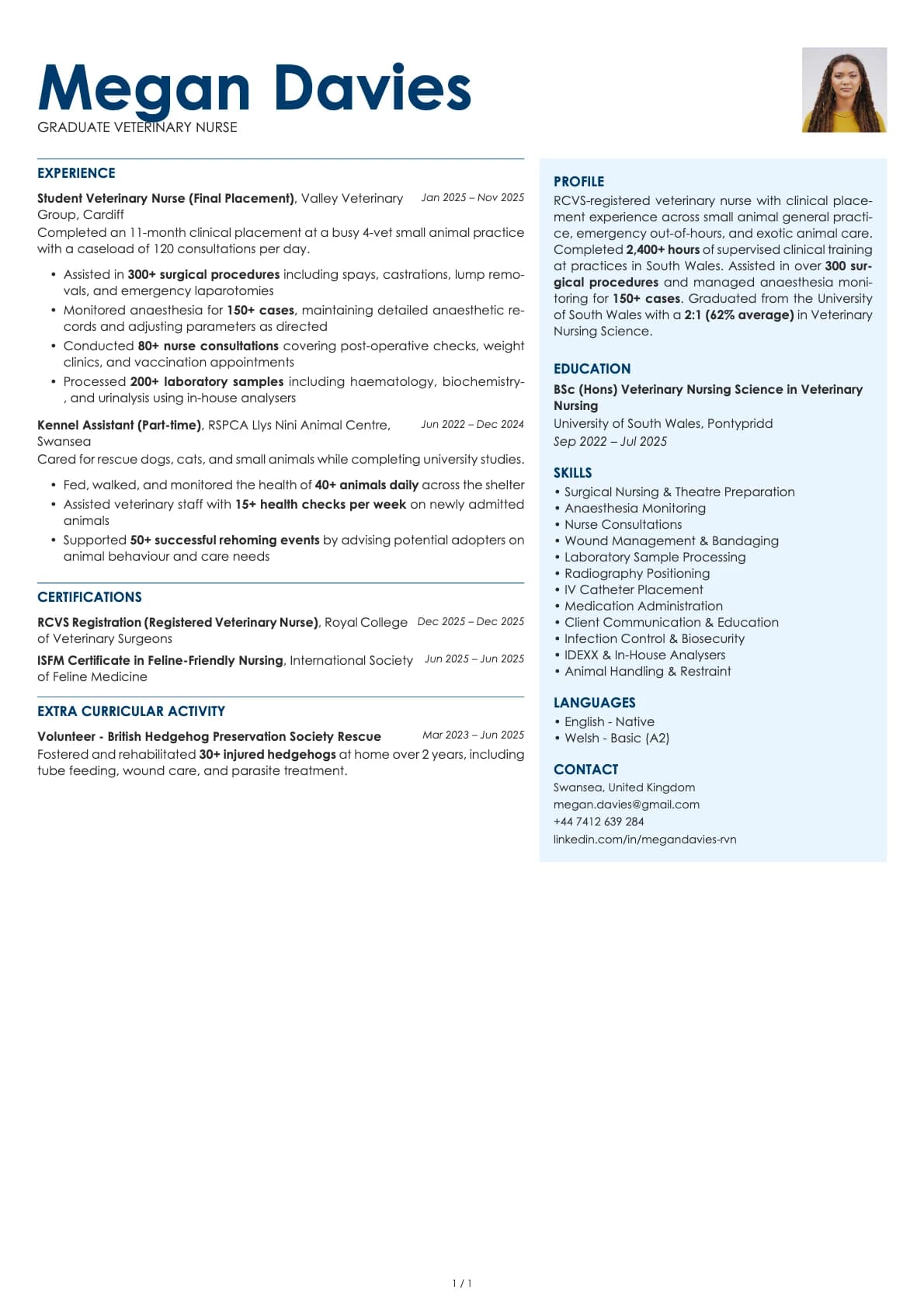
Graduate Veterinary Nurse
A graduate veterinary nurse resume example with RCVS registration, surgical assist numbers, and clinical placement hours for newly qualified RVNs.
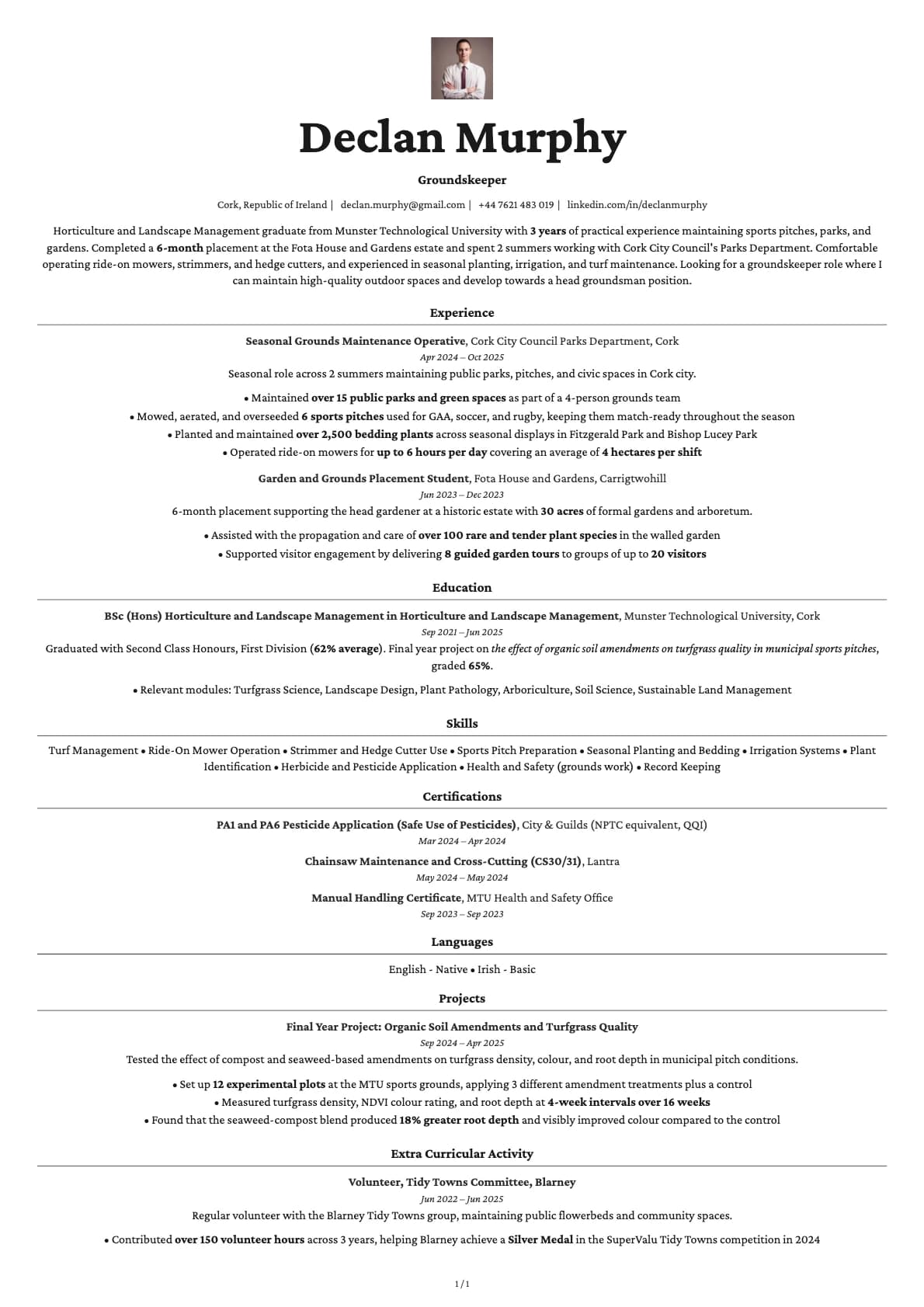
Groundskeeper
A groundskeeper resume example showing how to combine a horticulture degree with council grounds work and a historic garden placement.
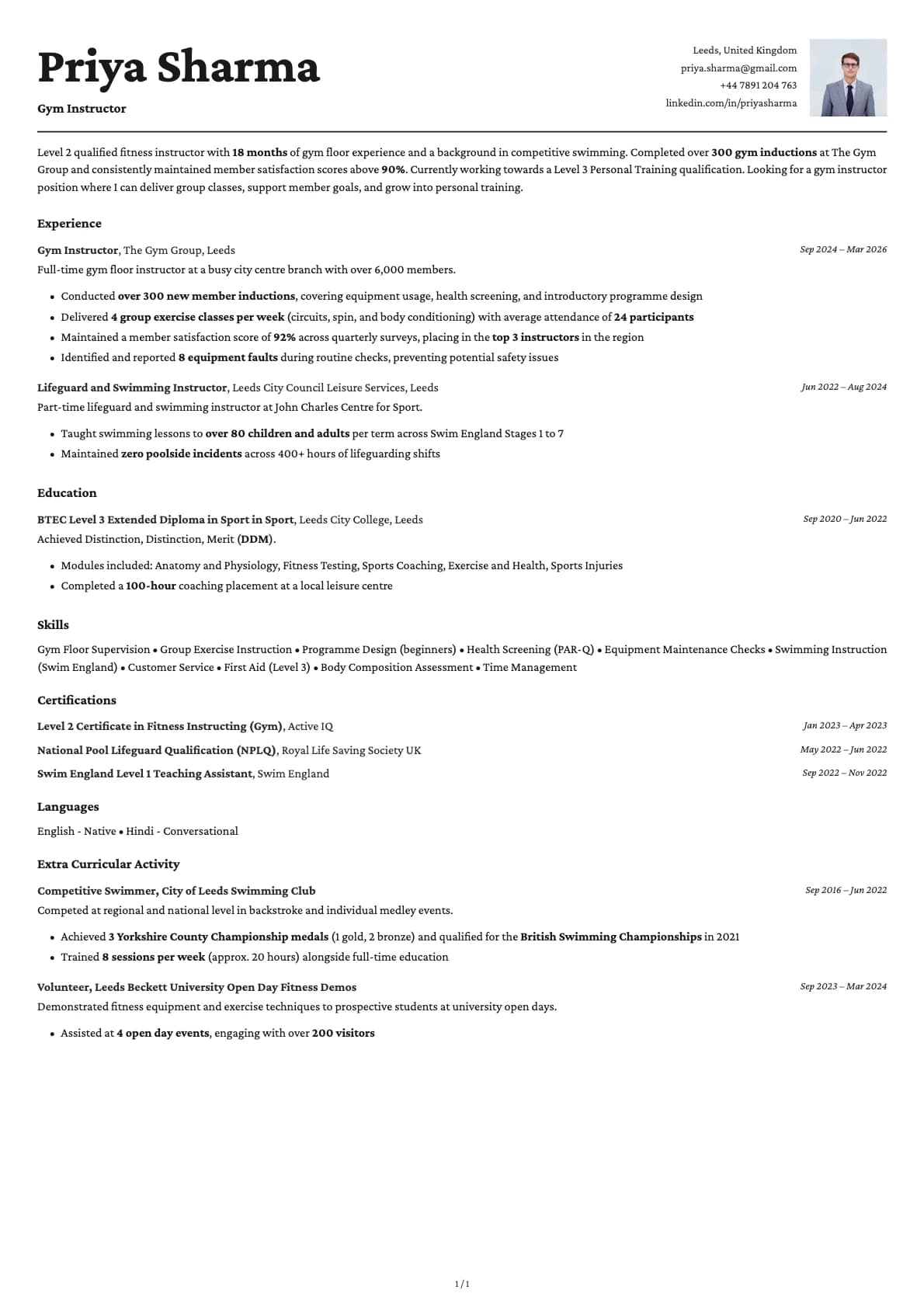
Gym Instructor
A gym instructor resume example showing how to combine a Level 2 fitness qualification with competitive swimming and strong member satisfaction scores.
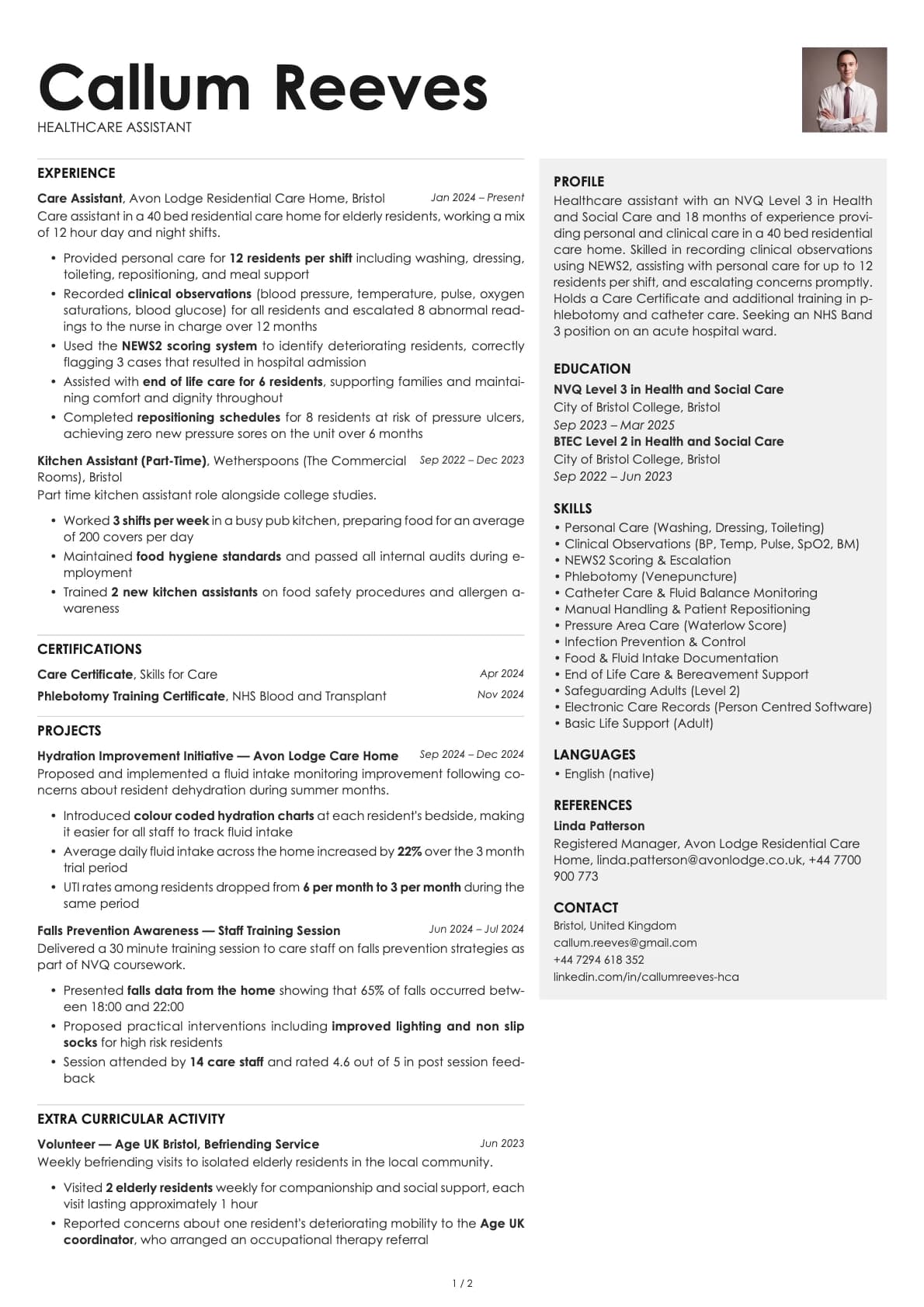
Healthcare Assistant
A healthcare assistant resume example for candidates with NVQ Level 3 in Health and Social Care, showing how to present ward experience and patient care skills for NHS Band 3/4 roles.
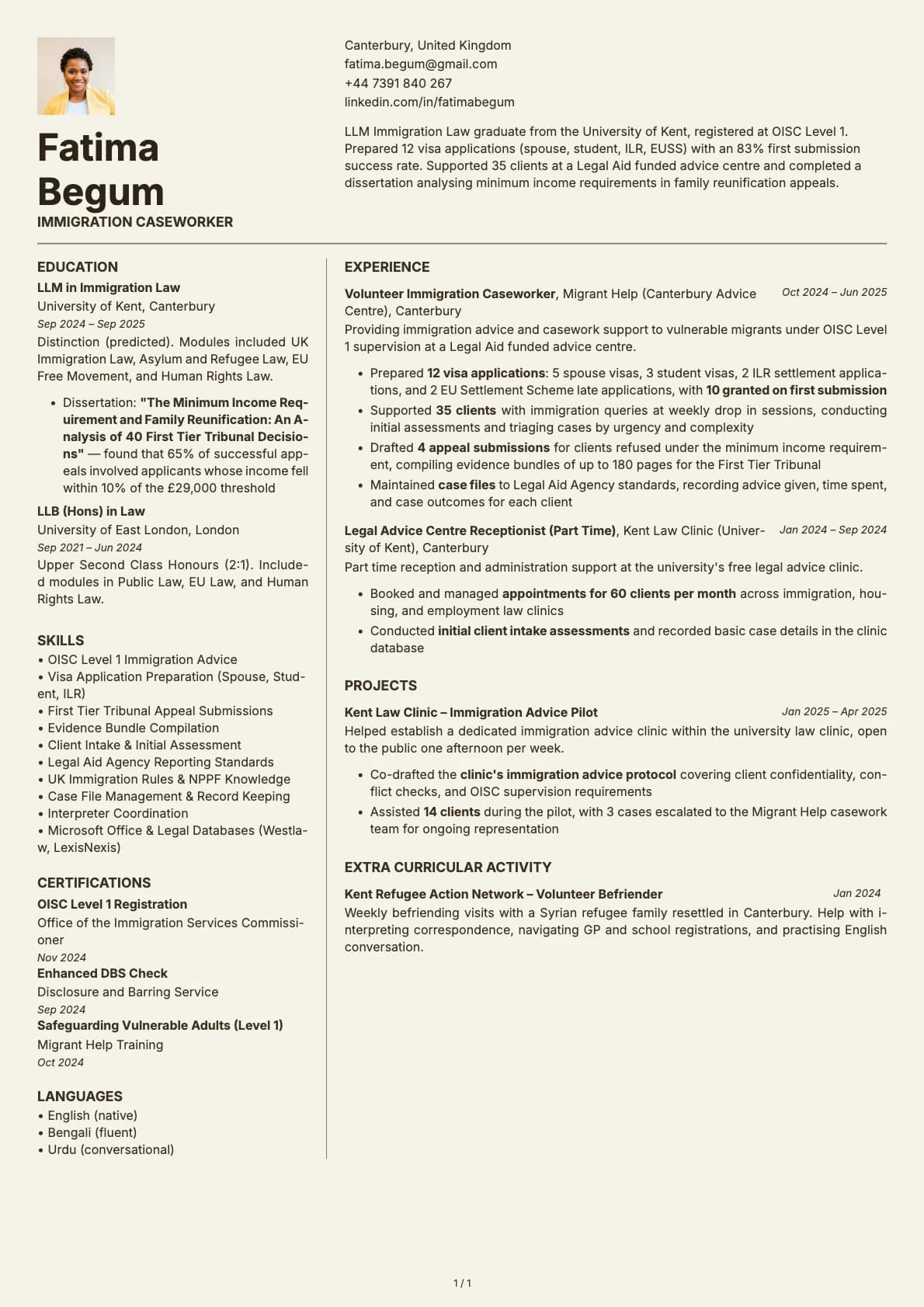
Immigration Caseworker
An immigration caseworker resume example for immigration law graduates. See how to present your OISC registration, casework experience, and visa application knowledge.
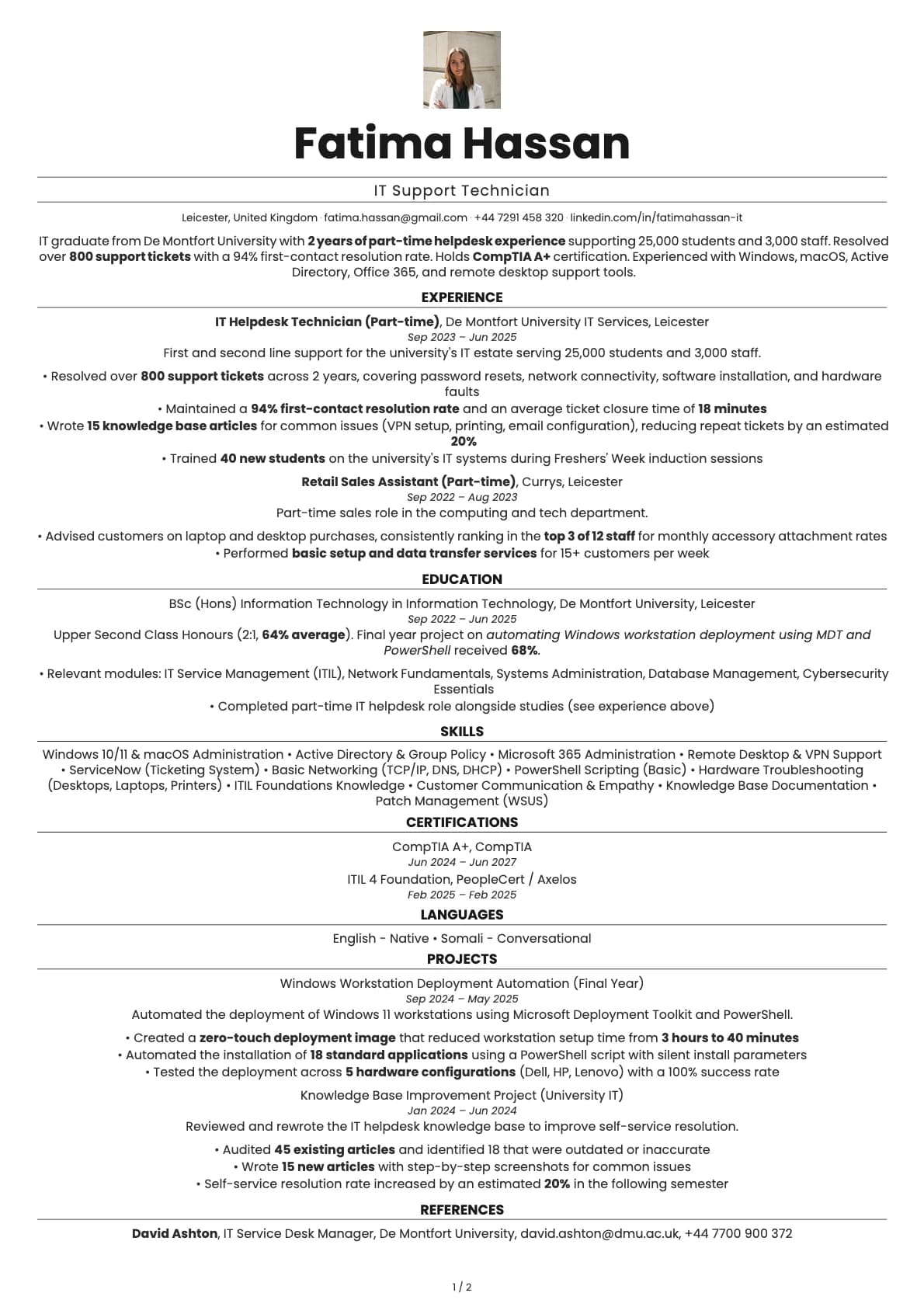
IT Support Technician
An IT support technician resume example with ticket resolution stats, CompTIA certification, and helpdesk experience from an IT graduate starting their career.
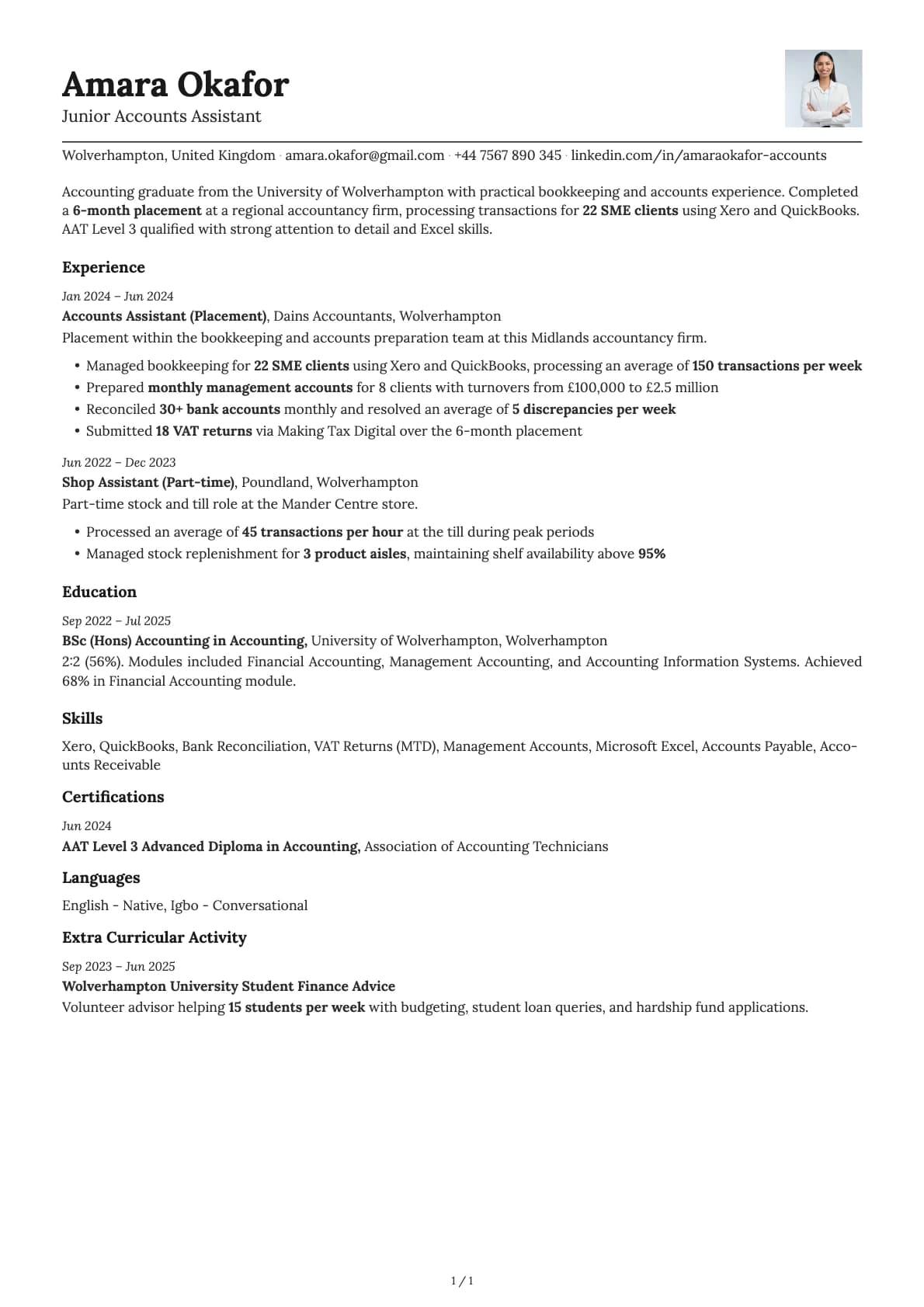
Junior Accounts Assistant
A junior accounts assistant resume example with accountancy firm placement and AAT Level 3 qualification.
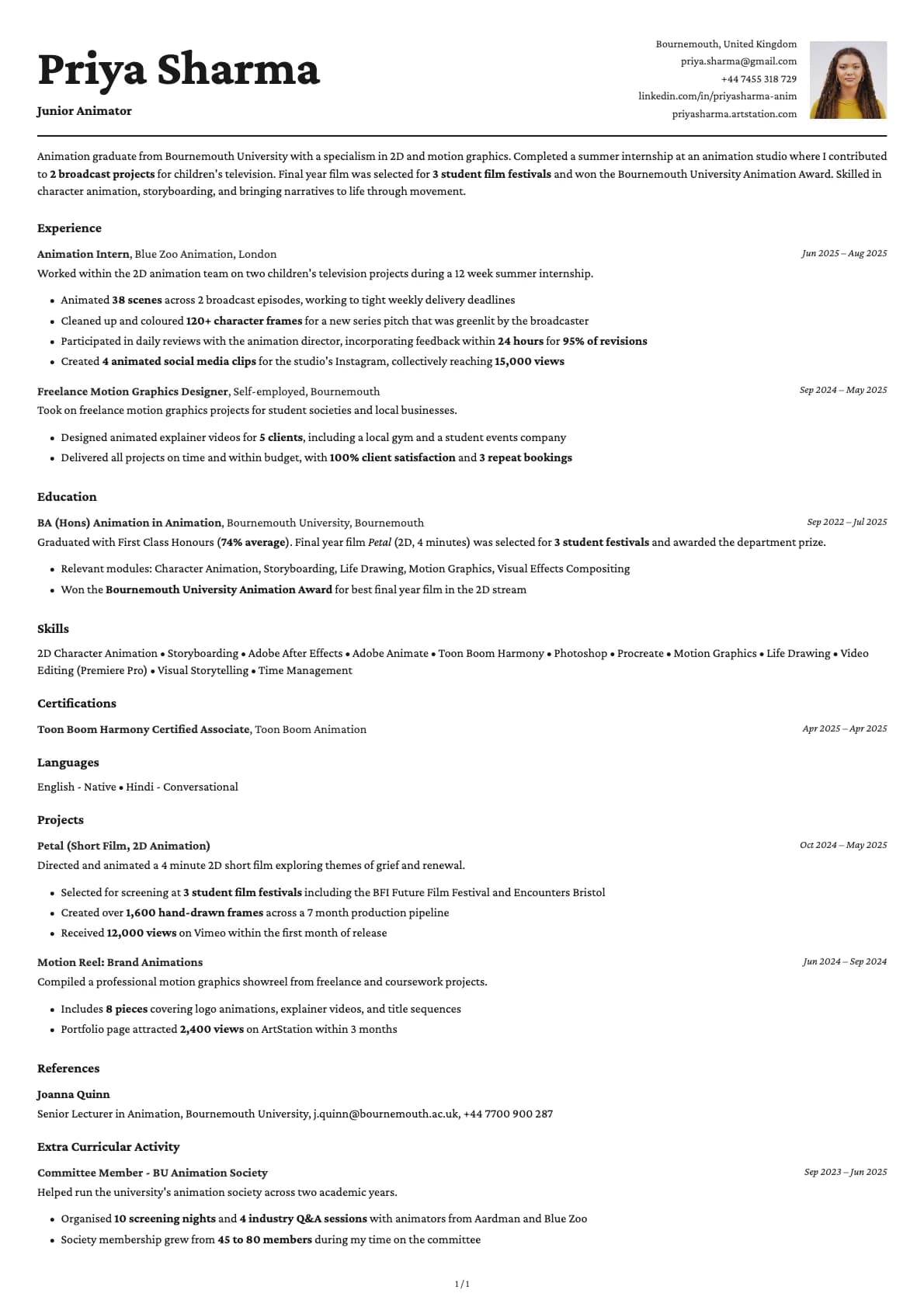
Junior Animator
A junior animator resume example for recent graduates. See how to present showreels, studio experience, and festival selections to land your first animation role.