Junior Accounts Assistant Resume Example
A junior accounts assistant resume example with accountancy firm placement and AAT Level 3 qualification.

Laddro Team
Free to use. No account needed to start.
Free to use. No account needed to start.
Overview
Accounts assistant roles are the entry point for many accounting careers. They involve bookkeeping, bank reconciliation, invoice processing, and VAT returns, all tasks that require accuracy and consistency. Employers hire graduates and AAT-qualified candidates who can start contributing from day one, so practical experience with real accounting software is essential.
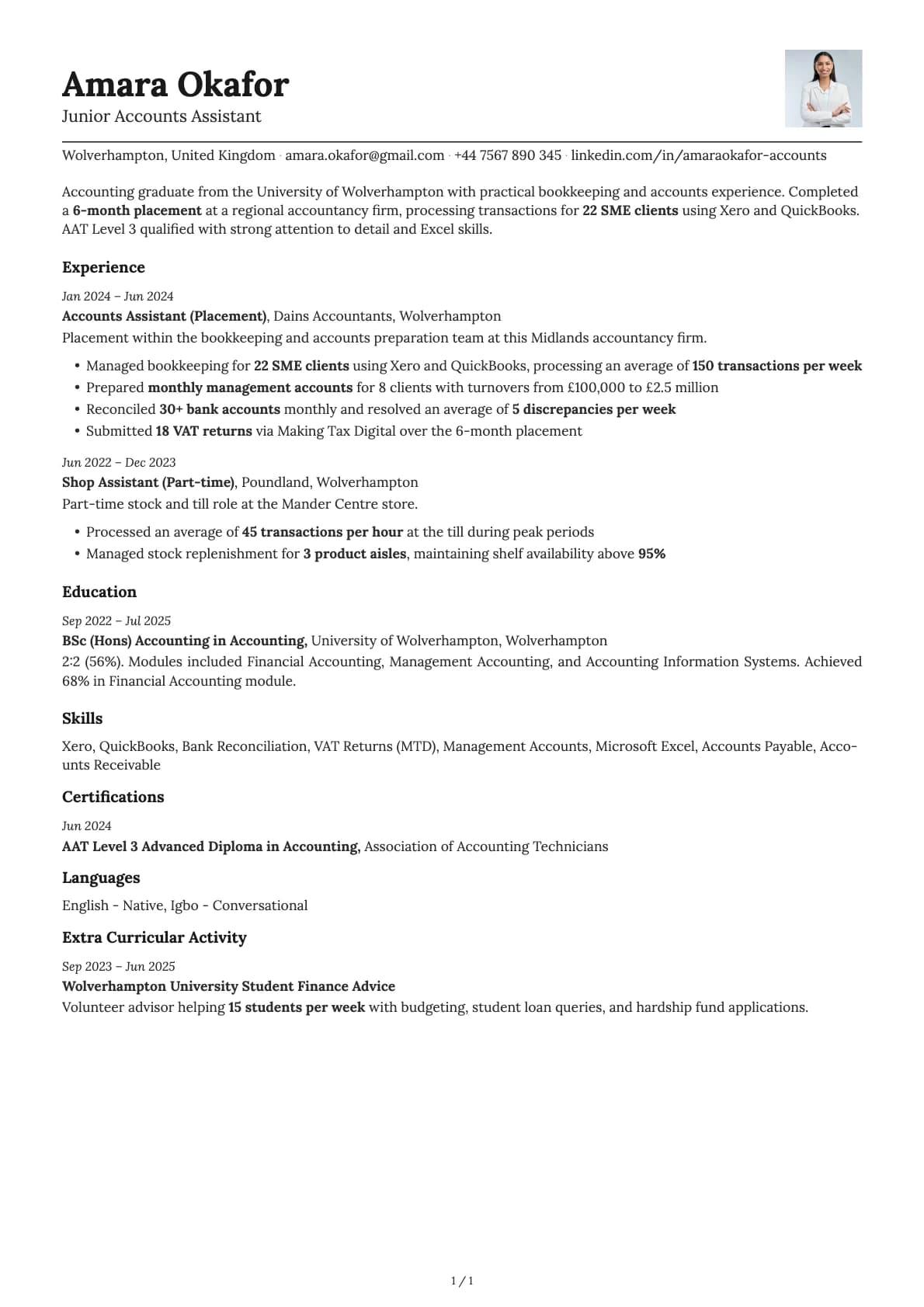
Amara Okafor is an accounting graduate from the University of Wolverhampton who completed a 6-month placement at Dains Accountants and holds an AAT Level 3 Advanced Diploma. Her resume works because it shows high-volume transaction processing, multiple software systems, and VAT submission experience.
What Makes This Resume Work
Bookkeeping for 22 clients across two software platforms. Managing accounts on both Xero and QuickBooks for multiple SME clients shows Amara can adapt to different systems and handle a varied workload. Most practices use multiple platforms, so this flexibility is valuable.
150 transactions per week with reconciliation accuracy. Processing this volume of transactions and reconciling 30+ bank accounts monthly shows Amara can handle the repetitive, detail-driven work that accounts assistant roles require. It also shows speed and reliability.
VAT returns submitted via MTD. Submitting 18 VAT returns is specific, practical experience that many graduates lack. It shows Amara understands the compliance deadlines and digital filing requirements that HMRC expects.
AAT Level 3 as a standalone qualification. Regardless of degree classification, having AAT Level 3 is a strong credential. It proves Amara has the technical accounting knowledge that employers need, validated by an external professional body.
Key Takeaways
For junior accounts assistant roles, name every piece of accounting software you have used (Xero, QuickBooks, Sage, etc.) and describe the volume of transactions you processed. Include bank reconciliation numbers, VAT return counts, and the number of clients you managed. An AAT qualification at Level 3 or above is a strong differentiator and should be highlighted prominently. If your degree classification is a 2:2, focus on your practical skills and professional qualifications instead, because in accounts, what you can do matters more than what grade you got.
Build your own version
Open this layout in the builder and swap in your own details. It takes a few minutes.
Free to use. No account needed to start.
Was this resume example helpful?
Rate this example to help us create better content for you.
4.5 average from 96 ratingsRelated resume examples
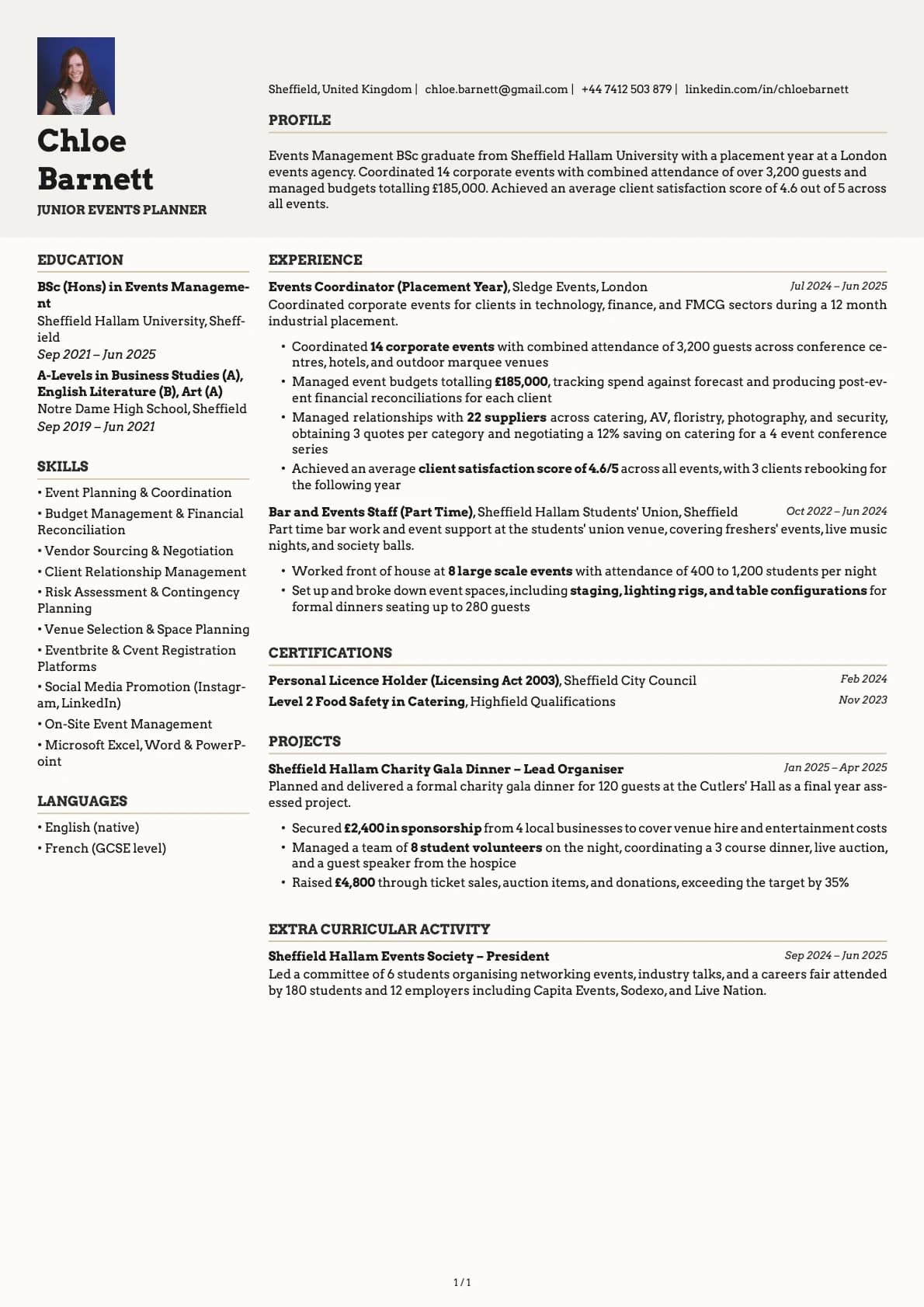
Junior Events Planner
A junior events planner resume example for events management graduates. See how to present your event coordination experience, guest counts, budgets, and vendor management skills.
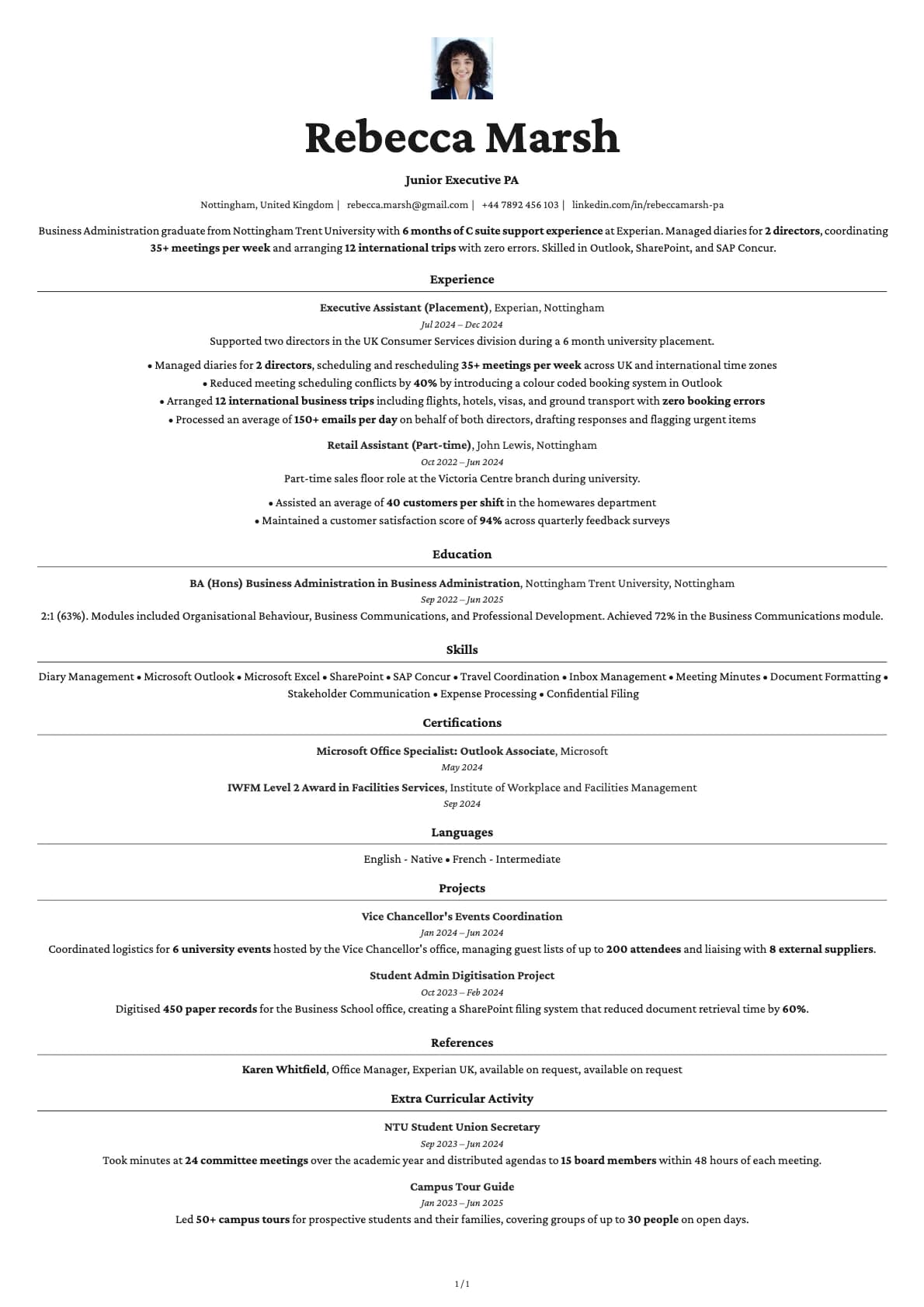
Junior Executive PA
A junior executive PA resume example with business administration degree, C-suite support experience, and diary management skills.
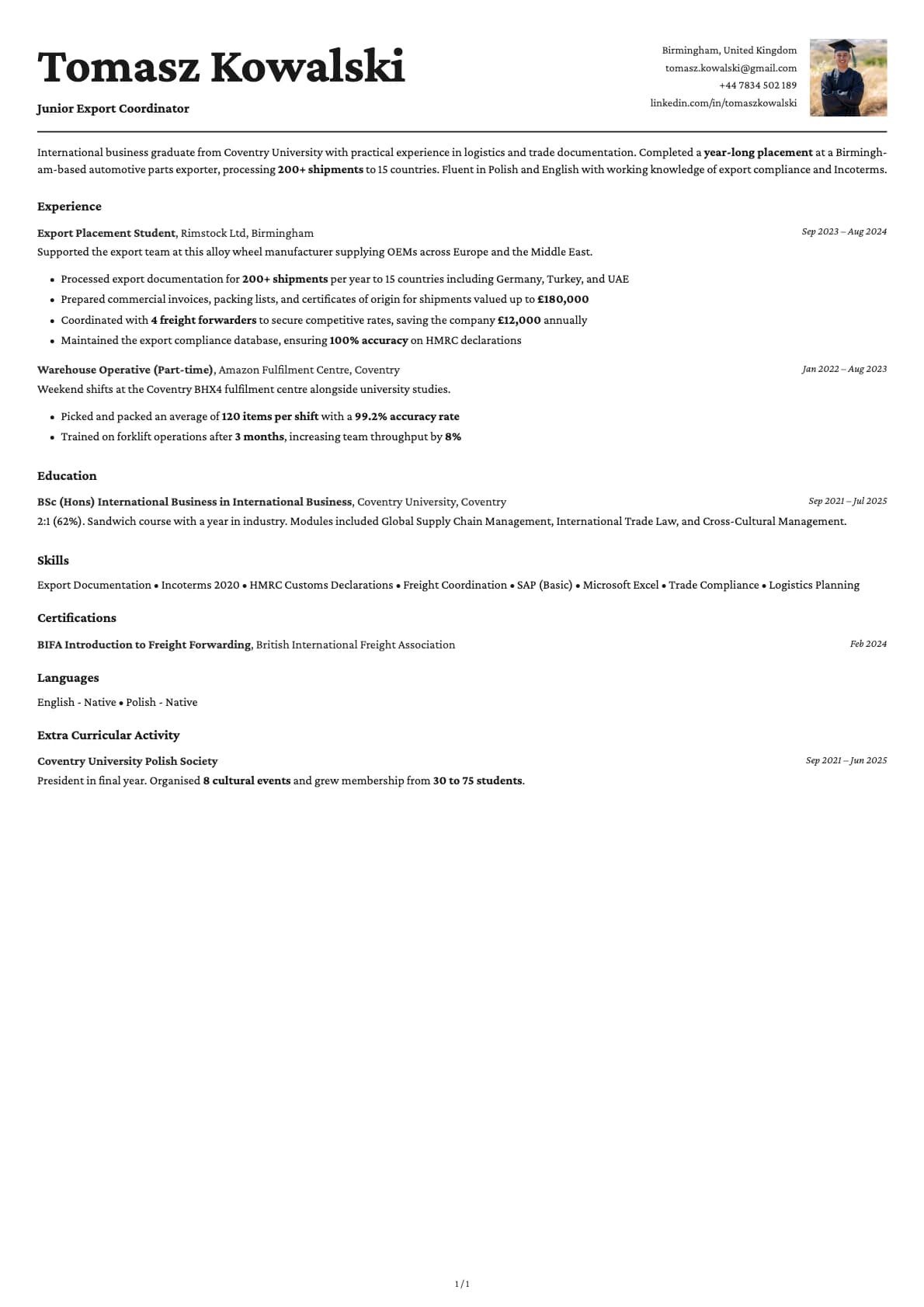
Junior Export Coordinator
A junior export coordinator resume example with placement experience in automotive exports and bilingual skills.
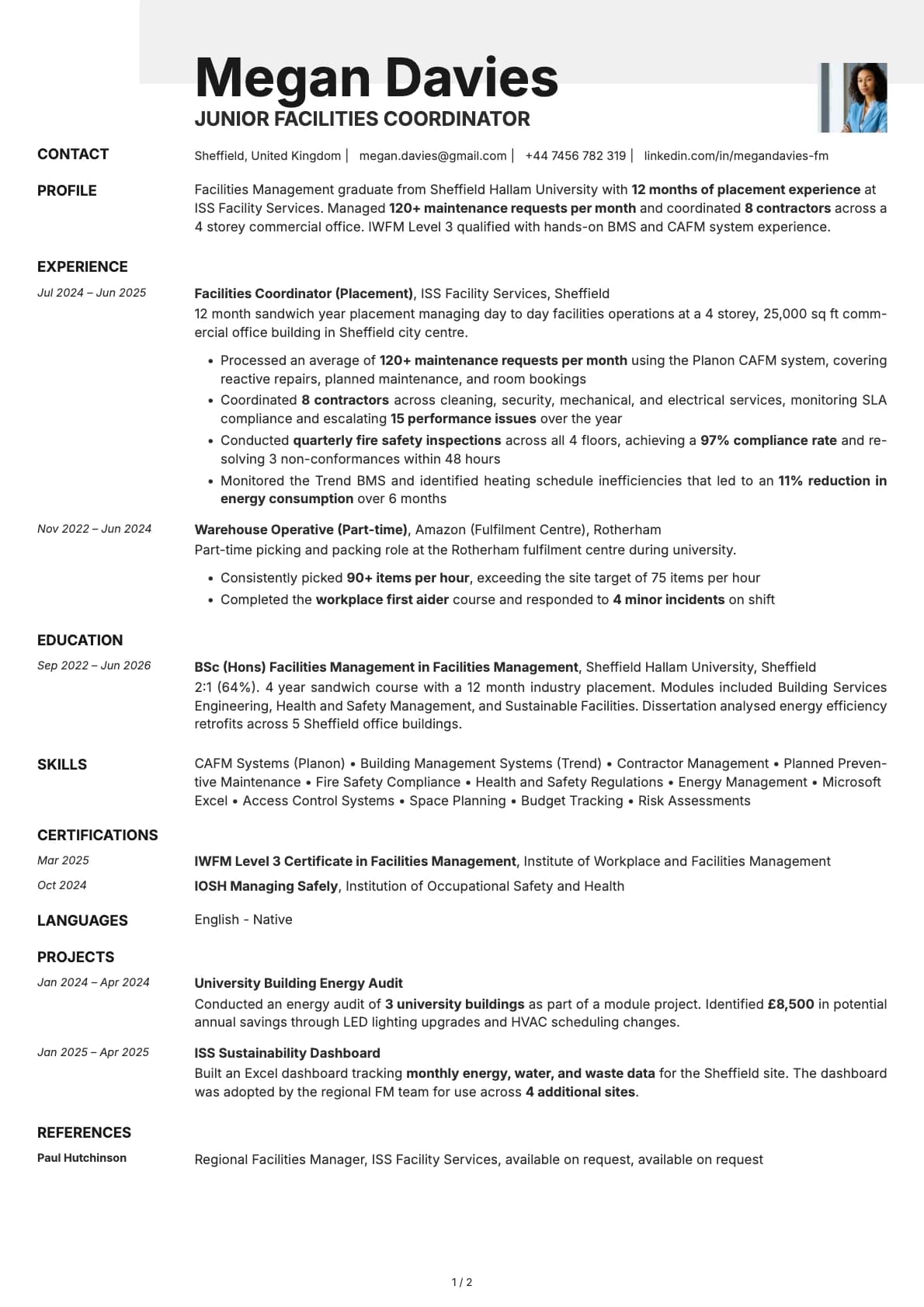
Junior Facilities Coordinator
A junior facilities coordinator resume example with facilities management degree, building services experience, and IWFM qualification.
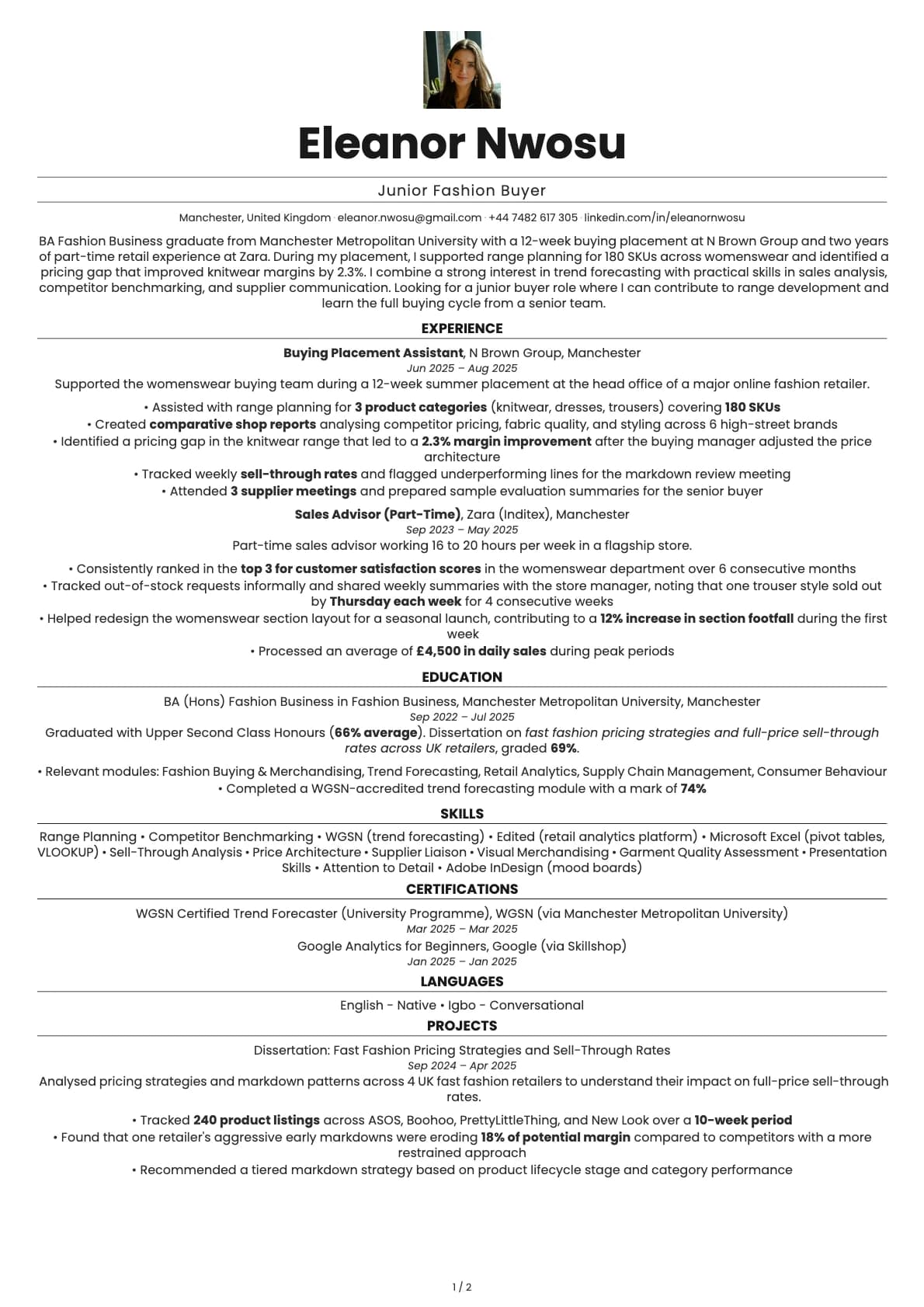
Junior Fashion Buyer
A junior fashion buyer resume example for fashion business graduates. See how retail experience and trend forecasting skills help you land a buying role.
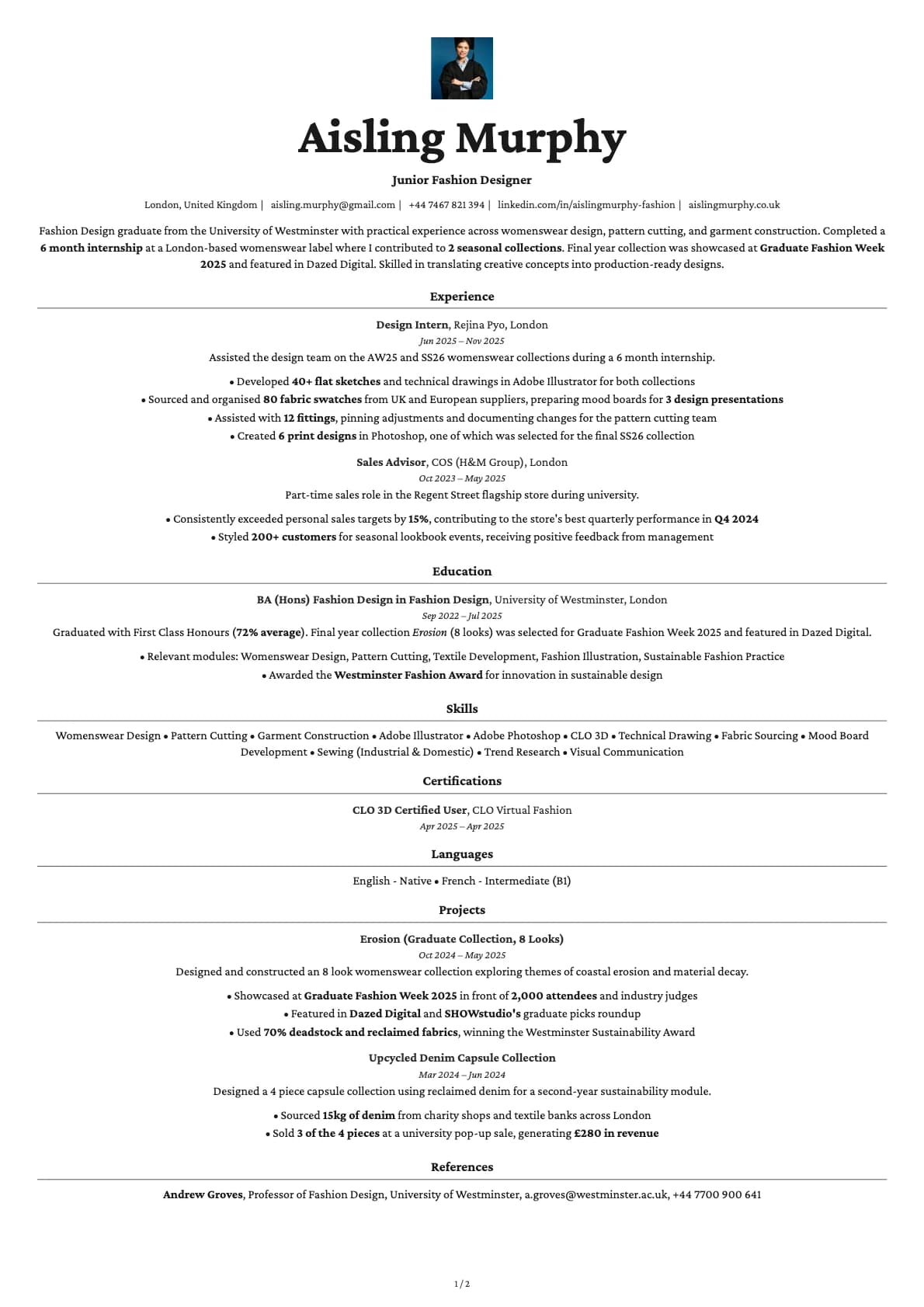
Junior Fashion Designer
A junior fashion designer resume example for recent graduates. See how to present collections, internship experience, and technical skills to land your first design role.
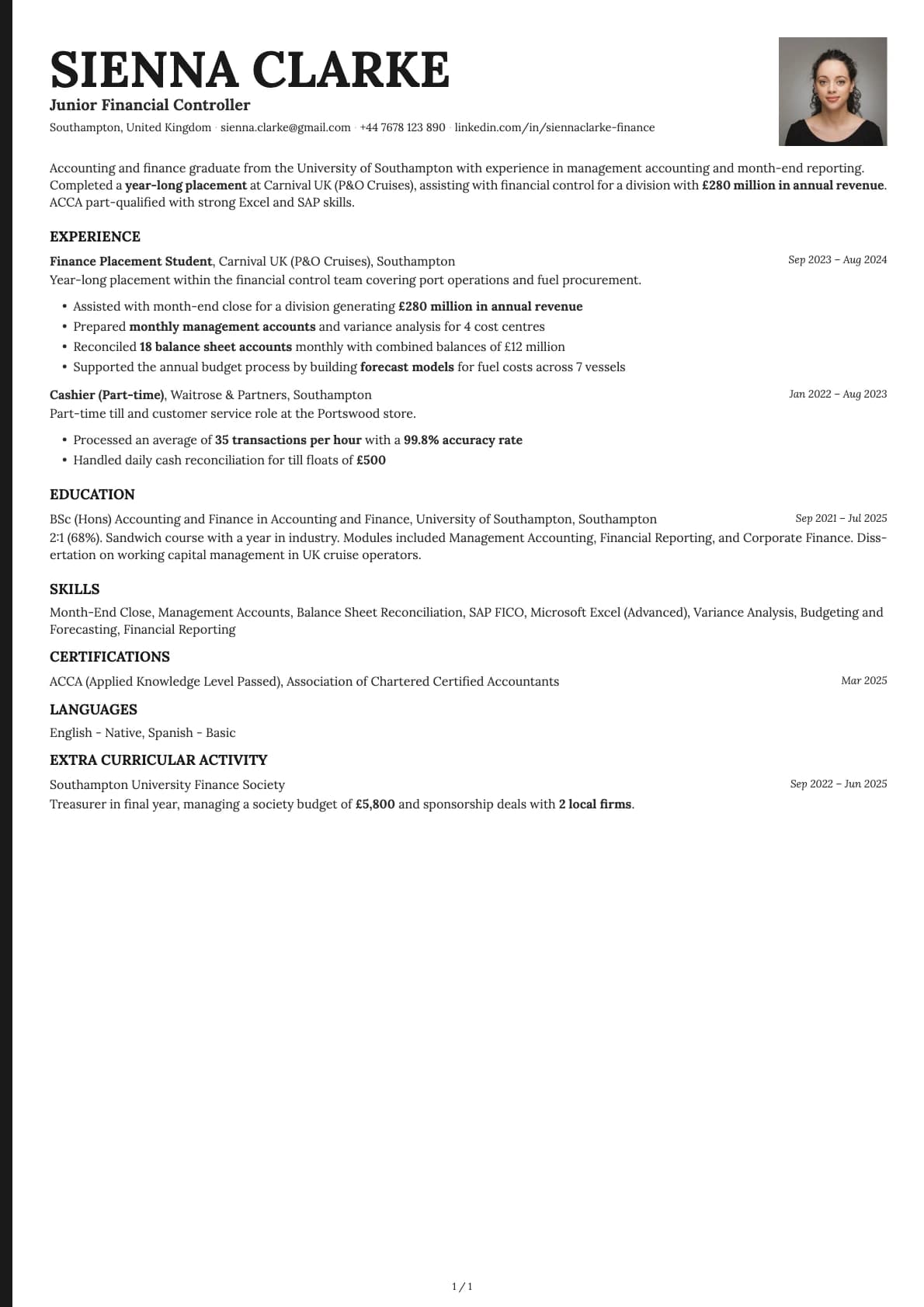
Junior Financial Controller
A junior financial controller resume example with Carnival UK placement and management accounting experience.
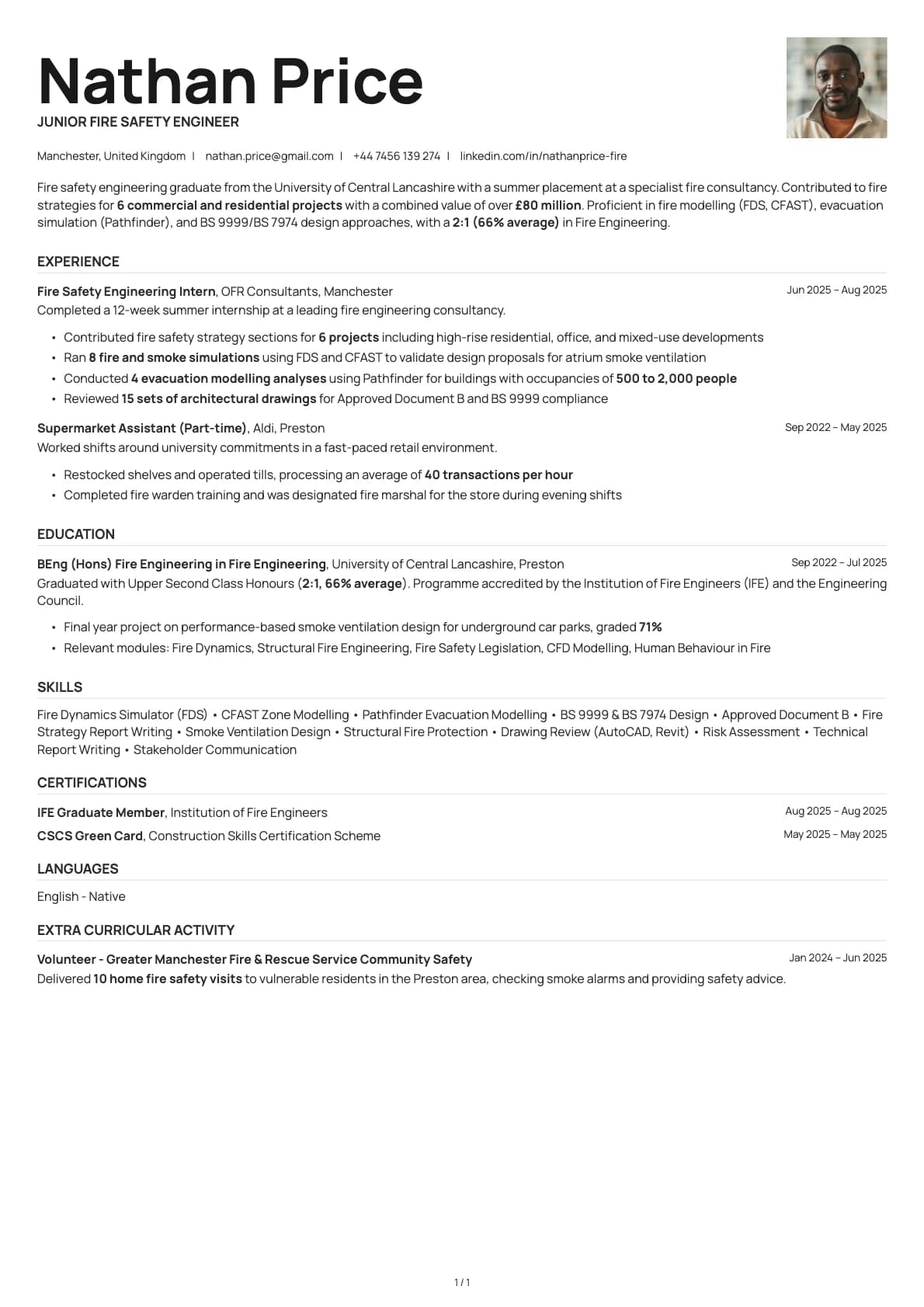
Junior Fire Safety Engineer
A junior fire safety engineer resume example with fire modelling experience, BS 9999 knowledge, and IFE membership for graduates.
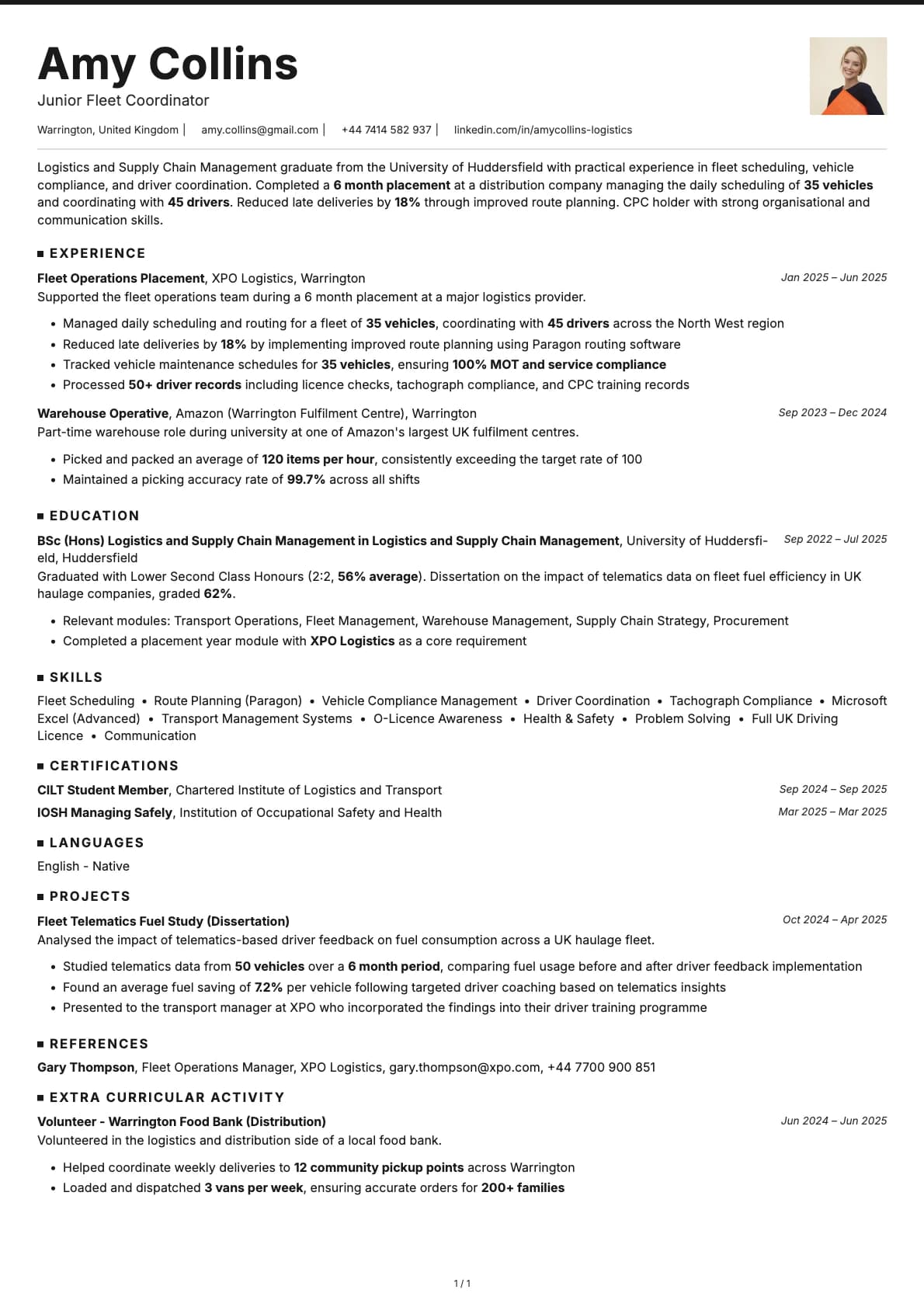
Junior Fleet Coordinator
A junior fleet coordinator resume example for graduates. See how to present fleet management, route planning, and vehicle compliance experience to land your first fleet coordination role.
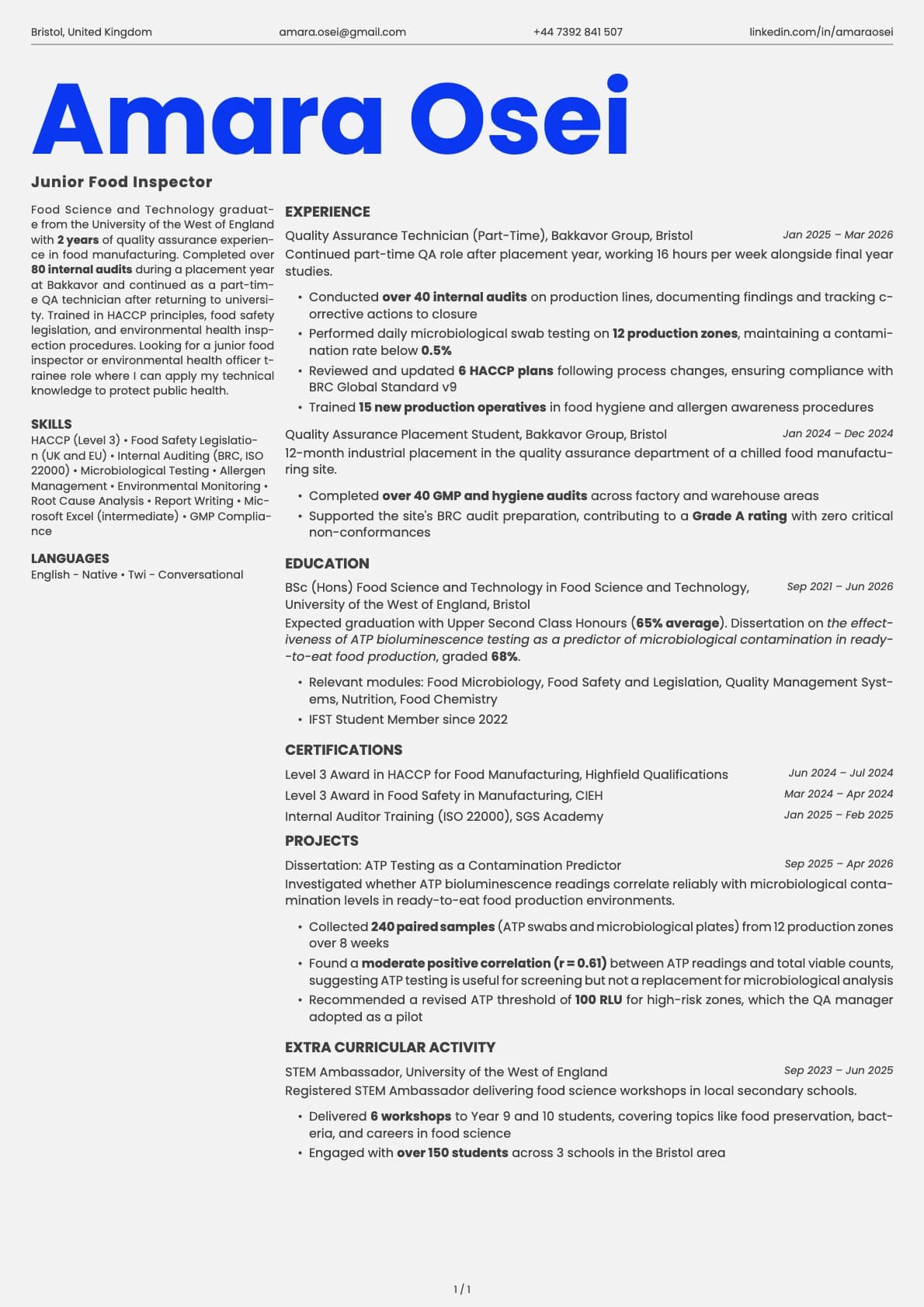
Junior Food Inspector
A junior food inspector resume example showing how to leverage QA experience in food manufacturing, HACCP training, and a food science degree.
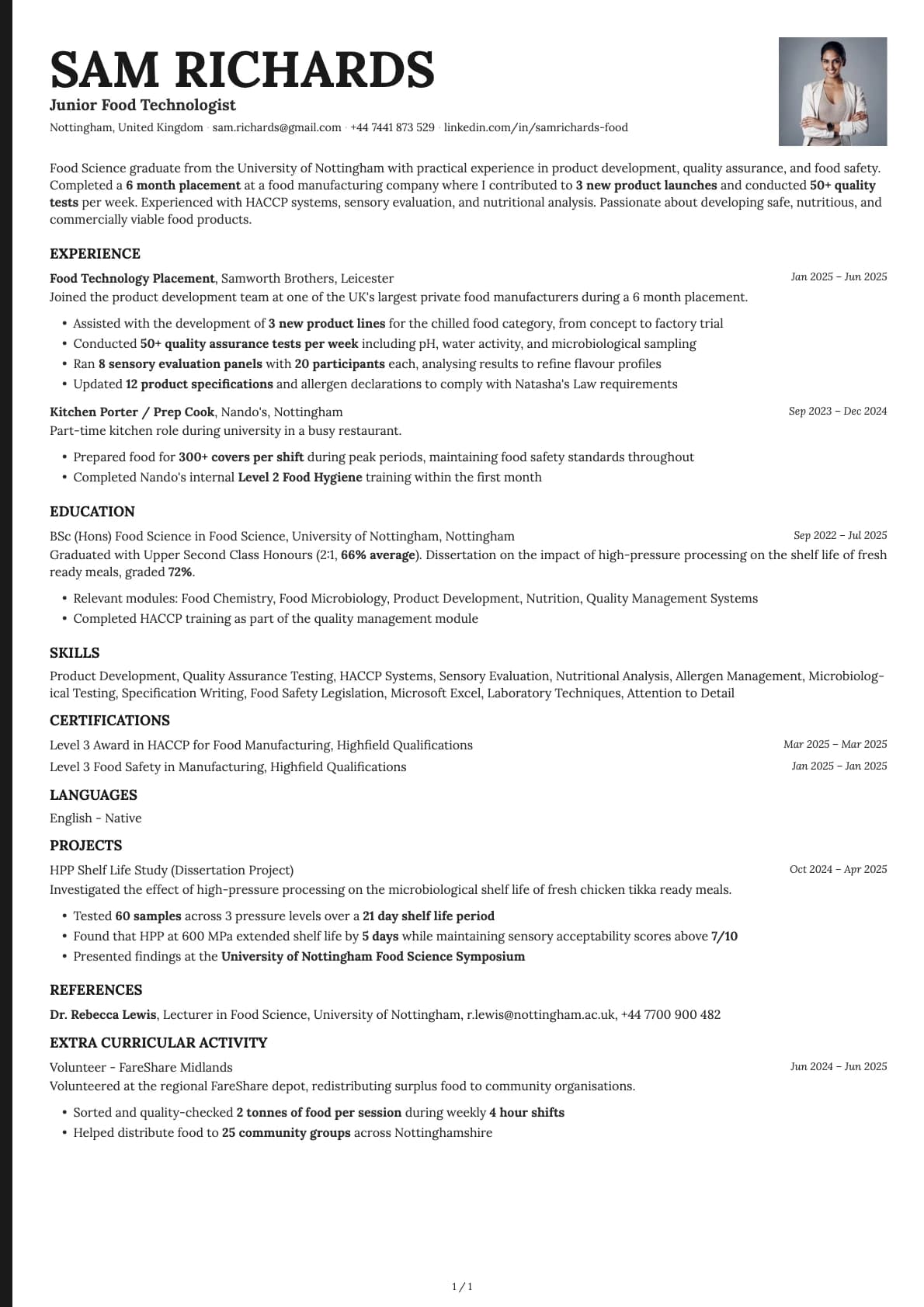
Junior Food Technologist
A junior food technologist resume example for graduates. See how to present product development, quality testing, and food safety experience to land your first food technology role.
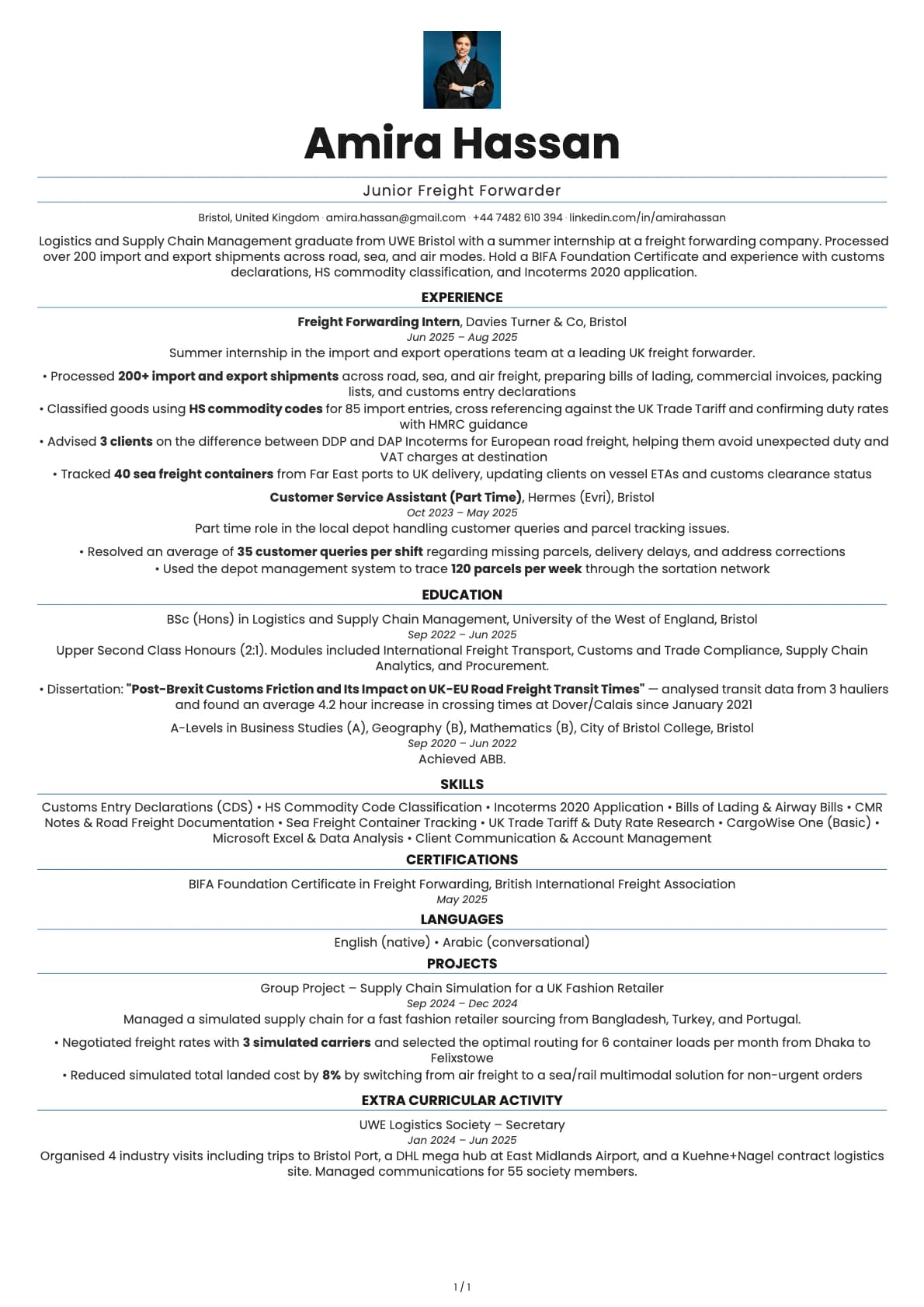
Junior Freight Forwarder
A junior freight forwarder resume example for logistics graduates entering international freight. See how to present your customs documentation, Incoterms knowledge, and freight operations experience.