Healthcare Assistant Resume Example
A healthcare assistant resume example for candidates with NVQ Level 3 in Health and Social Care, showing how to present ward experience and patient care skills for NHS Band 3/4 roles.

Laddro Team
Free to use. No account needed to start.
Free to use. No account needed to start.
Overview
Healthcare assistant roles are some of the most competitive entry level positions in the NHS. You do not need a degree, but you do need to demonstrate that you can provide safe, compassionate patient care in a fast paced clinical environment. The problem is that many HCA resumes read like a list of personal qualities rather than a record of practical competence. Ward managers want to know what you have actually done, how many patients you have looked after, and what clinical tasks you can perform.
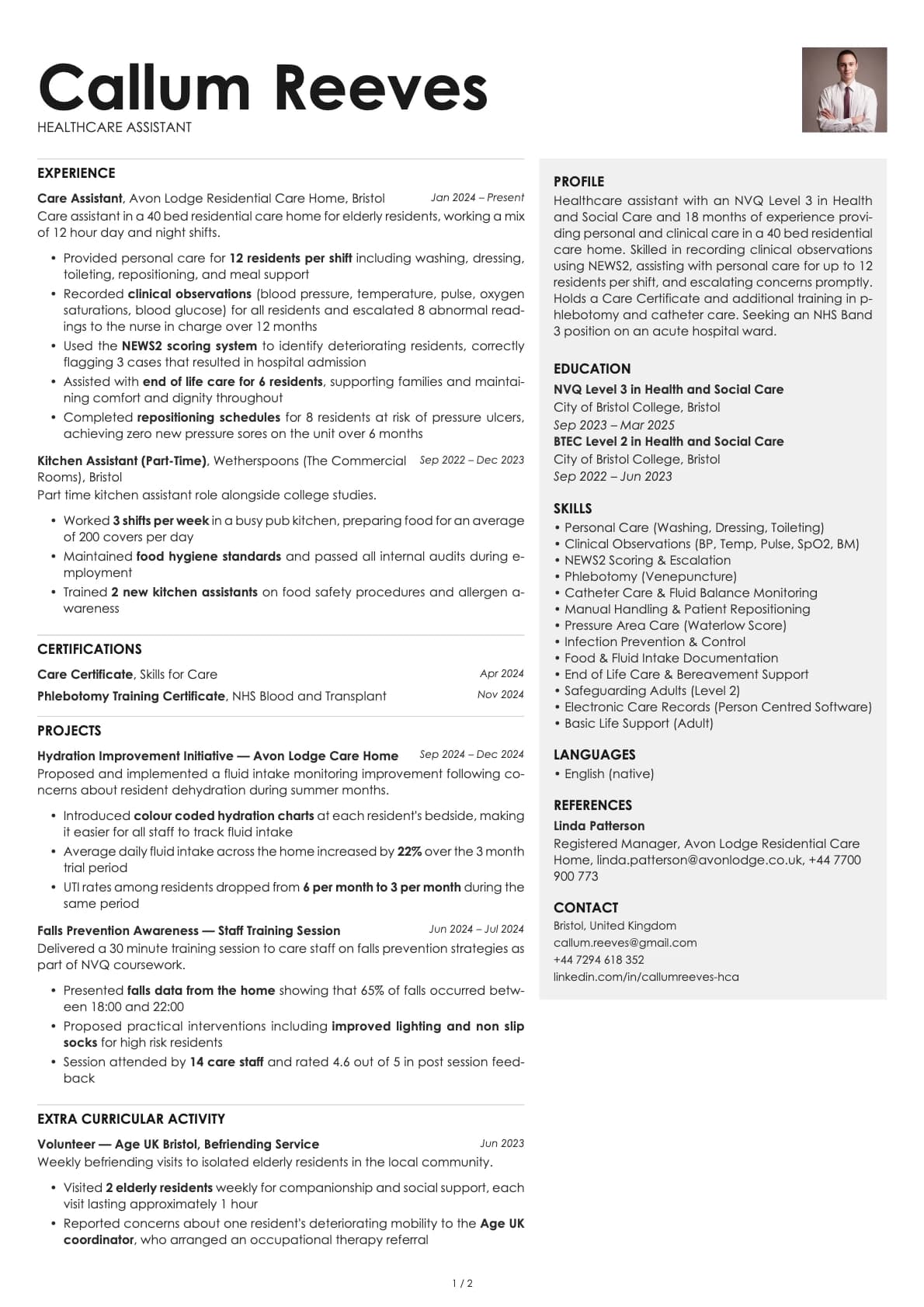
This resume belongs to Callum Reeves, who completed an NVQ Level 3 in Health and Social Care at a local college while working as a care assistant in a residential home. He is now applying for NHS Band 3 healthcare assistant positions. His resume works because it translates his care home experience into the language of acute hospital care and shows he has the clinical skills that ward managers look for.
What Makes This Resume Work
Patient numbers and shift patterns are stated clearly. Callum describes providing personal care for 12 residents per shift in a 40 bed care home, working a mix of 12 hour days and nights. He does not just say he "helped with patient care." He specifies that he assisted with washing, dressing, toileting, repositioning, and meal support, and states the number of residents he was responsible for. This tells a ward manager he can handle the workload.
Clinical observations are listed as a proven competence. He describes recording blood pressure, temperature, pulse, oxygen saturations, and blood glucose levels, and states that he escalated 8 abnormal readings to the nurse in charge over the past year. He also mentions using the NEWS2 scoring system. These are the core clinical tasks of an HCA, and demonstrating accuracy and escalation awareness is essential.
The NVQ Level 3 is presented as genuine training, not just a certificate. He describes the specific units he completed, including moving and handling, infection control, safeguarding, and end of life care. He also mentions his assessor observed him in practice 6 times and that he maintained a reflective log of 24 learning experiences. This shows the qualification involved real clinical assessment, not just coursework.
Additional training shows initiative. Beyond the NVQ, he completed phlebotomy training, a catheter care course, and dementia awareness training. He also holds a Care Certificate. Each additional qualification adds a specific skill that makes him more useful on a ward, and listing them demonstrates that he is actively building his competence.
Key Takeaways
State your patient numbers clearly. How many patients or residents per shift? What tasks did you perform for them? Ward managers need to assess whether you can handle the workload on a busy acute ward, and numbers are the best way to demonstrate that.
List your clinical observation skills and give examples of escalation. Recording observations is expected. Knowing when to escalate an abnormal reading is what separates a competent HCA from a dangerous one. Show that you understand this.
Present your NVQ as practical training, not just a qualification. Describe the units, the practice observations, and the reflective work. If you also hold a Care Certificate or additional training certificates, list them all. Every extra skill makes you more employable.
Build your own version
Open this layout in the builder and swap in your own details. It takes a few minutes.
Free to use. No account needed to start.
Was this resume example helpful?
Rate this example to help us create better content for you.
4.8 average from 187 ratingsRelated resume examples
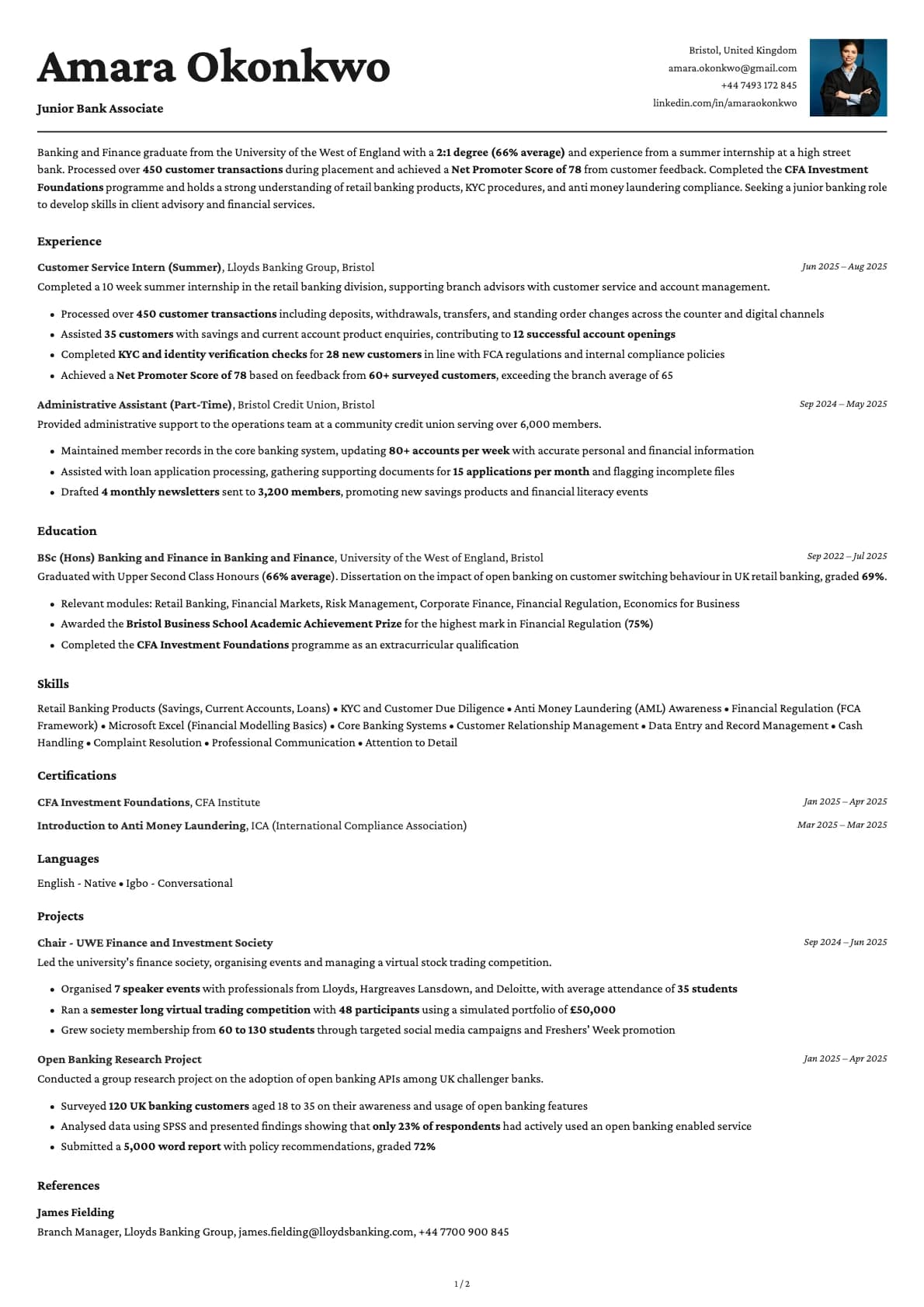
Junior Bank Associate
A junior bank associate resume example for banking graduates. See how to present your compliance knowledge, customer service skills, and internship experience.
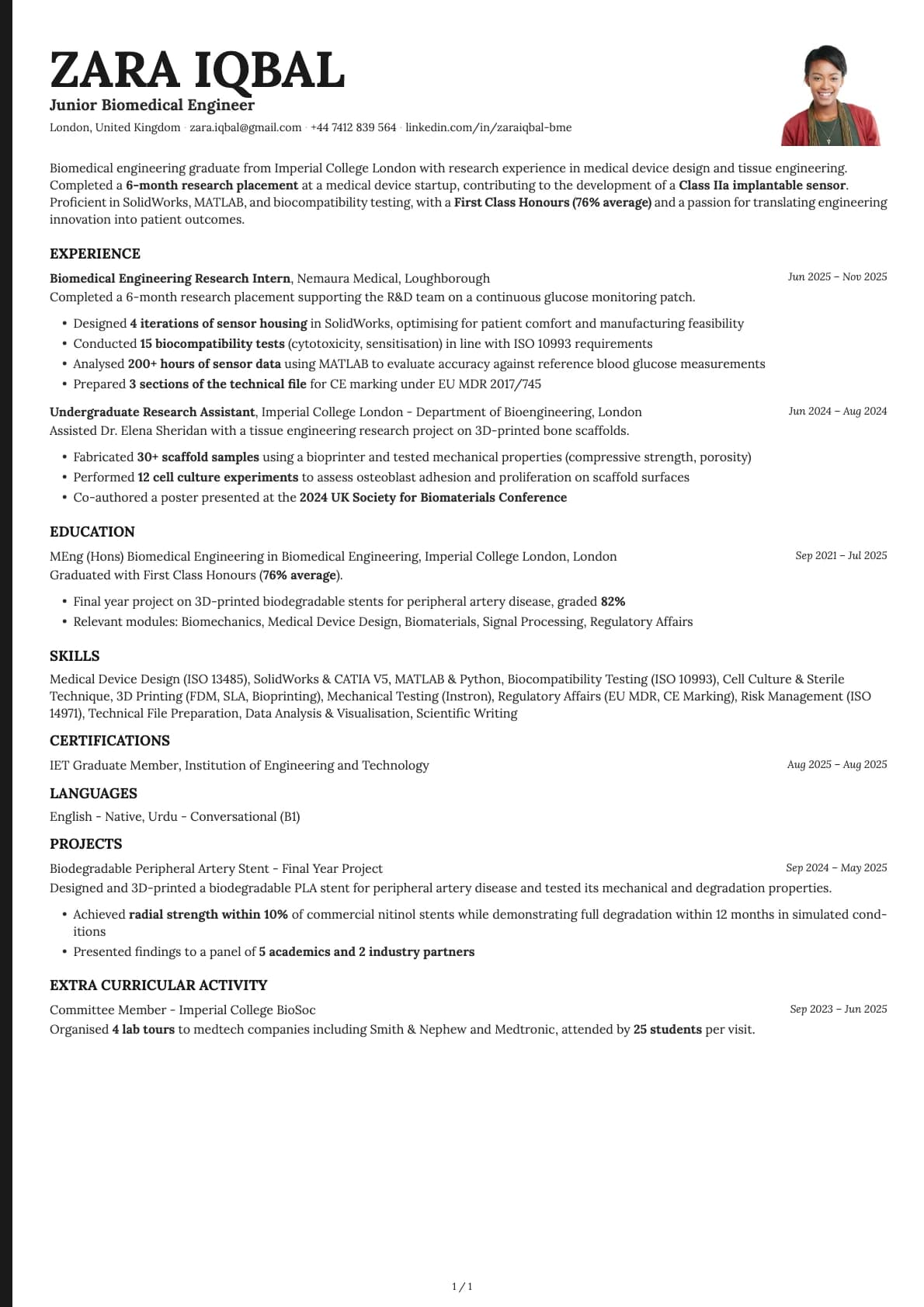
Junior Biomedical Engineer
A junior biomedical engineer resume example with medical device R&D experience, ISO standards knowledge, and research publications.
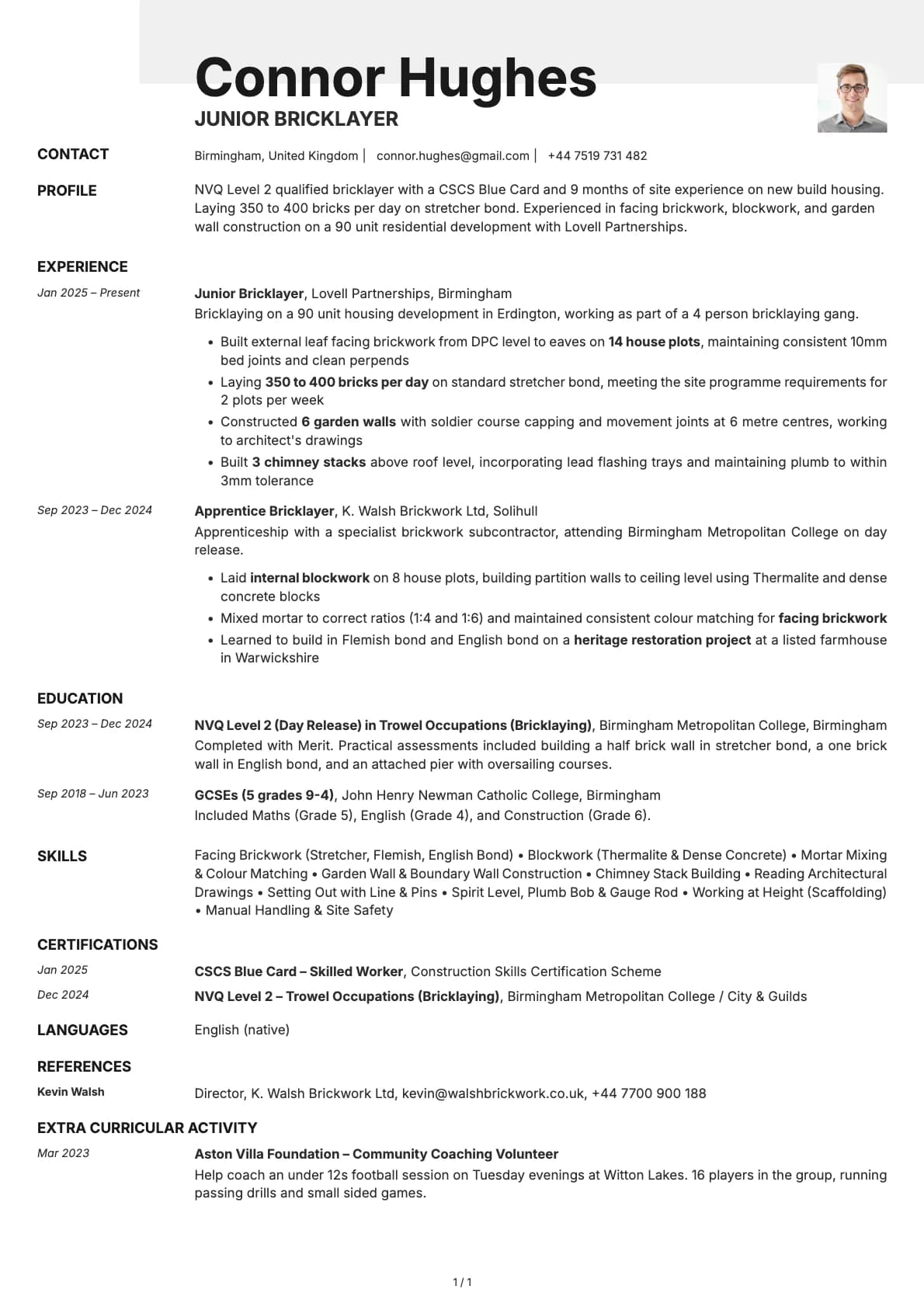
Junior Bricklayer
A junior bricklayer resume example for NVQ qualified bricklayers entering the trade. See how to present your bricklaying skills, CSCS card, and site experience.

Junior Business Analyst
A junior business analyst resume example for career changers. See how to use retail management and a business degree to break into business analysis.
Junior Business Development Associate
A junior business development associate resume example for entrepreneurship graduates. See how cold outreach metrics and startup experience win interviews.
Junior CAD Technician
A junior CAD technician resume example with HND qualification, AutoCAD and Revit proficiency, and architectural practice experience.
Junior Care Coordinator
A junior care coordinator resume example with domiciliary care experience, rota management numbers, and CQC compliance for new coordinators.
Junior Carpenter
A junior carpenter resume example for carpentry apprenticeship graduates. See how to present your City & Guilds, site joinery experience, and CSCS card details.
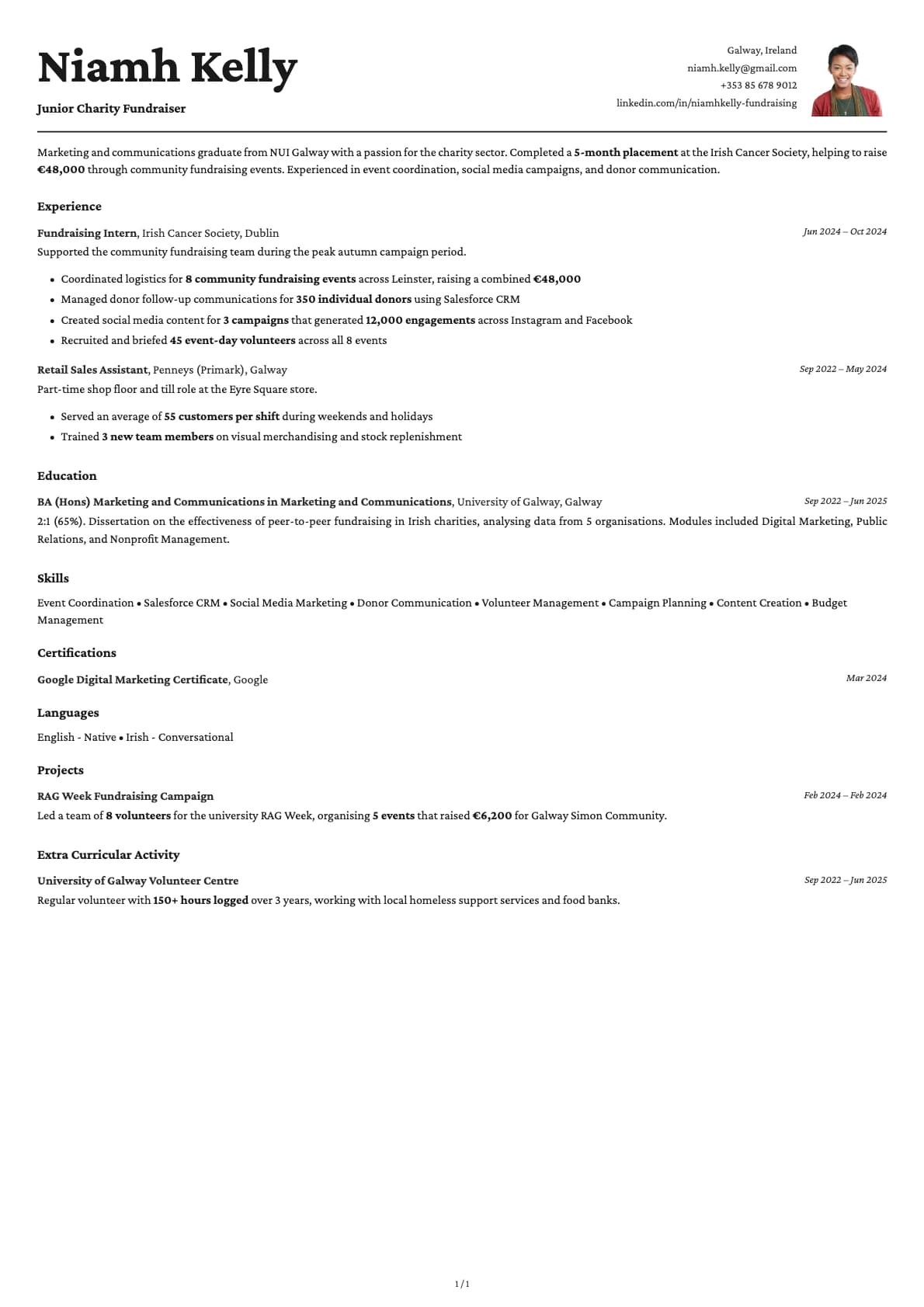
Junior Charity Fundraiser
A junior charity fundraiser resume example with Irish Cancer Society internship and event coordination experience.
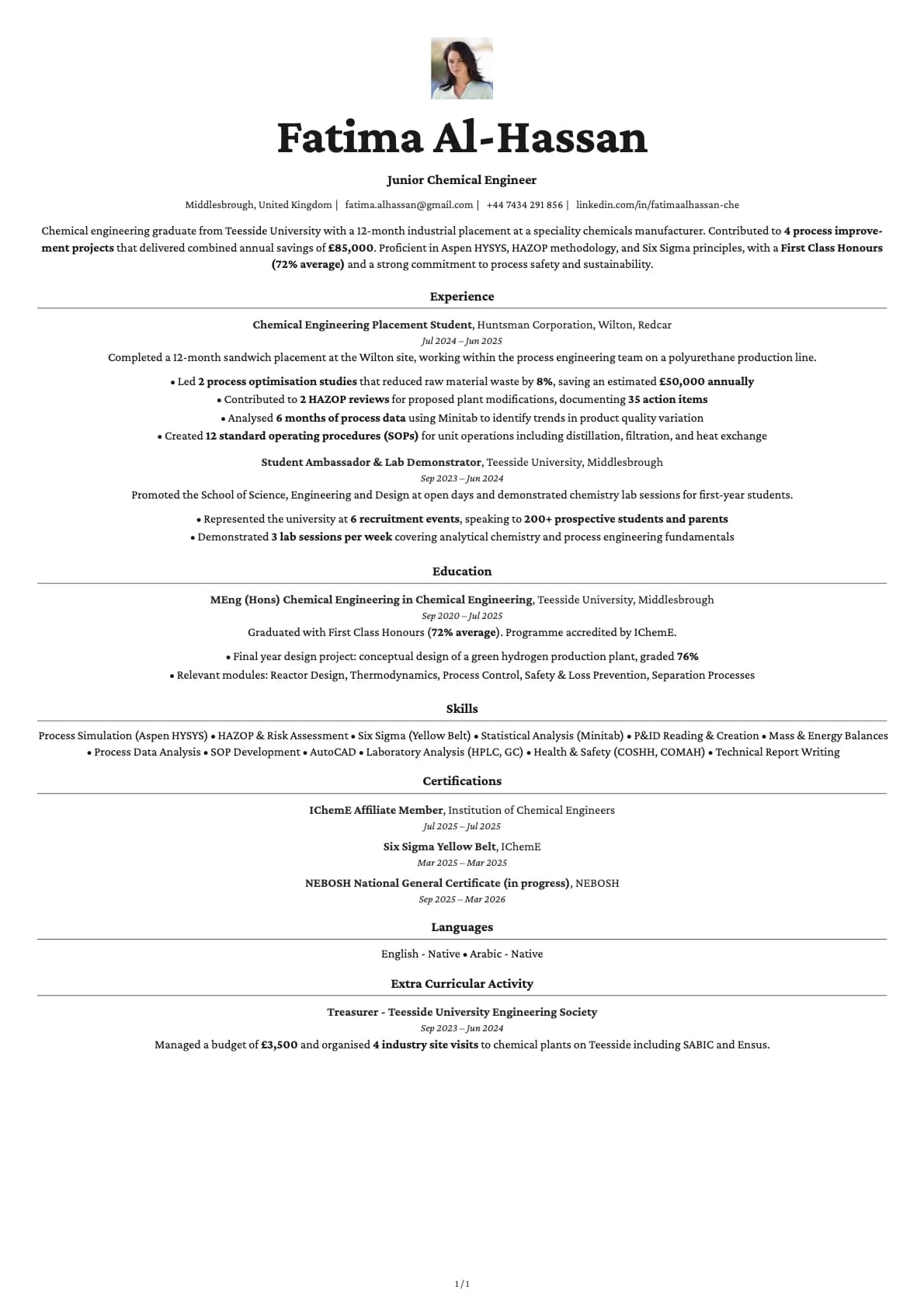
Junior Chemical Engineer
A junior chemical engineer resume example with industrial placement experience, process improvement savings, and IChemE membership for graduates.
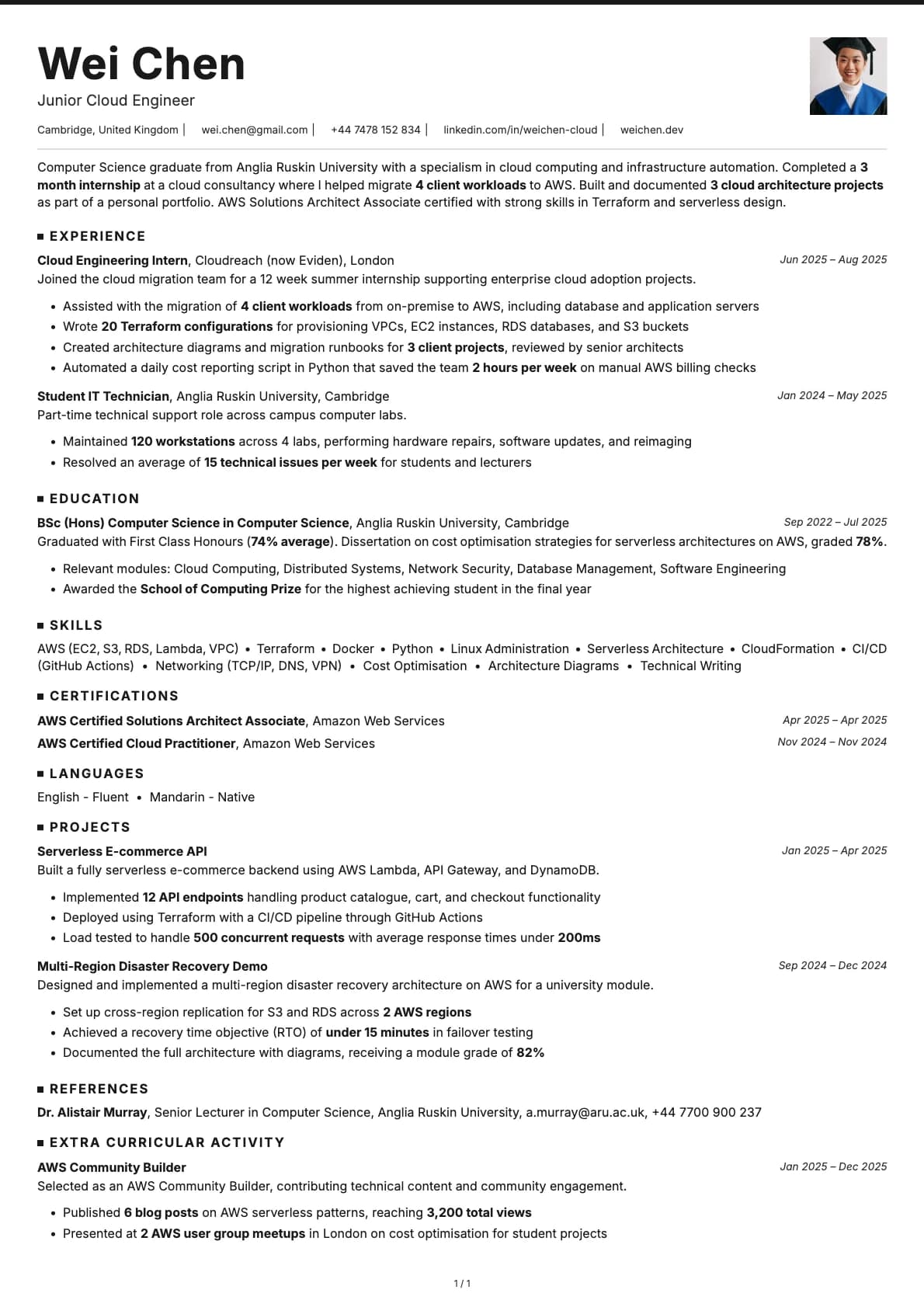
Junior Cloud Engineer
A junior cloud engineer resume example for graduates. Learn how to present AWS experience, Terraform skills, and cloud certifications to land your first cloud engineering role.
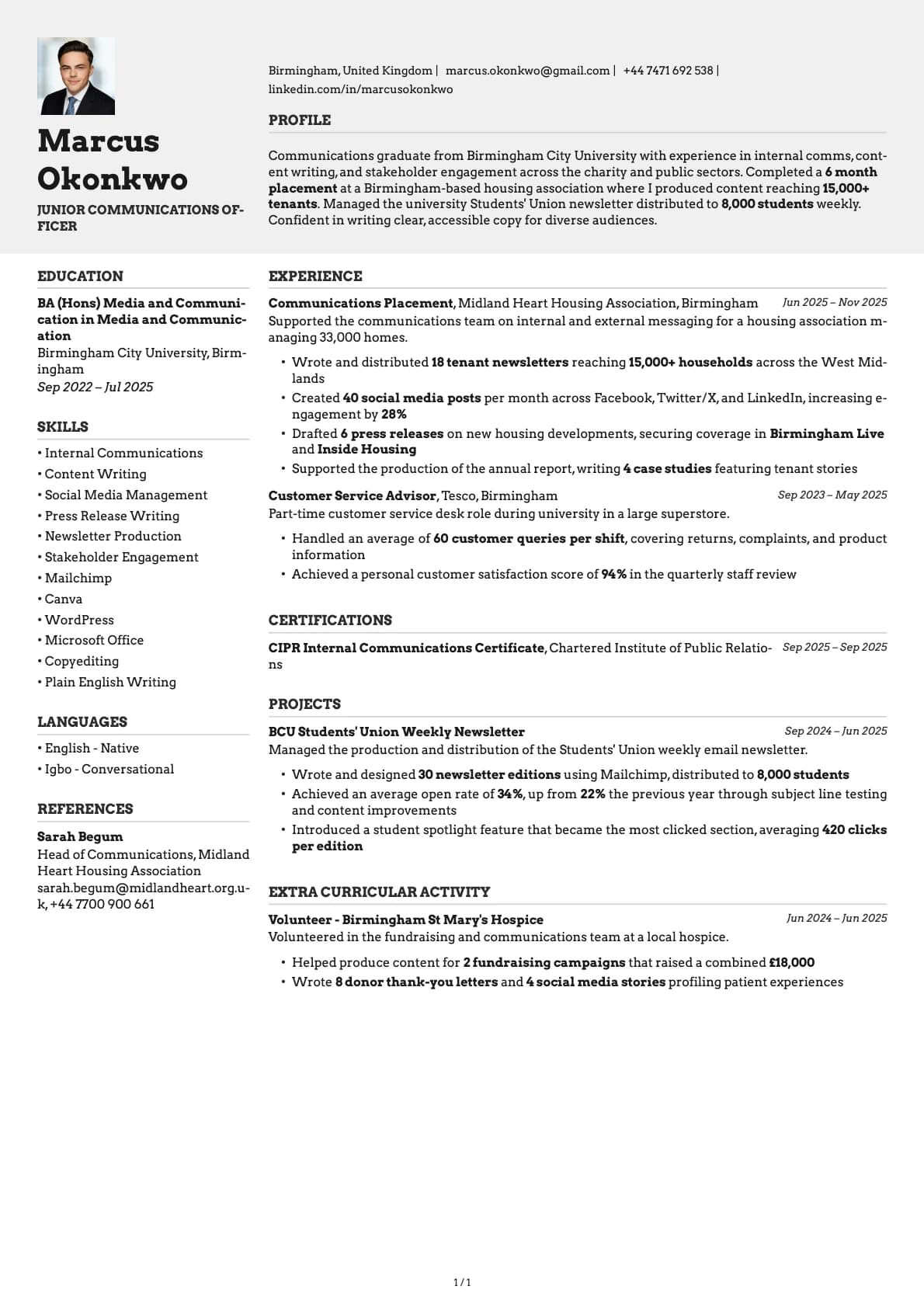
Junior Communications Officer
A junior communications officer resume example for graduates. See how to present internal comms, content writing, and stakeholder engagement experience to land your first comms role.