Graduate Structural Engineer Resume Example
A graduate structural engineer resume example with consultancy placement experience, Eurocode design skills, and IStructE membership.

Laddro Team
Free to use. No account needed to start.
Free to use. No account needed to start.
Overview
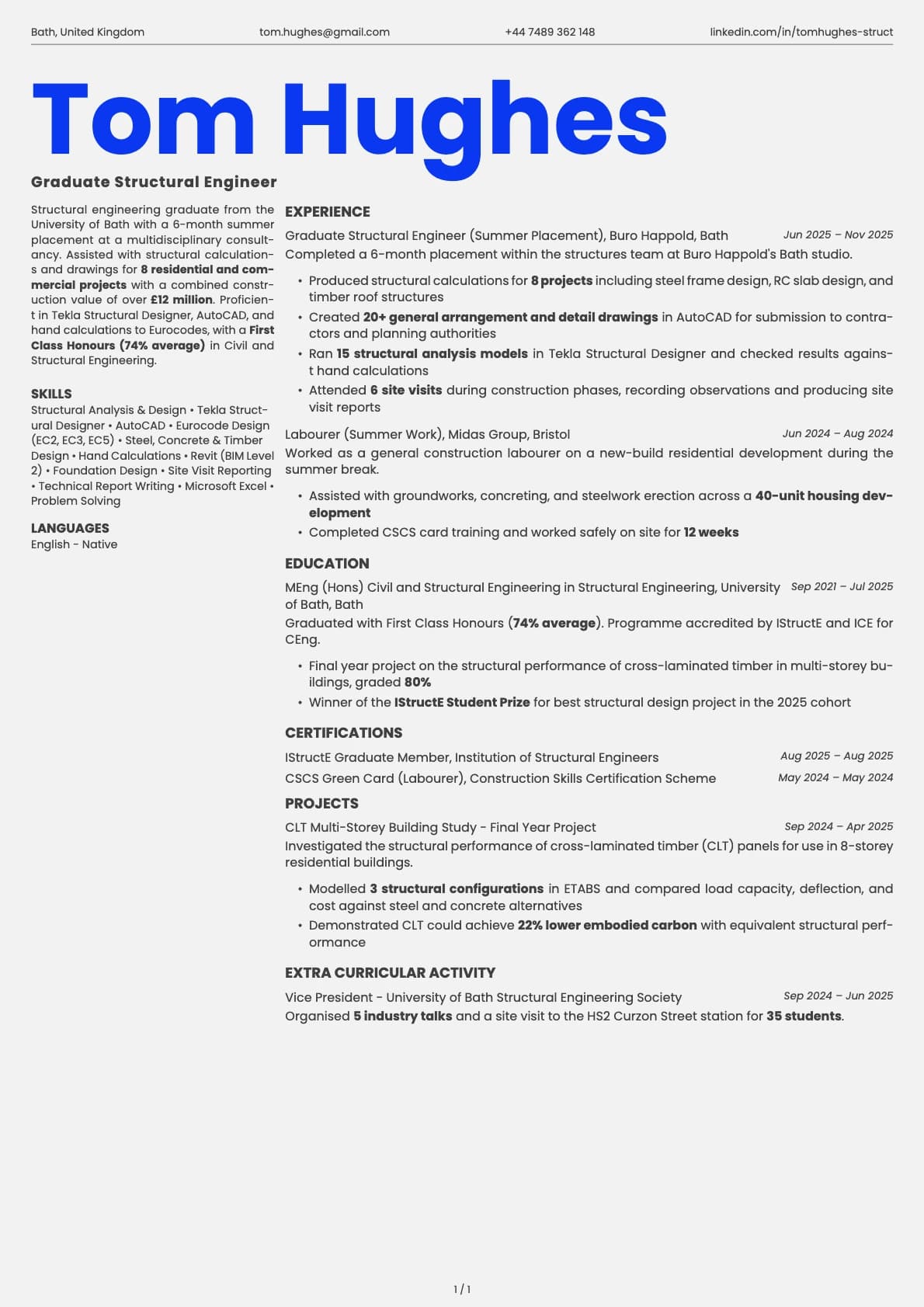
Structural engineering consultancies want graduates who can produce calculations, drawings, and analysis models with minimal hand-holding. Your degree gives you the theory, but what makes you employable is evidence that you have applied that knowledge to real projects with real constraints. Placement experience, software skills, and site awareness are the differentiators.
This resume belongs to Tom Hughes, a structural engineering graduate from the University of Bath who completed a six-month placement at Buro Happold. He produced calculations for 8 projects worth over £12 million combined, created 20 drawings, and ran 15 analysis models. His construction labouring experience also gives him first-hand understanding of how designs get built on site.
What Makes This Resume Work
Real project experience with financial context. Mentioning £12 million in combined construction value gives the reader a sense of the project scale Tom has been exposed to. This is more meaningful than simply listing project names, because it signals the level of responsibility and complexity involved.
Software proficiency is demonstrated through use, not just listed. Tom does not just say he knows Tekla Structural Designer. He says he ran 15 analysis models and checked them against hand calculations. This shows competence and engineering judgement, not just familiarity with a toolbar.
Construction site experience adds practical credibility. Having worked as a labourer, Tom understands buildability in a way that many graduate engineers do not. Consultancies value engineers who can produce designs that are practical to construct, and this hands-on experience supports that.
Key Takeaways
Graduate structural engineers should quantify their placement work with project counts, drawing numbers, and analysis models completed. Include the construction value of projects where possible, and reference the specific Eurocodes and standards you designed to. IStructE membership and a strong final year project in a relevant area (especially sustainability-related topics like CLT) demonstrate both professional commitment and technical depth.
Build your own version
Open this layout in the builder and swap in your own details. It takes a few minutes.
Free to use. No account needed to start.
Was this resume example helpful?
Rate this example to help us create better content for you.
4.7 average from 111 ratingsRelated resume examples
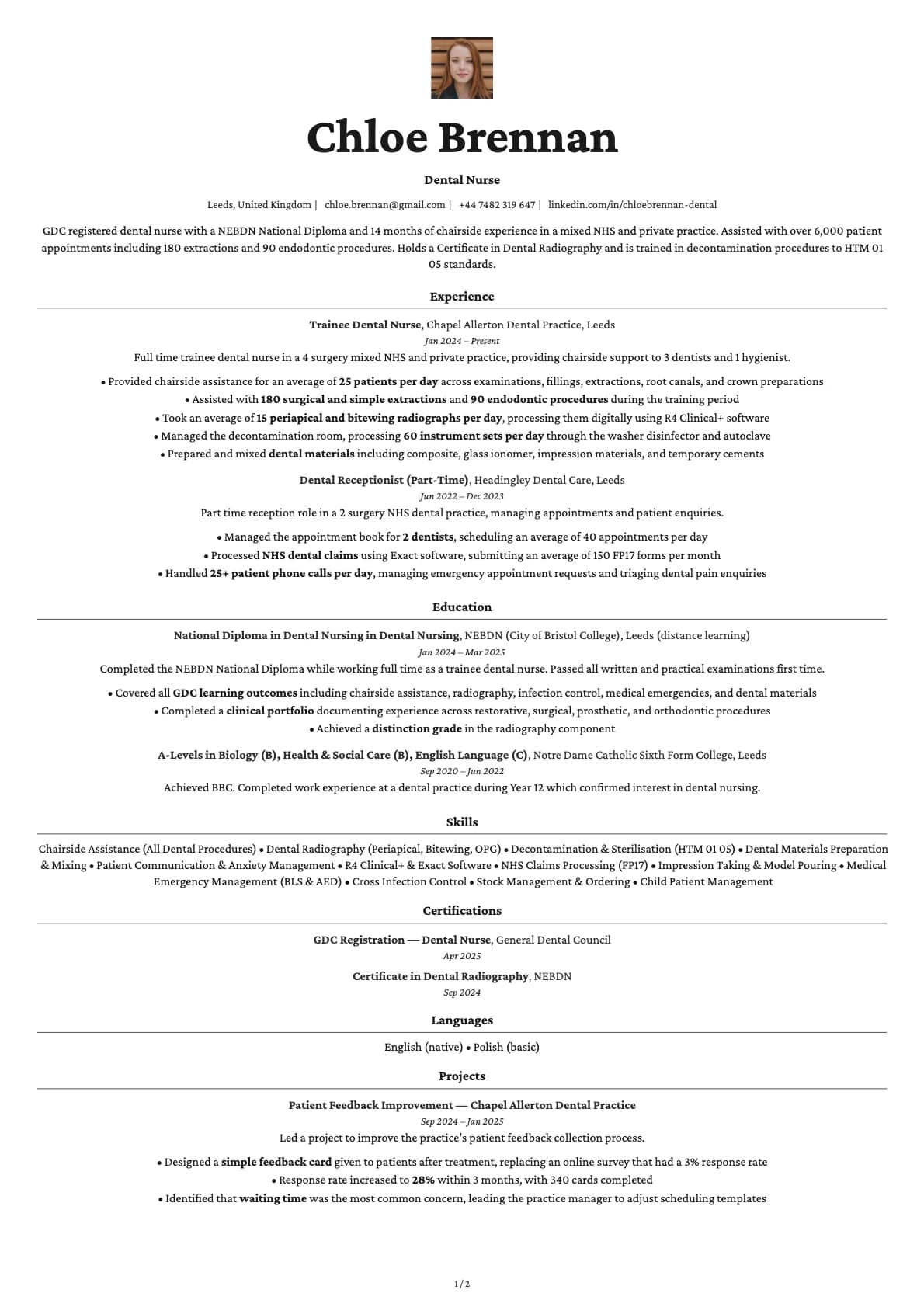
Dental Nurse
A dental nurse resume example for newly qualified candidates showing how to present GDC registration, clinical experience, and chairside skills for your first dental nursing role.
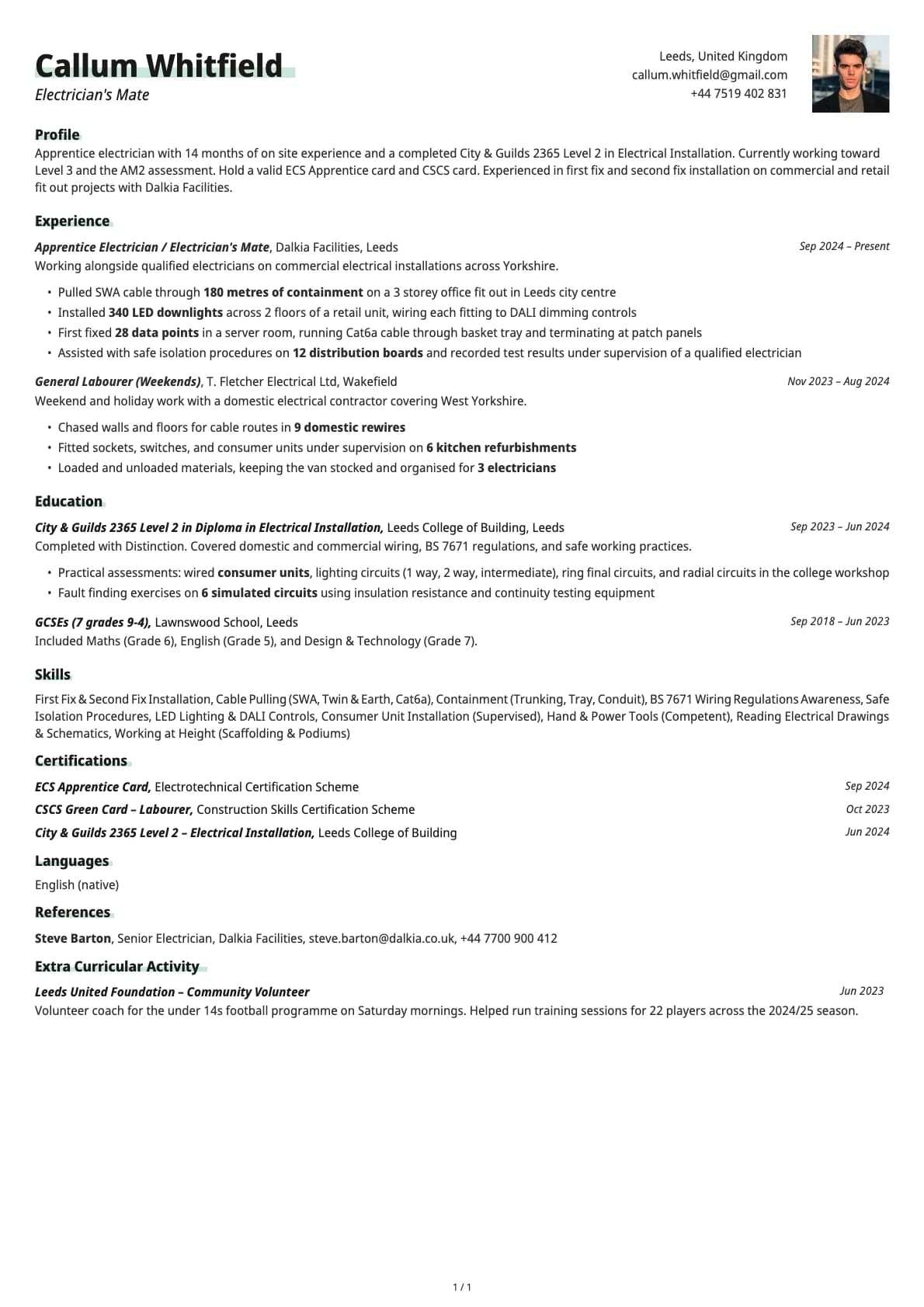
Electrician's Mate
An electrician's mate resume example for apprentice electricians entering the trade. See how to present your City & Guilds, ECS card, and practical wiring experience.
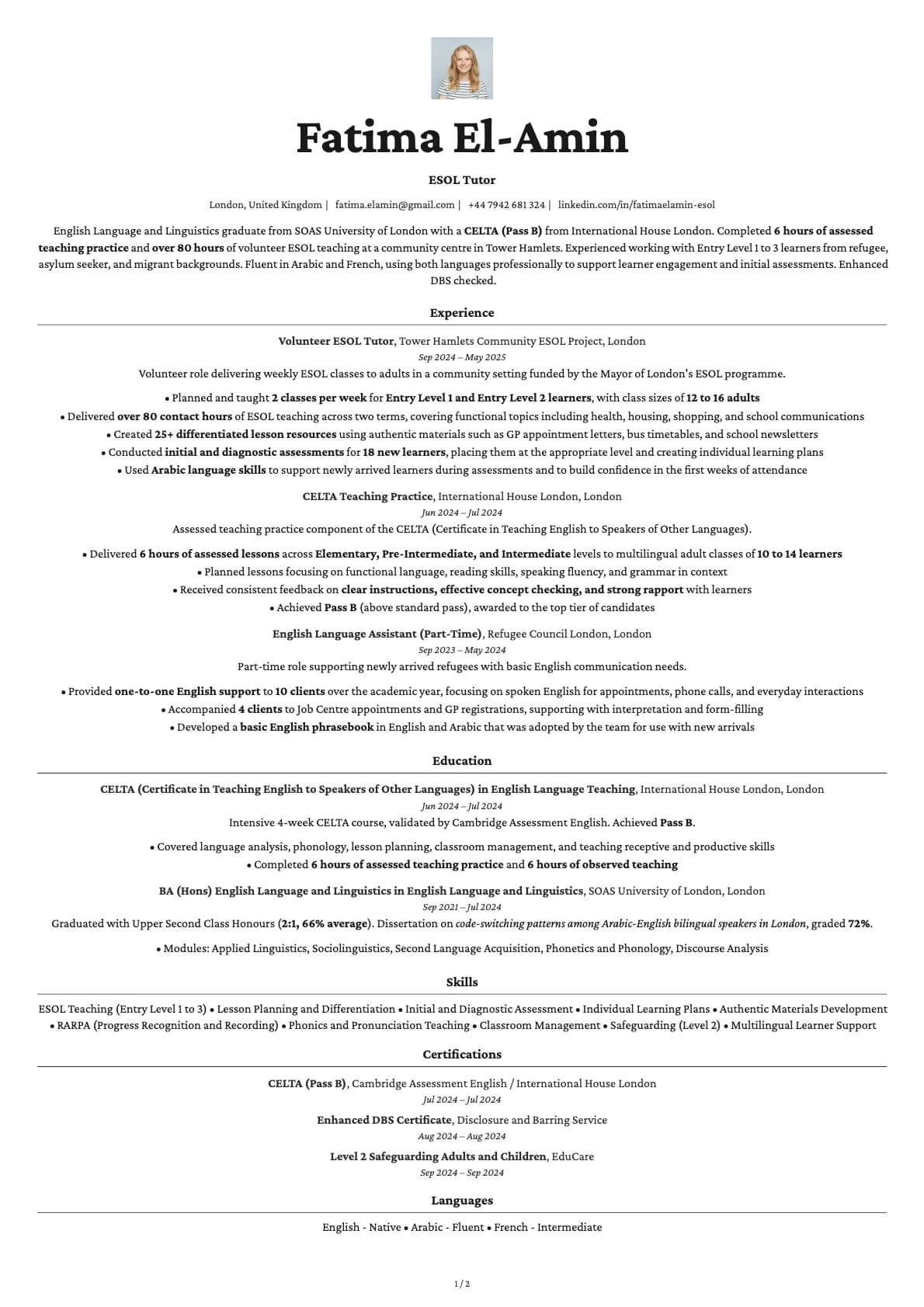
ESOL Tutor
A graduate ESOL tutor resume example with EFL teaching practice, CELTA, and multilingual classroom experience. See how to present your qualifications for ESOL teaching roles.
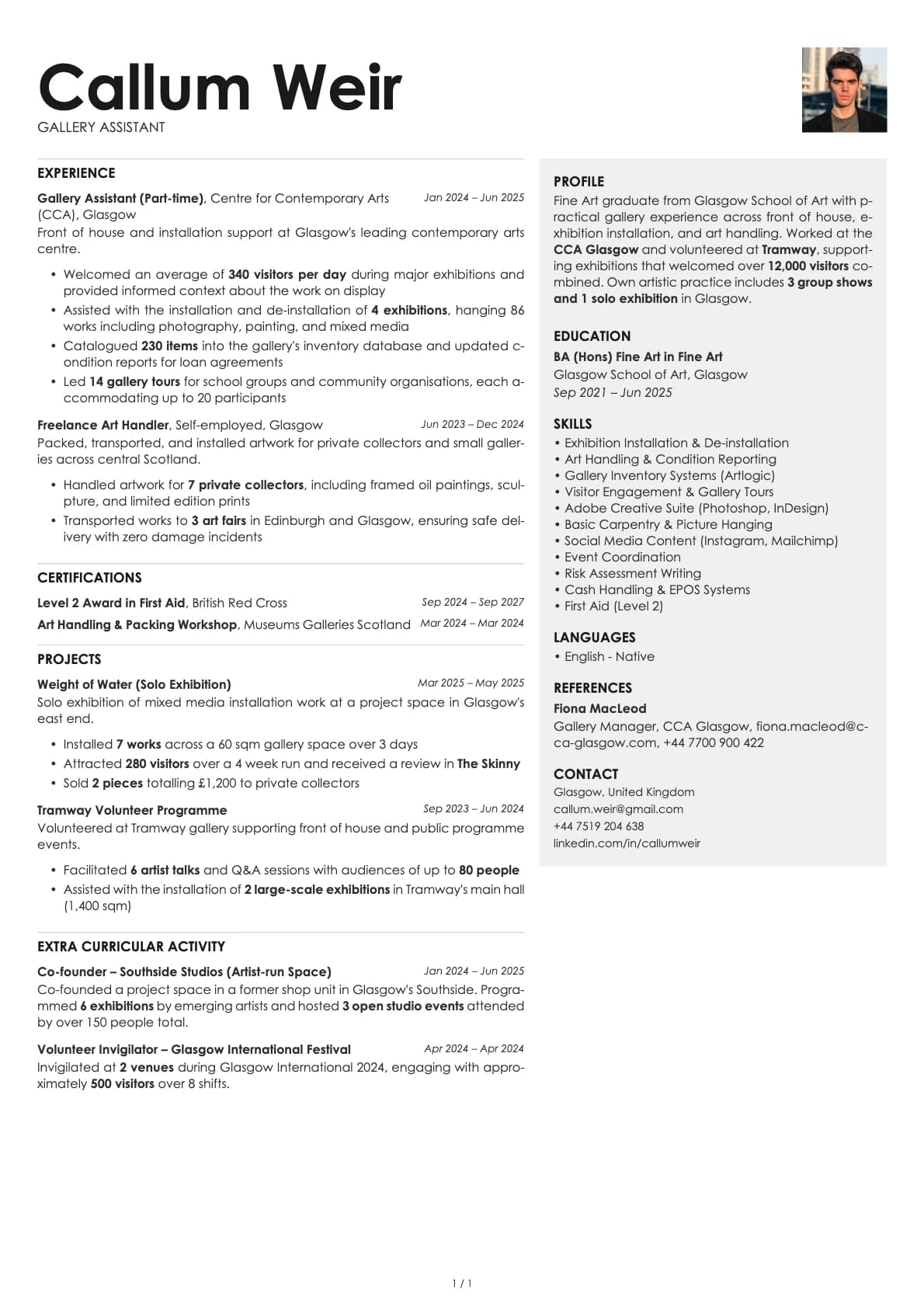
Gallery Assistant
A gallery assistant resume example with exhibition installation experience, visitor engagement numbers, and Fine Art credentials from a recent BA graduate.
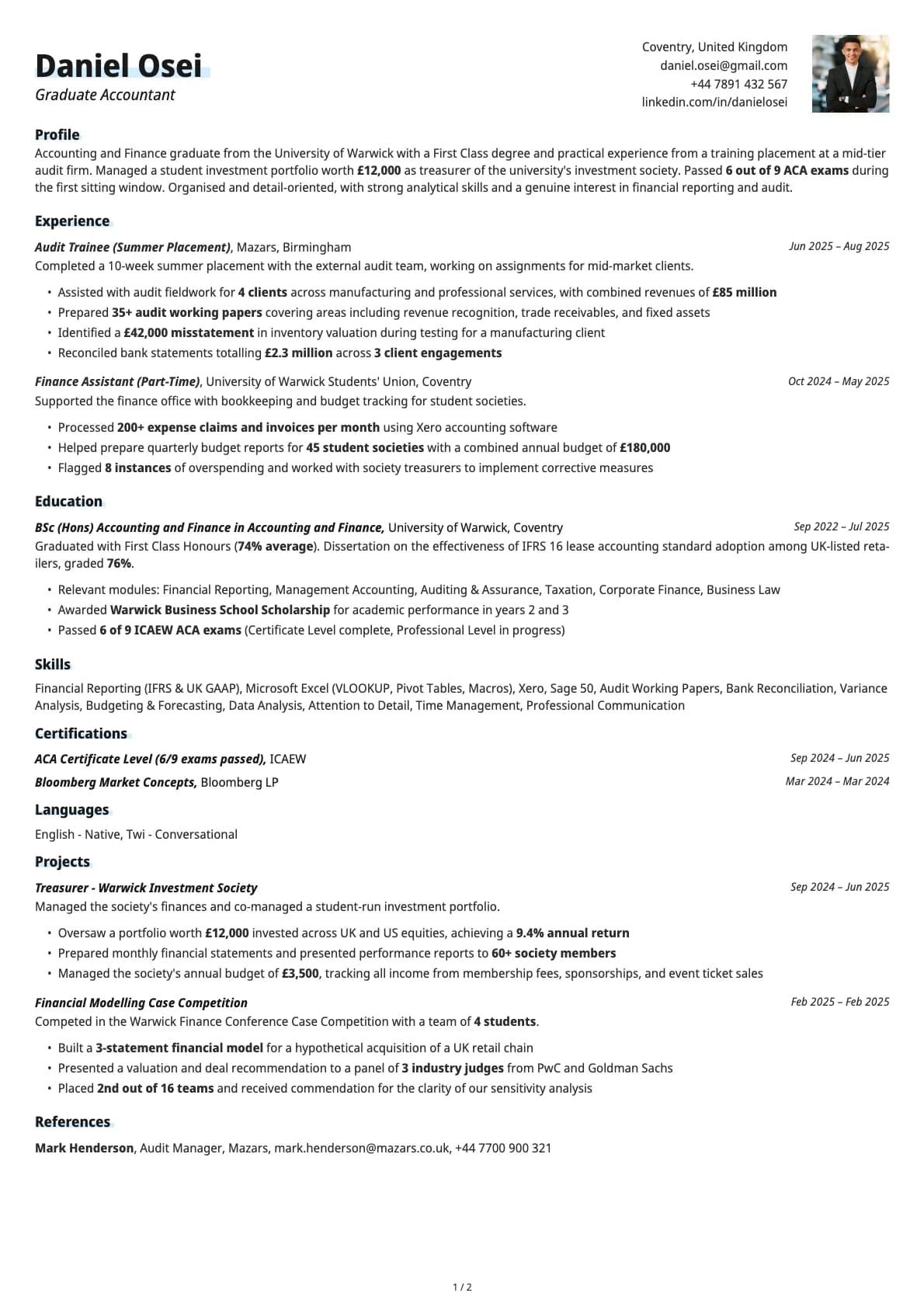
Graduate Accountant
A graduate accountant resume example for recent graduates. See how to present your accounting degree, Excel skills, and placement experience to secure your first role.
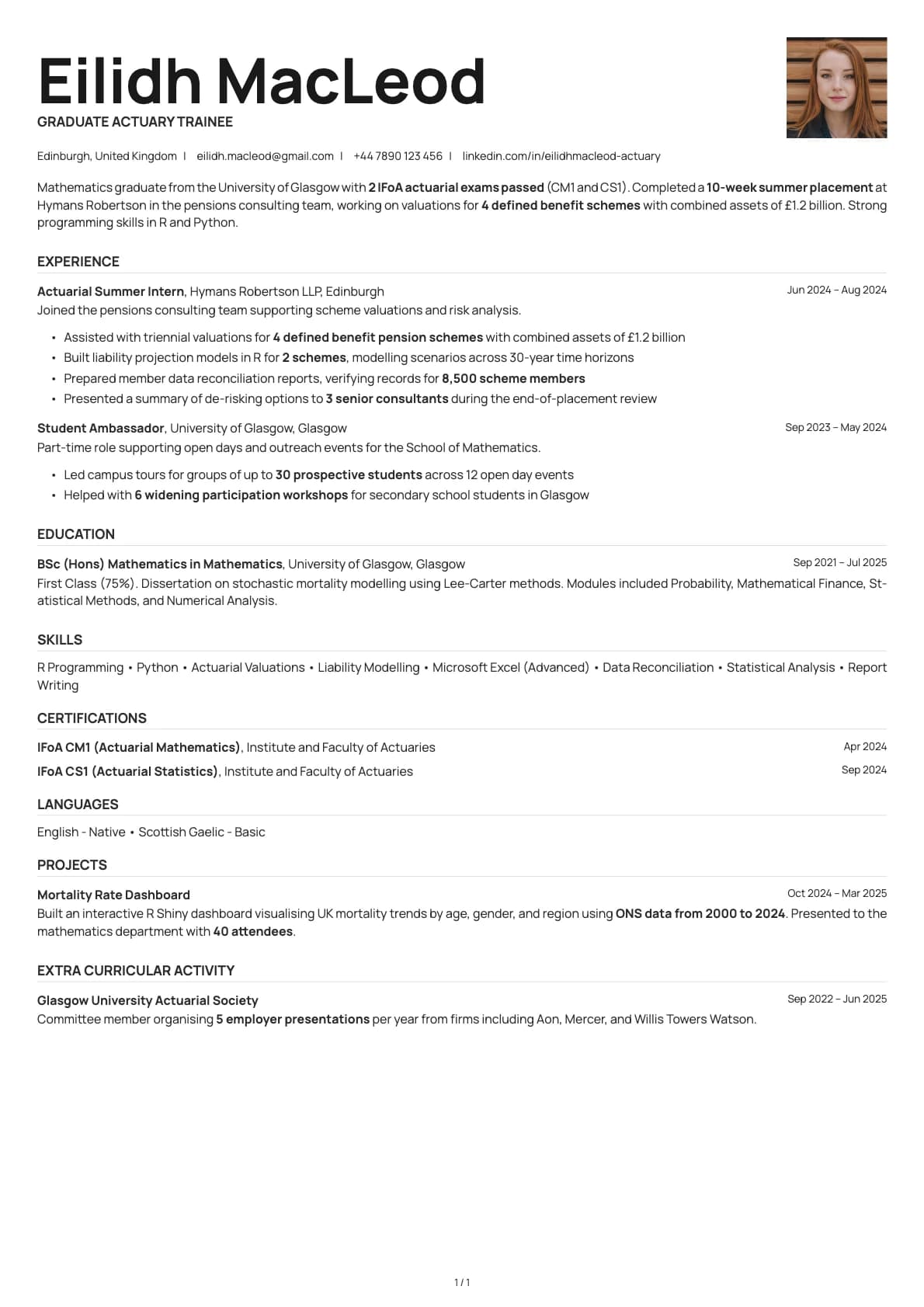
Graduate Actuary Trainee
A graduate actuary trainee resume example with Hymans Robertson internship and IFoA exam passes.
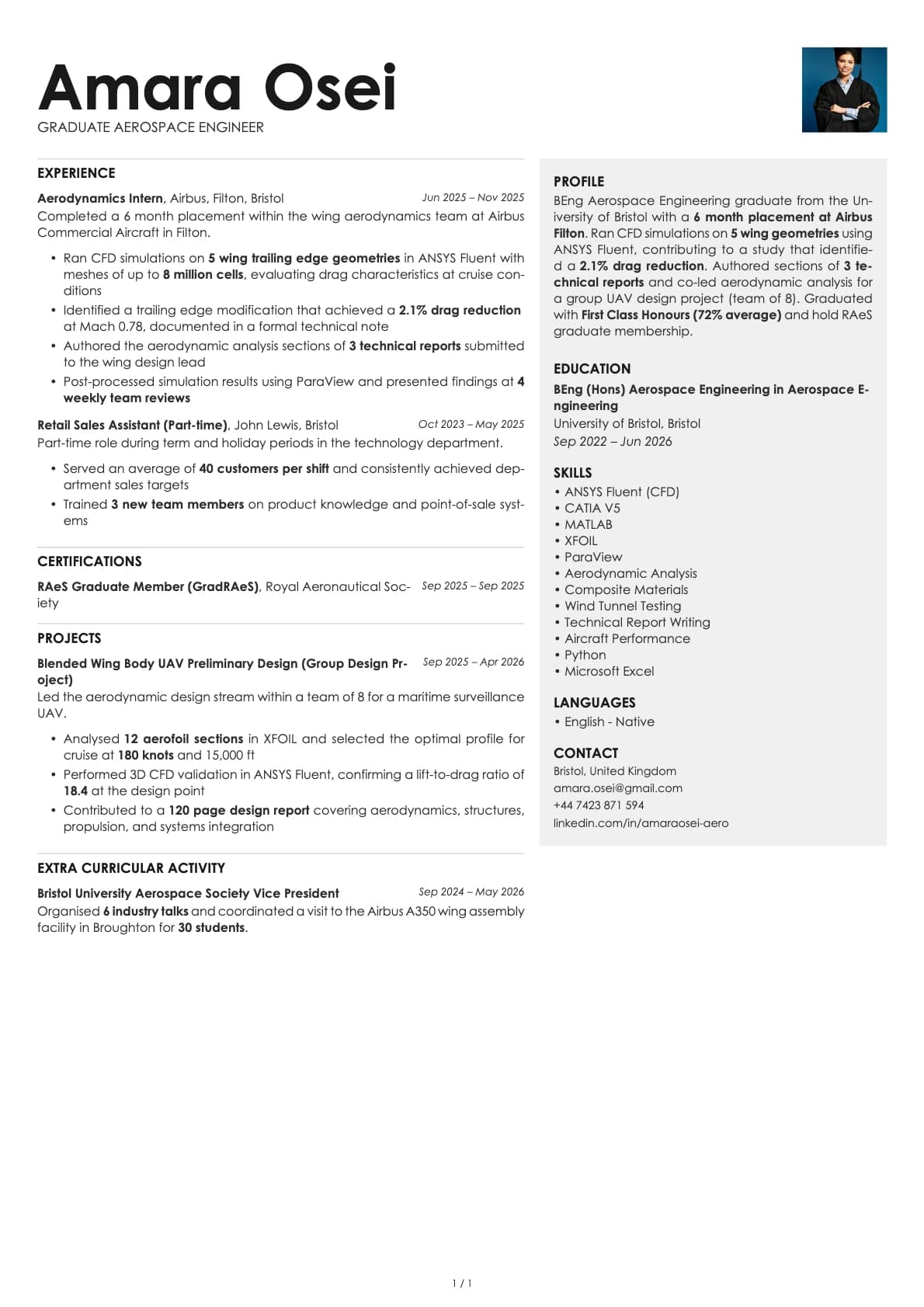
Graduate Aerospace Engineer
A graduate aerospace engineer resume example with CFD analysis skills, Airbus placement experience, and RAeS membership.
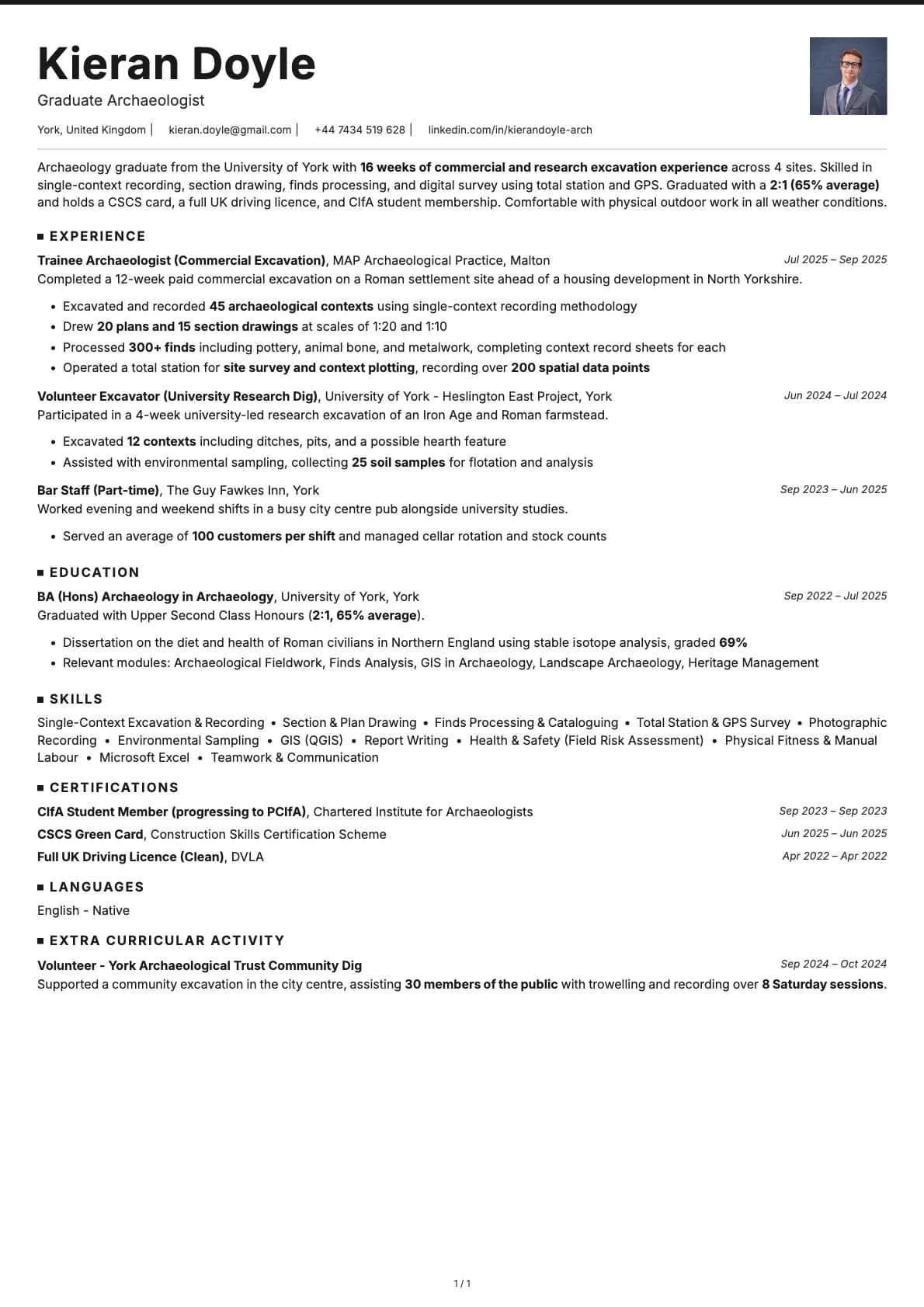
Graduate Archaeologist
A graduate archaeologist resume example with commercial excavation experience, single-context recording, and CIfA membership.
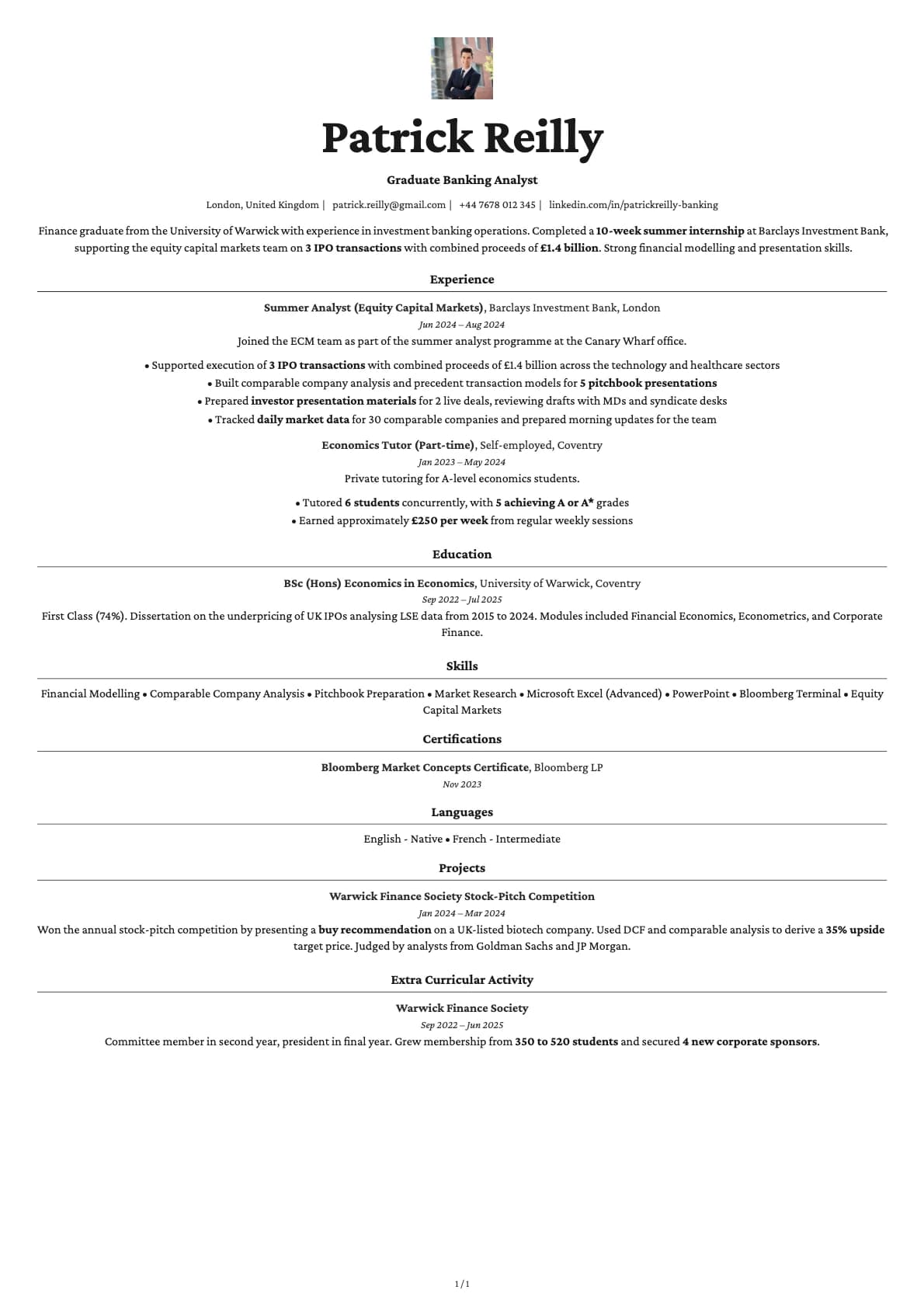
Graduate Banking Analyst
A graduate banking analyst resume example with Barclays ECM internship and financial modelling skills.
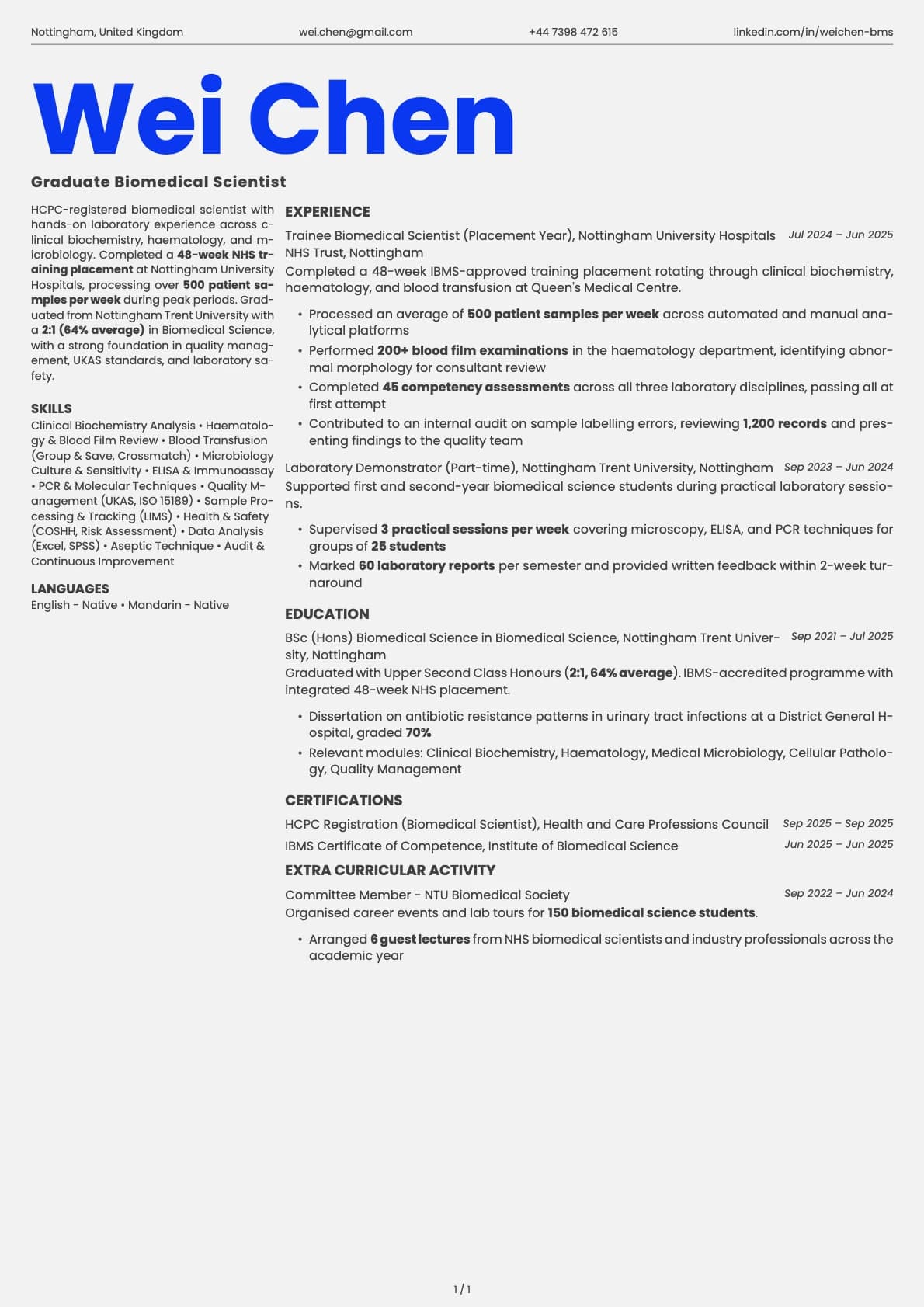
Graduate Biomedical Scientist
A graduate biomedical scientist resume example with NHS lab placement experience, HCPC registration, and sample processing numbers.
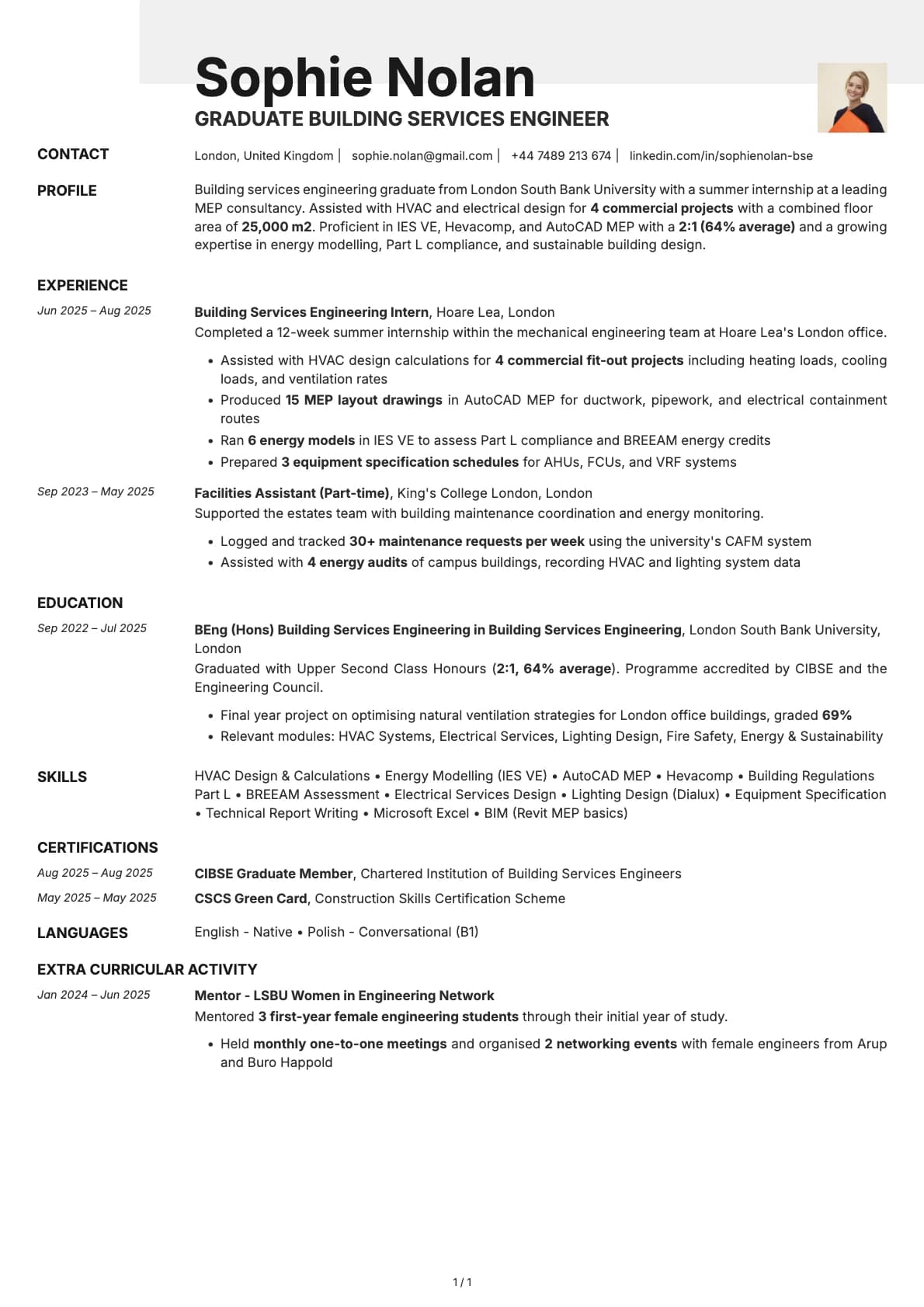
Graduate Building Services Engineer
A graduate building services engineer resume example with MEP consultancy experience, energy modelling skills, and CIBSE membership.
Graduate Building Surveyor
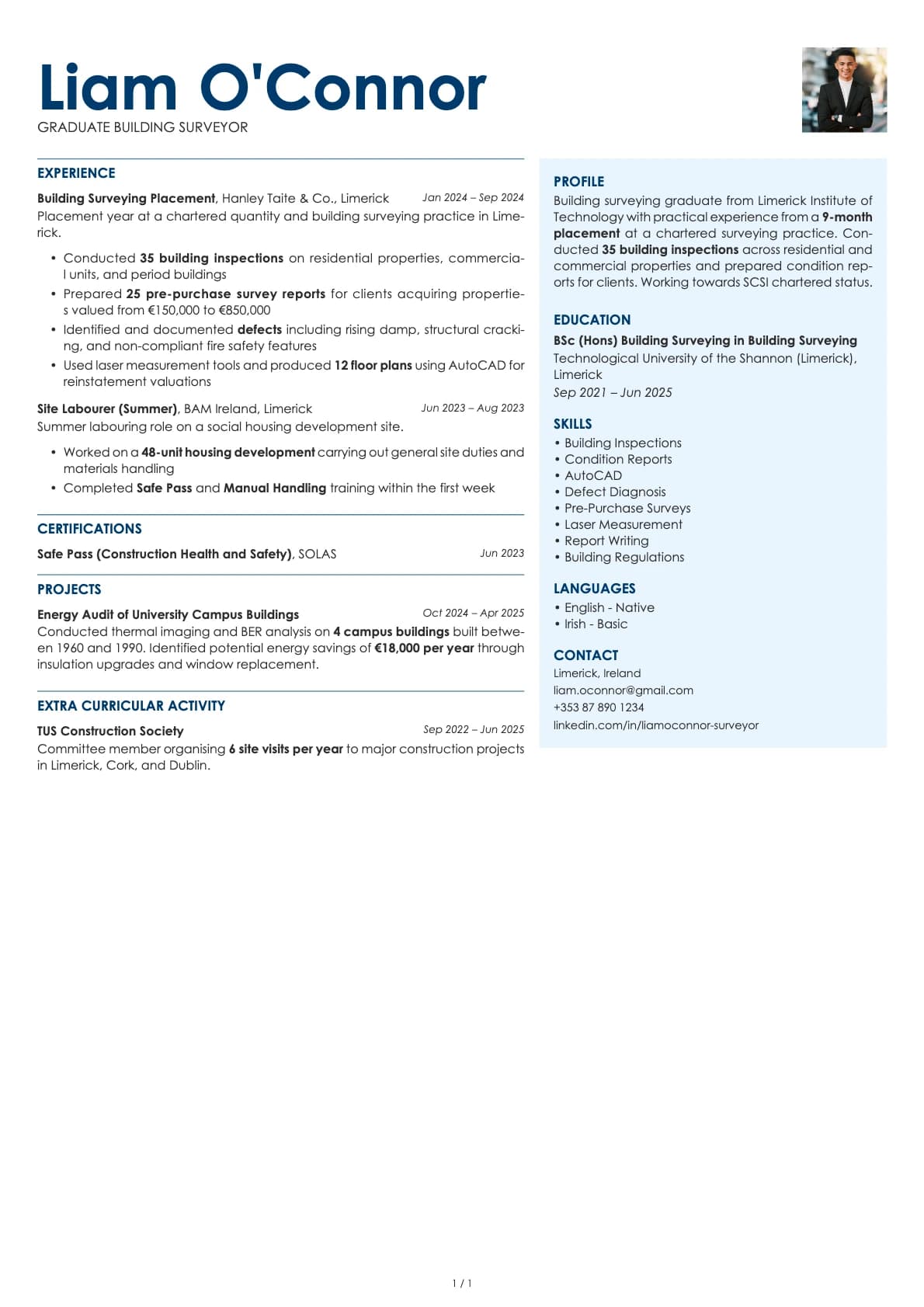
A graduate building surveyor resume example with chartered practice placement and building inspection experience.